
Lelio Artemis Speaker Cable Review
Lelio has been on a mythical journey these past couple of years.
It began with the launch of the Hestia interconnects, named after the goddess of the hearth. After a year of development, they followed up with the Artemis speaker cables, named after the goddess of the hunt.
I’ve had the chance to experience the Lelio Hestia before, as reviewed by another writer, and now it’s my turn to discover the prowess of this new goddess.
Lelio is a sister brand to DC-Cable under HiFiReport, committed to no-holds-barred construction and featuring all-silver conductors. Priced significantly higher than DC-Cable, Lelio caters to the desires of high-end audiophiles seeking the ultimate in sonic performance.
Products bearing the Lelio name are invariably formidable contenders.
Several years ago, Lelio launched the X series, including the X-1 power cable, X-2 speaker cable, and X-3 interconnect.
Both the power and interconnect cables utilized pure silver conductors. The X-2 speaker cable, however, presented a unique “one-in, two-out” design. At the speaker end, it featured two sets of connectors, akin to bi-wire speaker cables. The shorter set employed pure silver conductors, while the longer set combined pure silver with single-crystal copper.
This ingenious design allowed the X-2 speaker cable to offer “two flavors in one.” Users could choose the pure silver terminals for a pristine silver sound or opt for the other terminals to inject a touch of copper warmth.
This truly unique design earned it the formidable moniker of “War God” from HiFiReport.
However, customers raised a valid point: “Why not simply create a pure silver cable?” Years later, HiFiReport has finally answered that call.
The newly launched Artemis builds upon the foundation of the X-2 speaker cable, taking it to the next level.
Lelio’s Signature Structure: Seven-Core Coaxial Design
What foundation are we talking about? The foundation of “structure.”
HiFiReport’s owner, Lee Cheng-zan, takes a grounded approach to cable design. He avoids gimmicks, eschewing trendy acronyms or technical jargon to make products seem impressive on paper.
His philosophy centers on selecting excellent conductors and fine-tuning the sound through structural design.
After developing the “coaxial heterogeneous core” structure, he began to build a range of products based on this innovative design.
“Previously, almost no one had created cable designs with coaxial heterogeneous cores. Even today, it remains rare,” explains Lee Zong-zhe, HiFiReport’s junior owner.
The previous generation X-2 speaker cable utilized a seven-core coaxial heterogeneous silver conductor. This design isn’t exclusive to Lelio; even DC-Cable products incorporate coaxial heterogeneous core structures.
If you want to understand HiFiReport, remember this term: coaxial heterogeneous core.
Superior Conductor: Single-Crystal Silver
The Lelio Artemis employs a seven-core coaxial heterogeneous conductor, with each core individually insulated. This structure is undeniably complex.
But the ingenuity extends beyond structure; Artemis elevates the conductor material to an even higher echelon.
While the X-2 “War God” speaker cable used pure silver conductors, the Artemis steps up to single-crystal silver conductors.
Theoretically, a single crystal conductor can extend up to 125 meters. Ideally, single-crystal conductors eliminate crystal boundaries throughout the signal path, which is more conducive to signal transmission.
However, the extended drawing process makes single-crystal conductors significantly more expensive, naturally leading to a higher price point.
Enhanced Conductor, Lower Price
Structure as the foundation, conductor as the advancement.
This is Lelio’s fundamental design logic for evolving from the X series to the goddess series, and from the X-2 to the Artemis.
At this point, I must interject: despite using more expensive single-crystal silver compared to pure silver, the Artemis speaker cable is actually more affordable than the X-2 “War God.”
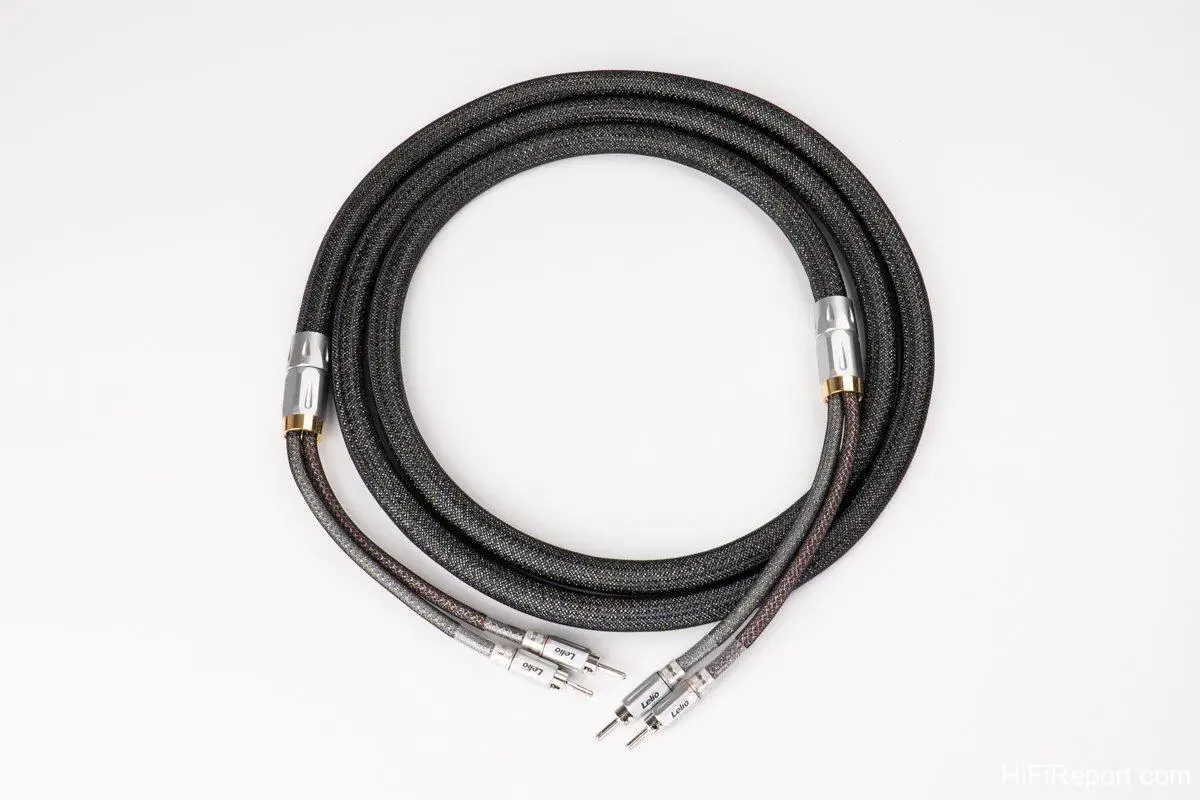
The “War God” retailed for NTD 280,000 for a 3-meter pair, while the Artemis is priced at NTD 268,000, approximately USD 8,268.
This upgrade at a lower price is undoubtedly good news for Lelio enthusiasts.
Palladium-Plated Copper Connectors and Supple Cable
Let’s revisit the details.
In audio cables, conductors and cable construction are crucial, but connectors are equally important. Connectors significantly impact the sound.
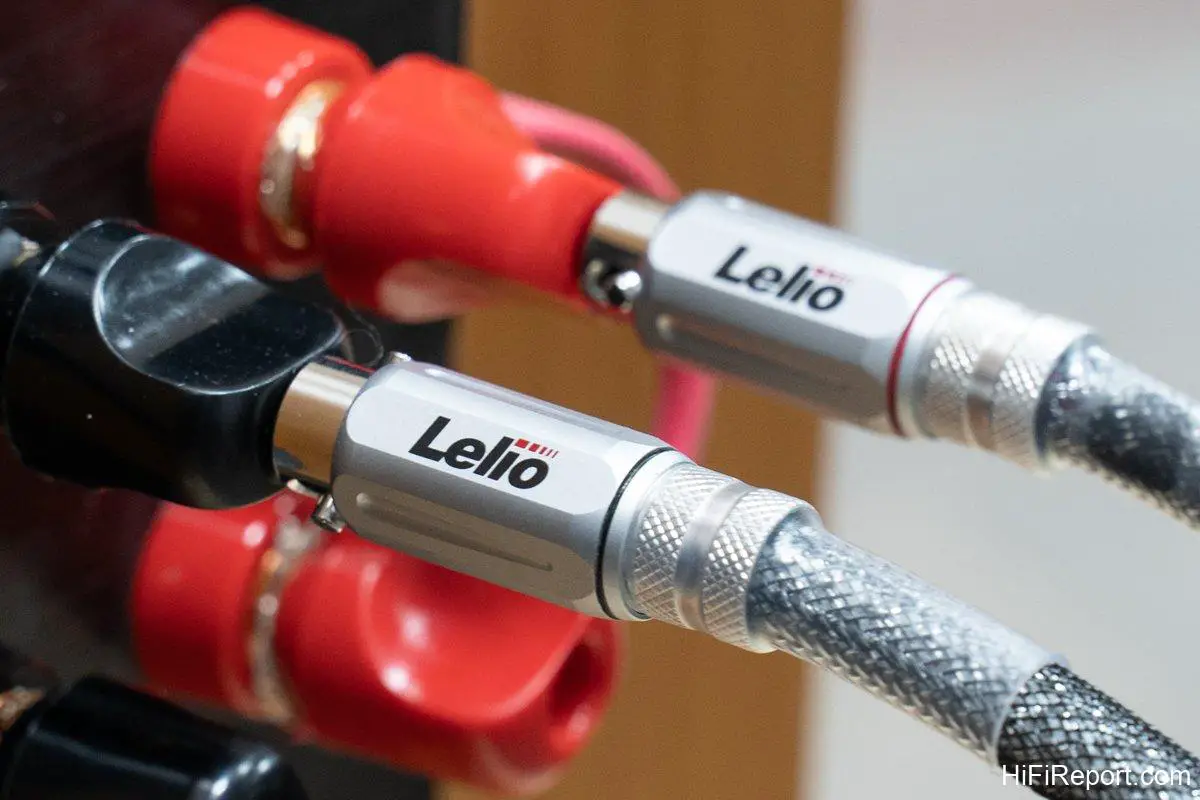
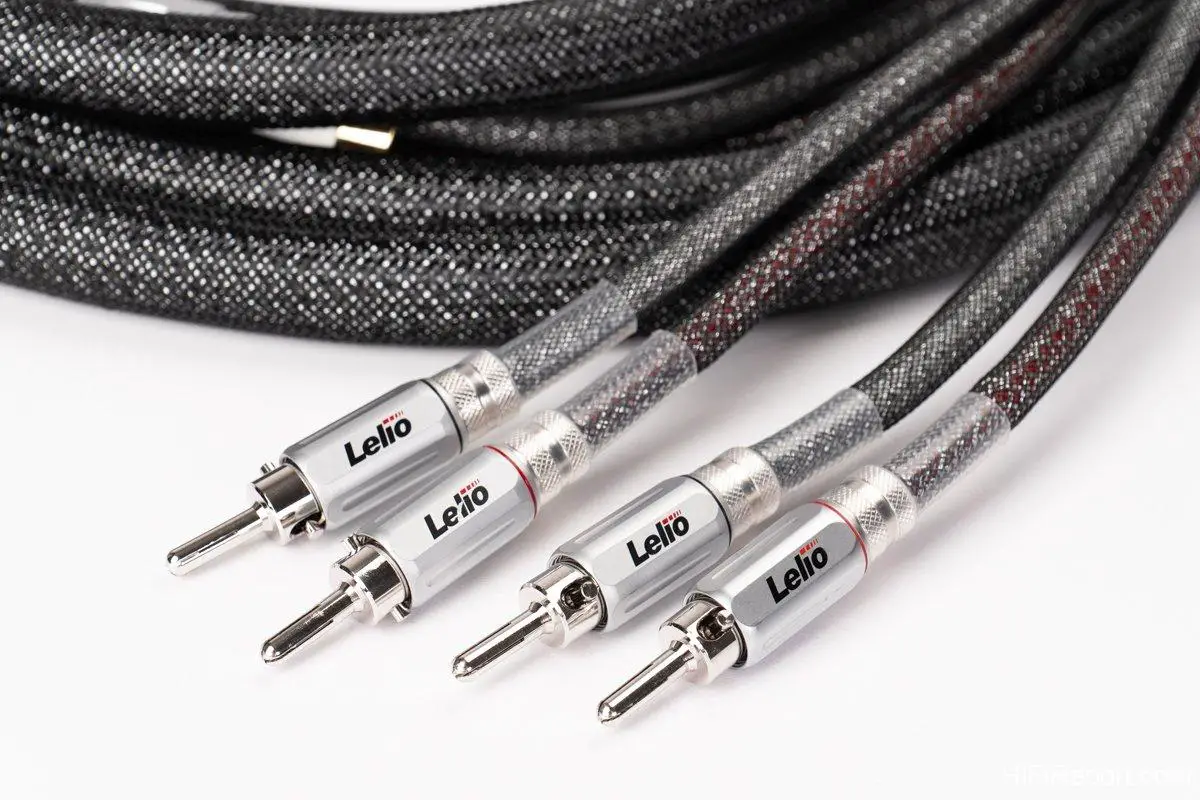
Artemis utilizes HiFiReport’s finest connectors, built upon a foundation of premium red copper and plated with palladium for oxidation resistance.
The connectors feature a compression-type design. After insertion, rotating the outer sleeve engages an internal post, expanding the connector to ensure a tight and secure fit with the speaker and amplifier terminals, optimizing signal transfer.
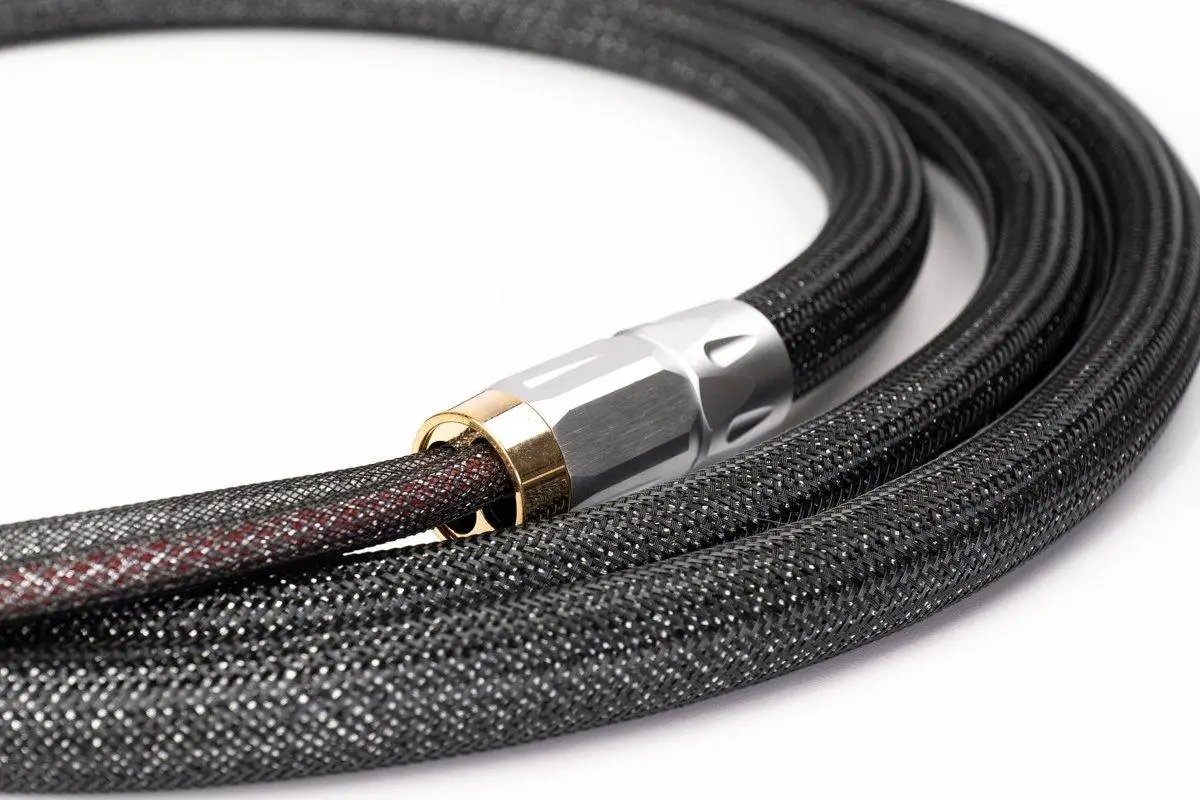
The outer blue-grey mesh jacket subtly reveals gold-flecked threads, offering a more visually interesting aesthetic than typical solid-color mesh found on many foreign cables.
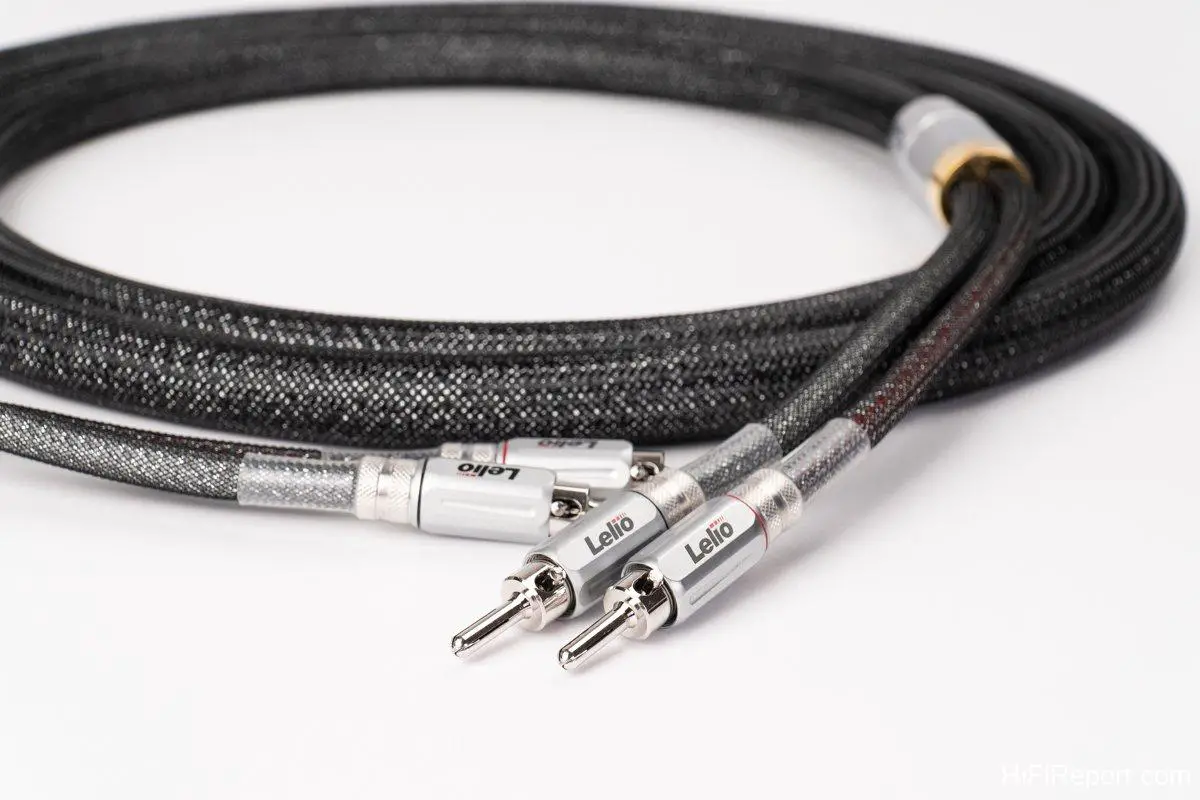
The main cable body is remarkably supple, and the positive and negative leads extending from the aluminum alloy anti-magnetic splitter are even more flexible.
HiFiReport has prioritized flexibility in their recent cable designs, offering a pleasing tactile experience.
Natural and Open Sound with High Density
Listening tests were primarily conducted in my home system, with a brief session in the company’s listening room before returning the cables.
At home, I used Lavardin IS Reference and Audiomat Adagio amplifiers paired with JMR Abscisse Jubile speakers. In the company’s room, I used an EAR Yoshino 868 preamplifier and 509 power amplifier with Wilson Audio Alexia 2 speakers.
The source was consistently a Telos EMP as a Roon Bridge, using Roon for music playback. The Roon Core was a Silent Angel Z1 at home and a MacBook Pro at the company.
Regardless of the system, the Lelio Artemis consistently delivered captivating performance.
It presented a natural and open sound with exceptional separation, abundant detail, solid and dense sonic images, and a wide and deep soundstage.
Silver cables are often characterized by their high-frequency prowess, sometimes at the expense of midrange and bass. However, Artemis avoids this pitfall. It boasts a remarkably “healthy” midrange, rendering not only three-dimensional and prominent sonic images but also solid sonic textures.
Its bass performance is equally impressive, with ample yet controlled quantity and excellent low-frequency resolution.
In the high frequencies, it maintains a balanced approach, delivering the inherent color and shimmer of silver without sounding harsh or strident.
Concerned about silver cables being aggressive? Artemis dispels such worries.
Break-in Period for Optimal Performance
These cables appear to require a break-in period. Initially, the sound was more direct, and the tonal colors were not as vibrant.
After a couple of days of use, the soundstage opened up, the tonal palette became richer, and the sound became more lively, fully justifying its price point.
If you find the Artemis doesn’t sound as impressive as I describe right out of the box, give it time to prove itself.
(It’s Artemis that needs to prove itself, not me.)
Focused Vocals, Rich Detail, and Excellent Bass Resolution
The sense of realism imparted by Artemis is evident in the Blue Coast Collection-The E.S.E. Session album.
In “Looking for a Home,” the guitar plucking exhibits layers of dynamics and tonal variations, which are rendered with greater clarity through Artemis.
Keith Greeninger’s vocals are focused and well-defined, with exceptional clarity in his voice, articulation, and enunciation.
During the recording, the two musicians played and sang simultaneously, occasionally tapping their feet to keep time. The subtle, low-frequency resonance of their foot taps on the floor, often difficult to discern, becomes more apparent with Artemis.
If the speakers lack deep bass extension or the system’s resolution is limited, this subtle sound might be missed. However, with the Artemis speaker cables, it becomes clearly audible.
We generally associate silver cables with high resolution. HiFiReport’s expertise in cable design is evident in Artemis’s ability to deliver deep and articulate bass.
Regarding vocals, “Lilianna” features a more dynamic performance with a gravelly and powerful voice.
The flamenco guitar in this track sounds distinct from the guitar in the previous song. The notes have shorter decays, a lower register, and a drier, more percussive quality.
The Blue Coast recordings are inherently natural and live, and these characteristics are already evident. However, Artemis enhances these sonic nuances, making the differences in timbre even more distinct and pronounced.
Superb Soundstage and Engaging Vocals
Listening to Paiwan tribal chief Lin Guang-cai’s “Centennial Paiwan, Rebirth of Glory” album, Artemis imbued the music with a more vivid soundscape and more expressive emotion.
In “Glorious Family,” the echoes of the space are palpable. Lin Guang-cai’s chanting, filled with invocation and declaration, contrasts with “Lumi,” an ancient Paiwan tune. The latter, recorded closer to the microphone, sounds fuller, more substantial, and larger in scale, while the former projects a sense of distance.
The harmonies in “Lumi” not only create vocal layers with Lin Guang-cai but also make the indigenous harmony singers seem almost physically present; Artemis’s resolution is truly remarkable.
Have I praised Artemis’s resolution too much, making you fear it might sound harsh? As I mentioned earlier, and reiterate now: it does not.
This is a testament to HiFiReport’s Lee’s skill. The coaxial heterogeneous core structure and OCC silver conductors are truly exceptional. The sound is rich in detail, information, and clarity, yet never strident, even at high volumes.
In the Japanese song “Ah! Lover,” the guitar playing is warm and intimate, capturing the instrument’s full and rich tone.
The same applies to “Hopeless.” The guitar in the intro alone is captivating in its texture.
Lin Guang-cai’s vocal inflections at the end of phrases are also exquisitely rendered by Artemis. The sustained notes, the vibrato, the vocal transitions, and the throat resonance all sound incredibly intimate.
In “Cherish,” a 1970s logging song, the opening piano prelude is full-bodied with solid note articulation.
The simple lyrics poignantly express the emotions of loggers in the high mountains. Artemis’s detailed and comprehensive reproduction of information makes the vocal expressions even more vivid and touching.
Beyond Imaging: Form and Expression
Listening to Eivör’s Eivör Live album, the drums in the opening track “Mín Móðir” sound deep yet well-defined. Artemis renders the drums with cleanliness and solidity, clear drum strikes, and solid note definition.
As Eivör’s voice enters, the clear vocal lines and rich vocal nuances instantly transport the listener to the live performance.
Artemis truly excels at reproducing live recordings. Its focused and high-density sonic presentation gives Eivör’s performance not only imagery but also form and expression.
The breath sounds, nasal tones, throat sounds, and plosives are all rendered with exceptional clarity.
If you are a vocal enthusiast who values vividness and detail, Artemis will undoubtedly satisfy your needs.
Clear Stage, Transparent Image, Vivid Texture
Listening to Oscar Peterson’s We Get Requests album, Artemis injects youthful vitality into this classic jazz recording, clarifying the stage, enhancing transparency, and enriching instrumental textures.
In “Corcovado,” the track begins with brushed piano strings, followed by the piano taking center stage with a lighthearted, bossa nova-infused melody. The drums on the left provide clear rhythmic support, while the bass accompanies and underpins the ensemble from the rear, creating a clear trio arrangement.
The piano, already known for its rich tone, gains added brightness and sparkle from the silver Artemis, while also becoming tighter and more focused, resulting in a more agile musical presentation.
The drums are played with precision, and Artemis further enhances the solidity and immediacy of the drum strikes. The delicate and shimmering sounds of the cymbals become even more intricate and vibrant.
Defined Orchestral Sections
When playing large-scale orchestral music, Artemis creates a layered and well-defined soundstage, clearly delineating each instrumental section.
Taking Anne-Sophie Mutter’s Across the Stars album as an example, “Rey’s Theme” opens the album. While the music is inherently beautiful, the surging double basses often provide a thrill for bass enthusiasts. With Artemis in the system, these low-frequency swells are tamed somewhat, resulting in a cleaner and more balanced sound. Yes, this is a healthier proportion.
The violin tone is crisp, and the lines are clean and bright. When reaching higher positions, the intensity and brilliance surge forth.
Don’t be afraid of hearing sharp violin tones. It’s not necessarily a problem with the audio system; often, it’s a musical necessity, the performer’s interpretation.
Those who don’t understand this may tinker with their audio systems, smoothing out those sharp edges, believing it to be beautiful sound, unaware that the tonal direction has been skewed.
Artemis’s natural and straightforward character clearly articulates timbre and texture without bias.
Its high-density presentation sharpens the form and lines of each sound source and increases the separation between them.
This enhances the visual aspect of listening to orchestral music, as the distinct sections are clearly delineated.
Consistent “Goddess” Series Sound Signature
HiFiReport also sent along the Hestia interconnects for me to use with Artemis.
After comparison, I found that these two cables share a very similar sonic character, almost identical.
If you value cleanliness, clarity, solidity, three-dimensionality, high density, high energy, and high separation, the Lelio “Goddess” series can help remove any sonic haze from your system and enhance overall sonic performance.
If you prefer listening at lower volumes, Artemis and Hestia can make your system sound refined and elegant, with an ethereal quality.
Ideal for Mid to Large Systems, Tube-Friendly
For those interested in the Lelio “Goddess” series, you can certainly purchase a complete set to “silverize” your entire system, further emphasizing these sonic characteristics.
If you don’t seek a full silver cable loom and prioritize system balance, I recommend choosing either the interconnects or speaker cables and pairing them with other copper cables to blend their sonic flavors.
Furthermore, the larger the system and speakers, the greater the dynamic range, bandwidth, and soundstage, the more apparent the benefits of these cables become.
I would not recommend the “Goddess” series for smaller systems primarily based on bookshelf speakers.
They also perform exceptionally well with tube amplifiers. At home, I preferred using them with the Audiomat Adagio, while at the company, I chose the EAR Yoshino 509 power amplifier for pairing.
Artemis can balance the inherently softer characteristics of tube amplifiers, adding a touch of brilliance and color to the inherently warm sound, while also tightening the slightly looser and rounder textures, making the sound more precise.
Visit HiFiReport at the Show!
Artemis and Hestia will be showcased at the upcoming audio show. HiFiReport also hinted that, if all goes well (it’s not guaranteed), a third goddess may also make an appearance.
Who is this upcoming goddess? Visit the HiFiReport booth at the show to find out!
Associated Equipment
DAC: Audiobyte Black Dragon, NuPrime DAC-10H
Source: Telos EMP (Roon Bridge), Silent Angel Z1 (Roon Core)
Amplifiers: Audiomat Adagio, EAR Yoshino 868/ 509, Lavardin IS Reference
Specifications
* Type: Speaker Cable
* Structure: 7-core coaxial heterogeneous
* Conductor: Single-crystal silver
* Length: 3M