
LINHUIPAD Single Side Earbud Headphones Review
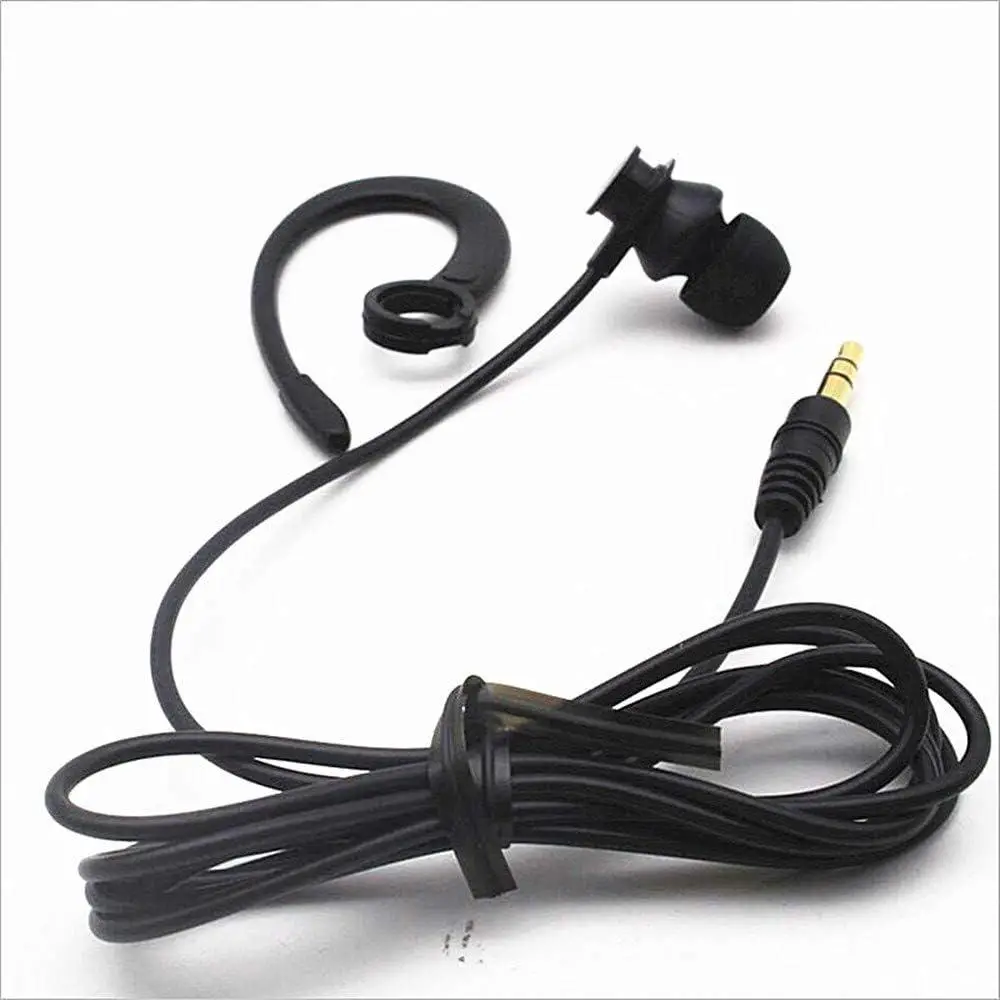
The LINHUIPAD single-side earbud plugs into a 3.5mm jack, runs on a 1.2-meter fixed cord, and carries no microphone. That combination places it in a narrow lane: a wired, one-ear monitoring earphone for people who need ambient sound while audio plays in one canal. The removable, switchable ear hook adds a retention feature that separates it from a plain in-ear tip. The product description on the listing flags it as popular among people with single-sided deafness and those who struggle to keep an earphone seated, which frames the core audience for the design.
What follows is a listening verdict built from owner reports across 884 ratings, where the recurring theme is function over fidelity. This is a practical monitor, and the tuning reflects that aim.
The Numbers First
- Connector: 3.5mm (1/8-inch) analog plug
- Cord length: 1.2 meters
- Configuration: Single-ear mono; no microphone
- Ear hook: Removable; switchable between left and right ear
- Compatible sources: PC, smartphones (listen only), MP3/MP4/CD players, radios, game controllers
- Target users noted by the seller: those with single-sided deafness (SSD) and users who have difficulty keeping an earphone in place
Driver and Acoustics
The sources document no driver type, diaphragm material, or acoustic chamber design for this earbud. What is clear from the product description and owner feedback is that the transducer sits in a compact sealed in-ear housing with a single rubber tip. No passive radiator, vent, or tuning chamber is mentioned in any source. Sound output is mono through the single driver, so any stereo separation a listener hears comes from the source device mixing both channels into one canal, not from the earbud’s own design. For a listener with single-sided deafness, that mono mix means both stereo channels arrive in the one working ear, which is the explicit use case the seller calls out in the product listing.
This content belongs to hifireport.com. Unauthorized reproduction is strictly prohibited.
Tuning and Sound Signature
For a wired earbud in this price tier, the LINHUIPAD delivers a mid-forward, low-impact signature that suits spoken content and casual listening more than demanding music.
Voices and Podcasts
The earbud handles spoken material with clean intelligibility. Several owners who use it for ebook narration, phone calls, and work audio report that voices come through clearly even in the mono configuration. The single-driver output mixes both channels into one ear, which works well for dialogue-heavy material where spatial placement matters less than clarity. A reviewer listening to podcasts on an older MP3 player described the output quality and volume as fine for that use, and the stereo device output unified into one ear was a welcome convenience. Another owner using it for phone calls found the sound quality adequate, with the main caveat being a low volume ceiling.
Music and Bass
Music performance is the weaker half of the signature. Multiple reviewers flag a low volume ceiling and a thin, underpowered bass response. One owner described the sound on a second unit as “tinny,” and another noted very low volume capability with not much bass at all. A PS4 gamer compared the output to quality headphones and found it noticeably quieter. For casual background listening to podcasts or light music on a phone, the output is adequate. For anything that relies on low-end weight, dynamic range, or extended listening in a quiet room, the earbud falls short of what a dedicated two-ear set delivers. An owner with single-sided deafness who expected to recover both stereo channels in the working ear found the output low and distorted when driven by a small personal radio, though performance improved noticeably when the same earbud was connected to a computer.
Getting the Fit
Insertion is firm and deliberate. Owners consistently report that the earbud has to go deep into the canal before it seats properly and audio registers. The rubber tip grips tightly; the bud does not sit loosely, and one reviewer had to “really shove it hard” to get it in. This tightness becomes an advantage during movement. The bud stays in place during brisk walking, and a plane traveler found it more secure than airline-provided earbuds on long flights. One owner also noted that the earbud works well for falling asleep to a movie while sleeping on your side, a use case where the hook keeps the bud from pressing into the pillow or rolling free.
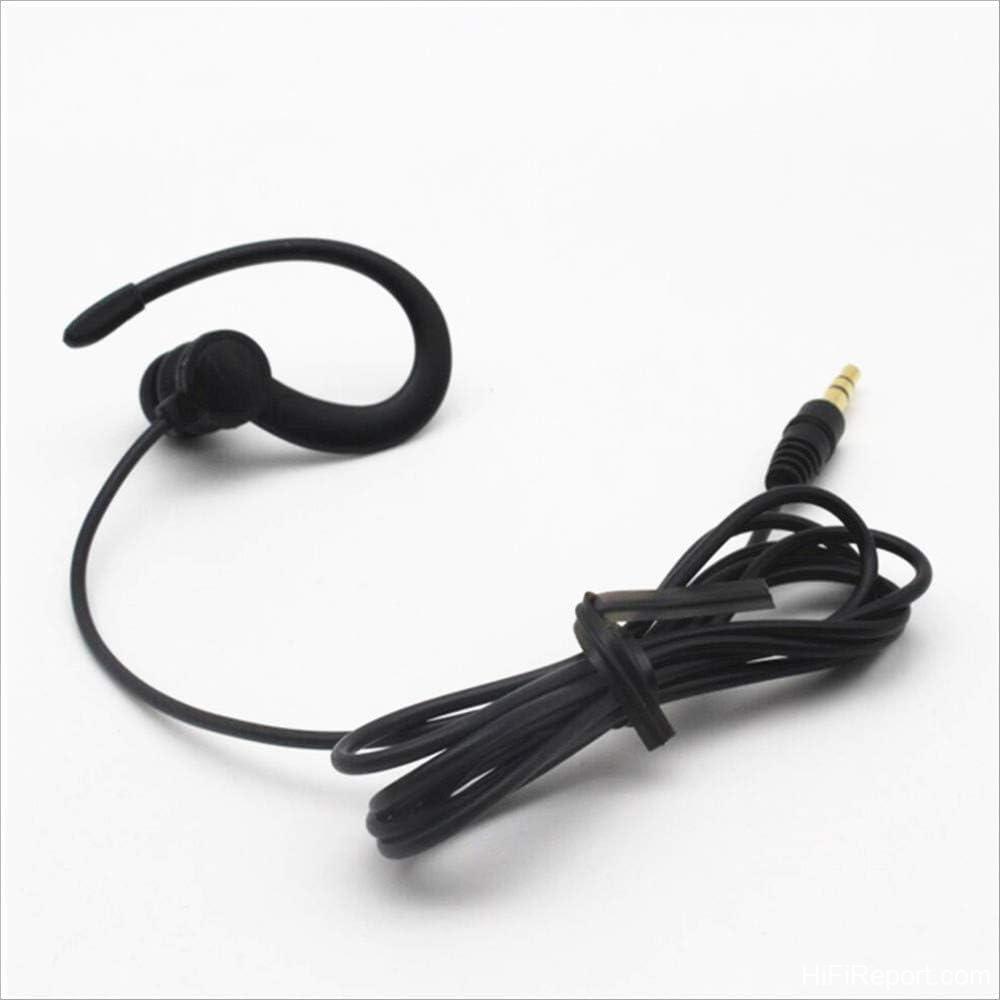
The removable hook clips over the top of the ear and adds a second retention point. The hook is described as soft and comfortable, without irritation or rubbing. Users can also detach the hook entirely and run the earbud as a standard in-ear tip, though in that mode retention depends on the rubber tip’s grip alone. One owner noted the hook does not swivel, which they considered a plus for stability. The hook joint is rigid enough to survive a removal and reattach to the opposite ear, though repeated cycling may eventually stress the connection.
Cable and Build
The 1.2-meter cord is fixed to the earbud; there is no detachable-cable design. A reviewer who wrapped the cord around a music player during storage caused the unit to stop working, and that set lasted roughly four months before failing. A second set held out about six months with daily use. The fixed, non-detachable cable makes the internal wiring vulnerable to repeated flexing at the plug joint, particularly when the cord is coiled tightly around a phone or MP3 player.
The housing itself is described as sturdy for its class. The unit arrives as a one-piece assembly, and the hook joint is rigid enough to survive at least one removal and reattachment without visible stress. There are no inline controls on the cord: no volume slider, no track button. Every adjustment to volume or playback must happen on the source device, whether that is a phone, tablet, or computer. One owner who purchased multiple units noted that there is no separate replacement hook sold on its own, meaning a cracked hook requires replacing the entire earbud.
Time With the Music
Owners who use this earbud for practical listening tasks report a consistent, unglamorous experience that fits a specific set of daily routines.
Gaming is one common use. A PS4 controller user plugged the earbud into the controller to hear in-game audio while keeping the opposite ear open to room noise. The mono mix was sufficient for casual positional awareness, though the volume ceiling was lower than dedicated headphones and the owner could not fault the earbud for it given what it is.
Phone calls and ambient awareness form another use case. An owner who stashes the earbuds in multiple locations uses them at home and out, often while kids, pets, and kitchen timers go on around the room. The single-ear configuration lets them hear a doorbell or a call coming through across the room while music plays in one canal. A work rule that allows only a wired earbud in one ear made this the obvious tool for that environment. The same owner also noted the earbud is handy when expecting an important phone call from across the room while simultaneously listening to music on a PC.
Walking and travel round out the list. The earbud held its position during brisk walks without falling out, and the hook prevented the bud from swinging free. A plane traveler chose it over airline-provided earbuds, finding it more durable and easier to stow for the next flight. The ear hook stayed in place during long rides, and the owner re-used the same pair across multiple trips.
Where the earbud fades is anywhere that demands volume, bass, or long-session comfort. Tight insertion can become uncomfortable after extended use, and the lack of inline volume control means every adjustment requires reaching for the phone or computer. For a two-hour podcast session at a desk, the need to grab the device for volume shifts adds friction that a two-ear set with buttons would avoid.
What Owners Say
The aggregate rating sits at 4 out of 5 across 884 reviews, a score that reflects a product doing exactly what it promises: a single-ear wired earbud with a removable hook and a fixed 1.2-meter cord. The split in feedback is clear and consistent.
Praise centers on retention, convenience, and the hook design. Owners who need one ear open for work, safety, or personal preference find the bud holds firmly during movement. The removable, switchable hook is a frequent highlight, with several users noting they initially did not realize it could be detached and reattached to the opposite side. The sturdy one-piece housing and the fact that the unit arrives assembled earn recurring mentions, and multiple buyers ordered a second or third pair after the first set performed well. The seller’s listing also positions the earbud as a go-to option for those with single-sided deafness and for people who simply cannot keep a standard earphone seated, and the review base reflects both groups.
Complaints cluster around three areas. Volume and bass are the most cited audio limitations; the earbud tops out at a modest level and lacks low-end punch, which limits its use for music. Durability is the second concern: owners report units failing within a few months, particularly when the cord is stored wrapped around a device. The third is fit difficulty; the bud needs a firm, deep insertion that some find awkward, and the absence of inline controls means volume changes require reaching for the source device. One owner who is deaf in one ear expected both stereo channels in the working ear and found the output low and distorted when connected to a small personal radio, though performance improved when plugged into a computer.
Strengths and Weaknesses
Strengths
- Removable, switchable hook keeps the bud secure during walking, travel, and desk work
- Tight in-ear fit prevents accidental drop; the bud also works as a standard in-ear when the hook is removed
- Mono configuration leaves the opposite ear open for ambient sound, useful in open offices and around children
- Compatible with a wide range of 3.5mm sources: PC, phone, MP3/MP4 player, radio, game controller
- Sturdy one-piece housing; the hook joint survived at least one removal and reattach in owner testing
Weaknesses
- Low volume ceiling and thin bass limit music use to casual background listening
- No inline volume or track controls on the cord; all adjustments require the source device
- Fixed, non-detachable cable is vulnerable to stress when wrapped tightly during storage
- Tight, deep insertion can be uncomfortable and requires firm pressure to seat
- No separate replacement hook is sold; a cracked hook means replacing the entire earbud
Verdict
The LINHUIPAD single-side earbud serves a specific listener: someone who works, walks, or games with one ear and needs ambient awareness without removing a headphone. The profile is the open-plan office employee, the parent juggling a podcast and a kitchen timer, the PS4 player who wants to hear the door, or the person with single-sided hearing loss who plugs into a PC and needs a reliable, inexpensive monitor. For that listener, the earbud does the job. The hook stays in, the mono mix is clean for voice, and the 1.2-meter cord reaches from a desk to a phone without strain.
This content belongs to hifireport.com. Unauthorized reproduction is strictly prohibited.
The profile who should skip it is the music-first listener. Bass response is thin, volume is modest, and the lack of inline controls makes long sessions fiddly. If the use case is pure listening in a quiet room with no ambient need, a standard two-ear set with better drivers and an inline remote is the smarter tool.
Specifications
- Brand: LINHUIPAD
- Connector: 3.5mm analog plug
- Configuration: Single-ear (mono)
- Microphone: None
- Cord length: 1.2 meters
- Ear hook: Removable; switchable left/right
- Tip type: Standard in-ear rubber tip
- Cable detachability: Fixed (non-detachable)
- Inline controls: None
- Compatible sources: PC, smartphones (listen only), MP3/MP4/CD players, radios, game controllers
- Aggregate rating: 4 out of 5 (884 reviews)
Questions Owners Ask
Can I switch the ear hook from my left ear to my right ear?
Yes. The hook detaches from the housing and reattaches to the opposite side. One owner confirmed the joint is sturdy enough for at least one removal and reattach without visible damage, though repeated cycling may eventually stress the connection.
Will this earbud work with a small radio or portable speaker?
It plugs into any 3.5mm output, but one owner with a personal radio reported low, distorted sound from that source. The same earbud performed more cleanly when connected to a computer. The earbud matches better with higher-impedance sources like PCs and phones than with low-output radios.
Is there an inline volume control on the cord?
No. The 1.2-meter cord carries no buttons or slider. Volume and track changes must be made on the source device, whether that is a phone, tablet, or computer.
What happens if I wrap the cord around my phone for storage?
One owner stored the cord wrapped around a music player and the unit stopped working after roughly four months. The fixed, non-detachable cable is vulnerable to repeated flexing at the plug joint. Coiling the cord loosely or letting it hang free extends the life of the internal wiring.

- The Ear hook can be removable to fit your left or right ear,you also can throw away the ear hook then it will be a standard in-ear earphone
- Enables users to safely keep one ear open to surrounding activities while listening to audio
- Very popular for those with single-sided deafness (SSD) and those who have a hard time keeping an earphone in their ear