
Linn Majik DSM Integrated Amplifier Review
For many Hi-Fi enthusiasts, including myself, the name Linn holds a special place.
Do you remember those Linn components from the 1990s? Their designs were square, minimalist, yet enduringly stylish. In the era dominated by CDs, who didn’t dream of owning an Ikemi or a Karik + Numerik combo? Around the same time, Linn also offered an entry-level integrated amplifier, modestly rated at 33W, but possessing a natural, balanced, and musical sound. Paired with the equally accessible Mimik CD player, it formed a highly regarded, value-driven system. That integrated amplifier was the Majik.
Two Decades of Linn Evolution
Over two decades have swiftly passed. During this time, Linn weathered a severe financial crisis that nearly led to the company’s collapse. Yet, two models have steadfastly remained, bearing witness to Linn’s journey through highs and lows: the iconic Sondek LP12, practically synonymous with the Linn name, and the Majik, a product line with a history spanning nearly a quarter of a century.
The Majik has evolved from its origins as a purely analog integrated amplifier, step by step. First came the integration of a DAC, followed by the addition of streaming capabilities, and later, the incorporation of room correction technology.
This evolutionary path mirrors Linn’s technological trajectory.
After navigating the crisis of 2006, Linn remarkably rebounded the following year with the launch of the DS series, signifying “Digital Streaming”. As a pioneering brand in digital streaming, Linn embarked on writing a new chapter in its history.
Their Klimax DS streamer was a rare breed at the time: a true high-end streaming source capable of supporting 24bit/192kHz master-quality digital playback.
Concurrently, Linn launched Linn Records online, offering 24-bit high-resolution digital files for purchase and download.
At a time when CD sales were plummeting and digital downloads were on the rise, Linn astutely seized the moment, strategically entering the market and swiftly establishing itself as a leader in digital streaming.
The DS series launched in 2007 included not only the flagship Klimax DS but also the mid-range Accurate DS and the entry-level Majik DS.
Initially, the Majik DS amplifier and streamer were separate units. However, Linn soon integrated streaming functionality into the amplifier, giving rise to the Majik DS-I and subsequently the Majik DSM, consistently upholding the concept of digital integration.
Over the past decade, it has become one of Linn’s best-selling products.
Minimalist and Modern Design
For over a decade, the Majik’s appearance remained largely unchanged, until Linn recently unveiled the fourth-generation Majik DSM. This new iteration visually signals a significant departure.
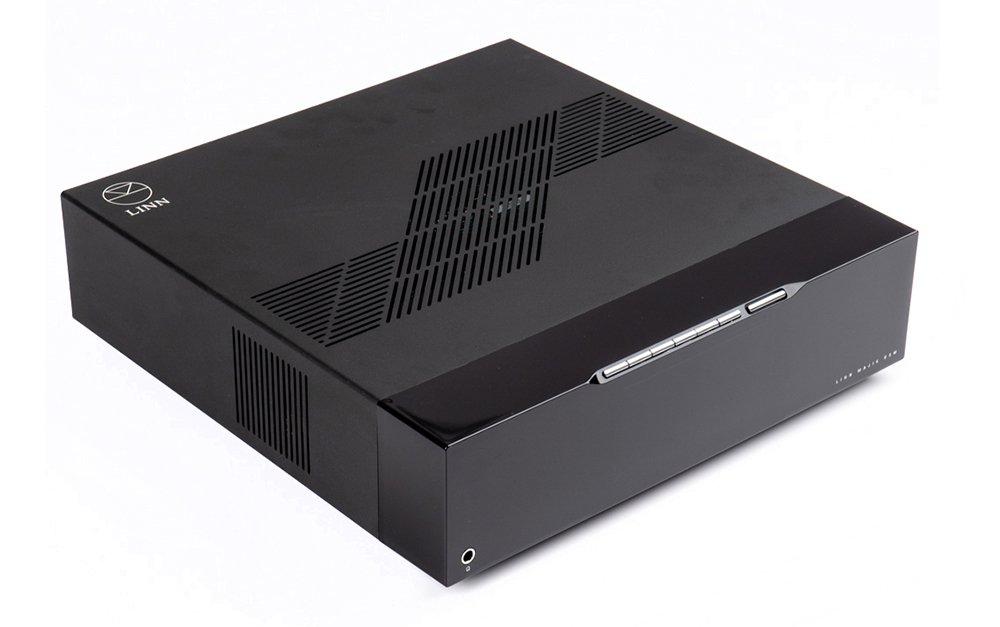
The full-width acrylic front panel exudes an understated yet mysterious aura. Even when powered on, its presence remains subtle, with only a soft blue light emanating downwards from the base, reflecting off the surface below to indicate that the Majik DSM is active.
Across the top of the panel, a row of slim, silver buttons is arranged. Apart from the three-way control on the far right, used for menu navigation and volume adjustment, the remaining six are preset function keys.
Inconspicuously placed in small lettering on the lower right of the panel is “Linn Majik DSM,” while the white Linn logo is subtly applied to the rear left corner of the top cover. The overall aesthetic is one of extreme minimalism, imbued with a modern, enigmatic charm.
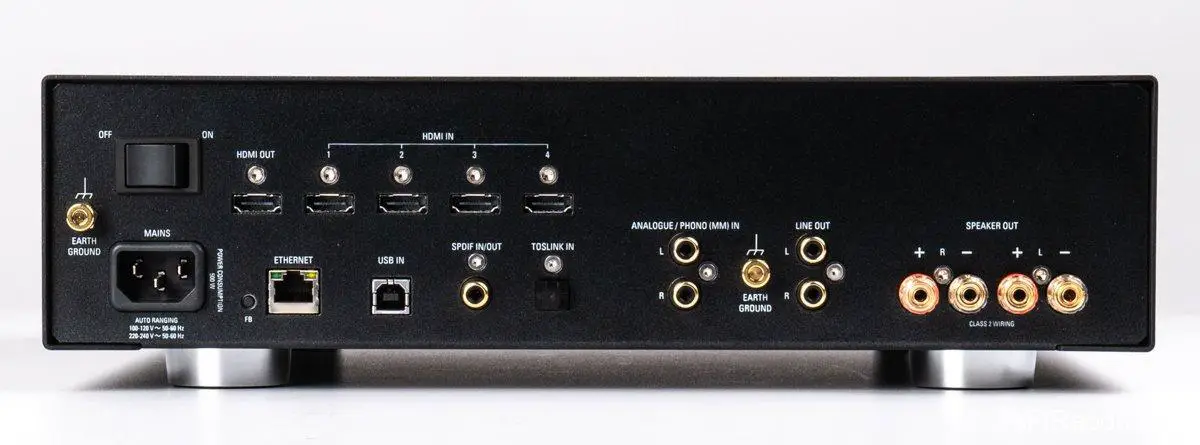
Input connectivity has been streamlined even further. The previous array of analog inputs has been largely dispensed with, leaving a single RCA input, configurable for either line-level or MM phono. The factory default is line-level, and users intending to connect a turntable will need to adjust this setting via the web interface.

Is one analog input sufficient? Linn isn’t engaging in that debate.
If you have a multitude of analog sources to connect, the Majik DSM is likely not your intended choice.
Selecting the Majik DSM signifies an alignment with Linn’s philosophy: we are in the digital age, the streaming era.
Simplicity for Modern Living
This conviction is further reflected in the reduced number of digital inputs.
Earlier Majik DSM models featured three coaxial and three optical digital inputs, along with both coaxial and optical digital outputs.
Furthermore, Linn had, unusually for them, included HDMI inputs and output on the Majik DSM, allowing HDMI-equipped digital sources to route audio through the Majik DSM, with video passed through to a television via HDMI out.
Previous iterations of the Majik DSM seemed to position itself as a central hub for an audio-visual system. However, this fourth-generation model has closed off many of those avenues.
The new version retains only one coaxial and one optical input, with the optical input being input-only, while the coaxial input can be configured as either input or output.
Additionally, a USB Type-B input has been added for connecting a computer for streaming, while the RJ45 Ethernet port remains. The HDMI section, with 4 inputs and 1 output, is carried over.
This configuration reveals Linn’s recognition that home audio-visual system setups have evolved. Excessive input options are deemed unnecessary and can be omitted, leaving only the essential connections.
Simplify, simplify, and simplify again.
Having undergone functional simplification, the Majik DSM’s product positioning becomes clearer and more aligned with the needs of contemporary households.
If multi-channel sound is not a requirement, and a straightforward two-channel system is desired, devices like Apple TV, Chromecast, set-top boxes, and gaming consoles such as Switch and PS5, all with HDMI outputs, can seamlessly connect to the Majik DSM. This setup caters to music listening, television viewing, and gaming needs.
For those with a CD player or a turntable, the coaxial digital and RCA analog inputs provide sufficient connectivity.
Input options should be adequate, not excessive.
Dedicated to the Digital Streaming Generation
Linn envisions Majik DSM users primarily engaging with streaming.
Their own website offers high-resolution audio files, reflecting their early adoption and support of streaming.
For Roon users, it is Roon Ready certified.
Linn’s App integrates online streaming services such as Qobuz, Tidal, and Calm Radio, and the Majik DSM itself supports Spotify Connect. Subscribers to these services can effortlessly enjoy online music.
Even without subscriptions or Roon membership, users can still access music files stored on a NAS within their local network via the Linn App’s intuitive folder browsing.
If this resonates with you, then the Majik DSM is designed for your home.
Class D Amplification with Switched-Mode Power Supply
As a classic Linn amplifier model, the Majik DSM’s amplifier section delivers 50W into 8 ohms and doubles to 100W into 4 ohms.
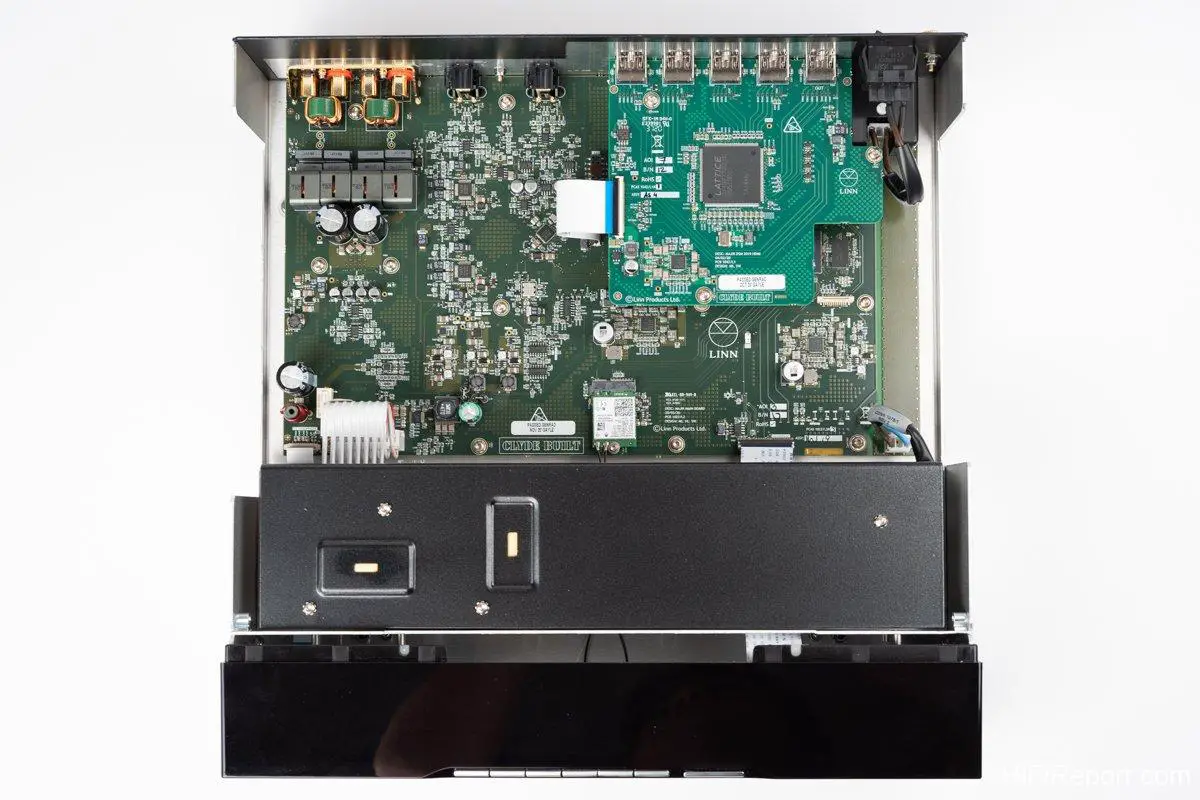
Linn adopted Class D amplification and switched-mode power supplies in previous generations. This design approach allows Linn equipment to maintain a compact form factor, operate at low temperatures, and minimize energy consumption.
Two days after the Majik DSM arrived, I needed to move it downstairs for listening tests.
Upon lifting the carton, I immediately set it back down, wondering, “Is there even anything inside? It’s incredibly light!” I opened the box to confirm the unit was indeed present.
Later, I asked colleagues to try lifting it, and everyone had the same reaction.
Checking the specifications, the Majik DSM weighs a mere 4.1 kilograms.
App Download and Account Binding
Before first use, two setup steps are necessary.
Firstly, download Linn’s dedicated App on your smartphone or tablet. For iPhones or iPads, search for “Linn” in the App Store. For Android devices, Macs, or Windows computers, download the “Kazoo” App.
This App will serve as the control interface for the Majik DSM.
Secondly, visit the Linn website (linn.co.uk) and find “Linn Account” in the website footer menu to create your personal Linn account.
After account creation, use either the Kazoo or Linn App to bind the device to your account.
This account binding unlocks full operation and configuration of the Majik DSM, including setting up the preset buttons, configuring the RCA input function, adjusting input levels, display settings, maximum volume limits, left/right channel balance, and more.
These customizable features are for Linn Majik DSM owners to explore at their leisure.
Engaging Space Optimisation
Beyond these settings, the Majik DSM features a significant function: Space Optimisation, Linn’s proprietary room correction technology.
While some audiophiles may be skeptical of DSP processing, experience demonstrates that room correction can be genuinely effective, especially when speaker placement is constrained and far from ideal.
As the review Majik DSM unit was already account-bound, I couldn’t personally test Space Optimisation.
However, I can share two firsthand experiences.
Several years ago, Linn’s 520 digital active loudspeakers were delivered to our editorial office, and a demonstration of the setup process was given.
Initially, the speakers were placed in our usual speaker position, away from the rear and side walls, what Linn terms “Ideal Speaker Position.”
After inputting room parameters, Linn’s cloud-based processing calculated the Space Optimisation profile for that position and sent the new parameters to the Linn system.
Next, the speakers were moved back against the wall, a placement considered less than ideal by audiophile standards, but common in many homes. We reran the calculation and compared the results.
Even with speakers in the “ideal position” but without Space Optimisation enabled, the Linn system already produced a balanced and pleasing sound. However, engaging Space Optimisation noticeably improved focus, imaging, solidity, and layering.
With the speakers placed against the wall, the sound became flatter, and resonances from the building’s drywall back wall introduced unwanted harshness.
However, with Space Optimisation applied, a slightly more forward soundstage and clearer image outlines were evident, representing a significant improvement over listening directly with wall placement.
Of course, the soundstage and imaging were still not as natural as with the speakers in the ideal position, but it was a substantial improvement over the uncorrected wall-mounted placement.
This demonstration convinced me of the effectiveness of Linn’s Space Optimisation technology.
Another experience occurred at the Tone Hi-Fi audio shop in Tainan.
I was invited to host a music seminar at Tone Hi-Fi’s second-floor space. Mr. Lin, the shop owner, is a Linn enthusiast, and the system used for the seminar was Linn’s Accurate DSM driving JMR Voce Grande speakers.
Before the event, Ms. Du from Tone Hi-Fi meticulously fine-tuned the Space Optimisation settings, repeatedly listening to specific musical passages and making subtle adjustments to the room data.
Tone Hi-Fi emphasized that after entering accurate room dimensions, further fine-tuning of the data based on listening is beneficial.
Numbers are static, but human perception is dynamic. Personal listening and experimentation are essential to maximize the effectiveness of Space Optimisation.
While unable to personally test Space Optimisation on the Majik DSM in this review, these two experiences underscore my belief in its efficacy.
For users whose speakers must be placed in less-than-ideal positions or in acoustically unbalanced rooms, Space Optimisation offers valuable assistance in enhancing musical enjoyment.
Lively, Open Sound with Clarity
The Majik DSM is both convenient and intuitive to use.
Connecting speakers, power, and network cables, and opening the Linn App instantly located the Majik DSM, as did Roon. Streaming music could then commence immediately.
Even without Space Optimisation engaged, the Linn Majik DSM’s sonic performance is captivating.
Its sound is lively and open, with a wide soundstage, clear sonic outlines, precise imaging, rich detail, and a vibrant sheen.
The sonic texture is dense and focused yet refined. Initially, it might seem slightly lean in terms of body, but this characteristic contributes to its bright, transparent quality.
It’s akin to the challenge of finding a coffee bean that simultaneously exhibits bright, lively fruit acidity and rich, lingering chocolate notes. Similarly, Linn has chosen a specific sonic path for the Majik DSM.
Upon each power-up, the volume defaults to 50, a moderate to slightly low level. In most households, even in the evening, this setting, paired with speakers around 88dB sensitivity, delivers full musical information without being intrusive.
At this gentle volume, the Majik DSM retains complete musical detail and excels in its high resolution and delineation of sonic contours.
Increasing the volume to 65 or higher unleashes the music’s energy. The Majik DSM sounds expansive and generous, and the music becomes more vibrant and engaging.
Clear and Bright Sonics
Listening to John Williams’ 2020 recording with the Vienna Philharmonic, the orchestra’s exceptional ensemble playing elevates this album above any of Williams’ previous recordings.
The Majik DSM presents the Vienna Philharmonic’s masterful performance with a clear and transparent sonic picture.
The piece opens with a four-note motif on the French horn, followed by flute and oboe hinting at the theme. Then, harp arpeggios introduce a gentle, flowing prelude, setting the stage for the unveiling of the main theme.
The Majik DSM renders the timbral qualities of these instruments with remarkable clarity. Particularly when the flute follows the French horn with a thematic suggestion, and the oboe enters a beat later, the Majik DSM distinctly delineates the sonic textures of the flute and oboe within this brief woodwind ensemble.
Next comes the thematic declaration, first by violas and cellos, then joined by violins.
John Williams’ arrangement is exquisitely beautiful, and the Majik DSM weaves these dense string textures into a tapestry of sound, shimmering with warmth.
As the theme develops and builds in intensity, the addition of wind instruments enriches the sonic palette and depth, with timpani strikes that are resonant yet precise and articulate.
The Majik DSM’s sonic character is pristine, clean, and refined. The string-led B-section theme is delicate and graceful, while the return of the A-section theme is again vibrant and passionate.
The Majik DSM handles these grand sonic landscapes effortlessly while also preserving subtle details, demonstrating its true value.
Its tonal character leans towards brightness and freshness, lending the music a lively and spirited quality.
Listening to just this one piece is invigorating!
Clean Transparency for Effortless Listening
Its refined and elegant character makes it particularly well-suited for chamber music.
Listening to Yo-Yo Ma and Kathryn Stott’s “Songs of Comfort & Hope” album, also released in 2020, conceived as Ma’s musical offering of solace to a world facing the COVID-19 pandemic, guiding listeners towards inner peace through music.
Listening to the folk song arrangement of “Shenandoah,” the piano initially establishes a steady, rhythmic single note, while the cello hints at the melody with pizzicato notes.
The piano then introduces the main theme in chords, responding to the cello.
The piano’s timbre is rounded and full, while the cello’s sonic outline is clear and defined. The Majik DSM offers a clean and transparent sonic picture, with a slightly bright tonal palette that imparts color and vibrancy to the music, yet without sacrificing timbral accuracy.
The piano notes are full-bodied and dense, and the arpeggiated chords towards the end reveal the Majik DSM’s speed and resolution. Yo-Yo Ma’s signature cello tone, often described as having a rich, nasal quality, is rendered with clarity and without muddiness, making for exceptionally pleasant listening.
In the closing moments, the piano gently punctuates the music, leaving a lingering resonance that naturally fades into the air—truly beautiful!
Vivid Instrumental Textures, Especially Metallic
Listening to Bruce Springsteen’s Pete Seeger tribute album, “We Shall Overcome – The Seeger Sessions.”
Also featuring “Shenandoah,” this version, recounting the feelings of pioneers crossing the Mississippi River, is imbued with a weathered, ruggedly resilient character, in contrast to Yo-Yo Ma’s elegant interpretation.
This arrangement is distinctly “American,” with harmonica, mandolin, fiddle, and drums evoking the vastness and hardship of the westward expansion.
The textural qualities of these accompanying instruments are remarkably prominent, and the Majik DSM clearly presents this sonic landscape. Instrumental timbres are vividly rendered.
Springsteen’s raw, gravelly vocals, with somewhat imprecise pitch, but with the epic spirit of a bard, imbue this classic folk song with a sense of conquering power.
Seeger’s classic “We Shall Overcome,” as interpreted by Bruce Springsteen, takes on a different character.
The richer instrumentation and full, robust recording, are a departure from the more declamatory, declarative performance style of Pete Seeger and Joan Baez’s classic versions.
Particularly striking is the tambourine that appears midway through the song. The percussive sound of the metal jingles spraying outwards is incredibly lifelike.
The Majik DSM’s excellent high-frequency performance is particularly adept at portraying the sounds of metallic instruments.
Clean and Defined Bass
Is 50W into 8 ohms, doubling to 100W into 4 ohms, sufficient power? This is a difficult question to answer definitively, as it depends on the speakers used, room size, and listening volume preferences.
I used it with Dynaudio Contour 60s at the office and JMR Abscisse Jubilees at home, both 4-ohm speakers. In the larger listening room at the office and in my apartment living room, it delivered satisfyingly rich sound at exhilarating volumes.
Another example is an arrangement of the fourth movement of Mahler’s Fifth Symphony for organ and violin.
The original movement is scored for strings only, allowing the wind and percussion sections of the orchestra a ten-minute rest. The strings express Mahler’s deeply romantic and sentimental slow movement.
This arrangement features violin as the primary melodic voice, while the organ’s rich timbres and broad frequency range multi-dimensionally supplement the violin’s melodic lines with color and depth, constructing a grand sonic architecture.
When the organ delves into the lower registers or builds cloud-like dense harmonies, the Majik DSM shows no signs of strain. Instead, it maintains a consistently clear and transparent sonic picture, distinctly separating the violin’s melodic lines from the organ’s high-pitched pipework.
Is the Majik DSM’s power adequate? This is not a concern you need to have. Simply focus on selecting music on Tidal and Qobuz.
A New Generation of Linn
As Linn’s entry-level product, the Majik DSM not only offers a wealth of features and practical power output but also delivers outstanding musical performance.
Its liveliness, vibrancy, enthusiasm, openness, transparency, and richness present music in a dynamic and brightly illuminating manner.
The warmer, smoother, and slightly softer sonic character of earlier Linn products seems absent, replaced by a more modern, agile, and vibrant sonic signature that is equally captivating.
This is a new generation of Linn, and this is Linn for a new generation.
Specifications
* Type: Digital Streaming Integrated Amplifier
* Output Power: 100W @ 4 ohms; 50W @ 8 ohms
* Digital Inputs: HDMI x 4; Optical x 1; Coaxial x 1 (switchable to digital output); USB Type B x 1
* Analog Input: RCA x 1 (line-level, MM phono switchable)
* Digital Output: HDMI x 1
* Analog Outputs: RCA x 1; 6.3mm phone jack headphone output x 1
* Supported Sample Rates: Up to 24bit/192kHz
* Supported File Formats: FLAC, ALAC, WAV, DSD (64/128), MP3, WMA (except lossless), AIFF, AAC, OGG
* Built-in Streaming Services: Tidal, Qobuz, Spotify Connect, Airplay, Roon, TuneIn, Calm Radio
* Dimensions: 350 x 100 x 350 mm (W x H x D)
* Weight: 4.1kg