
Lumin D3 Review
Several years ago, when Tidal’s lossless streaming began gaining popularity, I decided it was time to invest in my first streaming system. The Lumin D2, their entry-level streamer at the time, quickly caught my eye. Its presence was ubiquitous at audio shows, eagerly adopted as the digital source in numerous exhibit rooms, and frequently spotted in dealer setups.
Upon closer inspection, I discovered that despite being an entry-level product, the D2 offered features and compatibility identical to its higher-end siblings. Beyond its more approachable price point, its sound was warm, smooth, and devoid of distracting colorations, making it remarkably easy for newcomers to build a system that sounded great.
After careful consideration, I became a proud owner of the Lumin D2, and even having upgraded my source since, I still regard the D2 as one of the most cost-effective streamers available.
Through multiple interactions with Lumin’s factory staff, I’ve come to understand that they are fundamentally a technology-driven company, relentlessly seeking ways to refine their products. This drive explains their relatively quick release cycle for new models. Recently, they’ve launched updated mid-range units like the T3 streamer and U2 network transport.
However, their entry-level model, the D2, had remained unchanged for three years, leading me to wonder if Lumin was pivoting towards purely high-end audio and abandoning the entry-level market. It wasn’t until I recently interviewed Angus, Lumin’s International Marketing & Sales representative, that I learned the opposite was true. The D2 was a product they were exceptionally proud of, and they had been continuously working on enhancing its design.
They were simply unwilling to release the D3 until it offered a demonstrably significant upgrade for users.
Design and Features
This brings us to the D3, which benefits significantly from specifications trickled down from Lumin’s higher-tier models, featuring comprehensive upgrades to both chassis and circuit design. At first glance, you might think it looks largely similar to the D2.
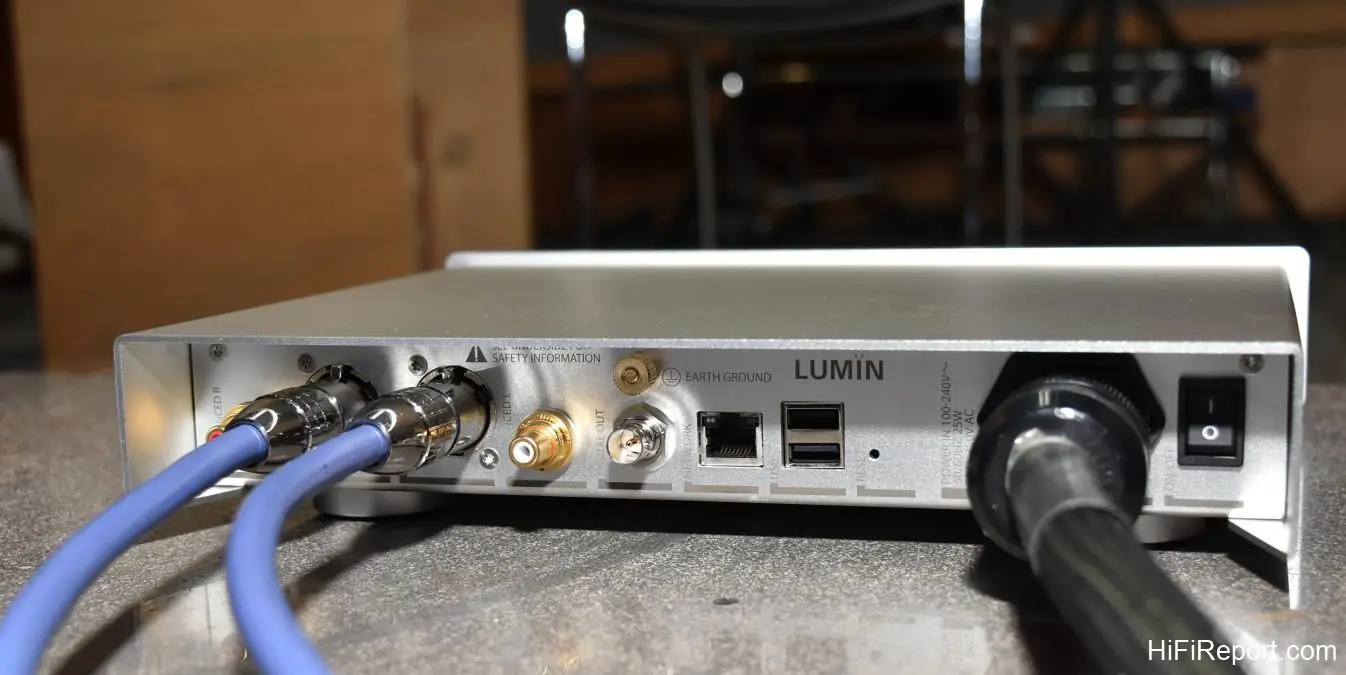
However, upon closer inspection, you’ll notice that the D3’s aluminum surface now features the same anodized finish found on their P1 preamplifier, offering a noticeably better feel than the D2’s brushed texture and being far less prone to fingerprints, ensuring the unit remains pristine. The front panel is crafted from thickened CNC-machined aluminum for improved damping.
Furthermore, the D3 replaces the D2’s steel bottom plate with an aluminum one, enhancing the chassis’s vibration suppression capabilities.
I’ve always appreciated the D3’s minimalist aesthetic. The chassis adopts a compact, half-size, flat rectangular structure, available in both black and silver finishes, making it very friendly for users with limited space. The thick aluminum front panel is CNC-milled and still features Lumin’s signature blue cold-light display. Aside from that, there are no buttons or knobs – it’s incredibly simple.
While the screen can’t display color album art, I actually prefer this clean design; it consumes less power, generates less interference, and simply feels more reliable in use.
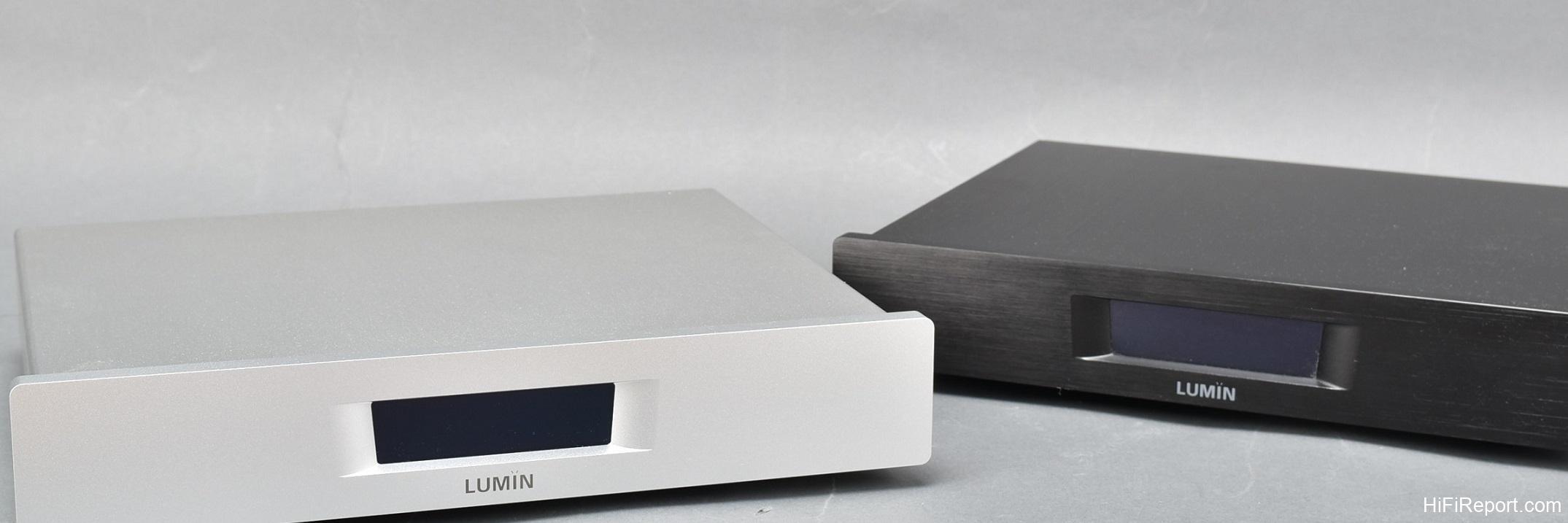
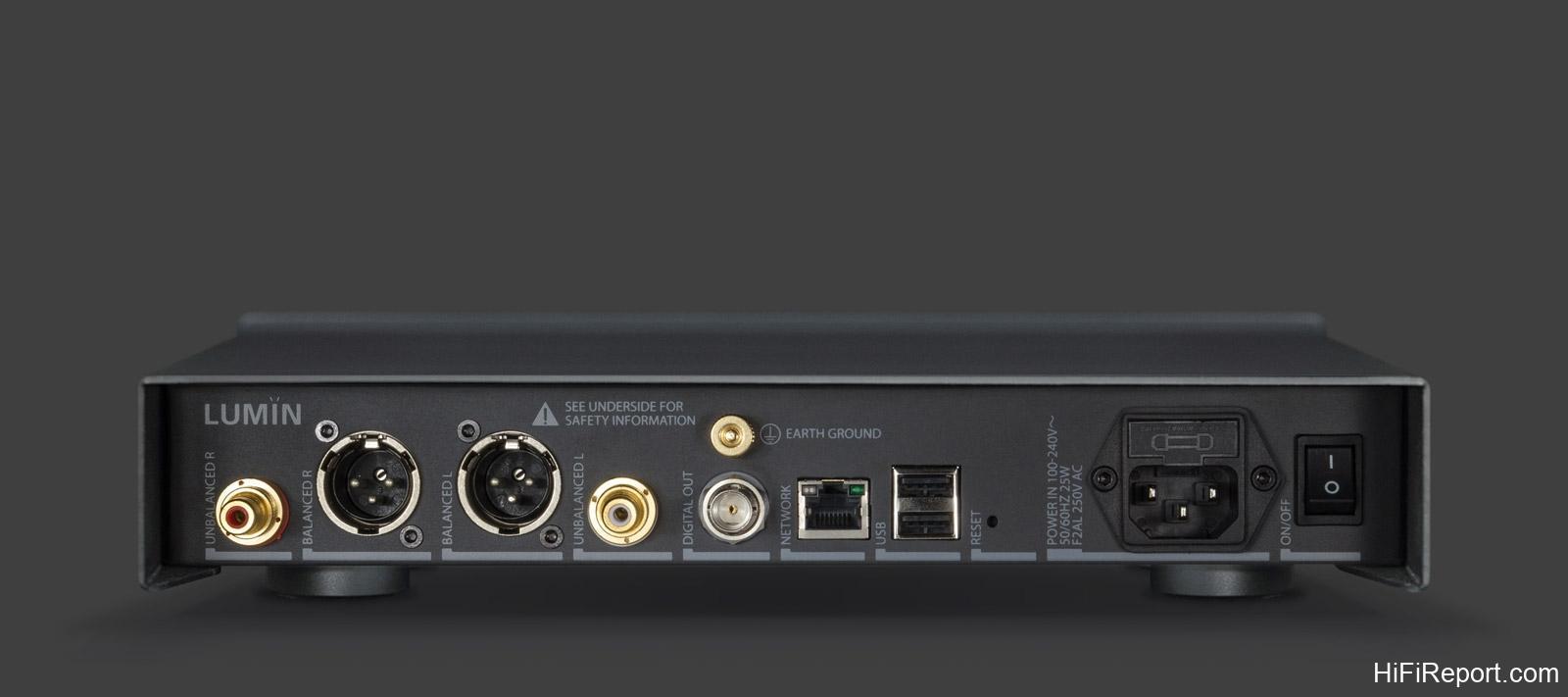
Flipping the D3 around, you’ll find its terminal connections are identical to the D2. Digital inputs include a single 1000Base-T Ethernet port and two USB-A ports, allowing you to connect USB drives for playback. Regarding digital outputs, the D3 differs from the mid-range T3 as it lacks a USB output, offering only a single BNC digital output. Theoretically, the D3 can function as a network transport, but its practicality in this role isn’t as high as the T3’s.
I believe Lumin arranged this layout considering the needs of entry-level users, enabling the D3 to handle streaming, decoding, and preamp functions all in one unit. For analog outputs, it provides both RCA single-ended and XLR balanced pairs, allowing you to connect integrated amplifiers or power amplifiers for a two-channel system, or headphone amplifiers or active speakers for a desktop streaming setup.
Finally, the D3 includes a grounding terminal, increasingly popular for connection to dedicated grounding boxes in the audio market, promising further improvements in sound purity.
Internal Design and Components
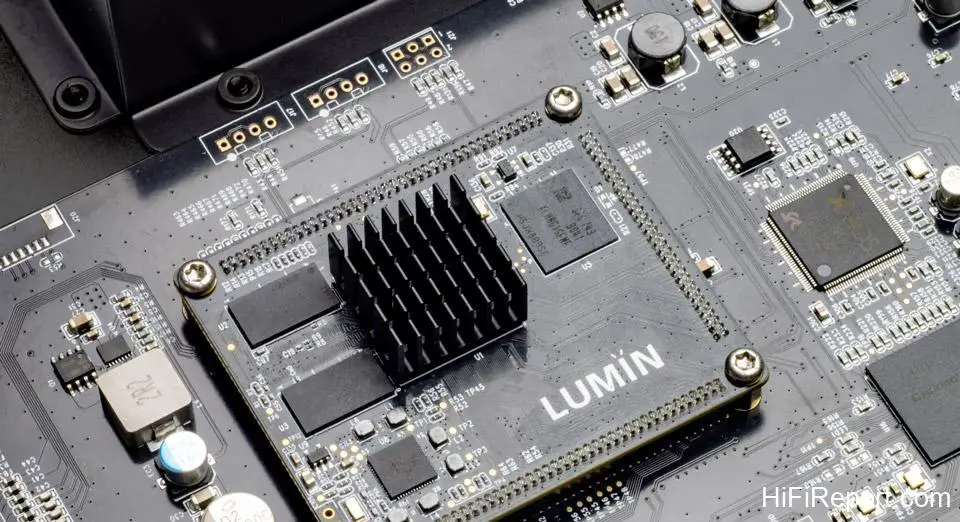
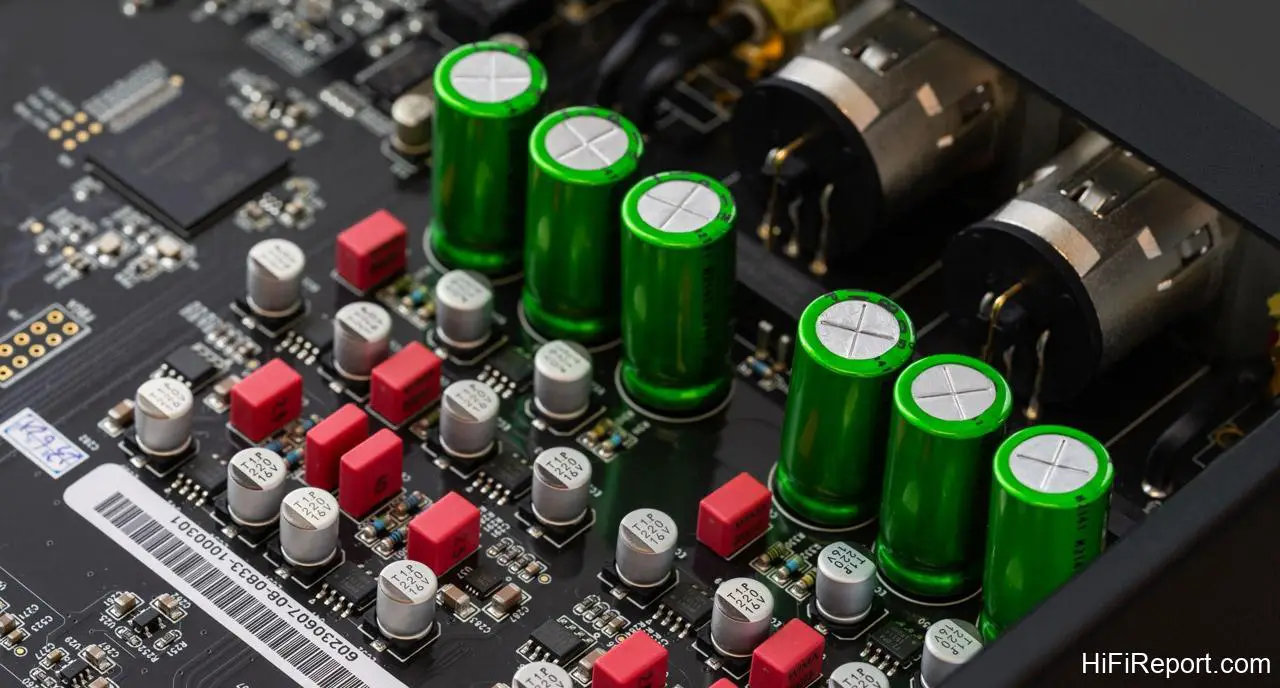
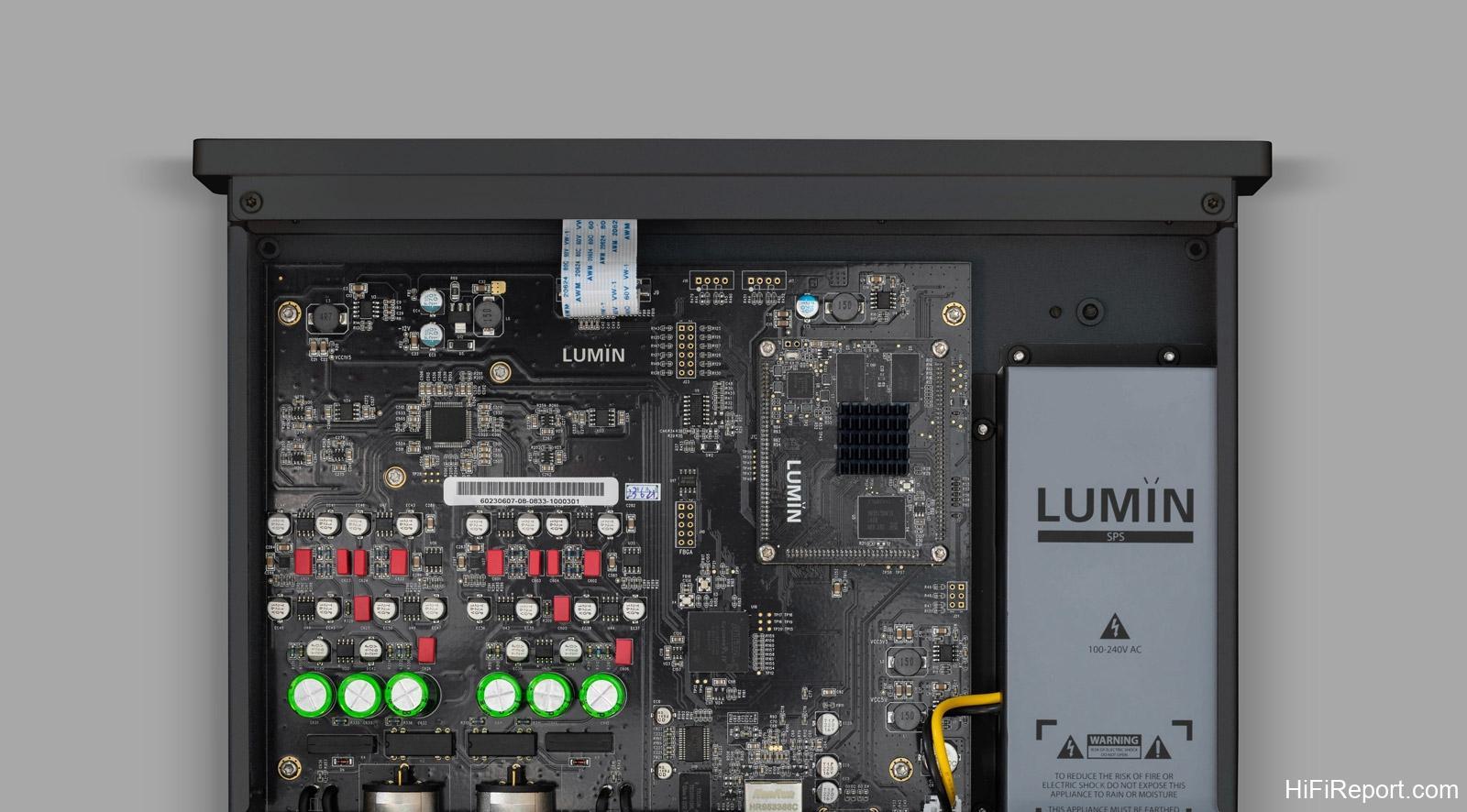
Moving beyond the exterior, the D3’s internal design represents the most significant evolution of this generation. Digital signals entering the unit first pass through Lumin’s brand-new processor, which boasts significantly greater computing power and faster processing speed than the D2, along with larger internal memory and higher resampling rates. A key advantage of Lumin products, as we know, is their ability to continuously enhance functionality through firmware updates.
A more powerful processor ensures higher future software compatibility, keeping the streamer’s feature set at the forefront of the industry.
For decoding, the D2 used one Wolfson WM8741 DAC chip per channel. The D3, however, upgrades to a single 32bit Sabre DAC ES9028PRO chip. This chip supports high-resolution music decoding up to DSD256 and PCM384 (compared to DSD128 and PCM192 on the predecessor). It also features full MQA decoding, capable of unfolding MQA files twice for optimal sound quality. You might wonder if switching from separate DACs per channel to a shared DAC means it’s no longer a fully balanced architecture.
Don’t worry, while the D3 doesn’t use one DAC chip per channel like the T3, the ES9028PRO itself is an 8-channel decoding chip. Therefore, Lumin’s circuit design can still maintain 4 decoding channels in parallel for each stereo channel, effectively providing a fully balanced decoding architecture.
Not only does this result in a significantly higher signal-to-noise ratio compared to the D2, but the D3’s analog output stage also inherits a buffer circuit composed of audio-grade capacitors from the flagship X1 streamer. This boosts the XLR analog output voltage from 4Vrms to 6Vrms. A higher voltage allows for greater flexibility in pairing with downstream equipment and facilitates better dynamic contrast and improved channel separation.

The Lumin App and Connectivity
Since the D3 has no physical controls on its body, a robust app is essential to manage all its functions. This has always been Lumin’s strength, so much so that even Esoteric’s own streamers license Lumin’s software. Naturally, this app offers even greater compatibility when used with Lumin’s own streamers. The D3 provides full UPnP support and, via the official app, can play streaming music from services like Tidal, Qobuz, and Spotify (with future support for Amazon Music).
Recently, support for the popular US streaming platform Plex has also been added. When you select music from various platforms, Lumin compiles them into a playlist. Streaming music is buffered via the app before playback, which also contributes to better sound quality compared to other methods.
The D3 also supports internet radio. According to Lumin staff, they highly value internet radio support and have even set up dedicated servers within their company to ensure the most fluid listening experience for all Lumin users who wish to access lossless Tunein Radio.
Of course, if you prefer not to use the Lumin App, the D3 supports Spotify Connect and AirPlay 2. Crucially, it now includes Tidal Connect functionality, allowing you to control music playback directly from the Tidal App, which makes listening to Tidal’s recommended playlists much more convenient. Additionally, the D3 is a Roon Ready device, so if you have a Roon membership, it can seamlessly function as a Roon endpoint.
Advanced Settings and Control
Beyond streaming playback, the Lumin App offers many adjustable parameters. First is the inclusion of Lumin’s acclaimed Leedh Processing lossless digital volume control. This is a 32-bit digital volume control system designed by Lumin specifically for their streamers, aimed at preserving musical detail while maintaining the highest purity with minimal attenuation. This allows the streamer/DAC to function as a streaming preamplifier, enabling direct connection to a power amplifier.
Furthermore, you can choose whether to resample the audio, with any file format convertible up to a maximum sample rate of PCM 352.8kHz or DSD128. Theoretically, higher resampling rates move the sound closer to an analog quality, but the actual effect is best left for users to experiment with.
A noteworthy point is the D3’s digital volume control function. It is enabled by default on new units. If the amplifier, headphone amp, or active speakers you are connecting also have volume control, it’s recommended to turn the volume down to the minimum initially and then gradually increase it to prevent sudden loud bursts that could damage speakers.
Based on my experience, if you’re using the D3 purely as a streaming source feeding into an integrated amplifier, it’s generally best to disable the digital volume control on the D3 and use the amplifier’s volume control to avoid having two volume controls in the signal path, which theoretically should result in better sound quality.
Listening Impressions
For my testing, I used the D3 as a streaming preamplifier, paired with a Keces S300+ power amplifier, driving our long-term reference Pioneer S-1EX floorstanding speakers. I specifically brought in the previous generation D2 streamer for comparison first. Its sound was familiar to me: a warm, smooth foundation, with large musical figures and a sense of intimacy, presenting music in a relaxed, effortless manner. When I switched to the D3, its sonic evolution genuinely astonished me.
Compared to the D2, it elevated transparency, detail, and dynamic impact to an entirely different level. While the D3 retains the D2’s smooth and direct sonic character, it decisively improves upon the D2’s shortcomings!
Many will naturally wonder about the sonic difference between the D3 and the step-up T3. The T3, by comparison, offers a wider and deeper soundstage and a grander musical scale, along with superior transparency and detail. The D3, conversely, presents musical figures with a greater sense of body, and its detail retrieval is more direct and explicit.
This clearly demonstrates Lumin’s product tiering; while the entry-level model may be slightly less featured and refined than the mid-range, it still possesses its own unique and compelling sonic advantages. Regardless of your budget, a Lumin streamer is a worthy investment.
Beginning with jazz legend Cannonball Adderley’s “Live at ‘The Club'” album, the second track “Games” felt like a veil was lifted when switching from the D2 to the D3. The musical background instantly became clearer and more transparent, and the sense of soundstage depth and localization was very three-dimensional.
The audience’s chatter and applause surrounding me were clearly defined in terms of position and distance, creating a realistic spatial effect, as if I were truly present in that dimly lit, bustling jazz club. The saxophone had a very palpable presence, its outlines sharp, and the playing details were directly revealed. I could hear the player’s breath with a sense of intimacy, and the brass’s cutting sound was incredibly penetrating.
This distinct, direct sonic character makes listening to small jazz ensembles feel remarkably live and realistic!
Next, I listened to the French Modigliani Quartet’s performance of Haydn’s String Quartet No. 4. Through the D3, the four string instruments were arrayed before me in life-sized proportion. While the string texture wasn’t of the overly delicate or ethereal type, the lines were solid and full-bodied. The violin lines were clear and transparent, and against the backdrop of the concert hall’s ethereal reverb, the lingering notes always carried a captivating sense of airiness.
Even the faint details of bow contact on the strings were clearly presented. The cello exhibited a tight, crisp bowing texture with no bloated resonance at the end of notes, rendering the subtle body resonance and vibrato expressions incredibly vivid.
This demonstrated the D3’s significantly improved dynamic performance; even in a small chamber music performance, the contrast between soft and loud passages was very pronounced, preventing the quartet from sounding mundane and conveying more passionate emotion and nuanced dialogue between the instruments.
Furthermore, the D3’s bass performance is a particular strength. Control is greatly improved compared to the D2, and transient response is more outstanding. For example, listening to energetic pop music like “One Last Kiss” from Hikaru Utada’s “BAD MODE” album, you feel the fast, precise bass punches, like rapid jabs hitting your chest. The plucked electric bass notes are distinct and articulate, and the energy is controlled with ease, completely devoid of any bloat or heaviness.
This rectifies the slightly soft characteristic in the D2’s mid-bass, resulting in a tight, clean, and incisive texture. Not only is the bass faster, but you also hear more extension and detail. In electronic albums like “Aphex Twin – Blackbox Life Recorder 21f / in a room7 F760”, you can hear clean, deep electronic bass that extends smoothly down to the lowest frequencies with ample quantity. The humming ultra-low frequencies ripple like waves.
Without mid-bass bloom, you can also discern the more intricate rhythmic shifts and surround effects within the track.
Conclusion
After three years of anticipation, the Lumin D3 streamer has certainly not disappointed. Its components and design mirror those of the higher-end T3, allowing the D3 to retain the previous generation D2’s direct, transparent sound and smooth foundation while comprehensively excelling in “audio performance.” If you’re looking to step into the world of streaming audio this year, congratulations!
Because the Lumin D3 streamer is unquestionably one of the most compelling and sincere entry-level products released in recent years.
Specifications
* Product Type: Streaming DAC
* Maximum Support: 32bit/384kHz, DSD256
* DAC Chip: ESS ES9028Pro
* Input Terminals: RJ45×1, USB×2
* Output Terminals: RCA×1, XLR×1, BNC×1
* Supported Streaming: UPnP, Spotify Connect, Tidal Connect, AirPlay 2, Roon Ready, Plex, MQA, TuneIn, KKBOX, QPlay
* Weight: 2.5 kg