
Lumin T3 Review
This year marks a significant product offensive from Lumin, with the simultaneous release of three new components: the P1 streaming preamplifier, the T3 streaming player, and the U2 Mini streaming transport. The P1 represents entirely new territory for Lumin, a brand not previously known for such a versatile device. It’s a preamplifier that elegantly integrates streaming, DAC, and analog input capabilities, even incorporating HDMI passthrough to accommodate two-channel audio from HDMI sources.
The T3 and U2 Mini, on the other hand, are the highly anticipated successors to the popular T2 and U1 Mini respectively. These new models leverage updated hardware and software platforms to further refine and enhance their already impressive functionality and performance.
Of the trio of new releases, the T3 is perhaps the most eagerly anticipated in my view. This isn’t to diminish the allure of the entirely new P1, but rather stems from the T series’ established position as Lumin’s best-selling core range. The T series embodies Lumin’s key technologies and most accurately reflects their current research and development trajectory. Therefore, when presented with the choice between reviewing the P1 or the T3, my decision to focus on the T3 was immediate and unwavering.
New Processing Core
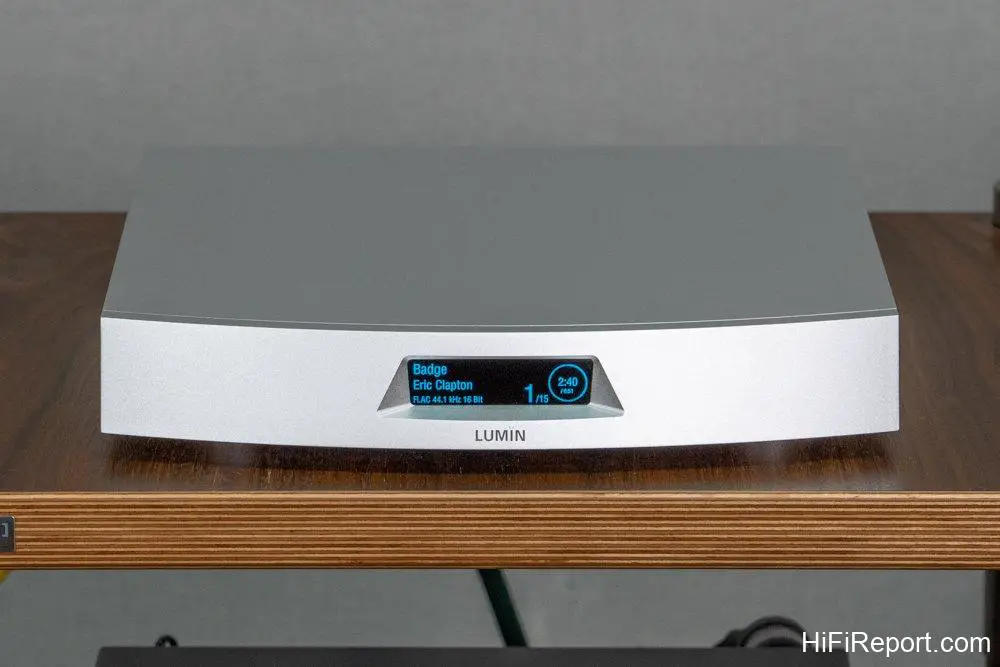
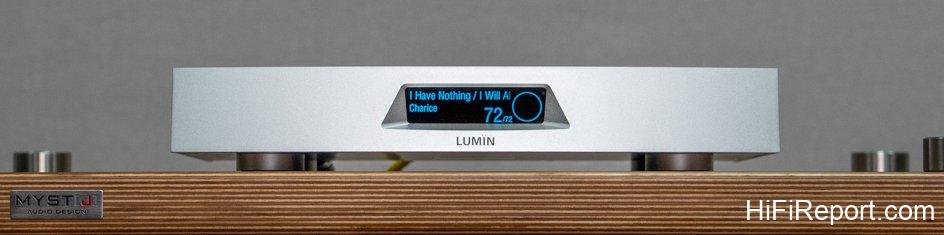
In terms of aesthetics, the T3 maintains a virtually identical appearance to its predecessor, the T2. The signature curved front panel, meticulously crafted from CNC-machined metal, exudes both elegance and a substantial presence. This classic design, inherited from Lumin’s flagship models, is undeniably iconic and integral to the Lumin identity. To alter it would be to compromise the essence of the brand.
So, what advancements does the T3 bring? The most significant difference, and indeed the most crucial upgrade, lies in the implementation of a brand-new processing core. This new core boasts significantly enhanced computational power, directly impacting the unit’s upsampling capabilities. Whereas the T2 could upsample all incoming signals to a maximum of DSD128 before digital processing and decoding, the T3 elevates this capability to DSD256, opening up even greater possibilities for sonic exploration.
This enhanced upsampling is just the immediate benefit of the processor upgrade, with further advantages anticipated in the future. Lumin’s commitment to upgradeability is a key aspect of their product philosophy. By maintaining hardware stability and leveraging software updates, Lumin ensures its devices remain current and feature-rich over time. The T3’s adoption of a more powerful processor ensures it is well-equipped to handle the demands of future software enhancements and feature additions.
Furthermore, the T3’s chassis benefits from the same advanced metal finishing techniques as the P1. This new process results in an even smoother, more refined surface that is less susceptible to fingerprints and easier to clean.
Flexible Upsampling Options
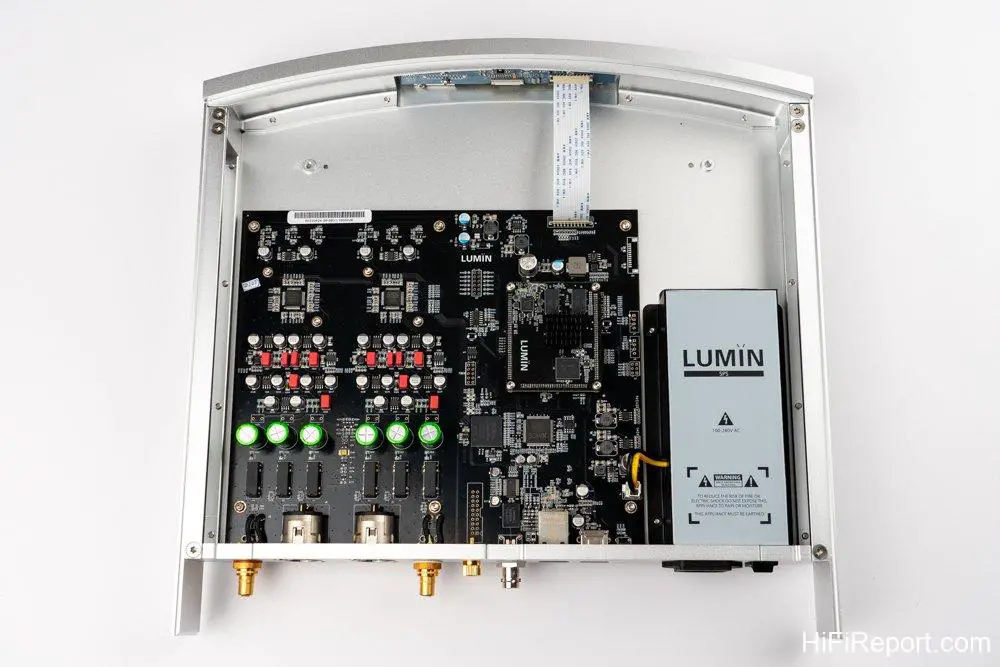
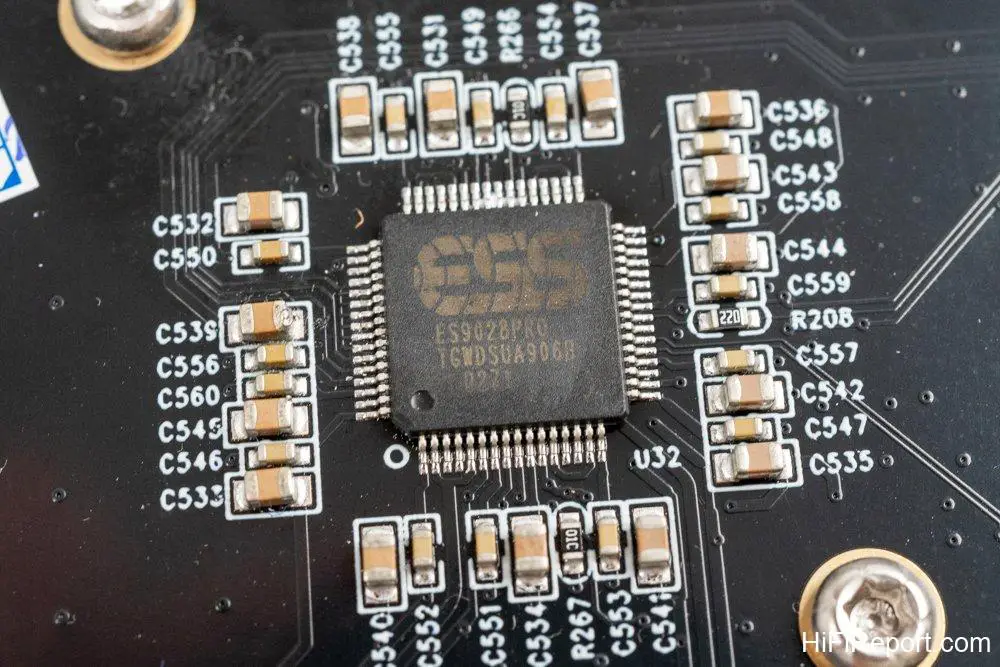
The T3 retains the highly regarded ESS Sabre 32 ES9028Pro DAC chip, supporting playback of PCM up to 384kHz and DSD512 formats. Each channel in the T3 is equipped with a dedicated ES9028Pro DAC in a dual-mono, fully balanced circuit layout. The analog output stage is directly inherited from the flagship X1 model, renowned for its exceptionally low noise floor and wide dynamic range.
Expanding on the aforementioned upsampling capabilities, the T3 offers remarkably flexible upsampling and downsampling options. Regardless of whether the input signal is PCM or DSD, the T3 can perform bidirectional conversion, upsampling to a maximum of DSD256 or 384kHz PCM. For example, you can configure the T3 to upsample CD-quality 44.1kHz PCM to DSD256 output, or conversely, downsample DSD to 44.1kHz PCM or other desired sampling rates.
What is the practical value of this? Firstly, it offers an element of sonic experimentation. While upsampling or downsampling doesn’t inherently add detail to the signal, it can subtly alter the sonic character, providing different listening perspectives. Secondly, it can be genuinely useful. For instance, when streaming compressed audio from services like internet radio or Spotify, upsampling can contribute to a smoother and more refined listening experience.
LEEDH Processing Volume Control
A particularly noteworthy feature of the T3 is the inclusion of LEEDH Processing lossless digital volume control. What exactly is LEEDH Processing? It’s an innovative digital volume adjustment technology developed by Gilles Millot of the French company Acoustical Beauty. Unlike traditional digital volume controls that rely on chip-based calculations, LEEDH Processing employs a sophisticated algorithm to manage volume attenuation. This algorithmic approach ensures that no digital signal information is lost during volume reduction, thus preserving the integrity of the signal for subsequent DAC conversion. This truly lossless operation ensures the DAC receives the most complete signal possible, even at reduced volume levels.
Currently, beyond Lumin, brands such as Solution, Metronome, and 3D Lab have also adopted LEEDH Processing technology. The integration of LEEDH Processing lossless volume control significantly enhances the T3’s versatility.
Lumin’s streaming devices incorporated LEEDH Processing starting from firmware version V13.0. Prior to this, Lumin streamers also offered volume adjustment, but through conventional digital electronic volume control. Consequently, Lumin traditionally recommended prioritizing volume control via downstream components such as preamplifiers or integrated amplifiers. Volume adjustment on the Lumin streamer itself was suggested only when no other volume control options were available in the system.
With the implementation of LEEDH Processing, Lumin now confidently suggests that users can set their preamplifier or integrated amplifier to a fixed volume level and control volume directly through the T3. The ultimate step is to even consider connecting the T3 directly to a power amplifier, thereby achieving the most direct and unadulterated signal path. Beyond power amplifiers, the T3 can also directly drive active loudspeakers, creating a remarkably streamlined system without compromising sonic performance.
Comprehensive Functionality
In terms of streaming capabilities, the T3 upholds Lumin’s tradition of comprehensive functionality. The T3 is compatible with a wide array of streaming protocols and supports numerous streaming service platforms, including UPnP (OpenHome), Roon Ready, Tidal Connect, Spotify Connect, Qobuz, AirPlay, and TuneIn. Control is facilitated via Lumin’s intuitive proprietary app, but you can also seamlessly integrate and control the T3 within your preferred compatible streaming applications.
The T3 also provides full MQA decoding, allowing you to experience MQA encoded music at its highest possible fidelity and sampling rates. Connectivity options are equally comprehensive. In addition to XLR and RCA analog outputs, the T3 offers USB and BNC SPDIF digital outputs. The USB output supports DSD512 Native and 32bit/384kHz PCM, while the BNC output handles DSD64 DoP and 24bit/192kHz PCM. Furthermore, the USB A port can read and playback music files directly from connected USB storage devices, further expanding its versatility.
Monitor-Like Character
The listening evaluation was conducted in my home listening room, utilizing the following system components: Electrocompaniet EC 4.8 preamplifier, NuPrime Evolution One power amplifier, and Aurum Cantus Grand Harmony loudspeakers. Reference sources for comparison included an Auralic Aries G1 wireless streaming transport and a Holo Audio Spring 3 DAC. Roon, running on a NAS, served as the streaming control system.
For network infrastructure, I employed a QNAP QHora-301W wireless router and a QSW-308S network switch, both powered by a Daitron 150W power supply. The T3, Aries G1, and NAS were all connected to the network switch.
During the listening sessions, I maintained a traditional source-preamplifier-power amplifier configuration, using the preamplifier for volume control. Consequently, I disabled the T3’s volume control, setting it to full volume output and selecting the “Normal” output level setting. The T3 offers both “Normal” and “Low” output level settings to accommodate different gain structures and power requirements of downstream components.
All settings are easily managed through Lumin’s dedicated app, which features a simple and intuitive interface, making it remarkably user-friendly and requiring minimal learning.
The sonic character of the T3 resonated with my previous impressions of the flagship X1, sharing a similar profile of clarity, precision, refinement, and well-defined image outlines. However, the T3 presented an even more direct and immediate sonic presentation, perhaps with a touch more youthful energy. While the X1, with its Lundahl output transformers, possessed a certain analog warmth and richness, the T3, with its more direct signal path, leaned towards a more monitor-like character.
Transparent Soundstage, Pure Tonality
My initial and most striking impression of the T3 was its exceptional clarity. The soundstage was remarkably transparent, with a pristine background and pure tonal quality. For example, listening to Eva Cassidy’s “Ain’t No Sunshine,” track 1 of The Dali CD Vol. 4 test disc, with its sparse arrangement of guitar and bass accompaniment, the T3 immediately revealed its exceptionally clean and transparent sonic backdrop. The tonal character was devoid of excessive coloration, exhibiting a crystalline clarity and brilliance, rather than warmth or roundness. There was a sense of rationality, perhaps even a touch of coolness.
Vocals and instrumental images were precisely rendered, with clearly defined outlines and solid focus, resulting in excellent separation and easily discernible instrument placement within the soundstage. Moving to track 2, Tom Jones’ “Did Trouble Me,” the instrumentation becomes considerably richer and more complex, with a wider range of tonal colors. The T3 adeptly revealed the distinct layers of the soundstage, from front to back, creating a palpable sense of depth and stage presence. The subtle organ accompaniment at the beginning, for instance, was rendered with a clear sense of form and precise localization, delicate yet distinct.
As instruments progressively entered the mix, each occupied its own defined space and maintained its individual identity. The relative proportions of each instrument within the soundstage were also clearly conveyed, resulting in a highly organized and meticulously detailed musical picture, akin to a fine-line painting. Furthermore, the T3 highlighted a key aspect of this track: its rich tonal palette. Across the frequency spectrum, from highs to lows, the T3 demonstrated exceptional resolution, allowing the unique timbral characteristics of each instrument to shine through, resulting in an exceptionally vibrant and nuanced musical tapestry.
Dynamic Performance
Another undeniable strength of the T3 is its impressive dynamic performance, validating its design goals of achieving ultra-low noise and wide dynamic range. RR Recordings’ “Big Band Basie” serves as an excellent demonstration of this capability. Big Band ensembles, traditional jazz orchestras, while not numerically large, feature a potent brass section including trumpets, saxophones, trombones, and tubas, alongside drums, percussion, and piano. When unleashed, their dynamic peaks can be truly explosive. RR Recordings, renowned for their dynamic recordings, fully captures the excitement of a big band in this album. If your system fails to convey a sense of explosiveness with this recording, it’s likely due to insufficient listening volume.

Through the T3, I clearly experienced the sensation of sound waves “bursting” forth. The brass section, played with force, and the drums, struck with vigor, delivered wave after wave of energy, faithfully reproducing the almost explosive dynamics captured in the recording. The T3’s clean sonic background further amplified the dynamic contrasts, making for an exhilarating listening experience. Moreover, the T3’s excellent high-frequency extension effectively conveyed the brilliance and sheen of the brass instruments, resulting in a captivating tonal quality. Crucially, the T3 maintained excellent overall balance, with a flat frequency response and smooth, natural extension at both frequency extremes. Consequently, even at high volume levels, the sound remained free of harshness or listener fatigue, simply delivering unadulterated sonic excitement.
Exceptional Resolution
Moving on to “Antiphone Blues,” the T3 immediately revealed the reasons for this recording’s status as an audiophile classic. “Antiphone Blues” features saxophone and pipe organ duets. The presence of a pipe organ dictates a recording venue such as a church or concert hall, characterized by a spacious acoustic environment. Through the T3, the sonic background was remarkably black and clean, deep and expansive. However, the sense of space was not amorphous or boundless, but rather possessed a defined shape and boundaries, rich with reverberation.
Track 2, “Nobody Knows The Trouble I’ve Seen,” opens with a soft organ passage. The low-frequency content, while subtle in volume, was rendered with remarkable clarity, possessing both weight and agility. The recording clearly positions the pipe organ in the distance and the saxophone closer to the microphone, and the T3 faithfully conveyed this spatial relationship. The T3 also revealed the intricate tonal variations of the pipe organ, with different ranks of pipes exhibiting distinct timbral characteristics across the frequency spectrum. Even during complex passages with multiple keys played simultaneously, the T3 maintained clear separation between frequency ranges, preventing any sense of muddiness and further demonstrating its exceptional resolution.

Another key aspect was the saxophone’s tonal character: pure yet richly textured, possessing a desirable fullness. This richness undoubtedly stemmed from the T3’s ability to resolve a wealth of fine detail. Similarly, listening to Arrau’s interpretations of Chopin Waltzes, the T3 rendered the piano with a pleasing warmth and a fluid, almost liquid quality, entirely free of dryness. The piano tone seemed to shimmer and glow, with delicate high frequencies that floated effortlessly. The T3 captured the full tonal palette of the piano, with extended note decays and effortless detail retrieval. Furthermore, the frequency balance was remarkably even, with a well-judged level of low-frequency weight, resulting in an overall presentation that was both light and agile yet grounded and stable.
Versatile Performance
Finally, playing the opening track from the “Top Gun: Maverick” soundtrack, as the music swells from quietude to grandeur, with a tidal wave of low frequencies washing over the listener, the T3 not only maintained clear instrumental layering but also conveyed a palpable sense of density, creating a majestic musical scale. The electric guitars were focused and energetic, building a palpable sense of anticipation. This single track alone demonstrated the T3’s effortless command of large-scale dynamic passages.
Listening to this point, I was thoroughly impressed. The T3 is undeniably a versatile and accomplished component, equally adept at handling delicate nuances and explosive dynamics. Beyond its elegant aesthetics and comprehensive feature set, the T3 excels in detail retrieval, dynamic performance, and overall sonic expressiveness. When it comes to cable pairings, I recommend opting for neutral, balanced, and lively-sounding cables with excellent detail retrieval capabilities to further complement the T3’s inherent strengths and unlock its full potential.
Specifications
* Type: Network Streaming Player
* Supported Sample Rates: Up to DSD512, PCM 32bit/384kHz
* DAC Chip: Dual ESS Sabre32 ES9028Pro chips
* Inputs: RJ45 Ethernet, USB Storage
* Analog Outputs: RCA × 1, XLR × 1
* Digital Outputs: USB (up to DSD512 Native, PCM 32bit/384kHz), BNC SPDIF (up to PCM 24bit/192kHz, DSD64 DoP)
* Network Functions: UPnP (OpenHome), Roon Ready, TIDAL Connect, Spotify Connect, AirPlay
* Dimensions: 350 × 60.5 × 350 mm (W×H×D)
* Weight: 6 kg