
Marantz Horizon Review
The Horizon isn’t just Marantz’s first foray into the streaming speaker market; it marks an audacious leap straight into the high-end segment, with a price tag exceeding $4,000 USD. What’s more, the Horizon boasts a remarkably bold design, a complete departure from Marantz’s previous products, sparking considerable curiosity across the media landscape. This highly anticipated product has finally arrived for review, giving us the opportunity to experience it firsthand.
Technical Features and Design
The Horizon is an all-in-one streaming speaker, requiring no additional amplifier or components. It functions as a complete, self-contained streaming system, a feature that will undoubtedly appeal to many consumers seeking simplicity and convenience.
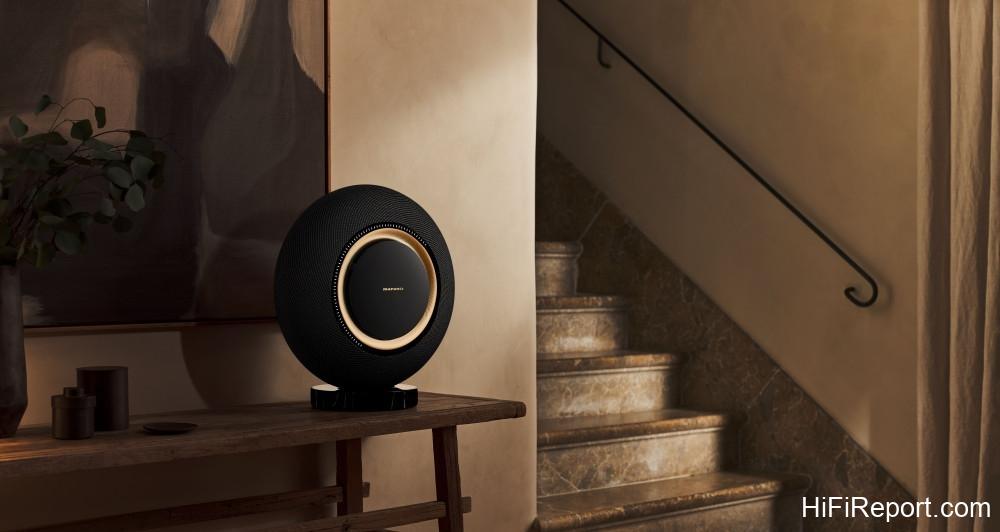
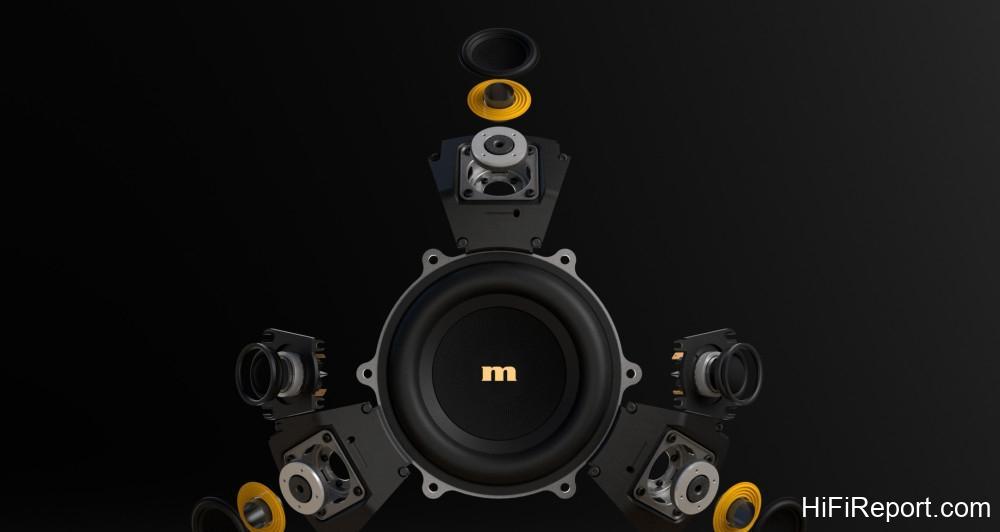
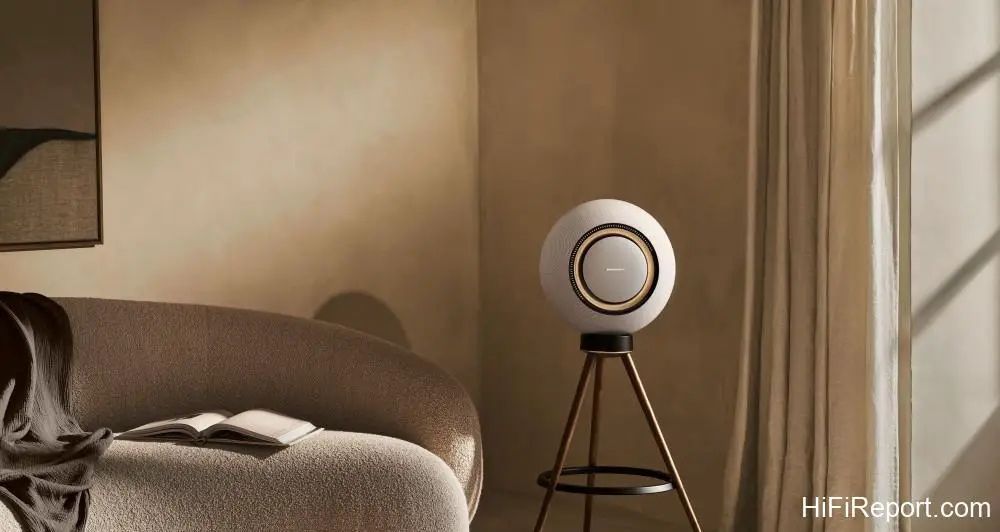
The Horizon’s design is truly unique, featuring a spherical shape engineered to radiate sound waves outwards, intended to completely fill the room. To achieve this effect, the Horizon is equipped with six drivers: two 1-inch silk dome tweeters, three 2-inch full-range drivers, and one 6.5-inch woofer.
The two tweeters fire laterally, while the three full-range drivers have an even more distinctive configuration. Their multiple presence ensures greater mid-frequency output, and their specific placement—on the lower left, lower right, and directly above the speaker—allows for comprehensive, height-infused sound dispersion, particularly upwards towards the ceiling.
This arrangement contributes to the Horizon’s exceptionally strong mid-range performance and creates a remarkably expansive soundstage, even capable of generating a sense of space, which I will detail further below.
The bass performance is equally impressive. The 6.5-inch woofer is larger than typically found in most wireless speakers, giving the Horizon excellent low-frequency output. To provide a stable foundation for the woofer’s movement, the base of the Horizon features a solid marble slab, contributing to its substantial weight of 12.5 kg – a heft rarely seen in wireless speakers.
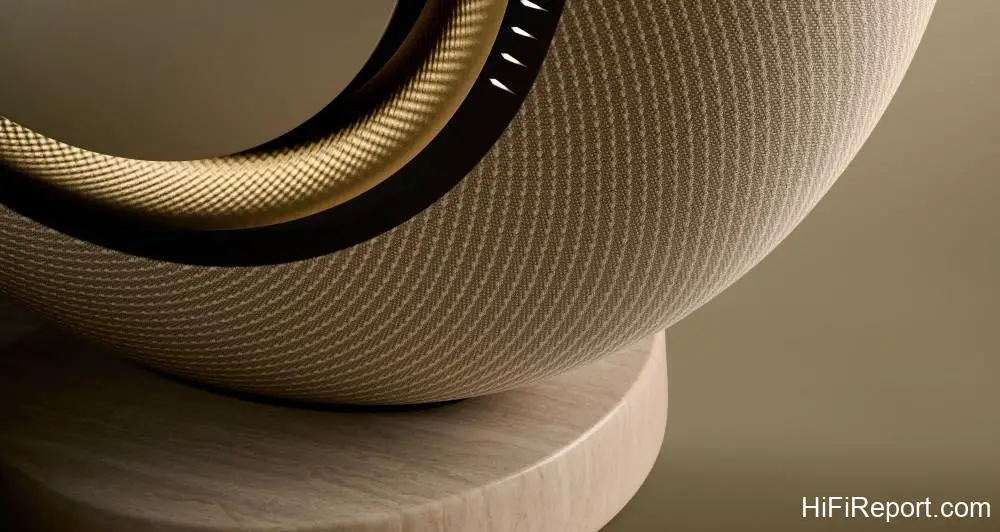
In terms of amplification, the Horizon houses an amplifier with a continuous power output of 310 watts, peaking at an astonishing 1160 watts. This is remarkable for a wireless speaker, surpassing the output capability of some small to medium-sized standalone power amplifiers. Marantz notes that the amplifier utilizes the company’s newly developed Rise Amplifier technology, characterized by high efficiency and superior heat dissipation.
Given the Horizon’s unique shape and driver configuration, Marantz developed the proprietary Mirage DSP digital audio processing circuit to optimize and integrate the sound output. This Mirage DSP also allows the Horizon to switch between different sound modes with minimal impact on audio quality.
Regarding streaming capabilities, as expected, the Horizon features Marantz’s recent flagship HEOS technology. Via the HEOS App, it can play music from streaming platforms like Spotify and Soundcloud, as well as TuneIn internet radio. It also supports AirPlay 2 and Bluetooth playback. For physical connections, the Horizon provides RCA analog input, optical input, and USB playback for storage devices.
Notably, it also includes an HDMI eARC function, which is a pleasant surprise, meaning it can connect to a TV and play TV audio.
It’s important to mention that the HEOS App detects the user’s region. Because Tidal does not officially offer services in Taiwan, you cannot play Tidal using the HEOS App in Taiwan. However, the Horizon circumvents this by directly supporting Tidal Connect. If you have a Tidal account, you can play music directly through the Tidal App.
If you use other streaming platforms like Qobuz, you can use third-party apps like M-Connect for playback, ensuring full support for high-resolution streaming music.
Listening Experience
Many single-piece wireless speakers claim to fill the room with sound, but actual testing often reveals that this isn’t always the case. This is often because many wireless speakers have drivers primarily configured on a single plane, directing sound forward and sideways. While they may create a 360-degree sound experience on a “plane,” which feels good when seated, the sound changes significantly when you stand up, impacting the experience.
Wireless speakers are typically used for casual listening, and people move around their homes; they aren’t always sitting still.
The Horizon avoids this issue. Its design is akin to a standing disc, with drivers positioned around the circumference, enabling it to genuinely project sound waves throughout the entire space, not just on a flat plane. Consequently, whether I was sitting, standing, or moving around the room, the sound, while changing slightly (a physical inevitability), never noticeably degraded (becoming flattened or blurred). This was the first significant advantage I noticed.
It ensures that all household members can move freely while still enjoying excellent sound quality.
Secondly, a common criticism of wireless speakers is that they are often miniaturized or cost-engineered, typically lacking large woofers or using subpar components, resulting in weak bass performance with insufficient depth or impact, making popular music sound flat. This contradicts the nature of such products, as younger consumers who primarily listen to pop music are often the target audience. If the music lacks bass, pop music simply won’t be engaging.
The Horizon overcomes this as well. It features a 6.5-inch woofer, comparable in size to those found in small to medium bookshelf speakers. It also houses a high-power amplifier. Furthermore, the marble base provides a stable foundation, which enhances control over the woofer, allowing the Horizon to deliver richer, more controlled bass.
Thanks to this design, the Horizon can produce considerable sound pressure. The manufacturer specifies a maximum SPL of 104 dB at 1 meter, peaking at 114.5 dB – far exceeding that of typical single-piece wireless speakers and even some small to medium bookshelf speakers. This high SPL, combined with the expansive sound and robust bass, gives the Horizon the ability to deliver a sense of power and scale rarely heard in wireless speakers.
For instance, when playing pop music, the energy in the low frequencies felt comparable to that of a small to medium bookshelf speaker setup. After prolonged listening, it didn’t feel like listening to a wireless speaker at all, but rather a proper hi-fi system.
In the high frequencies, the Horizon presents a smooth and gentle character. The mid-range is neutral, stable, natural, and comfortable. Vocals sound clear and fresh. While the mid-range thickness might not match a traditional hi-fi system, it is exceptional compared to other wireless speakers. There’s no hint of dryness or thinness; instead, it has a slightly neutral-to-warm quality.
The mid-range detail is excellent, clearly resolving nuances like piano key attacks and the subtle vibrations in a singer’s throat. I found the mid-range to be the most stable across all frequencies, changing very little as I moved around the room, which I believe is a significant benefit of the Horizon’s unique driver configuration.
For example, playing Adele’s hit “Hello” from her album “25,” her voice felt slightly thick, full-bodied, and magnetic, conveying deep emotion. The piano in the background felt weighty and steady, while the vibration of the piano strings was clearly discernible, successfully capturing the song’s nostalgic, melancholic, and heartfelt atmosphere. Despite being a single-piece speaker, I could clearly perceive the separation between the voice and piano; they didn’t sound cramped together.
When the song reached the chorus, the emotional intensity erupted with the entry of drums. The Horizon rendered the drums solid and impactful. Combined with the expansive soundstage, it effectively conveyed the song’s heavy sense of solitude and vast atmosphere.
This sonic characteristic is perfect for deep male voices. Indeed, playing Leonard Cohen’s “In My Secret Life” from the album “Ten New Songs,” the persistent drumming at the beginning was tightly focused, and the guitar strumming was full of energy. At this point, the soundstage felt larger than with the Adele album, with a grander image that felt closer to the listening position.
When Leonard Cohen’s voice entered, it immediately captivated the senses – thick, magnetic, and incredibly compelling. The focus, expressiveness, and penetration completely surpassed what I’d expect from a regular wireless speaker. Thanks to the excellent expansiveness and good mid-low frequency performance, I believe it’s also well-suited for jazz or vocal-focused pop music. Trying a few tracks yielded excellent results.
For instance, “One for My Baby” from “Belafonte Sings the Blues” provided a wonderfully open listening experience.
Naturally, being a single-piece design, it cannot replicate the precise soundstage and imaging of a two-channel system. However, when seated approximately 3 meters directly in front of the speaker, I could still distinguish instruments positioned in different locations, and even sense the relative depth between instruments – for example, the saxophone on the left, the vocals in the center, and the drums further back.
The vocals on this track were similarly rich and full-bodied, successfully conveying the live jazz recording’s sense of space, instrument separation, and vocal presence and charm, something far beyond the capability of ordinary wireless speakers.
Another example from pop music is “Luka” sung by Olivia Ong on her album “Summer Night Wind.” The opening guitar is passionate and unrestrained, yet carries a hint of ethereal quality. When Olivia Ong’s voice enters, it is clear and bright, yet warm and full-bodied, with a subtle moist quality, as if infused with water – soft yet full of emotion.
The accompanying drum kit in the background is solid and dynamic, each drum hit having a distinct form, providing a stable rhythmic foundation for the entire song. This track is a live concert recording, and the Horizon excelled at conveying the inherent expansiveness of a live recording. As mentioned earlier, the Horizon also manages to fill the entire listening space with music, making the performance feel even more expansive and open.

Some may find it hard to believe my descriptions of the sound having expansiveness and a sense of space, given it’s a single-piece design. However, this is truly a crucial part of the Horizon’s design. Beyond using six drivers to disperse sound waves throughout the space, there’s another feature that demonstrates Marantz designers’ intent to create a sense of space: the sound mode adjustment function powered by the MyMirage DSP.
When playing music via the HEOS App, there’s an equalizer-like icon in the bottom right corner. Tapping it brings up the sound mode selection, offering Auto, Sound Master, and MyMirage. Auto is a balanced, uncolored setting. MyMirage allows you to customize parameters: Warmth, Spaciousness, and Clarity, enabling you to tailor the sound to your preference. If you’re unsure how to adjust, you can select Sound Master, which uses parameters tuned by Marantz’s Sound Master.
This setting feels slightly enhanced but maintains balance, resulting in a more engaging sound than Auto.
Remarkably, while digital equalization processing often introduces noticeable sonic degradation, the Horizon exhibits very little of this. The impact is minimal. Even when maximizing the Spaciousness parameter, the music remained highly listenable. This indicates that Marantz’s MyMirage DSP is quite sophisticated.
This is important because it encourages users to experiment with and utilize the sound field modes, particularly for increasing spaciousness or warmth – functions not typically offered by similar products but desired by consumers.
Conclusion and Recommendation
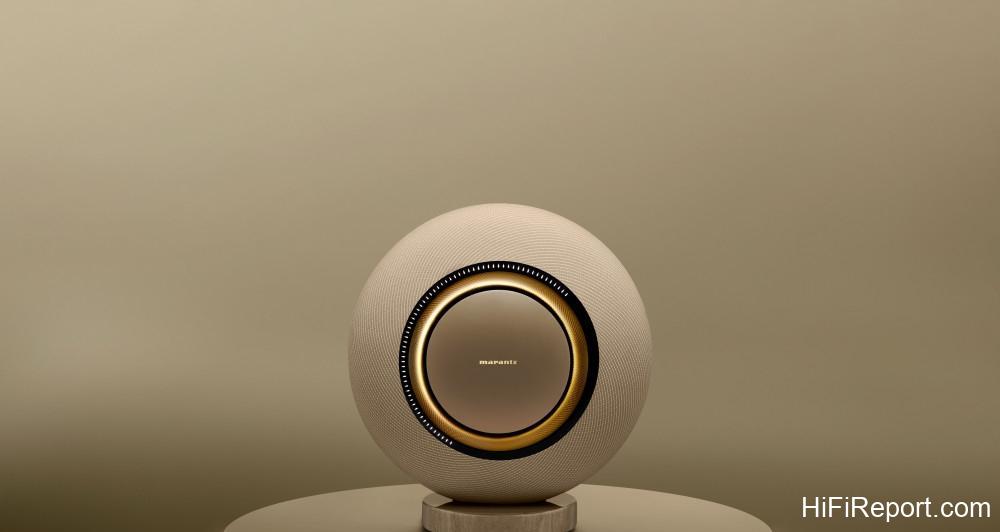
The Horizon represents Marantz’s first strike in the streaming speaker arena, hitting the ground running at a premium price point. I believe this strategy is successful. Given the crowded market, Marantz, as a newcomer, needed to make a significant impression. The Horizon, with its aesthetics, design sensibility, and sound quality, is immensely appealing. Its exquisite, almost luxury-grade texture is sure to capture the hearts of many consumers.
Naturally, the price of the Horizon might give some consumers pause. However, I believe upon reflection, it offers tremendous value. Remember, the Horizon is a single-piece streaming all-in-one unit. Choosing it means acquiring a streamer, an amplifier, and speakers simultaneously, without additional expenses like speaker cables or the need for complex setup and tuning.
It achieves true omnidirectional sound dispersion, ensuring you hear great sound regardless of whether you’re standing, sitting, or moving around. Combined with its stunning appearance, it looks like a piece of art in your home. At this price, it’s truly not expensive, because buying the Horizon isn’t just buying audio equipment; it’s buying a design and an experience. And a “wonderful experience” is priceless. Highly recommended!
Specifications
* Design: All-in-one streaming speaker
* Drivers: 1-inch tweeter × 2, 2-inch full-range driver × 3, 6.5-inch woofer × 1
* Frequency Response (+/-3dB): 30Hz~20kHz
* Maximum SPL (1M): 104dB, Peak 114.5dB
* Input Interfaces: RCA analog, Toslink optical, USB-C (for storage devices), HDMI eARC, Wired network, Wi-Fi, Bluetooth
* Supported Audio Formats: 192kHz/24bit PCM, DSD 5.6MHz, Dolby Atmos
* Dimensions (H.W.D.): 36.4×38.7×21.0cm
* Weight: 12.5 kg