
Marantz SACD 30n Review
It has been a while since I last auditioned Marantz equipment. Recently, I received the SACD 30n all-in-one digital source and Model 30 integrated amplifier, both launched in 2020. The appearance is refreshing, and after experiencing the sound, the performance-to-price ratio is even more astonishing. It seamlessly blends complexity and simplicity, constructing a virtual-real integration for the cloud digital streaming era, all while maintaining a highly competitive price. Marantz has pulled out all the stops, ready to make a significant impact and dominate the sub-$3000 USD price range.
During the editorial meeting to arrange equipment reviews, the SACD 30n and Model 30 were naturally assigned to the same reviewer. However, after auditioning them, I felt it would be a shame to review them together. Some may think these two units are best as a set, but both pieces of equipment perform exceptionally well individually, pairing wonderfully with other components. Furthermore, each unit has so many features and technical highlights that writing about them together would not only be lengthy but also potentially lose focus. Therefore, I decided to review them separately, starting with the all-in-one digital source, the SACD 30n.
Digital Source and Preamplifier
The SACD 30n may look like a traditional SACD/CD player, but it is actually an all-encompassing digital source. Its functionality is incredibly comprehensive, supporting both wired and wireless connections. It can even function as a preamplifier with its variable gain output. With the SACD 30n, you only need a power amplifier and speakers, or simply pair it with active speakers, to create a simple yet excellent-sounding audio system.
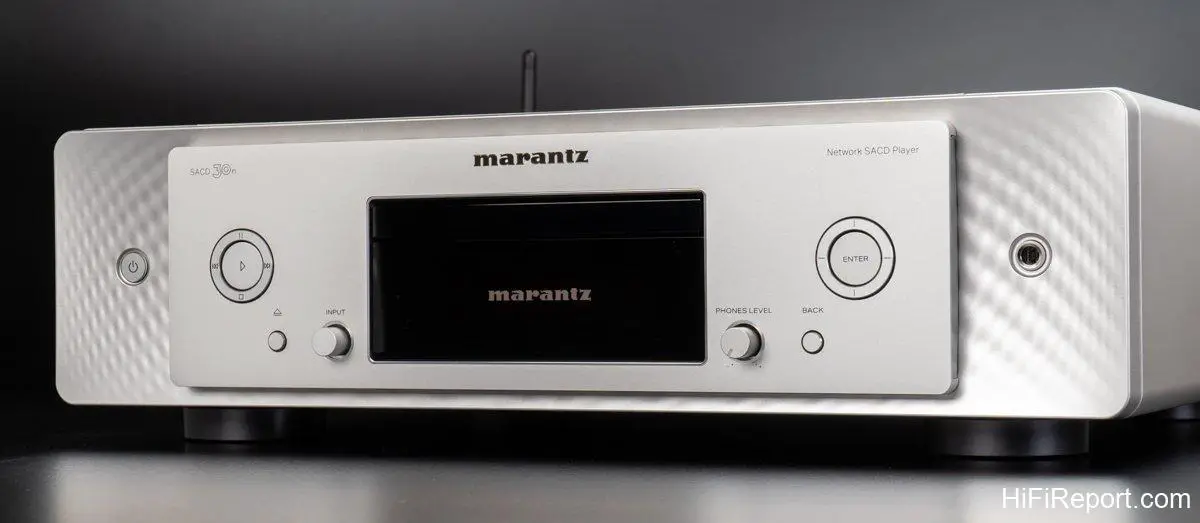
Let’s start with the appearance. Traditional Marantz equipment is often champagne gold, but with the SACD 30n, the champagne gold hue is lighter, appearing more elegant. The centrally raised front panel with a circular display window retains the design elements of traditional Marantz equipment. The rear panel features a wave-patterned decorative panel, complemented by LED ambient lighting on both sides, which is truly beautiful. Similar to the trend of ambient lighting in luxury cars in recent years, Marantz has also embraced this wave of luxury fashion, making the SACD 30n look both classic and modern.
Proprietary SACDM-3L Transport
Within the luxurious chassis of the SACD 30n lies a powerful digital music processing center.
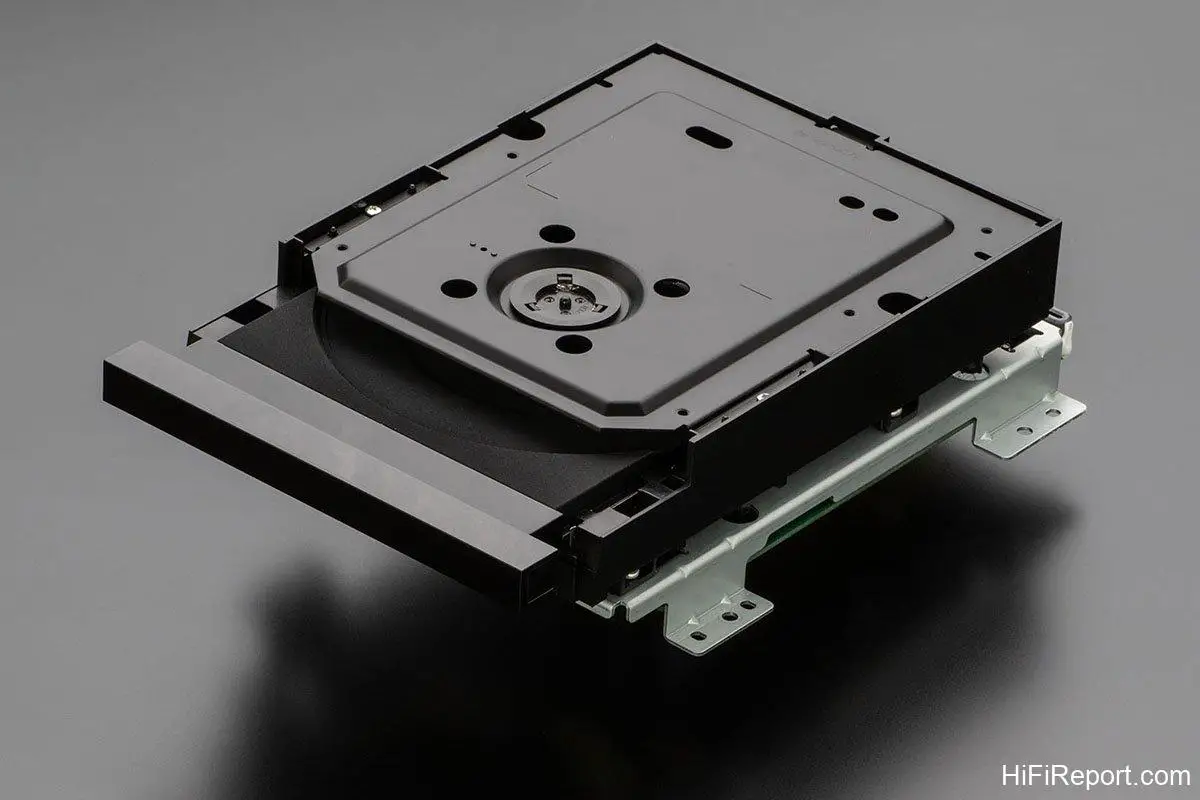
Starting with traditional physical SACD/CD playback, Marantz, as a major manufacturer, is impressive. While others typically purchase off-the-shelf SACD/CD transport mechanisms, Marantz takes a different approach. The SACD 30n features their in-house developed and manufactured SACDM-3L transport, which not only reads SACDs and CDs but is also compatible with CD-R and CD-RW discs.
What does this mean? It means you can use these blank physical media to burn Hi-Res digital music files from your computer and create your own custom Hi-Res music albums to play on the SACD 30n.
Furthermore, when you are not using the SACDM-3L transport and switch to digital streaming or DAC-only mode, the power supply to the transport is automatically turned off. This is to avoid any extra power supply noise from affecting the DAC operation.
Marantz Musical Mastering (MMM)
If you choose not to use the SACD 30n as a traditional SACD/CD player, you can use it as a standalone DAC or a digital streaming music center.
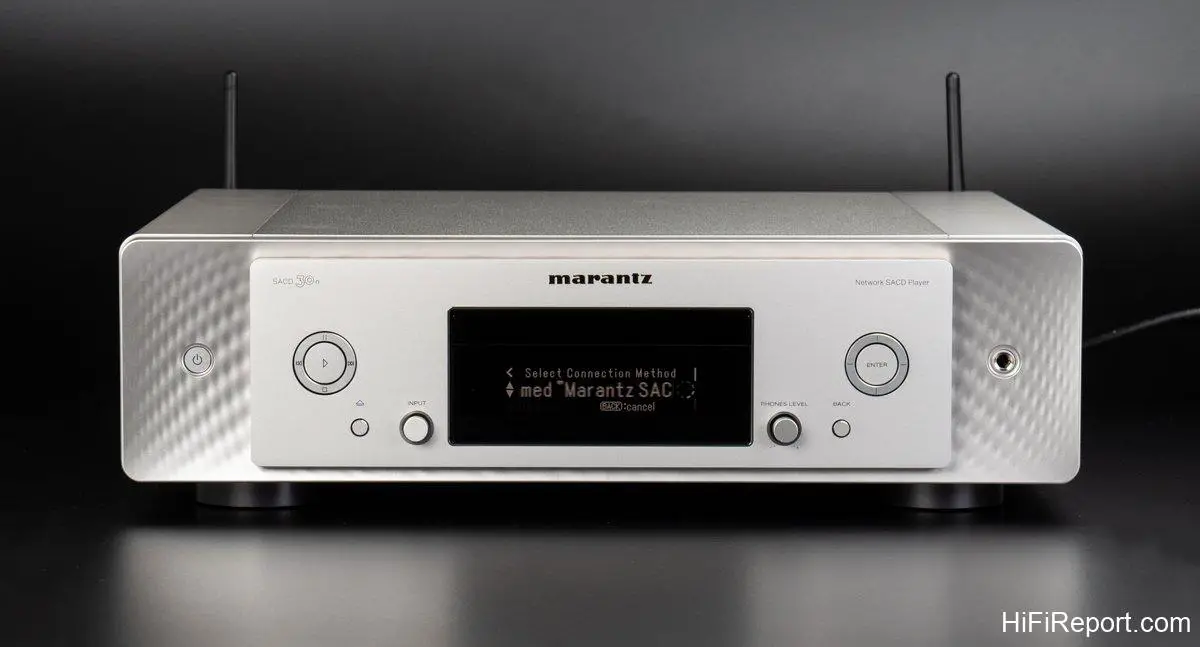
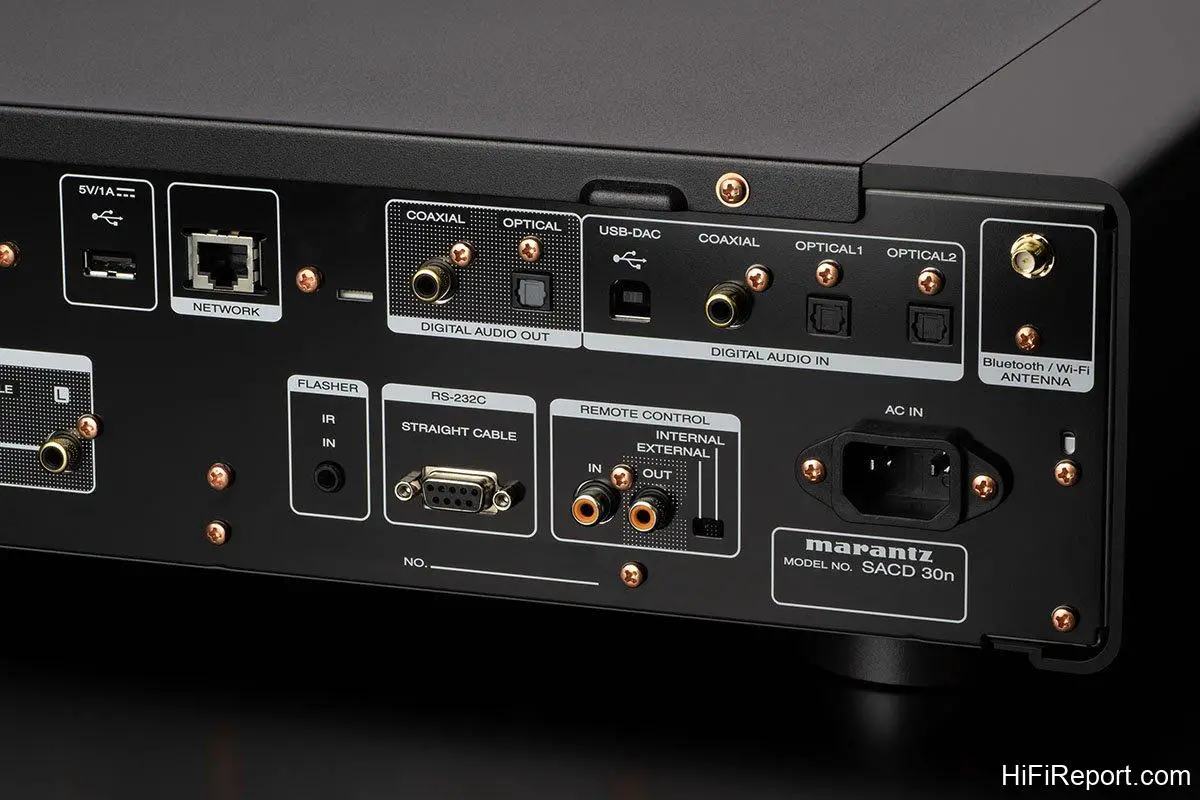
The SACD 30n is equipped with two optical and one coaxial S/PDIF inputs, along with a USB-B asynchronous input. It also supports RJ45 Ethernet network input.
Whether connecting a disc transport, computer, or network, the SACD 30n handles it all. Moreover, the DAC section of the SACD 30n is quite sophisticated.
What’s so sophisticated about it? Most digital-to-analog converters use off-the-shelf DAC chips, and the competition is often about who has higher specifications or newer chips. However, the SACD 30n is not that simple. It features Marantz Musical Mastering (MMM), an in-house designed digital-to-analog converter. The S/PDIF inputs support up to 24-bit/192kHz, while the USB input supports high-resolution audio up to 32-bit/384kHz PCM and DSD up to 11.2MHz. MMM is not a commercially available DAC chip; instead, it’s a digital-to-analog conversion module developed in-house using DSP.
11.2 MHz DSD Upsampling
MMM not only supports both PCM and DSD but also reaches the highest current standards. It comprises two parts: MMM-Stream and MMM-Conversion.
MMM-Stream handles digital signal oversampling and upsampling. Regardless of whether the input music signal is PCM or DXD, it is all resampled and upsampled to 11.2MHz DSD signal, and then passed to MMM-Conversion for decoding.
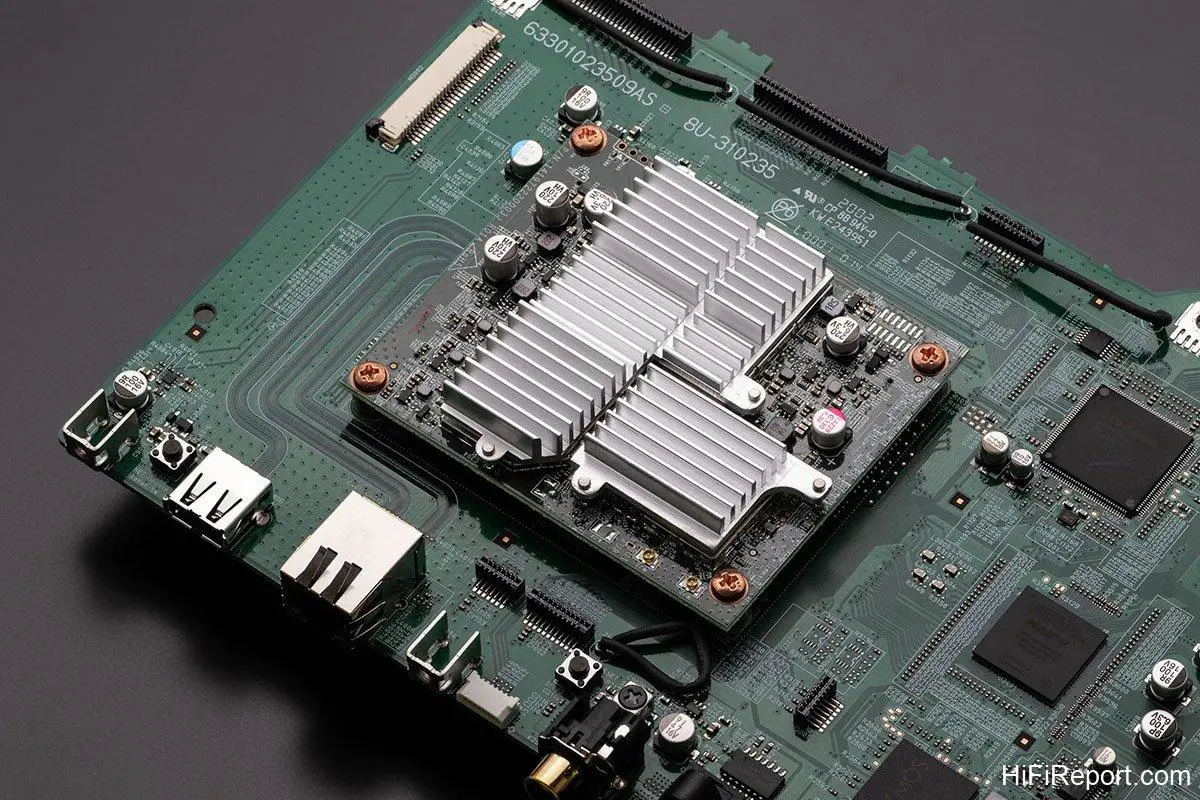
MMM-Stream is not traditional oversampling but Marantz’s proprietary MMM upsampling filter. It relies on two clock oscillators for accurate upsampling, utilizing dual 32-bit floating-point DSP processing, rather than typical single-chip upsampling. The signal is then passed to MMM-Conversion for decoding and converted into an analog music signal, amplified by Marantz’s exclusive HDAM (Hyper Dynamic Amplifier Module).
Those familiar with Marantz will know HDAM. It is Marantz’s proprietary Hyper Dynamic Amplifier Module, developed over many years. Eschewing common op-amps, Marantz builds their own discrete differential amplifier circuits, encapsulated in metal module housings. In the SACD 30n, MMM is paired with both HDAM and HDAM SA3 modules, while the headphone amplifier utilizes a dedicated HDAM SA2 module.
For audiophiles who also enjoy headphones, owning the SACD 30n is like having a dedicated headphone amplifier included.
HEOS Integration
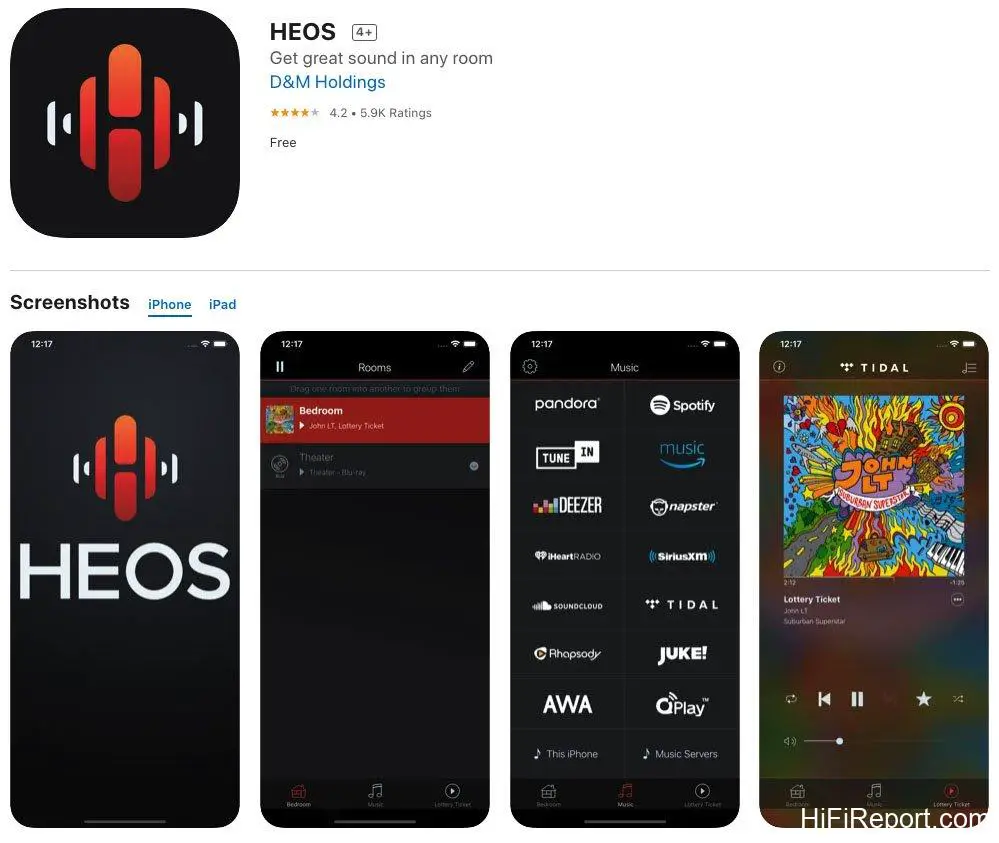
If MMM digital-to-analog conversion is the brain of the SACD 30n, then HEOS integration acts as the hands that reach out and grab the music. You can download the HEOS App, and as long as it’s on the same local network, HEOS will automatically find the SACD 30n (and also the Model 30 integrated amplifier). You can then play music through HEOS, and practically any way you want to listen to music can be controlled via HEOS.
How many ways are there to listen to digital streaming? Direct Bluetooth streaming from your phone? No problem. It also supports the latest Airplay 2. Amazon Prime Music and Pandora are also supported, although users in this region may be fewer.
Want to listen to Spotify? Just select it within HEOS. Internet radio via TuneIn is also pre-loaded in HEOS. Furthermore, it can access your own local network NAS; HEOS will automatically find it. Even USB connections can be accessed through HEOS. You can also switch inputs on the SACD 30n, control the power on/off of both the SACD 30n and Model 30, and even design equipment application scenarios, such as renaming devices to “Living Room” or “Bedroom”.
In other words, HEOS is essentially the all-in-one remote control app for the SACD 30n.
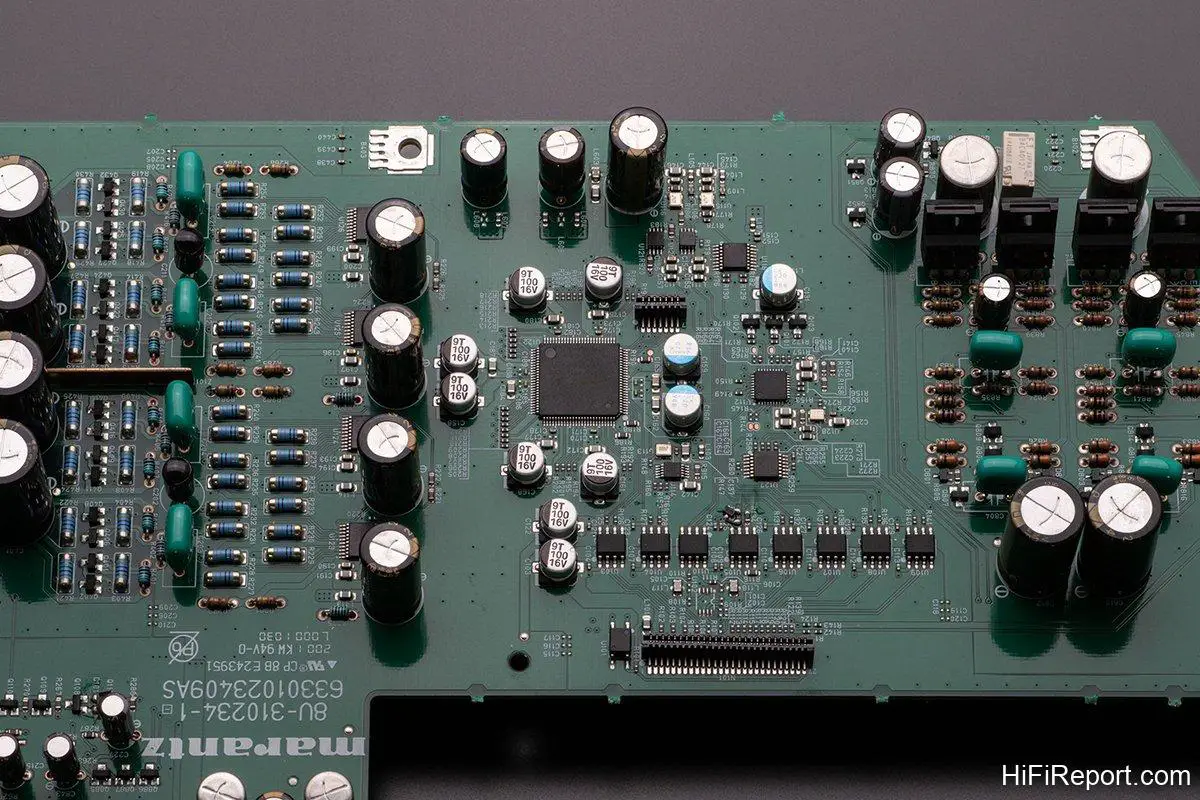
And if you don’t even want to use the app remote and prefer voice input, the SACD 30n has you covered. Which voice assistant do you prefer? Amazon Alexa? Google Assistant? or Apple Siri? The SACD 30n is remarkably versatile, supporting all three.
Moreover, many digital streaming enthusiasts have joined the Roon community, and the SACD 30n is Roon Ready certified, supporting direct Roon integration.
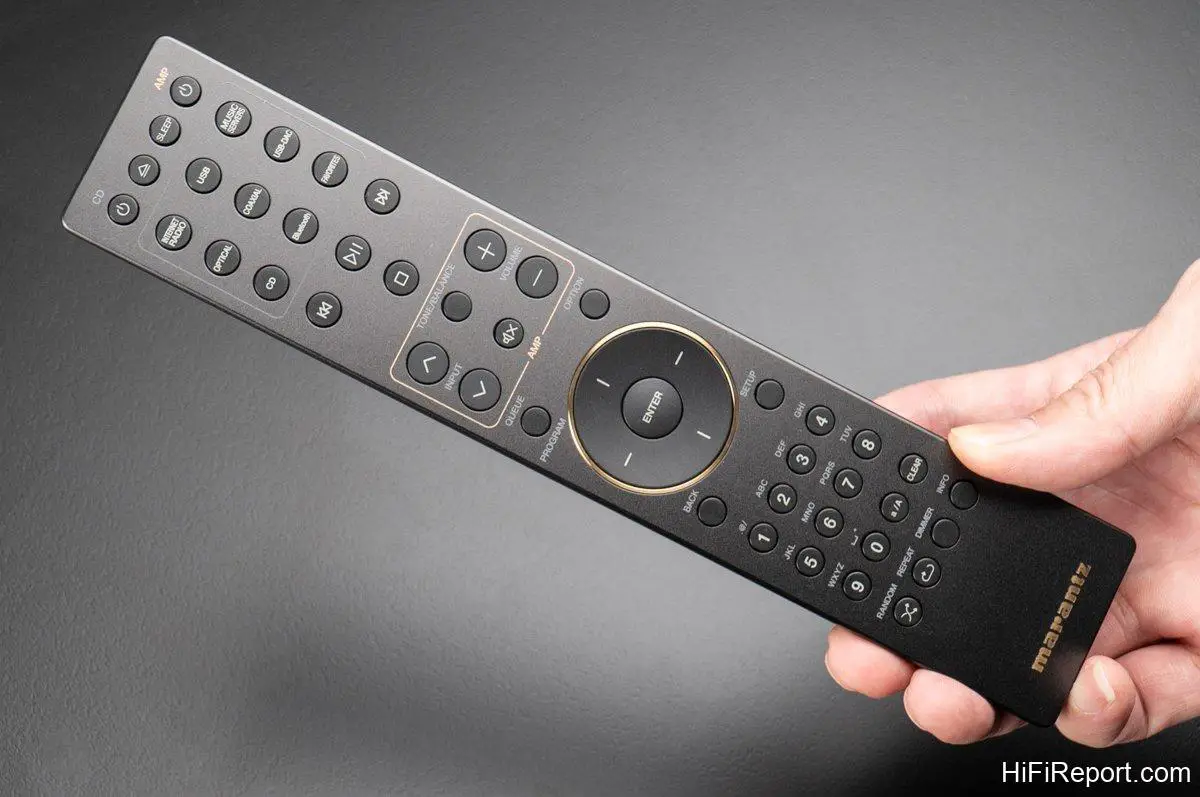
Given the SACD 30n’s extensive features, using the HEOS App is the most convenient way to operate it. However, if you are an old-school audiophile who primarily uses SACDs and CDs, the traditional remote control might be more practical. But if you listen to NAS or digital streaming subscription services more often, the HEOS App remote control will be much more convenient.
Marantz Sound Master Tuning
With the features mostly covered, I now want to discuss the meticulous fine-tuning of the SACD 30n. From Saul Marantz founding the company to the later Ken Ishiwata, master-level tuning has always been a key feature emphasized by Marantz. However, with Ken Ishiwata’s passing in 2019, a master has fallen. Marantz has shifted to using the Marantz Sound Master team to replace the previous emphasis on individual heroism. Although we know that the current team is led by Yoshinori Ogata, Marantz is not creating a new tuning master but instead emphasizes the refined tuning done by the Marantz Sound Master team.
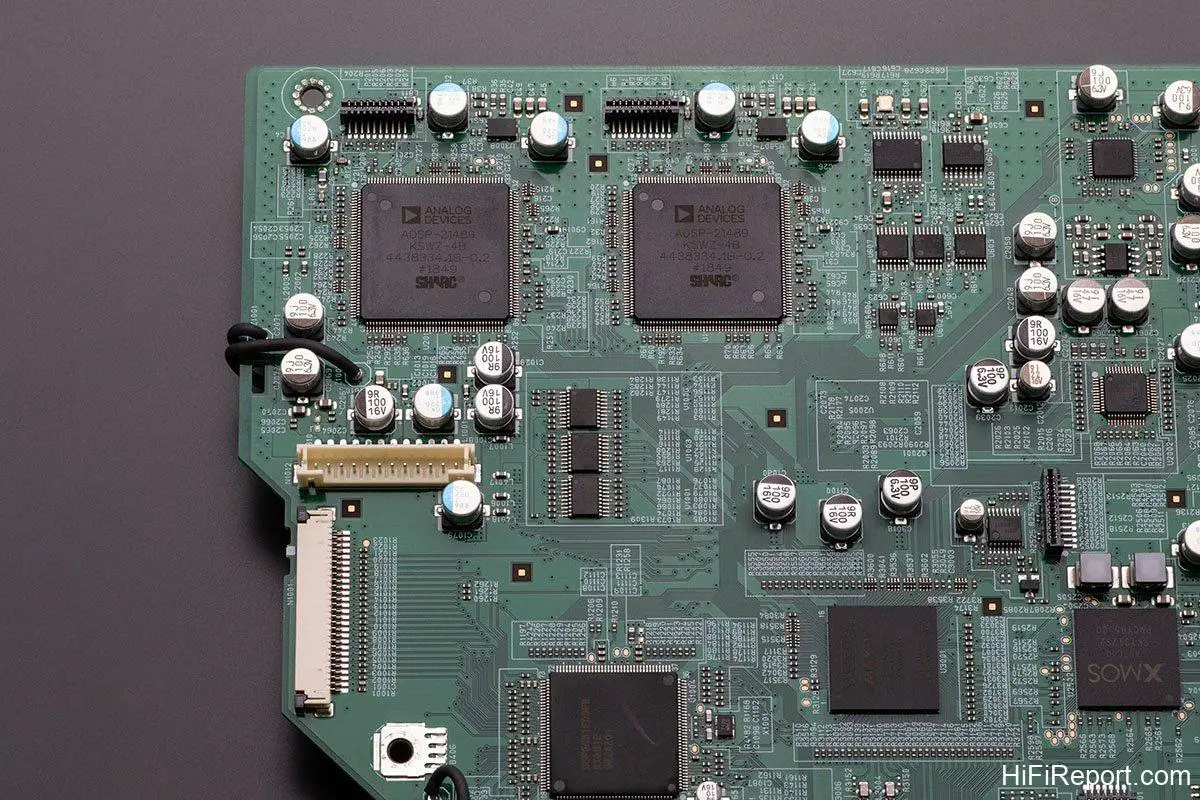
How is this refined tuning achieved? It starts with customized electronic components.
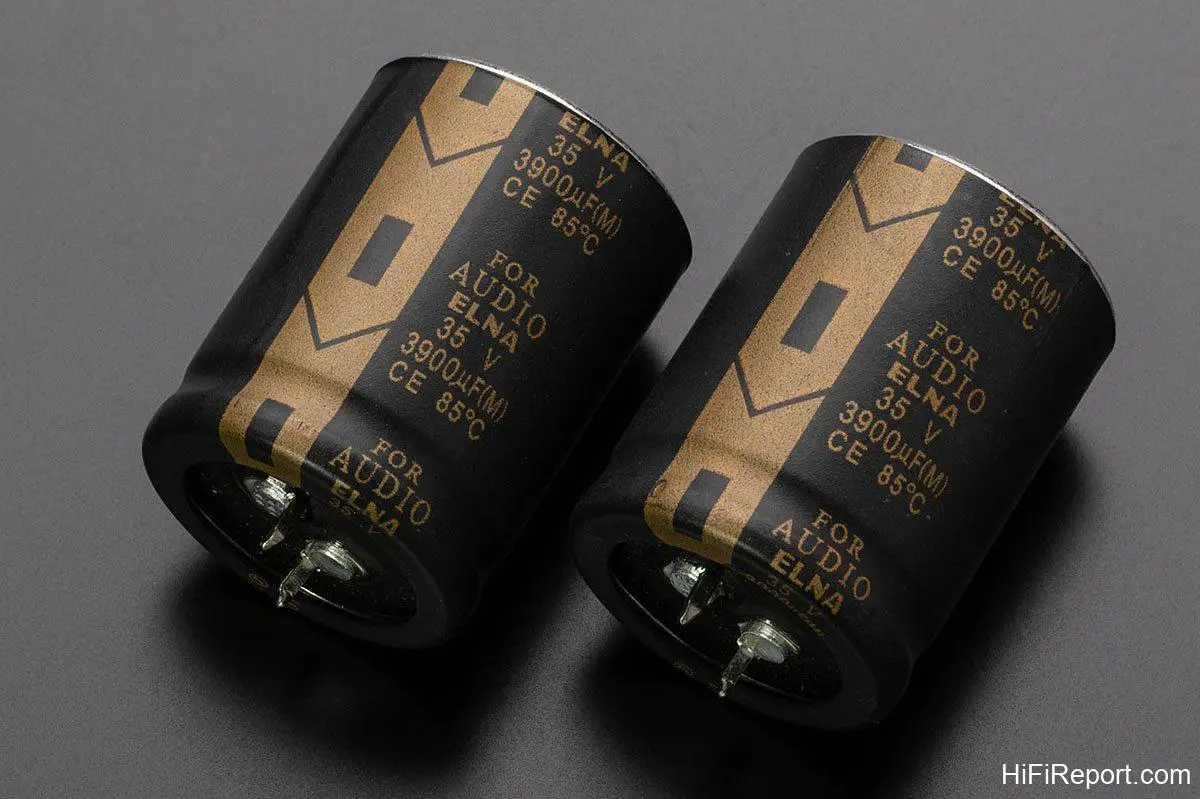
Examples include the in-house SACDM-3L transport, Elna capacitors from Japan for filtering, custom-made MELF (Metal Electrode Leadless Face) resistors, and paired 44.1kHz/48kHz independent dual clock oscillators.
How are these electronic components selected? It’s all based on the Marantz Sound Master team, who make decisions through meticulous comparison and listening tests, shaping the classic Marantz sound.
Sound Performance and Pairings
According to the manufacturer’s intention, the SACD 30n is naturally designed to pair with the Model 30 integrated amplifier. However, the SACD 30n has two sets of analog outputs: one fixed output and another variable volume output, meaning the SACD 30n can function as a preamplifier. Therefore, during my audition, I used two configurations: variable output directly into an EAR 509 MKII tube power amplifier, and fixed volume output paired with the Model 30. Speakers used were Wilson Audio Alexia 2 and Dynaudio Contour 60.
The SACD 30n’s sound is pure and transparent, with a sweet and pleasingly gentle smoothness. When paired with the EAR 509 MKII driving Wilson Audio Alexia 2, it exhibited a comfortable and listenable sound, not tense or overly aggressive, drawing out beautiful and smooth musical lines. When I switched to the Model 30 integrated amplifier driving Dynaudio Contour 60, it was also a great match. It maintained the gentle and smooth musical lines, along with a comfortable and non-fatiguing sound. The high-frequency extension had a warm hue, retaining detail at low volumes and remaining controlled at high volumes.
I acknowledge that there are many components that surpass it in terms of sonic refinement. However, within the sub-$3000 USD price range, finding a unit with comparable features and sound performance to the SACD 30n is currently unlikely. This is why I consider the SACD 30n to be the most outstanding value in its price class.
Ultimately, I finalized my listening tests using the SACD 30n and Model 30 paired with Dynaudio Contour 60 speakers. Not only did they sound great together, but their price points were also more closely matched. However, I must emphasize that the SACD 30n can be used independently. When directly connected to the EAR 509 MKII power amplifier, the SACD 30n’s output was sufficient to drive the power amplifier, and the sound did not become weak or thin due to the absence of a dedicated preamplifier stage. Pairing the SACD 30n with a power amplifier or any other amplifier should yield excellent sound performance. However, as I also received the Model 30, the combination of the two delivers a truly authentic Marantz sonic signature, which is why I ultimately chose to pair them with the Contour 60 for the final listening evaluation.
Sweet and “Poisonous” Female Vocals
The SACD 30n’s sweet sound character has a very alluring “female vocal poison” quality. I played a series of female vocal recordings, and the sonic character was just right.
Starting with Lyn Stanley’s “London With A Twist: Live At Bernie’s” SACD, a live recording from January 2019 at Bernie Grundman Recording Studios in the US, emphasized as being free from any Protools Auto-tune modifications, the recording has a strong sense of live atmosphere. Listening to the jazz classic “Route 66,” Lyn Stanley’s uniquely charming voice, combined with her free and easy jazz vocal style, even in a standard jazz piece, Lyn Stanley sings with great personality. The SACD 30n brought out the sweet trailing resonance of her voice. The underpinning plucked double bass was full and clear, contrasting with her magnetic vocals, creating a rich live recording atmosphere.
Next, another audiophile female vocal recording, one I haven’t listened to in a while, “The Best of Inger Marie Gunderson.” The reason I chose it was to find an SACD to test the SACD 30n, and coincidentally, this compilation is a German-made SACD, prompting me to pull it out. Listening to the first track, “Kiteflyer’s Hill,” the audiophile recording’s grandeur, from the powerful low frequencies to the contrasting distant brass, creates a wide and substantial soundstage. Inger Marie Gunderson’s voice is also magnetic, with a sweet trailing resonance, even more pronouncedly sweet on the SACD 30n. Of course, a magnetic voice is not just about sweetness; the subtle rasp in the midrange brings out the charm and appeal of her voice. These attractive sonic qualities seem even sweeter and more intimate on the SACD 30n.
Switchable Digital Filters
The SACD 30n has another important feature: switchable digital filters. You can find the Filter setting in the Audio options of the setup menu, with Filter 1 and Filter 2 available for switching. Filter 1 sounds like it has a wider and deeper soundstage, while Filter 2 brings the sound image slightly closer with a slightly narrower soundstage. When listening to female vocals or pop music, I prefer the Filter 2 setting, which sounds more intimate. For classical music, I prefer the Filter 1 sound, which opens up the soundstage wider and allows the speakers to disappear naturally into the space, showcasing a grand scale.
Becoming addicted to listening to audiophile female vocals on the SACD 30n, I played the “A Star Is Born” soundtrack and listened to “Shallow,” the female lead’s debut performance. The acoustic guitar intro was crisp and bright, accompanied by the background noise of the live concert in the movie. Bradley Cooper playing guitar and singing lead, leading into Lady Gaga’s harmony, the vocal lines were clear and sweet. The chorus soared an octave higher, singing out with passionate vocals. The male and female harmonies were rendered by the SACD 30n with both cohesion and clarity. The drums and electric bass gradually built up the musical intensity. The SACD 30n’s bass had a comfortable punch, not aggressive, but with a smooth and comfortable elasticity.
While listening to the music, images of the live concert scenes from the movie filled my mind.
Enjoying “Unplugged” Live Performances
Of course, the SACD 30n is not just a machine for listening to audiophile female vocals, although I find its sweet trailing resonance particularly charming for female vocals.
Switching to Eric Clapton’s “Unplugged” live concert, listening to “Before You Accuse Me,” the crisp sound of the steel-string guitar, the SACD 30n with its slightly bright character, reproduced the vividness of the live concert.
Eric Clapton was singing energetically on stage, and the audience below the stage was not idle, clapping and tapping along. The SACD 30n not only possessed vivid and rich musical details but also brought out the sense of layering in the live recording. I know that the layering and imaging of rock live recordings heavily rely on post-production processing, but on the SACD 30n, it sounded lively and energetic, making enjoying the “unplugged live” experience thoroughly satisfying.
Clear Soundstage with Richness
Switching to classical music, listening to Andre Navarra’s “Schubert: Arpeggione Sonata.” The opening piano arpeggios led to the dense cello, emerging as smoothly as singing. The SACD 30n showcased a comfortable musical richness at this moment. I couldn’t help but wonder if this is the so-called Marantz sound – slightly leaning towards richness between clarity and density, which seems to be the tuning approach of the Sound Master. Andre Navarra’s recording is relatively early, and the cello naturally has a slightly nasal quality, which sounded even richer on the SACD 30n. However, the soundstage remained comfortably open, and the instruments did not blend together due to the age of the recording. The SACD 30n presented the piano and cello clearly and smoothly, while still revealing the recording’s vintage character.
Switching to a newer recording, listening to Maxim Vengerov’s violin solo in the EMI version of “Beethoven Violin Concerto,” conducted by Mstislav Rostropovich with the London Symphony Orchestra. I directly listened to the bright third movement, Rondo. The SACD 30n presented the violin’s brisk theme with a gentle expression. The octave-higher theme was bright but maintained a comfortable and beautiful violin timbre. When the orchestra repeated the theme, the scale expanded.
Every time I listen to this CD, I always feel that when Vengerov plays the theme, he wants to play it faster, but when conductor Rostropovich repeats the theme, he keeps the tempo steady and even. The violin soloist has to follow the conductor’s tempo. A young violinist encountering a mature conductor still has to be obedient and follow the conductor’s pace. Once the orchestra repeats, the pace catches up. The interweaving of the soaring violin with brass and woodwinds, the SACD 30n showcased clear layering and call-and-response. The violin was in the foreground, the orchestra in the background. The solo was focused, and the orchestral tutti was expansive. Listening to this delightful Rondo on the SACD 30n was truly refreshing.
“New World” Symphony – Layering and Dynamics
Switching to Dvořák, listening to Lorin Maazel conducting the Vienna Philharmonic’s DG version of “Dvořák’s Symphony No. 9, ‘From the New World’.” The fourth movement’s introduction, with strings building tension, leads to the resounding brass section, unfolding the grandeur of the “New World.” Maazel fully utilizes the beautiful timbre of the Vienna Philharmonic’s strings. The first theme is distinct and bright, contrasting with the gentle and refined second theme. The SACD 30n’s clear musical layering made the interweaving of the “New World” sections natural and rich.
This fourth movement has many alternating sections of brass, woodwinds, and strings. The SACD 30n clearly presented the layering of the call-and-response between sections. The extension and sheen of the mid-high frequencies were comfortable and natural. The low frequencies were able to drive the Contour 60 with sufficient weight, maintaining a balanced and stable soundstage. The dynamic contrast of the “New World” fourth movement is quite large, from the majestic opening introduction to the middle section, which seems to reflect on the previous three movements. The changes in orchestral volume are significant, and there are many crescendos, testing the conductor’s and orchestra’s synergy, and of course, the dynamic contrast of the audio system. The sound performance of the SACD 30n paired with the Model 30, driving the Contour 60, was quite satisfying.
Must-Audition All-in-One Digital Source
The SACD 30n is an all-in-one digital streaming player designed for the network era. Launched in 2020, its timing is excellent. It not only combines comprehensive features but also catches the wave of Roon popularity. It is unlikely to become outdated in the next few years. With the support of traditional SACD/CD playback, veteran audiophiles can continue to enjoy their physical music collections while also connecting to the network to enjoy inexhaustible digital music subscription services. Most importantly, the SACD 30n embodies decades of Marantz’s sonic know-how, with a refined sound signature tuned by the Marantz Sound Masters, offered at a very affordable and competitive price, directly challenging the market. For anyone looking for an all-in-one digital source, please audition the SACD 30n before making a decision.
Specifications
* Type: SACD/CD Player and Network Digital Streaming Player
* Analog Outputs: Balanced, Unbalanced, Headphone Amplifier
* Digital Output: Optical
* Digital Inputs: Optical, Coaxial, USB, Ethernet, Bluetooth
* Frequency Response: 2 Hz – 20 kHz
* Dynamic Range: 109 dB
* Signal-to-Noise Ratio: 112 dB
* Total Harmonic Distortion: 0.000015%
* Dimensions: 443 × 130 × 424 mm (W × H × D)
* Weight: 13.5 kg