
Marantz CD 50n Streamer/CD Player Review
Remember back in 2020, when lossless streaming was just becoming widespread in the audiophile world? Marantz, as a leading Japanese audio manufacturer, was quick to respond by launching the high-end SACD 30n streamer. This source component, which took three years to design, could not only play SACD discs directly but also integrate with Marantz’s proprietary HEOS engine to access various streaming services like Spotify, TIDAL, and internet radio.
Simultaneously, they introduced the MODEL 30, a pure analog integrated amplifier featuring then-advanced Hypex Ncore Class D amplification modules. Paired together, the SACD 30n and MODEL 30 formed a Hi-Fi system that seamlessly blended traditional and innovative features, receiving widespread acclaim from both domestic and international media.
In 2022, Marantz combined the source and amplification into a single unit, releasing the successor, the MODEL 40n integrated streamer/amplifier. This streamlined the audio system significantly; you only needed to connect a pair of speakers for music playback, making it far more appealing for users with limited space and those seeking simplicity.
However, while many audio manufacturers were embracing the all-in-one trend, Marantz has returned to the separates philosophy this year with the CD 50n and MODEL 50 audio combination. The reason is simple: while all-in-one units are convenient, integrating digital and analog audio circuits within the same chassis without mutual interference is incredibly challenging. The most straightforward solution remains completely separating the source and amplification into independent chassis.
This not only provides perfect isolation from noise and vibration but also increases the flexibility and upgrade potential of the audio system.
Design and Build Quality
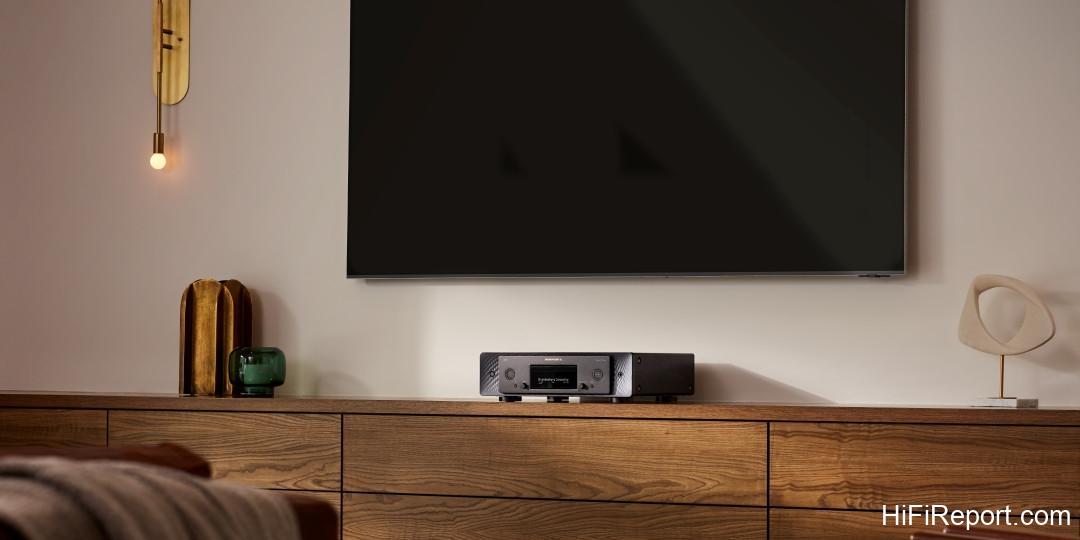
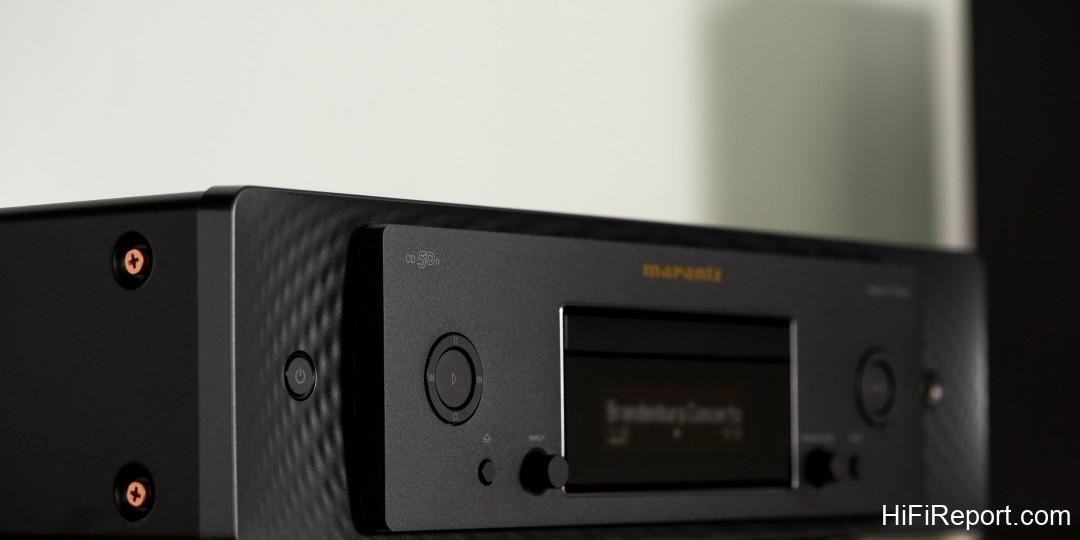
This review focuses on the CD 50n, a CD source component equipped with streaming capabilities. Positioned below the SACD 30n, its appearance and functionality are remarkably similar, adopting Marantz’s new generation industrial design that has been in use since 2020. The front panel features a dual-layer design, with the main operational buttons located on the central black panel, alongside an LCD display and the CD tray mechanism.
The most striking visual element is the iron-grey side panels, adorned with numerous small circular dimples that create beautiful light reflections, giving it a sophisticated and design-conscious look.
Beyond its striking aesthetics, the CD 50n places a strong emphasis on chassis rigidity and vibration damping. The unit feels reassuringly heavy in hand. In addition to the outer main chassis structure, the interior incorporates a triple-layer bottom plate constructed from two 1.0mm thick steel plates.
This structure supports the CD mechanism and power transformer, lowering the center of gravity and eliminating the negative effects of vibration on sound quality, thus laying a stable foundation for excellent audio performance.
Core Functionality and Connectivity
Functionally, the CD 50n features a Marantz-developed CD mechanism capable of playing standard CDs as well as MP3 or WAV music files stored on CD-R discs. While this unit doesn’t play SACDs like the SACD 30n, it is notably the first Marantz source component to support HDMI ARC functionality, including HDMI CEC.
This allows it to sync with your TV’s volume control and output audio from streaming video content like Netflix and YouTube through your sound system, effectively replacing your TV’s internal speakers. For modern users who often use their television as a primary source in the living room, this feature is a significant enhancement, distilling the essentials to meet their needs more precisely.
Furthermore, the CD 50n supports wired Ethernet, Wi-Fi, and Bluetooth connectivity. By linking it with the HEOS app, you can stream music files from NAS drives and PCs on your local network via UPnP, as well as access popular streaming platforms like Spotify and TIDAL (availability may vary by region). If you prefer not to use the HEOS system, it also supports Spotify Connect, allowing direct streaming control from the Spotify app.
For Apple users, the familiar AirPlay 2 feature is included, enabling music playback from mobile devices via mirroring. Additionally, a USB Type-A port is available for playing music stored on flash drives.
USB DAC and Headphone Performance
If you’re a desktop audio enthusiast, the CD 50n also includes a USB Type-B input, offering USB DAC functionality. This allows you to connect a computer or music server for audio playback, supporting resolutions up to DSD 11.2MHz and PCM 384kHz/32bit. A 6.3mm headphone output is conveniently located on the front panel, featuring Marantz’s renowned HDAM-SA2 discrete headphone amplifier circuit.
It also offers three levels of output gain, ensuring excellent audio quality even when used purely as a headphone system.
Internal Engineering and Components
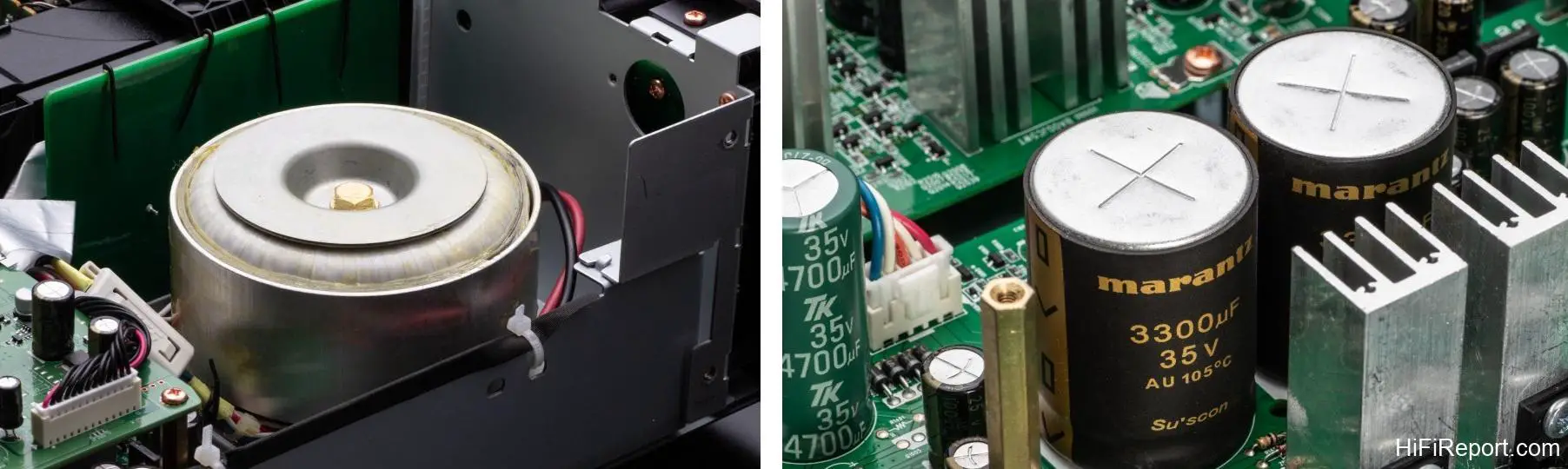
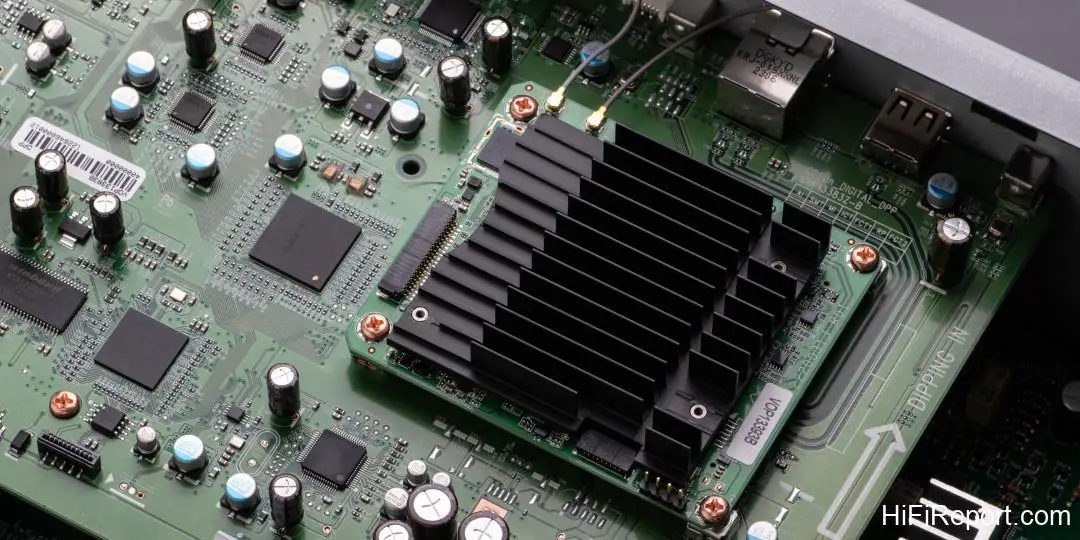
Peeking inside the chassis reveals the CD 50n’s robust circuit construction. Most screws within the unit are made of non-magnetic pure copper. The power supply section is handled by a generously sized toroidal transformer paired with two custom-made 3,300μF filter capacitors.
Significant effort has been put into the transformer’s vibration damping and shielding; it features double insulation to suppress magnetic flux leakage, is encased in a silicon steel frame externally, and sits on a steel plate that elevates and isolates it from the main chassis floor, preventing vibration and noise from entering the digital circuits.
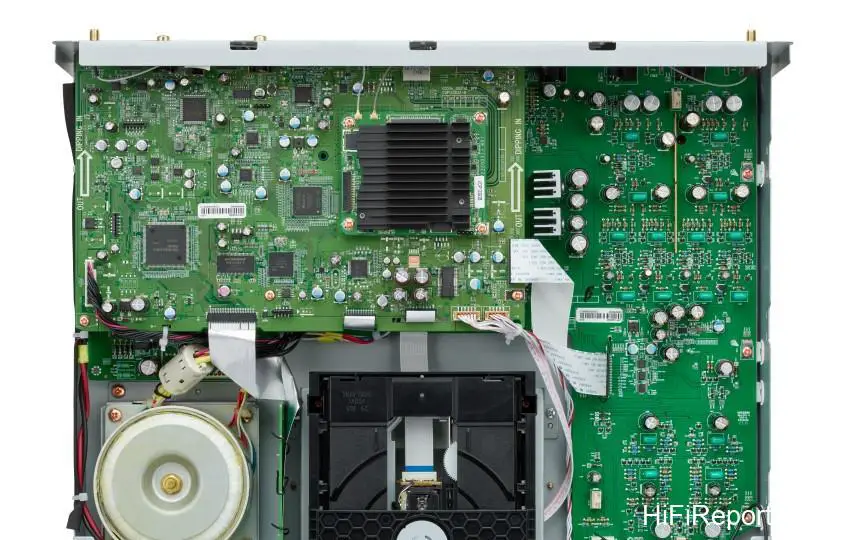
The main digital board houses the HEOS network module and the CD transport. Signals first pass through Marantz’s specially designed digital filter, “Marantz Musical Digital Filtering.” Following this, three ultra-low phase noise crystal clocks are used for clock regeneration, specifically targeting 44.1kHz and 48kHz sample rates to minimize digital jitter.
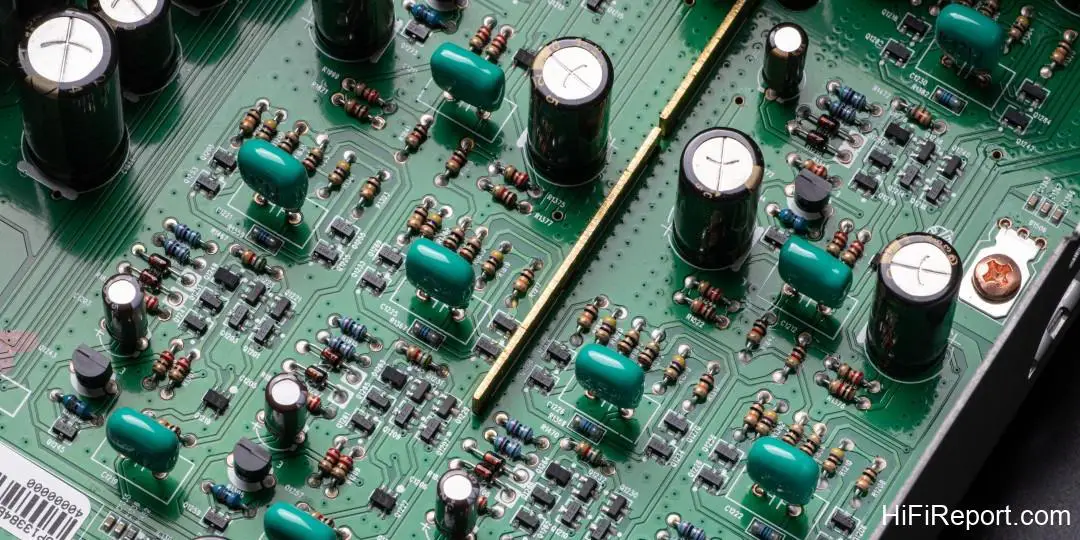
While this model doesn’t employ Marantz’s proprietary MMM technology for digital-to-analog conversion like the SACD 30n, it features an ESS 32-bit ES9018K2M DAC chip. The I/V conversion, low-pass filter, and output buffer circuits following the DAC are designed with a completely discrete layout, utilizing top-tier audio components along with Marantz’s exclusive “HDAM” and “HDAM-SA2” modules to create a variable-gain high-level amplification circuit.
This design is key to delivering rich musical detail and dynamic sonic performance. It also means the CD 50n is more than just a versatile source component; it possesses standard preamp functionality, capable of directly connecting to a power amplifier or active speakers to form a simple audio system.
Listening Impressions
For listening, I first used the CD 50n purely as a source, selecting the “Fixed” analog output connected to a Yamaha TW-EF3A integrated amplifier driving our in-house Pioneer S1-EX floorstanding speakers. The TW-EF3A has an automatic room correction function, and after adjustment, its frequency response in our listening room is very flat, clearly revealing the CD 50n’s sonic characteristics.
As a source paired with the TW-EF3A, the sound was neutral and clear, with high resolution across the entire frequency range. However, after listening for a while, I felt the sound lacked a bit of weight. So, I switched to connecting the CD 50n’s “Variable” output directly to a Keces 300+ power amplifier. This effectively engaged the unit’s preamp function.
Marantz specifically advises *against* using the “Fixed” analog output when connecting directly to a power amplifier to avoid excessive volume that could damage speakers.
According to Marantz, using the CD 50n as a digital preamp should effectively shorten the signal path. I initially expected the sound to become more direct, but surprisingly, the soundstage became wider, and the sonic center of gravity shifted downwards slightly. The sound quality became warmer and softer, and it gained more weight. Ultimately, I decided to use the Keces 300+ power amp for the final evaluation pairing.
First, I played Eric Clapton’s “Unplugged” live album. In the third track, “Hey Hey,” the transparency of the CD 50n’s sound was impressive, creating a realistic sense of space. The mid-range resolution was excellent, with a neutral and natural texture. The acoustic guitar playing sounded sweet and elastic, with a warm and resonant body. The various playing techniques in this song, such as strumming and pulling strings, conveyed strong force and solid weight.
Eric Clapton’s weathered blues voice sounded very smooth, with natural articulation of lips and mouth, free from any harshness or compression, instead feeling full and relaxed.
Next, I played saxophone master Cannonball Adderley’s jazz album, “Somethin’ Else.” From the first note, the brass players sounded incredibly full-bodied! The trumpet was rich and penetrating, with the high frequencies smoothed beautifully. The metallic sheen of the brass had a slight golden hue, sounding soft and non-fatiguing. The saxophone’s tone was warm and rich, with delicate vibrato details audible in the decay.
Its image felt cohesive and large, and the breathing nuances added a strong sense of liveness. The double bass had a full, elastic, and resonant quality, while the jazz drum accompaniment was powerful, with each strike revealing strong dynamics, adding a driving, lively rhythm to the jazz pieces.
Following this, I played Russian pianist Daniil Trifonov’s performance of Rachmaninoff’s “Piano Concerto No. 1.” The CD 50n’s soundstage effect amazed me once again. I could feel a profoundly deep stage unfolding behind the speakers. The musical background was very black, completely free of any impurities, and the instrument images were full-bodied, with outlines appearing exceptionally clear within the unit’s transparent soundstage. The piano tone was rounded and smooth.
The challenging virtuoso passages flowed like water, with each note clear and full of weight.
Aside from the transparent soundstage, another outstanding strength of this unit is its potent dynamic performance. The opening orchestral tutti in the first movement had tremendous explosive power! The energy was delivered sharply and quickly, with no sense of hesitation.
Even the piano’s dynamic contrasts were significantly clearer; not only could I hear delicate expression in soft touches, but during heavy low-register chord impacts, I could also feel the vast scale of the piano’s resonance, expressing the sheer beauty of the piano’s tone to its fullest.
Summary and Recommendation
Based on my experience, achieving smooth, easy-to-listen-to characteristics in affordable Japanese audio products is not difficult. However, this CD 50n not only offers smooth and transparent sound quality but also demonstrates that Marantz’s new generation of audio products has made significant breakthroughs in overall sonic performance. Even as a source component, you can clearly perceive the strong dynamics and soundstage effects brought by the proprietary HDAM amplification technology.
Coupled with its extensive connectivity, integration with televisions, and simultaneous CD and streaming playback capabilities, it is truly a perfect source for the living room listener. And if you also let it handle the duties of a preamp, its sound quality performance at this price point is truly hard to match. Highly recommended!
Specifications
* Product Type: Streaming Player, CD Player
* Colors: Black, Silver
* Signal-to-Noise Ratio: 112dB
* Frequency Response: USB 2Hz–50kHz (-3dB), CD 2Hz–20kHz (±1dB)
* Total Harmonic Distortion: USB 0.0010% (24bit), CD 0.0016% (16 bits)
* Maximum Sample Rate: USB DSD 11.2MHz, PCM 384kHz
* Digital Inputs: Optical ×1, Coaxial ×1, HDMI ×1 (ARC), USB-A ×1, USB-B ×1, RJ45 ×1
* Digital Outputs: Optical ×1, Coaxial ×1
* Analog Outputs: Variable RCA, Fixed RCA (two pairs), 6.3mm Headphone
* Dimensions (W×H×D): 442×130×424mm
* Weight: 10.3 kg