
Marten Parker Trio Floorstanding Speaker Review
Since 2020, I have been collaborating with HiFiReport to host music appreciation seminars, guiding audiences into the world of classical music.
The first seminar of this year took place on January 8th. Upon arriving at HiFiReport, I immediately noticed the Marten Parker Trio speakers standing prominently at the front. Positioned centrally was the MSB S202 stereo power amplifier, with the MSB Premier DAC serving as the source. This was precisely the same setup I had encountered at the Sound Ray room during the recent audio exhibition just three weeks prior! Fantastic! My visit to the Sound Ray room at the show had already left me with a strong positive impression of the Parker Trio’s performance.
However, Sound Ray’s Mr. Chang is renowned for his masterful tuning skills. Was it the inherent quality of the speakers themselves, or Mr. Chang’s expert touch that made them sound so exceptional? Here at HiFiReport, in a different setting and with a different setup, the sound remained remarkably “excellent.” Even attendees at the seminar that day couldn’t help but praise the speakers to HiFiReport’s owner, Mr. Chang.
I happened to be standing nearby when that gentleman voiced his praise, and I wholeheartedly agreed with his sentiment.
In the past, I had attempted to document my observations after each HiFiReport seminar, but starting last year, I became somewhat lax and discontinued this practice.
Both seminars last year featured the Wilson Audio Alexia 2 speakers, which I am very familiar with. This year, for the first seminar of the year, a new set of speakers was introduced, and the difference was immediately noticeable.
However, the period leading up to the Lunar New Year was incredibly busy, and I simply couldn’t find the time to write about that particular seminar.
The thought lingered in my mind, “These speakers are so good, shouldn’t I write something about them?” As the New Year passed, the idea faded somewhat.
Mr. Chang’s invitation served as a reminder, and gave me the opportunity to fulfill this silent promise I had made to myself.
Having heard them at the exhibition and at HiFiReport, this time we moved to Sound Ray’s listening room for another audition.
Of the three locations, HiFiReport’s space was the largest, yet when I played grand orchestral music, I didn’t sense any lack of power. The exhibition room was of medium size, and its performance was, needless to say, well-attested by many witnesses.
Sound Ray’s listening room, however, was considerably smaller, around 16 square meters, roughly the size of a typical home listening room.
Considering my previous two experiences, if the Parker Trio performs admirably in spaces of varying sizes, wouldn’t that be truly remarkable?
Parker Series Lineup
Launched in 2020, the Parker series is Marten’s latest line, positioned third in their product hierarchy, below the Mingus Series.
At the TAA audio show that year, Mr. Chang overcame numerous obstacles to bring in the Parker Quintet just the evening before the exhibition opened. He then worked through the night unpacking, positioning, and tuning them.
If you attended the TAA audio show that September, and if you visited the Sound Ray room, you might not have realized that the Parker Quintet was so new, because it already sounded fantastic! Mr. Chang later remarked that the Parker Quintet’s performance amazed even him. The Parker series comprises three models: the largest is the Parker Quintet, featuring five drivers; followed by the Trio with three drivers; and the smallest is the bookshelf model Duo, with a two-driver design.
Marten’s speaker naming convention is quite straightforward: the “” (ensemble) in the name indicates the number of drivers.
While the three Parker series models differ in size, they share three key design features: ceramic drivers, passive radiator design, and the M-Board cabinet with a front-narrow, rear-wide profile.
Ceramic Drivers
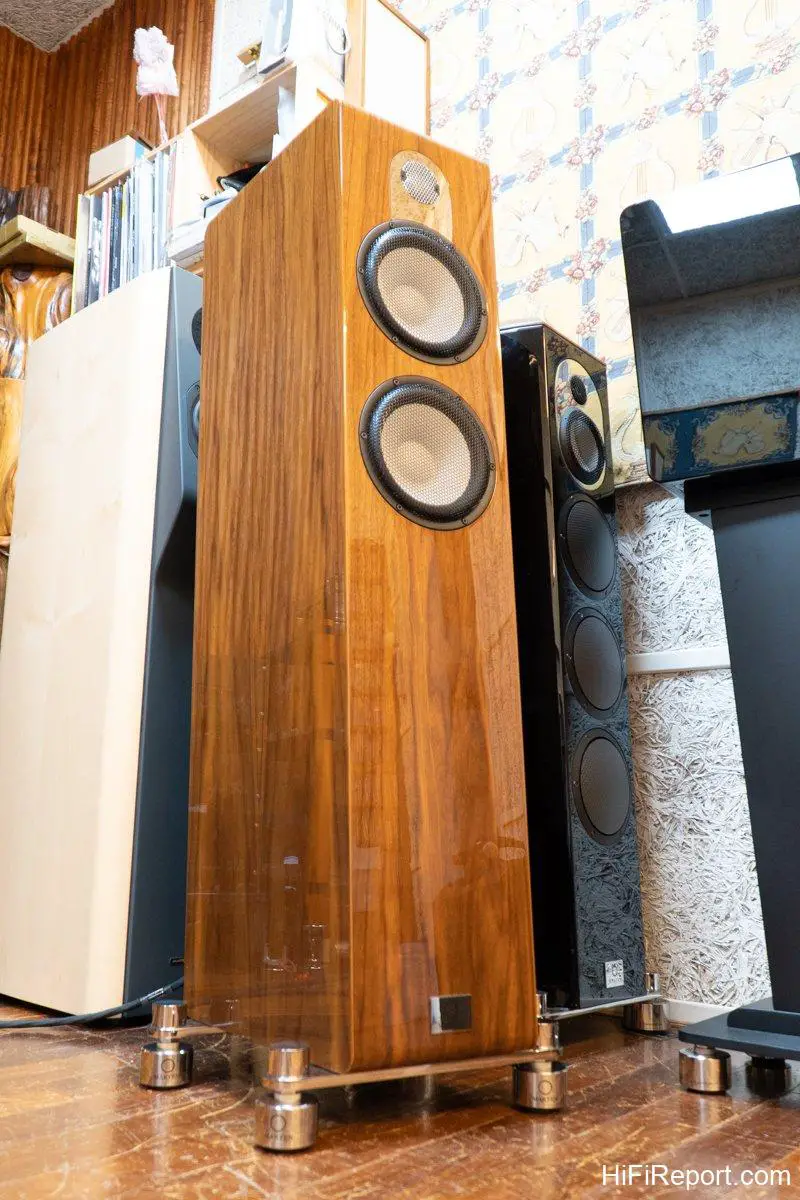
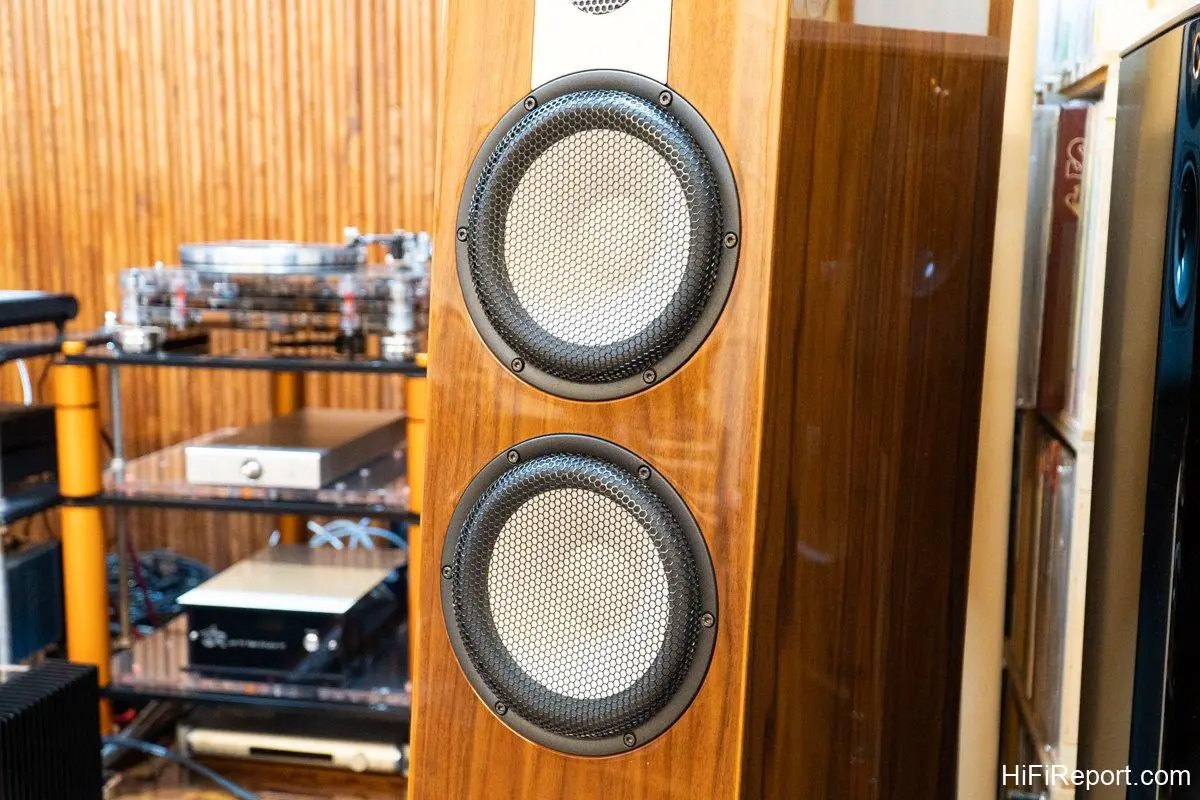
Following the naming logic, the Parker Trio, as the name suggests, is a three-driver speaker, featuring a 1-inch ceramic tweeter and two 7.5-inch ceramic mid-bass drivers in a 2.5-way configuration.
These drivers are custom-designed by Leif Olofsson, specifically for the Parker series.
All drivers are driven by neodymium magnets, aiming for more agile and precise movement.
According to Leif, these mid-bass drivers are the best available among similar types on the market – regardless of price.
The mid-bass drivers have a large diaphragm area, which moves a greater volume of air. Their long-throw design allows for higher dynamic headroom.
According to Marten’s official website, the Parker Trio is a 2.5-way design, meaning one of the two woofers handles the full frequency range up to the crossover point with the tweeter, while the other is used solely to reinforce the bass. Therefore, there should be a lower low-pass crossover point for the second mid-bass driver. However, the manufacturer does not specify the low-pass frequency for the second mid-bass driver in the specifications.
Accuton Ceramic Tweeter
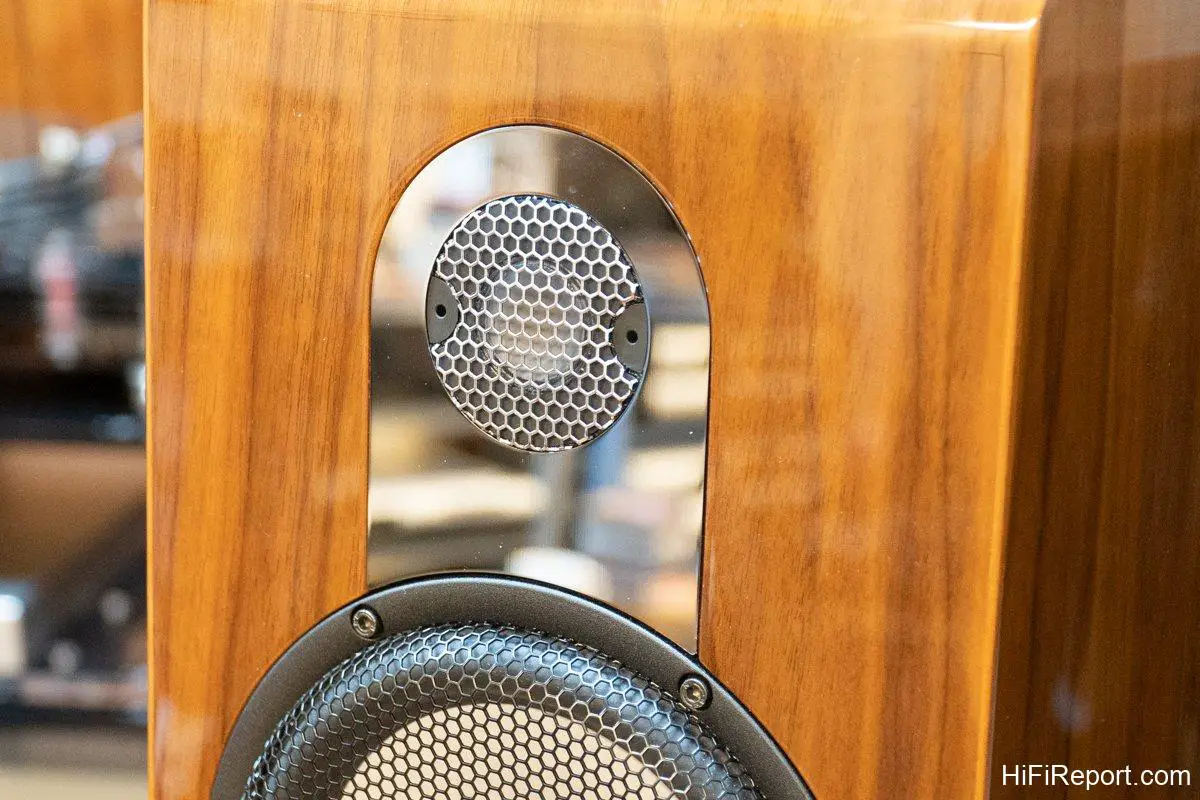
The ceramic tweeter is a custom-made unit from Accuton, crossing over with the mid-range at 2.2kHz. Its specified frequency extension reaches up to 40kHz, providing a very wide operating range.
While the standard ceramic tweeter is already impressive, Marten offers even more high-end options.
Consumers can opt for diamond tweeters at an additional cost. The diamond version also includes upgrades to the crossover components and speaker terminals.
Internal wiring is also upgraded. The standard Parker Trio uses high-quality Jorma Design copper wiring with shielding, which is already excellent. The diamond version upgrades to Jorma Design’s flagship Statement series cables.
Naturally, the price increases significantly (really, significantly).
Rear Passive Radiators
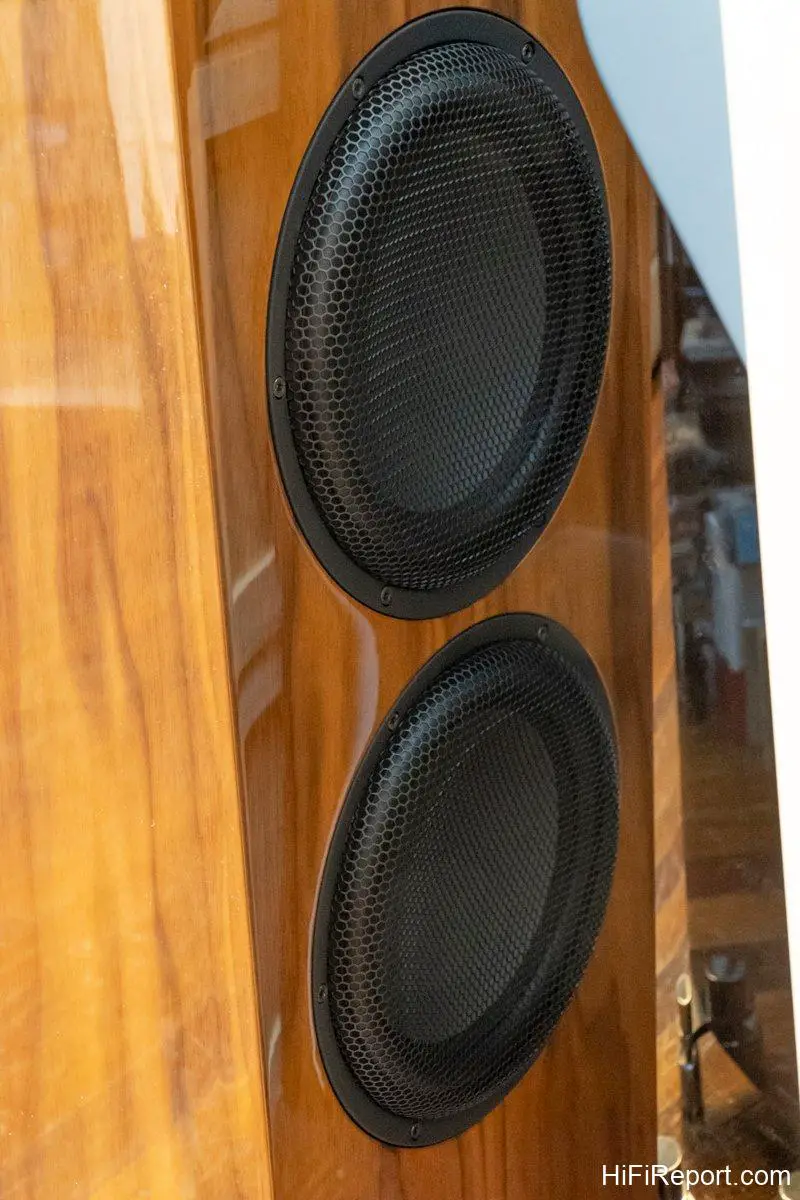
In addition to the three front-facing drivers, the Parker Trio features two aluminum diaphragm passive radiators on the rear. These are not internally wired and are not driven by the amplifier. They operate passively to enhance bass output and extension.
Because of the passive radiator design, the Parker Trio’s cabinet is a sealed enclosure, without the common bass reflex port.
This design not only aids in low-frequency reproduction but also improves efficiency. The Parker Trio has a sensitivity of 91dB, and the larger Quintet even boasts 93dB.
Sophisticated Crossover Design
Interestingly, none of Marten’s other floorstanding speakers employ a .5-way design; only the two floorstanding models in the Parker series use a 2.5-way configuration.
Marten’s official website doesn’t elaborate much on this, but it mentions their “multi-diverse crossover” technology, implying the use of different crossover slopes.
Beyond the quality and matching of drivers and cabinets, the crossover is crucial to speaker performance.
Leif designs the crossovers himself, through repeated testing, listening, and measurement, as well as computer modeling and simulation. Components are carefully selected and hand-assembled.
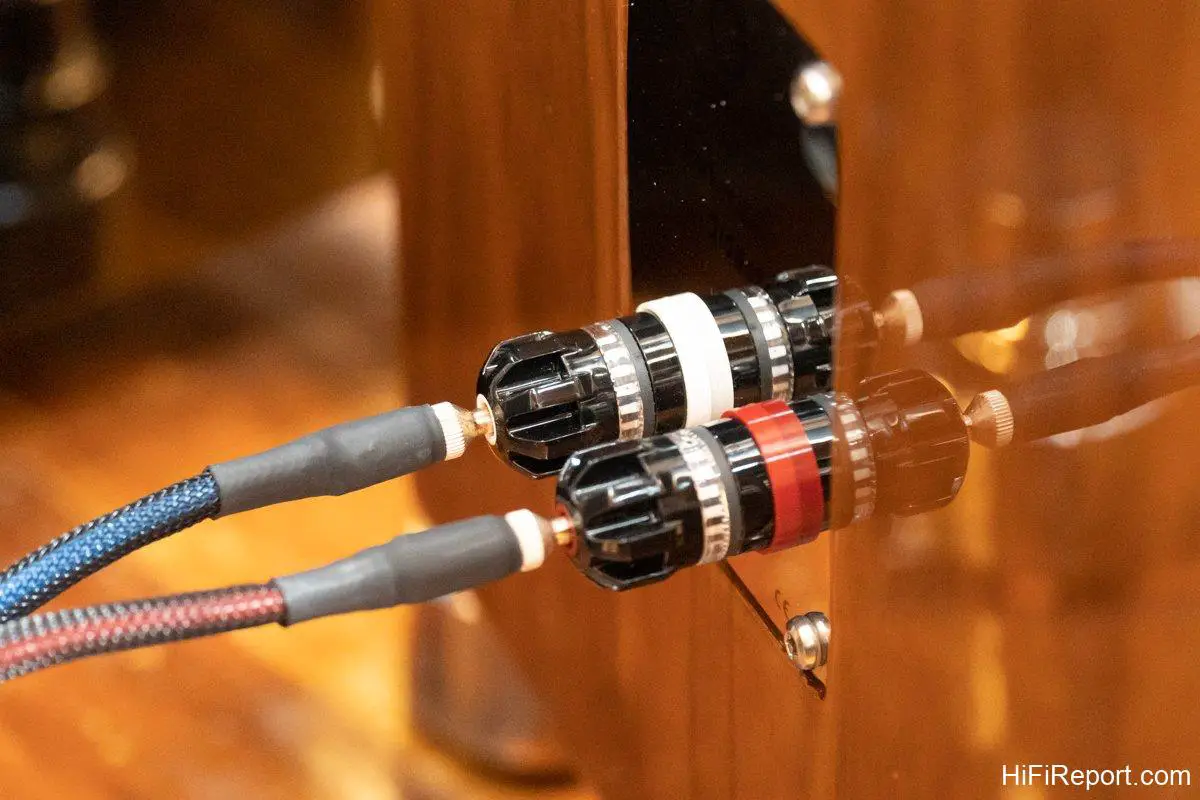
The fact that the Trio only has a single set of WBT nextgen speaker terminals on the rear demonstrates Leif’s confidence in his crossover design.
Modern, Minimalist Aesthetics
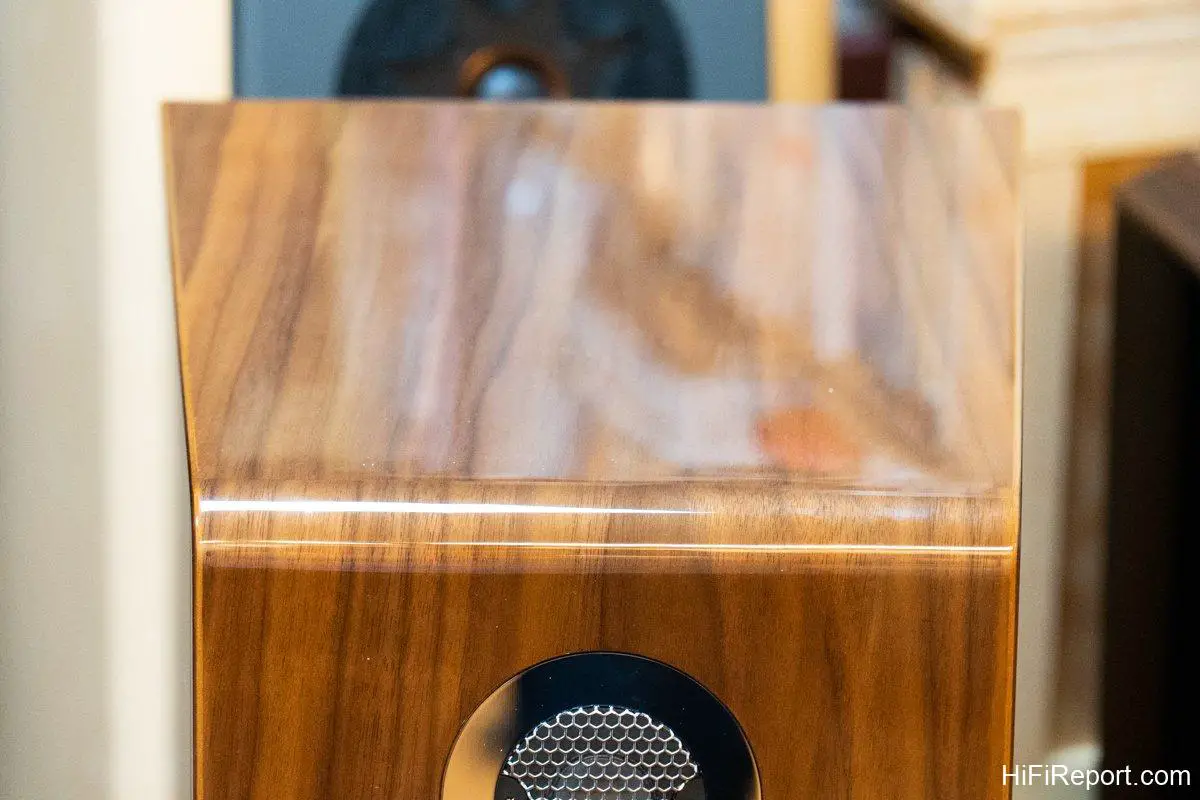
The cabinet design is minimalist and clean. Apart from the metal trim around the tweeter and the rear terminal plate, there are no other contrasting elements or color blocks.
The cabinet is available in four finishes: walnut piano gloss, walnut matte, black piano gloss, and white piano gloss. Marten’s current four series clearly delineate target audiences and design styles—Coltrane and Mingus lean towards luxury, while Parker and Oscar emphasize minimalist chic.
These four series, two sets of design philosophies, cater to the tastes of most discerning consumers. Marten’s strategy is undeniably clever.
M-Board Cabinet Construction
The cabinet is constructed using a material called M-board, which is not simply MDF but a composite of multiple materials bonded together.
However, Marten does not disclose the specific materials or their proportions.
Due to the composite nature of different materials, M-board exhibits superior damping characteristics, significantly reducing cabinet resonances.
In terms of form, the front-narrow, rear-wide, and slightly backward-sloping design is deceptively complex in its construction.
The front-narrow, rear-wide shape creates non-parallel side panels, which helps to minimize internal standing waves.
The slight backward slope time-aligns the tweeter and mid-bass drivers, improving phase coherence.
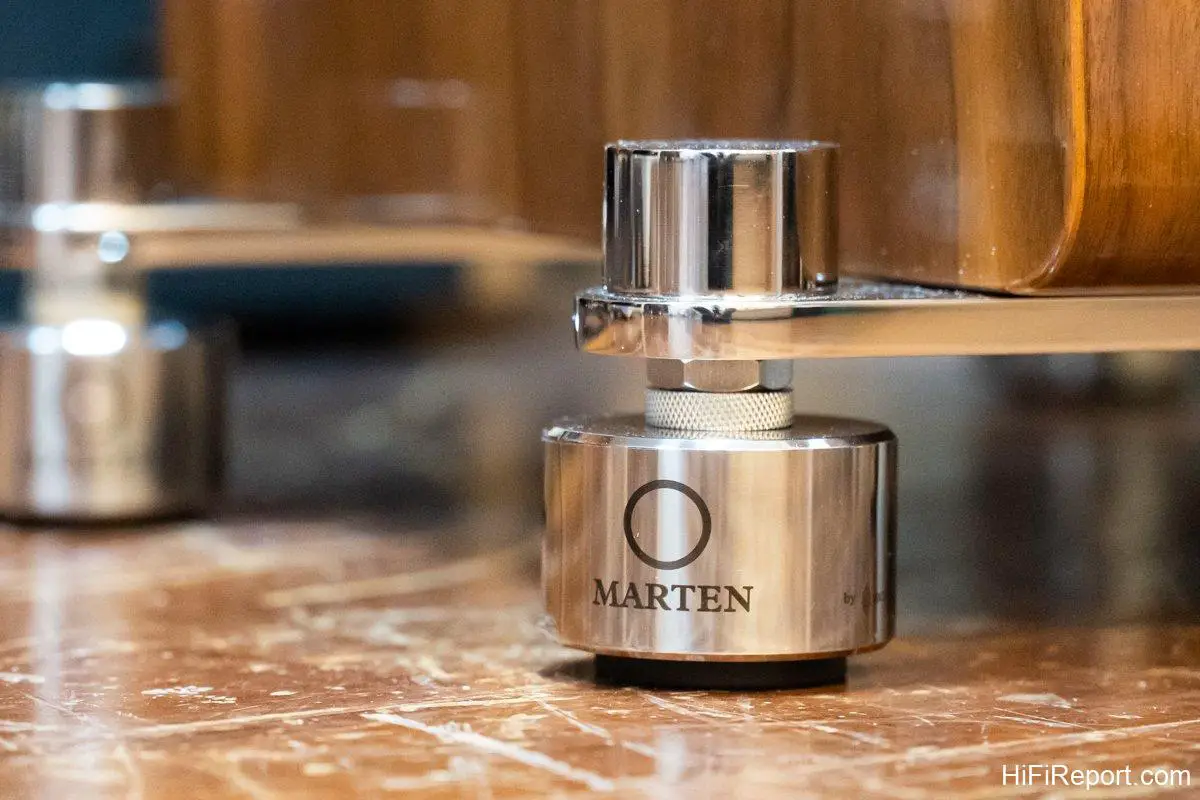
The base utilizes feet co-developed with IsoAcoustics. Their dual-hardness design effectively dissipates vibration energy, isolating the speaker from floor-borne vibrations and vice versa.
Unlike many manufacturers who use spikes, Marten collaborates with a professional isolation company to find the optimal vibration control solution for each speaker model based on its weight.
Consequently, Marten speaker feet are not interchangeable between models due to different weight capacities and specifications.
ASR & MSB Electronics with Audioplan Cables
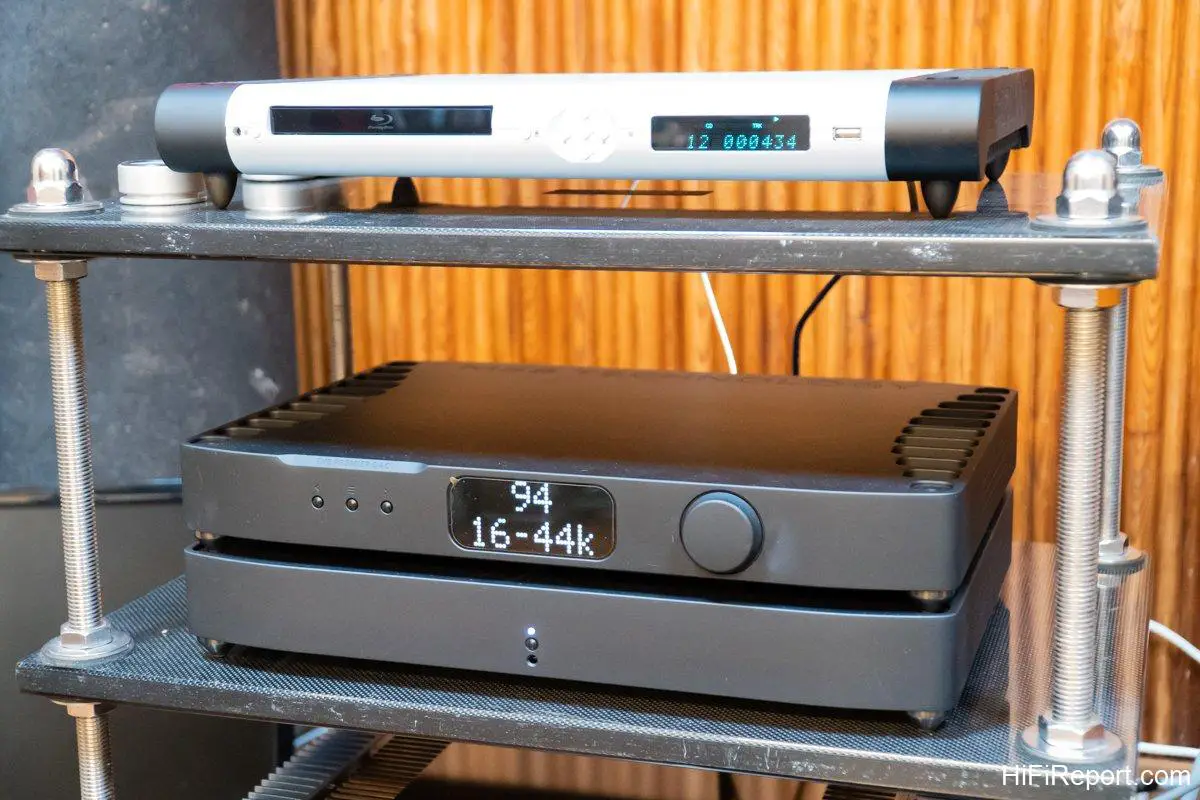
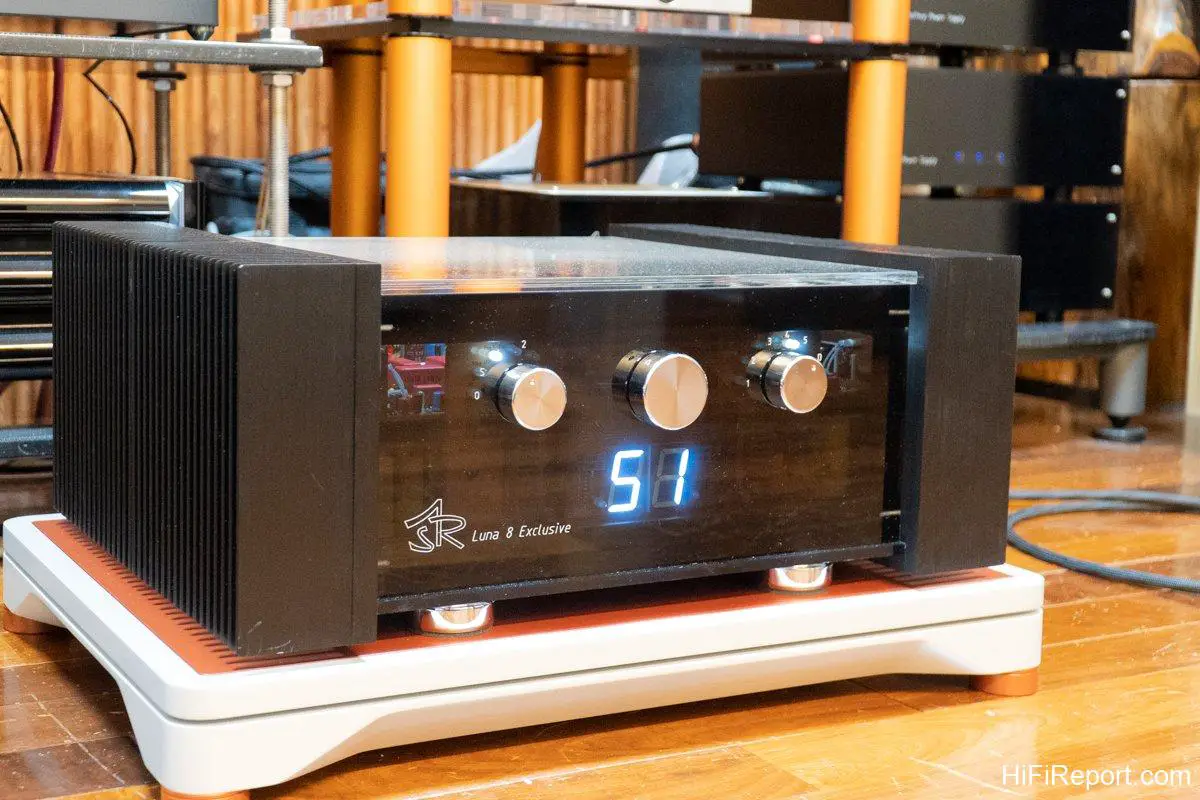
The system Mr. Chang at Sound Ray assembled to pair with the Parker Trio this time was different from what I had heard in the previous two instances. The amplifier was switched to an ASR Luna 8 Exclusive. This unit, with its separate power supply in two external boxes and battery-powered preamp stage, delivers not only ample power but also a sonic purity that surpasses the standard version.
The source was an MSB Universal Media Transport Plus, outputting digitally via coaxial to the Premier DAC.
The cabling in this system was also a new combination I rarely encounter at Sound Ray’s listening room. In the past, Mr. Chang often used Jorma Design or Vertere Acoustics cables. This time, he opted for German Audioplan cables.
“Many people know this German company only as a speaker manufacturer, but they actually started with cables and are still making them today,” Mr. Chang explained. Audioplan has shifted its business focus back to its roots in recent years, prioritizing cables.
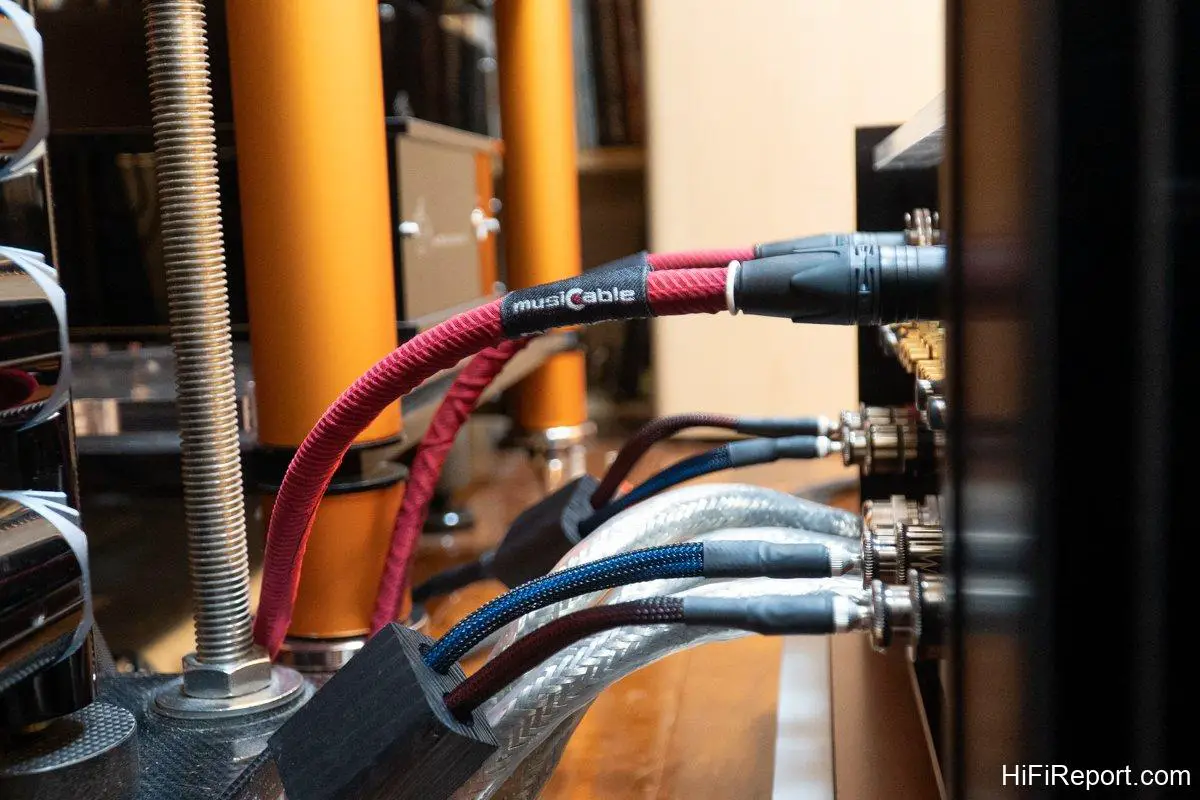
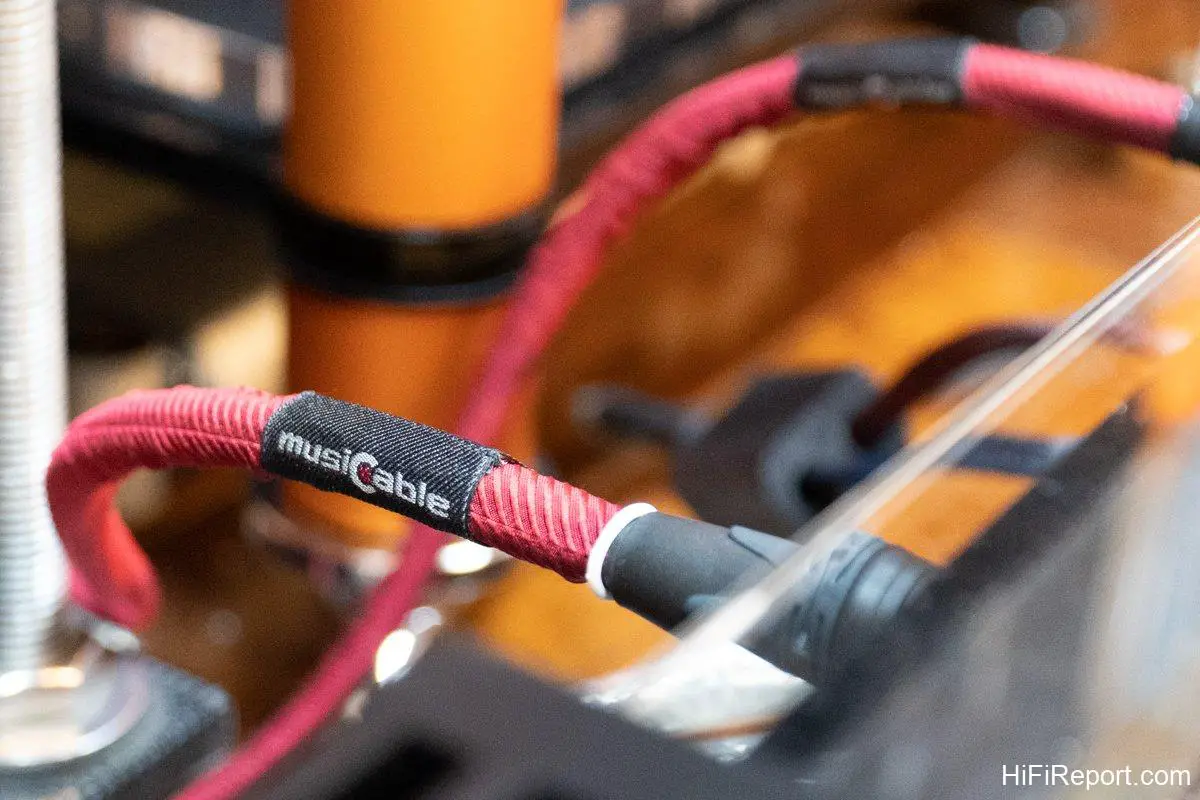
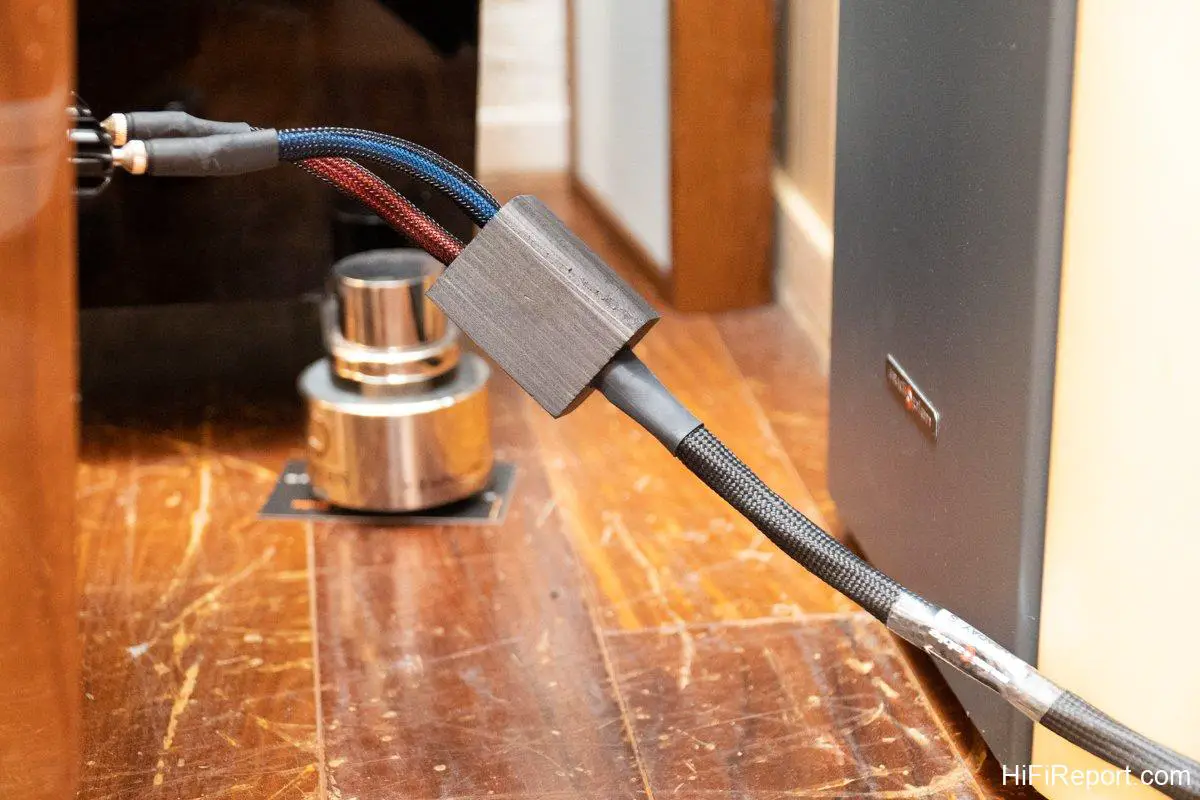
The power cable connected to the Premier DAC was the top-of-the-line PowerCord Ultimate. The interconnects were flagship Maxwell U balanced versions, and the speaker cables were the second-tier Faraday S II.
“Their cables all use ‘heavy duty coating’ silver plating…,” Mr. Chang mentioned.
“That’s thick silver plating then?”
“‘Heavy duty coating,’ you should still call it ” (silver-clad).” Mr. Chang asked me to unplug the speaker and signal cables to examine them. The silver-white surface had a slightly matte, oxidized appearance.
“These terminals also have ‘heavy duty coating,’ all silver-clad.” The balanced connectors were Neutrik, but the internal pins were replaced with silver-clad components.
“Their cables sound truly amazing. I was shocked when I first heard them. How am I supposed to sell other brands of cables now?”
Precise Imaging and Soundstage
Mr. Chang made it sound effortless, as if simply plugging in a cable solved all problems. But he must have invested considerable effort in setting up this system, because the soundstage, the imaging, and the tonal balance were utterly captivating.
While I was taking photos, Mr. Chang casually put on “dalan,” an album by Puyuma singer Sangpuy. This album received nominations at the 2013 Golden Melody Awards for Best Indigenous Language Album, Best Newcomer, Best Arrangement, and Best Album Producer. Sangpuy himself won the Best Indigenous Singer award at the 2013 Golden Melody Awards as a newcomer.
Sangpuy’s career soared from there. His 2016 album “” (Yaangad) was even more acclaimed, sweeping three awards at the following year’s Golden Melody Awards.
My point is not about the music itself, but Mr. Chang’s music selection was excellent. I was immediately drawn in as soon as the CD started playing.
Listening, photographing, and chatting with Mr. Chang, a whole CD played through. The sense of image was truly captivating—positioning was clear and precise, very clear and very precise.
Imaging was clear and three-dimensional, again, very clear and very three-dimensional.
You might worry that my repeated use of “clear” and “precise” implies a cold sonic character? Not, in, the, slightest.
I didn’t find it cold at all, nor did I perceive it as warm. It was a balanced, harmonious sensation.
The third track, the title song “dalan,” was written by Sangpuy in a Sami indigenous town in the Arctic Circle’s polar day region. It carries a world-music style with indigenous elements, imbued with a mysterious Arctic atmosphere. The guitar notes were clear and full, and the low-voiced opening created a sense of remoteness and tranquility. Then, the percussion entered, the deep and full drum sounds were profound yet not boomy. Marten’s passive radiator design prowess was evident.
As Sangpuy’s vocals rose, the dynamics unfolded, and the harmonies were distinctly layered.
Who recorded this? The recording engineer was Platinum Studio, a renowned studio in Taiwan with top-notch equipment. Post-production was handled by Sterling Sound in New York, a truly lavish production. No wonder it sounds so fantastic!
Revealing Every Detail
Being Marten speakers, how could I miss out on jazz? Every time I listen to Marten speakers at Sound Ray, I always choose a few jazz CDs.
I put on Sarah Vaughan’s 1985 Paris concert and listened to her a cappella rendition of “Summertime.” Without accompaniment, it was easier to appreciate how Sarah Vaughan utilized her vocal techniques to handle every nuance of the song. You could effortlessly discern every vocal turn and articulation detail. The singer’s image was three-dimensional and prominent yet not excessively forward.
“Wave,” another slow song, showcased her vocal dynamics as she ascended in pitch and then lowered her voice, the transitions were simply exquisite.
The Parker Trio reproduced the sonic image with remarkable clarity. It was like a 4K high-resolution, high-contrast picture. Not only were lines and contours distinct, but there were also a plethora of details. The high brightness and high contrast revealed all the layers.
The drums in the background were gentle, and the bass plucks, in addition to their bouncy articulation, also possessed a sense of looseness.
Towards the end of the song, Sarah Vaughan sang slower and slower, finally humorously making snoring sounds, which made the audience burst into laughter and applause.
She then introduced the trio members one by one. At this point, it was easy to distinguish between the natural sound and the microphone echo added.
Although Marten emphasizes that their products are “born for music,” their clarity, precision, and transparency do lean somewhat towards a monitor-like character.
Are you also meticulous about detail retrieval? The Parker Trio truly excels in this regard.
Deep, Full Bass with Speed and Resolution
The Parker Trio’s sound is vibrant and energetic, full of life and spirit, as evidenced by Hugh Masekela’s “Hope” album.
From the very first track, “Abangoma,” the drum sound was simply intoxicating.
So bouncy, so elastic, so powerful—drums with weight and impact.
The Parker Trio appears simple with its three front drivers, and the 7.5-inch mid-bass drivers don’t seem particularly large or imposing, yet they produce such deep, full bass. The sealed enclosure and passive radiator design are undeniably impressive.
As the saying goes in audiophile circles, “Good bass is worth its weight in gold.” Speaker prices often escalate due to bass performance.
I had already experienced the Parker Trio’s bass prowess at the previous audio show and at HiFiReport. Listening again this time, with familiar software, I was even more impressed.
Overall, the speaker’s sonic speed is fast, the mids and highs are quick and agile, which contributes to its precise character.
Its bass is required to be both elastic and full, deep, and yet maintain speed and resolution. This is no easy feat.
But its liveliness and vibrancy are not limited to this; the bass performance actually enhances its vitality and provides excellent support for its overall liveliness.
In “Mandela,” not only are there strong, full kick drums, but also backing vocals and percussion. The colorful and energetic performance and vocals sounded incredibly vibrant on this system.
The trumpet had a bright and cheerful quality, with a touch of hardness, yet with adequate body, creating a very live texture and atmosphere.
Transparency and Intimacy
Another example, again a live recording, Ahmad Jamal’s 1992 Paris concert captured not only the live atmosphere but also the musicians’ incredibly energetic, live performance.
From the first track, “The Tube,” the piano played with a brisk and unrestrained style, typical of Jamal.
The electric bass also showcased its virtuosity, playing a series of rapid melodies in dialogue with the piano.
The drums were equally active, with crisp and powerful drum sounds, each strike clear and decisive.
The Parker Trio’s soundstage was transparent, with distinct layers. This transparency creates an intimacy, bridging the gap between the music and the listener, offering a clear and immediate connection.
Duke Ellington’s classic “Caravan,” in Jamal’s hands, was infused with more bebop energy, wild and aggressive.
Those sudden fortes, whether from the piano or drums, tested the system’s ability to handle dynamic peaks.
Although the Parker Trio has a high sensitivity of 91dB, the stable and reliable drive of the ASR Luna 8 Exclusive also played a crucial role.
I set the MSB Premier DAC’s volume output to 100, which is full output without attenuation or gain. Paired with the Luna 8 Exclusive at a volume setting of 58-60, it could fully reveal the music’s dynamic intensity while also faithfully conveying the music’s texture and detail.
Effortless Orchestral Grandeur
Playing large-scale orchestral music, this system was naturally also impressive.
Last time at HiFiReport, I was standing in the corner, behind the speakers, and the sound I heard was certainly not as good as from the front.
I wanted to know how the Parker Trio would perform with the music I brought that day, so this time I deliberately brought John Williams in Vienna album.
After inserting the CD into the MSB Universal transport and it finished reading, the music started playing automatically.
The first track was “The Flight to Neverland” from the movie “Hook,” a grand piece with brilliant orchestral arrangements. A simple theme is constantly repeated, but in each repetition, the changing orchestration creates a kaleidoscope of colorful worlds.
I have heard this piece on many systems, and this experience was exceptional. In a relatively small space, it unfolded a rich and expansive soundstage. The bass was impactful and full yet not muddy. The music had both weight and color, and was layered. This was definitely a magnificent Neverland! The second track, selections from “Close Encounters of the Third Kind,” also filled me with excitement.
The opening violins played sustained high notes, dissonant harmonies, creating a mysterious and tense atmosphere. This was the arrival of aliens, filled with ominous and unknown qualities.
The weight of the low strings was far beyond what the visual size of the speakers would suggest. How could these not-so-large speakers produce such bass depth and thickness? The music progressed step by step, swirling and winding, leading to a climax—the theme of the mothership’s arrival.
After a still avant-garde passage, it transitioned into a gentle theme, with tender strings, high strings radiating a soft luster. As more sections joined in, the musical texture thickened, until the peak, where the signature five-note communication motif appeared in the powerful brass section.
Layers upon layers of strings surged forth, amplifying the music’s emotional impact.
The beauty of this music lies not only in the melody but even more so in the orchestration. John Williams fully demonstrated how his style was influenced by late Romantic composers.
Excellent! Although the amplifier was different, the MSB S202’s capabilities are by no means inferior to the ASR Luna 8 Exclusive. I believe the level of performance at the HiFiReport seminar should also be very convincing (which puts my mind at ease).
Piano Performance
Do you enjoy listening to piano music? The Parker Trio also excels in reproducing piano music.
Although what we hear is always the combined performance of the entire system, the inherent quality of the speakers is undeniable. Even though the characteristics of the front-end equipment will be incorporated, the speaker’s own nature and performance can still be discerned.
What is the Parker Trio’s character? Why does it sound so good with piano music? Firstly, it is fast. Although the piano is a stringed instrument, it produces sound by hammers striking the strings. Therefore, the speed, force, and finger independence of keyboard playing all affect the piano sound. Piano reproduction is a stringent test of a speaker’s (or audio system’s) speed.
Secondly, the Parker Trio’s sound is clear and highly transparent, which is conducive to showcasing the rich and colorful tones of the piano.
Thirdly, its frequency bandwidth is wide. The manufacturer’s specifications state 26Hz-40kHz. The lowest note on an 88-key piano is 27.5Hz. Classical piano pieces rarely go lower. Compared to many floorstanding speakers of similar size, the Parker Trio is clearly better equipped to fully reproduce the piano’s range.
Finally, its sound is open, with ample energy and outstanding dynamic performance.
The piano is the “king of instruments.” When reproducing piano music, the Parker Trio is capable of recreating the piano’s majestic presence.
Based on the above four reasons, I praise—and must praise—the Parker Trio’s performance with piano music.
Listening to Denis Pascal playing Liszt’s Hungarian Rhapsody No. 2, the full, resonant, and pure piano sound started from the low register played by the left hand and gradually spread and expanded.
Many people are familiar with this piece, but you may not be familiar with this version. This version is excellent in both recording and performance. And you may not have heard the Parker Trio play this piece, or even Marten speakers playing this piece.
Listening to the resonance of the piano’s low register, the lingering quality of the vibrating strings, how deep and stable it is, can only be truly appreciated by hearing it.
As for the rapid sequences of notes, each note was distinct and forceful. Not all piano pieces are this impactful, but if Hungarian Rhapsody No. 2 lacks impact, it’s not worth listening to.
When the high notes sounded, the harmonics were truly beautiful, not only bright and colorful but also lingering and resonant.
It’s hard to imagine what it would be like with diamond tweeters! In the third piece, the opening features the left hand circling in the low register, deep, sonorous, and powerful, with the piano body’s resonance adding to the weight.
Then the music moves to the right hand, traversing back and forth in the high register. This interplay between low and high registers fully demonstrates the Parker Trio’s capabilities in reproducing piano.
When Denis Pascal finished a phrase, his fingers still pressed on the keys, and the sustain slowly faded away. Listening to the piano sound dissolving and dissipating into the air, the image was real and intimate.
The Parker Trio’s reproduction of piano music is truly excellent!
Must-Listen Speakers
Exhibition, HiFiReport, Sound Ray listening room—three encounters with the Marten Parker Trio within three months, each time leaving me reluctant to leave.
Its proportions are moderate, yet it possesses a larger-than-expected scale and wider dynamic range.
Its sound is precise, natural, and balanced, capable of captivating even the most serious music enthusiasts.
The refined and minimalist exterior design is both attractive and timeless—a classic “High WAF” speaker.
If you have this budget and are planning to purchase new speakers, regardless of how many pairs you have auditioned, it is worth listening to the Parker Trio—this is the recommendation from someone at HiFiReport who has listened to them three times in three different locations.
Specifications
* Type: 5-driver 2.5-way passive radiator floorstanding speaker
* Drivers: 1 x 1-inch ceramic tweeter (upgradeable to diamond tweeter), 2 x 7.5-inch ceramic mid-bass drivers, 2 x 9-inch aluminum passive radiators
* Power Handling: 300 Watts
* Sensitivity: 91 dB
* Frequency Response: 26 Hz – 40 kHz ± 2 dB
* Impedance: 6 Ω (minimum 3.1 Ω)
* Crossover Frequency: 2.2 kHz
* Dimensions: 117 × 22 – 28 × 36 cm (H×W×D)
* Weight: 40 kg