
Marten Parker Trio Floorstanding Speaker Review
Since 2020, I’ve been collaborating with HiFiReport to host music appreciation seminars, guiding attendees into the world of classical music.
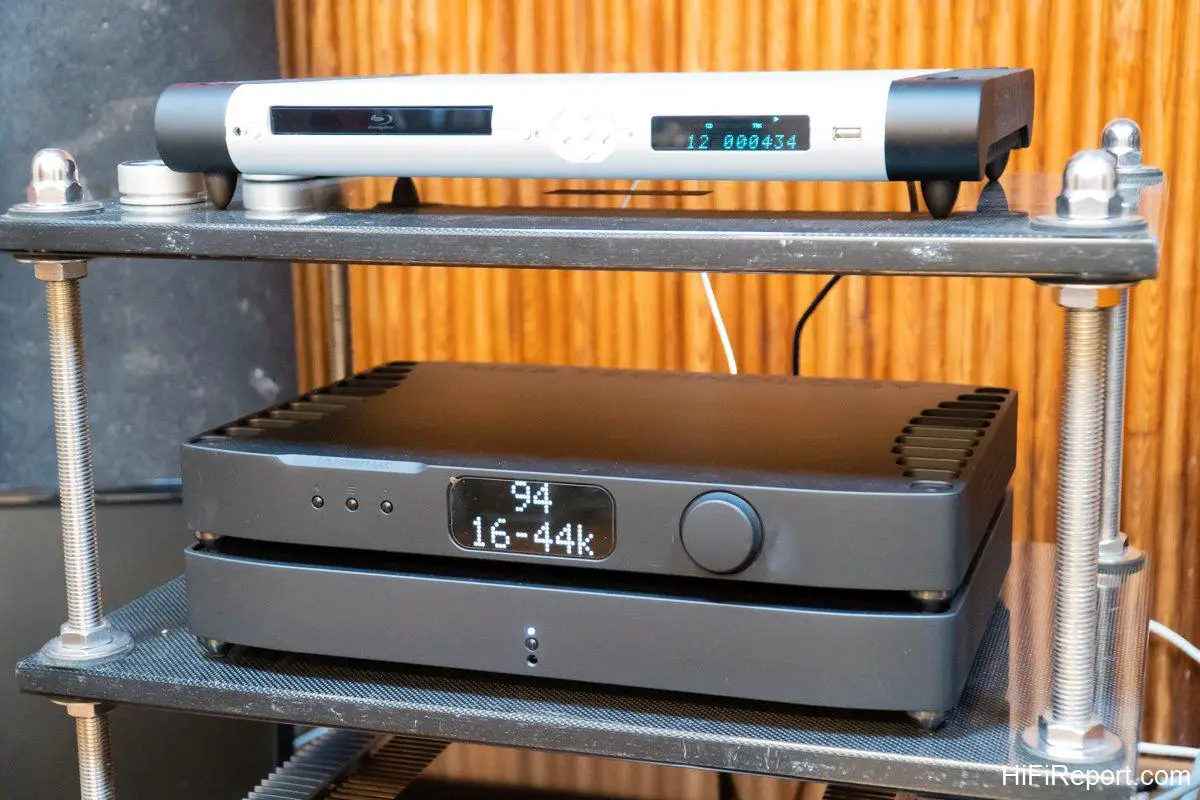
The first seminar of this year took place on January 8th. Upon arriving at HiFiReport, the Marten Parker Trio speakers immediately caught my eye, positioned prominently at the front. Central to the setup was an MSB S202 stereo power amplifier, paired with an MSB Premier DAC as the source. This was the very same combination I had encountered at the My-HiEnd Hi-Fi Show just three weeks prior in the SoundRay room! Excellent! My visit to SoundRay’s suite at the show left a lasting impression of the Parker Trio’s outstanding performance.
However, SoundRay’s Mr. Chang is renowned for his exceptional tuning skills. Was the impressive sound primarily due to the speakers themselves, or Mr. Chang’s masterful setup? Here at HiFiReport, in a different venue and with a different setup, the sound was still undeniably “excellent.” Even the guests attending the seminar couldn’t help but praise the speakers to HiFiReport owner Mr. Chang, expressing, “I must commend these speakers.”
I stood nearby as that gentleman spoke, wholeheartedly agreeing with his praise.
In the past, I had attempted to document my observations after each HiFiReport seminar, but this practice waned last year due to my own inertia.
Both seminars last year featured the Wilson Audio Alexia 2 speakers, a model I am intimately familiar with. This year, the inaugural seminar introduced new speakers, making an immediate impact.
Unfortunately, the busyness leading up to the Lunar New Year prevented me from writing about that initial encounter.
The matter lingered in my mind. “These speakers are so remarkable, shouldn’t I write something about them?” After the New Year festivities, the thought had almost faded.
Mr. Chang’s invitation served as a reminder, offering me the opportunity to fulfill that unspoken wish.
Having heard them at the show, at HiFiReport, and now in SoundRay’s own listening room, across these three locations – HiFiReport offered the largest space. Yet, even when playing grand orchestral pieces, I never felt a sense of strain or inadequacy. The show exhibition space, smaller than HiFiReport, delivered a performance that spoke for itself, witnessed by many.
SoundRay’s listening room, however, was considerably smaller, around 165 square feet, comparable to a typical home room.
Considering these three experiences, if the Parker Trio could excel in spaces of varying sizes, wouldn’t that be truly exceptional?
Parker Series: Third in Lineup
Launched in 2020, the Parker series is Marten’s latest, positioned third in their product hierarchy, following the Mingus Series.
At the TAA Hi-End Show that year, Mr. Chang overcame considerable logistical challenges to receive the Parker Quintet speakers just the evening before the show’s opening. He then proceeded to unpack, position, and tune them throughout the night.
If you attended the TAA show that September and visited SoundRay’s room, you might not have realized the Parker Quintet was so new, as they sounded fantastic right away! Mr. Chang later remarked that the Parker Quintet’s performance was “Amazing!” The Parker series comprises three models: the largest Parker Quintet featuring five front-firing drivers, the mid-sized Trio with three drivers, and the smallest bookshelf Duo with two drivers.
Marten’s naming convention for their speakers using “” (ensemble) is quite literal; the number of drivers corresponds to the ensemble number in the name.
While differing in size, all three Parker series models share three key design elements: ceramic drivers, passive radiator design, and the M-Board cabinet with its wider front and narrower rear profile.
Ceramic Bass Drivers: “The Best,” Says Designer
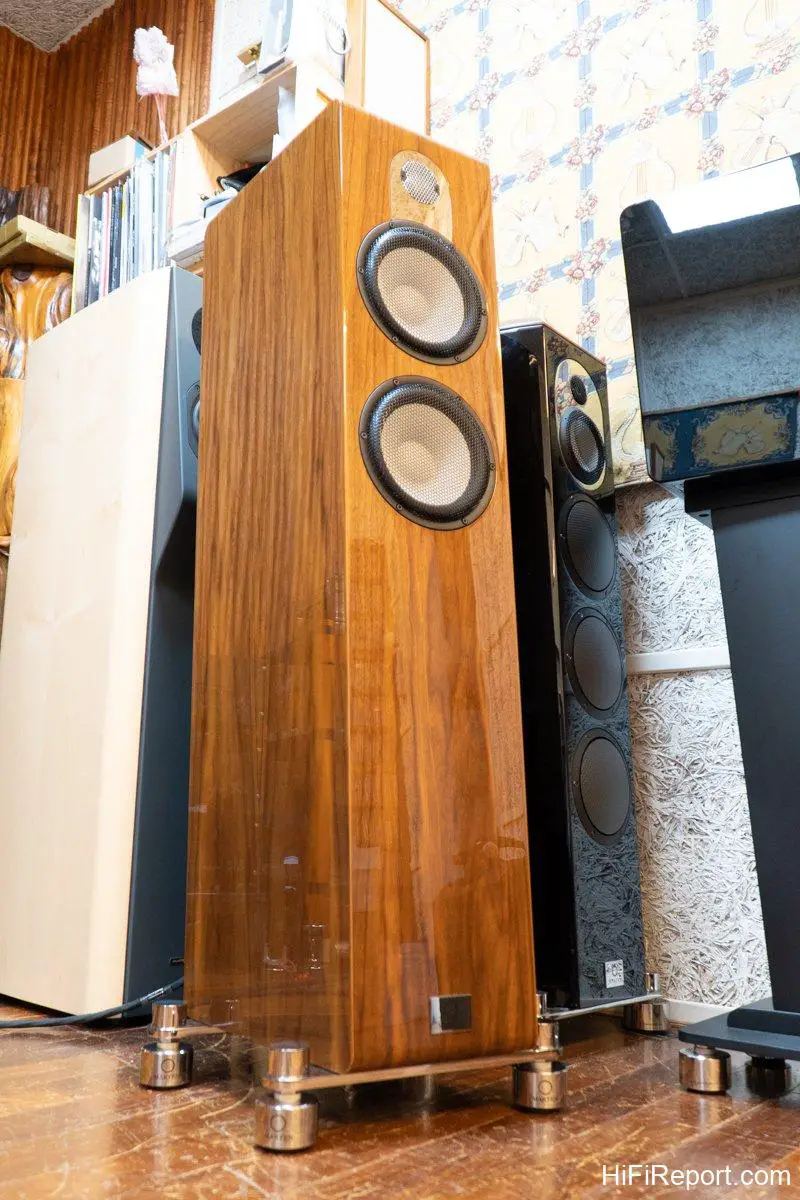
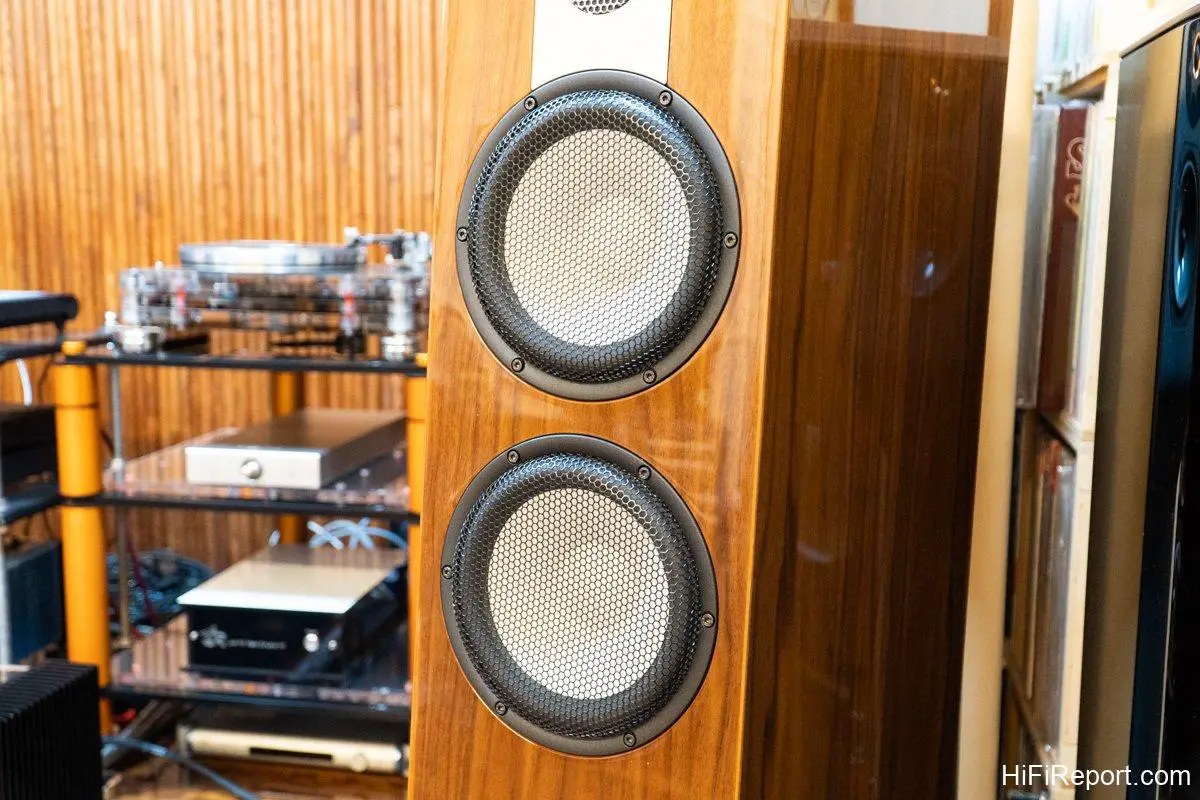
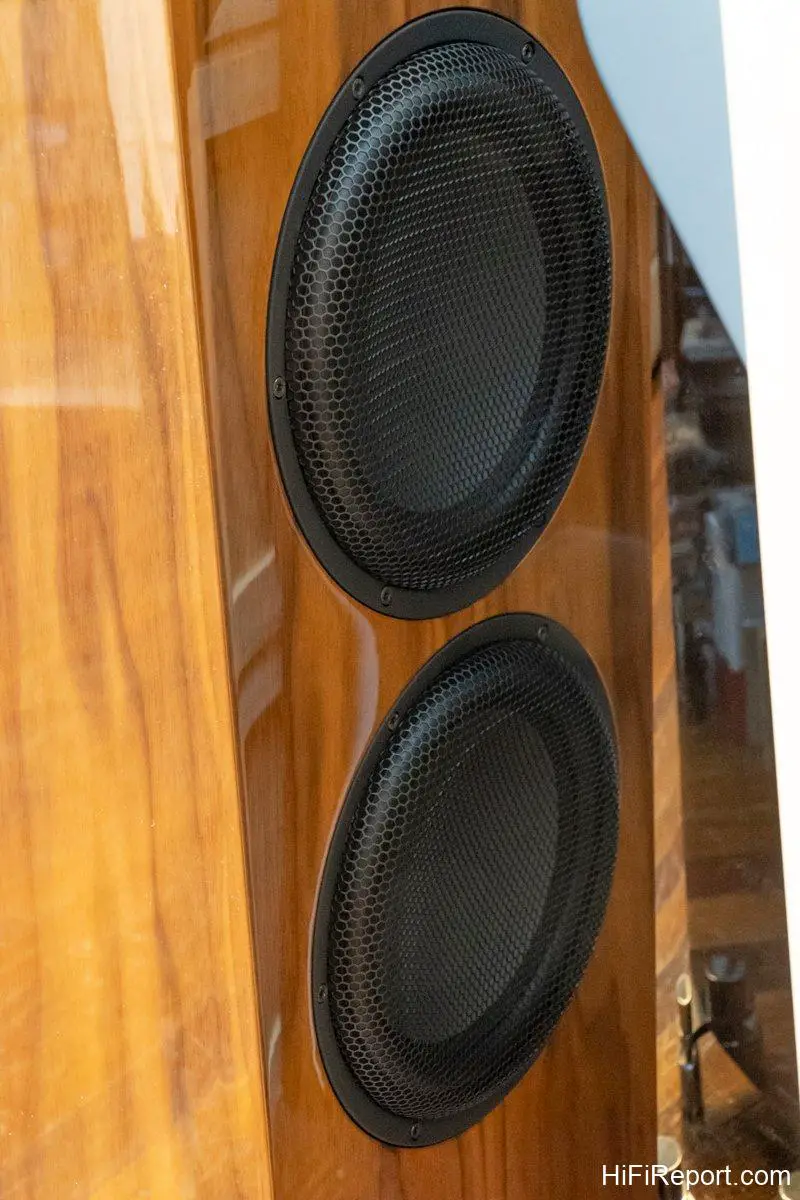
As the name suggests, the Parker Trio is a three-driver speaker, featuring a 1-inch ceramic tweeter and two 7.5-inch ceramic mid-bass drivers in a 2.5-way configuration.
These drivers are custom-designed by Leif Olofsson specifically for the Parker series. All drivers utilize neodymium magnets for agile and precise movement.
According to Leif, these mid-bass drivers are the best available in their class – regardless of price. The large diaphragm area of the mid-bass drivers moves a significant volume of air, and their long-throw design allows for greater dynamic headroom.
Marten’s official website specifies the Parker Trio as a 2.5-way design. This indicates that of the two bass drivers, one handles the full frequency range up to the crossover point with the tweeter, while the other primarily reinforces the bass, presumably with a lower low-pass crossover frequency. However, the manufacturer’s specifications do not explicitly state the low-pass frequency for the second mid-bass driver.
Accuton Ceramic Tweeter: 40kHz Extension
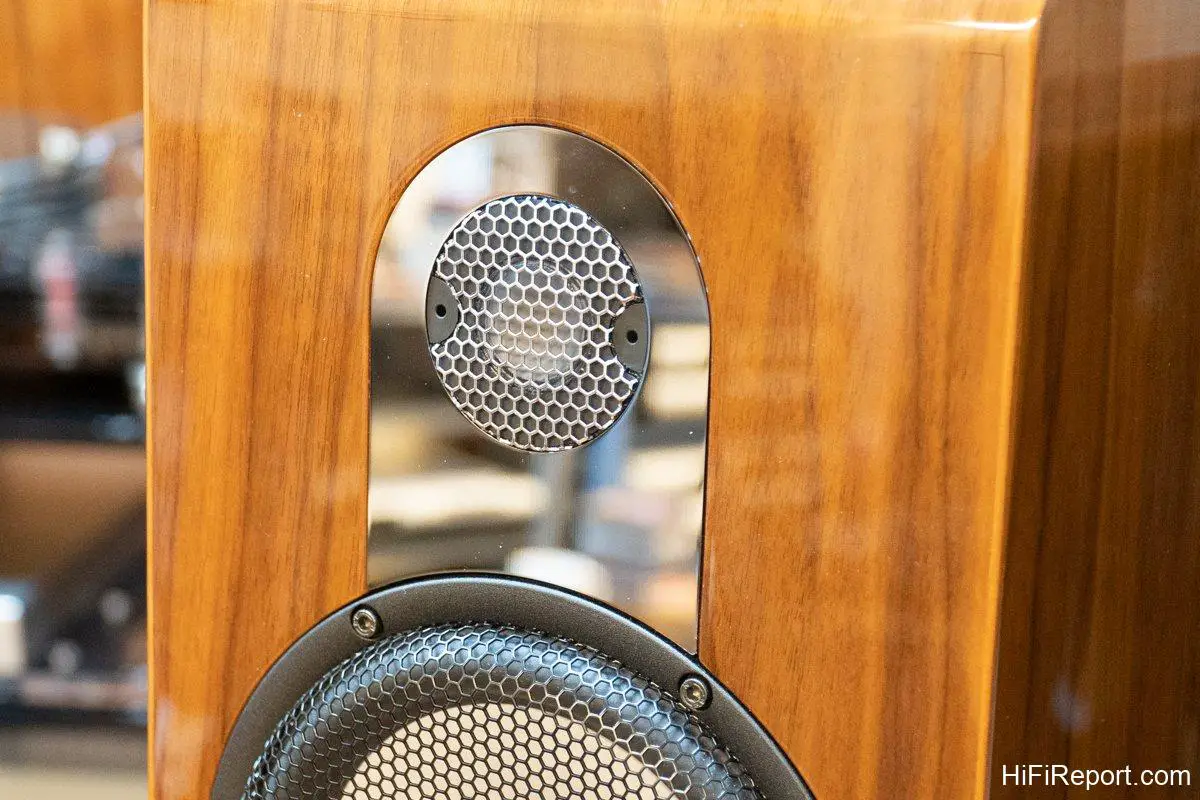
The ceramic tweeter is a custom unit from Accuton, crossing over with the mid-range at 2.2kHz. According to specifications, it extends up to 40kHz, covering a very wide range.
While the standard ceramic tweeter is already impressive, Marten offers an even higher-end option. Consumers can upgrade to a diamond tweeter version, which also includes upgrades to the crossover components and speaker terminals. Internal wiring is also enhanced; the standard Parker Trio uses high-quality Jorma Design copper wiring with shielding, already a high standard. The diamond version elevates this further with Jorma Design’s flagship Statement series cables. Naturally, this upgrade comes at a significantly higher price.
Rear-Mounted Passive Radiators
Beyond the three front-facing drivers, the Parker Trio incorporates two rear-mounted passive radiators with aluminum diaphragms. These are not connected to internal wiring and are not amplifier-driven, operating passively to enhance bass output and extension.
Due to the passive radiator design, the Parker Trio’s cabinet is a sealed enclosure, lacking the common bass reflex port. This design not only aids in low-frequency reproduction but also improves efficiency. The Parker Trio boasts a 91dB efficiency rating, while the larger Quintet achieves an even higher 93dB.
Meticulously Designed Crossover
Intriguingly, none of Marten’s other floorstanding speakers employ a .5-way design, except for the two floorstanding models in the Parker series, which are 2.5-way. Marten’s website doesn’t elaborate much but mentions their “multi-diverse crossover” technology, implying the use of different crossover slopes.
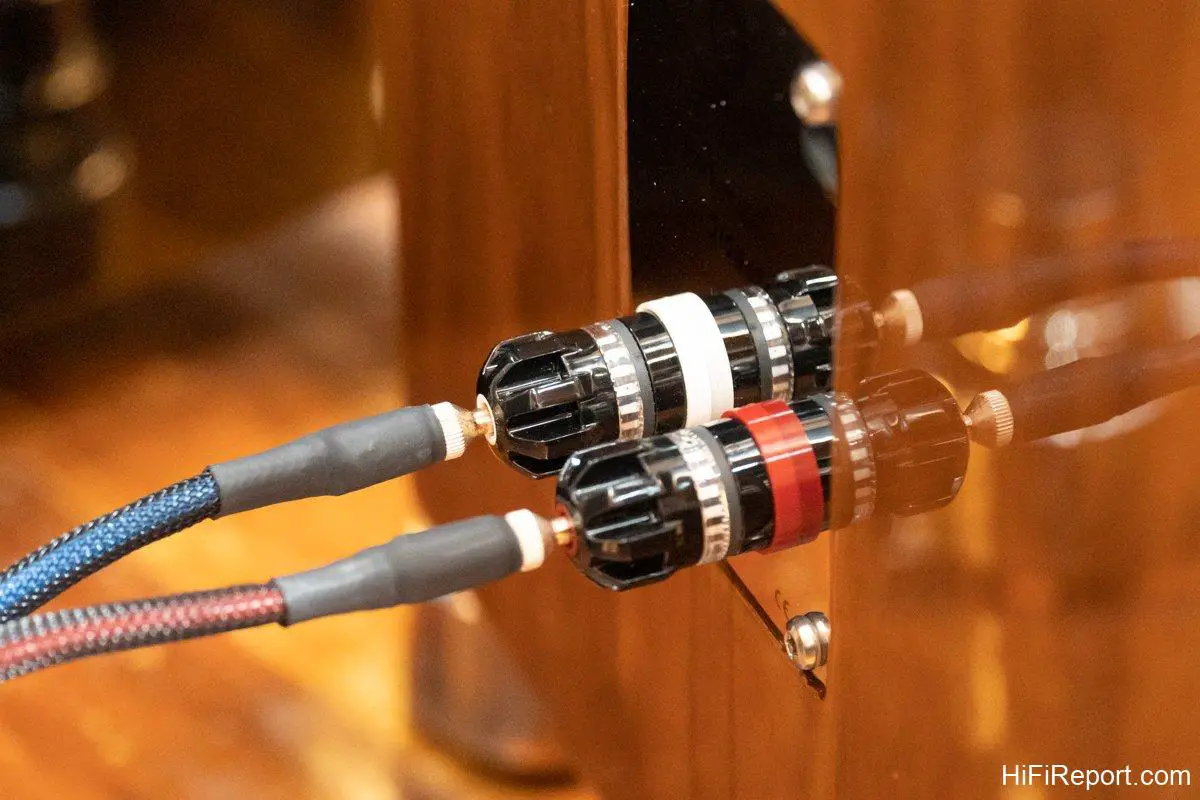
Beyond driver and cabinet quality and synergy, the crossover is paramount in speaker performance. Leif personally designs the crossovers, undergoing extensive testing, listening, and measurement, alongside calculations and simulations, with components hand-selected and assembled. The Parker Trio’s single set of WBT nextgen speaker binding posts reflects Leif’s confidence in his crossover design.
Modern, Minimalist Aesthetics
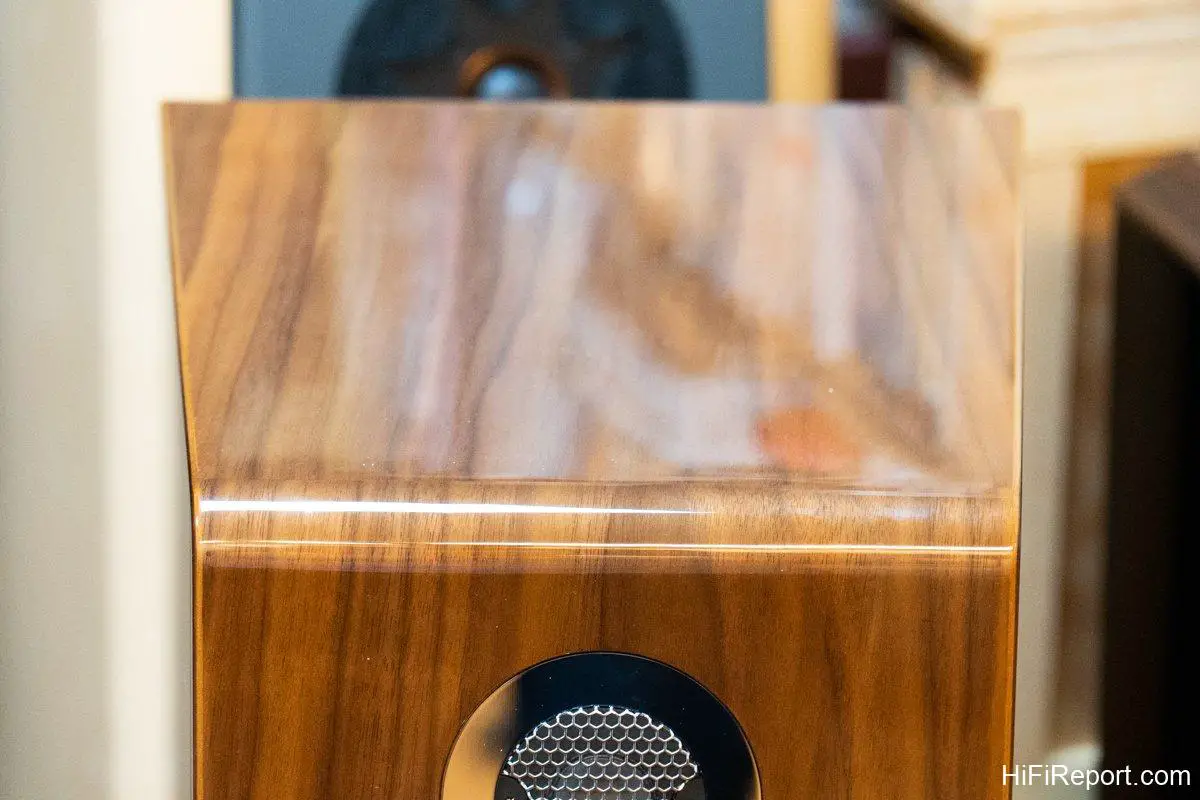
The cabinet design is minimalist and sleek. Aside from the metal trim surrounding the tweeter and the rear terminal plate, there are no contrasting materials or color breaks. Cabinet finishes include high-gloss walnut, matte walnut, high-gloss black, and high-gloss white. Marten’s four series – Coltrane and Mingus catering to luxury tastes, and Parker and Oscar appealing to minimalist modern aesthetics – clearly segment their target audiences and stylistic directions. This strategic segmentation across four series caters to a broad spectrum of discerning consumers, showcasing Marten’s astute market understanding.
M-Board Cabinet: Tapered and Sloped
The cabinet is constructed from a material called M-board, which is not simply MDF but a composite of various materials bonded together. Marten remains discreet about the exact composition and layer thicknesses. However, this composite structure provides superior damping characteristics, significantly reducing cabinet resonance.
The cabinet’s shape, wider at the front and tapering towards the rear with a slight backward tilt, appears simple but involves sophisticated construction. The non-parallel side walls created by the tapered design help minimize internal standing waves. The backward slope aids in time-aligning the tweeter and mid-bass drivers, improving phase coherence.
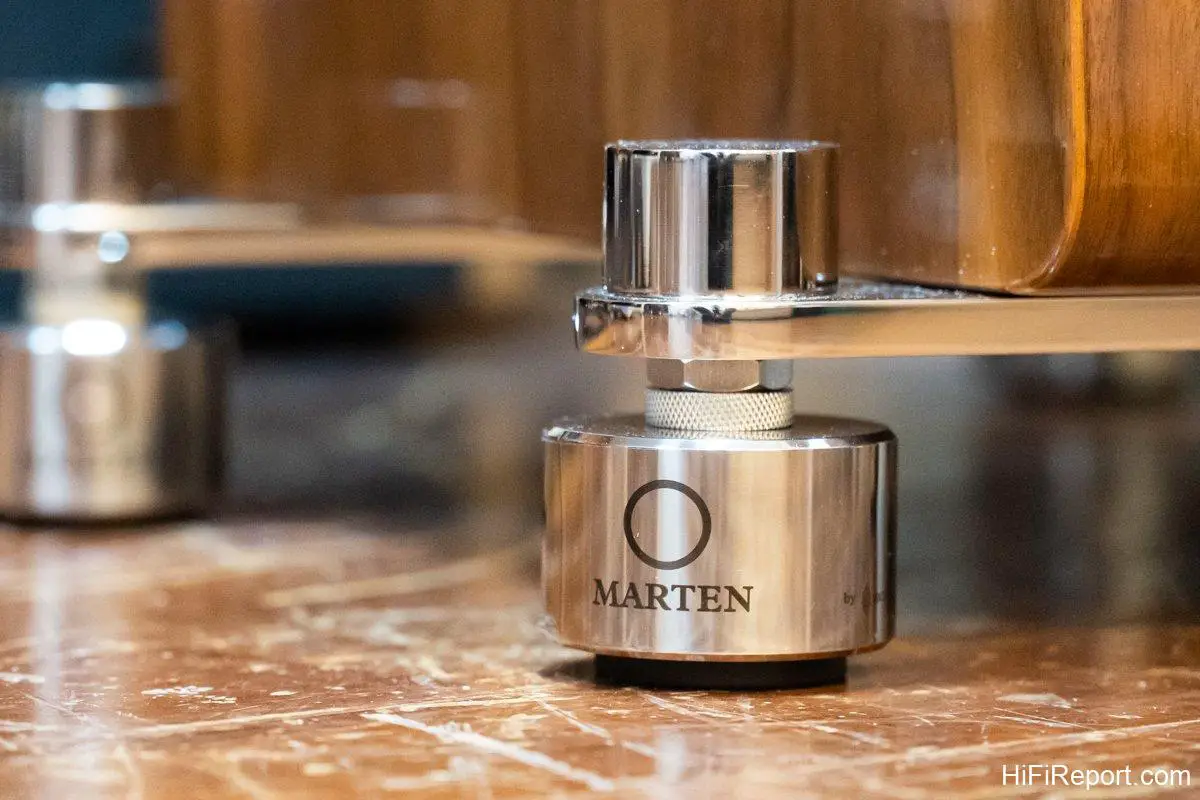
The base utilizes footers co-developed with IsoAcoustics. Their dual-material design effectively dissipates vibrational energy, isolating the speaker from floor-borne vibrations and vice versa. Unlike many manufacturers using spikes, Marten collaborates with a specialist isolation company to determine the optimal isolation solution for each speaker model’s weight and characteristics. Consequently, Marten speaker footers are not interchangeable between models due to differing weight capacities and specifications.
ASR & MSB Electronics, Audioplan Cabling
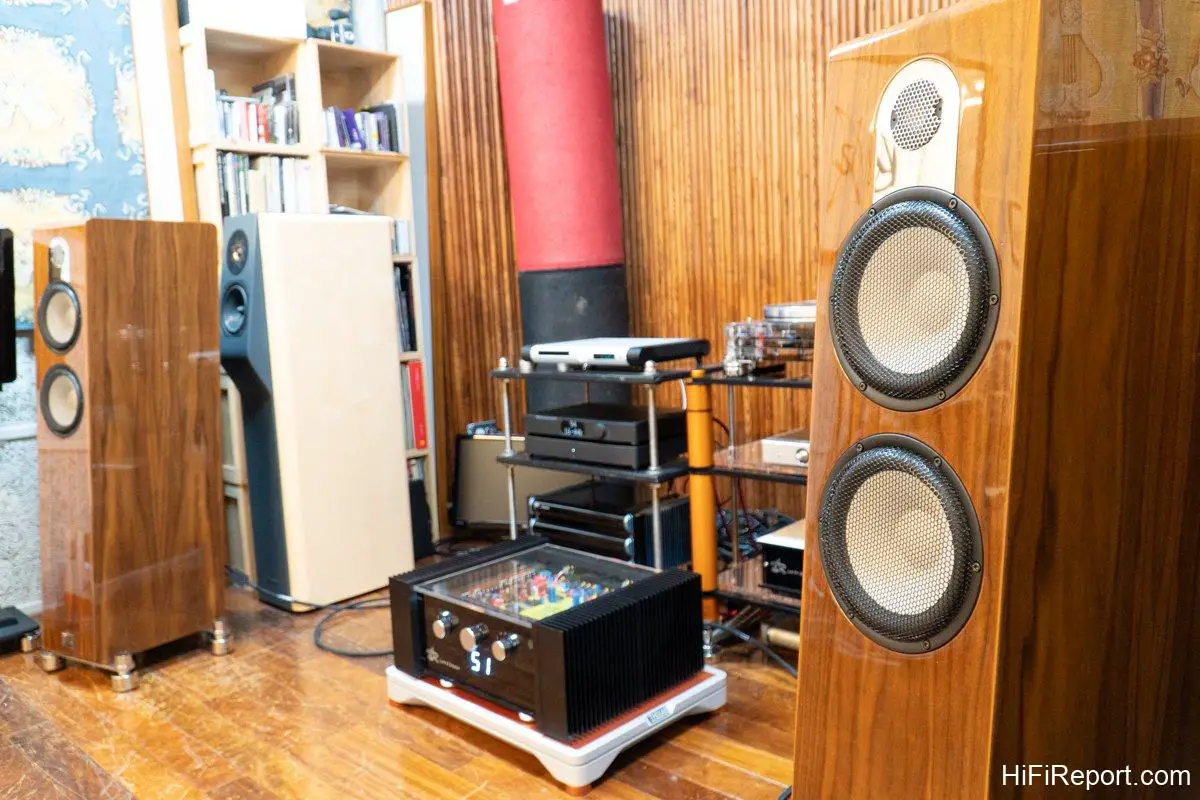
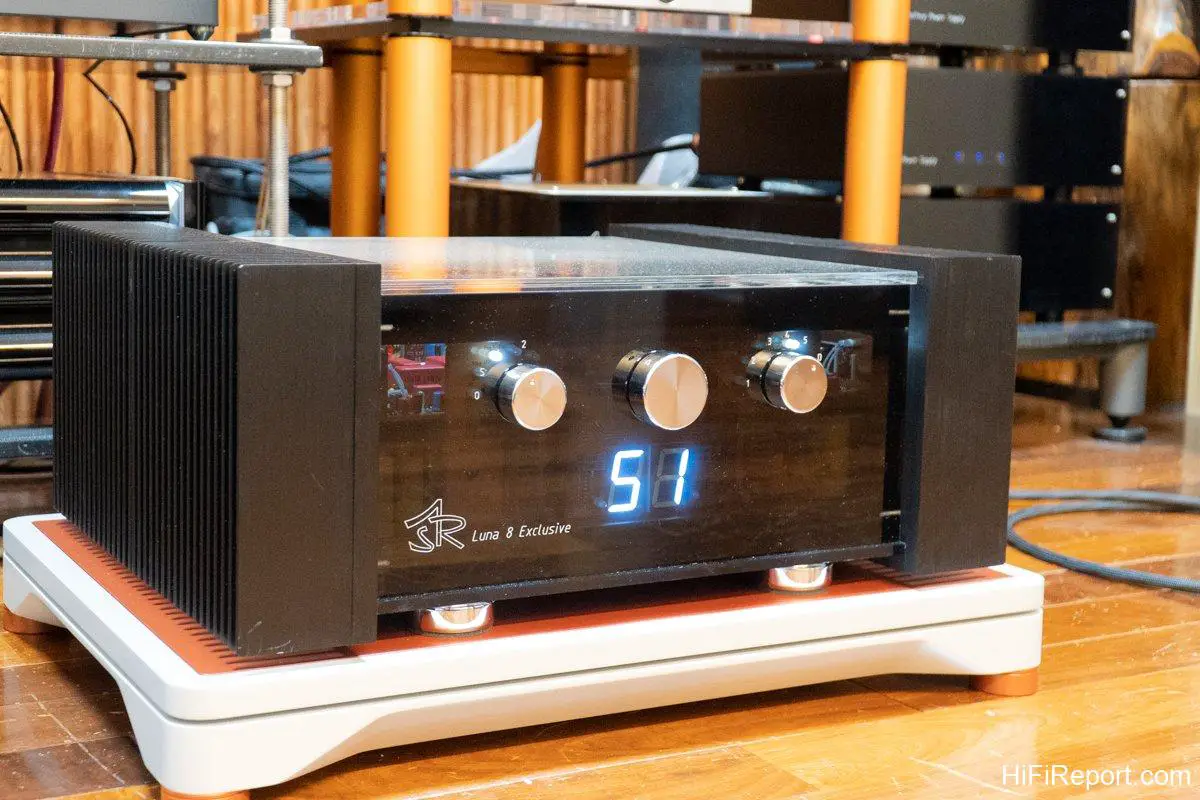
The system Mr. Chang assembled to pair with the Parker Trio for this listening session differed from my previous two encounters. The amplifier was switched to an ASR Luna 8 Exclusive, featuring not only two separate power supply units but also battery power for the preamplifier stage. This amplifier delivers not only ample power but also exceptional sonic purity, surpassing even the standard Luna 8.
The source was an MSB Universal Media Transport Plus disc player, using coaxial digital output to the Premier DAC. The cabling in this system also presented a new combination, rarely seen in SoundRay’s listening room. Mr. Chang typically employs Jorma Design or Vertere Acoustics cables. This time, he opted for German Audioplan cables.
“Many people know this German company primarily for their speakers, unaware that they actually started as a cable manufacturer and continue to produce cables to this day,” Mr. Chang explained. Audioplan has recently refocused on its core business of cable manufacturing.
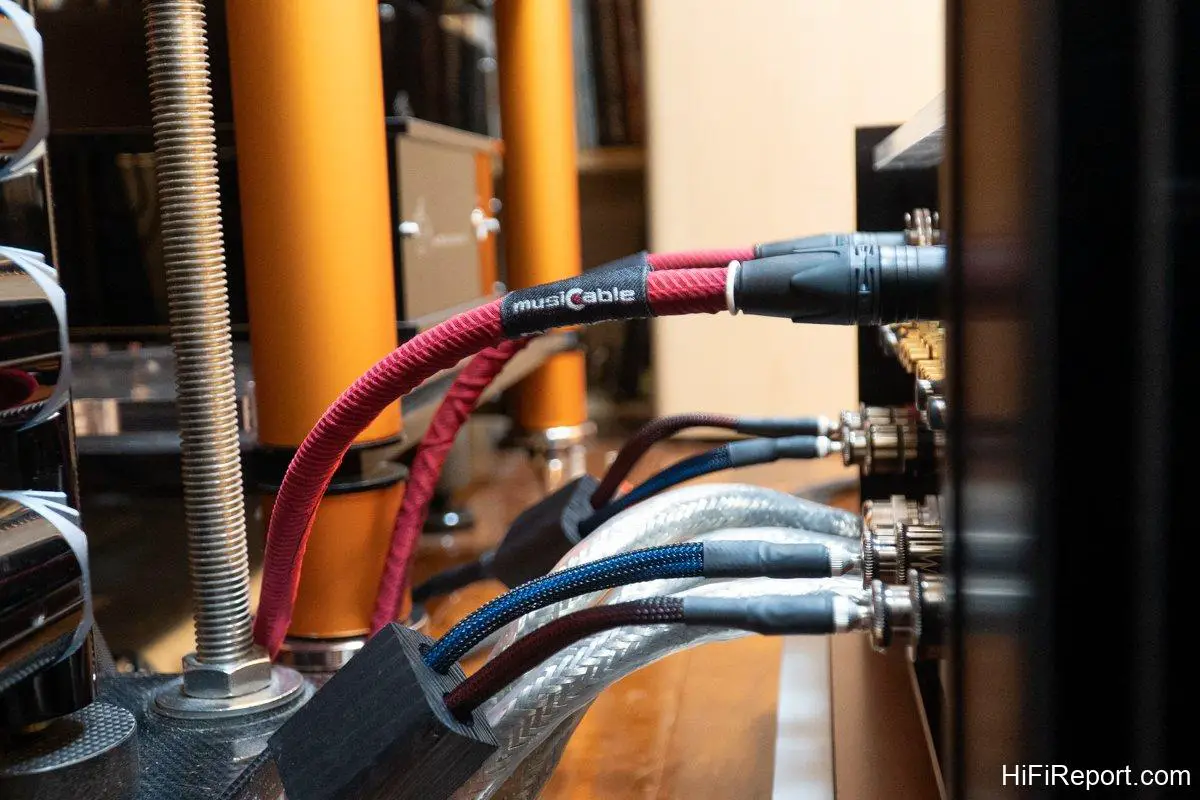
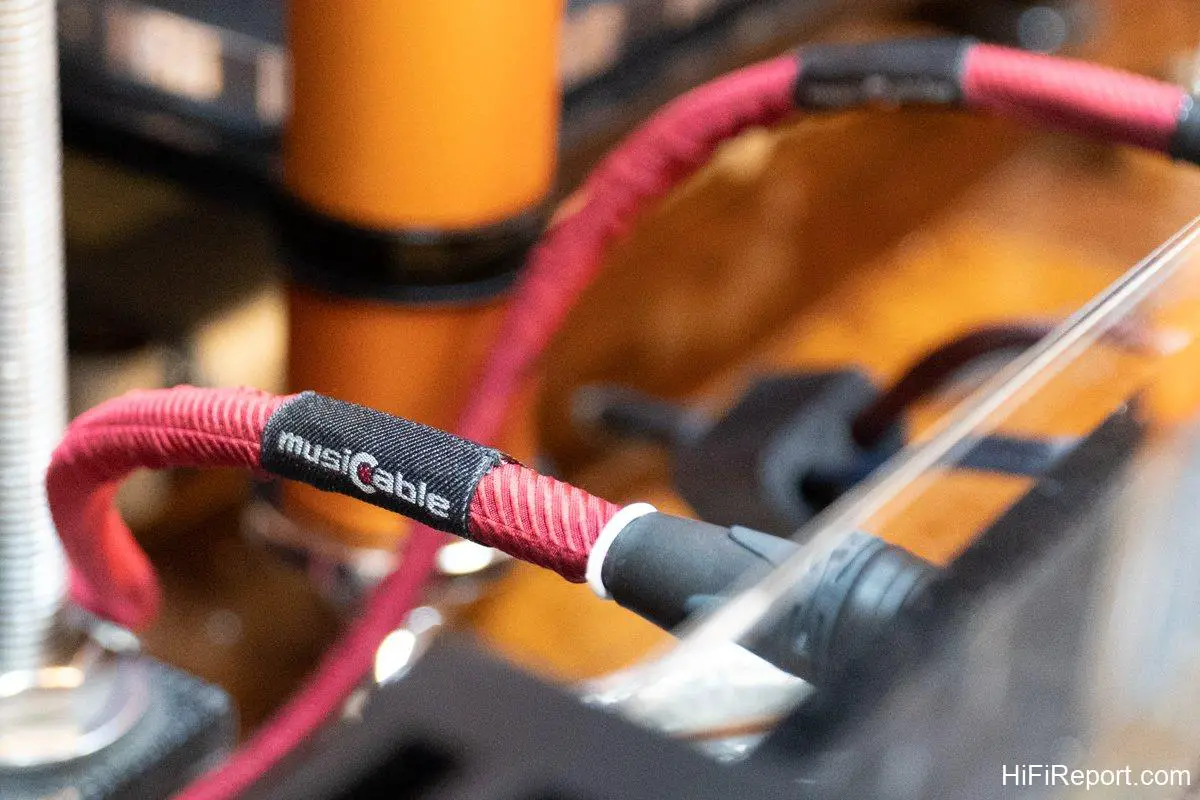
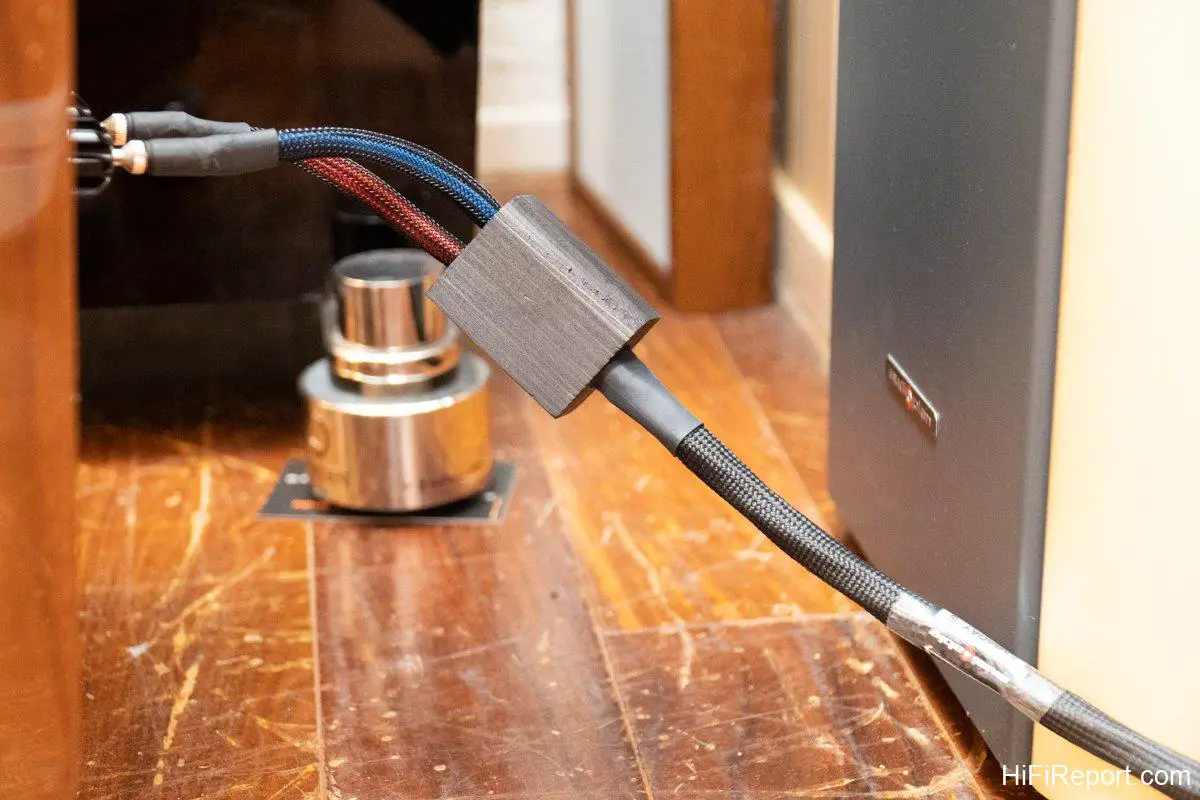
The power cable connected to the Premier DAC was their top-of-the-line PowerCord Ultimate. The interconnects were the flagship Maxwell U balanced version, and the speaker cables were the second-tier Faraday S II.
“Their cables all use ‘heavy-duty coating’ silver plating, as they call it….”
“So, it’s thick silver plating?”
“‘Heavy-duty coating’, you should still call it ‘heavy-duty coating’.” Mr. Chang asked me to unplug the speaker and signal cables to examine them. The silver-white surface had a slightly matte, oxidized appearance. “These connectors also use heavy-duty coating, all silver-plated.” The XLR connectors were Neutrik, but with silver-plated pins.
“Their cables sound truly exceptional. I was astonished when I first heard them. It makes me wonder how I can continue selling other brands of cables.”
Precise Imaging, Clear Soundstage
Mr. Chang made it sound effortless, as if simply connecting a cable resolved everything. However, he undoubtedly invested considerable effort in optimizing this system, as the soundstage, imaging, and tonal balance were captivating.
While I was taking photographs, Mr. Chang casually put on “dalan,” an album by Puyuma singer Sangpuy. This album received nominations for Best Indigenous Language Album, Best New Artist, Best Arranger, and Best Album Producer at the 2013 Golden Melody Awards. Sangpuy himself won the Best Indigenous Singer award that year for this debut.
This album elevated Sangpuy’s profile, and his 2016 album “Yaangad” achieved even greater acclaim, sweeping three awards at the following year’s Golden Melody Awards.
My point isn’t about the music itself, but rather Mr. Chang’s excellent choice of demo tracks. I was immediately captivated by the CD. Listening, photographing, and chatting with Mr. Chang, an entire CD played through.
The soundstaging was truly captivating, with clear and precise localization, very clear and very precise. Imaging was also clear and three-dimensional, again, very clear and very three-dimensional. You might wonder, with my repeated use of “clear” and “precise,” if the sound was cold or clinical. Not, in the slightest. I didn’t perceive it as cold, nor did I find it warm. It was a balanced, harmonious experience.
The title track “dalan” was written by Sangpuy in a Sami indigenous town in the Norwegian Arctic Circle during the polar day. It carries a world music influence with an Arctic mystique. The guitar notes were clear and full, the opening low-register vocals creating a sense of remoteness and tranquility. Then, percussion entered, the deep, full drum sounds were profound yet not boomy. Marten’s passive radiator design proved its merit. As the vocals ascended, dynamics unfolded, with clear and distinct harmonies.
Who recorded this? It was recorded at Platinum Studio, a renowned recording facility in Taiwan known for its top-tier equipment, and mastered at Sterling Sound in New York. This was a high-budget production, no wonder it was so impressive!
Effortless Detail Retrieval
Given it was a Marten speaker system, I couldn’t miss the opportunity to listen to jazz. Every time I visit SoundRay to hear Marten speakers, I always select a few jazz CDs.
I put on Sarah Vaughan’s 1985 Paris concert recording, listening to her a cappella rendition of “Summertime.” Without accompaniment, it’s easier to appreciate how Sarah Vaughan utilizes her vocal techniques in every phrase and nuance of the song. You can effortlessly discern every vocal inflection and articulation detail. The singer’s image was three-dimensional and palpable, yet not overly forward.
“Wave,” another slow song, showcased her vocal range. She began with an ascending phrase, then lowered her voice, the transitions were exquisitely subtle. The Parker Trio reproduced the sonic image with remarkable clarity. It was like a 4K high-resolution, high-contrast picture. Not just sharp lines and outlines, but also abundant detail. High brightness and high contrast revealed layers upon layers.
The drums in the background were subtle, the bass plucks had a tautness and a hint of spaciousness. Towards the end of the track, Sarah Vaughan sang slower and slower, eventually humorously mimicking a snore, eliciting laughter and applause from the audience. She then introduced the trio members one by one. It was easy to distinguish between the natural sound and the microphone’s added echo.
While Marten emphasizes that their products are “born for music,” this level of clarity, precision, and detail retrieval does lean towards a monitor-like character. If you value detailed information retrieval, the Parker Trio delivers in spades.
Deep, Full Bass with Speed and Resolution
The Parker Trio’s sound is vibrant, energetic, and spirited, as evidenced by Hugh Masekela’s “Hope” album. From the first track “Abangoma,” the drum sounds were instantly captivating. So taut, bouncy, and powerful – drums with weight and impact. The Parker Trio, seemingly simple with its three drivers and 7.5-inch mid-bass units, produced such deep, full bass. The sealed cabinet and passive radiator design are undeniably impressive.
As the saying goes in audiophile circles, “good bass is priceless.” Expensive speakers often justify their price with their bass performance. I had experienced the Parker Trio’s bass capabilities at the previous hi-fi show and HiFiReport events. Listening again with familiar recordings, I was even more impressed.
Overall, the sound is fast and agile. The mid and high frequencies are quick and precise, contributing to its accurate character. Its bass is both taut and full, deep and yet maintains speed and resolution – a remarkable feat. But its sense of realism and vibrancy goes beyond just bass. The low frequencies enhance, rather than detract from, its vitality, lending crucial support to its lifelike quality.
In “Mandela,” alongside the powerful and full kick drum, there are vocal harmonies and percussion. The vibrant and energetic performance and vocals sounded incredibly lively on this system. The trumpet had a bright and clear quality, slightly assertive yet with sufficient body, creating a very live-like texture and atmosphere.
Transparent Sound: No Barrier Between Listener and Music
Another example, also a live recording, Ahmad Jamal’s 1992 Paris concert captured not only the live atmosphere but also the musicians’ dynamic performances, full of energy.
From the first track “The Tube,” the piano played with a brisk and unrestrained style, typical of Jamal. The electric bass also showcased its virtuosity with rapid melodic runs, engaging in a dialogue with the piano. The drums were equally active, the drum sounds crisp and energetic, each strike clear and concise.
The Parker Trio’s soundstage was transparent and layered, with a sense of see-through clarity that eliminated any barrier between the listener and the music. It was direct, immediate, and tangible.
Duke Ellington’s classic “Caravan,” in Jamal’s hands, took on a bebop-infused, roaring character, wild and bold. The sudden fortes, whether piano or drums, tested the system’s ability to handle dynamic peaks. While the Parker Trio’s 91dB efficiency is high, the ASR Luna 8 Exclusive’s stable and reliable drive was also crucial.
I set the MSB Premier DAC’s volume output to 100, representing full output without attenuation or gain. Paired with the Luna 8 Exclusive at a volume setting of 58-60, the system revealed both the music’s dynamic intensity and its textural nuances.
Effortless Orchestral Grandeur
This system handled large-scale orchestral music with equal aplomb. During the previous HiFiReport event, I was positioned in a corner, behind the speakers, a far from ideal listening position. I was curious to hear how the Parker Trio would reproduce the music I had brought that day, so this time I deliberately brought John Williams in Vienna.
I loaded the CD into the MSB Universal transport, and playback began automatically after disc reading. The first track was “The Flight to Neverland” from the movie “Hook,” a grand orchestral piece with brilliant orchestration. A simple theme repeats continuously, yet each repetition, through changes in orchestration, creates a kaleidoscopic world of color and vibrancy.
I’ve heard this piece on numerous systems, and this experience was exceptional. In a relatively small room, it unfolded a vast and expansive soundstage. The bass was impactful and full yet well-defined. The music had weight, color, and layers. This was truly a magical Neverland! The excerpt from “Close Encounters of the Third Kind” in the second track was equally thrilling.
The opening sustained high notes from the violins, dissonant harmonies, created a mysterious and tense atmosphere – the arrival of aliens, filled with both ominous and unknown qualities. The weight of the low strings was far beyond what one might expect from speakers of this size. How could these relatively compact speakers produce such bass depth and fullness? The music unfolded step by step, building tension until reaching a climax – the arrival of the mothership theme. After a still avant-garde passage, it transitioned to a tender theme, with gentle strings, the high strings radiating a soft glow. As more sections joined, the musical texture thickened, culminating in the iconic five-note communication motif powerfully rendered by the brass.
Layer upon layer of strings surged forth, enhancing the music’s emotional impact. The beauty of this music lies not only in the melody but also in the orchestration. John Williams fully demonstrated the influence of late Romanticism on his compositional style.
Excellent! Although the amplifier was different, the MSB S202’s performance is certainly comparable to the ASR Luna 8 Exclusive. The sound quality at the HiFiReport seminar should have been equally convincing (which reassured me).
Four Reasons to Praise Piano Reproduction
Do you enjoy piano music? The Parker Trio excels at reproducing piano. While what we hear is always the integrated performance of the entire system, the speaker’s intrinsic qualities are undeniable. Even though the front-end components contribute their sonic character, the speaker’s inherent nature and performance remain discernible.
What is the Parker Trio’s character? Why does it sound so good with piano? First, it’s fast. While a stringed instrument, the piano produces sound by hammers striking strings. Therefore, keyboard speed, dynamics, and finger independence all affect the resulting piano sound. Piano reproduction highly tests a speaker’s (or audio system’s) speed.
Second, the Parker Trio’s sound is clear and transparent, which benefits the nuanced and colorful timbre of the piano.
Third, its frequency bandwidth is wide. The manufacturer’s specifications are 26Hz-40kHz. The lowest note on an 88-key piano is 27.5Hz. Classical piano music rarely goes lower. Compared to many similarly sized floorstanding speakers, the Parker Trio can more fully reproduce the piano’s range.
Finally, its sound is open, with ample energy and outstanding dynamic performance. The piano is the “king of instruments.” In reproducing piano music, the Parker Trio is capable of recreating the piano’s majestic scale.
Based on these four reasons, I praise – and must praise – the Parker Trio’s piano reproduction. Listening to Denis Pascal playing Liszt’s Hungarian Rhapsody No. 2, the full, resonant, and pure piano tone began from the low registers played by the left hand, gradually expanding and extending. Many are familiar with this piece, but perhaps not this version. This version is exceptional in both recording and performance. And you may not have heard the Parker Trio, or even Marten speakers in general, reproduce this piece. Hearing the low-range piano resonance, the sustained reverberation of the strings, how deep and solid it is, can only be truly appreciated by listening.
As for the rapid runs of notes, they were articulate and powerful. Not all piano pieces are this impactful, but if Hungarian Rhapsody No. 2 lacks impact, it’s not worth listening to. When the high notes resonated, the overtones were beautiful, not only bright and colorful but also lingering. It’s hard to imagine what it would sound like with diamond tweeters. In the third movement, the opening features the left hand’s swirling and melancholic melody in the low register – deep, powerful, and weighty, resonating with the piano’s body. Then the music moves to the right hand, traversing back and forth in the high register. This interplay between low and high registers fully showcased the Parker Trio’s piano reproduction capabilities.
As Denis Pascal concluded a phrase, his fingers still on the keys, the final notes gradually faded, listening to the piano sound dissolve and dissipate into the air, the image was real and intimate. The Parker Trio’s piano reproduction is truly excellent!
You Must Hear Them!
Showroom, HiFiReport, SoundRay’s listening room – three encounters with the Marten Parker Trio within three months, each time leaving me wanting more. Its size is moderate, yet it possesses a larger-than-expected scale and dynamic range. Its sound is precise, natural, and balanced, allowing even the most serious music lovers to delve into the core of the music. The refined and minimalist design is both attractive and enduring, a quintessential “High WAF” speaker.
If you have the budget and are considering new speakers, regardless of how many pairs you’ve auditioned, the Parker Trio is worth hearing – this is the recommendation from a HiFiReport reviewer who has listened to them three times in three different locations.
Specifications
* Type: 5-driver, 2.5-way passive radiator floorstanding speaker
* Drivers: 1 x 1-inch ceramic tweeter (upgradeable to diamond tweeter), 2 x 7.5-inch ceramic mid-bass drivers, 2 x 9-inch aluminum passive radiators
* Power Handling: 300 Watts
* Sensitivity: 91 dB
* Frequency Response: 26 Hz – 40 kHz ± 2 dB
* Impedance: 6 Ω (minimum 3.1 Ω)
* Crossover Frequency: 2.2 kHz
* Dimensions: 117 × 22 – 28 × 36 cm (H×W×D)
* Weight: 40 kg