
McIntosh MA12000 Integrated Amplifier Review
Some audiophiles argue that while vacuum tubes offer a beautiful sound, they often lack power, whereas solid-state amplifiers provide ample drive but may sacrifice sonic warmth. Is it possible to have both? The McIntosh MA12000, an integrated amplifier from the American audio giant, answers with a resounding yes. And it doesn’t stop there. This powerhouse includes a phono stage, DAC, and headphone amplifier, all while functioning as a standalone preamplifier or power amplifier. The MA12000 allows you to achieve audio nirvana, effortlessly blending power and sonic beauty in one exceptional unit.
McIntosh’s Apex Integrated Amplifier
The MA12000 unequivocally stands as McIntosh’s most formidable integrated amplifier to date. Its price tag reflects this top-tier status, yet the MA12000 delivers everything a discerning music lover could desire.
For digital music, the integrated DA2 module handles decoding, with USB connectivity for computers and standard S/PDIF inputs for CD transports or digital streaming devices. Vinyl enthusiasts are catered to with a built-in MM/MC phono stage. Furthermore, McIntosh’s proprietary HXD headphone amplifier is included for immersive private listening, expanding the soundstage beyond the confines of headphones for a more speaker-like experience. The MA12000’s preamplifier and power amplifier sections can operate independently, and it even offers analog equalization adjustments for fine-tuning your sound.
What does all this mean in practical terms? Think of the MA12000 as more than just an integrated amplifier. McIntosh has packed in the functionality of six separate components: a preamplifier, power amplifier, DAC, MM/MC phono stage, HXD headphone amplifier, and an equalizer. To assemble a comparable high-end system using separate components, you would need to purchase all six units individually. This would also necessitate dedicated power distribution, potentially requiring multiple high-quality power conditioners and power cables, not to mention the interconnect cables to link everything together. The cost and complexity can quickly escalate.
Instant Music Enjoyment: An All-in-One Solution
Of course, the prospect of assembling a system from separate DAC, phono stage, preamplifier, power amplifier, and headphone amplifier doesn’t deter serious audiophiles. For those who pursue audio perfection, such meticulous component selection is part of the journey, much like a wine connoisseur’s collection of specialized glassware or a whisky aficionado’s array of dram glasses. The pursuit of sonic excellence can be a deep and nuanced endeavor. However, if your goal is simply to “enjoy music” without the complexities of system building, desiring a single unit to handle all your audio needs, the MA12000 is undoubtedly your ideal choice.
McIntosh offers a comprehensive range of integrated amplifiers, starting with the entry-level MA252 and culminating in the flagship MA12000. Their website showcases nine models, offering a wide spectrum of choices to suit various budgets. This extensive product line demonstrates McIntosh’s commitment to the integrated amplifier category, targeting every price point. The MA12000 represents the pinnacle of McIntosh’s integrated amplifier design, incorporating all of their technological expertise.
Incorporating McIntosh’s Signature Technologies
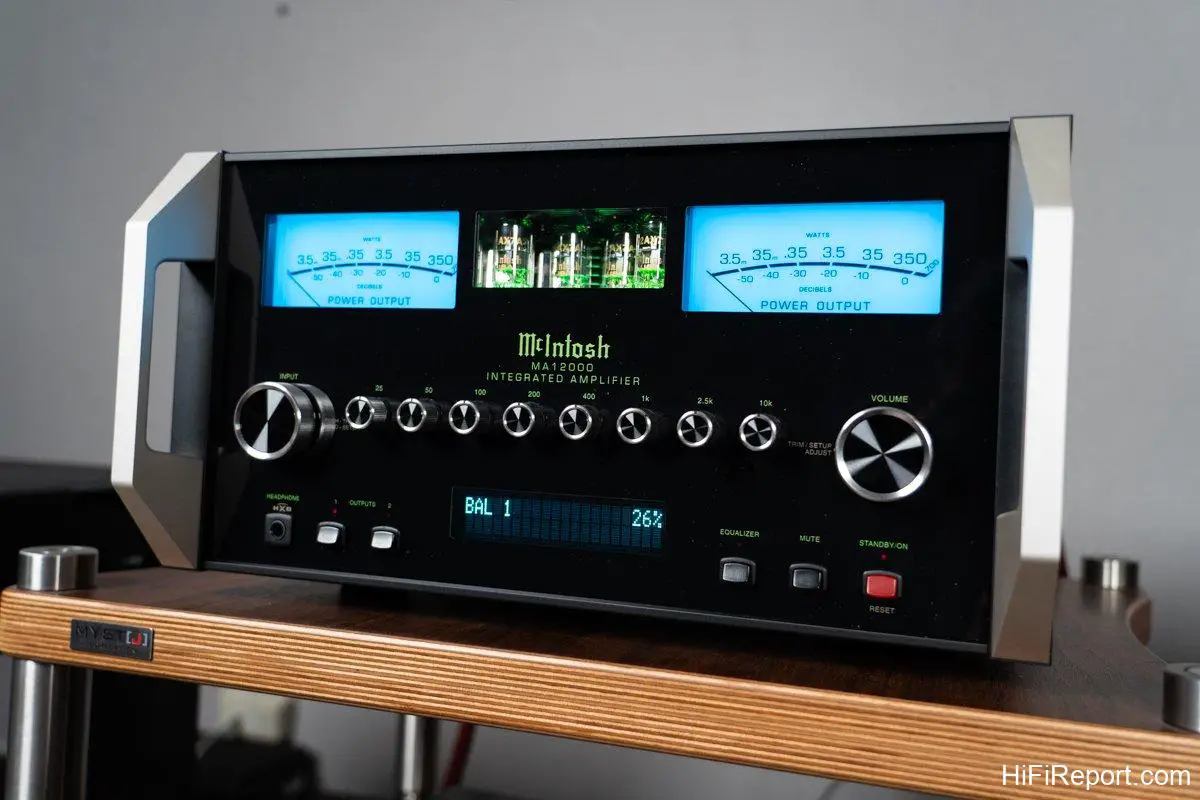
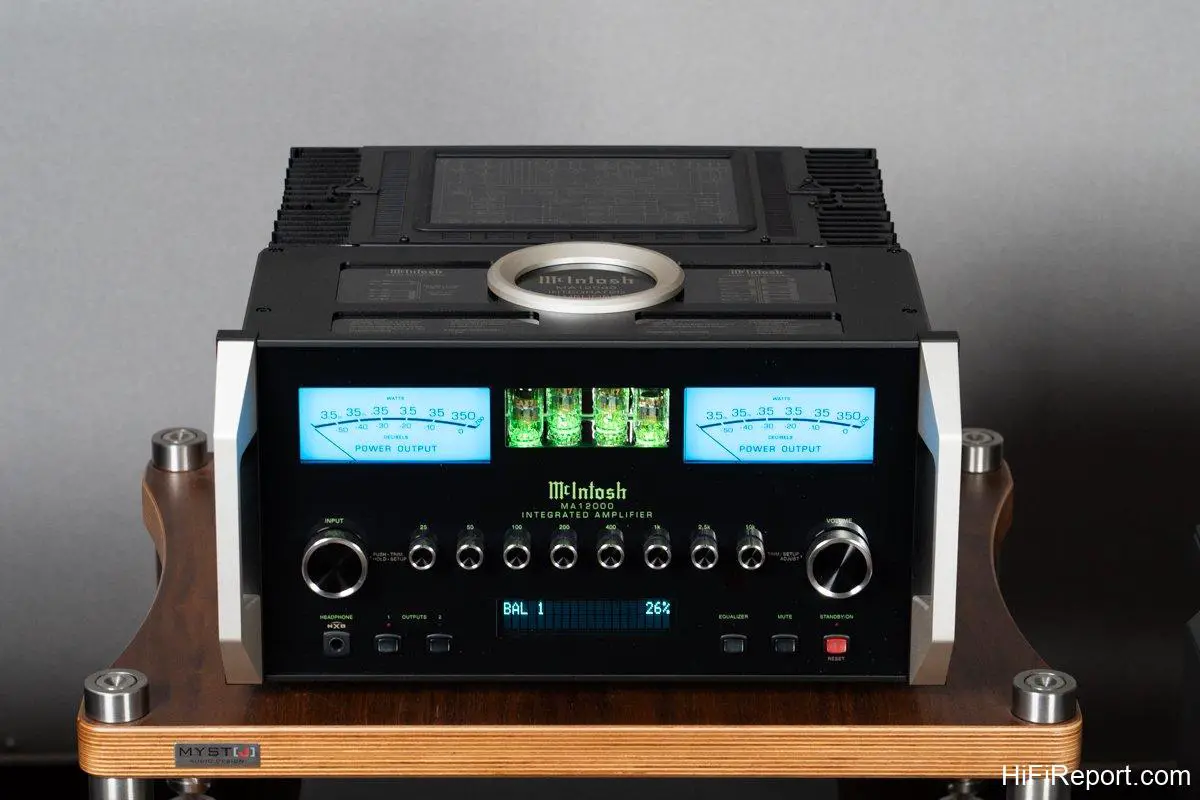
One might say that the MA12000 embodies “six units in one,” and it indeed integrates all of McIntosh’s key technologies. The iconic blue Watt meters are instantly recognizable as McIntosh, a hallmark of the brand’s identity. Power Guard prevents amplifier overload, instantly limiting the signal to avoid clipping distortion during excessive drive. Sentry Monitor provides real-time circuit protection, safeguarding against short circuits. Even accidental speaker cable shorting with the amplifier powered on is mitigated by Sentry Guard’s immediate protection activation.
Beyond its “six-in-one” functionality and incorporation of McIntosh’s core technologies, the most significant “value” proposition of owning a McIntosh lies in its legacy of over seventy years. Founded in 1949, McIntosh is a brand synonymous with audio excellence, a classic recognized across generations. In the ever-changing landscape of high-end audio, where brands rise and fall, McIntosh has endured, maintaining its relevance and prestige.
A McIntosh component purchased decades ago often retains significant value today. Vintage McIntosh pieces from before 1970, such as the MC240 or MC275, can command prices on the used market far exceeding their original retail cost. This enduring value is the hallmark of a classic brand. Investing in an MA12000 is not just about enjoying music; it’s about acquiring a potential heirloom.
McIntosh: Repairability and Enduring Value
Choosing McIntosh is a value-driven purchase, underpinned by the company’s commitment to after-sales service. Among contemporary high-end audio brands, McIntosh boasts an exceptionally high degree of in-house manufacturing. From circuit boards and transformers to chassis, almost everything is produced in their own factory. This vertical integration allows McIntosh to repair virtually any of their products, regardless of age (though repairs outside the warranty period are subject to charges). During a factory visit to McIntosh in the USA, I witnessed their service department working on several McIntosh units from the 1960s and 70s. This seventy-plus-year-old company truly stands behind its products.
The key to this repairability lies in McIntosh’s commitment to manufacturing, rather than outsourcing production while focusing solely on R&D. Outsourcing manufacturing can pose significant challenges for long-term serviceability. While revisiting my 2018 McIntosh factory tour report while writing about the MA12000, I was reminded that the Binghamton factory still hand-manufactures output transformers. The chassis fabrication facility resembles a large metalworks, and even the glass front panels of vintage units can be re-screen printed, restoring them to pristine condition. McIntosh’s dedication to repair extends even to seventy-year-old components.
Hybrid Design: Tube Warmth and Solid-State Power
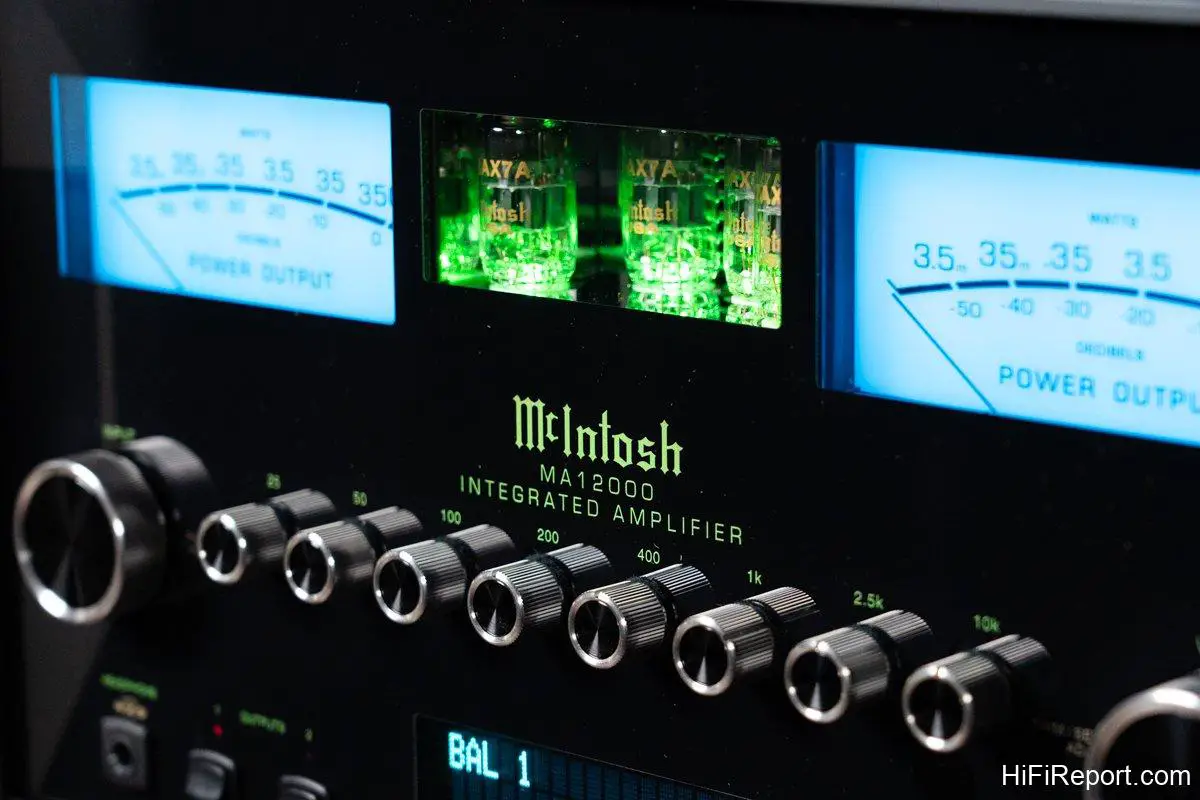
Beyond its comprehensive feature set, the MA12000’s defining characteristic is its hybrid circuit design. This ingeniously combines a vacuum tube preamplifier stage with a solid-state power amplifier, offering the best of both worlds: the sonic allure of tubes and the robust power of transistors.
What is the appeal of vacuum tubes? In essence, it’s the pleasing even-harmonic distortion they introduce. While some might consider this coloration, tube aficionados cherish this sonic signature. The MA12000’s hybrid design utilizes four 12AX7 vacuum tubes in its preamplifier section, coupled with a formidable 350-watt solid-state power amplifier, making it a true powerhouse.
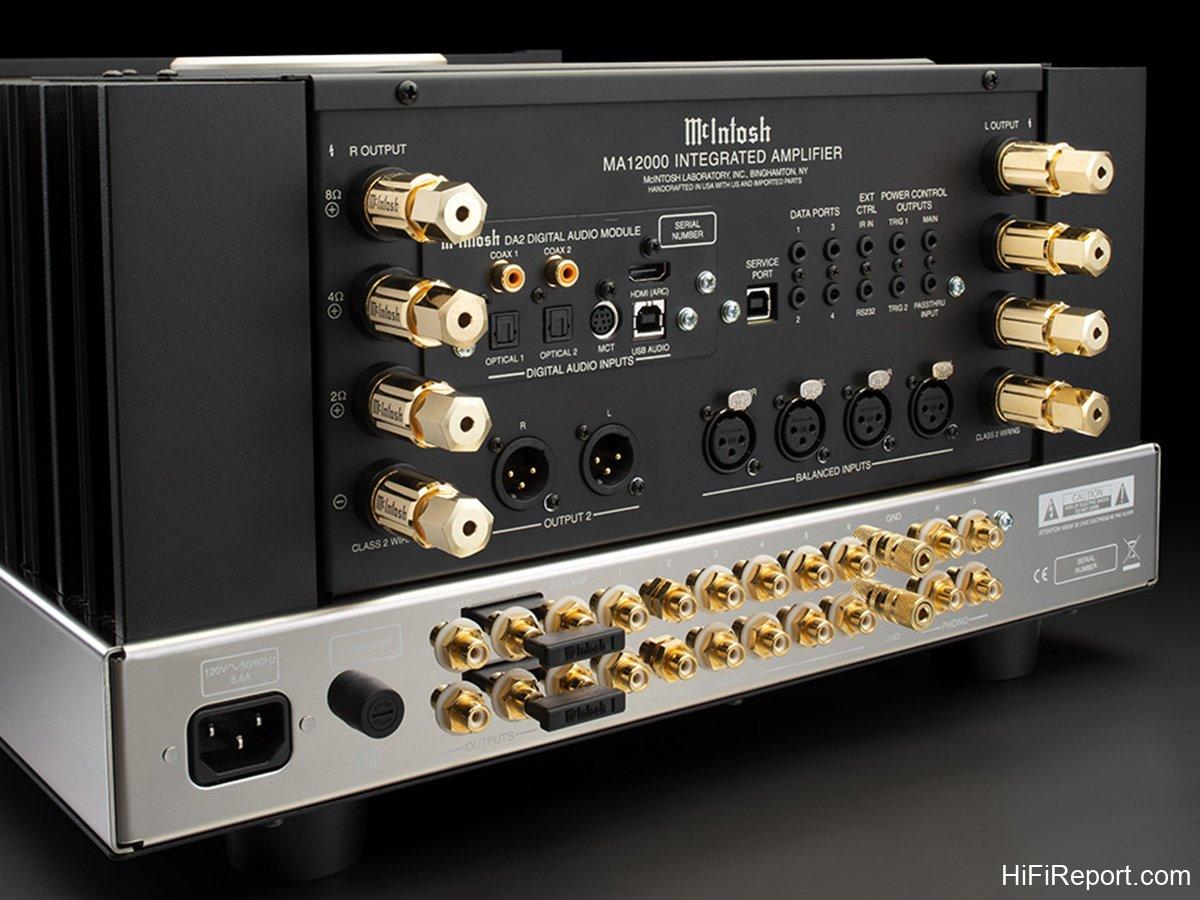
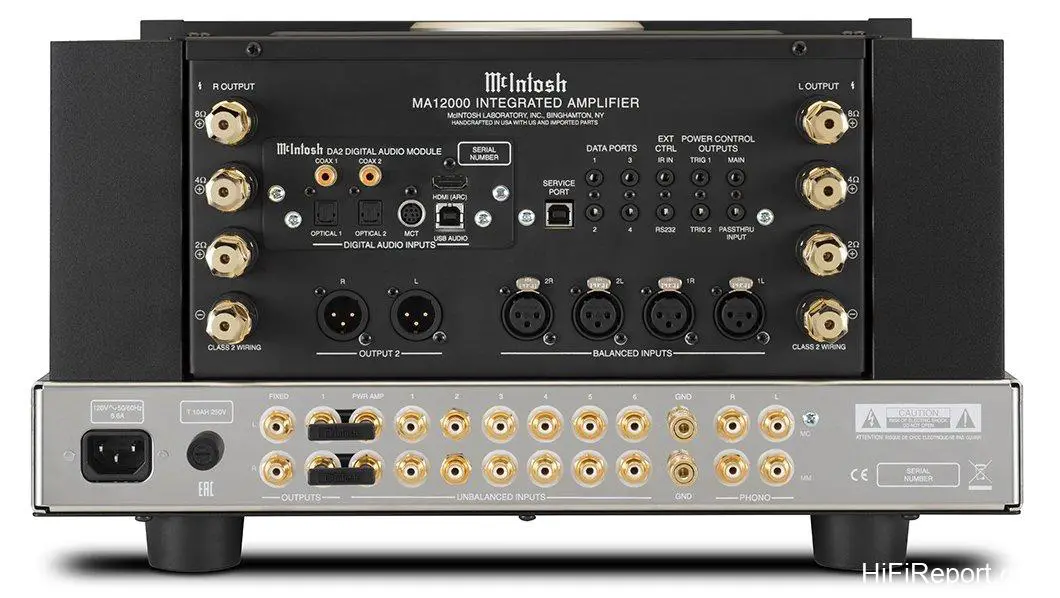
The MA12000’s speaker terminals accommodate 2, 4, and 8-ohm impedance loads. McIntosh consistently emphasizes that their amplifiers deliver consistent power output regardless of speaker impedance, maintaining the full 350 watts across all settings. While impedance matching is generally recommended, experimentation is encouraged. For instance, with Wilson Audio Alexia 2 speakers, which are 4-ohm nominal impedance, I found the 8-ohm setting to sound preferable.
How to discern the optimal setting? Simply use a dynamic drum track and focus on the definition of the kick drum and the snap of the snare. Compare the sound across different impedance settings, selecting the one that offers a full, solid drum image with the quickest transient response.
Abundant Connectivity: 17 Inputs
Upon the MA12000’s arrival at the HiFiReport editorial office, unpacking it was a considerable undertaking. Weighing in at 48.9 kg (approximately 108 lbs), this is definitely not a one-person lift. However, once positioned on the equipment rack, the MA12000 exudes an imposing presence.
In terms of industrial design, the MA12000 embodies classic McIntosh aesthetics. The iconic blue Watt meters evoke the brand’s rich history, while the substantial chassis hints at the immense power derived from McIntosh’s custom-wound, heavy-duty transformers.
Input connectivity on the MA12000 is exceptionally generous. The built-in DA2 module provides 2 coaxial, 2 optical, USB, MCT, and HDMI ARC inputs, totaling 5 digital inputs. It supports high-resolution formats up to DSD512, DXD384, and 24bit/192 kHz.
Analog inputs include 8 sets: 6 RCA and 2 XLR, along with dedicated MM and MC phono inputs. Two RCA jacks on the rear panel with jumpers allow for preamplifier and power amplifier separation. Removing these jumpers enables the MA12000 to function as a standalone preamplifier or power amplifier.
The MCT digital input is designed for seamless connection to McIntosh SACD/CD transports, enabling DSD playback via McIntosh’s proprietary protocol. HDMI ARC connectivity allows for connection to televisions, enhancing audio quality and ensuring audio-video synchronization.
Furthermore, the MA12000 features separate MM and MC phono inputs, allowing connection of two turntables, one with an MM cartridge and the other with an MC cartridge. Enjoy jazz or rock with the MM setup and classical with MC – a vinyl enthusiast’s dream! In total, the MA12000 offers a staggering 17 inputs, more than enough for even the most extensive audio systems.
If there’s one feature the MA12000 omits, it’s built-in digital streaming. This omission, I believe, is a deliberate design choice to ensure the MA12000’s longevity. While the DA2 module can connect to computers for streaming from digital platforms, integrating streaming directly into the MA12000 could potentially render the unit outdated as streaming technology evolves. Therefore, the MA12000 embraces both digital and analog sources, but stops short of integrated streaming.
Balancing Power and Sonic Finesse
In terms of sonic performance, the MA12000 masterfully blends power and refinement. The warm, sophisticated character of the midrange and high frequencies likely stems from the vacuum tube preamplifier stage, while the 350-watt solid-state power amplifier effortlessly drives the Alexia 2 floorstanding speakers. Consider the “Whiplash” movie soundtrack, specifically the opening track “Snare Liftoff,” which begins with the subtle sound of the protagonist practicing snare drum rudiments, gradually building in intensity. Cranking up the volume to simulate a closed practice room, the MA12000 delivered a powerful performance. The dynamic range, from the softest to loudest passages, was exceptionally rendered.
The subsequent track, “Overture,” a big band jazz arrangement, further showcased the MA12000’s warm, rich tonality and immense dynamic capabilities. As a big band piece, “Overture” features prominent brass sections. At high volumes, an amplifier struggling to control the speakers can lead to not only low-frequency muddiness but also harsh, strident brass. However, the MA12000 maintained composure, rendering brass instruments with both brilliance and body. The kick drum had impactful punch, the hi-hat crispness, and the tom-tom fills in the track’s outro circled through the soundstage. The brass section’s unison swells at the finale were powerful and cohesive. The MA12000 presented the big band with impressive scale, a wide soundstage, and a tonally rich and vibrant sound.
Rocking Out with Authority
Listening to McIntosh demands exploration of classic rock, a genre where the brand gained prominence, notably at the Woodstock festival.
Playing Pink Floyd’s seminal album “The Dark Side of The Moon,” the opening heartbeat of “Speak to Me” is a familiar low-frequency test for many seasoned audiophiles. The gradually intensifying heartbeat reveals low-frequency extension and power. With the MA12000 volume set to 50, the faint heartbeat became audible around the 8-second mark. Then, the track unfolds with clock chimes, cash register sounds, and laughter.
As the band enters, the psychedelic rock textures are perfectly suited to the MA12000’s sonic character. The recording is replete with elaborate sound effects, with various sounds swirling across the stereo field, coupled with the unique timbres of early electronic instruments, creating a quintessential 1970s psychedelic rock atmosphere. The MA12000 brought this era to life.
It’s not that the MA12000 artificially “tubes up” the sound; rather, it captures the essence of Pink Floyd’s sonic landscape, driving the Alexia 2s with full, robust low-end authority and enveloping the listener in the recording’s swirling sonic tapestry. In the days of pure analog mixing, achieving such intricate sonic textures was a complex endeavor. For younger generations accustomed to digital recording, where such effects are often a click away, it’s worth remembering that in the analog era, achieving such panning effects might have required a team of engineers meticulously adjusting faders in real-time.
Moving to Eva Cassidy’s live recording “Live At Blues Alley,” her rendition of “Bridge Over Troubled Water” features a poignant electric guitar solo, punctuated by the faint clinking of glasses, evoking the intimate atmosphere of a small club. The MA12000 presented a deep, immersive soundstage, with Eva Cassidy’s focused vocals creating a palpable sense of stage presence. As the electric bass and drums join, the energy escalates. A second electric guitar weaves in subtle embellishments. The walking bass lines are rich and dynamic. The MA12000 drove the Alexia 2’s ample low-frequency response, rendering the bass notes with definition and rhythmic drive. Of course, the most captivating element was Eva Cassidy’s emotionally charged vocals, brimming with vitality. The MA12000 seemed to bring Eva Cassidy back to life, transporting me to the 1996 recording session.
Impressive HXD Headphone Amplifier
Switching to the classical crossover piece “Across the Stars,” featuring Anne-Sophie Mutter performing John Williams’ iconic film scores, listening to Rey’s Theme from “Star Wars: The Rise of Skywalker,” the MA12000 imbued the violin with rich, resonant tones. The orchestra enters with powerful pizzicato bass notes, unleashing a wave of orchestral grandeur. The MA12000 filled the soundstage with a dense, substantial texture, rich yet clear. The sonic depth was impressive, while the violin, amidst the orchestral swells, seemed to rise and fall like a lone vessel on a turbulent sea, mirroring Rey’s solitary journey on the path of the Jedi.
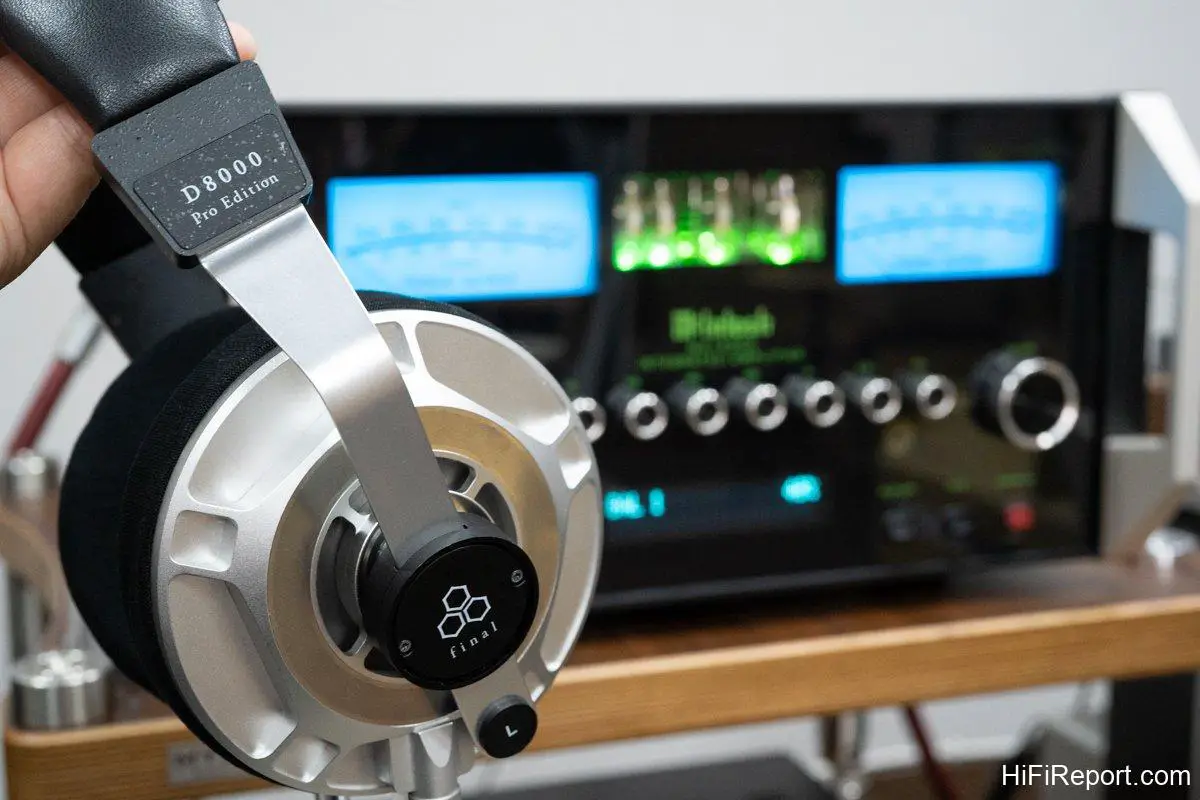
The MA12000’s headphone amplifier circuit is noteworthy. Many assume integrated amplifier headphone outputs are merely afterthoughts, added as a perfunctory feature. However, McIntosh takes headphone amplification seriously. The MA12000 incorporates McIntosh’s proprietary HXD (Headphone Crossfeed Director) circuit, enabled by default. HXD aims to create a more speaker-like front soundstage with headphones, shifting the sound image from within the head to a position in front of the listener. Paired with final D8000 Pro headphones, the HXD effect was highly effective. While the D8000 Pro is not particularly demanding to drive, the MA12000 handled them with ease. McIntosh emphasizes that its headphone amplifier circuit is designed to accommodate even high-impedance headphones, suggesting compatibility with models like the Sennheiser HD 800 S.
A No-Compromise, All-In-One Solution
Choosing the MA12000 signifies a desire for a high-quality integrated amplifier, avoiding the complexity of a multi-component system without compromising performance. Functionally, the MA12000 is effectively six components in one, also reducing cable clutter. With the exception of built-in digital streaming, the MA12000 offers comprehensive functionality, and each section can be used independently. Even in future system upgrades, the MA12000 can serve as a component within a more complex setup. For those seeking a “one-step” path to high-end audio excellence, the MA12000 provides a shortcut to audio nirvana.
Specifications
* Type: Hybrid Integrated Amplifier
* Output Power: 350 Watts per channel into 2, 4, or 8 Ohms
* Total Harmonic Distortion: 0.005%
* Signal-to-Noise Ratio: 114 dB
* Frequency Response: 10 Hz – 100kHz (+0, -3dB)
* Analog Inputs: XLR × 2, RCA × 6, MM Phono × 1, MC Phono × 1
* Digital Inputs: Coaxial × 2, Optical × 2, HDMI ARC × 1, MCT DIN × 1, USB × 1
* Analog Outputs: XLR × 1, RCA × 1
* Headphone Output: 1/4 inch jack
* Damping Factor: > 40
* Dimensions (W×H×D): 445 × 240 × 558 mm (17.5 x 9.45 x 22 inches)
* Weight: 48.9 kg (108 lbs)