
Modulum Audio Rack Review
Among the vast array of audio equipment and accessories, some are specifically engineered to combat vibration, such as isolation feet and audio racks.
The star of this review, the Modulum audio rack, is a master in vibration management. It meticulously measures the vibration patterns of its shelves, then applies damping strategically to control these resonances effectively. This minimizes interference with the components placed on the rack, ultimately leading to a significant improvement in sound quality.
Founder’s Unexpected Journey
Hailing from Canada, Modulum was founded in 2014 by Jean-François Michaud, a passionate aficionado of both music and design.
Interestingly, Jean-François’s primary profession is a lawyer, yet he is also a demanding audio enthusiast. He found himself dissatisfied with the existing audio racks and support systems on the market, as none could simultaneously meet his stringent requirements across performance, design aesthetics, flexibility, and ease of assembly.

During his legal career, Jean-François gained exposure to the furniture industry while representing a major Canadian manufacturing association in international agreements. This provided him with a deep understanding of furniture manufacturing processes and intricacies. Leveraging this knowledge, he embarked on his own research and development, collaborating with Canadian furniture manufacturers to design an audio rack. After several years of dedicated effort, the Modulum brand was born.
Vibration Control Philosophy
Modulum’s core technology is dubbed the “Vibration Control Platform System.” As the name suggests, the emphasis is on “control.” Modulum believes that an audio rack’s primary function shouldn’t be to merely eliminate, dissipate, or suppress vibrations, but rather to *control* them precisely for optimal sonic results.
Modulum achieves this superior vibration control through a multi-faceted approach.

Firstly, the material for the shelves underwent rigorous testing. They experimented with glass, marble, granite, MDF, plywood, solid wood, and more. Ultimately, solid wood emerged as the clear winner.
Solid wood boards, when properly laminated and CNC-machined, proved most effective at dissipating vibrations, leading Modulum to choose them for their shelves.
For the uprights connecting each level, Modulum employs aerospace-grade 6061-T6 solid aluminum alloy columns, measuring a substantial 1.5 inches in diameter. These columns securely lock each shelf in place with screws.

The columns are available in three lengths: 3 inches, 8 inches, and 10 inches. Furthermore, two columns can be interconnected, offering a wide range of shelf height configurations.
The connection between the shelves and columns also reveals careful thought. Instead of a rigid, direct attachment, rubber washers are strategically placed to create a buffer. This ingenious design reduces vibration transmission between the components.
Moreover, Modulum’s floor spikes are quite unique. They don’t simply rely on the aluminum cone for contact; instead, a tiny ceramic spike is fitted at the tip of the aluminum cone. This ceramic spike is what makes contact with the floor, precisely controlling vibration transfer.

Modulum utilized finite element analysis to identify the areas of greatest vibrational impact on the shelves. The accompanying image depicts a shelf without the damping rods, where red, yellow, and green indicate stronger vibrations. It’s evident that parasitic vibrations are most pronounced in the central region of the shelf, followed by the front and rear edges.
Uncovering Vibration Roots
What we’ve discussed so far only covers Modulum’s Fundamental Vibration Control. The rack incorporates an even more sophisticated technique: Mechanical Vibration Control, discreetly integrated beneath each shelf.
To gain a deeper understanding of the shelves’ vibrational characteristics, Modulum employed finite element analysis. This revealed that residual parasitic vibrations were most significant in the central area of the shelves, followed by the front and rear edges.

Once the areas of most intense vibration were identified, the next step was to devise a method for controlling them.
Modulum investigated numerous vibration control technologies, ultimately discovering a tuned mass damper known as the Stockbridge Damper.
Originally used in structures like skyscrapers, cable-stayed bridges, and power lines to counteract resonance caused by wind or earthquakes, Modulum applied the same principle. They fashioned the Stockbridge Damper into elongated stainless steel damping rods (harmonic absorbers), installing them underneath the shelves. A longer rod is positioned in the center, with two shorter ones at the front and rear edges, effectively controlling shelf vibrations.

Modulum’s website showcases the difference in finite element analysis results before and after using the damping rods. The images clearly illustrate that without the damping rods, the shelf displays various colors: blue around the periphery (indicating minimal vibration), orange to red at the front and rear edges (indicating strong vibration), and purple in the center (indicating the most intense vibration).
After the damping rods were implemented, the shelf’s periphery turned dark blue, transitioning to light blue towards the center, demonstrating a significant reduction in vibration.
While the principle of the damping rods might seem straightforward, their execution is far from simple. Their length, width, and curvature must be meticulously designed, and the length-to-width ratio of the damping rods needs to be adjusted for different shelf sizes. There’s no one-size-fits-all formula. Ultimately, Modulum dedicated several months to finding the optimal damping rod combinations for each shelf size.

Currently, HiFiReport offers Modulum audio racks in two sizes. The larger one, measuring 24.5 inches wide by 21.5 inches deep, is suitable for standard-sized components or large floor-standing speakers. The smaller version, at 17 inches wide by 15.5 inches deep, is ideal for medium-sized floor-standing speakers or compact components.
Following the implementation of the damping rods, subsequent finite element analysis confirmed a substantial reduction in vibration, with the shelf’s periphery appearing dark blue and gradually lightening to a pale blue closer to the center.
Immediate Sonic Impact
The audition took place in the HiFiReport listening room. The system comprised a YBA CDT450 CD transport, a Merging NADAC DAC, a Van Medevoort MA360 SE integrated amplifier, and Wilson Audio Alexia V loudspeakers. For comparison, a Sound Organisation audio rack served as the reference.
The audition method was straightforward: the YBA CDT450 CD transport was placed first on the Modulum audio rack, then on the Sound Organisation rack, to compare the sonic differences.
Why choose a CD transport for the test? Because CD transports contain rotating mechanical structures that generate significant vibration, they are ideal for highlighting the efficacy of an audio rack.
The results? The difference was remarkably apparent, distinguishable with just one or two quick comparisons.

Taking “Song of Bernadette” from Jennifer Warnes’ “Famous Blue Raincoat” album as an example, featuring vocals, piano, bass, and strings: through the Modulum audio rack, the separation between different instruments became markedly improved. Their positioning and dimensionality gained greater presence, with discernable differences in their vertical placement. Bass notes exhibited clearer articulation and low-frequency transients, while plucked strings revealed a more defined texture, as if the strings were tauter, lending the music a more dynamic ebb and flow. The vocal contours were sharper, the image more three-dimensional, and the timbre itself became fresher and more transparent.
In contrast, the soundstage on the reference rack seemed to coalesce into a more amorphous mass, forming a large, indistinct circle between the speakers. The distinctions between upper, middle, and lower soundstage layers, as well as the precise location of instrumental images, were less discernible. The bass, in particular, appeared to float higher, contributing to a somewhat muddled sonic presentation.
Simply put, the Modulum audio rack presented a soundstage more akin to a precisely framed picture or canvas. The structure, both vertically (upper, middle, lower) and horizontally (left, center, right), was clearly defined and well-organized. Furthermore, the high frequencies exhibited greater airiness, and the low frequencies demonstrated improved depth and extension. The overall result was a listening experience that was both remarkably clear and comfortably engaging.
Sonic Clarity Unveiled
Take, for instance, the test disc “Uncompressed World Vol. III,” which features a broader array of accompanying instruments and greater low-frequency scale and quantity. Played through the Modulum audio rack, the sonic improvement appeared even more pronounced than with the previous album.
In comparison, the reference rack’s sound lacked the same clear, transparent “air,” presenting a somewhat hazy musical picture. The sound felt a bit sticky, overly rounded, and soft, lacking incisiveness, with less defined image outlines.
The Modulum audio rack, on the other hand, invoked a sensation of “clearing skies.” Not only did the soundstage gain greater transparency, but the sound itself became crisper and more articulate. Dynamic contrasts were also rendered with greater clarity and vividness, imbuing vocals with enhanced power and presence.
Importantly, the Modulum rack’s enhanced clarity did not come at the cost of textural hardness or dryness, nor did it result in a dull or heavy presentation. The tonal balance remained unchanged, meaning the sound neither thickened nor thinned, but rather gained an overall improvement in brightness and luminosity.
Overall, the Modulum audio rack undeniably steered the sound in a positive direction, making the music more vibrant, noticeably more enjoyable, and significantly more captivating.
Modulum is genuinely impressive – it certainly lives up to its claims!

Dynamic Musicality
Next, I played the 2017 Audio Exhibition Commemorative CD, featuring selected works from Steinway & Sons. My aim was to assess the impact of the Modulum audio rack specifically on the piano solo pieces contained within.
After one or two comparisons, the difference quickly became evident, revealing a substantial improvement in the sound.
On the reference rack, the piano’s sense of scale felt somewhat smaller, or perhaps a bit narrower, lacking the same open expansiveness. The key presses were less distinct, and rapid passages tended to sound a bit muddled or “sticky.”
In contrast, the Modulum audio rack allowed the soundstage width to unfurl naturally, presenting a very organic piano image with rich decay and reverberation that sounded remarkably lifelike. The tonal quality was cleaner and more transparent, yet without losing any natural richness. Key presses were distinct and precise; in rapid successions of notes, the individual articulation of each note was much clearer. During fortissimo passages, the sound felt genuinely louder, or rather, the sense of dynamic swell was more palpable. During quieter musical sections, the background was profoundly quiet, creating a serene and composed atmosphere, yet the individual notes remained vibrantly alive, resulting in a listening experience that was both relaxing and deeply engaging.
Endorsement by Top Brands
Vibration is indeed a subtle phenomenon; addressing it through absorption, isolation, suppression, or tuning yields distinct sonic outcomes. Judged by its results, Modulum’s approach is remarkably astute. The sound demonstrably improved, becoming both clear and natural, and crucially, without any undesirable side effects.
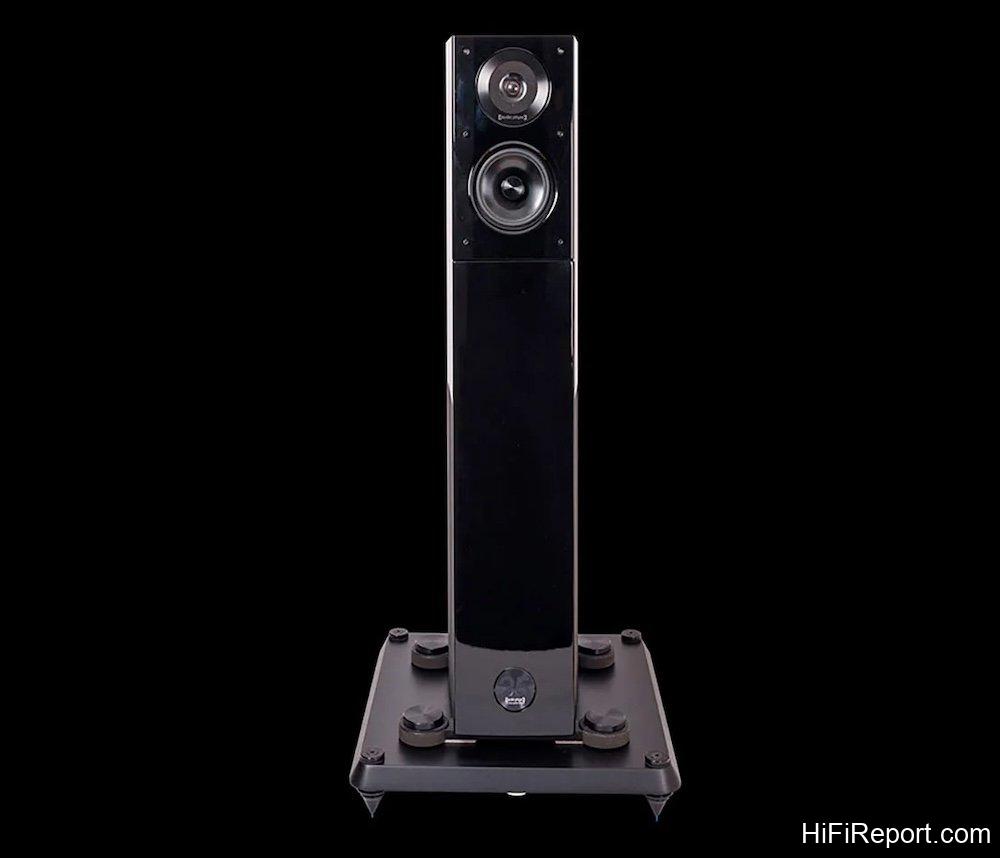
Furthermore, the Modulum audio rack boasts a unique capability rarely found in other brands: it can accommodate floor-standing loudspeakers. If your listening room features wooden floors, which are prone to resonance with speakers, the Modulum rack can prove incredibly beneficial.
As a noteworthy aside, even the esteemed Swiss brand Nagra utilizes Modulum audio racks at international audio shows. When a top-tier brand offers such an endorsement, isn’t it time you arranged a personal audition?
Specifications
* **Shelves:** Solid wood
* **Columns:** 1.5-inch diameter solid 6061-T6 aluminum alloy
* **Dimensions:**
* Large Shelf: 24.5 inches × 21.5 inches
* Small Shelf: 17 inches × 15.5 inches
* **Column Heights:** 3 inches / 8 inches / 10 inches