
ModWright HA300 Vacuum Tube Headphone Amplifier Review
It has been a while since we last reviewed a product from ModWright Instruments of the United States. Their hallmark is exceptional value for money, embodying American pragmatism by creating highly competitive products at reasonable prices. ModWright began by offering modification modules, upgrading the analog circuitry of affordable CD/DVD or Blu-ray players to deliver significant sound improvements for a modest investment.
They later expanded into their own tube amplifier designs, which have consistently garnered excellent reviews. The HA300 is their latest flagship headphone amplifier, distinguished from the previous TRYST model by its use of the 300B as the amplification tube.
Who is this tall and young handsome man? You would never guess that it is Daniel Wright, the owner and designer of ModWright, pictured at last year’s CAF (Capital Audiofest) in Washington D.C.
Upon unboxing, you’ll find product information and a QC checklist. The HA300 is meticulously handcrafted, resulting in a slow production pace. This review unit itself was a long-awaited arrival.

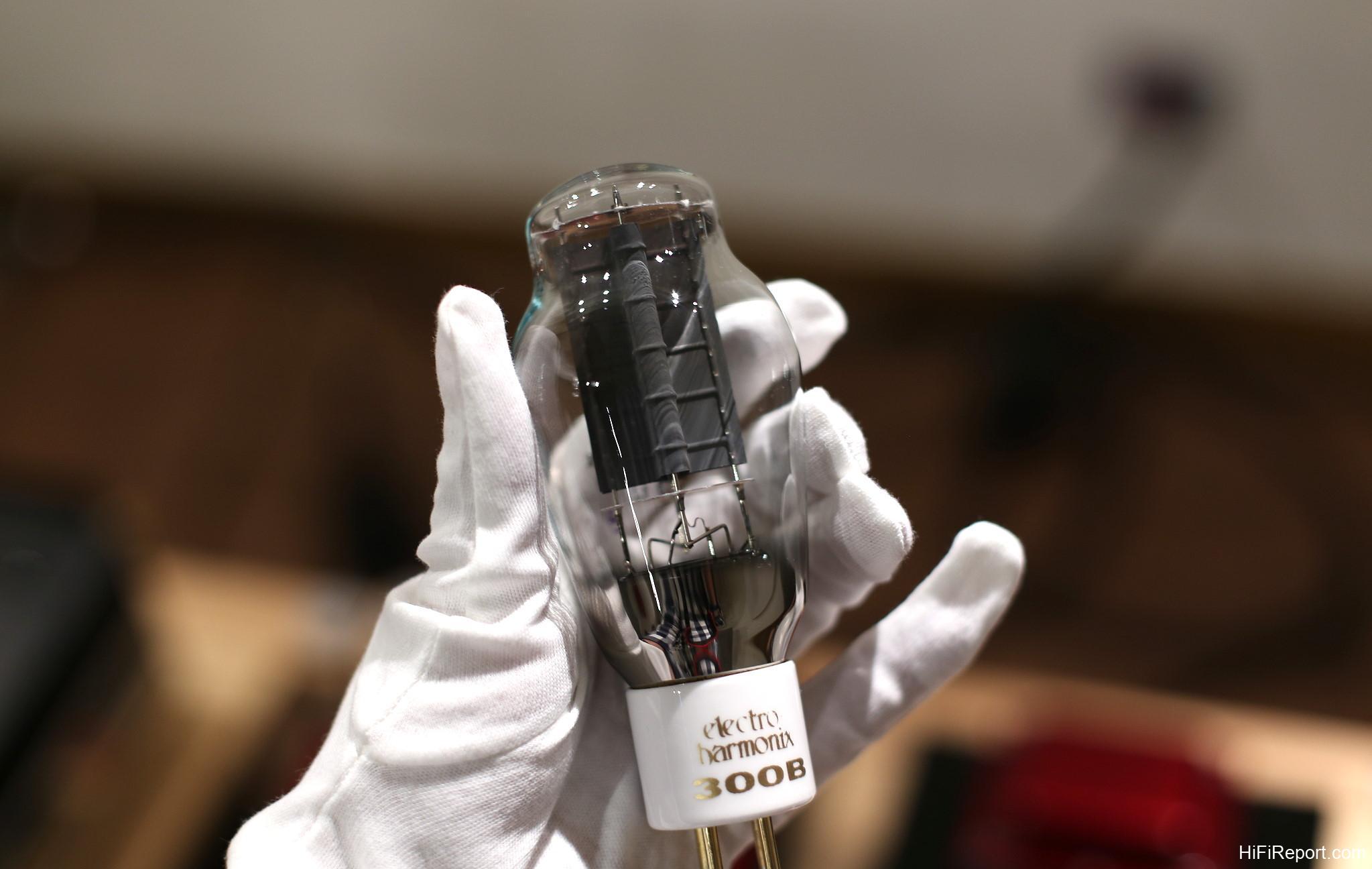
The stock tubes are electro-harmonix (EH) 300B Gold (gold pin) vacuum tubes.
The 300B is arguably one of the most beloved tube types in the amplifier world.
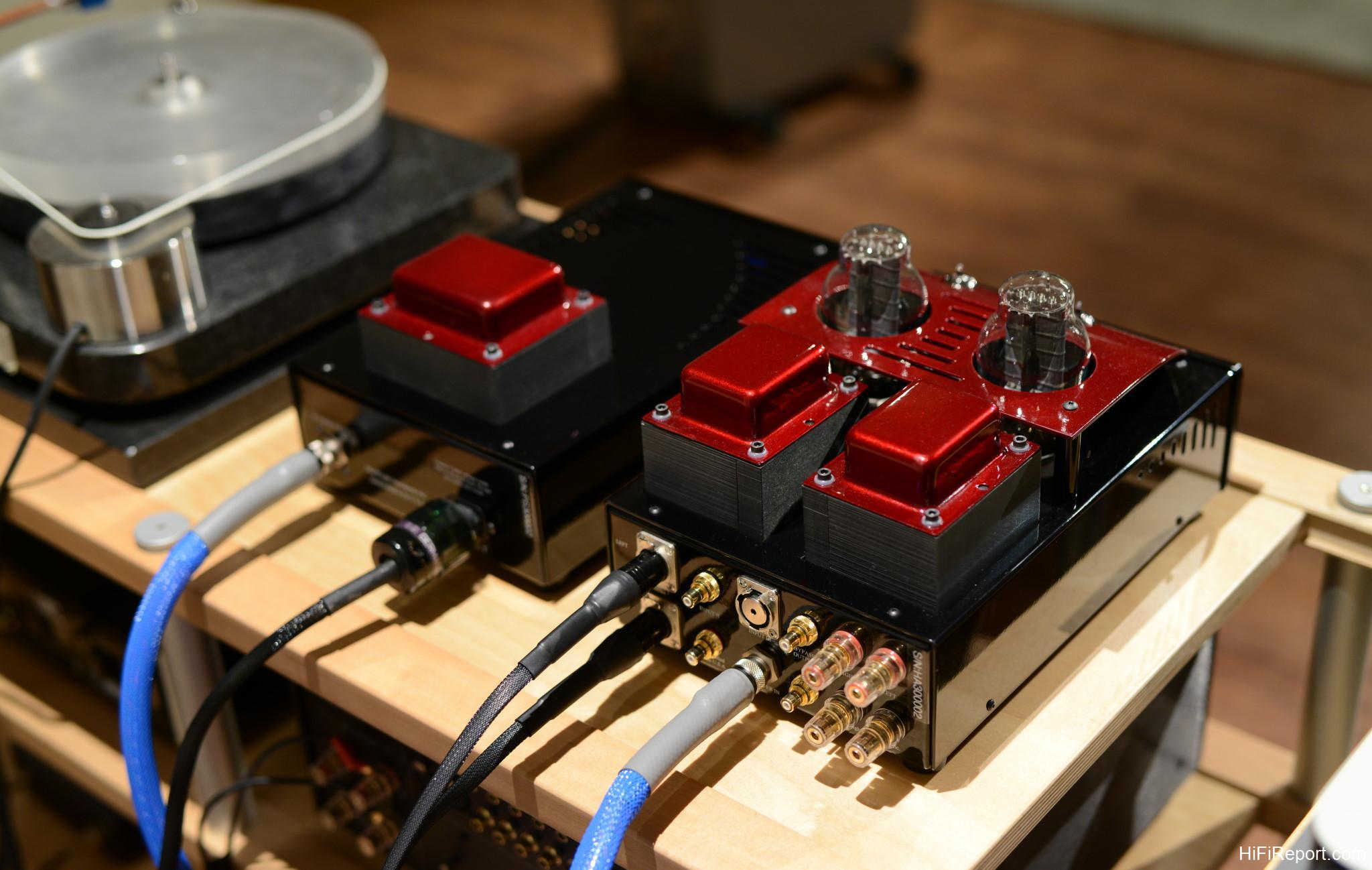
Two small white boxes contain the 6BM8 preamp tubes, also from EH. The purple cable is a dedicated power cord, connecting the HA300 unit to its separate power supply.
This power cable looks substantial and high-quality, another ModWright in-house product. While the exact specifications are unknown, it is certainly a step up from a generic black power cord.

This unit is the first in Taiwan. In fact, it was already pre-ordered by a customer but was loaned to us for review first. The finish is a stunning bright red. As each unit is entirely handmade, customization is a key feature. Beyond color options, customers can discuss specific component and design preferences with the factory, making each HA300 virtually unique.

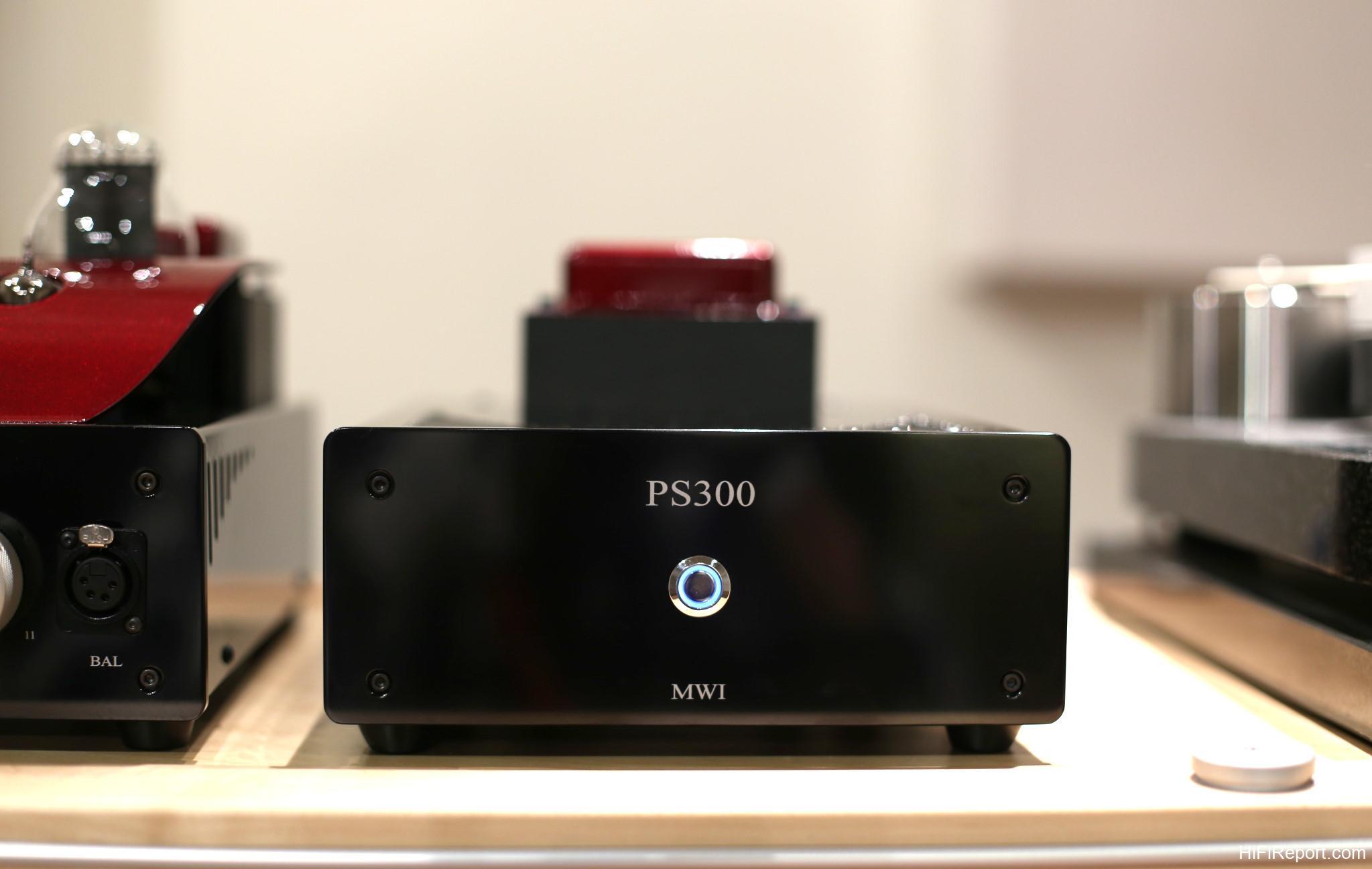
The HA300’s paint finish is excellent, and the unit is truly beautiful in person. It features a stainless steel chassis, which aids in heat dissipation. The separate power supply on the right has its transformer housing painted in the same color as the main unit. These small details demonstrate the manufacturer’s dedication to quality. The use of a separate power supply minimizes power-related interference and lowers the noise floor, which is particularly crucial for sensitive headphone systems.

The downside, of course, is the increased cost of a separate power supply design. The HA300 employs a pure Class A amplification and zero-feedback circuit design.

The front panel features three headphone outputs: IEM (3.5mm), Stereo (6.3mm), and 4-pin XLR. The IEM output on this unit has been custom-modified to a 4-pin XLR based on customer request. The left knob selects the input source, and the right knob controls the volume.
The power switch, when pressed, illuminates a blue indicator light. Tube amplifiers generally benefit from at least ten minutes of warm-up time to reach optimal sonic performance.

Turning to the rear panel of the HA300, one might be surprised to see speaker outputs. Indeed, the HA300 is also an integrated amplifier, capable of delivering 8W of pure Class A power.

Inputs include one set each of RCA and XLR, a mini 3.5mm jack for portable sources or smartphones, and a set of RCA bypass outputs. A small toggle switch selects between headphone output (HP) and speaker output (SPKR) modes.

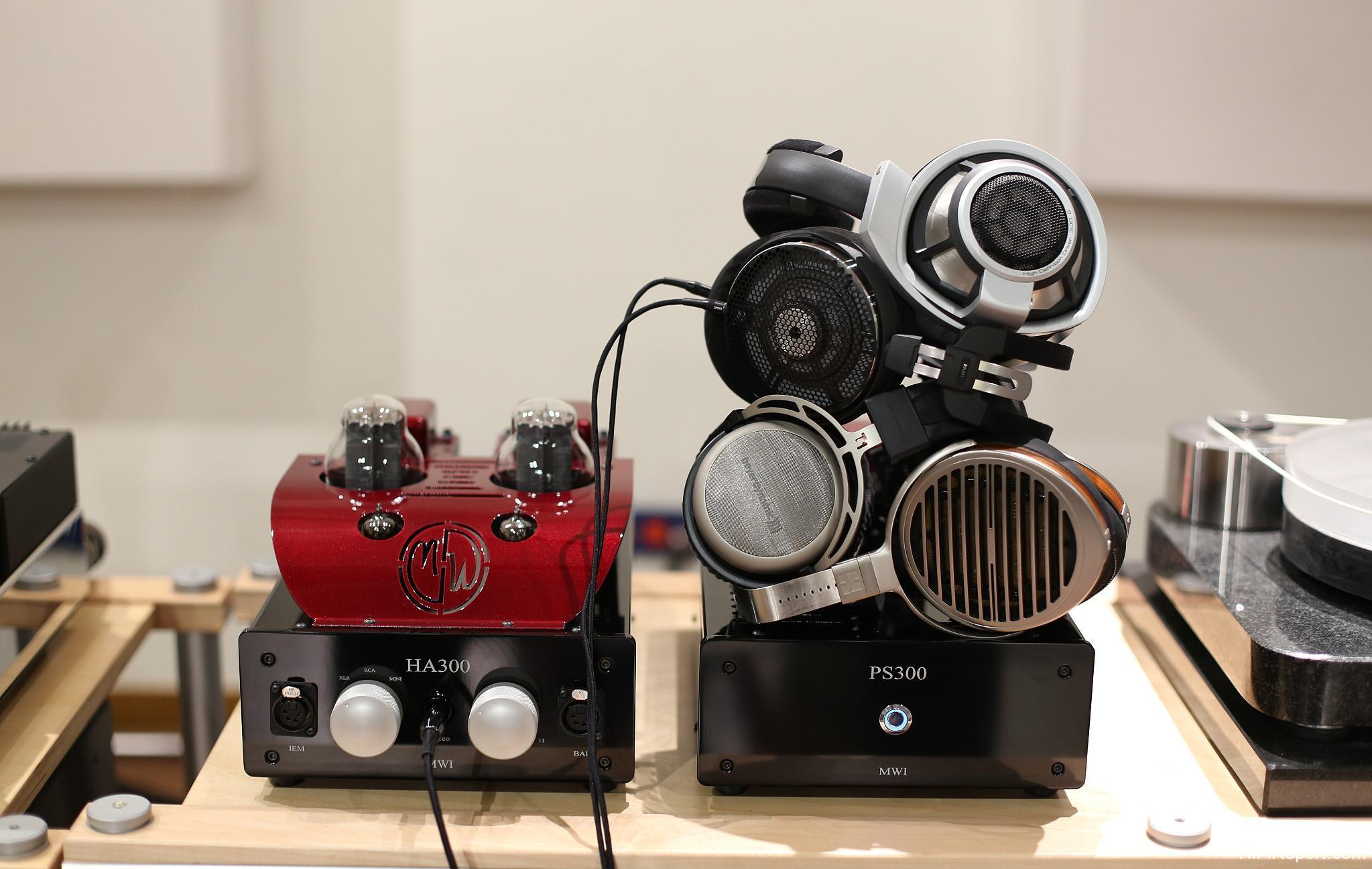
During the review, several representative headphones were paired with the HA300, all of which were driven effortlessly. Ultimately, the HiFiMAN Susvara, which exhibited the best performance, was chosen for the final evaluation.

The headphones used for evaluation, from top to bottom in the image, were:

* **HiFiMAN Susvara**: The top performer among the four headphones. HiFiMAN’s higher-end headphones are notoriously demanding to drive, but when paired with a capable amplifier, the sound is exceptional, coming closest to a high-end two-channel audio system experience in headphones. * **Beyerdynamic T1 2nd Generation**: A relatively neutral performer, with balanced characteristics across the board.
* **Audio Technica ATH-ADX5000**: Exceptionally comfortable to wear, with outstanding detail retrieval and premium build quality. While sonically excellent, ranking second to the HiFiMAN Susvara, it lacked the complete soundstage presentation of the Susvara. * **Sennheiser HD800**: An early king of headphones, now surpassed by the other three, falling significantly behind… The newer HD800S model should be a considerable improvement.
Exceptional Transparency and Detailed Layering
Listening to the soundtrack of the musical “MAMMA MIA,” a love story built around songs by the Swedish band ABBA, a personal favorite musical. It is a delightful way to revisit many of ABBA’s iconic tracks. ABBA’s music is always uplifting. While one might expect tube amplifiers to sound more lush or colored compared to solid-state designs, the HA300 presents a sound with moderate fullness and exceptional transparency. The clarity allows for effortless hearing of fine details within the music.
This reminded me of my previous experiences with ModWright tube gear, which also shared this sonic characteristic. Musical theater soundtracks often feature live orchestral performances. The drum sounds were remarkably realistic, and the vocals were direct and unembellished, creating a palpable sense of being present at the performance.
Waves of Impactful Bass and a Two-Channel-Like Soundstage
Moving to “Po-Lo-Mit-To” by He Xun-Tian, specifically track 7, “Dust Drum,” lives up to its name with a series of powerful drum performances. Many audiophiles use this track to evaluate a system’s low-frequency reproduction. Using the HiFiMAN Susvara for this track is a true test, as the Susvara is a notoriously difficult headphone to drive. To reproduce this track effectively, an amplifier needs not only sufficient power but also excellent control. The HA300 truly shines here.
At only around half volume, it already fully unleashed the Susvara’s potential. The bass was full, deep, and impactful, with fast transient response. The copious low frequencies remained distinct and layered, without any muddiness. This track alone confirmed the HA300’s flagship status. Track 9, “Spring Song,” features a large-scale chorus, recorded in a spacious venue.
The chorus builds from a distant perspective, and the track juxtaposes the powerful chorus with prominent drums, creating a dramatic contrast. The HA300 fully realized the Susvara’s two-channel-like soundstage, allowing me to clearly perceive the acoustic reflections of the entire space.
The Alluring Sweetness of 300B Tubes Emerges
Listening to Wang Yuja’s debut album “Transformation” on DG, featuring works by Stravinsky, Scarlatti, Brahms, and Ravel. Following in the footsteps of Li Yundi and Lang Lang, Wang Yuja is arguably the fastest-rising Chinese pianist. I became a devoted fan upon the release of her debut album, attending every performance during her first tour in Taiwan. Later, whenever possible, I would seek out her performances around the world, having attended over ten of her concerts.
Her playing is characterized by incredible speed and agility, combined with her own interpretive insights. In recent performances, she has even incorporated improvisational and re-arranged elements, demonstrating deep immersion in the music. While “Transformation” is a debut album, her performance is already remarkably mature and polished, showcasing exceptional technique.
DG’s modern digital recordings prioritize naturalness and fluidity, avoiding overly aggressive close-miking, emphasizing the overall musical beauty. The piano notes were crystalline and delicate, with a subtle sweetness – the unique sweetness inherent to 300B tubes, and arguably their most captivating sonic characteristic. During this album, the HA300’s impressively low noise floor was also evident. The background remained inky black, a testament to the designer’s skill.
What are the benefits of a low noise floor? Greater dynamic range and a more vibrant and engaging sonic presentation.
Surprisingly Excellent Integrated Amplifier Performance
An 8W output may seem modest, especially when many modern amplifiers start at 50W and can easily reach 100W or 200W. However, the HA300 delivers a genuine 8W of pure Class A power. I connected the HA300 to my main system, driving Marten Django XL floor-standing speakers. It performed remarkably well, with no sense of insufficient power. The sonic character remained consistent with its headphone performance. It appears the HA300 can handle virtually any speaker that isn’t excessively demanding.
No More Headphone Amplifier Hunting
With the increasing demand for high-performance headphones, the market has seen a surge of top-tier, high-end models in recent years. Headphone enthusiasts are often faced with the challenge of finding suitable headphone amplifiers. This was clearly exemplified by the HiFiMAN Susvara used in this review. The number of amplifiers on the market that can adequately drive, let alone excel with, the Susvara is likely limited.
The HA300 is undoubtedly among them, effortlessly handling the Susvara and delivering exceptional sonic performance, enriched by the sweet allure of 300B tubes. The added functionality of speaker outputs and the option for tube rolling to explore different sonic flavors further enhance its appeal.
Specifications
* Type: Vacuum Tube Headphone Amplifier & Integrated Amplifier
* Tube Complement: 300B x 2, 6BM8 x 2
* Amplification: Pure Class A, Zero Feedback
* Headphone Outputs: IEM (3.5mm), Stereo (6.3mm), 4-pin XLR (Customized)
* Speaker Output Power: 8W Class A
* Inputs: RCA, XLR, mini 3.5mm
* Outputs: RCA Bypass, Speaker Binding Posts
* Power Supply: External, Separated Power Supply
* Finish: Red (Customizable)
* Handcrafted: Yes