
Monitor Audio Anthra W12 Subwoofer Review
Over the past two years, the visibility and importance of subwoofers in the audio-visual market have steadily increased. This is primarily because, as the processing power of audio equipment continues to advance, it can support the use of a greater number of subwoofers, and setting them up and calibrating them has become significantly simpler.
Using multiple subwoofers offers numerous advantages. For example, through the “modal averaging” effect provided by multiple subs placed strategically in a room, a much more even and balanced low-frequency response can be achieved. Furthermore, multiple subwoofers can expand the sweet spot in larger listening rooms, allowing more seats to benefit from ideal bass performance, rather than being limited to a single “money seat.”
And of course, it goes without saying that multiple subwoofers will invariably deliver more powerful, fuller bass, providing greater energy and impact, or satisfying the demands of larger spaces.
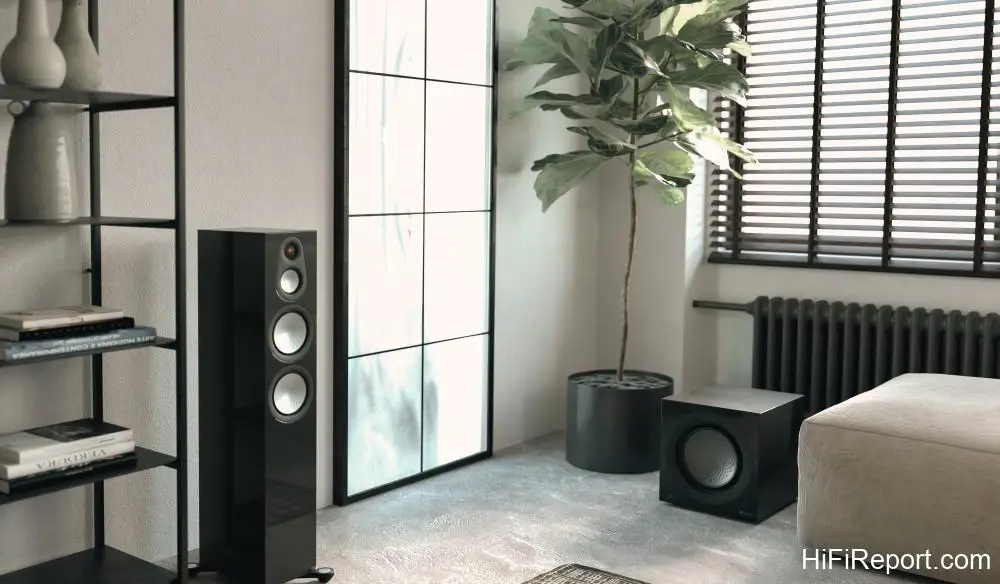
Consequently, a vast number of surround processors and receivers have begun supporting four, or even more, subwoofers – brands like Trinnov Audio, Storm Audio, Integra, Pioneer, Denon, Marantz, NAD, Lyngdorf, and many others. What’s particularly noteworthy is that the appeal of multiple subwoofers has also extended to traditional two-channel audio equipment. For instance, NAD’s M66 two-channel streaming preamplifier can support four subwoofers.
All these developments clearly indicate that multi-sub setups are a significant trend in the audio market.
Introducing the Monitor Audio Anthra Series
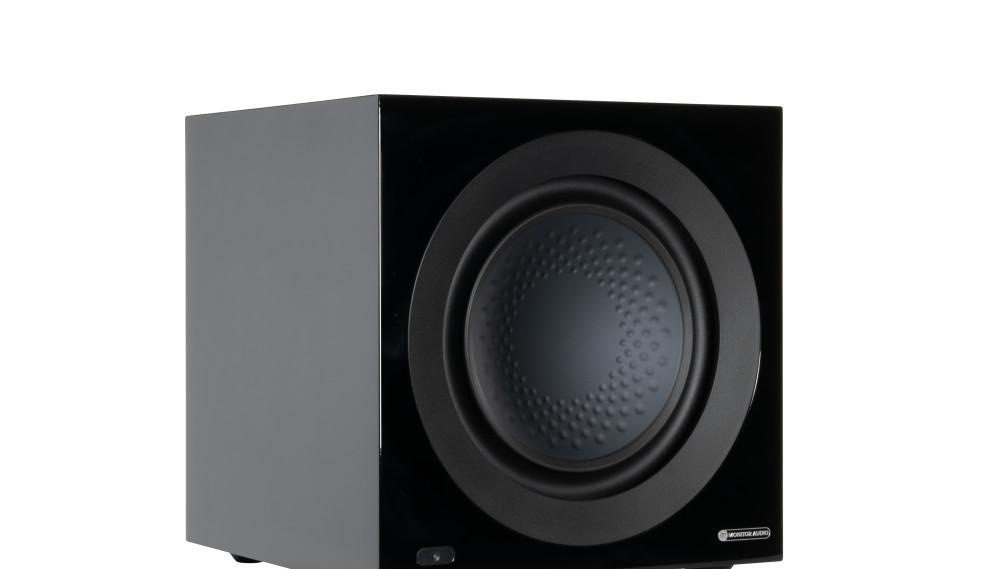
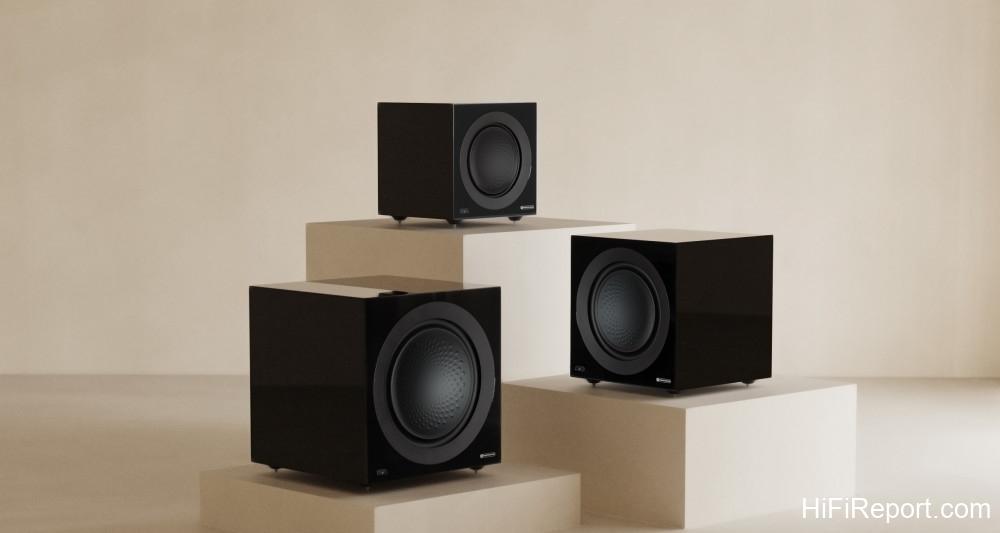
Perhaps recognizing this burgeoning trend, the veteran British brand Monitor Audio, long dedicated to loudspeaker products, has launched a new series of subwoofers named Anthra. The series comprises three models: the Anthra W10, Anthra W12, and Anthra W15. The number in the model name corresponds to the diameter of the driver cone, representing 10-inch, 12-inch, and 15-inch units respectively. The model we are reviewing today is the 12-inch Anthra W12.
It’s worth noting that in the past, Monitor Audio typically included a dedicated subwoofer within each specific speaker series – for example, the Gold series had various speaker products including a dedicated subwoofer, the Silver series had its own dedicated sub, and so on. The Anthra series is different; it doesn’t fall under a specific speaker series but stands as an independent subwoofer series.
This signifies that Anthra is a versatile series capable of complementing speakers of any level or type, designed for both two-channel and multi-channel applications. This implies that the Anthra series must possess sufficiently robust performance to meet the demands of diverse usage scenarios.
Addressing Multi-Subwoofer Challenges: Daisy-Chaining and Placement
As mentioned earlier, the audio-visual industry is now moving towards the “multi-subwoofer” era, with both home theaters and high-end two-channel systems seeking to use multiple subwoofers for optimal low-frequency performance. However, consumers often encounter two practical issues. Firstly, some front-end equipment only provides a single subwoofer output, limiting the number of subwoofers that can be used (this is common with two-channel audio equipment).
Secondly, in certain environments, the ideal position for a subwoofer might be far from the equipment. Using multiple subwoofers in such cases would require many long signal cables, which is quite inconvenient (common in large home theater rooms).
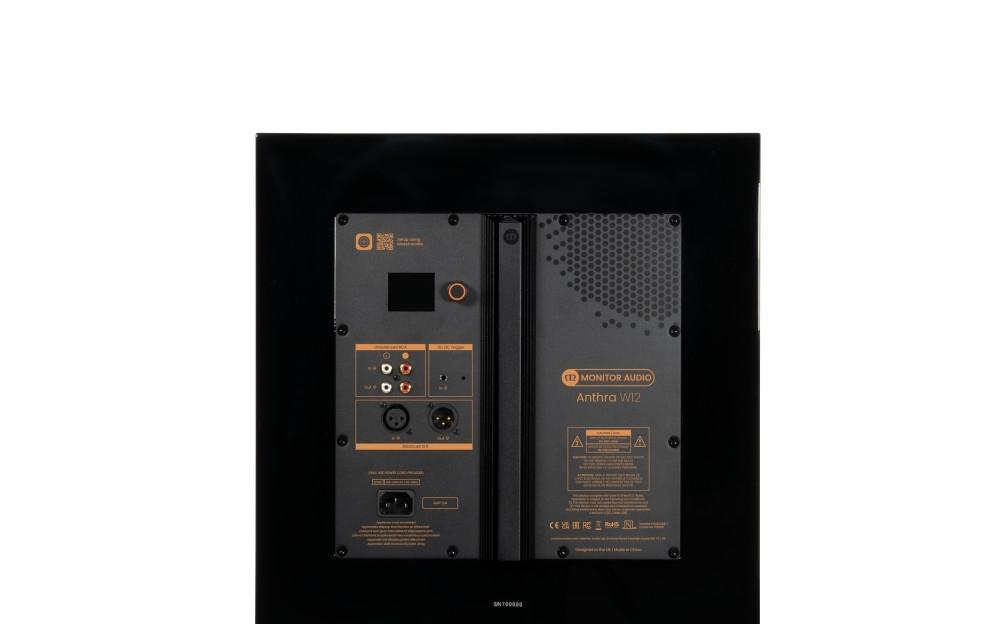
The Anthra series addresses this by supporting the Daisy-Chaining method often used in professional audio setups. Their rear panels feature not only RCA unbalanced and XLR balanced inputs but also RCA and XLR outputs. You can utilize these input and output pairs to pass the low-frequency signal to other Anthra subwoofers.
In this configuration, even if the front-end equipment only has a single subwoofer output, or if the subwoofer locations are far from the equipment, a multi-sub setup can still be easily achieved. The Daisy-Chaining function of the Anthra series allows connecting up to four subwoofers, offering significant flexibility in setup. Naturally, a multi-sub configuration can deliver more complete and full-bodied bass. This is a feature largely absent from most consumer home subwoofers historically.
Seamless Setup and Control via the Maestro Unite App
Many audiophiles are aware of the benefits of subwoofers but remain hesitant, primarily because traditional subwoofers can be notoriously difficult to adjust. One reason for this is the presence of room modes in any space; placing a subwoofer in an unfavorable location can result in poor performance, exhibiting peaks or dips in the low-frequency response.
Another reason is that a subwoofer must integrate properly with other speakers (you don’t listen to the subwoofer in isolation), so adjustments must be made from the listening position while listening to the system as a whole to understand the transition between the subwoofer and the main speakers.
Many traditional subwoofers only offer basic adjustment knobs on the back panel, requiring constant trips back and forth between the listening chair and the subwoofer’s rear panel, which is tiring just thinking about it.
Monitor Audio’s design this time is very well-conceived. The Anthra series subwoofers can be controlled via the Maestro Unite setup App. This application provides a comprehensive suite of setup and adjustment functions. This means you can sit comfortably in your listening position and make all sorts of subwoofer adjustments via the App, including volume, crossover point, phase, and even automatic and manual EQ equalization.
You can easily listen and adjust without having to repeatedly go to the subwoofer’s back panel. Additionally, this App can control multiple Anthra series subwoofers simultaneously. If you want to use multiple subs in a Daisy-Chained configuration, this single App can provide unified control.
Advanced EQ Functionality for Room Correction and Customization
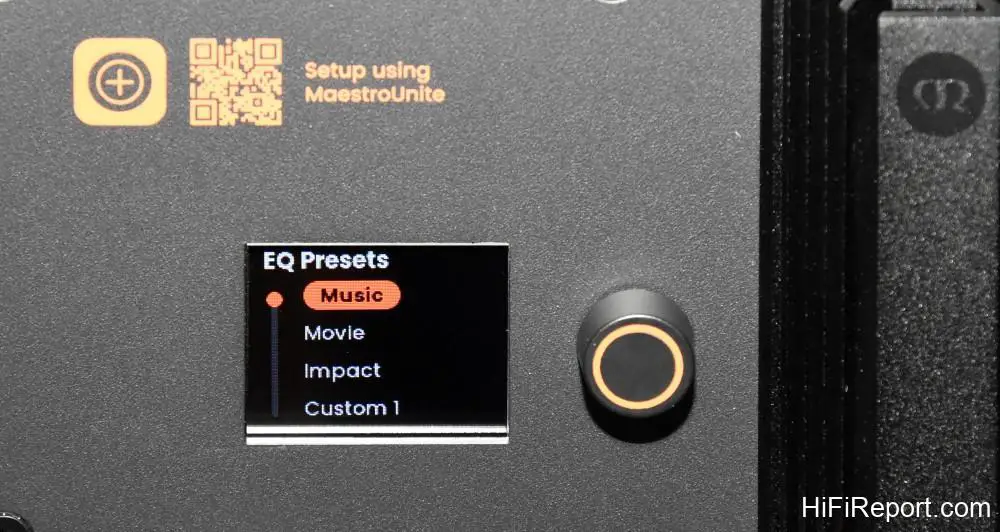
But what if home decor or room layout prevents placing the subwoofer in the ideal position? This is where the EQ equalization function provided by the Anthra series comes into play. To facilitate this feature, these subwoofers are equipped with DSP (Digital Signal Processing) circuits, allowing EQ mode switching via the App. Anthra subwoofers offer up to 6 EQ modes, including 3 presets (Music, Movie, Impact) and 3 custom modes.
Each of these 3 custom modes can be configured with 8 filter parameters. Under each parameter, you can customize the frequency point, gain/attenuation, Q value, and filter type. This provides a very complete set of functions, allowing you to adjust based on content type or room conditions, and effectively gives experienced users the ability to perform detailed tuning.
User-Friendly Physical Interface: The LCD Display
Beyond the aforementioned design elements, the Anthra series also features a unique rear panel interface. Instead of traditional knobs or switches, it incorporates a 2-inch full-color LCD display paired with a control knob. The purpose of this design is to enhance user convenience, especially in many home theaters where the lighting is kept dim for optimal projection. Operating traditional knobs and switches in such dark environments can be difficult and frustrating.
The illuminated 2-inch full-color screen combined with the control knob offers a completely different experience, being very user-friendly.
Acoustic Design, Driver Technology, and Robust Build
With the key features covered, let’s move on to the acoustic design. One of the crucial factors behind Monitor Audio’s over forty years of success and global acclaim is their ability to manufacture their own drivers. This allows them to control speaker performance right from the fundamental driver design stage. This advantage is fully leveraged in the Anthra series subwoofers. Taking the 12-inch W12 model reviewed here, its bass driver incorporates Monitor Audio’s key technologies.
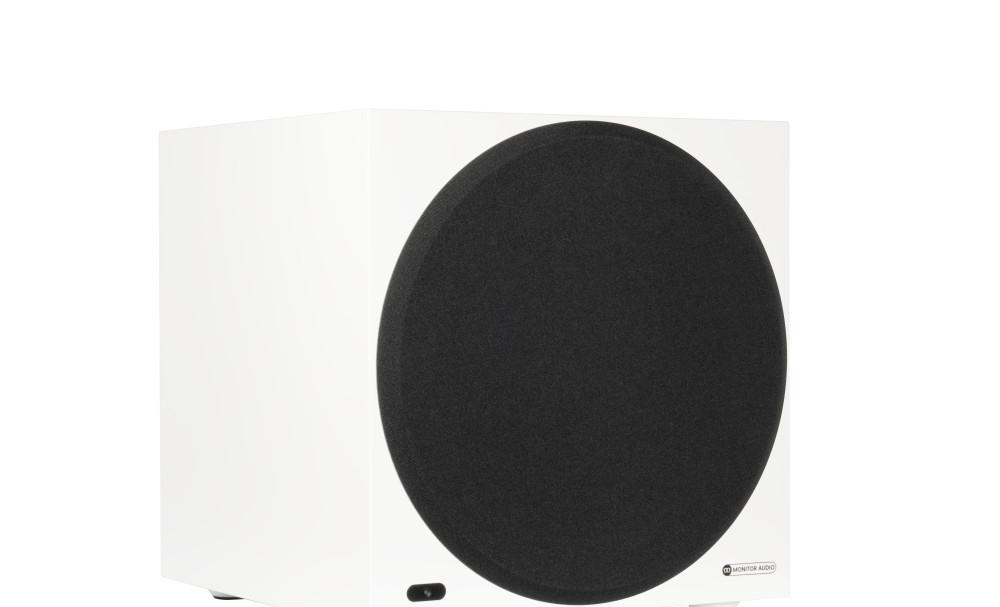
Most notably, it features their signature C-CAM cone material, further enhanced with RST II treatment, which involves deliberately pressing small hexagonal dimples into the cone surface to improve rigidity and prevent deformation.
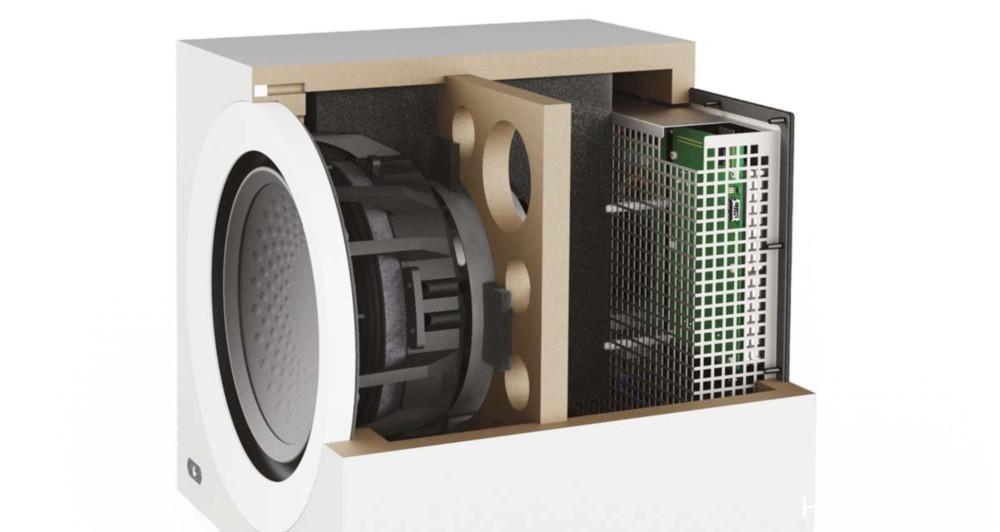
For the best possible control, the Anthra W12 employs a sealed cabinet design (acoustic suspension). Emphasis is also placed on driver excursion, achieving a substantial 50mm – truly a “long-throw” bass driver. Furthermore, both the spider and the magnet assembly behind the cone are dual setups, providing significant motor force for driver movement. To minimize cabinet vibration under such conditions, the W12 features a very robust cabinet design.
The outer panels are constructed from 36mm thick MDF board, and a 25mm MDF bracing frame is placed within the cabinet’s midsection for reinforcement. For amplification, Class D technology is employed for efficiency, delivering a continuous RMS power of 900 watts, with peak output reaching an impressive 1700 watts – providing extremely powerful drive. These solid design choices contribute to the W12’s substantial weight of over 28 kilograms.
Practical Usage Experience: Initial Listening Impressions
Next, let’s discuss the practical usage experience. First and foremost, the Maestro Unite setup App is genuinely user-friendly. Sitting in the listening position, I could quickly switch between multiple EQ settings, adjust subwoofer volume, and even mute it. This allowed for rapid A/B testing between having the subwoofer on or off, instantly revealing its impact on the overall music and making it easy to assess the integration with the other speakers.
This made the subwoofer review process remarkably convenient.
For instance, to evaluate the subwoofer’s speed, I played a demanding track: “Façade of Reality” from the album *Live at Paradise* by Dutch heavy metal band Epica. This track opens with extremely fast double-bass drumming. Using the App, I could immediately discern the difference with the subwoofer ON versus OFF. The Anthra W12 demonstrated excellent control and speed.
With the subwoofer engaged, the double-bass drumming still sounded incredibly fast, and the individual drum hits remained clearly defined with distinct separation. There was no sense of the sound being slowed down or becoming muddy due to the subwoofer’s contribution. Moreover, the weight and impact of the drum hits were also quite impressive.
While its extreme low-frequency extension might not be the most exaggerated on the market due to the sealed cabinet design, its control, speed, and layering in the bass frequencies are outstanding. Control, in particular, is extremely important. If the Anthra series is intended for “cross-over” use (both music and movies), control is absolutely key. It must be fast and low-distortion to satisfy the playback demands of various movies and music genres.
Through our testing, we can confirm this is indeed an excellent subwoofer.
Optimizing Performance with EQ: Measurements and Results
Beyond basic acoustic performance, the W12 allows users to customize EQ settings to mitigate room environment influences, which is certainly worth exploring. This time, I deliberately placed it in a location that wasn’t acoustically ideal. I then used REW software paired with a miniDSP UMIK-1 microphone to take measurements, assessing the low-frequency response.
Subsequently, I utilized the App’s custom EQ function to correct most of the peaks and dips, gradually achieving a relatively smoother low-frequency response curve.
In practice, I used REW software + miniDSP UMIK-1 microphone for measurements and then the custom EQ function to optimize the low-frequency response. [Assuming Fig 1 and Fig 2 were shown in the original, Fig 1 shows the response before adjustment, and Fig 2 shows it after.] There are a few points to explain regarding these results. Firstly, below 25Hz, there is a natural roll-off, and further down, there’s a rise due to wall gain, which was not addressed.
My crossover point was set at 80Hz, so frequencies above 80Hz were not processed. The most severe issue before adjustment [in Fig 1] was a nearly 20dB difference between the peak around 27Hz and the dip around 48Hz. After processing with the EQ tools, this difference was significantly reduced. Then, smaller fluctuations were addressed. The result is shown [in Fig 2].
If we take an average level of 100dB, you can see that most of the fluctuations from 25Hz to 80Hz are within a range of +/- 5dB, which is considered good performance for the extreme low-frequency band. While the graph might look a bit wavy, the improvement in listening experience after adjustment was quite noticeable.
I used the album “Dohh~ Koh~” (Ghostly Drummers – Wave of Fury) for testing. This album features extensive, rapid hitting of large drums, challenging not only the energy output but also the speed and definition of the low frequencies and the drums themselves. With just a tap on the App, I could quickly perform A/B tests, comparing the difference between “no processing” and enabling the “manual EQ.”
To protect the subwoofer, the energy boost limit for the equalization function is restricted, so it’s impossible to achieve a perfectly flat low-frequency response. However, even with the available correction, the audible difference was quite significant.
With the manual EQ enabled, the entire sound had a sense of being “dialed in,” as if the focus had sharpened. Various details within the sound became more apparent and were “arranged” more neatly. The large drums now had better impact and definition; the drum sound was more solid, and the breaks between hits were more distinct. At this point, I felt as though the drumsticks used by the Ghostly Drummers were wrapped in thick cloth, making them seem larger.
The power and elasticity of the drum sound were both improved. The energy didn’t just hit the eardrums; it massaged the skin, providing a strong, tactile impact. If you hear muddy, chaotic bass from the W12, don’t doubt its capabilities; it’s likely the room distorting its performance, and its custom EQ function provides the means to adjust for this.
Movie Performance: Deep, Impactful, and Controlled Bass
If it’s this capable with music, its performance with movies should be exceptional. I set up three custom EQ profiles. One profile specifically boosted the extreme low frequencies below 50Hz slightly, designed for movie soundtracks to enhance their impactful low-frequency effects. If you’re lazy, you can also just select the “Impact” preset, which directly boosts energy around 100Hz, and the boost range is quite wide.
This approach more easily delivers sudden mid-bass surges, which I find a bit aggressive, but some listeners might find it very exciting. It’s worth trying out.
I played the 4K BD of director Christopher Nolan’s recent masterpiece, “Oppenheimer.” Most of the film’s audio consists of dialogue, but the sections depicting Oppenheimer’s imagination of the atomic world offer effects that low-frequency enthusiasts will deeply appreciate. When I played these sequences with the W12, the results were superb. When these scenes appeared, I not only felt incredibly powerful energy but also experienced massive dynamics.
The sound density was extremely high, conveying a sense of overwhelming force from the atomic world. This sonic impact wasn’t just on the eardrums; it was felt on the hands and skin as well. Sometimes it was a subtle, regular energy disturbance, at other times it was like a sonic tsunami, capable of completely engulfing you. Without an excellent, controlled subwoofer, achieving such effects would be impossible, and the W12 delivered.
Conclusion: A Versatile and Highly Recommended Subwoofer
Many manufacturers have released subwoofers in recent years that haven’t shown significant evolution, giving a feeling of “new bottle, old wine.” The Monitor Audio Anthra series is different; it combines both extensive features and high performance. It boasts a very complete control mechanism, especially the rich functionality of the App, and notably, the inclusion of up to six EQ profiles offers consumers considerable adjustment flexibility.
On the feature front, the Anthra subwoofers also support Daisy-Chaining multiple subwoofers, aligning with today’s trend towards multi-sub setups. In terms of sound performance, it incorporates Monitor Audio’s highest-grade cone technology, providing excellent control. The resulting bass is fast, solid, and powerful – never soft or muddy. It excels in both two-channel and multi-channel applications, offering high practicality and making it highly recommendable.
Specs
* Design: Active, sealed cabinet
* Driver: 12-inch long-throw driver, C-CAM cone material, RST II technology
* Frequency Response: 16Hz – 400Hz (-6dB)
* Amplifier Technology: Class D
* Amplifier Power: 900W RMS, 1700W peak
* DSP: 28 Bit 50 MIPS processing capability, supports App control and adjustment
* Crossover Setting: Continuously variable 20Hz – 200Hz
* Phase Setting: Continuously variable 0 – 360 degrees
* EQ Equalization: 3 presets (Music, Movie, Impact), 3 custom
* Dimensions (H.W.D.): 374 × 374 × 374mm
* Weight: 28.56 kg