
Monitor Audio Gold 100 5G Review
For a long time, Monitor Audio from the UK has maintained a clear three-tiered product hierarchy: Gold, Silver, and Bronze. However, this convention was broken in 2007 with the introduction of the Platinum series. The Platinum series not only signalled Monitor Audio’s determination to venture into the high-end market but also showcased their profound technical prowess.
Subsequently, leveraging the technology developed for the Platinum series, they further expanded their lineup with the Studio and Monitor series, creating an exceptionally comprehensive product range that covers every price point, ensuring consumers can find the best value no matter their budget.
Upon its release, the Platinum series was dubbed the “most value-for-money flagship series” by audio enthusiasts. Yet, Monitor Audio’s research and development efforts didn’t cease. Nearly ten years after the initial Platinum series debuted, in 2016, Monitor Audio challenged themselves again, launching the second generation, Platinum II.
From exterior refinement and lavish materials to design completion, the Platinum II series stands as undeniably top-tier, marking a brand-new milestone for Monitor Audio.

The Gold Series: Inheriting Platinum II Technology
Before the advent of the Platinum series, the Gold series had consistently held the flagship position for Monitor Audio. With the introduction of Platinum, the entire technical standard and build quality of the Gold series were elevated to a new plane. Following Monitor Audio’s excellent tradition, technology from higher-tier products is regularly trickled down to the next level. Thus, this fifth generation of the Gold series inherits the technical essence of the Platinum II series.
▲
Although the new series specifications were publicly available on the official website for some time, the products officially launched this February. Local distributor Ding Shang held a formal press conference on February 20th at Ming Zhan Audio in Zhubei. Beyond the new product introduction and unboxing already featured on PrimeAV, both “Audio Art” and “PrimeAV” magazines managed to obtain the products before the press conference for comprehensive reviews.
This review focuses on the smallest bookshelf speaker in the series, the Gold 100. Let’s start with the tweeter.
Driver Technology and Design
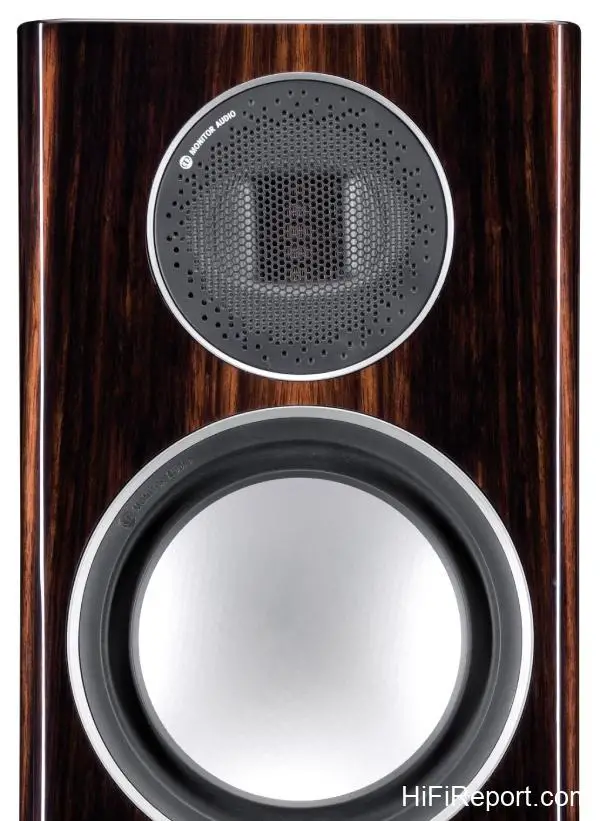
The previous generation Gold series used a ribbon tweeter; this generation uniformly adopts the MPD (Micro Pleated Diaphragm) Air Motion Transformer (AMT) tweeter. The diaphragm features a folded design, creating a radiating surface six times larger than Monitor Audio’s traditional 25mm gold dome tweeter.
This not only significantly increases the amount of air moved but also results in a wider and flatter frequency response. Compared to traditional diaphragm materials, AMT drivers have lighter mass, making them easier to drive, and they lack the resonance issues associated with conventional diaphragms, which is key to the Gold 100’s exceptional sound quality.
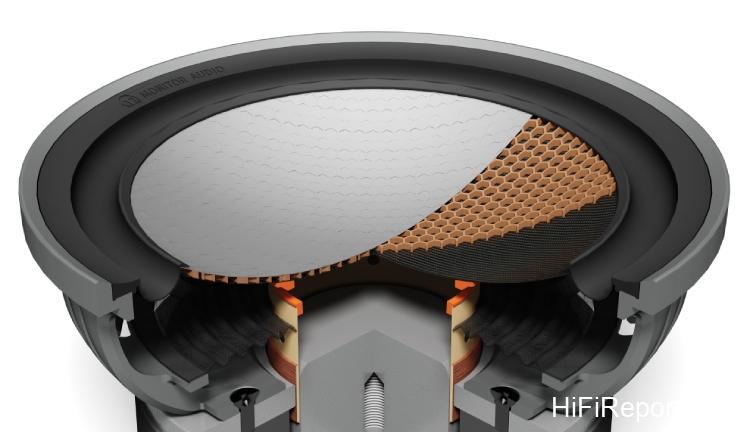
The mid-bass driver used in the Gold 100 has also been replaced with the RDT II (Rigid Diaphragm Technology II) sandwich cone driver, featuring the same design as the Platinum II series. From the exterior, the difference between the RDT II and the previous generation RDT driver is apparent. To enhance cone rigidity, the previous RDT driver surface featured numerous circles of varying sizes, while the RDT II cone reveals a honeycomb structure beneath the C-CAM surface.
The first layer of the RDT II cone is Monitor Audio’s exclusive C-CAM material. To strengthen the structure, a layer of ultra-lightweight Nomex honeycomb material is added underneath for reinforcement. The third layer incorporates a woven carbon fibre layer, significantly boosting the cone’s stiffness and further realizing the “Rigid” definition in the driver’s name.

Unlike the floorstanding speakers in the series, the Gold 100 is a two-way design, whereas the Gold 200 and Gold 300 are three-way. Being three-way, the Gold 200 and Gold 300 feature the MPD tweeter and 2.5-inch C-CAM midrange driver module (MPD/Mid-range Chamber Module), which makes its debut in this fifth-generation Gold series. The Gold 100 does not employ this module.
Monitor Audio also employs a “secret weapon” in the 6.5-inch RDT II mid-bass driver used in the Gold 100, a technology they call Dynamic Coupling Filter (DCF).
Typically, a driver’s voice coil and diaphragm are directly glued together, making it difficult to overcome distortion caused by high-frequency cone breakup. To solve this problem, Monitor Audio incorporates a plastic coupling ring between the voice coil and the diaphragm in this 6.5-inch mid-bass driver. This ensures the force on the diaphragm is more evenly distributed, effectively reducing distortion.
It also provides better cooling for the voice coil, allowing it to withstand dynamic “torture.” The manufacturer emphasizes that the advantage of the DCF design is particularly significant in two-way speakers.
Cabinet Construction and Aesthetics
Given that the Gold 5G series utilizes all the technology from the Platinum II series, how is cost saved? The answer lies in the cabinet construction. However, the Gold 5G series still employs cabinets made from thick 18mm MDF, and the Gold 100 is no exception.
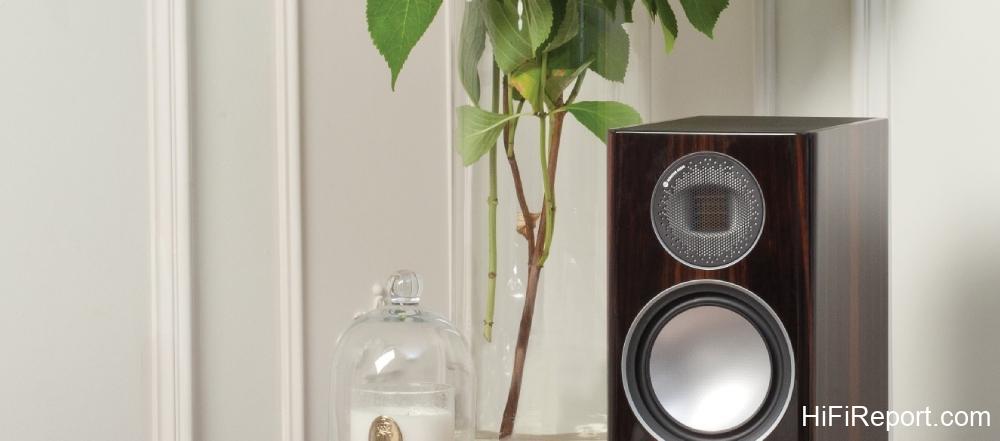
The previous generation Gold series featured a curved cabinet rear. This Gold 5G series has a completely square cabinet, but adds a full piece of leather trim on the top panel. The front baffle also features a perforated brand nameplate, enhancing recognition and significantly improving the overall texture and feel. The manufacturer offers four different finishes: Piano Gloss Black, Satin White, Dark Walnut, and Piano Ebony.
The two wood veneer versions also feature a high-quality mirror-matched wood grain process, which looks exceptionally beautiful in person.
Testing Environment and Setup
For this listening session, I paired the speakers with two integrated amplifiers from our long-term reference setup: the ASR Luna 6 Exclusive and the Roksan K3. The source was a Marantz ND8006. When using the Luna 6 Exclusive, it was clear that the Gold 100 speakers’ true character shone through completely. Beyond the excellent sound quality, the sense of layering and soundstage positioning was even more outstanding, and I was also very satisfied with the detail and bass performance.
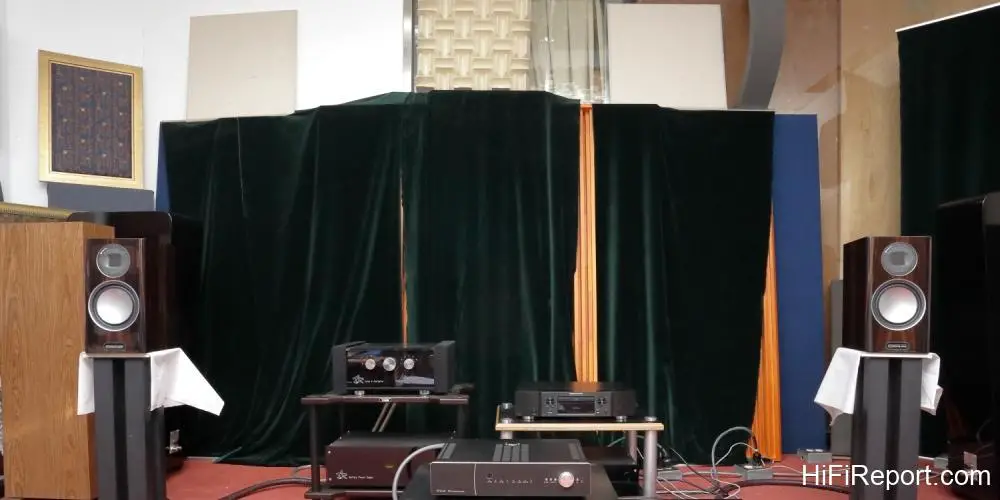
However, pairing such an expensive integrated amplifier with speakers in the approximately $3,000 USD range might be impractical. So, I also paired the Gold 100 with the K3, which is reviewed in this issue. This is arguably a much more appropriate pairing, and the Gold 100’s performance remained consistently excellent. Therefore, the final review is based primarily on the listening impressions from these two pairings.
Listening Impressions
In the first track, “Night Rose,” from Scheku’s “Empowerment” (DECCA 4832948), the cello sounded continuous and melodious, full of lively, springy texture. The variations in the performer’s bowing dynamics were also faithfully reproduced. The overall performance was very satisfying. Beginning in the middle section with the woodwind performance, you could further hear the excellent textural performance of this fifth-generation Gold 100 – details were richer, and density was better.
The eighth track, the fourth movement of Shostakovich’s “Cello Concerto No. 1,” showcased the Gold 100’s outstanding performance with large-scale music and significant dynamics. Despite being a small speaker, it exhibited immense presence and a relaxed quality. The entire piece sounded stable and solid, never feeling constrained. The rhythmic bass pulses revealed the texture of the drum skin vibrations, avoiding a dull or sluggish sound.
The Gold 100, with its superb sonic density coupled with excellent sound quality, sets it apart from products in the same price range. On “Cleopatra’s Aria” (5099990787225, Warner), the Gold 100 captured the light and rich texture characteristic of ancient music perfectly, and the reproduction of the recording space was remarkably realistic. Natalie Dessay’s voice possessed exquisite nuance, with clear variations in weight and emphasis.

Paired with the ethereal ancient instrument accompaniment, it painted a beautiful musical picture.
When the scale descended, her singing seemed to tug at the heartstrings, making the listener’s mood low. When the scale ascended to the piercing high notes, there was no hint of harshness, showcasing the excellent high-frequency performance of the MPD AMT tweeter. Listening to “The Art of Menahem Pressler” (BIS SACD1999, Sunrise), the piano texture was equally outstanding. Whether the high notes or low notes, the articulation was excellent.
The pianist’s carefully crafted tonal variations were also faithfully reproduced.
Joyce DiDonato’s “Songplay” is a fascinating album that features operatic vocals singing jazz arrangements. You can appreciate both the beauty of the operatic voice and the swinging jazz style. The opening scat singing in the fourth track, “Lullaby of Birdland,” was utterly captivating. The subsequent instrumentals created a joyous atmosphere.
Besides hearing the rich and varied texture of DiDonato’s voice, the upright bass moving up and down the scale was clear, realistic, and wonderfully agile.
Typical small speakers often render soprano voices too thin, making them unpleasant to listen to. However, the Gold 100’s sound is just right – it has sufficient body and substance, along with clear texture and abundant detail.
“Gold Standard” is a professional term representing the “highest standard in its class.” I believe this was Monitor Audio’s thinking when they established the Gold, Silver, and Bronze tier system years ago. After five generations of development, augmented by the advancements from the Platinum II series, the Gold 100 remains the “Gold Standard” for speakers in the approximately $3,000 USD range today.
Specifications
* Type: Two-way, two-driver, bass-reflex bookshelf speaker
* Launch Date: February 2019
* Drivers: MPD (Micro Pleated Diaphragm) AMT tweeter ×1, 6.5-inch RDT II cone bass driver ×1
* Frequency Response: 40Hz–50 kHz
* Crossover Frequency: 2.5 kHz
* Recommended Amplifier Power: 60–120 watts
* Sensitivity: 86dB (1 watt @ 1M)
* Maximum SPL: 110dBA
* Nominal Impedance: 4 ohms
* Dimensions (WHD): 195 x 360 x 330.6mm
* Weight: 9.12 kg