
Moon 861 Power Amplifier Review
Last year, Moon launched the entirely new North Collection series, releasing six products at once. For Moon, a brand known for its steady pace, this was a significant move, especially considering all six were high-end products, mostly positioned above existing models. This clearly signals Moon’s strong ambition to actively compete in the Hi-End market with the North Collection series.
Targeting the High-End
In truth, Moon already possessed the capability to contend in the Hi-End market and didn’t necessarily need the North Collection series to prove it.
Their current flagship preamplifier, the 850P, priced at $36,000 USD, and the current flagship monoblock power amplifier, the 888, priced at $60,000 USD, are second to none compared to any top-tier models from other brands. However, apart from the 850P and 888, other Moon models were primarily in the mid to upper-mid range. This means Moon had lacked a comprehensive high-end product line for quite some time. The introduction of the North Collection series is intended to fill this gap and re-emphasize to audiophiles worldwide Moon’s research and development strength and technical expertise in creating top-tier equipment.
The six products in the North Collection series are divided into three tiers: 6, 7, and 8. The 681 streaming DAC and 641 integrated amplifier form the entry-level tier. The 791 streaming preamplifier and 761 stereo power amplifier constitute the mid-level tier. The 891 streaming preamplifier and 861 stereo power amplifier represent the high-end tier.
These three tiers reveal two key points. First, pairing the two components within each tier creates a functionally complete playback system capable of handling streaming, digital, analog, and vinyl playback. Simply connect speakers, and you’re ready to listen, with ample power delivery provided by each amplifier. Second, have you noticed the absence of pure analog preamplifiers in these three tiers? Exactly. The preamplifier functionality is either integrated into the source component or the power amplifier.
Beyond performance and features, a significant appeal of the North Collection series is convenience. By integrating preamplifier functionality with source or power components, fewer separate boxes are needed. Moon leverages its deep technical expertise to ensure excellent sound quality is achieved nonetheless.
Premium Aesthetics
Moving on to the main subject, let’s examine the star of this review, the Moon 861 stereo power amplifier.
While the 861 maintains Moon’s familiar aesthetic, the level of craftsmanship has been significantly elevated, and thoughtful details have been incorporated throughout, giving the 861 the undeniable presence of a high-end component.
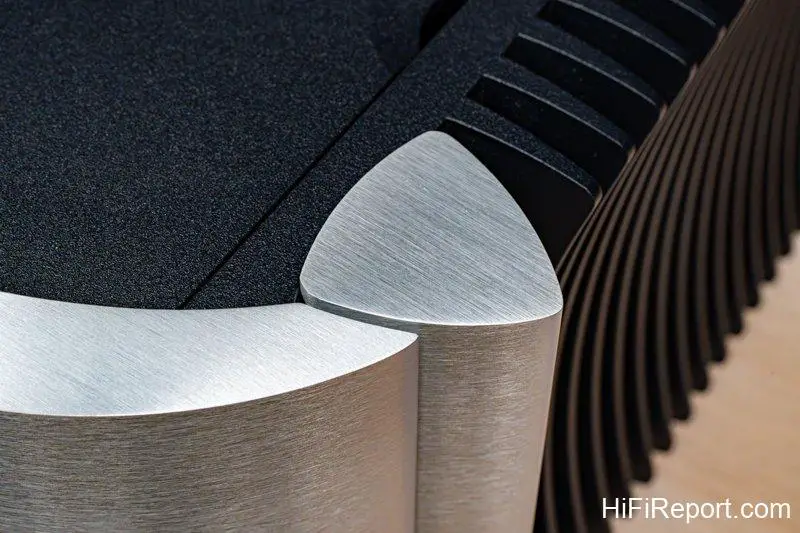
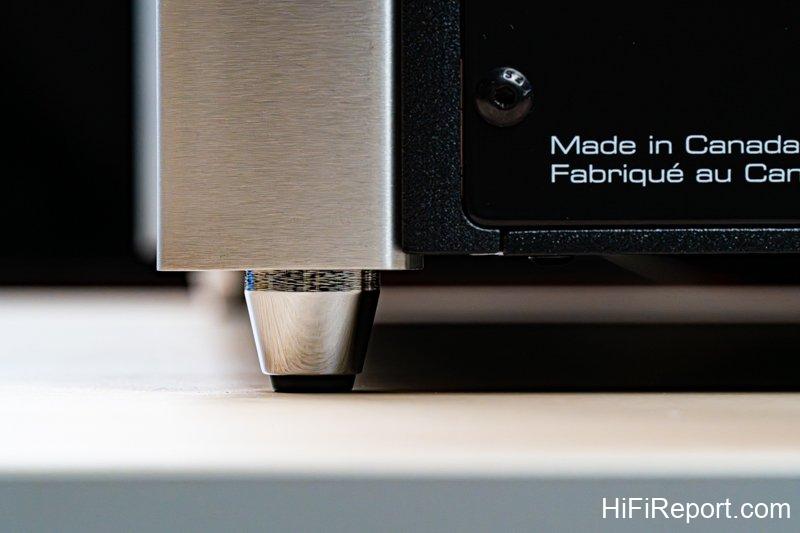
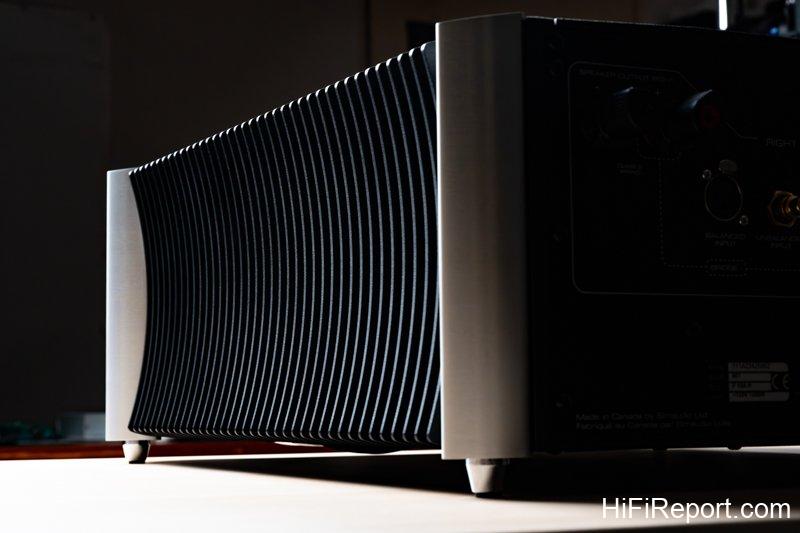
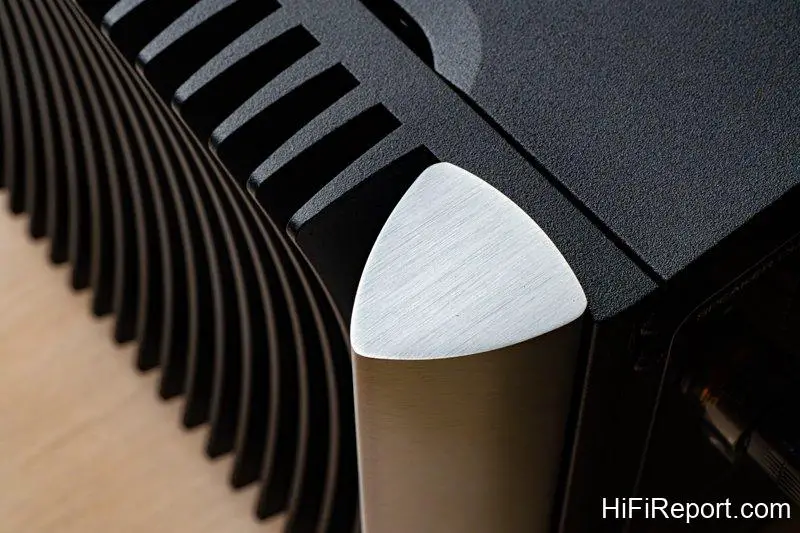
Upon closer inspection, the 861’s chassis is a combination of numerous curves. For instance, the protective side panels on the front are smoothly curved, completely devoid of right angles. They sweep back and connect to the corner pillars, which are triangular but still feature curved edges and a slight bevel at the top and bottom ends, resulting in a truly beautiful appearance.
And it doesn’t stop there.
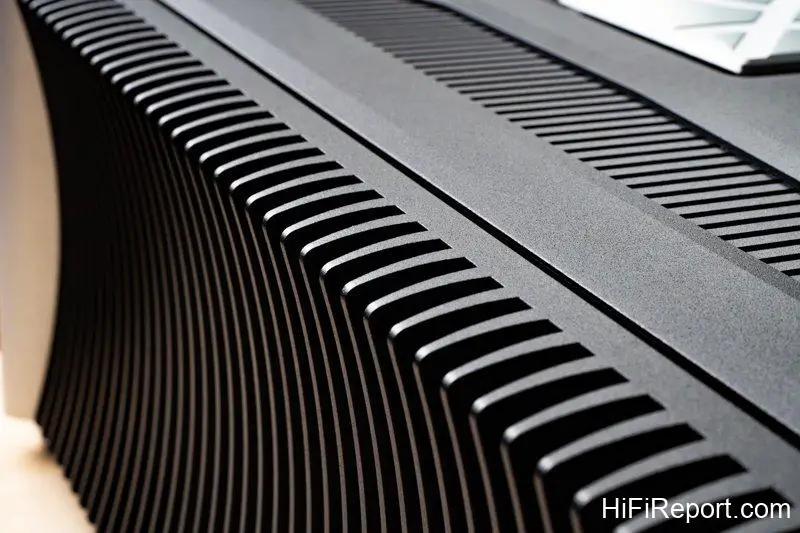
Behind the pillars are the heat sinks on either side of the chassis. To ensure sufficient thermal efficiency, the heat sinks must be large. However, large heat sinks can easily look bulky. To counteract this, the top, bottom, and side edges of the heat sinks have also been curved, mitigating any sense of awkwardness.
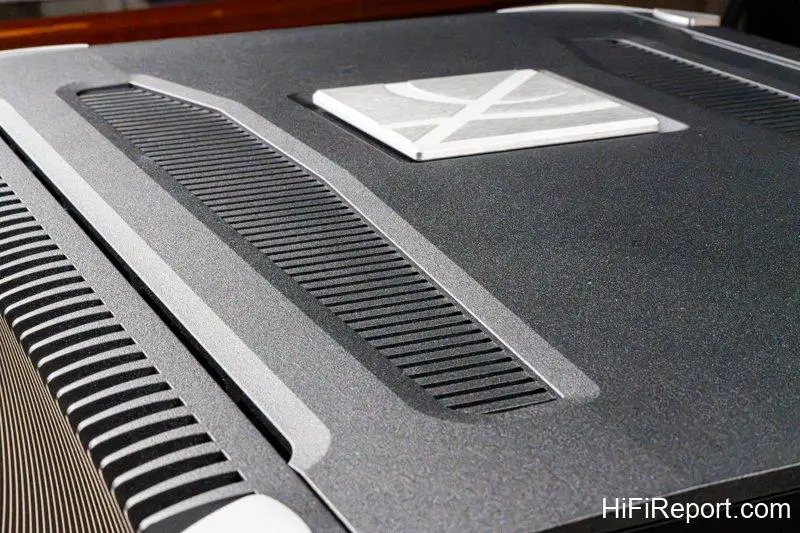
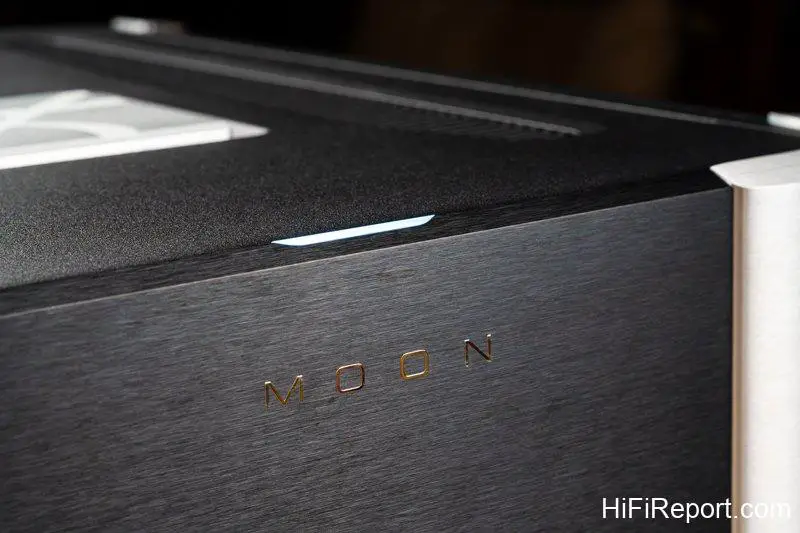
Furthermore, the 861’s top cover is not completely flat; it’s slightly thicker in the center and tapers towards the edges, with the logo badge inlaid in the middle and ventilation slots on either side.
In essence, the 861’s chassis showcases variation inch by inch, detail everywhere you look. You can’t take it all in at a single glance; you just want to keep looking.
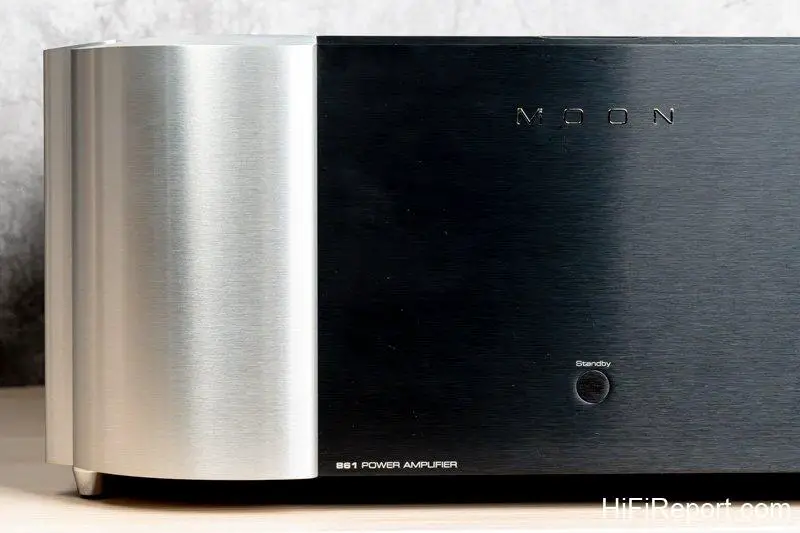
A discreet power button is located near the bottom center of the 861’s front panel. When the amplifier is powered on, a small, equally discreet indicator light illuminates above the button.
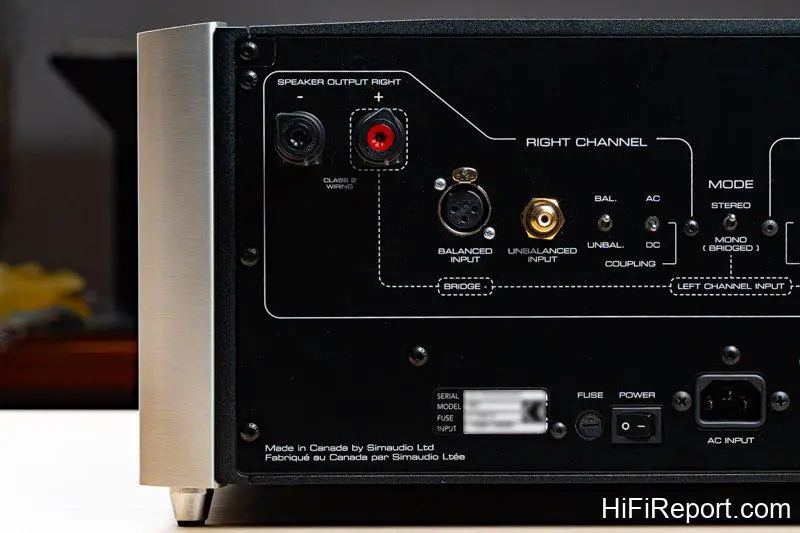
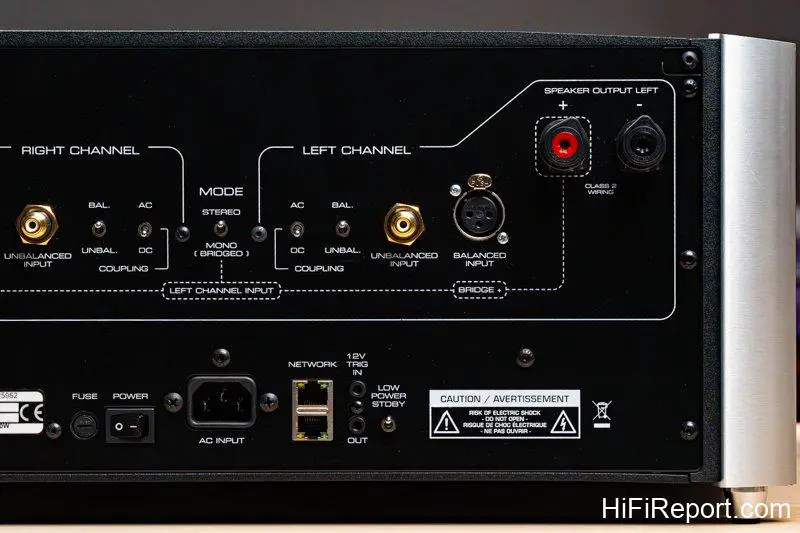
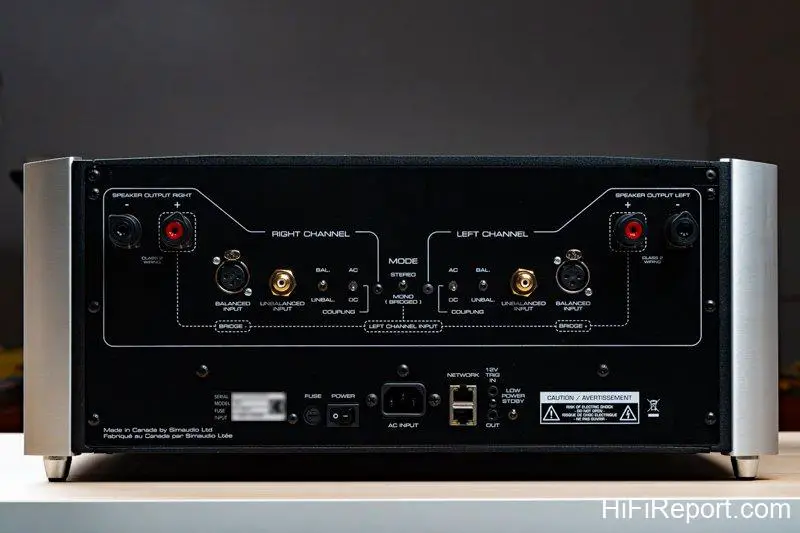
Turning to the rear panel, the 861 provides one set each of XLR balanced inputs and RCA unbalanced inputs, switchable via a toggle switch.
In addition to the input selector, the 861 also has an AC/DC selector switch. What is it for? If you are certain your preamplifier operates very stably and does not output DC, select the DC mode. However, if your preamplifier might output DC due due to its circuit design or age, switch to AC mode. In this case, the 861 activates protection measures to block DC.
Located centrally on the rear panel is the stereo/mono selector switch. The 861’s power output in stereo mode is 300W per channel into 8Ω (x 2), and in monaural mode, it delivers a substantial 800W into 8Ω.
Below the rear panel, there are also two RJ45 network ports for MOONLink connectivity. These can be used to connect to a Moon preamplifier and another 861 for linked control.
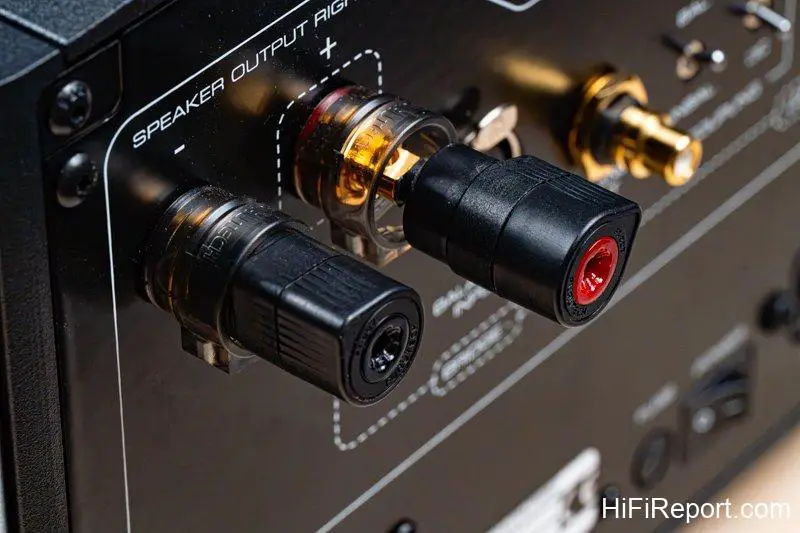
The 861 utilizes Furutech FT-807 speaker terminals, which are of very high quality. The entire terminal assembly is covered by a plastic shell to prevent accidental short circuits from metal objects. The knobs have been enlarged for easy tightening of spade connectors. The only potential issue is that the gap in the plastic shell is slightly narrow, so wider spade connectors may not fit. This should be checked before use.
MDCA Technology
In terms of circuitry, the 861 incorporates many of Moon’s advanced technologies, among which the most notable is MDCA (MOON Distortion-Cancelling Amplifier) technology.
This technology has been refined by Moon over several decades. It works by using a Precision Comparator to compare the input and output signals and then sending a correction signal to the output stage in real time to reduce distortion.
MDCA can achieve lower distortion than circuits using overall or local negative feedback, and without needing overall feedback. This results in the 861 having a remarkably low Total Harmonic Distortion of 0.002%, a high Signal-to-Noise Ratio of 119dB, and a frequency response of 2Hz – 100kHz (+0 / -3dB) – truly excellent specifications.
Another major highlight of the 861 is the use of custom-made bipolar power transistors sourced from Motorola.
Moon spent three years collaborating with Motorola to develop power transistors exclusively for Moon’s use. These transistors have lower tolerances, meeting the requirements for precise matching, and they contribute to a more transparent, clean sound with better focused three-dimensional imaging.
Furthermore, these custom bipolar power transistors offer wider bandwidth, lower distortion, and improved linearity, ensuring the 861 maintains consistently high performance at any output level.
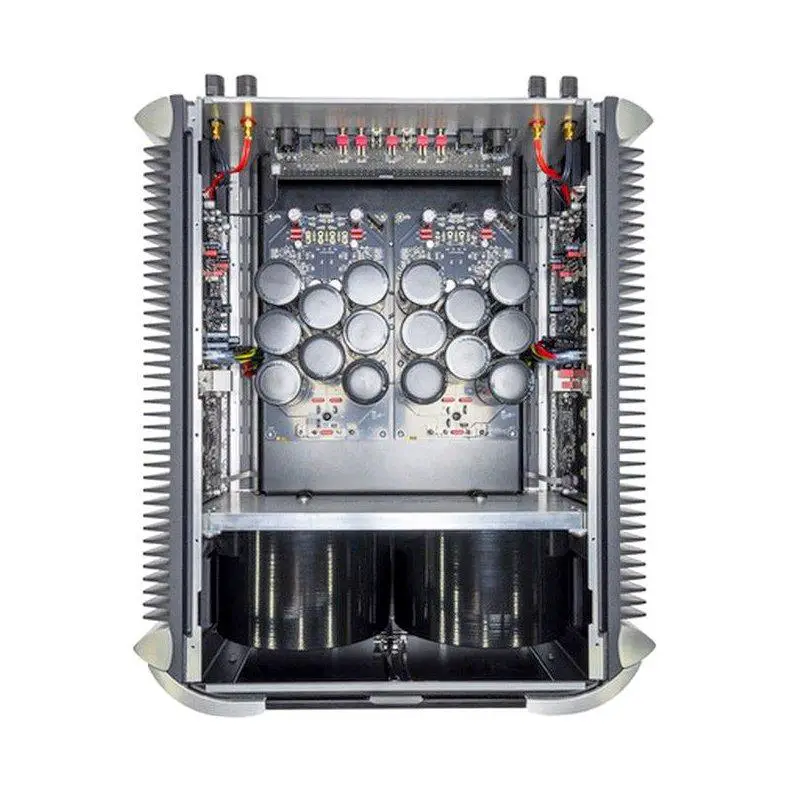
The 861’s internal circuitry features a dual-mono, fully balanced architecture. The left and right channels are completely separated within the chassis, operating independently from the power transformers onwards.
For power, the 861 is equipped with two large 1500VA toroidal transformers, located at the front of the chassis. The transformers are epoxy-sealed within containers to suppress vibration. A thick aluminum plate separates the transformers from the circuit boards behind them to shield against magnetic leakage interference.
Each channel of the 861 is fitted with 8 large filter capacitors, totaling 16 capacitors with a combined capacitance of 228,000µF, ensuring an abundance of power supply.
Exquisite Detail
The listening session took place in the HiFiReport listening room. The accompanying equipment included an Intel NUC Roon Core streaming source, LAiV Harmony DAC, EC 4.8 preamplifier, and Wilson Audio Alexia V loudspeakers.
When auditioning equipment, I typically start with solo instruments or small ensembles to assess the sound quality and subtlety. With the 861, possessing such formidable power, I was particularly keen to first understand how well it handled fine details. So, I began with simple music, specifically choosing some relaxing piano solos, covering both classical and jazz genres. The result? Wow! I must say, it was absolutely superb! In these pieces, the spaces between notes are long, making it easier to discern the performer’s actions and techniques. Through the 861, I could clearly hear the sound of the sustain being damped when the pedal was released. The sound didn’t just abruptly stop; it felt as though a soft material was muting the strings, with the sound gradually fading out, accompanied by a subtle trace of reverberation.
I hadn’t experienced this sensation quite so clearly before. The 861 opened my eyes, demonstrating its exceptionally outstanding detail reproduction.
Authority and Dynamics
Great detail is undisputed, but what about the 861’s speed and agility? This was the second aspect I wanted to explore.
Playing tracks from the “Chick Corea Akoustic Band” album, the ensemble consists of a jazz trio led by Chick Corea, with bass and drums making up the rest. As the name “Akoustic Band” suggests, the musicians use unplugged acoustic instruments.
Several pieces on the album feature rapid and passionate drumming. Heard through the 861, each drum beat was not only clear and crisp but also possessed tremendous impact and appropriate weight. It precisely delineated the position of each strike and the body of the drum. The sound was incredibly impactful yet remained calm and orderly, exhibiting a poised and well-controlled delivery.
I found that the drums and bass reproduced by the 861 were not of the lightning-fast variety. Instead, they retained just the right amount of decay without any hint of lingering, allowing the sound to be agile and lively while maintaining the necessary weight and substance. The result was remarkably realistic.
In simple terms, the 861 possesses exceptional control but doesn’t grip the mid and bass drivers so tightly as to make the sound stiff or lifeless. It’s a highly refined tuning.
Take, for example, John Coltrane’s famous “Giant Steps.” The overall sound density was excellent. Bass notes were thick and dense, with a springy, textured quality and great speed, driving the music forward relentlessly. The saxophone timbre was dense, also exhibiting excellent body, with a clear and prominent sound that emphasized the force of the playing. Combined with very distinct dynamics between soft and loud passages, it brought out the unrestrained style of the piece.
The overall musical atmosphere was very “free,” even to the point of being raw. If you don’t hear that feeling, it means the amplifier isn’t lively enough. The 861 presented this “free” atmosphere perfectly, making for an incredibly enjoyable listen!
Soundstage and Imaging Prowess
Next, I played Quatuor Ebène performing works by three French composers for string quartet. Immediately, I noticed the excellent blackness of the sound background and the extremely transparent airiness. The noise floor was among the best I’ve heard.
The 861’s clean and transparent background made the subtle movements of the string instruments come alive even more. Tiny variations were clearly audible, and the richness of the timbre made the sound itself immensely captivating.
Furthermore, the 861 was particularly adept at presenting soundstage and imaging. The string lines had excellent three-dimensionality, appearing as tangible forms within the soundstage. The spatial boundaries and shape were also very realistic, which in turn precisely delineated the positions of the four string instruments, creating a highly lifelike presentation.
If you place a particularly high premium on soundstage performance, the 861 is absolutely a component you should prioritize investigating.
For string music to sound good, timbre is exceptionally important. Therefore, I switched to the German Physiks Emperor flagship preamplifier, which is significantly more expensive than the EC 4.8, to see how much it would improve the sound quality.
Upon the first note, I couldn’t help but exclaim “Wow!” The timbre was so rich, so beautiful! Through the Emperor preamplifier upstream, the 861 projected more, and clearer, texture and detail. Moreover, the surface of the sound seemed polished, becoming more refined and smooth, with a more delicate and beautiful sheen. This transformed the somewhat aggressive edge I heard earlier into a softer, more resilient quality that was utterly delightful to listen to!
Expressive Piano Rendition
Next, I auditioned the live recording of Chen Pi-hsien’s 2019 piano recital produced by the audio show. The piece played was the second movement of Beethoven’s Piano Sonata No. 32, a slow movement. Played through the 861, the music exhibited excellent lyricism, with clear notes, deliberate touch, and wonderful continuity in the melody. This allowed me to fully appreciate the beauty of slow music.
Through the 861, I also heard that each note was slightly different, with very clear variations in dynamics and tone, making the music exceptionally expressive and atmospheric.
This piece starts very quietly. The volume should be set to moderate; don’t turn it up too loud, as it gets very powerful later.
When the music reached its powerful passages, the 861 revealed its open, grand, majestic, and substantial side. Through the Alexia V speakers, it accurately reproduced the scale of the piano. After hearing this, you will understand why people buy such expensive equipment and what makes equipment like this so good.
This piece is over 19 minutes long, but I didn’t feel bored or that it dragged on at all. I simply listened through it, my emotions stirred.
Effortless Symphonic Scale
It was time for large-scale orchestral music. I chose Gustavo Dudamel conducting the Los Angeles Philharmonic playing John Williams’ famous film scores for the test. After listening to the first track, I suddenly felt that both the 861 and the Alexia V’s capabilities were being constrained. I immediately got up to adjust the speaker placement.
I moved the Alexia V back slightly, spread them wider, reduced the toe-in angle, and moved my listening seat back a bit as well. In short, I opted for a greater listening distance and a larger soundstage.
This space is large enough to allow for such adjustments.
Then I played the track again. That was it. The 861 possesses superb power and capacity; it needs a greater listening distance and a larger soundstage to fully unleash its potential! After adjustment, the soundstage was extremely open, exhibiting the grand scale appropriate for symphonic music. The vertical extension was effortless, and the high frequencies were particularly brilliant and opulent. Cymbals were crisp and bright with a finely detailed texture, while strings and trumpets sounded clean, luminous, smooth, and flowing, entirely free from any uncomfortable harshness.

The second track, the overture to “Close Encounters of the Third Kind,” begins with a long section of atmospheric build-up. This demonstrated the 861’s excellent resolution even at low volumes, clearly revealing all sorts of subtle sounds and variations in timbre, creating an incredibly cinematic musical experience.
Throughout this section, one can hear exceptionally rich layers of bass frequencies, indicating that the 861 not only precisely controlled the Alexia V’s woofers but also reproduced the necessary low-frequency information.
Astonishing Bass
Naturally, I also listened to some popular music with the 861. I chose Mariah Carey’s “Ballads.”
I have listened to this compilation many times and am very familiar with each song. However, playing it through the 861 provided a new understanding of the drums and bass in every track.
The 861 rendered the low-frequency aspects with exceptional clarity and accuracy, including shape, outline, size, duration, texture, and more. Everything was incredibly clear and precise, making the listening experience remarkably exciting and insightful. It allowed me to appreciate how meticulously and rigorously the music producers, recording engineers, and mixing engineers must have handled the bass during production. Now, all of that care was conveyed through the 861 and Alexia V.
The Alexia V undoubtedly played a significant role here, but without the 861’s outstanding control and resolution, the bass performance could not have been this good.
My emphasis on bass is not because the 861 only highlighted the bass in this album, or because the bass was excessive, causing me to focus solely on it. Rather, the bass performance was simply so exceptional that I couldn’t help but notice it.
In fact, the overall sound remained very balanced. The 861 absolutely did not boost any frequency range, resulting in an excellent musical and soundstage structure, clearly delineated.
Furthermore, it maintained excellent balance even at low volumes, with the bass remaining clear. This ensured that listening to music quietly was still deeply engaging.
Undeniably Worthy
Based on the 861’s performance in all aspects, it possesses the undeniable capability to join the ranks of top-tier Hi-End power amplifiers.
Its power output is more than sufficient, its control is first-class, its command over bass frequencies is extremely precise, and its detail and resolution are also top-notch.
Its character is versatile, without any significant quirks, yet it’s sensitive enough to clearly reflect the sound of the upstream components. It has excellent discerning power regarding recordings, offering both high flexibility and enjoyable listening.
Its appearance is simple, yet elegant and highly refined, and its construction is meticulous. Combined with the brand’s long-standing reputation for credibility, there is no doubt or need to doubt the reliability and durability of the 861.
Such a comprehensive and well-rounded power amplifier is absolutely deserving of your attention.
Specifications
* Type: Stereo Power Amplifier
* Power Output: 300 Watts / 8Ω, 600 Watts / 4Ω, 800 Watts / 8Ω (Mono)
* THD + N: 0.002% (1 Watt)
* Frequency Response: 2Hz – 100kHz @ +0, -3dB
* Gain: 31dB
* Signal-to-Noise Ratio: 119dB
* Damping Factor: 900
* Dimensions (W×H×D): 481 × 21 × 609 mm
* Shipping Weight: 57 kg