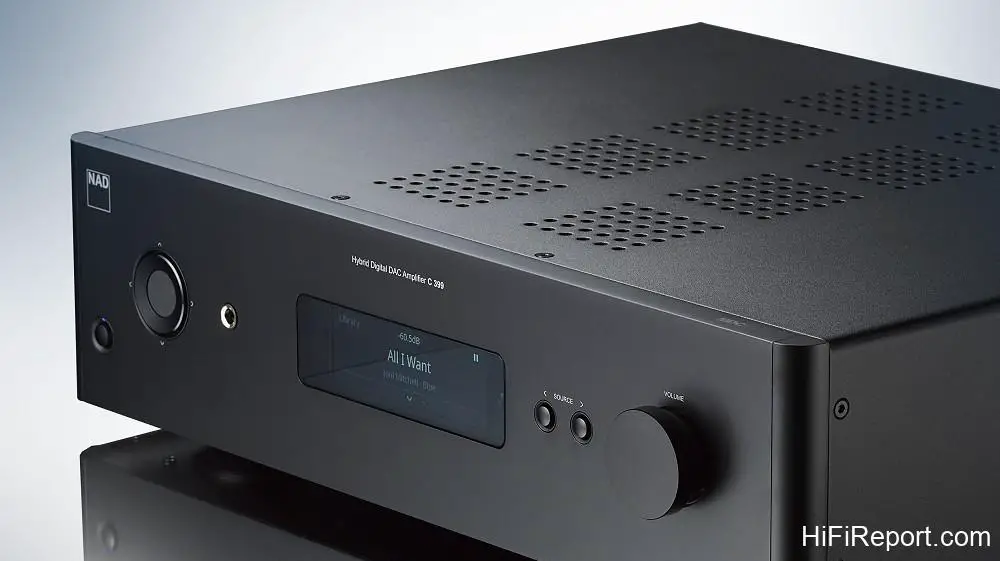
NAD C399 Review
In the era when seasoned audiophiles were much younger, we all knew that if you wanted to experience the beauty of classical music on a budget, the NAD 3020 was the go-to choice. Traditional design and a mature, sweet British sound – that was the impression many “used to” have of NAD.
However, with the advent of the streaming era, NAD has been a pioneer in adopting new technologies. While many enthusiasts were still skeptical about the sound quality of digital and Class D amplification, NAD dared to innovate. From their earlier UcD and DDFA modules, they have now embraced top-tier high-performance Class D amplification like Ncore and Eigentakt to achieve high power and low distortion.
This, combined with advanced Swedish Dirac room correction technology, has transformed NAD from a brand perceived as traditional by audiophiles into a leading representative of next-generation amplifiers.
Design Philosophy: From Classic to Next-Gen
Over the past few years, there was a noticeable gap in the level of circuit components between NAD’s Classic and Masters series. Taking integrated amplifiers as an example, the Classic series C388 and C368 used Hypex UcD modules. However, following the industry and user acclaim for the Masters series M10 and M33, NAD began actively replicating the Masters series’ winning formula in the more affordably priced Classic series.
The circuit design of the C series has become increasingly “M-series like.” For instance, the C658 streaming preamplifier is almost identical to the preamp section of the M10 and also includes Dirac. The C298 power amplifier uses the same level of Purifi Eigentakt amplifier modules as the M33. The subject of this review, the C399, is the flagship integrated amplifier in the Classic series, and the “mimicking the M series” design approach is quite evident.
Core Features and MDC2 Upgradeability
The C399 “core unit” is an integrated amplifier with built-in digital-to-analog conversion and Bluetooth. On the rear panel, it offers optical and coaxial digital inputs. More importantly, it includes HDMI eARC, allowing it to receive digital audio back channel from a smart TV. When watching regular broadcasts, movies, or music videos on your TV, the C399 can handle the digital-to-analog conversion and amplification, driving your speakers.
This replaces the TV’s internal speakers with your audio system, letting you enjoy higher sound quality and more convincing sonic energy.
NAD designed their products with upgradeability in mind, allowing users to select features based on their needs and expand functionality years after purchase as audio technology evolves, without needing to replace the entire unit. Previously, NAD used the MDC module design in the Classic series, where inserting a module into the rear MDC expansion slot added features.
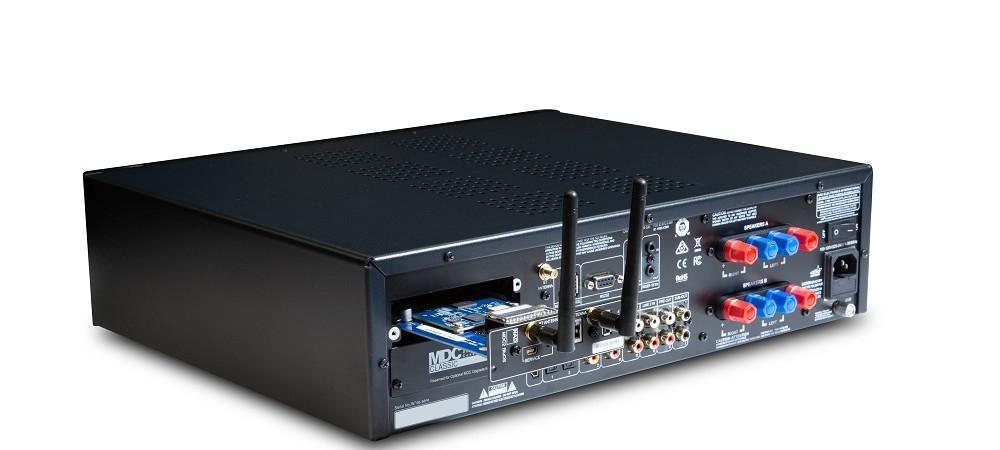
Recognizing the continuous evolution of electronic circuits, NAD announced the new, higher-performance, bidirectional MDC2 platform in September 2021. The C399 is the first model equipped with an MDC2 expansion slot. NAD also launched the first MDC2 module, the “MDC2 BluOS-D.” If users want to stream with the C399, they don’t need to buy a separate streaming player. Simply purchase the MDC2 BluOS-D module at the same time as the amplifier and install it into the C399’s MDC2 slot.

This gives the C399 wireless and wired network connectivity, transforming it into a streaming integrated amplifier. Furthermore, thanks to the digital audio processing circuits built into the MDC2 BluOS-D module, it adds Dirac Live room correction capabilities to the C399.
Hardware Breakdown
Let’s delve into the hardware structure of this unit. For this review, I evaluated the C399 equipped with the MDC2 BluOS-D module. The base unit already has Bluetooth, and the MDC2 BluOS-D module also includes Bluetooth (with bidirectional transmission and support for high-quality aptX HD). When the MDC2 BluOS-D module is installed in the C399, the module’s Bluetooth takes over (the base unit’s internal Bluetooth goes idle).
When the C399 is connected to the network via the MDC2 BluOS-D, it gains BluOS multi-room streaming functionality. It supports AirPlay 2, Spotify Connect, and Tidal Connect. It not only decodes MQA but also offers free MQA internet radio stations to listen to!
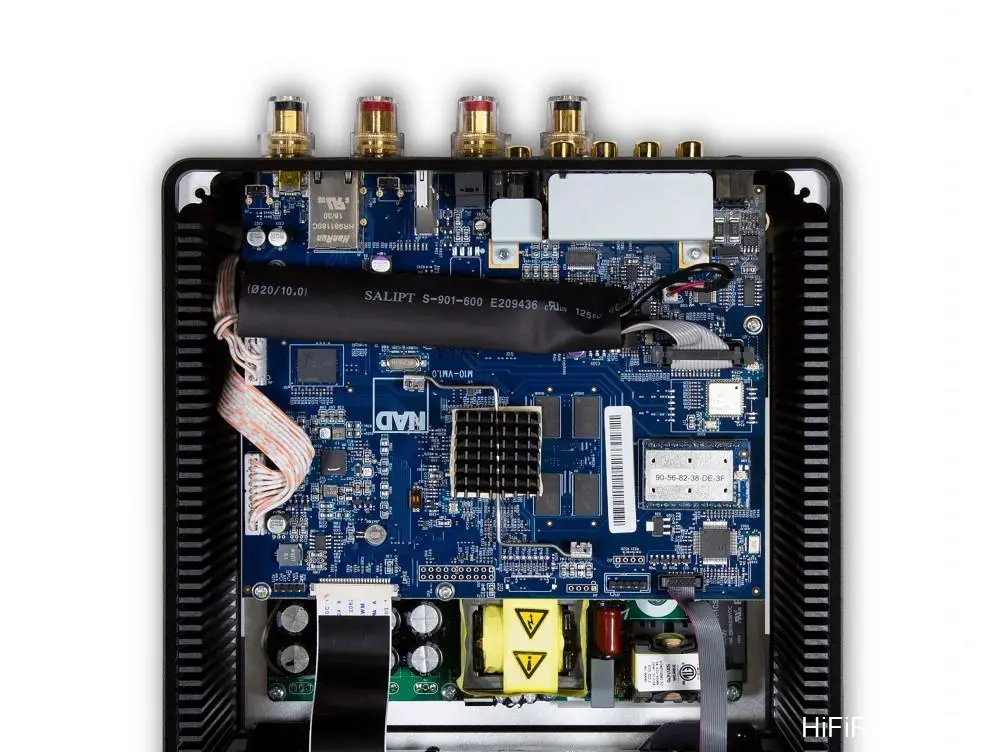
The MDC2 BluOS-D module is built around a 1.8GHz 32bit microcontroller, the NXP MIMX8MM6DVTLZAA, which handles the unit’s primary streaming functions and digital audio processing, including subwoofer crossover, bass/treble control, and Dirac room correction.
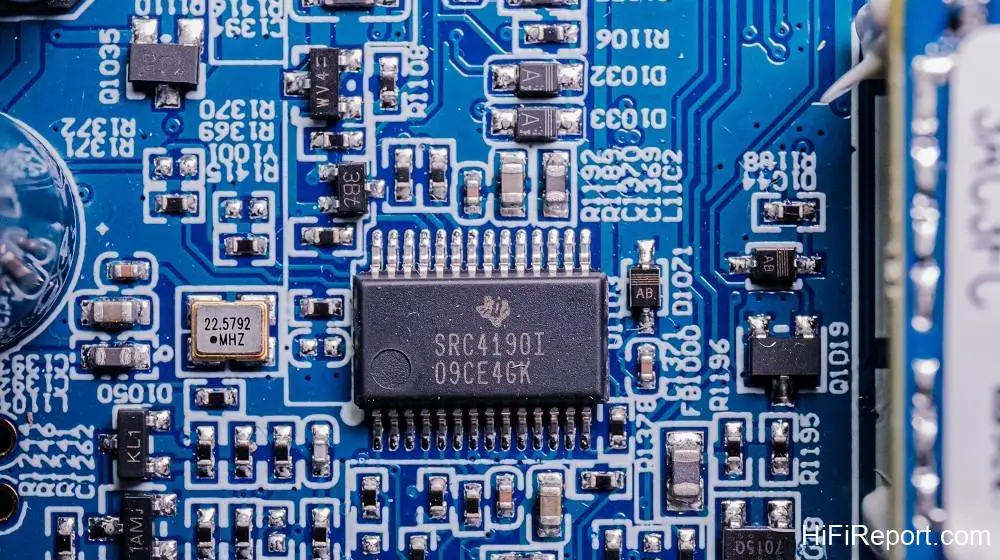
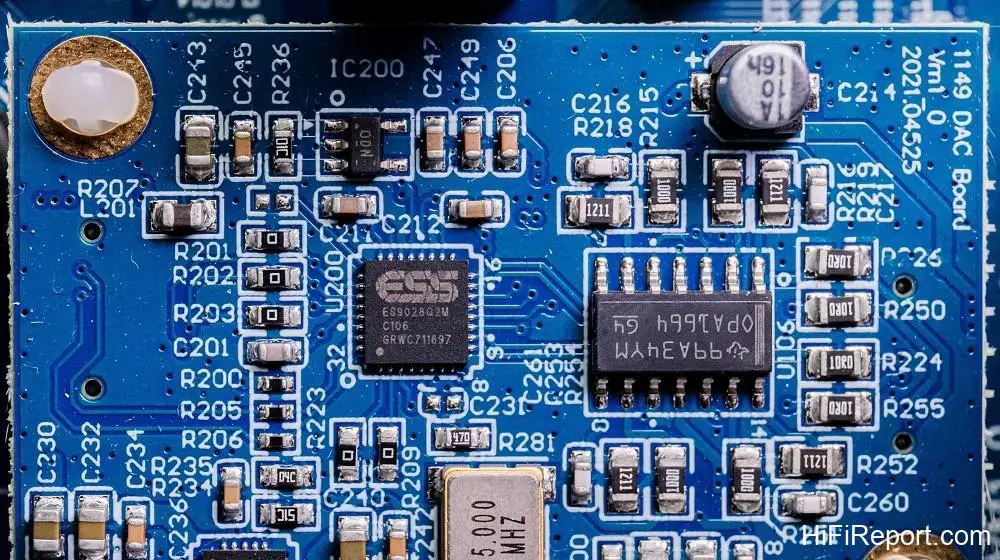
Before digital-to-analog conversion, digital audio signals from the MDC2 BluOS-D module and S/PDIF inputs with sample rates less than or equal to 96kHz are upsampled to 192kHz/24bit using a TI SRC4190. This approach helps narrow the sound quality gap between “CD quality” and Hi-Res music files. For the digital-to-analog conversion stage, the C399 is equipped with the same high-end 384kHz/32bit DAC chip, the ESS ES9028Q2M, found in the M10 and M33.
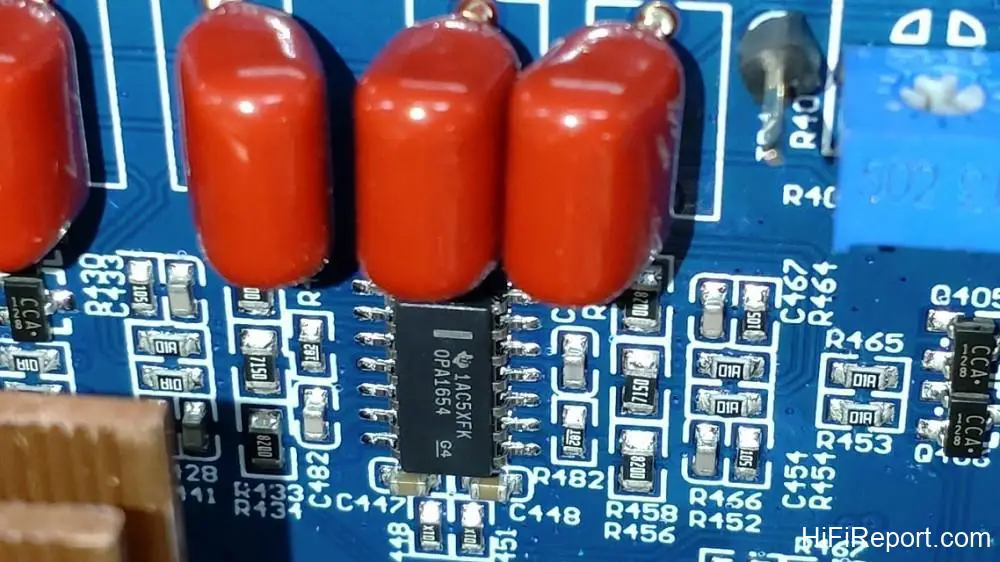
This DAC chip boasts low jitter, low distortion (Total Harmonic Distortion of -120dB), and high dynamic range (129dB). Following the DAC chip, the I/V buffer uses the TI OPA1664, a 4-channel OP amp chip with low noise, low distortion, and wide frequency response (one chip is shared by the output stages of the two stereo channels for D/A conversion).
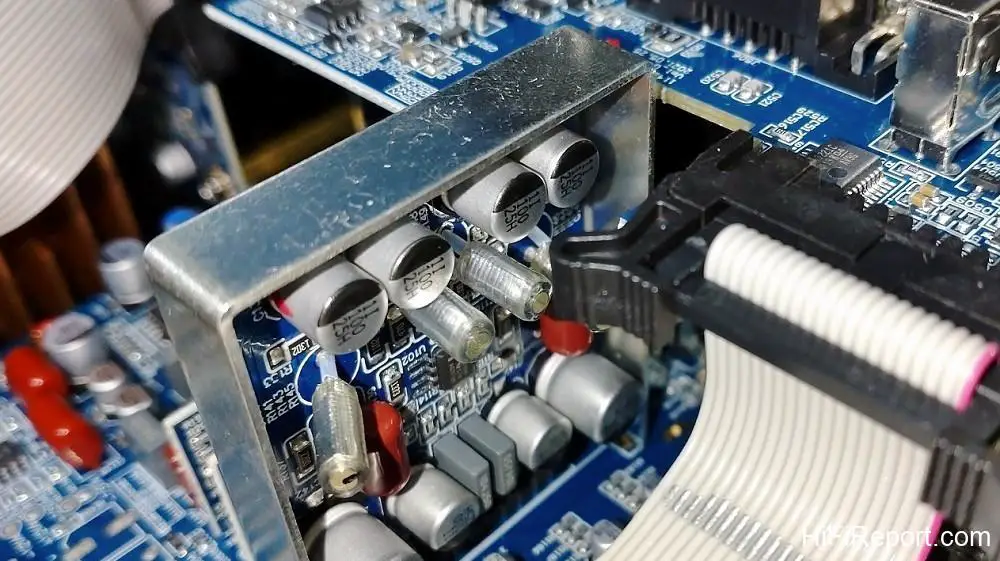
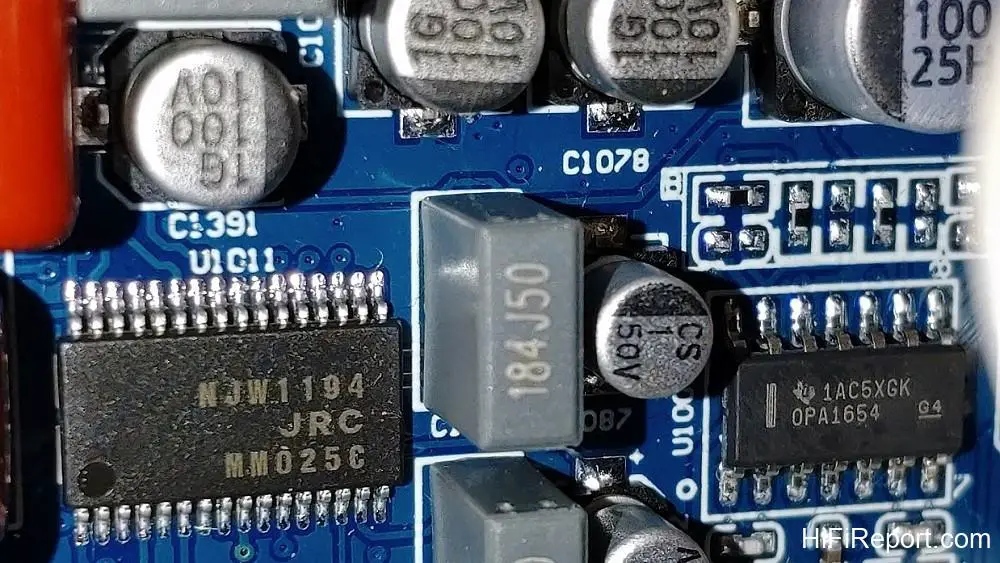
The C399’s preamplifier circuit includes a low-noise Phono Stage with metal shielding (pictured above), so connecting a turntable (using an MM cartridge) to listen to vinyl is not an issue. For the main preamplifier circuit, the unit uses a JRC NJW1194 volume control chip with built-in source switching and bass/treble adjustments (another component with low distortion and low noise characteristics).
This is followed by a FET input, low-noise, low-distortion 4-channel OP amp chip, the TI OPA1654, for high-level amplification (pictured below).
When Mr. Peng, the Assistant Manager from the distributor Ying Jia Audio, delivered the C399, he mentioned that this unit was like a budget version of the M33. At the time, I was a bit skeptical: the price of the C399 plus the MDC2 BluOS-D streaming module is less than half the price of the M33, and the “recipe” seemed closer to the M10 V2’s “Dirac + Ncore.” How could it be a “budget M33”?
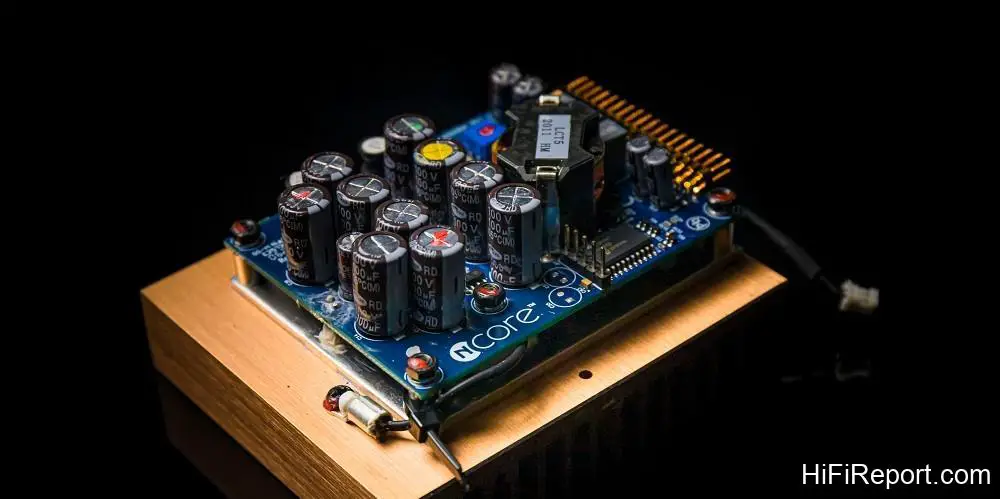
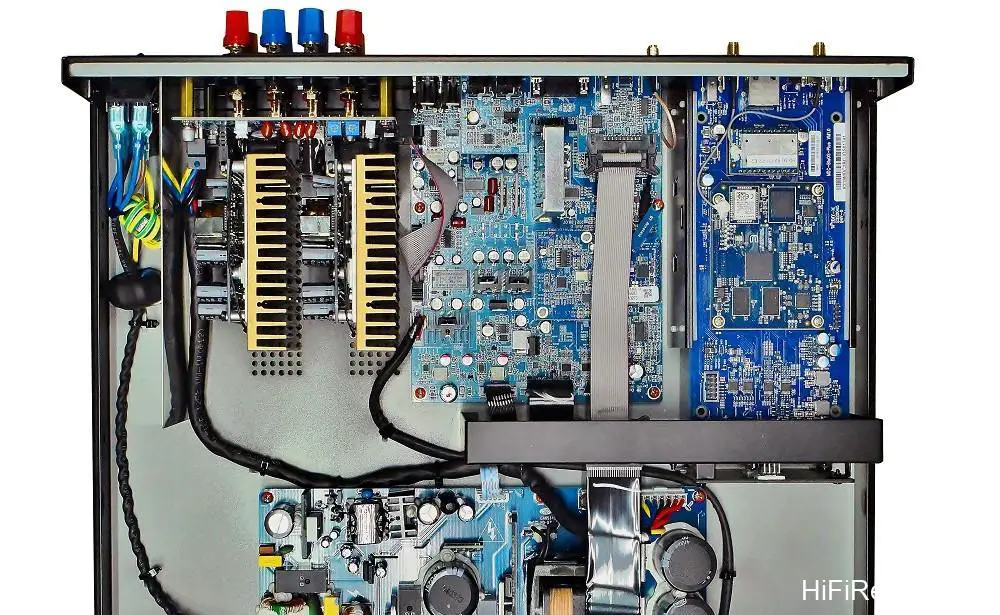
Upon opening the unit, I immediately understood: the circuit layout of the C399 is indeed more similar to the M33. The M10 V2, due to its compact size, used a two-channel Ncore module (NC252MP, 250 watts/4 ohms per channel) with its own switching power supply. The C399, however, is equipped with a large, proprietary switching power supply board designed and manufactured by NAD, just like the M33.
The amplifier circuits are also like the M33, with “independent left and right channels,” each using a single-channel Class D module. The M33 uses the Purifi Eigentakt 1ET400A, while the C399 uses the Hypex Ncore NC400 OEM.
The “prototype” circuit board of the NC400 is round. It is the only Ncore module Hypex sells directly to DIY enthusiasts, with an output power of 400 watts (8 ohms). The NC400 OEM board equipped in the C399 is rectangular, and its circuit structure and component layout are similar to the higher-end NC500. The “OEM” suffix indicates that it was customized according to the audio manufacturer’s specifications.
Here’s the key point: information on the NC400 OEM is not available on the Hypex website. Comparing the NC400 and NC500 OEM specifications with this unit, I found that the C399’s maximum output current (>26 Amps) falls between the published figures for the NC400 (23 Amps) and NC500 (28 Amps). I suspect this might be because the OEM version is custom-made, and the power supply circuit is NAD’s proprietary design (not Hypex’s standard version).
Both Ncore and Eigentakt were designed by Bruno Putzeys. Objectively comparing the NC400 used in the C399 and the 1ET400A used in the M33, the former’s output power is only about 6% lower. The latter’s relative advantages lie mainly in its higher damping factor (providing better control over speakers) and lower distortion at “low power output states.”
Before the advent of Eigentakt, Ncore was the king of Class D amplifier performance. The C399 exhibits a total harmonic distortion of just 0.02% across the “full frequency range” at its full power output of 180 watts. This clearly demonstrates that its low distortion is not just cosmetic. In its price range, I honestly cannot think of any other integrated amplifier that can maintain lower harmonic distortion than the C399 while outputting 100 watts.
As you know, it’s difficult enough to find a two-channel power amplifier rated at 180 watts per channel for under $2500, let alone a streaming integrated amplifier. In summary, based on the C399’s circuit design, you can already see that NAD has implemented a complete low-distortion, low-noise design.

The exceptionally powerful power supply and amplifier circuits make the C399 streaming integrated amplifier almost equivalent to a “streaming preamplifier + power amplifier” separated system, with driving power exceeding the current entry-level M-series model, the M10 V2.
Listening Impressions: Uncalibrated
After carefully positioning the speakers, I first listened to the C399’s “original flavor” without Dirac calibration. My main goal was to understand the sound performance for users who might not purchase the MDC2 BluOS-D module (and thus don’t have Dirac). The result was as expected: the sound tuning of the C series is indeed different from the M series. The M series is pure, transparent, and neutral.

The C399, on the other hand, presents a traditional British aesthetic: warm, moist, and full-bodied mid-range and upper bass. The density is high with a slight sense of viscosity, and the treble is soft and rounded, very rich and flavorful. The sound character is quite mature; the brightness of the high frequencies is relatively restrained. Relatively speaking, listeners are more likely to feel the sweetness and weight of the sound.
In this state, the sound performance is very suitable for listening to classical music. The soundstage spreads out behind the speakers in a fan shape. When it comes to pop music, the C399 fully demonstrates the performance advantages of Ncore. Its powerful driving force can make the Pioneer S-1EX floorstanding speakers produce thick and powerful bass and ultra-low frequencies.
The excellent stability and control allow listeners to experience powerful energy and presence that is close to feeling it physically in a live setting.
Listening Impressions: With Dirac Live
All audio products that utilize Dirac now allow setup using a smartphone app. The C399 is no exception. Simply connect the included test microphone to the USB port on the MDC2 BluOS-D module and follow the instructions on the phone app to complete the process.
However, based on my past experience, if you want to perform more detailed adjustments with “custom target curves” in Dirac, running the PC version of Dirac Live 3 on a laptop allows for finer control and the option to use a more accurate test microphone. This time, as before, I used a miniDSP UMIK-1 connected to a laptop to run the Dirac Live test procedure.
The sound characteristics of the three settings differed significantly, but they shared a common trait: the effect of Dirac Live calibration in the mid-bass and bass frequencies. After mitigating room modes, the bass became fast, taut, clean, and highly resolving. The sound felt fresher, with reduced viscosity. Although the calibration did not affect frequencies above 500Hz, optimizing the “lower half” in terms of resolution and speed made the overall sound brighter and more youthful.
Perhaps due to the change in equilibrium, compared to the uncalibrated sound, the treble also seemed brighter, and the sheen of violins was better than before.
Listening with the first memory setting, the Auto Target Curve, the original “British style” was significantly diluted (though some elements remained). The sense of moisture and viscosity decreased, and transparency increased considerably. It felt somewhat closer to the M series character. The sound of the second memory setting felt drier. This is because Dirac primarily performs attenuation-based frequency response correction.
Since Dirac Live LE does not calibrate above 500Hz, the level in that range is higher than below 500Hz, which is why the mid-bass and bass sounded thinner.
My manually adjusted third setting compensated slightly below 500Hz for the issue observed in the second setting. This setting sounded very balanced, neutral, and realistic, with a bright and direct sound. I could no longer perceive the typical British character.
Conclusion and Recommendation
Among the three Dirac calibration methods I attempted this time, the final manual setting result provided an answer: by using Dirac calibration to make the sound as balanced and neutral as possible, the C399 truly can perform like a “budget M33.”
What exactly was NAD thinking? The M10 V2 previously had few rivals in its price range, but this time they’ve launched the C399, almost as if challenging the M10 V2! This is where audio gets interesting. NAD has differentiated them through sound style: the M10 V2’s sound is clearer, more direct, and fresher, while the C399 has more power and a warm, rich sound. The choice depends on the user’s preference.

Considering the advanced technology applied in the C399, its actual performance, and its objective specifications, I believe this “budget M33” offers one of the highest price-performance ratios among current integrated streaming amplifiers in the $3000-ish range and deserves our highest recommendation.
Specifications
* Type: Network Streaming Integrated Amplifier
* Rated Output Power: >180W per channel (20Hz-20kHz, into 8 Ohms & 4 Ohms, both channels driven)
* IHF Dynamic Power: 217W per channel into 8 Ohms, 400W per channel into 4 Ohms, 506.4W per channel into 2 Ohms
* Damping Factor: >150
* Peak Output Current: >26 Amps (1 Ohm, 1ms)
* Total Harmonic Distortion (20Hz-20kHz): 0.02% (250mW to 180W, into 8 Ohms & 4 Ohms)
* Signal-to-Noise Ratio: >106dB (Preamplifier), >95dB (Integrated Amplifier), >107dB (Headphones)
* Frequency Response: 20Hz-20kHz (±0.3 dB)
* Channel Separation: >90 dB (1kHz), >75 dB (10kHz)
* Digital Inputs: HDMI eARC, Coaxial x2, Optical x2
* Wireless Connectivity: Bluetooth supporting apt-X HD 24bit audio, supports bidirectional transmission (receive and transmit)
* Analog Inputs: RCA x2 pairs, Phono MM
* Subwoofer Output: x2 pairs
* Preamp Output: RCA
* Headphone Output: 6.3mm
* Speaker Terminals: 2 sets
* MDC Upgrade Slots: 2 slots
* Dimensions (W x H x D): 435 × 120 × 390 mm
* Weight: 13.6 kg