
Arcam CDS50 Review
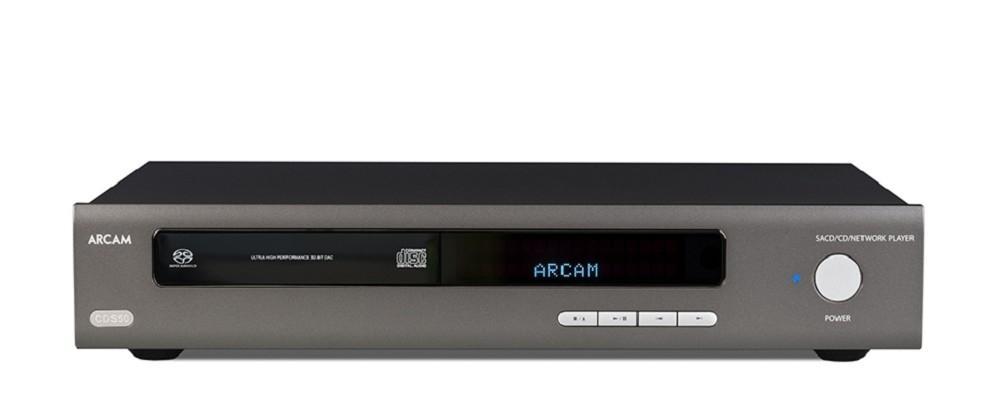
The CDS50 is capable of reading and playing various disc formats including SACD, standard CDs, and burned CD-R/RW discs. When connected to a network, it can also play music files shared from music servers such as PCs, NAS drives, or smartphones. Compatible file types include FLAC, ALAC, AIFF, OGG, MP3, AAC, and WMA.
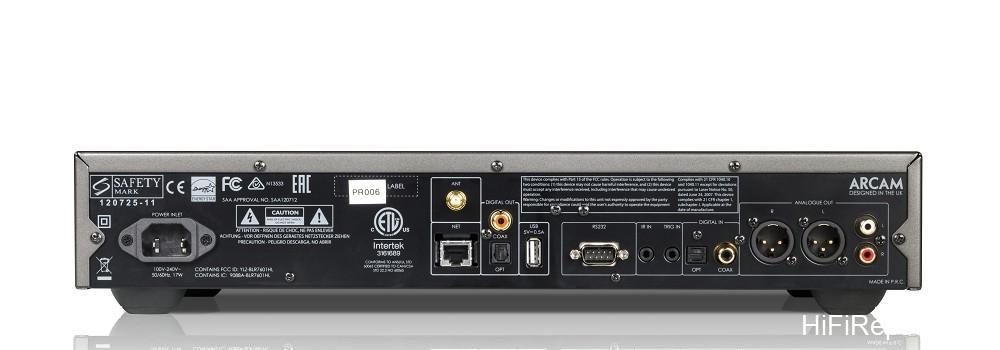
The USB port on the rear panel allows connection of USB flash drives or external USB hard drives, supporting the same music file types as listed above. Furthermore, it can stream music from services like TIDAL and Qobuz (requiring a paid subscription) as well as internet radio and podcasts. For audio signal output, the unit features both balanced (XLR) and unbalanced (RCA) terminals. These are all “fixed output” connections, meaning the volume cannot be adjusted directly on the unit.
Therefore, like traditional SACD/CD players, the Arcam CDS50 must be connected to an integrated amplifier or preamplifier and cannot be connected directly to a power amplifier.
Circuit Structure
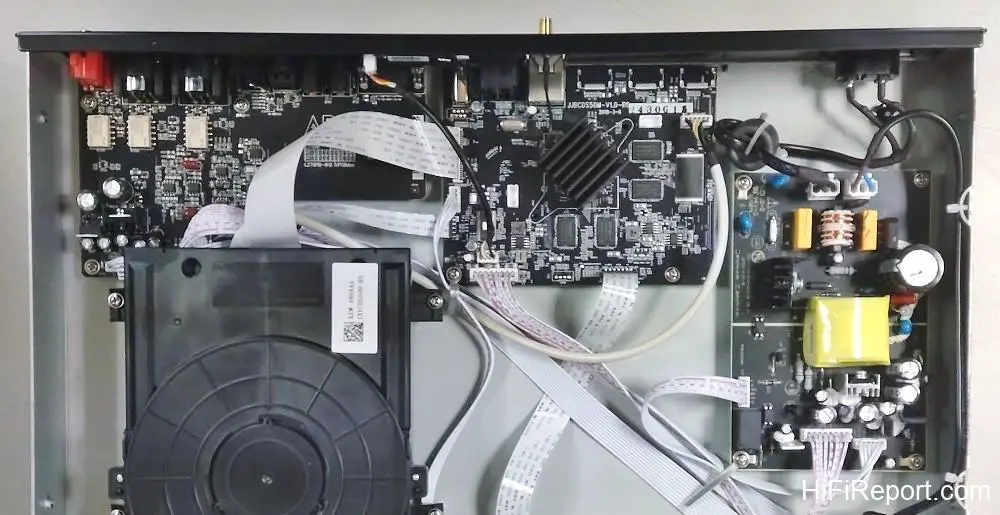
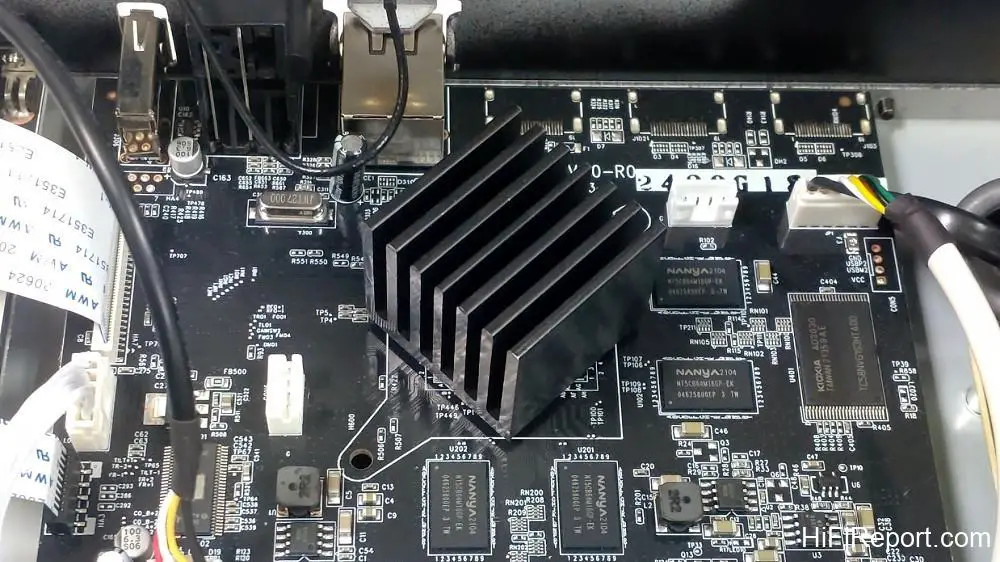
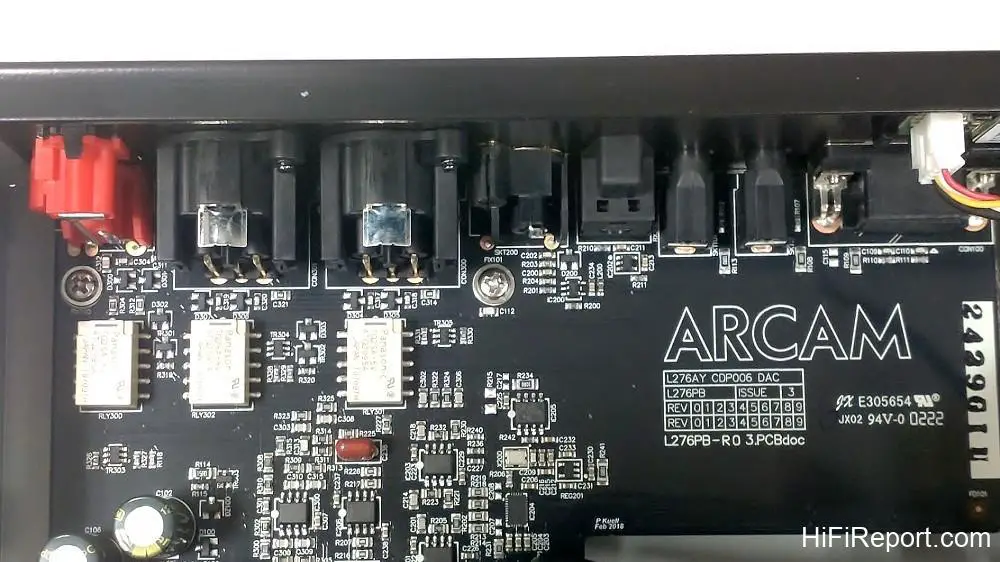
Let’s now delve into the circuit structure of the CDS50. As shown in the diagram, the internal layout can be roughly divided into three sections: left, middle, and right. The circuit board on the right houses the unit’s power supply (a switched-mode power supply). The central area towards the rear contains the main digital board, while the rear left houses the audio circuit board, which includes the digital-to-analog conversion circuitry.
In the bottom-left corner are three rectangular components – these are relays for the unbalanced and balanced audio output terminals. This layout appears quite sensible, deliberately maximizing the distance between the post-DAC audio circuitry and the power supply and digital circuits to minimize the noise floor.
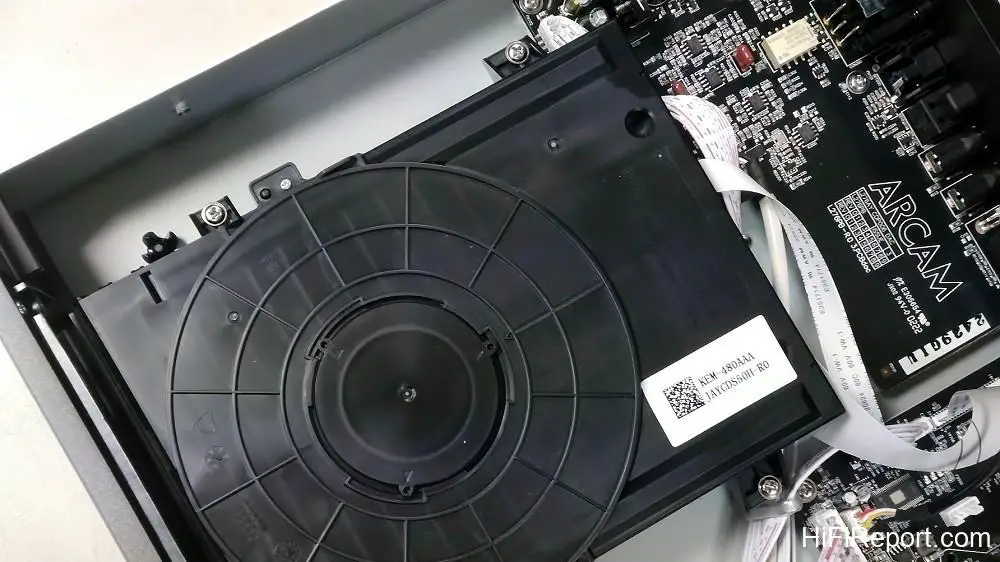
The disc drive is located in the front left of the unit. As this player handles not just CDs but also SACDs, it utilizes a laser pickup mechanism typically found in Blu-ray players.
The digital main board is situated towards the rear panel, where the network and USB terminals (for USB drives and hard drives) are located for music playback. Beneath the central heatsink, I believe there is an FPGA chip. This is the core processor of the unit, primarily responsible for reading and decoding music files.
The CDS50’s audio circuit board is essentially the DAC board, featuring both optical and coaxial digital inputs.
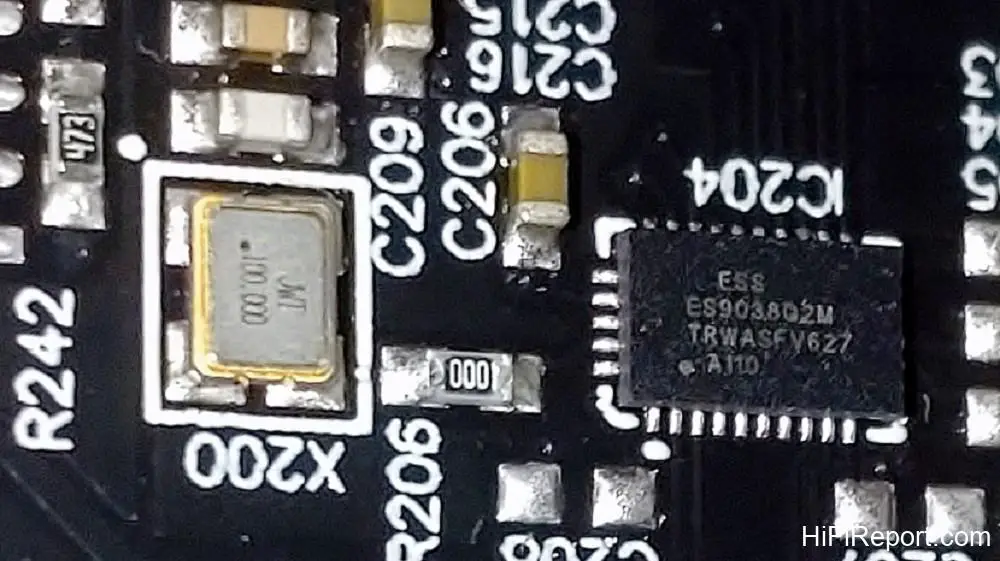
The digital-to-analog conversion circuit employs a high-performance 32-bit two-channel DAC chip, the ESS ES9038Q2M. This chip boasts excellent characteristics including high dynamic range (128dB) and low distortion (THD+N -120dB). It includes a built-in Time Domain Jitter Eliminator to reduce timing errors. The silver component next to it is a high-precision oscillator working in conjunction with the DAC.
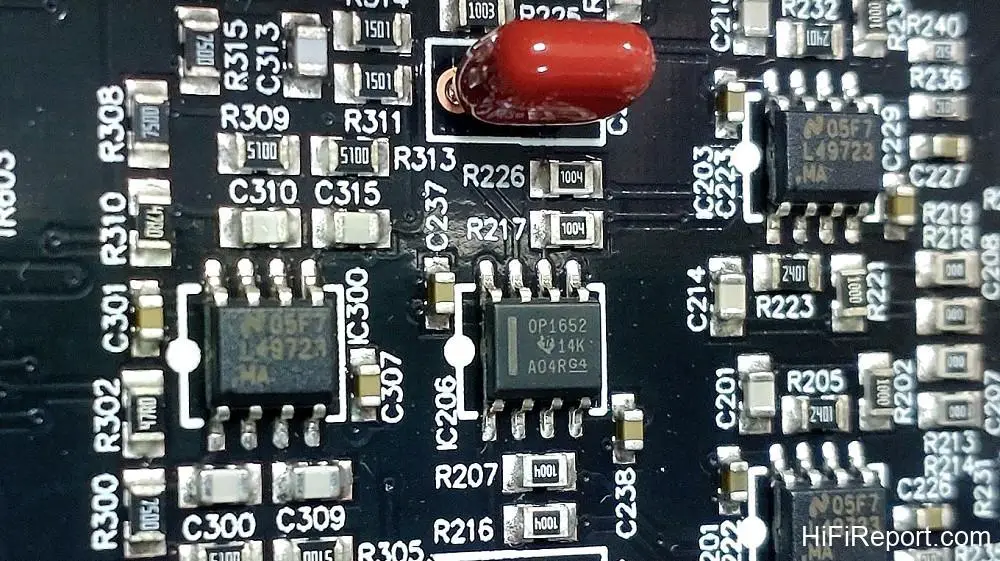
Following the DAC chip and preceding the audio outputs, the buffer amplification circuit utilizes active components such as the TI LME49723 and OPA1652. These are dual operational amplifier chips known for their low noise, low distortion, and wide bandwidth properties. Through this integrated design, the CDS50 ultimately achieves a THD+N below 0.002%, which is quite exceptional among products in its class.
Sound Performance
Having covered the circuitry, let’s move on to the sound performance of the unit. I began my listening tests by playing music files through the CDS50. Arcam is a long-standing British brand, so one might naturally expect a typical British “beautiful sound”. This assumption is fundamentally correct. The CDS50’s sound is exceptionally charming, with a warm and mellow quality from the midrange upwards. It’s incredibly easy to listen to, drawing the user in for hours on end without fatigue.
For a digital source priced below approximately $1,667 USD, the CDS50’s ability to convey musical expression and nuance is outstanding. It is entirely free of harshness, promotes relaxation, and renders classical music with an engaging beauty that could even convert listeners unfamiliar with the genre.
What is particularly rare is that the CDS50’s mellow tone doesn’t rely on the treble softening often characteristic of 1990s British sound. My impression is that it achieves this by pairing high-specification components to create higher sound density in the midrange, resulting in a richer overall sound. Listening to Hilary Hahn perform Mendelssohn’s Violin Concerto at a “suitable volume” quickly reveals another trait of the British sound: the soundstage unfolds in a fan shape.
The depth of the soundstage is clearly discernible, and during orchestral passages, the different instrument sections are rendered with rich and distinct layering. The violin possesses a moderate sense of lustre (not the traditionally restrained British sound), clearly and sensitively responding to bow-string interaction, bowing force, and tonal changes.
The “fineness and clarity of texture” is vastly different from the traditional British sound of the CD’s heyday in the 1990s, appearing much brighter and more detailed. The sense of speed is far from sluggish, feeling quite lively and immediate, with less coloration and haze and higher resolution. During my listening sessions, I could clearly differentiate the sound quality between Hi-Res and CD-quality music files.
SACD and CD Playback
Playing SACDs, in my opinion, represents the most captivating aspect of the CDS50’s sonic performance. Users who primarily stream music today have a relatively low chance of encountering DSD playback unless they specifically seek out DSD files, as converting SACDs to DSD is typically not easy for the average person. The CDS50 playing SACDs fully showcases the advantages of DSD encoding, which is analogous to PDM (Pulse-Density Modulation, a type of analog modulation).
With extremely high sampling rates and excellent linearity, the sound is smooth, natural, and possesses a distinct “analog flavour.” It’s very much like listening to a vinyl record free of surface noise, with excellent stability and full extension at both high and low frequencies. The texture and layering of the string introduction in MISIA’s “Everything” (on SACD) were utterly mesmerizing.
Listening to Harnoncourt conducting the Vienna Philharmonic in Bruckner’s Symphony No. 5 (on SACD), the CDS50 delivered high-resolution performance smoothly and harmoniously. In terms of sound quality when playing SACDs, I personally believe it clearly surpasses playing 96kHz/24bit Hi-Res music files. If you own a CDS50, be sure to take advantage of any trips to Japan to hunt for some used SACD discs!
Next, I listened to CDs. The experience was virtually identical to listening to CD-quality lossless music files. As the listening time increased and the unit warmed up more fully, the warmth of the CDS50’s sound intensified. Experienced audiophiles hearing it at this point might feel a sense of nostalgia, perhaps reminiscent of vacuum tube CD players from over two decades ago.
However, while the “flavour” might be similar, the CDS50 clearly benefits from advancements in electronic technology (especially the DAC chip). Its resolution, stability, dynamic contrast, and purity of sound are far superior to those vintage tube CD players.
Listening to Keith Jarrett’s Köln Concert reveals the richness of the piano’s tone and resonance, while listening to Natsukawa Rimi’s “Nada Sōsō” immediately makes it clear that the CDS50 is excellent at reproducing vocal music, especially capturing the texture and expression of the human voice.
Conclusion and Recommendation
From examining the CDS50’s circuit structure to conducting listening tests, I believe Arcam has thoughtfully integrated streaming functionality into a CD/SACD player, sharing a high-performance DAC circuit. Their intention is genuinely to provide both seasoned and new-generation audiophiles with a user-friendly, practical, and cost-effective digital source.
Younger users can simply pick up their smartphones and start playing music, while older enthusiasts who may not even use the music file playback features can still enjoy the benefits. In its price range, there are truly few CD players that can rival it (especially in its handling of classical music), and even fewer capable of playing SACDs. Therefore, I particularly recommend this unit to listeners whose primary music content is on CD.
You don’t have to worry about your old CD player starting to falter, nor do you need to settle for using a Blu-ray player for CDs. Please bring your own CDs and SACDs and experience the CDS50 for yourself!