NAD M10 V3 Review
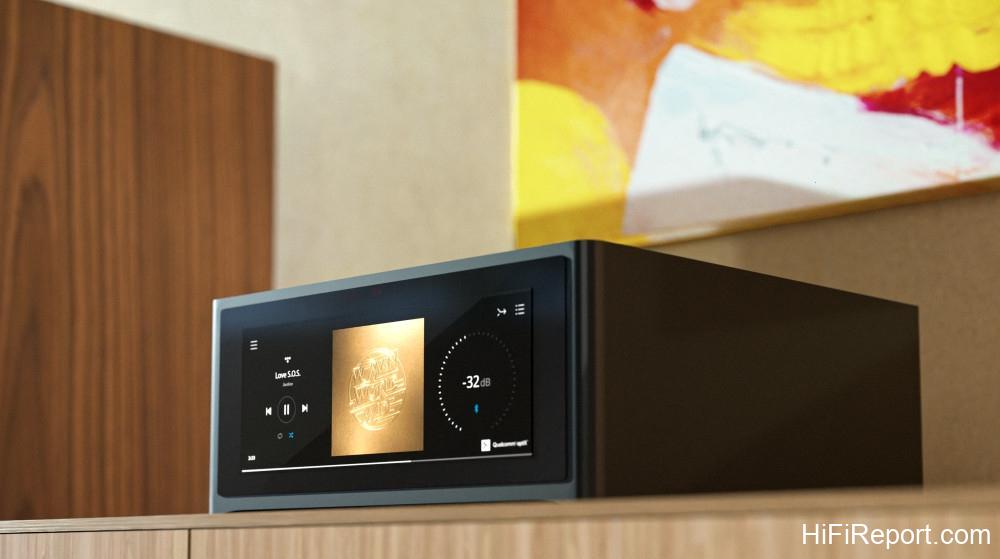
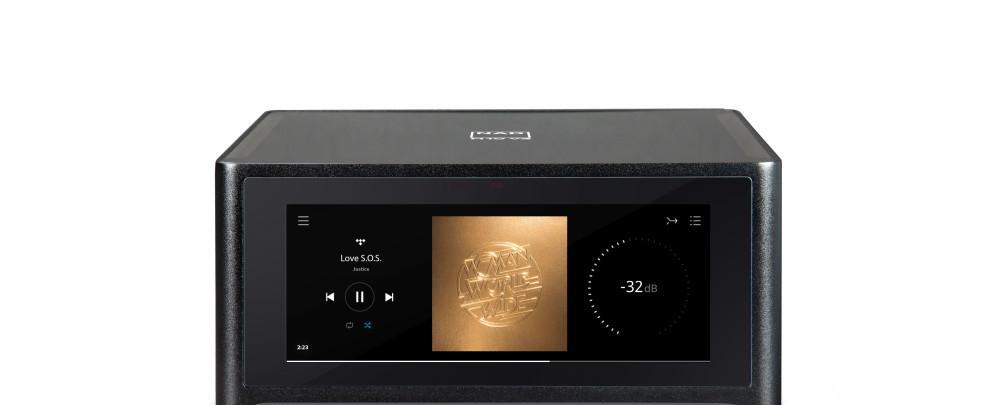
The NAD M10 network streaming integrated amplifier is undoubtedly a classic product. Back in 2019, when the first generation was launched, few manufacturers dared to incorporate a high-resolution color touchscreen on a traditional amplifier panel, let alone offer a host of advanced features like high-resolution streaming playback, Roon Ready certification, multi-room support, and bi-directional Bluetooth transmission (supporting apt-X HD).
What’s more, the M10 even supports Dirac Live spatial correction, a feature that significantly minimizes the impact of room acoustics, enhancing sound balance and accuracy. Even today, this technology is rarely found in two-channel equipment. The M10 also boasts comprehensive input/output interfaces, including direct HDMI ARC functionality for connecting to TVs and playing audio. The 7-inch front-panel color touchscreen is a joy to use.
Thanks to its excellent design, the M10 quickly earned the EISA “Smart Amplifier of the Year” award shortly after its release and achieved impressive sales figures. Its success inspired subsequent similar or imitative products in the market, solidifying the M10’s status as a true classic.
Seeing the enthusiasm from consumers for this device, NAD decided to continue optimizing and developing it. The second generation, M10 V2, was released in 2021, followed by the third generation, M10 V3, in 2024. This latest model has recently been introduced to Taiwan, giving us the opportunity for a full review.
Key Third-Generation Upgrades
So, what’s new in the third generation? First and foremost, the DAC chip, a core component of any streamer, has been upgraded. The M10 V3 uses the ES9039 DAC chip developed by ESS Technology, while the previous V2 model used the ES9028. Both chips utilize ESS’s HyperStream technology, which dynamically redistributes quantization noise in digital signals, pushing it into frequency ranges where the human ear is less sensitive.
This results in lower Total Harmonic Distortion plus Noise (THD+N) and higher Dynamic Range (DNR). While the previous ES9028 used HyperStream II, the ES9039 in the V3 employs the more advanced HyperStream IV technology, offering significant improvements in audio processing capability, dynamic range, distortion control, and noise suppression, leading to even better sound quality.
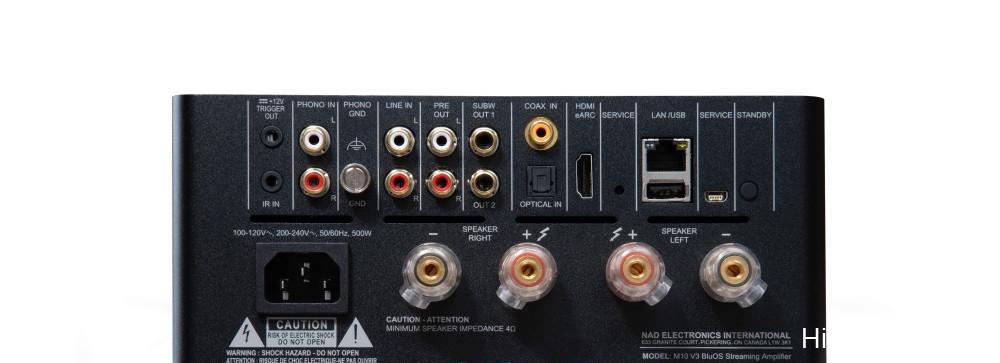
Next, the M10 V3 adds a dedicated Phono input, supporting MM cartridge turntables. NAD highlights the use of precise RIAA equalization circuitry to ensure low distortion and accurate frequency reproduction, promising warm, detailed vinyl playback. This means the M10 V3 is no longer limited to digital music but can also deliver the analog richness of vinyl records.
Since its first generation, the M10 has been renowned for supporting Dirac Live room acoustic correction technology. The M10 V3 takes this a step further by being the first to include support for its extension, DLBC (Dirac Live Bass Control). This is the third major enhancement in the M10 V3. DLBC remains a remarkably rare and advanced feature in two-channel audio equipment today, capable of automatically optimizing 2.2 channel systems. It warrants a dedicated explanation.
Adding subwoofers to two-channel systems has become a growing trend in recent years. It’s even a common sight at audio shows, and some audiophiles approach subwoofers with more rigor than home theater enthusiasts, often opting for dual subwoofers or even multi-subwoofer arrays.
However, the more subwoofers you use, the more complex the setup and considerations become. Beyond basic parameters like level, distance, and crossover points, a more challenging issue arises: subwoofers are inevitably affected by the room environment, creating peaks and dips in the extreme low frequencies. Unless you have test equipment and painstakingly search for optimal placement for each sub, this effect is nearly impossible to eliminate.
Placing a subwoofer in a position with poor response, stacking more will only further distort the problematic low-frequency response.
DLBC, short for Dirac Live Bass Control, is an automatic correction feature developed by Dirac Live specifically for the extreme low frequencies and subwoofers. Crucially, DLBC can integrate “multiple” subwoofers, coordinating their operation seamlessly with the main speakers and flattening the peaks and dips in the extreme low-frequency range. This means subwoofer placement becomes more flexible and forgiving.
For audiophiles attempting to properly calibrate multiple subwoofers manually, it requires significant experience, knowledge, potentially measurement tools, and a considerable amount of time. DLBC streamlines the testing and setup process, making it much easier to achieve a well-integrated 2.2 system. The M10 V3 is one of the very few two-channel audio devices to feature this capability.
It’s worth noting that DLBC is a more advanced function and is not included by default. It’s an optional add-on purchase for those who need it. Furthermore, DLBC is an advanced feature that builds upon the “Dirac Live Full Frequency” license. This means you must first purchase the “Dirac Live Full Frequency” license (which costs $99 USD), and then you can purchase the DLBC feature afterwards (pricing is not yet known, but it might be around $100-200 USD).
Does that sound a bit expensive? Not necessarily. If you’re a beginner user purchasing the M10 V3 for its value or compact design, you might perceive it as costly. However, if you are building a high-end 2.2 channel system costing upwards of $15,000 USD, even potentially over $30,000 USD, and you desire a high-quality streaming source that allows this system to perform unhindered by room acoustics, delivering a more balanced and accurate sound, then DLBC can provide significant value.
It automatically manages and corrects multiple subwoofers and mitigates room effects, allowing your high-end 2.2 system to realize its full potential. In this context, its value is undeniable.
Unfortunately, at the time of this review, the DLBC function on the M10 V3 was not yet activated (it is expected to be enabled via a future firmware update), so I couldn’t test it personally or confirm the exact purchase price. If we have the opportunity for further review in the future, we will provide a report on this specific feature.

Another improvement accompanying the addition of DLBC support is the included remote control. The M10 V3 comes with the new BC1 remote (the previous model had the RC1). The BC1 remote features a brushed metal panel, is larger, and, most importantly, includes an EQ button. This button allows you to instantly toggle Dirac Live on and off, enabling you to immediately compare the effect of Dirac Live calibration. This feature is sure to provide a tangible sense of the difference it makes.
Listening Experience
For this issue of New Vision magazine’s feature on bookshelf speakers, I used the M10 V3 as a reference component and found its capabilities truly impressive. The M10 V3 scales its performance with the quality of the speakers it’s paired with, delivering increasingly better results. Whenever I encountered a less-than-ideal sonic situation during testing, cross-referencing often revealed the issue lay with the speakers, not the M10 V3.
Eventually, I switched to the magazine’s reference speakers, the S-1ex, which are medium-sized floorstanders. Even at “normal home listening volumes,” the M10 V3 drove them with apparent ease, producing excellent sound quality. So, don’t underestimate its power output.
The M10 V3’s sound signature is neutral and highly resolving. One could say it possesses the detail-excavating capability of studio equipment, but the sound isn’t dry. Especially as you move towards the mid-bass, the sound takes on a slightly richer and more elastic quality while maintaining its neutral foundation, without feeling artificially enhanced or colored.
Furthermore, the M10 V3 exhibits excellent control over the speakers, a quality that spans the entire frequency range. This allowed me to hear subtle variations in detail across the spectrum. For instance, violins sounded delicate, the soundboard of a plucked instrument had a crisp quality, and cello bowing revealed ample friction accompanied by rich body resonance – there were audible nuances everywhere.
While the M10 V3 is fundamentally neutral, it isn’t rigid or sterile. Some violin passages even had a touch of sweetness. I also found its piano reproduction particularly good, presenting a warm and gentle texture that seemed to capture the feel of the felt hammers striking the strings, giving the piano sound a quality that was soft within its inherent hardness. This was evident when playing Russian piano virtuoso Daniil Trifonov’s performance on the album “Bach: The Art of Life.”
The piano tones were warm and beautiful, not cold single notes, imbued with life. The decay of the piano notes was incredibly clear, and combined with good spatial rendering, it was truly exquisite.
Even this initial listening experience was impressive, but with the M10 V3’s features like subwoofer outputs and Dirac Live, I had to explore further. So, I connected a subwoofer, deliberately placing it in a “less-than-ideal” position to challenge its correction capabilities. After completing the entire testing process, simply pressing the EQ button on the remote allowed me to instantly switch between Dirac Live being on and off, enabling real-time comparison.

Although the Dirac Live supported by the M10 V3 only corrects frequencies below 500Hz, the impact on sound quality is substantial. As experienced audiophiles know, properly tuning the low frequencies can alter the sound across the entire spectrum, and this was a perfect example. As mentioned earlier, initially listening to the M10 V3 revealed its neutral sound with powerful detail retrieval and excellent tonal quality. However, activating Dirac Live presented an entirely different soundscape.
It gave the impression that the entire soundstage’s phase became more accurate, a feeling of “recalibration” and “re-alignment.”
For example, in Patricia Barber’s “Touch of Trash” from the album “Companion,” the track opens with extensive percussion distributed across the soundstage. With Dirac Live enabled, all instruments seemed to re-align their positions. Those previously prominent receded slightly, while those barely audible (hidden in the background) became more distinct. The arrangement of all instruments felt more harmonious, and even the previously somewhat forward vocals shifted to a more appropriate position.
The result was a more natural stage unfolding before me. You realize this is a more logical arrangement because the soundstage performance is now more complete, spacious, and live-like.

With the subwoofer connected, Dirac Live also automatically managed the bass integration, which was a key point to observe. With Dirac Live enabled, the transition between the subwoofer and the main speakers was seamless. The extreme low frequencies extended naturally downwards without any sense of disconnection, and crucially, you couldn’t “hear the subwoofer’s presence” (something two-channel enthusiasts are very particular about).
Simultaneously, because the peaks in the extreme low frequencies were corrected, the details in the mid and high frequencies felt easier to perceive, and the overall richness of the music was elevated.
However, I must also say that if you’ve never used such automatic correction features before, or if you are accustomed to listening with more bass, you might perceive the bass as reduced after enabling Dirac Live. This is normal, and Dirac Live’s correction aims for greater accuracy. For example, in Kenichi Tsunoda Big Band’s rendition of the classic “Take Five,” before enabling Dirac Live, the bass felt full and prominent, with a strong sense of energy.
After enabling Dirac Live, the bass energy slightly diminished, and the position of the kick drum bass receded slightly. While there was a little less impact from the energy surge, you realize that the music’s “main” and “subordinate” elements are now correctly configured. The saxophone is now the protagonist, and the kick drum serves as accompaniment. In contrast, the original state with prominent bass was actually overshadowing the main elements.
After listening for a while, you’ll find that this correct configuration makes the music feel more natural and lively.
How can simply changing the frequency response below 500Hz result in such a magical transformation? What Dirac Live does is quite complex. It first performs measurements at up to 7 points, then generates appropriate digital filter profiles to apply multi-band equalization to the frequency response curve.
Simultaneously, it also performs Impulse Response correction, and in this process, it optimizes the sound’s phase, ensuring that the sounds from different frequency bands arrive at the listener’s ears more consistently. This creates a more accurate sound effect, giving that sense of the soundstage being organized and better aligned.
Additionally, enabling Dirac Live has a slight impact on sound quality. This is something many seasoned audiophiles have observed. However, in actual listening, the difference is very subtle. Dirac Live’s ability to enhance the overall balance of the music, create a more three-dimensional soundstage, and make performances more lively outweighs this slight reduction in quality, which can be considered negligible.
Especially if your listening space is not a dedicated listening room (like a living room), if speaker placement is restricted (e.g., needing to place speakers close to walls), or if you are unfamiliar with subwoofer placement and adjustment, Dirac Live can effectively address most of these issues, offering extremely high practical value.
Conclusion
Although the M10 V3 evolved from the original 2019 model and the overall structure remains similar, reviewing it today still feels like evaluating an exceptional piece of equipment. It has a tiny footprint yet delivers surprising power, even driving medium to large speakers with high sound quality and presence. With successive generations of optimization, the current M10 V3 boasts an extensive feature set.
Whether you’re listening to online streaming, playing high-resolution files, enjoying TV audio, or indulging in vinyl records, it handles it all. Moreover, the M10 V3 includes Dirac Live, and advanced users can even pursue the future DLBC feature to easily configure a 2.2 system. With such powerful performance, this device remains hard to beat in today’s market, and we continue to give it our strongest recommendation.
Specifications
* Design: All-in-one streaming integrated amplifier
* Output Power: 100W/8ohms, 200W/4ohms
* Input/Output Interfaces: HDMI eARC, Coaxial Digital Input, Optical Digital Input, USB Type-A (supports USB storage devices, Dirac Live microphone input), Analog RCA Input, Analog RCA Output ×2, Subwoofer Output ×2, Pre-out, Wired Network
* Wireless Transmission: Wi-Fi, Bluetooth (supports apt-X HD 24bit codec, bi-directional transmission)
* Supported Music File Formats: MP3, AAC, WMA, WMA-L, OGG, ALAC, OPUS, MQA, FLAC, WAV, AIFF
* Supported Maximum Audio Resolution: 192kHz/24bit
* Frequency Response: 20Hz~20kHz(+/-0.6dB)
* Signal-to-Noise Ratio: >82dB; THD<0.03% * Product Dimensions (W.H.D. ): 218×100×260mm * Weight: Approx. 5.9 kg