
NAD T 778 Review
NAD T 778 AV Receiver Review
Many friends have asked me if it’s still worth investing in a surround sound receiver and setting up a multi-channel home theater system these days, given that most people are now watching online streaming videos and YouTube, and Blu-ray discs are becoming less common. Indeed, the sheer volume of online video and audio content, in varying qualities, is overwhelming and constantly updated. One might wonder, “Does anyone even watch Blu-rays anymore?”
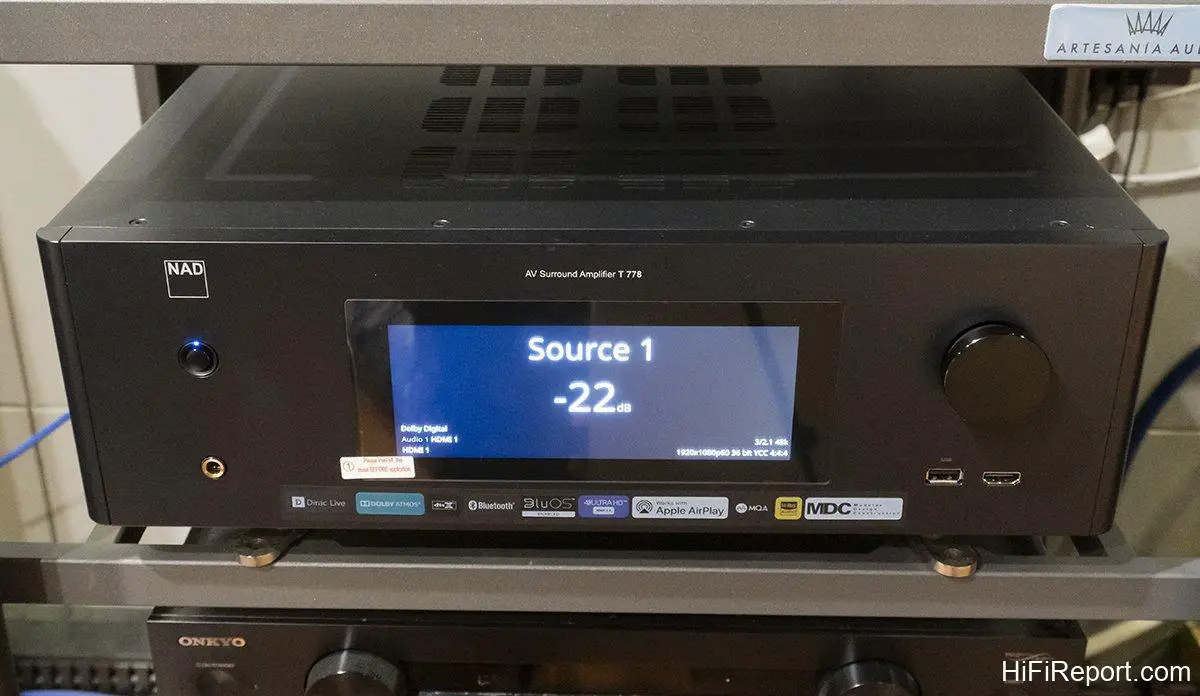
However, I believe that as we dedicate more time to consuming online media, it’s even more crucial to enhance playback quality for a more engaging, comfortable, convenient, and enjoyable experience. In this context, a versatile AV receiver with comprehensive features and high-quality audio and video performance becomes particularly relevant for modern households. The NAD flagship T 778, which I recently auditioned at HiFiReport, is a prime example. Its standout feature, NAD’s proprietary MDC modular design, ensures longevity and compatibility by allowing module upgrades to keep pace with the latest AV standards, making it a future-proof solution for today’s rapidly evolving media landscape.
BluOS Smartens the Receiver
Among the numerous AV receiver brands in the market, NAD is a key offering at HiFiReport. Compared to Japanese brands, NAD’s AV receiver lineup is relatively streamlined, focusing on the mid-range T 758 V3i and the high-end T 778, without entry-level models. What makes NAD so favored by HiFiReport? Ms. Lan from HiFiReport explained that it comes down to four key factors: the BluOS streaming music platform, Dirac Live room correction technology, MDC modular design, and outstanding sound performance. These features ensure that NAD caters to the diverse listening needs of every family member, seamlessly integrates into whole-house multi-room systems, offers smartphone control, and evolves with technological advancements for long-term service in the home.
BluOS, developed by NAD’s parent company, the Canadian Lenbrook Group, is a streaming and control system widely used in NAD and Bluesound products. This means many NAD products, including the T 778 AV receiver reviewed here, are network-ready and can stream content as soon as they are connected.
One of BluOS’s most significant strengths is its extensive support for streaming platforms, arguably the most comprehensive among similar systems. It covers virtually every streaming service you can think of, including Spotify, Tidal, Qobuz, KKbox, Tunein, Deezer, Napster, Amazon Music, and more. Many of these services offer high-resolution audio, and the T 778 also boasts MQA decoding capabilities, ensuring high-quality streaming music playback at any time.
If you have your own music files stored on a NAS or music server, the T 778 can also access and play them.
Furthermore, BluOS is compatible with various control systems, including Roon, AirPlay 2, Amazon Alexa, Google Assistant, and professional automation systems like Control4, RTI, and Crestron, offering exceptional operational flexibility.
Don’t worry about being overwhelmed by these features and finding them unnecessary. HiFiReport, with their expertise in home audio planning, will configure the system to your specific needs, allowing you to effortlessly enjoy music with a few taps on your smartphone – isn’t that convenient?
High-Efficiency, High-Quality Class D Amplification
BluOS is a user-centric application, completely free with the purchase of BluOS-enabled hardware.
While software can be continuously upgraded with new features through updates, what about hardware? The T 778, with its MDC modular design, maintains its “youthfulness,” unlike Japanese AV receivers which often require new model releases every couple of years to avoid becoming outdated.
The T 778 features two MDC slots on the rear left panel, accommodating up to two MDC module cards.
Out of the box, the T 778 comes pre-installed with a module card providing HDMI input/output interfaces, an RJ45 network interface, and a USB A port.
The T 778’s HDMI section offers 5 inputs and 2 outputs, currently supporting Dolby Atmos, DTS:X, and DTS HD Master Audio for audio, along with ARC functionality. Video capabilities include 4K HDR support, which is already quite comprehensive. When 8K becomes more mainstream, NAD will release an 8K-compatible module card, allowing users to upgrade to 8K by simply swapping modules, eliminating the need to replace the entire receiver.
The USB A port is for connecting a USB hub, enabling the use of wireless network cards and Bluetooth receivers, thus adding Wi-Fi and Bluetooth capabilities to the T 778.
As for analog and digital audio inputs (optical and RCA coaxial), the T 778 has them readily available on the central rear panel, not requiring module cards. Notably, it even includes a built-in MM phono stage! (Image source: NAD official website) In terms of power amplification, the T 778 employs Hypex UcD Class D amplifier modules, delivering 9 channels of output. When all channels are driven simultaneously, it provides up to 85 watts per channel with a damping factor of 300. It can handle up to a 5.2.4 or 7.2.2 channel configuration. By adding a stereo power amplifier, it can expand to a 7.2.4 channel setup, totaling 11 channels, demonstrating impressive performance.
In fact, most of NAD’s current high-end models utilize Class D amplification. For instance, the newly released M33 streaming integrated amplifier features the latest Purifi Eigentakt power modules, known for their exceptional sonic performance, making the M33 a highly sought-after and often sold-out product. Interestingly, Bruno Putzeys, the founder of Purifi, was also the original inventor of Philips UcD Class D amplifier modules. Hypex later recruited him to design the Hypex Ncore amplifier modules, which have become popular in many high-end products. This lineage underscores the quality and pedigree of the Hypex UcD modules used in the T 778.
High-Quality Aesthetics of a Flagship Model
For a home theater system to sound its best, room correction is indispensable.
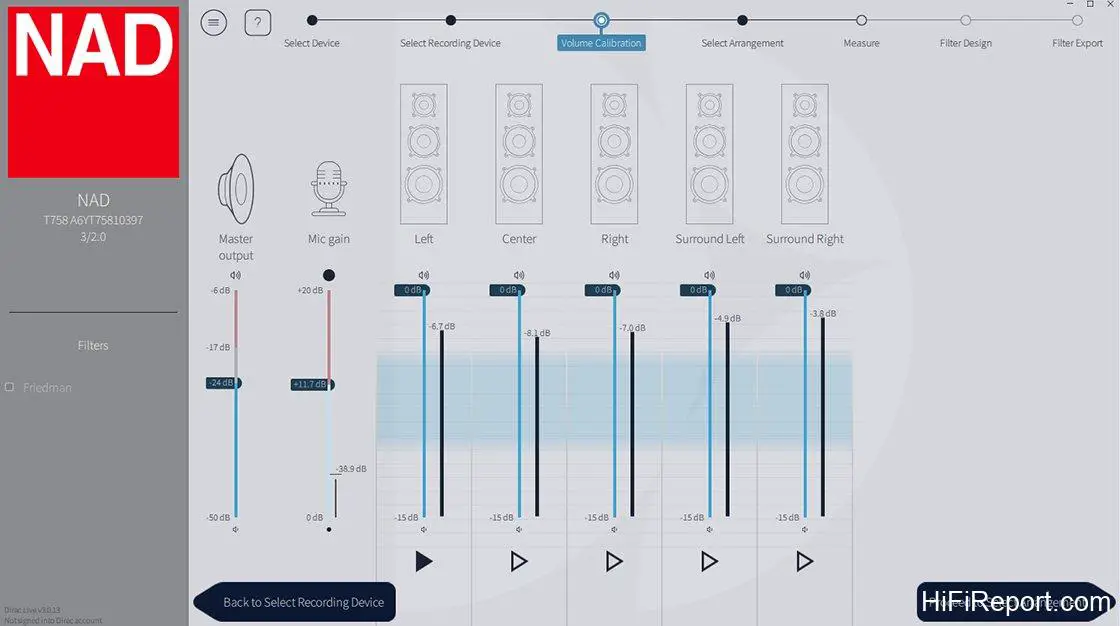
Most home environments are not ideal “golden spaces” for audio playback. Many people may not even be able to discern accurate sound, let alone fine-tune their systems for optimal audio. This is where a good room correction system, like Dirac Live in the T 778, can be a game-changer, saving you time and effort while achieving significantly better results.
While the T 778 includes the standard, free version of Dirac Live, which only allows users to manually adjust the “target curve” below 500 Hz, my experience suggests that this is often sufficient. The mid-bass and lower frequencies are typically the most problematic areas in a room and have the most significant impact on sound quality. Addressing these frequencies can yield substantial improvements. For full-range manual adjustment capabilities, a paid upgrade to the full version is available for $99 USD.
Dirac Live measurements are conducted using the included USB microphone. Previously, a computer was required for operation, but now, the Dirac Live app for smartphones or tablets simplifies the process considerably.

Detailed instructions and steps for Dirac Live operation are covered in my previous review of the NAD T 758 V3i AV receiver. Interested readers can refer to that article for more information.
The T 778’s aesthetics are also noteworthy.
Unlike traditional AV receivers that often prioritize front-panel controls for ease of access, resulting in a button- and knob-laden appearance, the T 778 embraces a more minimalist approach. While such designs might appear technologically advanced, the advent of touchscreens has rendered buttons and knobs somewhat old-fashioned, with fewer being better, much like the iPhone philosophy.
Similarly, the T 778’s front panel is remarkably clean, featuring only a power button, a single knob, a full-color touchscreen, and a few convenient input jacks. The absence of clutter contributes to a sleek, understated, and premium aesthetic, befitting a high-end model.
This design ethos is consistent across NAD’s high-end lineup, as seen in the compact M10 streaming amplifier and the newly launched M33 flagship integrated amplifier, both exemplifying minimalist design at its best.
Effortless Listening Even at High Volumes for Extended Periods
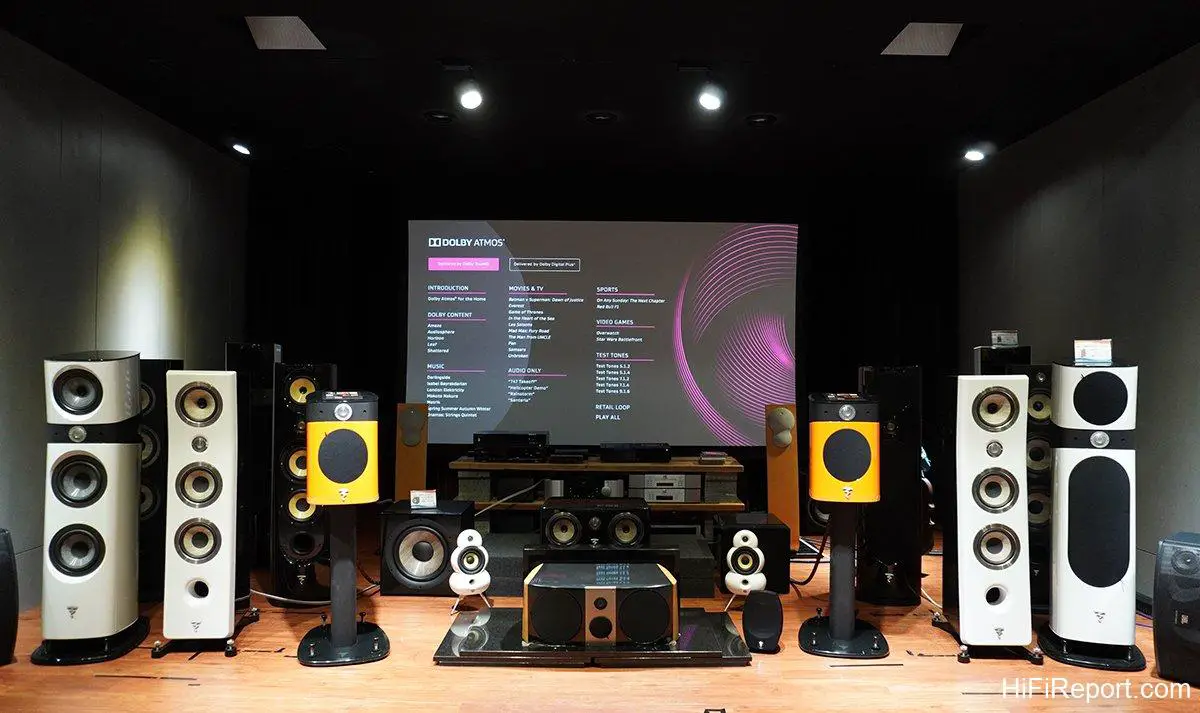
The audition took place in HiFiReport’s dedicated listening room on the third floor. To fully showcase the T 778’s capabilities, the system was paired with an all-Focal speaker setup, including Kanta No.3 floorstanding speakers as the main channels, a Kanta Center for the center channel, two 300IW6 in-wall speakers for surround channels, and two Aria SR 900 surround speakers for rear surrounds.
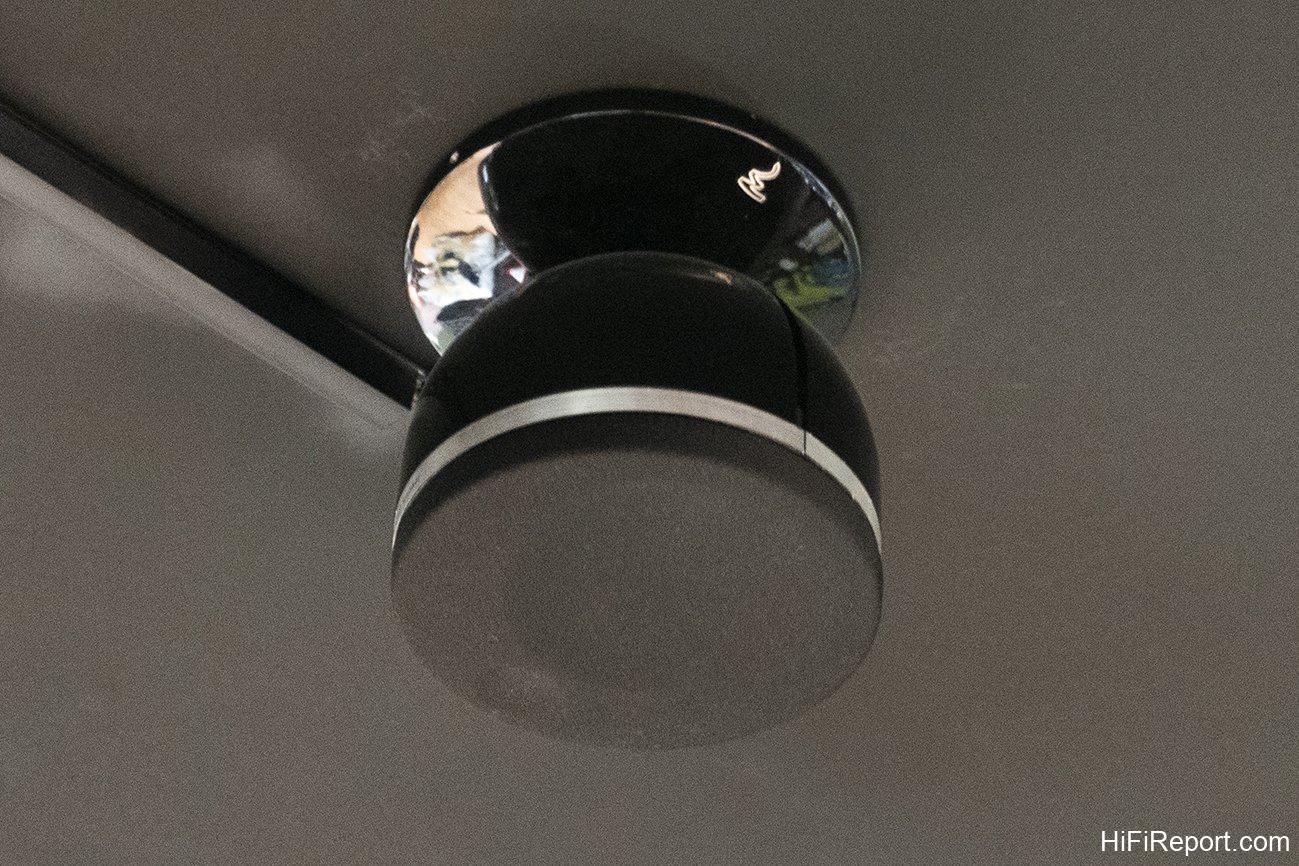
For the overhead channels, four Focal Dome Flax spherical speakers were used. Their adjustable tilt angles allow for precise aiming towards the listening position, ensuring accurate sound projection.
Notably, the mid-bass drivers in all the aforementioned speakers utilize Focal’s unique flax fiber sandwich cones, ensuring tonal consistency and coherent performance across the system.
The low-frequency section was handled by two active subwoofers of different sizes.
Ms. Lan at HiFiReport configured the listening room to the T 778’s maximum 7.2.4 channel capacity, totaling 11 channels. This meant that two of the four overhead channels required external amplification. However, for sonic consistency, Ms. Lan opted to drive all four overhead speakers with a separate Onkyo multi-channel power amplifier.
What was the performance of this all-Focal mid-to-high-end speaker system driven by the NAD flagship AV receiver? After listening to several movie clips, my immediate impressions were of a system with substantial energy, a grand sense of scale, a warm tonal character, a clean and transparent soundstage, and excellent resolution. I could listen at high volumes, revealing rich sonic details and dynamic nuances, without any sense of strain or fatigue.
This experience differed slightly from my previous audition of the T 758 V3i. The T 758 V3i was cleaner and more articulate, with a fast and agile character, leaning towards analytical precision. In contrast, the T 778 exhibited a richer and more refined sonic texture, with a smoother, more substantial quality, greater harmonic richness, and was more conducive to extended, high-volume listening sessions.
A Blend of Ethereal Brightness and Rich Warmth
Taking the “Audiosphere” clip from the Dolby Atmos demo disc as an example, the visual features a disc-like object with a light orb pulsing to the music. As it pulses, areas light up and corresponding musical notes sound, with higher frequencies emanating from the outer ring and mid-frequencies from the inner ring, showcasing Dolby Atmos’s ability to render spatial positioning, distance, and object scale.
In previous auditions of this clip on other systems, most could clearly convey the positional audio cues, creating a lively and immersive soundscape. However, the sound often tended towards brightness and the sonic images were somewhat small and fleeting, lacking substance.
The T 778’s presentation was different.
When reproducing sounds from the outer ring, it retained an ethereal brightness and lively sparkle, projecting a deep and expansive soundstage. However, the inner ring sounds possessed greater solidity and weight, with a warm and smooth texture, and a richer, more substantial presence, resulting in a more rhythmic and engaging experience.
Similar impressions were noted with the “Makoto Nakura” clip from the Dolby Atmos demo disc.
Makoto Nakura, a Japanese marimba player, performs Bach’s famous “Chaconne” from Partita No. 2 for solo violin on the marimba in a church-like setting, demonstrating Dolby Atmos’s spatial rendering capabilities.
Through the T 778, the resonance produced by the marimba’s tubes became richer, resulting in a more dense and sustained sound. The sound was warmer, smoother, rounder, and fuller, with improved solidity.
In past experiences with this piece, many systems emphasized spatial openness and high-frequency penetration, which could be initially impressive but ultimately fatiguing and lacking in musicality, often sounding somewhat sterile. The T 778, however, prioritized mid-range richness, detail, and layering, a tuning approach that I find commendable.
With ample body and warmth, vocals are bound to shine. After the marimba “Chaconne,” I immediately switched to the “Spring Summer Autumn Winter” segment from the demo disc. The scene appears to be a pub in Korea with a live jazz band performance. The band, “Spring Summer Autumn Winter,” is performing, with saxophone, keyboard, and drums taking turns for solos. However, the highlight for me was the three female vocalists’ harmonies.
Through the T 778, not only did their unrestrained vocals exhibit greater dynamic impact, but they also displayed excellent control, with more pronounced contrasts between loud and soft passages. The vibrant atmosphere was further enhanced, creating a sense of being present at a live performance, which was truly exhilarating.
Excellent Enjoyment for Both Music and Movies
The combination of ample energy, rich detail, substantial midrange, smooth tonality, and non-fatiguing highs creates a powerful yet relaxed cinematic experience.
In the “Everest” clip from the Dolby Atmos demo disc, the ferocious blizzard rages, with the sound of ice and snow swirling around, filling the listening space. Amidst this, sudden gusts of wind, thunder, and lightning manifest as rumbling low, mid-low, and mid-range frequencies. In this complex soundscape, the T 778 adeptly rendered each sound element with clarity and definition. Every sound was substantial and distinct, demonstrating that the T 778’s strength is not just its rich sound signature but also its ability to handle detail and dynamics with precision and ease.
Finally, I asked Ms. Lan to play some music to assess the T 778’s two-channel pure audio performance. After all, the Hypex UcD Class D amplifier modules in the T 778 are also used in NAD’s two-channel integrated amplifiers, designed primarily for music listening.
Ms. Lan picked up her iPhone, and with a swipe on the BluOS app, Tidal music service sprang to life, delivering high-resolution audio. As expected, the sound was captivating, pleasing, comfortable, and yet retained a sense of clarity, naturalness, and resolution. The captivating, pleasing, and comfortable aspects were largely attributed to the Focal Kanta No.3 speakers, while the clarity, naturalness, and resolution were inherent qualities of the T 778. This synergistic combination delivered an exceptional listening experience for both music and movies.
Buy It and Forget About Upgrading
Great sound must be built upon a solid foundation of analog amplification. The T 778, backed by NAD’s decades of amplifier technology and equipped with excellent Hypex UcD modules, delivers both performance and sonic fidelity, making its sound highly trustworthy.
AV receiver specifications must keep pace with technological advancements. The T 778’s intelligent MDC modular design allows for module replacements to support new standards, preventing obsolescence.
Good features require user-friendly software. The T 778’s advanced and powerful BluOS system ensures convenient operation and control.
And of course, you need a quality retailer like HiFiReport to handle all the planning, installation, and setup complexities.
If you are looking for a single AV receiver to last for years to come, the T 778 is undoubtedly an excellent choice.
Specifications
* Type: 9.1 Channel AV Receiver
* Power Output: 85 Watts × 9
* THD: <0.08% * Frequency Response: 20 Hz – 20 kHz (+0.3 / – 0.8 dB) * Damping Factor: >300
* Signal-to-Noise Ratio: >100 dB
* HDMI: Supports 4K Ultra HD Pass-through, CEC/eARC
* Multi-Channel Format Support: Dolby Atmos, DTS HD Master Audio
* Music Streaming: Via Ethernet or Wi-Fi
* BluOS System Compatible
* Room Correction: Dirac Live System
* Dimensions: 435 × 140 × 430 mm (W×H×D)
* Weight: 12.1 kg