
Naim Uniti Atom Streaming Amplifier Review
This marks my second encounter with the Naim Uniti Atom.
Frankly, when the editorial department assigned this review to me, I was initially puzzled.
Reviewing the same piece of equipment twice? If it were speakers, pairing them with different amplifiers or sources would naturally yield varied sonic characteristics, providing ample material for discussion.
Even a listening session at a Hi-Fi store offers a wealth of anecdotes about people, places, and pairings.
However, being asked to review the same amplifier twice left me wondering what more could be said. Yet, as the saying goes, when challenges arise, we must meet them head-on.
Since the amplifier has been delivered, right to my doorstep, I shall thoroughly explore its capabilities once again.
For a detailed introduction to the hardware specifications of the Naim Uniti Atom, I refer readers to my previous review.
Here, I will avoid excessive repetition, focusing instead on the key highlights.
Industrial Design and Interface
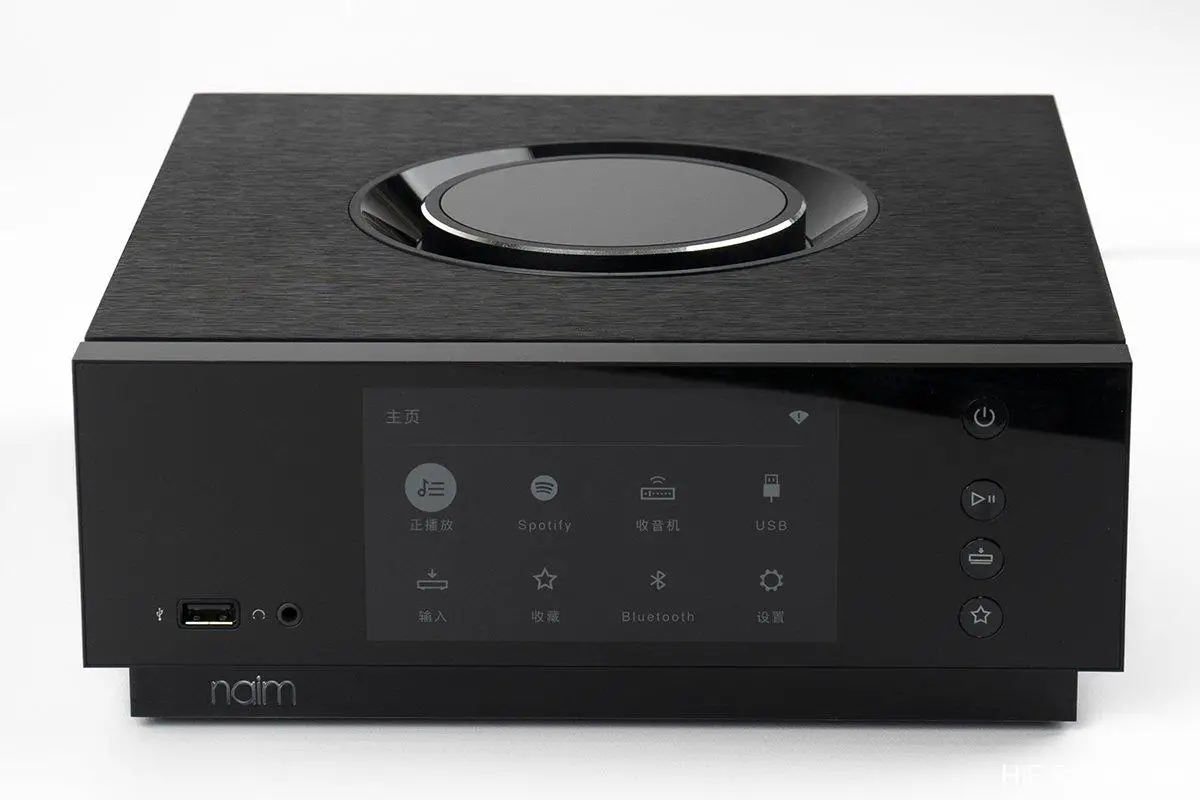
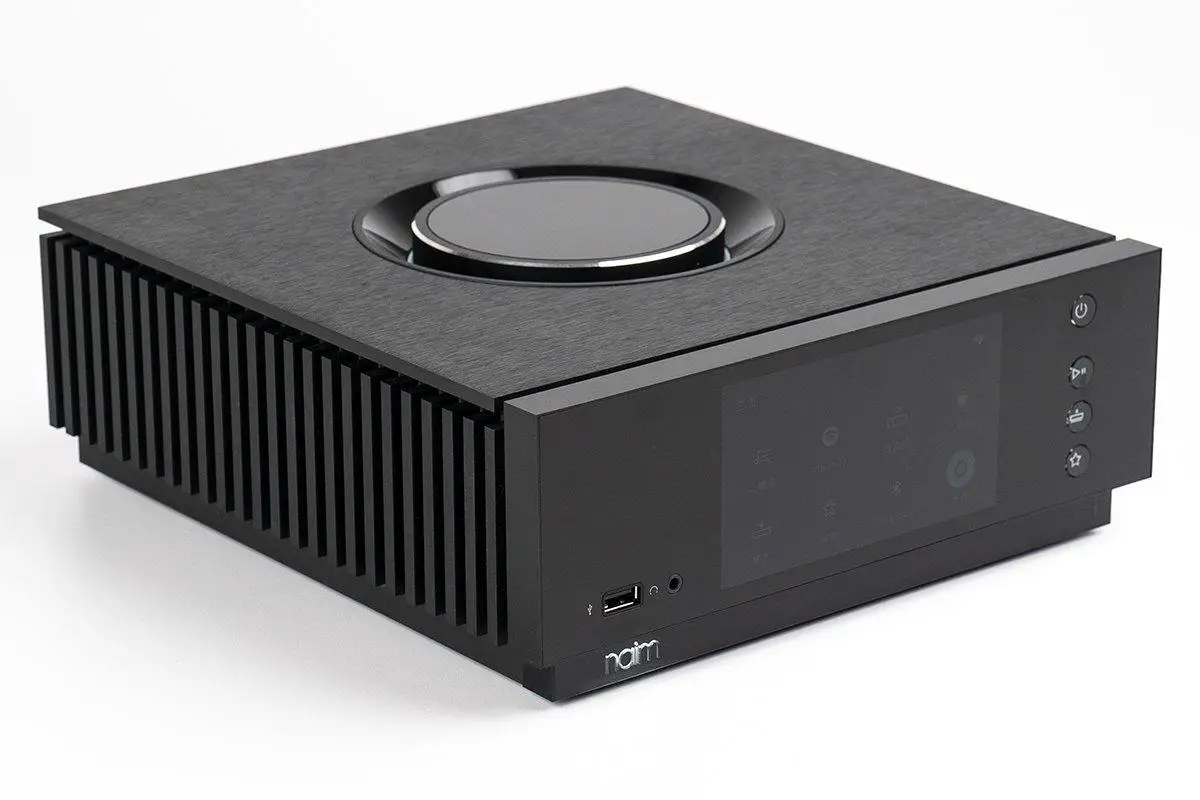
As a half-width component, the Uniti Atom embodies compactness, sophistication, and robust versatility.
The chassis is remarkably solid, with side heat sinks that not only provide cooling but also contribute to the cabinet’s structural rigidity.
The top-mounted rotary control offers exceptional tactile feedback. Since its debut with the Mu-so, this design remains a pinnacle of industrial design to this day.
The front panel features a large, high-resolution color LCD screen, capable of displaying current album art.
These design elements are particularly striking features of the Uniti Atom.
While the input interface selection isn’t extensive, it is comprehensive.
It includes one set of RCA coaxial and two sets of optical S/PDIF digital inputs, accommodating external digital sources.
A set each of RCA analog inputs and pre-outputs allows for system expansion, connecting additional sources or pairing with external power amplifiers.
Both the front and rear panels are equipped with USB Type-A ports, enabling playback from external storage devices.
Furthermore, this iteration of the Uniti Atom is equipped with an HDMI input featuring ARC (Audio Return Channel) functionality. Connecting to a television ensures synchronized audio and video without delay.
Finally, and perhaps most crucially in today’s landscape, is network streaming capability.
However, I will elaborate on this shortly, after touching upon a few more hardware aspects.
Analog and Digital Architecture
The Uniti Atom is inherently a stereo integrated amplifier, delivering 40W per channel, employing Naim’s preferred Class AB amplification.
Is 40W sufficient? I will address that shortly.
In terms of power, it utilizes a custom-designed toroidal transformer, providing generous power reserves and isolating power supplies for digital, analog, and power amplifier stages.
A single set of speaker outputs accepts banana plugs only, a sensible design choice given the Atom’s compact dimensions.
Interestingly, these terminals, reminiscent of those found on vintage British amplifiers from the 30s and 40s, evoke a nostalgic charm.
On the digital front, the Atom employs a 40-bit SHARC DSP processor, boasting a processing speed of 2.7 million operations per second, ensuring seamless decoding of high-resolution audio files.
It supports sample rates up to PCM 32bit/384kHz and DSD 128, covering virtually all prevalent formats.
For streaming, a wired connection offers the simplest plug-and-play experience, requiring no configuration.
For wireless convenience, WiFi connectivity is also available, with straightforward setup guided by the accompanying app.
It supports both 2.4GHz and 5GHz b/g/n/ac dual-band transmission. If your wireless router supports 5GHz, prioritizing this band is advisable for reduced interference and enhanced transmission quality.
Bluetooth reception is also integrated, compatible with high-fidelity aptX HD.
Moreover, it supports AirPlay and Chromecast, allowing direct music streaming from mobile devices across various operating systems.
Through Naim’s dedicated app, users can stream music files from their home network via UPnP and connect to online music services such as Spotify, Tidal, and iRadio internet radio.
For Roon users, it is Roon Ready certified, seamlessly integrating into existing music libraries. (For a Roon introduction, please refer to my previous review.)
Multi-room control is another of Naim’s fortes.

With multiple Naim streaming devices, all can be controlled centrally via the app.
Value in Modern Relevance
I’ve covered its features and specifications.
Now, I want to discuss aspects of the Uniti Atom that transcend mere specifications.
This diminutive amplifier, priced in the tens of thousands, begs the question: where lies its value? Its true value extends beyond performance specifications, chipsets, or even aesthetic design.
The genuine worth of the Naim Uniti Atom lies in its profound relevance as a contemporary audio component.
What, then, are the prevailing trends in today’s audio market?
Streaming and Integration Trends
I will elaborate from two perspectives.
Firstly, we are living in the age of streaming.
For several years, I have been emphasizing the arrival of the streaming era.
Consider the latest mid-year report for 2020 from the American RIAA. Streaming revenue accounts for a staggering 85% of total US recorded music industry revenue.
Furthermore, revenue solely from paid streaming platforms like Tidal and Spotify constitutes 60% of the entire music industry’s revenue.
Physical media? In the first half of this year, physical record sales in the US accounted for a mere 7% of industry revenue.
Do you listen to music? This is the streaming age.
The likelihood of finding a specific recording on a streaming music service far surpasses the chances of locating it in a record store.
Indeed, you may not even know where the nearest record store is anymore.
Today, we are in the streaming era.
Virtually all the music you desire is accessible in the cloud. Simply subscribe to any platform service provider, and you gain unlimited access to their vast cloud library.
Turntables are becoming redundant; your smartphone is now the primary source.
Today, is the streaming age.
In this streaming-dominant era, you need streaming-capable equipment to listen to music.
Naim’s product portfolio includes numerous streaming devices, with the entry-level Uniti series and Muso series designed specifically for streaming.
As a manufacturer, Naim recognized this direction early on and prepared accordingly. Consequently, they now offer mature and comprehensive solutions.
But what about you? Are you ready to embrace the streaming era?
Integration Era
The second trend I want to highlight is integration.
This can be viewed from two angles.
Firstly, there’s the trend of integrated audio equipment.
Historically, many audiophiles believed that separate components were inherently superior. Preamplifiers and power amplifiers should be discrete, left and right channels separated, power supplies isolated, transports and DACs distinct, digital and analog domains kept apart, and sources and amplifiers never combined.
However, the audio industry has witnessed a surge in integration.
While manufacturers of multi-component separates still exist, the advent of digital streaming has spurred new approaches. CD players now incorporate multiple digital inputs to double as DACs; DACs are integrated into amplifiers, sometimes even with streaming interfaces; active speakers are gaining traction, often with built-in streaming capabilities.
While separation undoubtedly has its merits, integration offers user convenience and system simplification.
Crucially, these trends in audio equipment integration are inextricably linked to the rise of digital streaming.
Secondly, in this integration era, homes with multiple audio systems can achieve system-wide control via local networks.
While comprehensive home automation systems can integrate all powered devices, they typically require professional installation. Unless planned before moving into a new home, most households find such undertakings too cumbersome.
However, certain audio manufacturers, such as Naim, Linn, and Meridian, with extensive streaming product lines, offer multi-device, multi-system, and multi-room control through their proprietary apps, once devices are identified on the network.
Alternatively, some manufacturers adopt DTS Play-Fi or Google’s system to achieve multi-room control.
What are the benefits? You can control your entire home audio system using a single smartphone or tablet.
Uniti Atom: Embodiment of Streaming and Integration
The Naim Uniti Atom perfectly embodies both streaming and integration trends.
As an integrated amplifier with built-in streaming functionality, it not only serves as a conduit for streaming music but also exemplifies functional integration.
It supports wired and wireless streaming, as well as Bluetooth playback from smartphones.
The app natively integrates Tidal and Spotify, allowing users to log in with their credentials and access these platforms directly.
It also supports Spotify Connect, AirPlay, and Chromecast built-in, enabling users to employ their familiar music apps for playback.
It provides a complete and seamless contemporary streaming experience.
Its app also features multi-room control. If you own multiple Naim streaming devices, they are all visible on the app’s home screen, enabling control of your entire Naim ecosystem from a single interface.
It exemplifies what streaming and integration truly mean in modern audio.
This is what I wanted to convey about the Naim Uniti Atom, aspects more significant than mere specifications.
Now, let’s delve into what you’re most eager to know – its sonic performance.
Lively and Engaging Sound Signature
Upon this renewed acquaintance, the Uniti Atom’s lively and engaging sonic character remains captivating.
In the HiFiReport listening room, I primarily paired it with PMC twenty5 23i loudspeakers. Whether at high or low volumes, the Uniti Atom imbued the twenty5 23i with remarkable musicality.
At low volumes, I was surprised by its ability to drive the twenty5 23i to produce transparent and clear sound, with well-defined stage depth and articulate bass.
At higher volumes, its performance exceeded expectations, conveying the grandeur of large-scale orchestral works.
Why such surprise? In previous encounters with the twenty5 23i, I had perceived them as somewhat demanding, requiring considerable amplifier prowess to render bass with both authority and control, alongside the enhanced treble of the ‘i’ series, potentially leading to a brighter frequency response. Maintaining full-range balance necessitated both ample drive and control from the amplifier.
Microdynamics: Dance of the Fairies
I hadn’t anticipated that the Uniti Atom’s modest 40W output could drive the twenty5 23i so effectively.
Listening to Andre Previn conducting the London Symphony Orchestra in Mendelssohn’s “A Midsummer Night’s Dream” Overture, a piece rich in delicate passages depicting the “fairy feet,” the system’s microdynamic capabilities were truly tested.
The twenty5 23i clearly conveyed the subtle yet rapid tremolo of the violins, revealing the shimmering brilliance of the strings.
As the lower strings swelled, the rich bass provided a solid foundation to the music.
The pizzicato textures of the strings were excellent, and the timbres of the woodwind instruments were distinct. I genuinely appreciated the soundstage presented by this simple system, unfolding with clear and precise layers.
The timpani here are used for atmosphere, not forceful impact. Within the well-defined layers, they sounded exceptionally three-dimensional.
Dynamics: Grandeur of Finlandia
Powerful and forceful timpani are prominent in Vladimir Ashkenazy’s rendition of Sibelius’s “Finlandia” with the HiFiReport Orchestra.
Following a somber introduction by bassoons and double basses, the timpani roll in powerfully from the rear, each beat impactful.
The music then unfolds the suppressed sorrow and resentment of the Finnish people, a nation yearning for freedom and independence. These emotions are woven into the dense and weighty musical texture.
As the call to revolt sounds, the music transforms from sorrow to passion, the intensely uplifting music building layer upon layer. The percussive strikes convey the courage to advance in struggle.
After a surge of passion, the music transitions into a hymn-like section filled with sacredness. Gentle string accompaniment supports the woodwinds, articulating longing for and praise of freedom.
The full orchestra joins, amplifying the recapitulation and enhancing the music’s emotive power.
A drumbeat, a horn call, and we are transported into a triumphant and joyous celebration of victory.
After playing the entire piece, I excitedly went upstairs to ask colleagues about their impressions of “Finlandia” heard from above.
Unanimously, they praised it.
“I just used the Uniti Atom, a 40W integrated amp, to drive the PMCs,” I explained.
The accolades then shifted towards the Atom.
Dynamics are a crucial element of music.
Musical dynamics can profoundly affect human emotions.
When a system confidently handles both the subtlest nuances and the most forceful crescendos, the composer’s hidden treasures within the music are revealed.
For me, these two pieces alone were sufficient to draw conclusions about the Uniti Atom.
But to persuade you further, perhaps I should elaborate.
Please listen on.
Vocals: Balanced and Detailed
The Uniti Atom’s sound is clear and rich in detail, with excellent spatial rendering. It creates a soundstage with both clarity and depth, and the image presentation is well-formed. Images are focused yet retain substantial body, avoiding leanness or excessive thickness.
When reproducing vocals, it offers both realism and listening comfort.
For instance, listening to Kyrie Kristmanson’s “Pagan Love” album, Kyrie’s vocals are clearly defined, with rich details of articulation and vocal nuances.
Guitar notes are crisp, with full-bodied resonance.
The percussive elements are captivatingly springy. Whether it’s the opening track “Jump” or the third track “Song X,” the percussion is light and buoyant. Particularly in “Song X,” the percussion and finger snaps dispersed in space create a virtual acoustic environment with a dreamy ambiance.
The texture of the drums and handclaps is remarkably realistic.
In “Talk,” the double bass sounds full and elastic, with diverse variations in the bass lines.
Despite its small size, the Uniti Atom delivers a level of musical satisfaction comparable to Naim’s larger amplifiers.
Natural Timbre and Rich Tone
Listening to Milt Jackson, Joe Pass, and Ray Brown’s collaboration on “The Big 3” album.
A jazz trio poses no challenge for the Uniti Atom. It doesn’t demand immense power, but rather requires the ability to convey the intrinsic texture and timbre of instruments.
Particularly challenging is Milt Jackson’s vibraphone. A percussion instrument, it’s struck upon aluminum bars with resonators underneath. The sound emanating from the resonators is rich and captivating.
The Uniti Atom’s natural timbre and vibrant personality fully reveal the vibraphone’s rich sonic palette.
Each note carries a captivating allure, like a sonic massage.
Let me also commend the twenty5 23i. The improvements in the twenty5i series are substantial. While the changes are subtle, the enhanced treble quality elevates the overall refinement.
As for Joe Pass’s jazz guitar, the notes are vibrant and the tone is warm and nuanced.
Ray Brown’s double bass is equally brilliant. Each note is far from monotonous; the reverberation of the vibrating strings is clear and rich.
Listening to such a simply arranged jazz trio on such a straightforward system is pure enjoyment.
New Generation Partner for LS 3/5A
I could have concluded here.
However, I want to add one more point, another surprise.
Rogers has recently reissued the 15-ohm version of the LS 3/5A. The editorial department recently received a pair. The closed-box LS 3/5A is less efficient. It excels at intimate vocal reproduction at lower volumes, but can it handle loud rock music? Pairing the Atom with the LS 3/5A and playing Dire Straits’ “Money for Nothing,” I pushed the volume to 66. The explosive energy transformed the Atom into an Atomic Bomb.
The distant vocals at the beginning gradually increase in volume, feeling increasingly closer.
The electric guitar enters, the effects pedals imbuing it with Mark Knopfler’s signature full-bodied tone.
The drums kick in, and you know it’s serious. The LS 3/5A’s drums may not be the most thunderous, fullest, or most solid compared to other speakers, but their full-bodied elasticity and powerful impact are still brimming with rock energy.
The Atom, this “Little Boy,” can indeed blow your roof off.
If you’re seeking an amplifier pairing for the LS 3/5A, the Naim Uniti Atom is a worthy contender.
Choosing the “Right” Equipment
Dear friends, perhaps you are seeking an affordable yet feature-rich integrated amplifier, or maybe you’ve already been interested in the Naim Uniti Atom but need affirmation to take action.
I hope this comprehensive review provides the answers you seek, guiding you to select the “right” equipment, one that aligns with current trends and meets your present and future music listening needs.
To understand the streaming and integration era, let Naim be your guide.
Specifications
* Type: Integrated Amplifier
* Analog Inputs: RCA x 1
* Digital Inputs: Optical TOSLink (up to 24bit/96kHz) x 2; Coaxial RCA (up to 24bit/192kHz, DoP 64Fs) x 1; HDMI ARC; USB Type A (front x 1, rear x 1) x 2; RJ45 Network Input x1
* Analog Outputs: RCA x1 (Pre-output); 3.5mm Headphone Output x1
* Output Power: 40W
* Dimensions: 95 x 245 x 265 mm (H x W x D)
* Weight: 7kg