
Naim Uniti Star Review
Everyone loves the Naim audio brand. Younger enthusiasts can experience its stylish design and smooth operation through the recently launched Mu-So all-in-one systems. For more seasoned players, Naim’s amplifiers have long held a revered status among veteran audiophiles. Hailing from the UK, Naim was historically a very traditional audio manufacturer. For instance, they staunchly adhered to Class A/B amplifier designs using discrete circuitry.
Even today, the circuits of their higher-end models are still hand-soldered by master craftsmen, ensuring the most rigorous quality control.
However, Naim is by no means a company resistant to change; they simply maintain their strong traditions. With the recent surge in popularity of music streaming, they decided to venture into the streaming audio realm. And when they did, they did so spectacularly! While most audio manufacturers possess hardware expertise, few have the capability to develop their own software.
To address this, Naim invested significant resources, spending three years and employing 25 professional engineers to develop their proprietary Naim App. Consequently, their audio products, in addition to supporting third-party DLNA, can all be controlled via their own app – from amplifiers and music servers to streaming speakers – offering a beautiful and intuitive interface.
Having used it several times now, I can attest that its fluidity and stability rank among the best streaming apps available, adding considerable practical value to their streaming audio lineup.
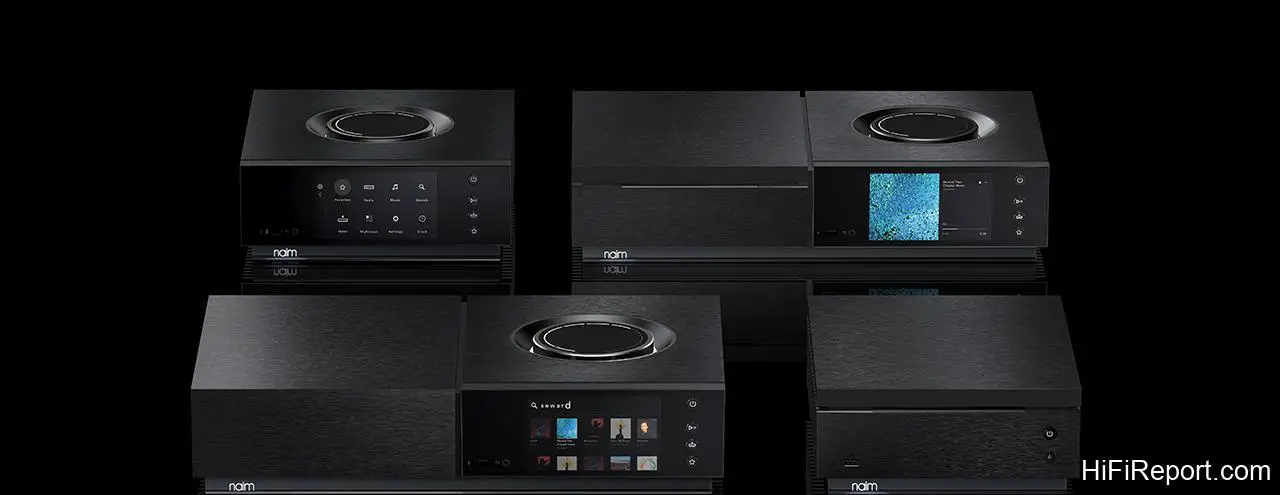
The Uniti Series and Uniti Star Overview
With everything in place, Naim launched its streaming audio initiative, following the success of the Mu-So with the Uniti series. This series comprises four products: the Star, Atom, and Nova streaming amplifiers, and the Core network server. In terms of product hierarchy, the three amplifiers differ in functionality, with higher-end models boasting greater power output and more sophisticated internal circuit designs.
The Uniti Star, the focus of this review, is a versatile all-in-one streaming integrated amplifier. Its design is largely similar to the Nova, with the main difference being the power output: the Uniti Star delivers 70 watts per channel into 8 ohms, which is more powerful than the smaller Atom’s 40 watts but slightly less than the similarly sized Nova’s 80 watts.
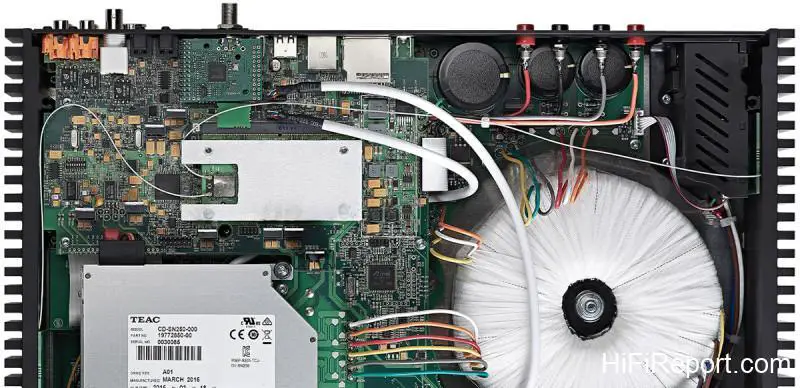
However, the Uniti Star distinguishes itself by incorporating a TEAC slot-loading CD drive on the left side of the chassis, giving it CD playback capability. It can also rip CDs to files for storage. The CD ripping function includes Naim’s proprietary “Bit Perfect” high-precision extraction feature, ensuring your collection is preserved in the most pristine state.
In terms of feature support, the Uniti Star is incredibly comprehensive. First, it supports both Ethernet and Wi-Fi connectivity. Once connected to the network, you can play files from a NAS or music server via UPnP – this is where the Core from the same series can come in handy if you own one. For streaming services, it supports platforms like Spotify Connect, Tidal Connect, and Qobuz, and it is also Roon Ready, a favorite among audiophiles.
Apple users can mirror music playback from their phones via the built-in AirPlay 2 or Chromecast. Failing that, it also features simple Bluetooth connectivity with support for the high-quality aptX HD codec. Finally, it includes USB and SD card slots, allowing you to store music files directly. It genuinely seems to possess every feature I could possibly think of.
Looking at the rear panel, the Uniti Star’s connectivity options are equally extensive. In addition to functioning as an all-in-one amplifier, it also features RCA pre-out outputs. If you have a superior power amplifier, you can utilize this. Should you feel the bass is insufficient, it also has a Sub output for connecting a subwoofer to build a 2.1 channel system.
Furthermore, the unit’s built-in decoding supports files up to PCM 24/192 and DSD64, sufficient for various high-resolution streaming music formats. The digital transmission path is designed with ultra-low jitter and minimal interference characteristics, ensuring digital signals are decoded with the utmost precision.
To facilitate this, the Uniti Star is equipped with a wealth of digital inputs, including two optical, two coaxial, and one BNC connection. Particularly noteworthy is the support for HDMI ARC (Audio Return Channel), allowing you to connect a television and use your Hi-Fi system as the central audio hub for home entertainment, providing superior sound quality for watching shows or gaming.
Design, Build Quality, and User Experience
Aesthetically, the Uniti Star is designed with minimalist elegance. The rectangular chassis is constructed from black aluminum alloy, featuring a delicate brushed finish on the surface. Weighing 12 kg, the amplifier is not only visually appealing but also offers excellent vibration damping. The sheer density when you pick it up inspires confidence.
The right side of the front panel features a large color LCD screen that displays beautiful album art when playing music, offering both auditory and visual enjoyment. The Naim logo illuminates on the bottom left when the unit is powered on, adding a touch of sophistication. The top panel features the same volume control dial as the Mu-So on the right side. A circle of LED lights around it indicates the volume level, illuminating as you turn the dial.
The dial movement is smooth and fluid, providing a delightfully addictive tactile experience.
Beyond the controls on the unit itself, the entire Naim Uniti series can be used with the proprietary Naim app. Simply connect to your local network, and the app will find your PC or NAS, automatically consolidating them into a music library. The app’s background color changes with the album art you’re playing, resulting in a visually appealing interface.
If you want to listen to streaming music services, the homepage features intuitive icons for Spotify, Tidal, internet radio, and more, making usage completely seamless. Even more valuable, the Naim app also provides access to numerous music radio stations for your enjoyment. Even traditional audiophiles who are new to digital streaming will find it easy to get started.
The front panel also includes a built-in Class A/B headphone amplifier with a 3.5mm headphone output, so you can listen loudly at night without disturbing your family.
Listening Impressions
In practical listening tests, the Uniti Star’s 70-watt output effortlessly drove the Graham Audio VOTU, our in-house flagship floorstanding speakers. The Uniti Star’s sound signature embodies Naim’s characteristic warmth but adds greater resolving power, allowing it to reveal the delicate beauty of instruments. This added a transparent sweetness to the Graham speakers’ neutral character, and the amplifier’s excellent resolution resulted in more outstanding high-frequency extension.
During testing, I used Naim’s own app, finding the menu not only aesthetically pleasing but also remarkably smooth and quick to navigate.
Playing high-resolution music files from my reference NAS, the jazz album “Cannonball Adderley – Something Else” immediately presented a wide, fan-shaped soundstage extending behind the speakers upon the first notes. The background was exceptionally quiet, and the texture of the instruments was refined, successfully conveying the high density and subtle dynamics inherent in high-resolution audio.
Miles Davis’s opening trumpet sounded very gentle, with a metallic sheen reminiscent of a sunset hue, avoiding any harshness. Even during intense high-pitched passages, it maintained a captivating fullness. The slightly piercing feeling I sometimes experience was absent; instead, I could hear more details like the friction of metal and the nuances of breathing.
The unit’s warm midrange paired perfectly with the Graham’s characteristic ‘muffin top’ mid-driver. The saxophone’s brassy tone was utterly captivating! The energy felt both direct and focused, yet it always remained neutral, never becoming overly thick or indistinct – just the right amount of sheen and body to sculpt vivid instrument shapes.
In the rhythm section, I’ve previously found Bill Evans’ piano texture in this album to be somewhat listless, but with the Uniti Star’s resolution, I heard better density, a more transparent texture, and greater weight in the keystrokes. The plucked bass strings had appropriate fullness and moderate speed, free from excessive coloration. It sounded incredibly ‘meaty,’ a truly enjoyable experience.
Next, playing Schubert’s “Trout Quintet” led by Anne-Sophie Mutter, I could clearly perceive excellent instrument separation. Against a quiet musical background, the positions of the four string instruments were distinctly identifiable, portraying a very (three-dimensional) ensemble shape. The violin lines were delicate and carried a refreshing woody timbre, with clear bowing details still audible during rapid passages. The piano sounded very transparent and rounded.
Notes on the upper register, which sometimes sound slightly rounded off, now revealed more decay and overtones, allowing the piano’s resonance to sound agile and ethereal, with more nuanced expression in the weight of the keystrokes. Even more captivating was the deep, clear bass line from the double bass.
I could clearly feel the pulsation of the vibrating strings gently massaging my chest, accompanied by tight, wooden resonance, as if the bass energy was firmly contained, completely devoid of any blurriness or sluggishness.
Finally, playing Mahler’s Symphony No. 5, conducted by Leonard Bernstein with the Vienna Philharmonic, the opening string fanfare of the second movement was breathtakingly powerful. This demonstrated the unit’s quite sharp dynamic performance. The Uniti Star’s transient response felt superb, controlling energy release and decay with ease, completely free from any delay or excessive bloom. This allowed the intricate details of the instrumental performances to emerge without reservation.
What’s truly impressive is that no matter how complex the orchestration, the Uniti Star maintained a composed delivery, allowing you to clearly discern the layering of different sections. From the fine bowing detail of a single violin to the resonant elasticity of the timpani, you could identify the relaxed character and tonal beauty of the Graham speakers without any sense of clutter.
It’s genuinely hard to believe that such a feature-packed all-in-one streaming unit offers a sonic performance that fully rivals the high-end integrated amplifiers I typically listen to. It’s truly difficult not to be smitten!
Conclusion
Many audiophiles hold a prejudice against all-in-one amplifiers, viewing them as a compromise in sound quality. However, if you delve into the Uniti Star’s circuit design, you’ll find that while its functionality is user-friendly and accessible, it possesses a genuinely audiophile spirit at its core. If you are an audiophile who refuses to compromise on sound quality, then I believe the Uniti Star will be the best choice for your entry into the world of streaming.
Specifications
* Type: All-in-one Streaming Amplifier
* Output Power: 70W / 8 Ohms
* Digital Decoding: PCM 24/192, DSD64
* Outputs: RCA Sub/Pre out ×1, 3.5mm headphone ×1
* Inputs: Optical ×2, Digital Coaxial ×2, BNC ×1, HDMI ARC ×1, RCA Analog ×1, 5-pin DIN ×1, USB Type A ×2, SD card ×1
* Streaming Support: Chromecast, AirPlay, TIDAL Connect, Spotify Connect, Bluetooth aptX HD, Internet Radio, UPnP, Roon Ready
* Dimensions: 95 × 432 × 265 mm (H×W×D)
* Weight: 12 kg