
NANAMI Bluetooth 5.3 Wireless Neckband Earbuds Review
These are lightweight neckband-style earbuds built for the gym, the commute, and the shower, with IPX7 water resistance and a multi-day battery.
The Short Answer
The NANAMI Bluetooth 5.3 neckband earbuds are a practical, water-resistant wireless set for people who want a light, tangle-free option for daily exercise and casual listening, and who are willing to refresh the hardware roughly once a year. The decisive reason to reach for these over a true wireless set or a premium neckband is the combination of IPX7 submersion rating, 16 to 20 hours of claimed playtime, and a magnetic clip that turns the two buds into a storage necklace in under a second. Sound quality leans bass-forward and sits a notch above the average for neckband sets in this class, which suits workout playlists and podcast listening. The trade-off is documented in owner reports: multiple long-term users describe one side going silent or the battery refusing a charge within 12 months of regular use, so budget for a replacement around your first anniversary.
Pros and Cons
Pros
- IPX7 waterproof rating backed by owner reports of pool submersion and daily shower use
- 16 to 20 hours of playtime on the 200 mAh battery; several owners confirm multi-day use at moderate volume
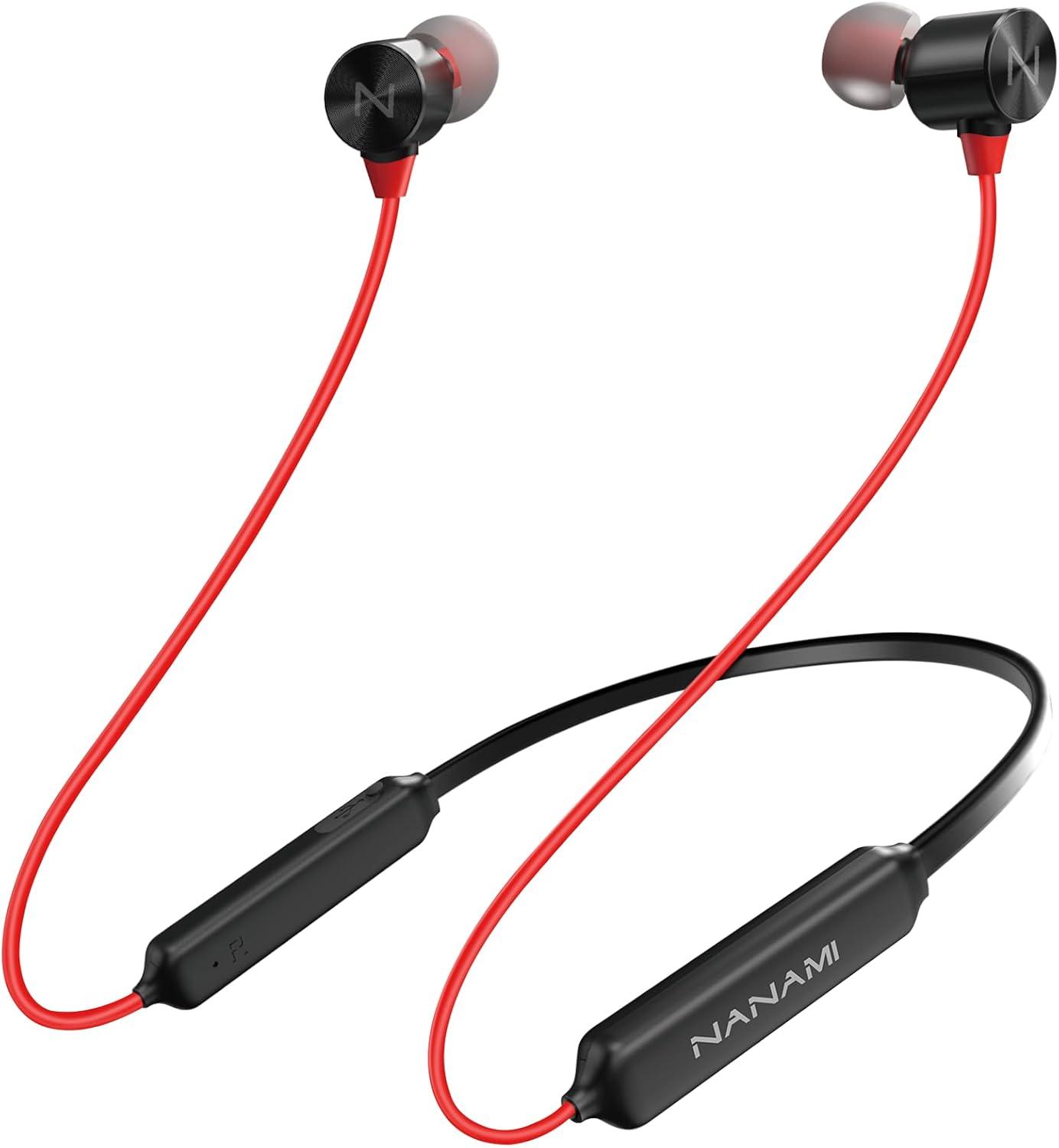
- Magnetic neckband clips into a closed loop for storage and keeps the cable off your face
- Bluetooth 5.3 with simultaneous dual-device connection for phone and laptop
- USB-C charging on the updated hardware, replacing the earlier micro-USB port
Cons
- Multiple owners report one bud or the full set failing within 12 months of daily use
- Microphone noise filter amplifies loud ambient sound instead of suppressing it, a problem in field or industrial settings
- Small default ear tips and a short rear cable can feel cramped for larger ear canals
- No active noise cancellation; isolation depends entirely on the in-ear seal
Who Is It For
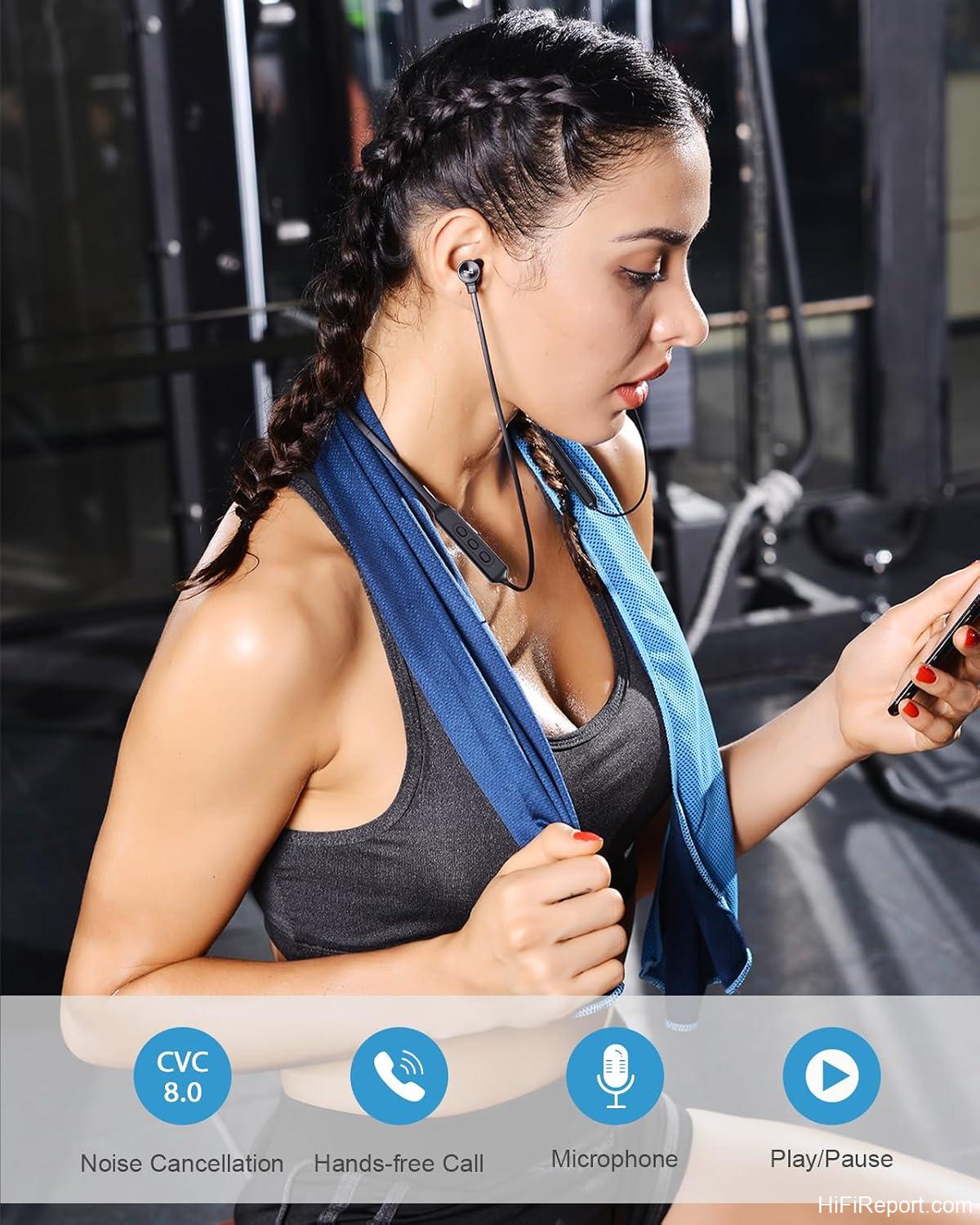
The core user is the daily exerciser: someone who hits the treadmill, cycles to the office, or works out at the gym and wants a set they can sweat through, rinse off, and hang in the shower. The IPX7 shell and the featherweight neckband make the set a low-effort addition to that routine. One owner described the band as so light that they fall asleep with it on without noticing. A second strong fit is the commuter or desk worker who juggles a phone and a laptop and wants to switch between a video call and a music stream without re-pairing. The dual-device Bluetooth 5.3 link handles that through the in-line button, no app required.
This is an original work from hifireport.com. Unauthorized copying is not allowed.
The anti-profile is the listener who wants a flat, reference-grade sound, serious active noise cancellation for a quiet commute, or a set that will last three or four years of heavy daily use. If you take long phone calls in loud environments such as construction sites or offices full of humming equipment, the mic filtering will work against you. A wired headset or a set with stronger active cancellation will serve that workflow better.
Design and Comfort
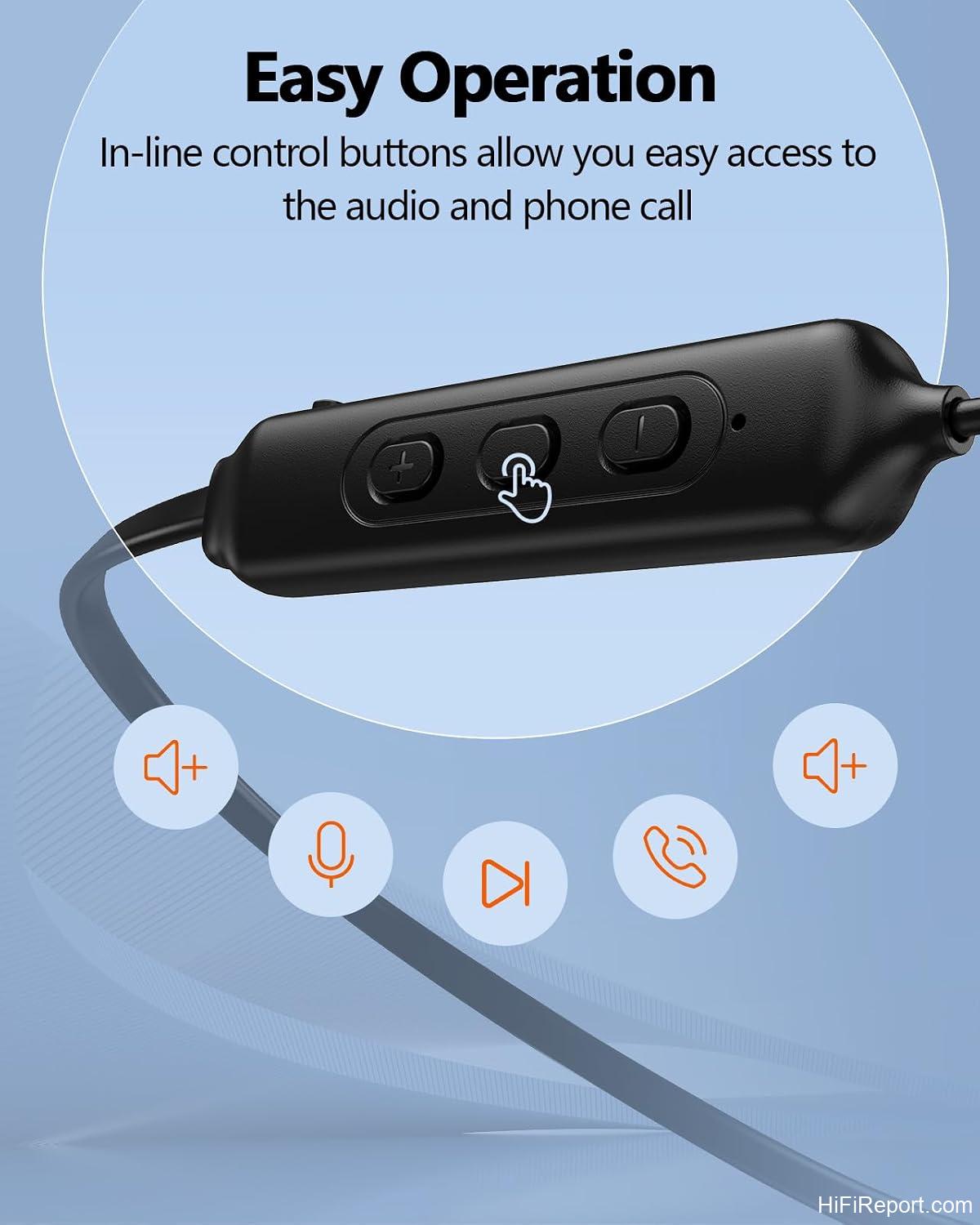
The NANAMI set pairs two small in-ear buds with a thin, flexible neckband made of a soft, bendable material. The band sits low behind the neck and, per multiple owners, is light enough that people forget it is there while reading, working, or sleeping on the side. Each bud has a magnet on its outer face; pull the earpieces out and the two magnets snap together into a closed loop that hangs below your chin like a short necklace. One running owner noted that in that necklace position the cable can swing during high-impact movement, which is a minor annoyance on a trail but irrelevant at the desk or on the couch. The control pod, which houses the three in-line buttons, rests against the side of the neck and can be pressed without lifting it off your collarbone.
Fit varies with ear geometry. The default tips are small, and the set ships with two extra sizes. Several owners had to try each size and give the bud a light twist on insertion to seat it properly in the canal. The short cable between the bud and the neckband means the earpiece sits close to the canal opening, which helps passive isolation but leaves little slack for sorting under a hat, a neck gaiter, or a balaclava during a winter bike ride. One owner who wore a balaclava found the short cable a constraint and would have preferred a longer lead. The overall weight is low enough that side-sleepers reported no pressure points or short-circuit sounds even after a full night of use.
Sound: What to Expect
The NANAMI neckband earbuds use a bass-forward tuning that one running owner described as “thumping good when the buds are well sealed.” Highs and mids come in slightly more pronounced than a neutral reference, which keeps vocals, podcasts, and dialogue clear without a flat, clinical feel. For speech, streamed video, and casual music, multiple reviewers called the output good for the class, with no major weaknesses in the midrange. If you are used to a flat, audiophile-neutral signature from dedicated IEMs or over-ears, these will sound warm and forward. The set rewards a tight seal; without one, the low end falls off and the overall presentation goes thin.
This is an original work from hifireport.com. Unauthorized copying is not allowed.

Bass and Midrange
Bass is the strongest part of the tonal picture. The in-ear seal is the key variable: owners who dialed in the correct tip size reported satisfying depth on electronic, hip-hop, and rock material. The tuning sits in the “solid thump” range rather than sub-bass territory, which keeps the low end punchy without muddying the mids. Mids carry vocals and dialogue clearly, which helps for podcast listening and for phone calls where you are the listener rather than the speaker.
Treble and Soundstage
Treble is present but not detailed. Highs are “tuned a little more pronounced than neutral,” which keeps cymbals and snare hits from getting muddy without pushing into a sibilant or harsh register. The soundstage is narrow and intimate, as you would expect from a neckband in-ear set. Stereo separation is there, but the width is modest. For solo listening during a run, at the desk, or in the shower, that is enough. The set does not compete with a dedicated IEM or a high-end over-ear on spatial detail or instrument separation.
This is an original work from hifireport.com. Unauthorized copying is not allowed.
Noise Cancelling
The NANAMI set has no active noise cancellation. Isolation comes from the in-ear seal alone, which blocks a fair amount of mid-to-high ambient noise when the tips fit well but does little for low rumble such as an airplane cabin or a subway car. One cycling owner pointed out that hearing traffic and wind is a safety benefit on a road, and the lack of ANC suits that use case. In a quiet office or a library, the passive seal will cut most conversation noise. In a loud open-plan workspace, you will still hear a lot of what is going on around you.
The microphone is a MEMS element with a background-noise filter for hands-free calling. In a quiet room, your voice comes through clearly and the remote caller can hear you well. In environments with loud mechanical noise, one field-tech owner found that the filter amplifies the ambient hum and muddies the speaker’s voice in the process. A network rack with loud fans or a passing train would make the filter prioritize the background over your voice. For call-heavy work in noisy settings, a wired mic or a set with stronger active filtering will be more forgiving.
Battery and Charging
The spec sheet lists 16 to 20 hours of playtime on the 200 mAh polymer lithium battery, and the product title claims 18 hours. Owner reports cluster around that range with variation depending on use pattern. One user who charged the set briefly while in the shower and then used it all day reported going several days between full charges. A podcast-and-call-heavy user logged 3 to 5 hours per day of mixed use over several months. A casual music listener measured about 10 hours per charge. The updated hardware charges over USB-C, a change from the micro-USB port on earlier batches, and more than one owner noted the switch was long overdue.
Battery longevity is the weak spot. Multiple owners reported the set stopped accepting charge or one side went quiet within 12 months of daily cycling. One user measured the charging port delivering 0.00 amps after the battery died and could not revive it, even with a known-good cable that still charged a keyboard at 4.99 V and 0.21 A. Another reported a physical deformation at the charging connector a year after purchase. In practice, expect the battery to hold a usable charge for roughly a year of daily use, then plan on a replacement set.
What Customers Are Saying
Owners who rate the set five stars tend to praise the same three things in the same breath: the neckband is so light they forget it is there, the battery stretches across multiple days, and the bass-forward sound suits a workout playlist. Several bought a second or third pair as a backup, treating the set as a “wear until it dies, then replace” item. One owner who went through five pairs in under 16 months noted that the latest batch with USB-C and Bluetooth 5.3 felt more solid than the earlier runs and upgraded their review accordingly, still recommending the set for TV watching but flagging the failure pattern.
The complaints focus on reliability. Multiple reviewers described one side going silent, crackling, or failing to charge within 12 months, often just past the warranty window. One owner traced the failure to 0.00 amps at the charging port and could not get power back. Another reported a physical deformation at the connector a year in. The microphone’s noise-filtering behavior draws consistent criticism from users who take calls in loud settings, where the MEMS element amplifies background hum instead of the speaker’s voice. Fit is a smaller but recurring issue: the default tips are small, and several owners with larger canals could not get a stable seal without cycling through the included sizes.

The 4.2 out of 5 aggregate rating across 4,720 reviews reflects this split. A large group of satisfied, practical buyers sits alongside a smaller but vocal group of owners who hit the 12-month failure wall and are less forgiving about a set that died just outside warranty.
The Buying Decision
The NANAMI neckband earbuds are a competent, water-resistant wireless set for people who prioritize the convenience of the physical package (IPX7 shell, magnetic clip, featherweight band) over top-tier audio or multi-year component life. The dual-device Bluetooth 5.3 link, USB-C charging, and the magnetic necklace storage make the set a tidy, low-maintenance option for the gym bag or the desk drawer. The argument that tips the scale for some buyers is the combination of IPX7 submersion rating and the magnetic design: the set survives a pool, snaps closed for storage, and weighs less than a set of earbuds in your pocket. Against that, the documented 12-month failure window means you will likely buy a second set within your first year of heavy use, and the mic filter is a genuine drawback for field work or noisy phone calls.
Best for the gym-to-shower-to-commute routine, the dual-device desk worker who wants a cheap, reliable backup, and anyone who values water resistance and a featherweight neckband over long-term component longevity.
Specifications
- Bluetooth version: 5.3
- Battery capacity: 200 mAh polymer lithium
- Claimed playtime: 16 to 20 hours
- Water resistance: IPX7
- Microphone: MEMS with background-noise filter
- Charging port: USB-C
- Neckband: Flexible, magnetic clip at each bud
- Device connection: Dual (two devices simultaneously)
- Controls: In-line multi-function button, three-button layout
- Voice assistant: Press multi-function button three times to activate phone’s assistant
- Ear tips: In-ear, multiple sizes included
Quick Questions
Do the NANAMI neckband earbuds survive being submerged in water?
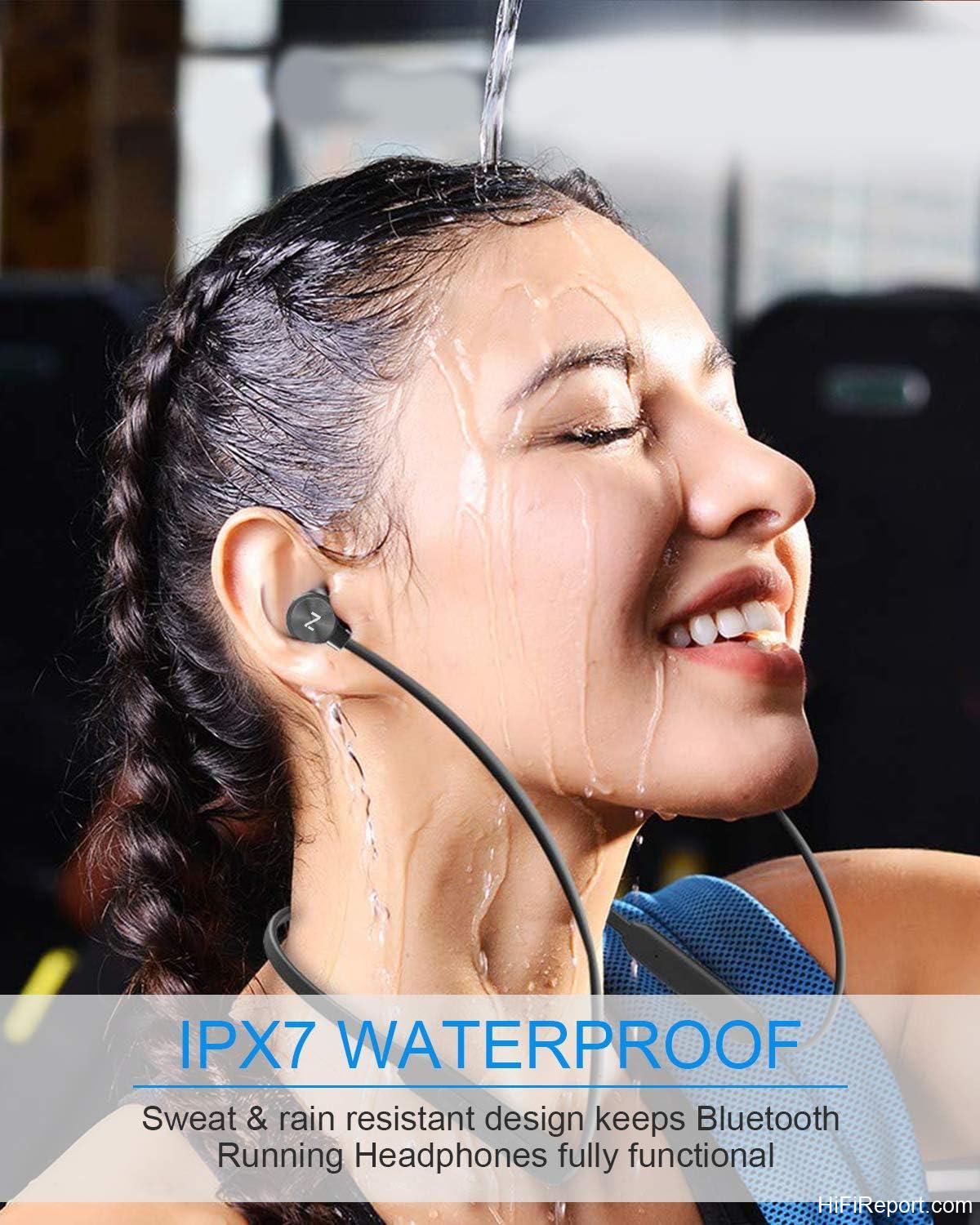
Yes. The IPX7 rating means they can handle temporary submersion. One owner swam in a pool twice with the set on and reported no loss of function. Daily showering, rain, and heavy sweat fall well within the rating. Let the cable and charging port dry before plugging in a charger.
How long does the battery actually last between charges?
The spec claims 16 to 20 hours, and several owners confirmed multi-day use at moderate volume. Heavy call and podcast users report 3 to 5 hours per day, enough for a full shift. Battery capacity degrades with time, and multiple owners noted the set stopped charging reliably after about a year of daily cycling.
Will the microphone handle a noisy work environment?
In a quiet office or outdoors on a walk, the MEMS mic picks up your voice clearly. In environments with loud fans, traffic, or machinery, the noise filter amplifies the background and reduces your voice, which several field-tech and support-call owners flagged as a persistent problem. For call-heavy work in loud spaces, a wired headset or a set with stronger active filtering will serve you better.
Can I connect the earbuds to two devices at the same time?
Yes. The Bluetooth 5.3 chip supports a simultaneous dual-device link. One owner ran a phone and a laptop at once, switching between a video call and a music stream without re-pairing. The switch happens through the in-line button, and no companion app is required.

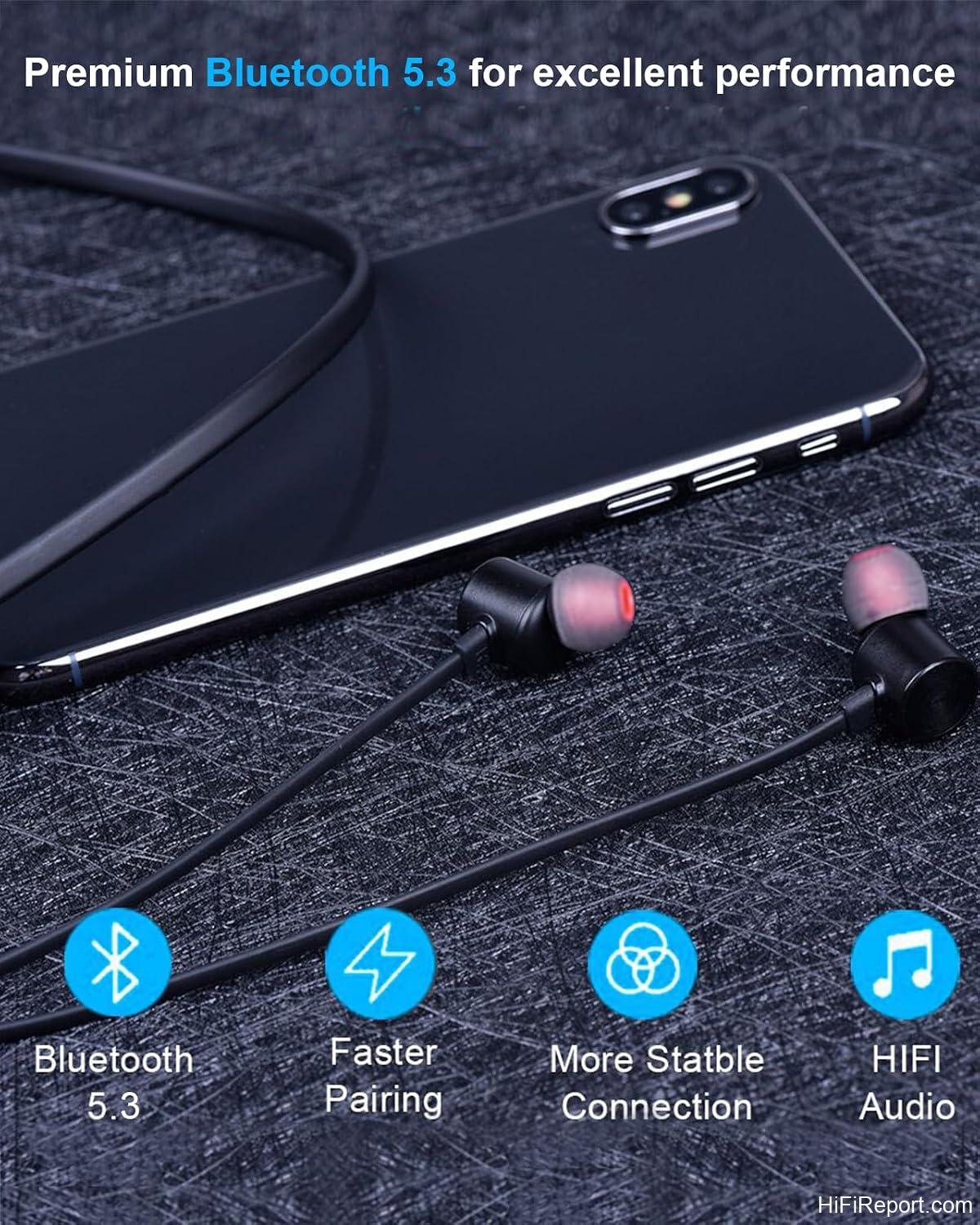
- [Bluetooth 5.3 & 16-20hours Battery Life] The earphones are equipped with Bluetooth 5.3 and advanced chip, which provides for a faster pairing, stable connectivity with your Bluetooth enabled cell phones, tablets, laptops, TV and many more. Further, the 200mAH polymer Lithium battery allows you to make hands free calling or listening to music, without having to worry about running out of battery.
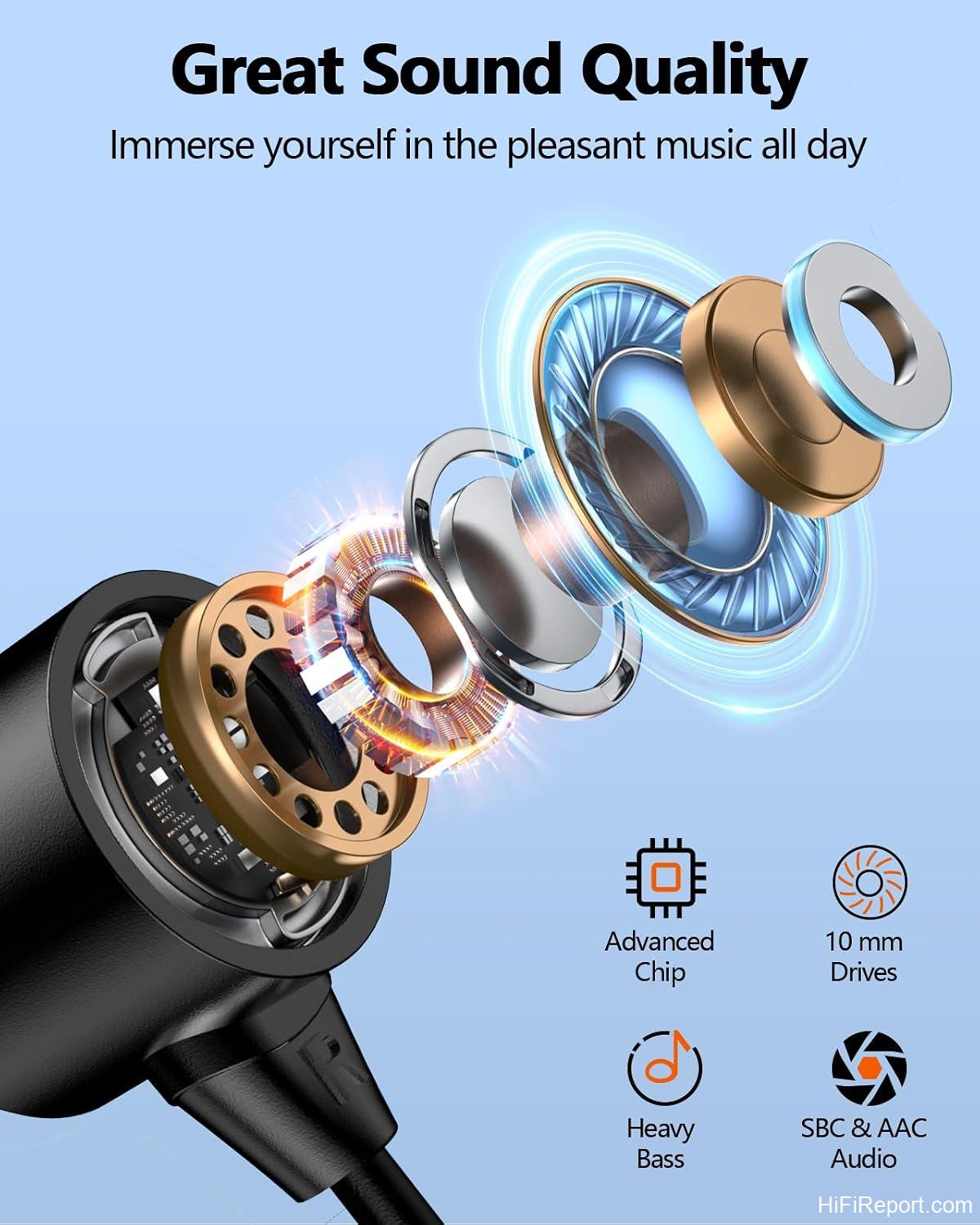
- [Powerful Audio] The acoustic design of the headphones provides rich, deeper bass and high fidelity ultra clear sound, for an immersive music experience. Further, the MEMS microphone can filter out the background noise, for clearer voice during hands free calling.
- [IPX7 Waterproof Technology] The Bluetooth wired earphones are IPX7 waterproof and sweat proof rated, so that you can do have to compromise on audio performance even during light rain or sweat, making it a perfect choice for running, jogging, hiking, climbing, bicycling, yoga, gym, workouts and other sports you like.