
Sony WI-C100 Wireless In-Ear Headphones Review
The Sony WI-C100 leads its spec sheet with one number that sets it apart on any shelf of neckband earbuds: up to 25 hours of continuous playback from a single USB-C charge. For a device that carries no charging case and no wireless charging pad, that runtime reshapes what a pair of wireless in-ears should last between top-ups. This review puts that 25-hour figure against owner reports, walks through how the sound and comfort hold up alongside the battery headline, and lands a verdict on whether the WI-C100 earns a slot in a routine that spans the gym, the desk, and the transit line.
Why This One Exists
Sony built the WI-C100 around a specific gap: neckband earbuds that die before the longest workday ends. The 25-hour battery rating means a user who plugs in at bedtime can wear the earbuds through morning meetings, a midday run, an evening commute, and a late listening session without reaching for a cable. No charging case sits in a pocket to forget or misplace; a standard USB-C cable handles all recharging.
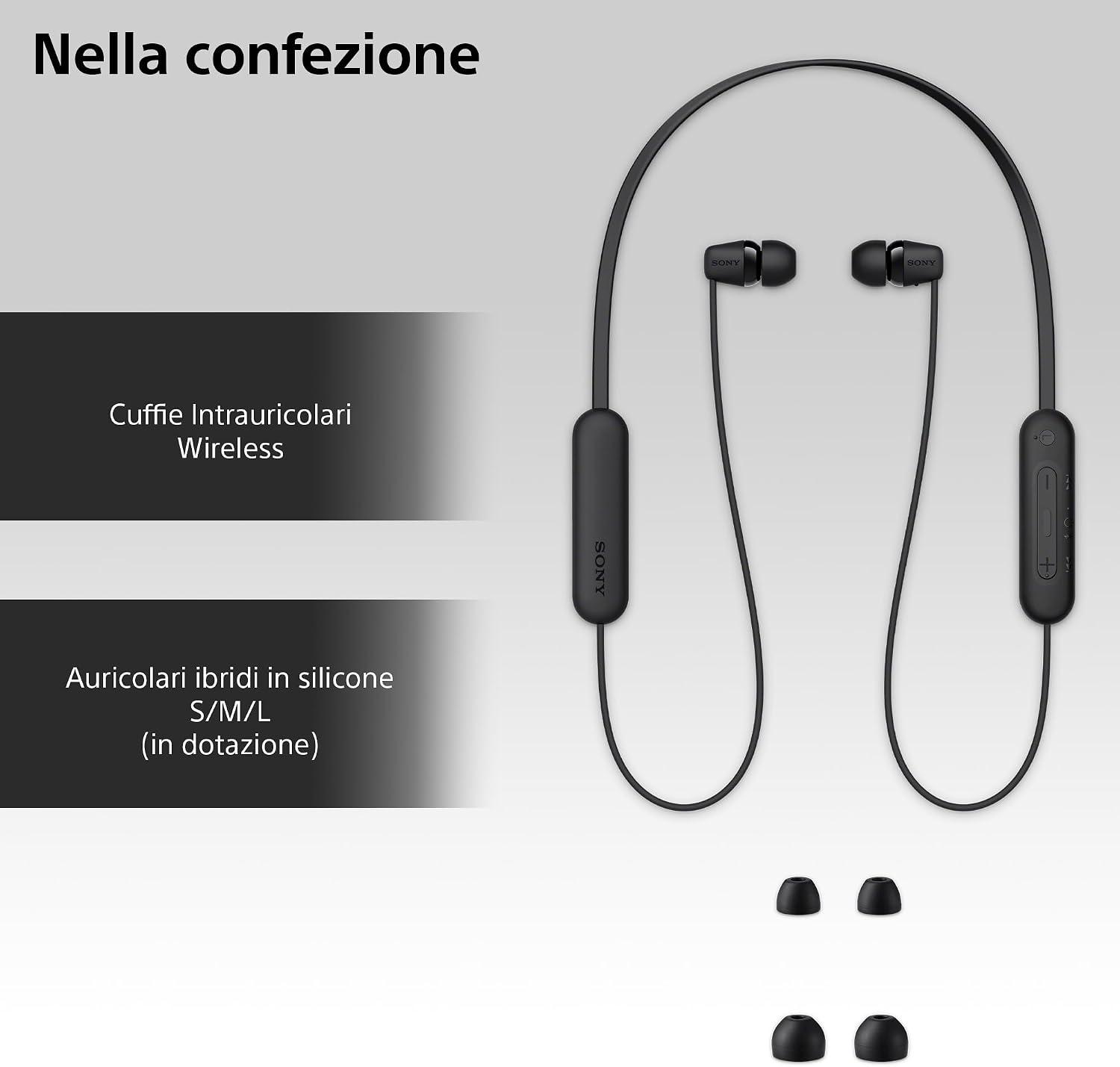
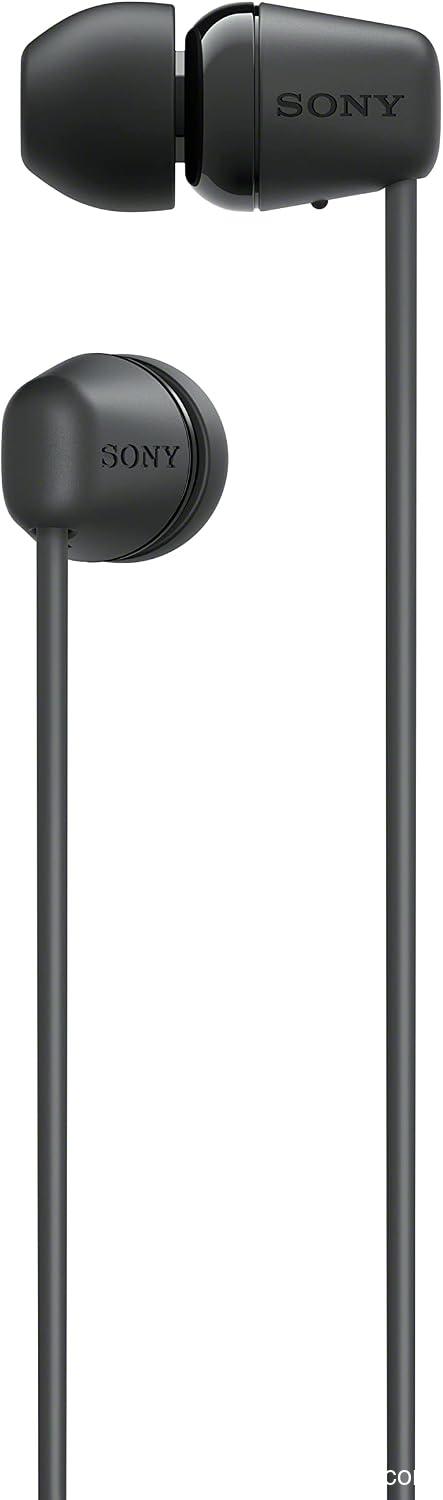
The neckband form factor makes the battery practical. A thin cable connects the two earbuds and runs over the back of the throat, carrying the battery and amplifier in a single module at the neck. Each earbud stays light because the heavy electronics do not sit behind the ear. Sony solves the tangle problem with magnetic contacts: set the earbuds down and they snap together instead of winding around a towel or a gym bag.
For the buyer, the decision comes down to whether 25 hours of real-world playback justifies the neckband silhouette over a pair of true wireless earbuds. If the routine is one charge covering multiple days and the user is content with a visible cable at the throat, the battery is the spec that tips the scale. If the user prefers two independent earbuds tucked into a pocket, the form factor changes the equation regardless of runtime.
25-Hour Battery Life Under the Hood
Sony rates the WI-C100 at up to 25 hours of playback on a full charge. The figure represents the maximum under steady volume and no active calls; real-world listen time will shift with codec, volume level, and whether DSEE processing stays engaged. No owner in the available review sample reported the battery falling well short of that window.
Quick charging covers the “left the house without plugging in” morning. Ten minutes on the USB-C cable yields up to 60 minutes of playback, enough for a transit ride or a single workout. The German-based owner who tracked battery decline over a week of mixed listening reported a 30 percent drop after roughly eight hours of use. That pace is consistent with the 25-hour ceiling and suggests the rating is not a lab-only number.
Charging infrastructure is minimal by design. There is no cradle, no wireless pad, and no case to lose. A USB-C to USB-A or USB-C to USB-C cable connects to a wall adapter or laptop port. The same owner called the setup fast and uncomplicated and said the chance of hitting a dead battery mid-day was low. The trade is that a long-haul traveler without a cable has no compact on-the-go charging solution tucked in a suitcase.
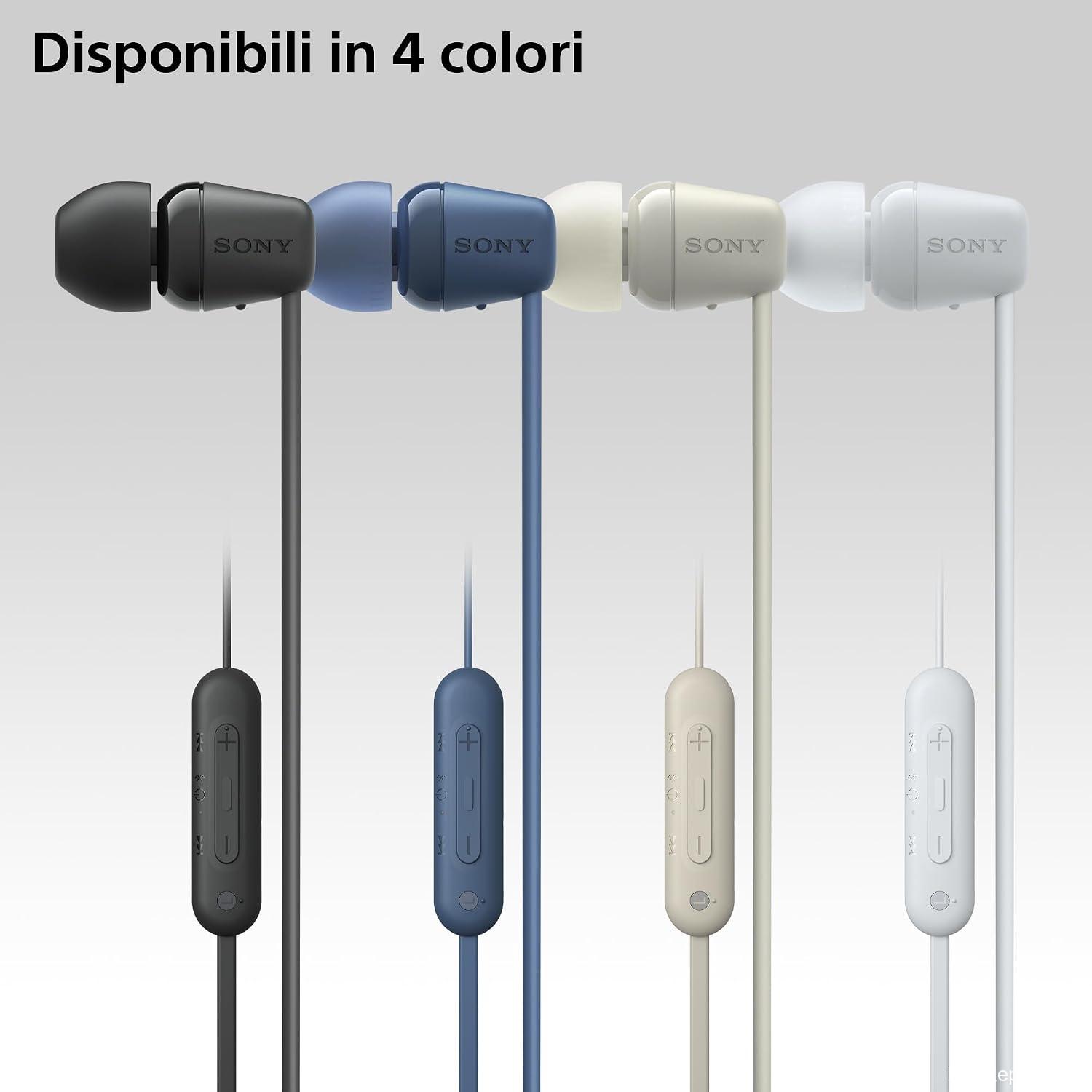
The battery and amplifier live in the neckband module, which adds a small weight to the throat. One reviewer noted the control unit and battery at the neck carry a bit of mass, but called the overall wear comfortable after the first hour. The two-earbud distribution of a true wireless pair avoids that single point of weight, at the cost of a charging case that must be stored and found.
The Sound
The Sony WI-C100 shapes its audio through a built-in amplifier and Sony’s DSEE (Digital Sound Enhancement Engine), which works to restore compressed files closer to their original recordings. The earbuds are not a raw pass-through from the phone; DSP processing happens on-board before the driver fires. A Swedish owner gave a short but clear “great sound” verdict, and an Irish owner echoed the assessment with “good sound quality” in a one-line review.
The most detailed audio account came from a German reviewer who compared the WI-C100 to a pair of wired Sennheiser earbuds they had used for years. Bass is present but not as pronounced as the Sennheiser reference. Volume reaches levels sufficient for outdoor use, and the built-in amplifier means the signal is not a weak phone pass-through. The Sony Headphones Connect app adds an equalizer and a list of genre presets, so a user who wants to push the low end or flatten the response curve can dial it in without a third-party tool.
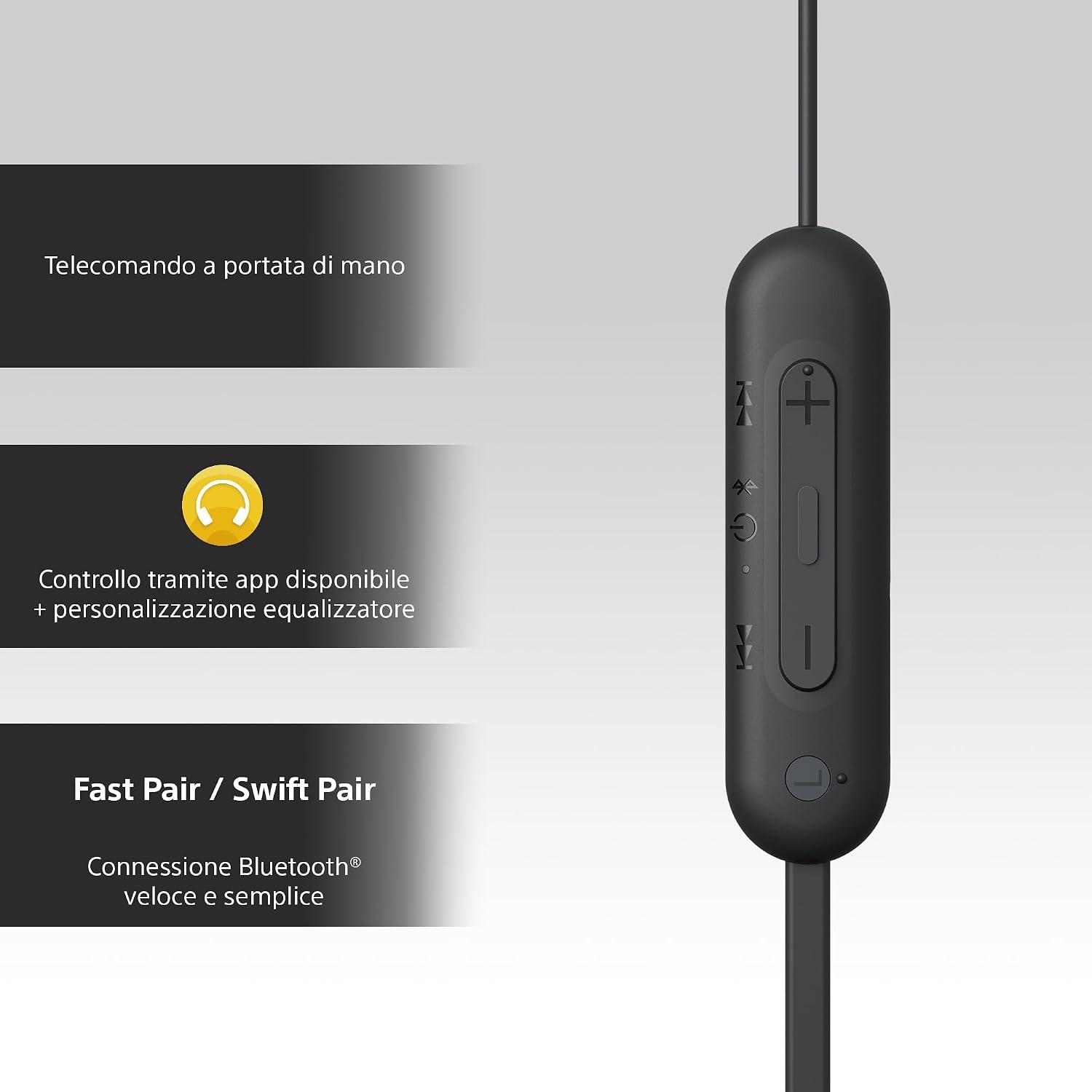
For calls, the WI-C100 carries a built-in microphone and supports hands-free calling. The German reviewer used the earbuds for Teams calls on a PC and found voice quality adequate for normal conversations, with the caveat that loud background noise would degrade clarity. The microphone serves a secondary role; the primary use case remains music playback, and the call function is a convenience rather than the reason to buy.
Everything Else
The WI-C100 is a lightweight neckband with two in-ear earbuds joined by a thin cable that drapes over the back of the throat. Multiple ear-tip sizes ship in the box, and the unit arrives with a brief instruction sheet. No cable and no storage pouch are included. The magnetic contacts on each earbud keep the pair from tangling when set down.
Bluetooth 5.0 handles the wireless link, and pairing is a short hold of the power button followed by a standard device-list selection on Android or iOS. The German reviewer connected the WI-C100 to a phone and two laptops, switching between them quickly and without dropouts. Bluetooth range inside a house held up well; the signal dropped in the far back extension of the property, which the reviewer estimated at roughly 10 meters of effective reach. The IPX4 rating means the unit resists sweat and light rain, which suits a gym session or a damp commute. The thin inter-earbud cable is a recurring concern in owner feedback: one Spanish-based reviewer called the wires very thin and delicate and framed the unit’s useful life as short because of that material.
The Sony Headphones Connect app rounds out the software side. It manages the equalizer, genre presets, and device pairing. No proprietary firmware update tool or advanced tuning utility appeared in the available sources, so the app’s scope stays within audio adjustments and connection management.
Living With Them
At the gym, the IPX4 rating earns its keep. A Belgian owner on a third purchase of the WI-C100 called the unit “useful while making sport,” and the water-resistance spec means sweat from a run or a weight session will not short the electronics. The neckband tether keeps both earbuds in reach, so there is no risk of dropping one into the weight rack between sets. The magnetic closure means a quick park on the bench leaves the two earbuds stuck together rather than wrapped around a towel.
At the desk, the German reviewer’s experience with Teams calls and music listening on a PC maps to a common hybrid-work routine. The earbuds pair to multiple devices and switch between them, which suits someone moving between a laptop, a phone, and a conference-call app. The neckband rests around the collar when idle, keeping the unit visible and within arm’s reach. The trade is visual: a thin cable over the neck is more noticeable than a pair of true wireless earbuds, which is fine for a home office and less so for a camera-facing meeting.

What Owners Say
The aggregate rating sits at 4.2 out of 5 across 2,839 reviews, placing the WI-C100 in the upper tier of its category. Praise clusters around battery life, sound quality, and durability. Owners across Sweden, Ireland, Turkey, and Belgium used phrases like “great sound,” “long-lasting battery,” and “high material quality” without reservation. A Belgian owner on a third purchase of the unit noted the earbuds remain practical for sports and still hold up after repeated use.
The German reviewer’s long-form account adds depth: comfortable wear, convincing audio for the tier, reliable multi-device switching, and a battery that declined slowly over eight-hour sessions. The Turkish reviewer highlighted material quality and charging speed as reasons for satisfaction. A Spanish-based owner at two stars stood apart, calling the cable material thin and fragile and predicting a short functional lifespan.
The headline claim of 25 hours of battery finds confirmation in owner reports. The 30 percent drop over roughly eight hours of mixed use aligns with the Sony rating, and no owner in the sample saw the battery fail well before the stated window. The battery is the most consistently praised non-sound attribute across the reviews, and the quick-charge window gets mentions alongside it.
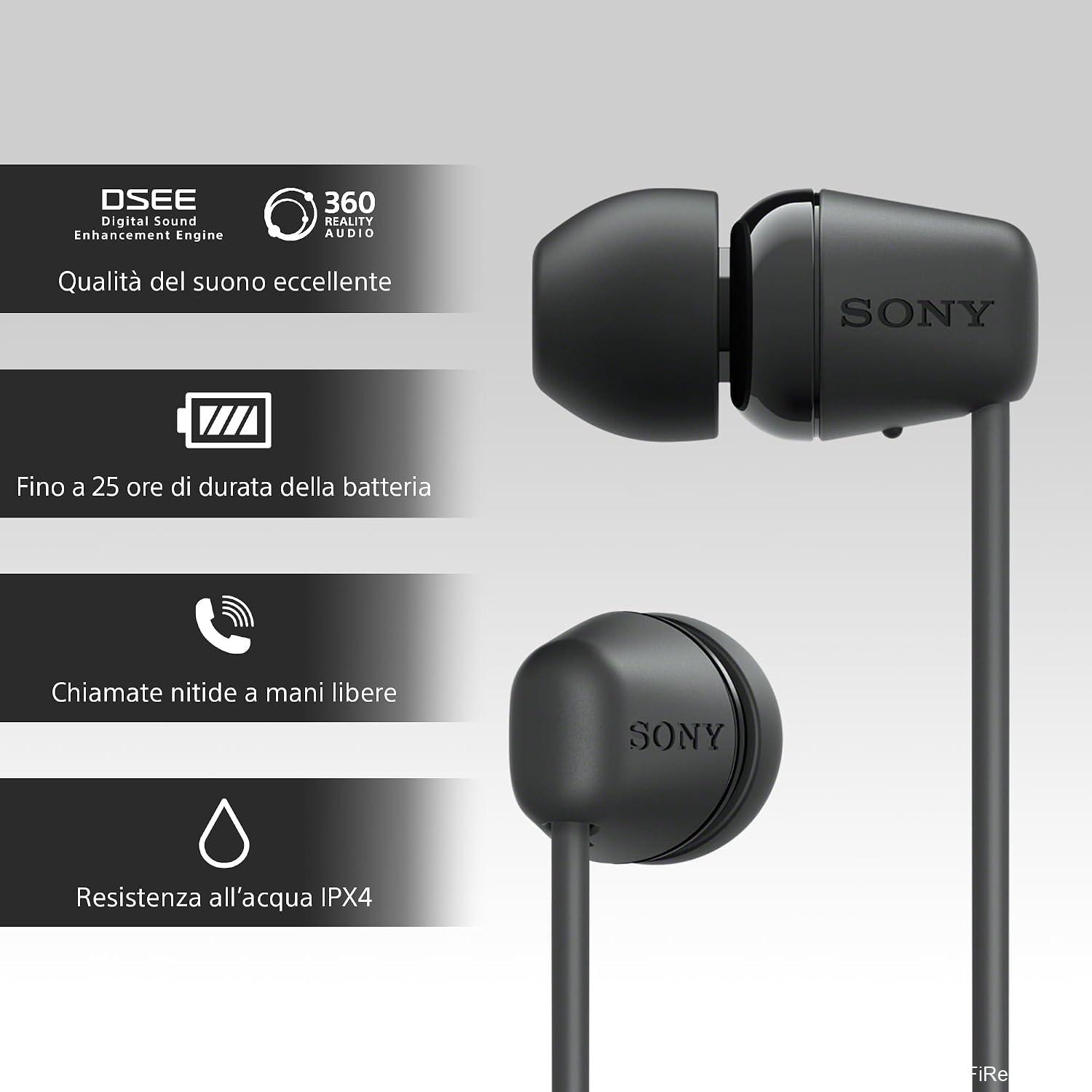
Complaints stay narrow. The thin cable raises durability questions, the neckband module adds a small weight at the throat, and the box omits a cable and a storage pouch. No owner in the available sample flagged Bluetooth instability or app glitches.
What We Like / What We Don’t
What We Like
Copyright protected. First published on hifireport.com; any unauthorized copy violates the intellectual property rights of hifireport.com.
- 25-hour battery life with a 10-minute quick charge that returns 60 minutes of playback
- On-board DSEE processing and a working equalizer in the Sony Headphones Connect app
- IPX4 water resistance that suits gym and outdoor use
- Magnetic earbuds that prevent tangles when stowed
- Reliable multi-device Bluetooth pairing across phone and laptop
What We Don’t
- Thin inter-earbud cable raises durability questions flagged by owners
- Neckband module adds noticeable weight at the throat over long sessions
- No cable or storage pouch included in the box
- Bass response trails wired competitors at the same tier per owner comparison
Verdict
The 25-hour battery claim is the reason to reach for the WI-C100 over a true wireless earbud that needs a mid-day top-up from a pocket case. One charge at night covers a full workday, a workout, and an evening commute. The quick-charge window handles the morning when the cable stayed at home. Owners confirm the runtime holds up under mixed use, and the sound, while not reference-grade, clears the bar for a Bluetooth neckband in its tier.
The buyer who should look elsewhere is the one who values a pocket-case form factor or wants the lowest-possible weight at the ear. The neckband design is a deliberate trade: more battery and a tethered pair in exchange for a visible cable and a heavier throat module. Best for someone who wants multi-day wireless in-ear playback without a charging case and accepts the neckband silhouette; look elsewhere if a true wireless pair or a wired IEM better suits the daily habit.
Specifications
- Battery life: Up to 25 hours on a single charge
- Quick charge: 10 minutes yields up to 60 minutes of playback
- Bluetooth version: 5.0
- Water resistance: IPX4 (sweat and splash resistant)
- Charging port: USB-C
- Audio processing: DSEE (Digital Sound Enhancement Engine)
- Companion app: Sony Headphones Connect (equalizer, genre presets)
- Earbud design: In-ear, magnetic closure, neckband connection
- Compatibility: Android and iOS
- Amazon rating: 4.2 out of 5 (2,839 ratings)
Questions Worth Asking
Does the 25-hour battery figure hold up outside the lab?
The German owner who tracked the decline over a week reported a 30 percent drop after roughly eight hours of mixed listening, which tracks with the 25-hour ceiling. No owner in the available sample saw the battery fall well short of the stated window, and the quick-charge window of 10 minutes for 60 minutes of playback provides a safety net for the off day.
Copyright protected. First published on hifireport.com; any unauthorized copy violates the intellectual property rights of hifireport.com.
Will the thin cable survive daily gym use?
One owner called the inter-earbud wires very thin and delicate and predicted a short useful life. A different owner on a third purchase reported the unit still works for sports without issue. The cable is the most fragile point on the device, and handling it carefully around doors, equipment, and tight spaces extends its serviceable life.
Can the WI-C100 handle phone and computer calls in the same session?
The German reviewer paired the earbuds with a phone and two laptops and switched between them without difficulty. Teams calls worked on the PC, with voice quality adequate for normal conversations. Loud background noise degraded clarity, but the multi-device switching and call function held up in a mixed home-office routine.
Does the neckband feel heavy over a full workday?
The German reviewer noted the control unit and battery at the neck add some weight but called the overall wear comfortable after the first hour. The two-earbud distribution of a true wireless pair avoids that single point of mass, at the cost of a charging case that must be stored and found. For most owners, the weight settled into the background.

- Built-In Media Controls – Manage your music and calls effortlessly with convenient controls for play, pause, volume, and track skipping directly on the headphones.
- 25 Hours of Battery Life – Enjoy long-lasting playback with up to 25 hours of listening time on a single charge, and a quick 10-minute charge for up to 60 minutes of use.
- IPX4 Water Resistance – Designed to handle sweat and splashes, perfect for workouts, outdoor activities, and rainy days.