
NBS BLACK LABEL III Cable Review
HiFiReport recently received the BLACK LABEL III power cable, a flagship product from the renowned American cable manufacturer NBS CABLE. As a flagship model, the BLACK LABEL III has a substantial weight, suggesting a wealth of high-quality materials hidden within. NBS stands for “Nothing But Signal,” emphasizing faithful and complete signal transmission. This principle is evident from the cable’s appearance: the BLACK LABEL III is pure black, unadorned, and understated.
However, the cable is robust and substantial, and after listening tests, its performance is undeniably impressive.
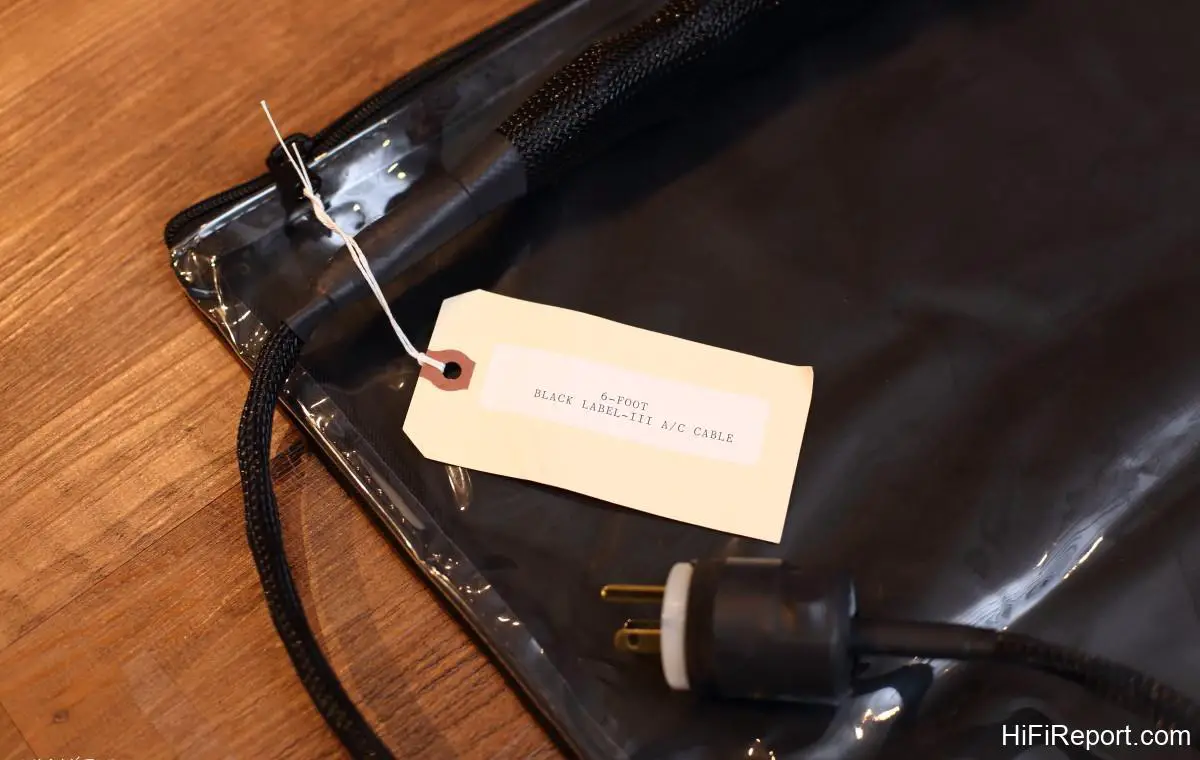
The included card boldly states the intended use of the BLACK LABEL III: “Plug directly into the wall outlet. No power conditioner needed.” With its pure black exterior symbolizing the purest signal transmission, it stands as NBS CABLE’s most powerful statement.
Prioritizing RFI and EMI Isolation
In signal transmission, both cables and equipment are susceptible to external interference. Many components emphasize chassis shielding, which is even more critical for cables. Due to their length, cables are particularly vulnerable to interference. NBS specifically addresses two significant interference sources and implements effective countermeasures. The first is RFI (Radio Frequency Interference), encompassing radio and wireless frequencies.
These radio waves can introduce noise into audio signals. Therefore, preventing RFI from affecting signal transmission within the cable is crucial.
The second is EMI (Electromagnetic Interference), originating from the cable’s own transmission process. When music signals flow through conductors, they generate an electromagnetic field, leading to EMI. Although EMI frequencies are typically high and outside the audible range, all frequencies create harmonic structures extending both upwards and downwards.
Even if the fundamental frequency is inaudible, its harmonics can fall within the audible range, at minimum degrading the musical frequencies. NBS cables claim to eliminate over 98% of RFI and EMI without compromising the music’s dynamic range.
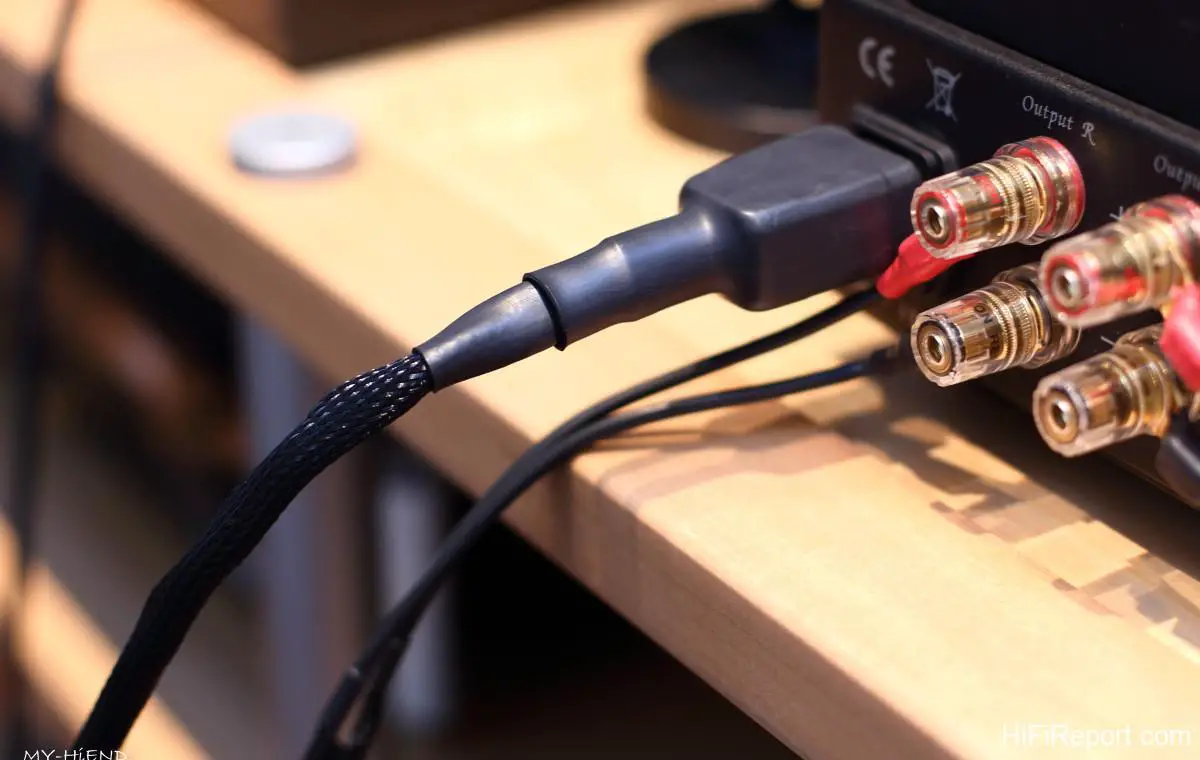
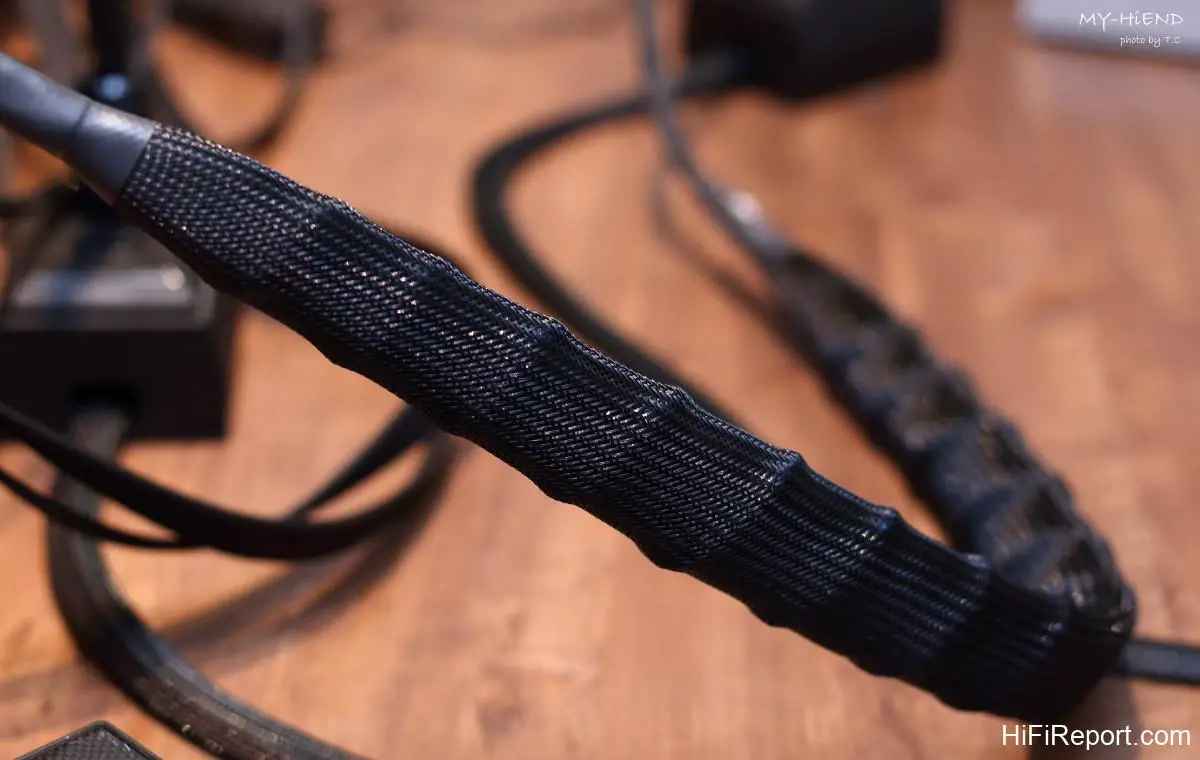
A small brand sticker at the center of the cable discreetly identifies it as NBS BL III, showcasing the manufacturer’s understated approach. While older NBS cables were uniformly thick, the BLACK LABEL III, for user convenience, tapers down near the equipment and outlet ends.
Incorporating Patented PFIN Technology
How does NBS achieve over 98% interference elimination? Every NBS cable utilizes a patented technology called PFIN (Passive Frequency Inductance Network). This technology employs silver and handcrafted, non-traditional shielding circuits. PFIN is incorporated into all NBS cables, with higher-grade cables featuring more complex PFIN networks. NBS’s core value and distinguishing feature lie in its unique metal braiding techniques and premium materials.
Those familiar with NBS cables will notice their rigidity, especially in higher-end models like the BLACK LABEL III. This stiffness results from the dense layering and braiding of materials. For example, a completed 4-foot cable utilizes over 48 feet of solid core copper wire. This extensive material usage explains the characteristic stiffness of NBS cables.
The NBS BLACK LABEL III uses medical-grade power plugs, clearly marked in green lettering on the plug base.
This particular power cable is 6 feet long. Cable impedance and conductivity vary with length, and NBS adjusts its designs accordingly for different lengths.
The equipment-end plug of the NBS is unadorned and functional, reflecting NBS’s philosophy of simplicity and substance.
The NBS BLACK LABEL III cable is exceptionally robust, primarily due to its complex internal shielding and conductor braiding. Higher-end cables are notably heavier.
Throughout the listening tests, we repeatedly swapped between our reference power cable and the NBS BLACK LABEL III to clearly discern the sonic differences. Our existing power cable is already a high-end product, yet the NBS BLACK LABEL III’s unique qualities were immediately apparent.
Enhanced Dynamic Contrast
Listening to Anne Bisson’s *Blue Mind* album, the dynamic contrast of her vocals increased. Piano passages in many tracks showed greater variation, with enhanced key weight and overall spatial presence. Subtle high-midrange nuances became more prominent, exhibiting greater presence, power, and definition.
Superior Extension and Dynamics
On the 2015 Hong Kong Audiophile Show SACD, track 12, “What a Wonderful World,” performed by the Tsuyoshi Yamamoto Trio, features a double bass solo in the first half, later joined by piano and drums. Switching to the NBS BLACK LABEL III, the double bass’s low-frequency density seemed higher. While the quantity of bass wasn’t necessarily greater, it became firmer and more defined.
The piano in the latter half gained transparency, and the extended frequency range enhanced the overall dynamic contrast of the music.
Expansive Frequency Range and Cohesion
Playing Laure Shang’s *Prayers of a Young Girl* album, track 11, “Ye Tai Hei” (The Night is Too Dark), the opening saxophone exhibited stronger penetration. The vocals gained a better sense of space, consistent with the previous albums tested. The extended high and low frequencies seemed to pull the frequency range wider, and the soundstage became more cohesive and defined.
With Diana Krall’s jazz audiophile album, *The Girl In The Other Room*, the most immediate difference after switching to the NBS BLACK LABEL III was in sound density. The increased density created a more three-dimensional soundstage, and the music flowed more seamlessly and coherently. The drums, while remaining relaxed, gained impact and solidity. Diana Krall’s signature vocal style retained its charm but with a newfound sense of effortless power.
These improvements made the entire album sound more vibrant and engaging, with a more naturally rendered and palpable soundstage.
Unrivaled Craftsmanship for Optimal Performance Specifications
The NBS BLACK LABEL III represents the pinnacle of the BLACK LABEL series, distinguished from its predecessors by its increased material usage and more intricate construction. NBS cables are meticulously handcrafted, and their complex braiding process contributes to their premium price. A power cable’s primary function is current transmission, where purity and simplicity are often paramount.
NBS’s approach prioritizes isolating external interference without incorporating filtering or other active components. The manufacturer’s recommendation to forgo power conditioners underscores their confidence in the product, which is built using the highest quality materials and the most sophisticated craftsmanship to deliver optimal performance.
* **Product:** BLACK LABEL III Power Cable
* **Manufacturer:** NBS (Nothing But Signal) CABLE
* **Technology:** PFIN (Passive Frequency Inductance Network)
* **Interference Rejection:** 98% RFI and EMI reduction (claimed)
* **Construction:** Handcrafted, complex braided design
* **Conductor Material:** Solid core copper (extensive usage)
* **Plugs:** Medical-grade power plugs
* **Length Tested:** 6 feet
* **Recommended Usage:** Direct connection to wall outlet, no power conditioner needed
* **Key Features:** Enhanced dynamic contrast, superior frequency extension, improved soundstage cohesion and density.