
NEO Ceradisc 80 Isolation Footers Review
NEO, fully known as NEO High End, hails from the landlocked Central European country of Slovakia. Their primary focus is on audio racks and isolation footers. Interestingly, the company originally started in interior design under the name Neostyle, founded in 2002. Fueled by a strong passion for both music and design, they decided to merge their interests and expertise, entering the audio market with racks that combined aesthetic design with functional performance, and thus NEO High End was born.
Dual Ceramic Structure
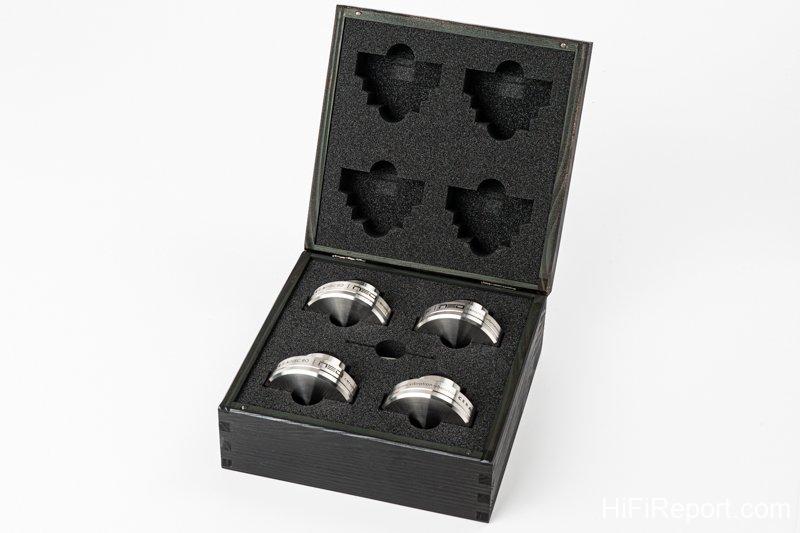
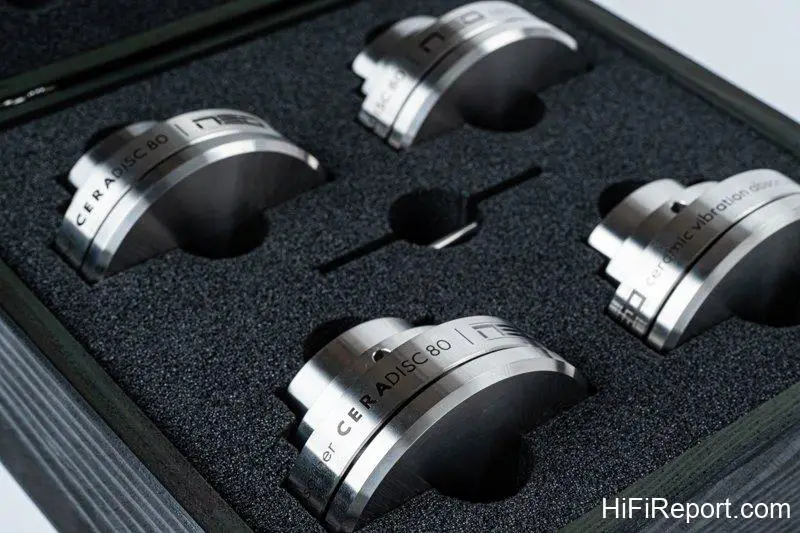
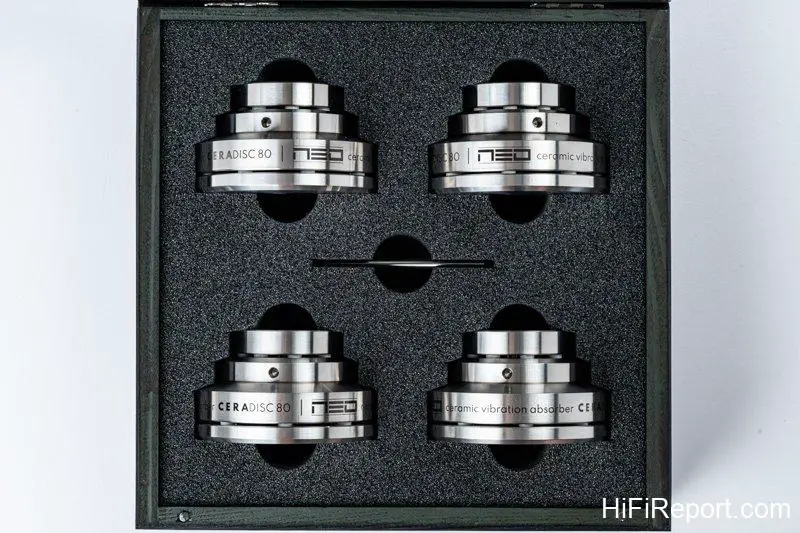
The star of this review, the Ceradisc 80, is NEO High End’s (hereafter referred to as NEO) largest isolation footer, making it their flagship model.
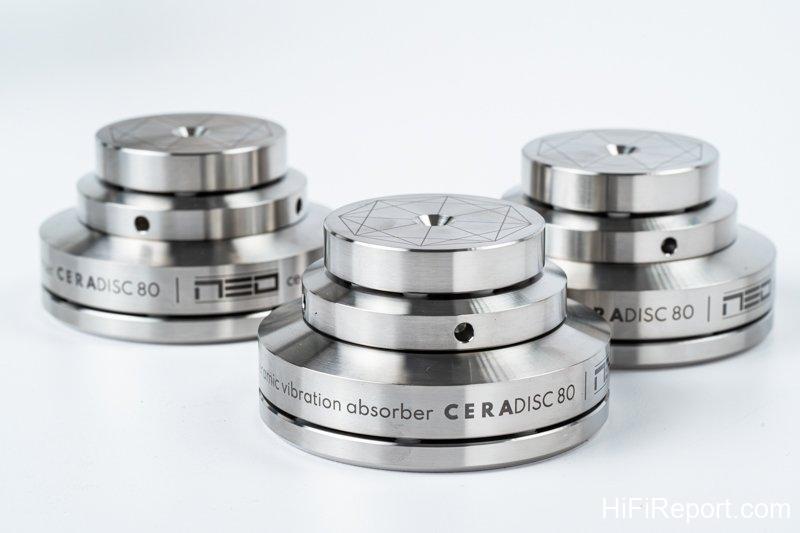
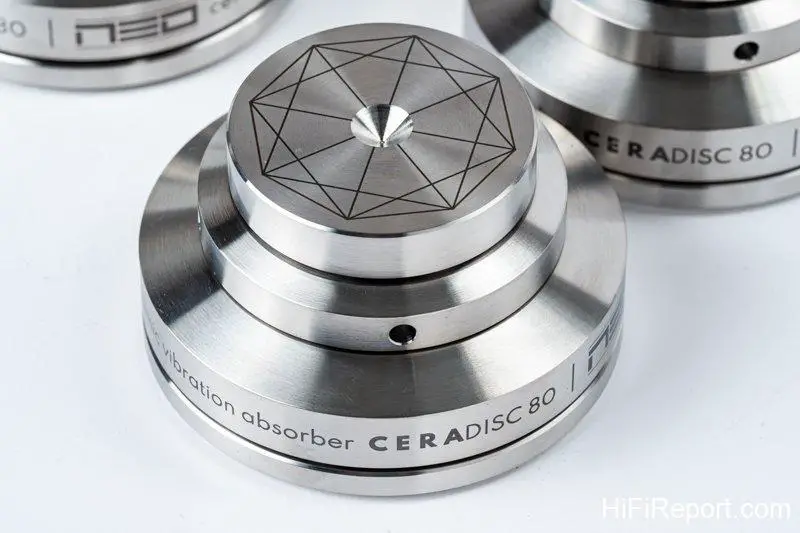
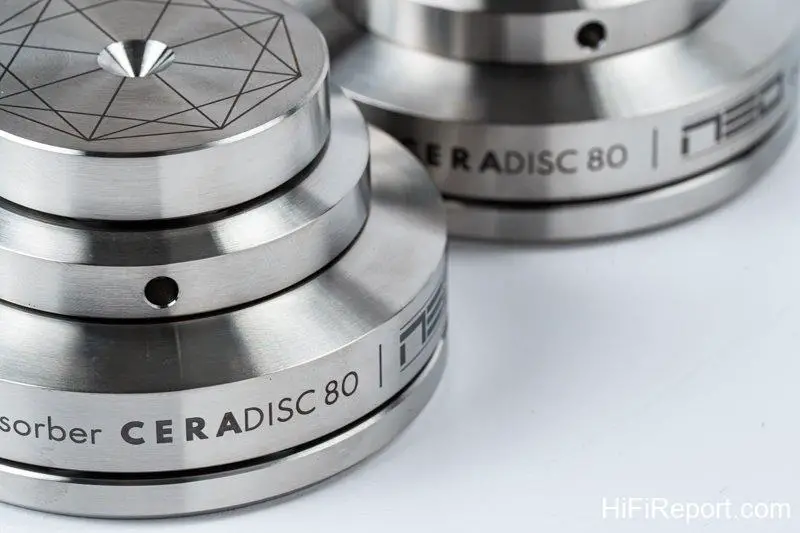
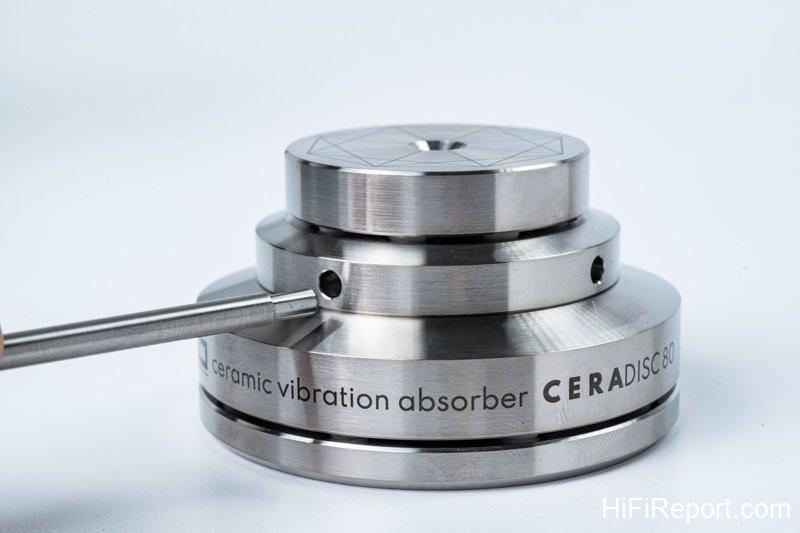
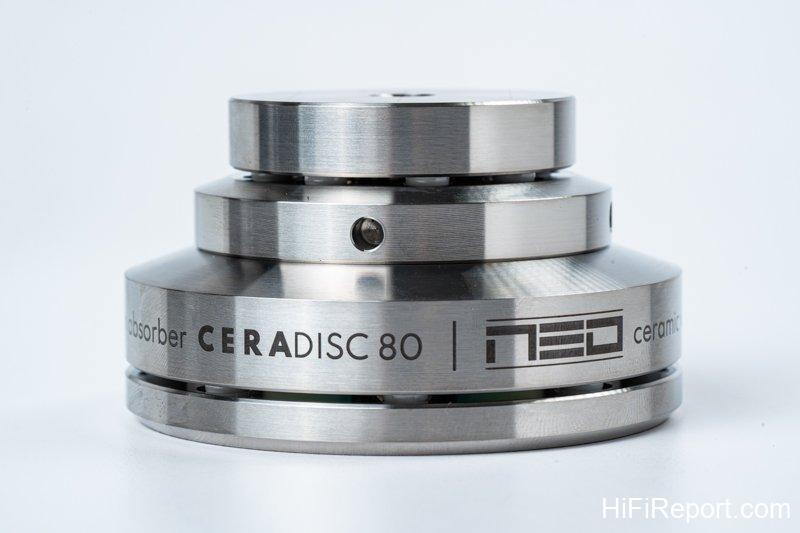
The name Ceradisc is a portmanteau of “ceramic” and “disc,” referring to its internal ceramic balls. The body itself is made of stainless steel, and “80” indicates its diameter, which is 80mm, or 8 centimeters. It’s quite substantial in size.
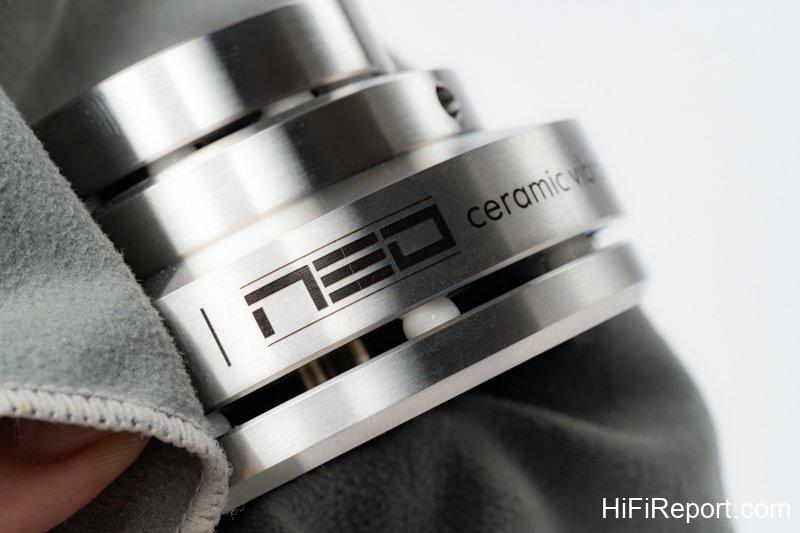
A set of Ceradisc 80 comes with four footers. When used together, they have a maximum total load capacity of 500 kilograms. Even when using just three footers, they can support up to 350 kilograms. This means the Ceradisc 80 is designed for super heavy equipment or speakers. For lighter components, NEO offers the Ceradisc 70, Ceradisc 50, or Ceradisc 45 options.
The key to the Ceradisc design lies in the ceramic element – the ceramic balls.
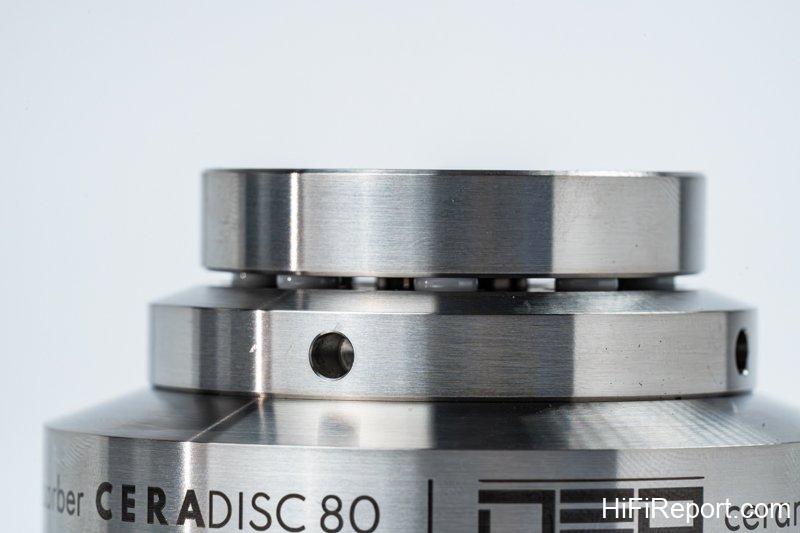
The Ceradisc 80 achieves its purpose of vibration isolation or dampening by allowing the upper and lower stainless steel discs to only make contact through the ceramic balls. This minimizes the contact surface area, thereby reducing vibration transmission to the lowest possible level.
How is this achieved? By machining several corresponding indentations or grooves into the contact surfaces of both discs and placing the ceramic balls within them.
This structure isn’t entirely novel; many brands of isolation footers utilize a similar principle. What differentiates the Ceradisc 80 is that each footer incorporates two layers of this structure, one above the other. This dual-layer design further reduces vibration transmission, effectively isolating the equipment from interference.
Furthermore, the Ceradisc 80 uses eight ceramic balls within a single layer, totaling sixteen balls across both layers. Why so many? While ceramic balls are hard, each individual ball has a limited load capacity. Using more balls distributes the weight, significantly increasing the overall load capacity.
It’s no wonder that four Ceradisc 80 footers can support up to 500 kilograms!
Exquisite Craftsmanship
Given that this structure isn’t unique, shouldn’t other manufacturers be able to replicate it? Yes, they can build it, but the critical factor is the precision of the execution. If the precision isn’t high enough, the isolation or dampening effect will be compromised.
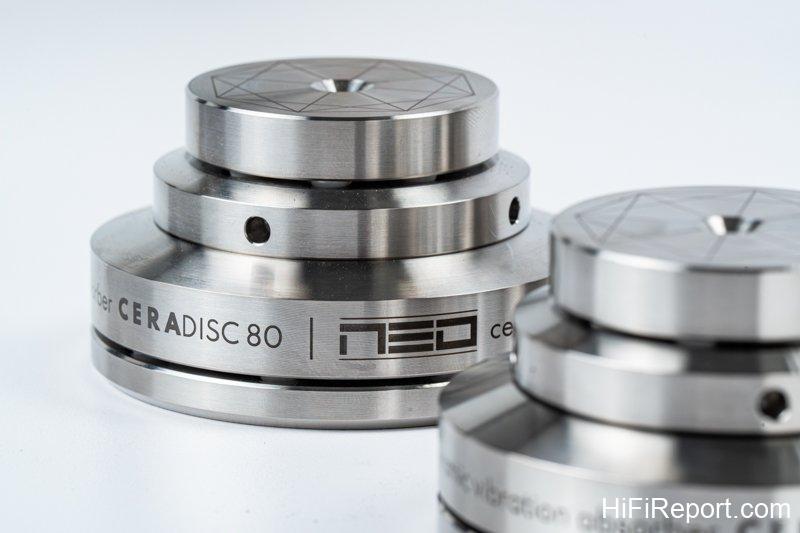
Factors like the size and roundness of each ceramic ball, the flatness of the stainless steel disc contact surfaces, the precise position, depth, and roundness of each groove, and the fineness of the polishing on the groove walls are all crucial. The lower the tolerance in each part, the better the isolation or dampening effect achieved.
So, is the overall precision of the Ceradisc 80 truly excellent? Honestly, I haven’t measured it, so it’s hard to say definitively. However, when I placed the equipment on them and gave it a gentle push, the component immediately swayed freely before quickly settling back to stillness. This indicates that the ceramic balls roll extremely smoothly within the grooves, demonstrating very low resistance. I believe this effortless movement wouldn’t be possible if the Ceradisc 80’s precision wasn’t exceptional.
Height Adjustment
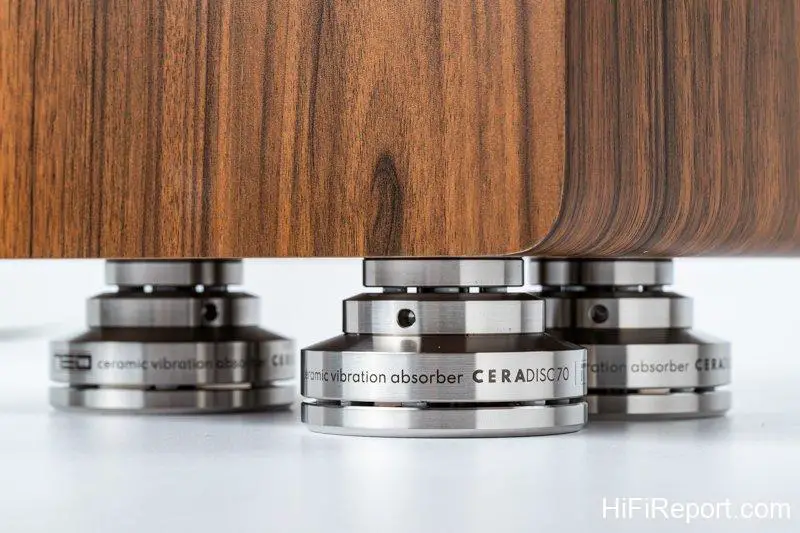
The two active layers of the Ceradisc 80 are held together by threads. By unscrewing them slightly, the overall height of the footer can be increased, up to a maximum of 5mm. This feature allows for fine-tuning the balance of the supported equipment, which is particularly important for components like turntables or speakers where perfect leveling is crucial.
Additionally, the Ceradisc 80 comes in two top plate variations: one with a central conical indentation and another with a threaded hole. The former is designed to accommodate spikes, such as those typically found on the bottom of floorstanding speakers, allowing them to rest securely in the conical recess. The latter allows for screwing in double-ended studs or adapter screws, enabling the Ceradisc 80 to be attached directly to the underside of equipment or speakers, preventing them from falling off when moved.
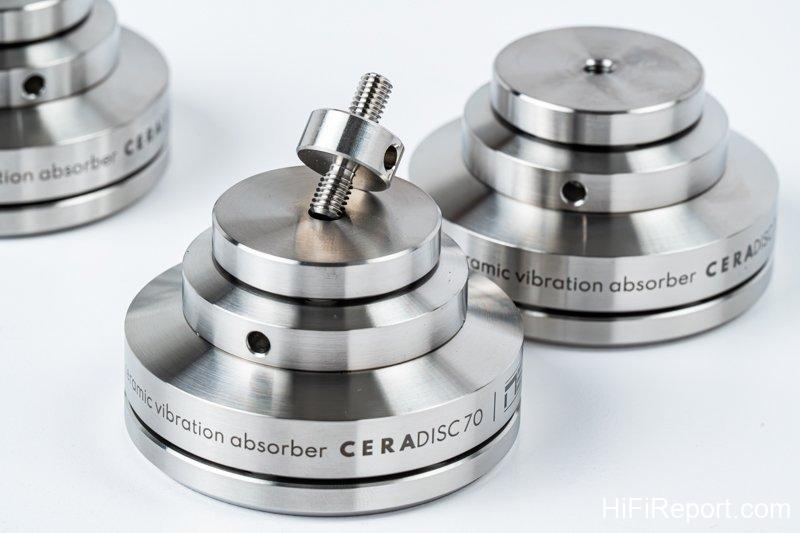
Of course, the simplest method is simply to place the equipment directly on top of three or four Ceradisc 80 footers.
Effortless Movement
Next came the listening test.
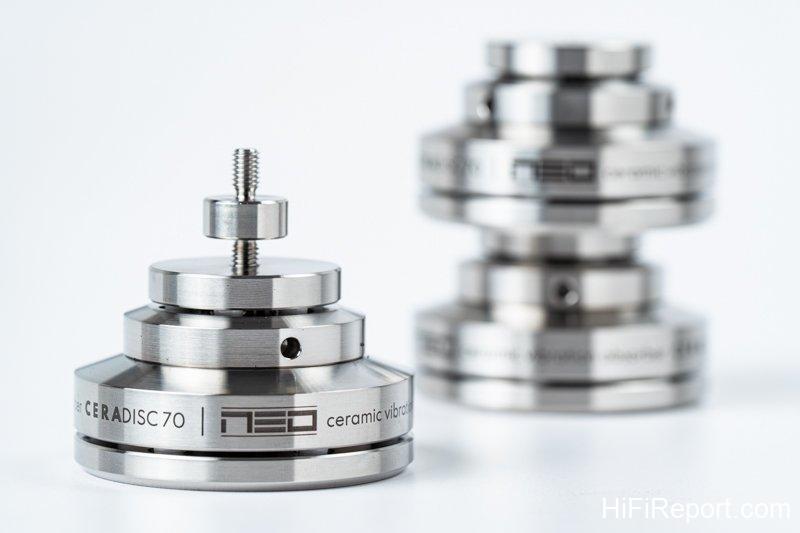
A set of four Ceradisc 80s was provided for this review, so I used them under a piece of equipment. I specifically chose the North Star Design Model 192 MKII CD transport because CD transports contain mechanical parts that generate significant vibration during operation, and isolating them should result in a more noticeable sonic improvement.
The other components in the system included the LAiV Harmony DAC, Linear Acoustic LA V5 preamplifier, Linear Acoustic LA 200 power amplifier, and Wilson Audio Alexia V speakers.
The Model 192 MKII is not particularly large, so three Ceradisc 80s were sufficient.
After placing the transport on the footers, something quite amusing happened. A gentle touch with my finger would cause the transport to sway, incredibly smoothly, before quickly returning to rest.
As this Model 192 MKII is quite old, its remote control had long since broken, leaving me to operate playback solely via the front panel buttons. However, pressing a button even lightly caused the unit to sway, making it difficult for the button press to register. It was the first time in my life I’d encountered such a situation, and it was quite entertaining! Fortunately, a few attempts usually did the trick, and it didn’t impede the listening session.
Vivid Presentation
First, I played track 3 from Anne-Sophie Mutter’s “Across the Stars,” which is “Hedwig’s Theme” from the “Harry Potter and the Sorcerer’s Stone” soundtrack. The piece begins with what sounds like a glockenspiel – an instrument resembling a marimba but with metal bars – played for a few measures before introducing the soaring violin melody.
It was easy to hear the changes brought by the Ceradisc 80 in this passage. The high frequencies felt less constrained, floating upwards with greater freedom. The perceived height of the soundstage increased, the depth extended further, and the reverberations lingered longer. This lent the violin a greater sense of airiness, making its variations more nimble and the musical expression more vivid and rich. The contrast between soft and loud passages became more pronounced; the quiet parts exhibited clearer layering, and the loud parts felt more unrestrained. It wasn’t about increased raw energy, but rather a richer, more distinct gradation of dynamics, which also made the music sound more fluid.
Next, I removed the Ceradisc 80s. The sound became denser, felt heavier, and more solid, with energy feeling more direct and impactful. The soundstage height decreased, and the image seemed to converge more towards the center, making the music feel less open.
Then, I placed the Ceradisc 80s back under the transport. The sound immediately became lighter, more delicate, with clearer variations and richer textures. The soundstage height improved, and the overall frequency spectrum felt more spread out from top to bottom.
Simply put, for “Hedwig’s Theme,” without the Ceradisc 80s, the sound was thicker, solid, and weighty. With them, it was light, vivid, and expansive. Both presentations had their merits, and neither was definitively “better,” but I personally preferred the sound with the Ceradisc 80s because the musical expression was clearer and the atmosphere felt richer.
Enhanced Bass
I then moved on to the test disc “Uncompressed World Vol. III,” which primarily features R&B and pop music. The arrangements are not overly complex, but there’s a significant emphasis on the low frequencies, with drums and bass often having considerable presence. To reproduce this well, clarity and layering in the system’s low frequencies are crucial. I wanted to see if the Ceradisc 80s would help.
After listening to just a few tracks, I quickly realized that the Ceradisc 80’s improvement in the low frequencies was every bit as significant as it was in the highs.
Without the Ceradisc 80s, the sound had a slight turbidity, lacking a certain clarity. The soundstage felt somewhat blurry, with different instruments tending to blend together, reducing separation. Coupled with looser, more expansive bass, the music felt a bit ponderous.
With the footers in place, the contours of the bass notes immediately became much sharper, and their texture gained a palpable sense of bounce without becoming lean. Drum hits tightened up considerably, and the shape and positioning of the drums became much clearer, making the overall music feel more nimble, vibrant, and rhythmically engaging.
Furthermore, similar to my experience with “Across the Stars,” the Ceradisc 80s slightly raised the soundstage and tightened the lower frequencies. Simultaneously, the air felt cleaner and more transparent, vocal forms became more prominent, and the separation between different instruments improved significantly. Taken together, these factors resulted in a more direct sound, giving the music a greater sense of live presence and, consequently, richer emotional impact.
Compared to listening to “Across the Stars,” where using or not using the Ceradisc 80s offered distinct listening experiences with their own merits (though I personally preferred the sound with them), listening to “Uncompressed World Vol. III” made me feel that the Ceradisc 80s were indispensable. The help they provided for rhythmic music was so significant; the improvement was simply enormous.
DAC Application
The Ceradisc 80 proved highly effective under a CD transport with mechanical vibration. Would the change or improvement be as noticeable when used with equipment that has no mechanical parts? To find out, I placed them under the LAiV Harmony DAC. Conveniently, the Harmony DAC has three metal cone feet on its underside, which fit perfectly into the conical indentations on the top of the Ceradisc 80s.
Again, playing “Uncompressed World Vol. III,” the change was equally striking and immediately audible.
With the Ceradisc 80s under the Harmony DAC, the sound felt cleaner and more refreshing. The thud of the kick drum became shorter, faster, and clearer, and the impact of the drum hits was more immediate.
Without them, the soundstage was slightly lower, and the high, mid, and low frequency bands seemed to converge, making the sound feel denser, veiled, and less transparent. The soundstage also felt more constricted towards the center, reducing the sense of openness.
Placing the Ceradisc 80s back under the DAC immediately raised the position of the vocals, giving them a more prominent outline. The shapes of the bass notes and drum hits became more focused and distinct, thus appearing slightly smaller. Separation between instruments improved dramatically, and the timbre of all instruments became more transparent and crisp, filling the air with a renewed sense of freshness.
The sound became lighter, and the entire musical presentation felt quicker and more effortless.
Intuitively, the benefits of using the Ceradisc 80s under the DAC were likely no less significant than using them under the CD transport.
Problem Solver & Enhancer
There’s a vast array of isolation products available, each with its own function and purpose. They can be used to solve problems or simply to enhance an already good setup. The Ceradisc 80 is capable of playing both roles.
It can bring about an overall improvement in sound clarity and transparency, imbue the presentation with a more vibrant atmosphere, and enhance musicality, all with virtually no negative side effects.
Furthermore, the Ceradisc 80 boasts an extremely high load capacity, making it suitable for both light and heavy equipment, speakers, or powered components, offering remarkable versatility.
If your equipment is lighter and doesn’t require such high load capacity, NEO also offers the smaller Ceradisc 70, Ceradisc 50, and Ceradisc 45 sizes, ensuring there’s an option to meet your needs.
Specifications
* Type: Ceramic Ball Isolation Footer
* Dimensions: Diameter 80mm, Height 46mm
* Height Adjustment Range: Within 5mm
* Load Capacity: Maximum 500kg per set of 4, Maximum 350kg per set of 3