
Obit Audio Isolation Footers Review
Among all hi-fi tuning accessories, isolation footers are perhaps the most “love-hate” items. Those who love them appreciate their significant effects, using footers with different characteristics to instantly create different sounds, satisfying the fun of playing with audio. Those who hate them do so because footers often cause biased changes. They might solve one problem but introduce another, ultimately complicating things further.
Is there an isolation footer that can comprehensively improve sound performance without causing side effects? Yes, and it’s the Obit Audio composite metal footers, a brand generating considerable buzz online and known for its proprietary design.
Multi-Layer Metal Vibration Control
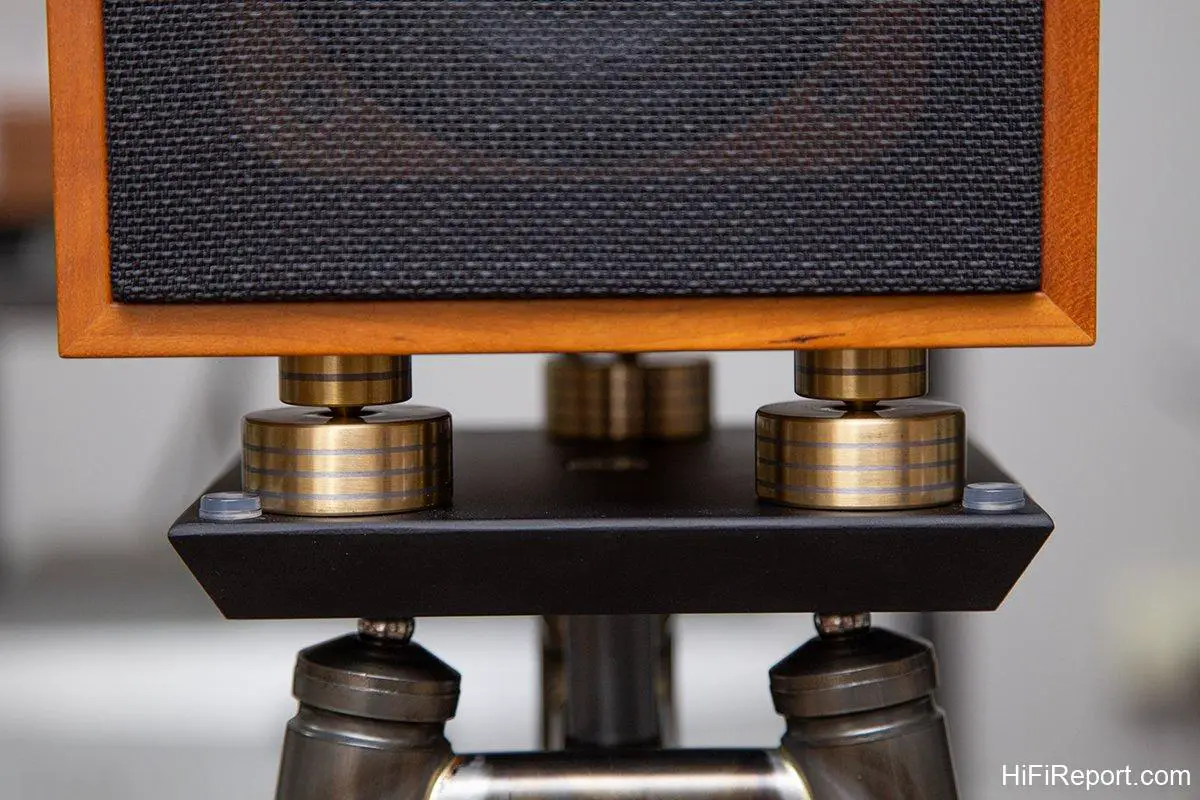
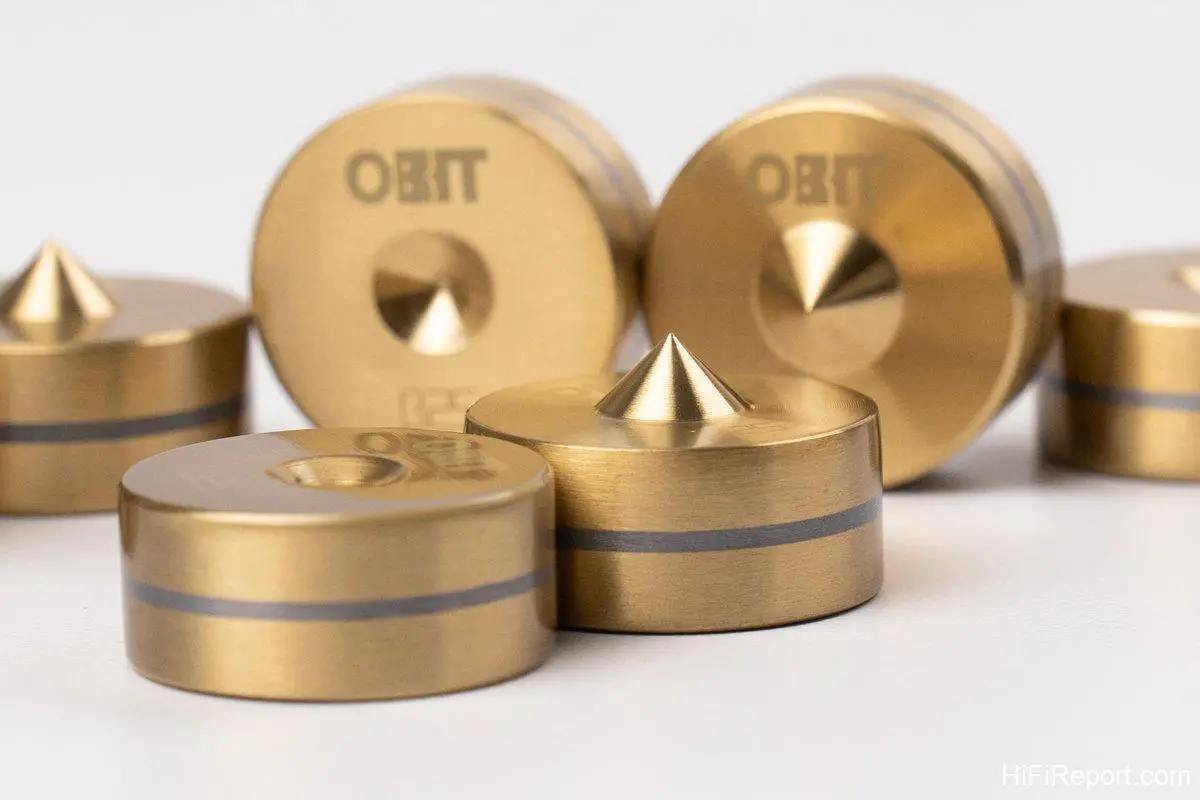
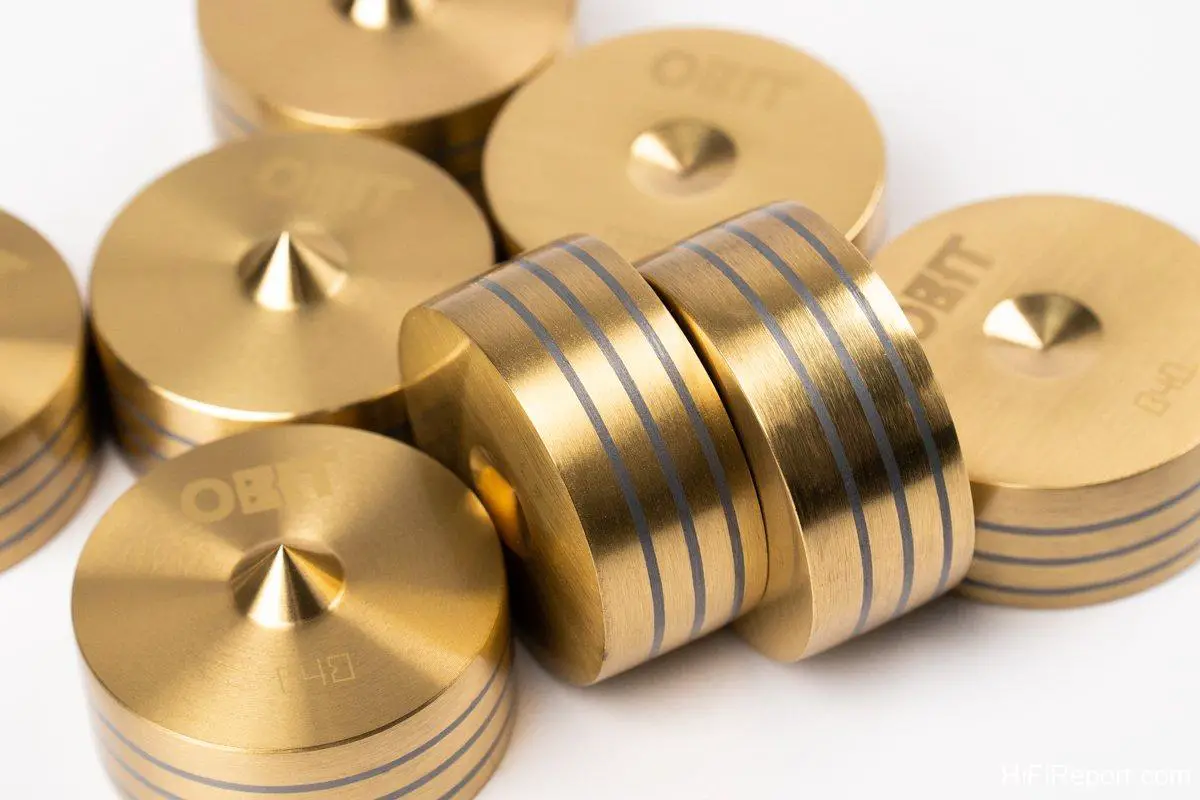
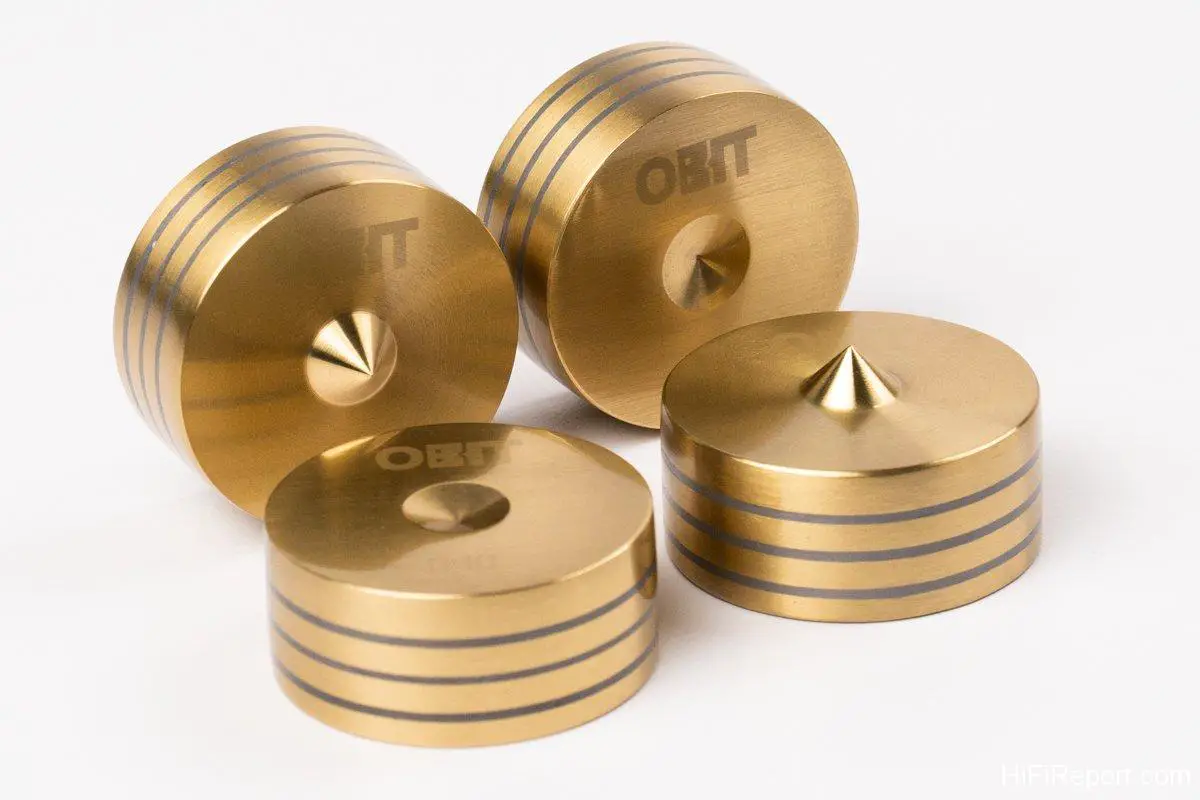
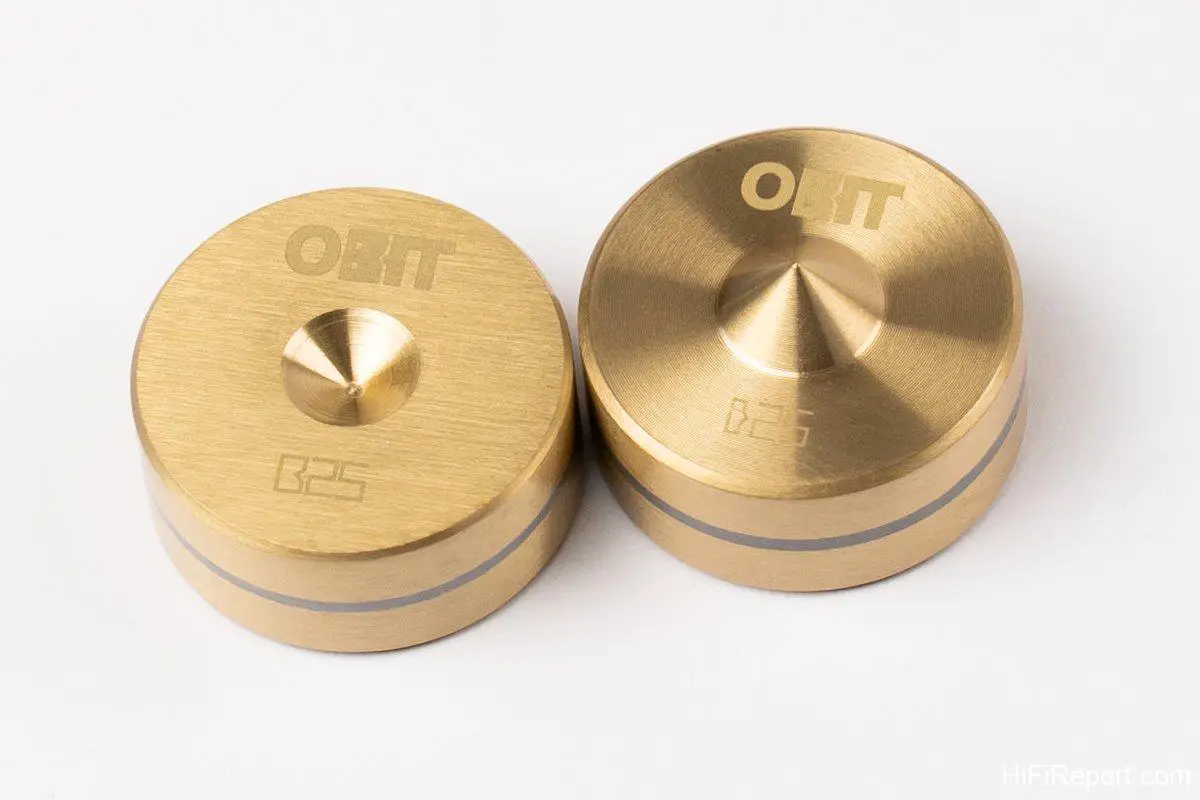
The appearance of Obit Audio composite metal footers is quite distinctive. They are brass-colored with one or three layers of silver-gray “filling” in the middle, resembling a mille-feuille cake.
Why this design? This is the patented technology of Chen Rui-Ren, the founder and developer of Obit Audio.
Chen Rui-Ren’s doctoral studies were in photonics, focusing on optical multilayer films. This research explored how different materials and thicknesses in multilayer films have varying refractive indices, allowing control over the amount of light transmission or reflection, and even the bandwidth of light frequencies.
Although he did not complete his doctorate, Chen Rui-Ren encountered audio isolation footers after leaving academia. Considering that sound, like light, is a wave of different frequencies, he had a flash of inspiration. Could the principles of multilayer films be applied to audio, using multi-layer metal structures to control the frequency range of vibration transmission? After in-depth research, Obit Audio was born.
Extending from optical multilayer films to multi-layer metal structures involves complex theories, mathematics, and physics. But simply put, audio isolation footers are essentially the medium between equipment and the supporting shelf. They participate in vibration, transmit vibration, and alter the equipment’s vibration, thus changing the sound. Obit footers work on the same principle.
Chen Rui-Ren explained to me that his footers contain both harder and softer metals. Through the coordination of hardness and softness, they achieve the ideal vibration frequency. The thickness and number of metal layers, as well as the diameter of the footers, are determined through calculations and repeated listening tests.
Detail-Oriented Tuning Philosophy
Although the product is based on theoretical derivation, the ultimate decision rests with the sound, which is determined by listening tests.
To objectively assess whether the footers improve the sound and by how much, Chen Rui-Ren simplified the listening test method as much as possible, focusing solely on the amount of detail. More detail heard indicates a more complete sound, suggesting that the footer adjustment is moving in the right direction.
What kind of detail to listen for? With his engineering background, Chen Rui-Ren devised a simple yet effective approach: listening only to reverb, decay, and harmonics.
Reverb and decay are probably the weakest sounds in a recording, but they are easy to discern. Even those unfamiliar with audio or who rarely listen to music can easily judge whether the reproduced reverb is long or short. If the perceived reverb becomes longer, it indicates that more subtle details are present.
More detail means better dynamics and contrast, which better portrays the vividness and expression of music.
Chen Rui-Ren not only listens himself but also invites different people to listen. They don’t judge the pitch, timbre, or soundstage, only the presence and duration of sounds.
Following effective and objective judgment, Chen Rui-Ren was able to continuously improve Obit footers, successfully bringing the product to market.
Complex Formulation and Craftsmanship
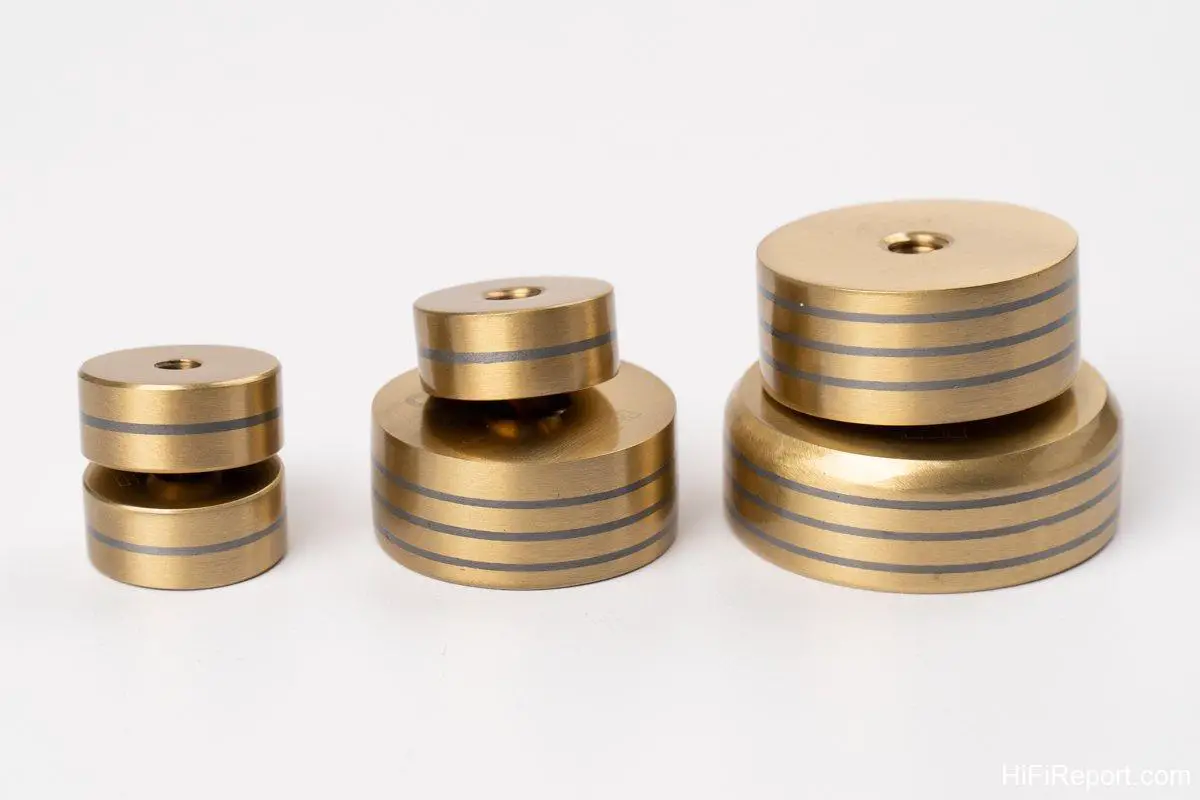
Obit footers are functionally divided into two series: B and I. The B series are base footers (or concave cones) with a central recess to accommodate cones, while the I series are cones (or pointed cones), designed to be used with B series bases.
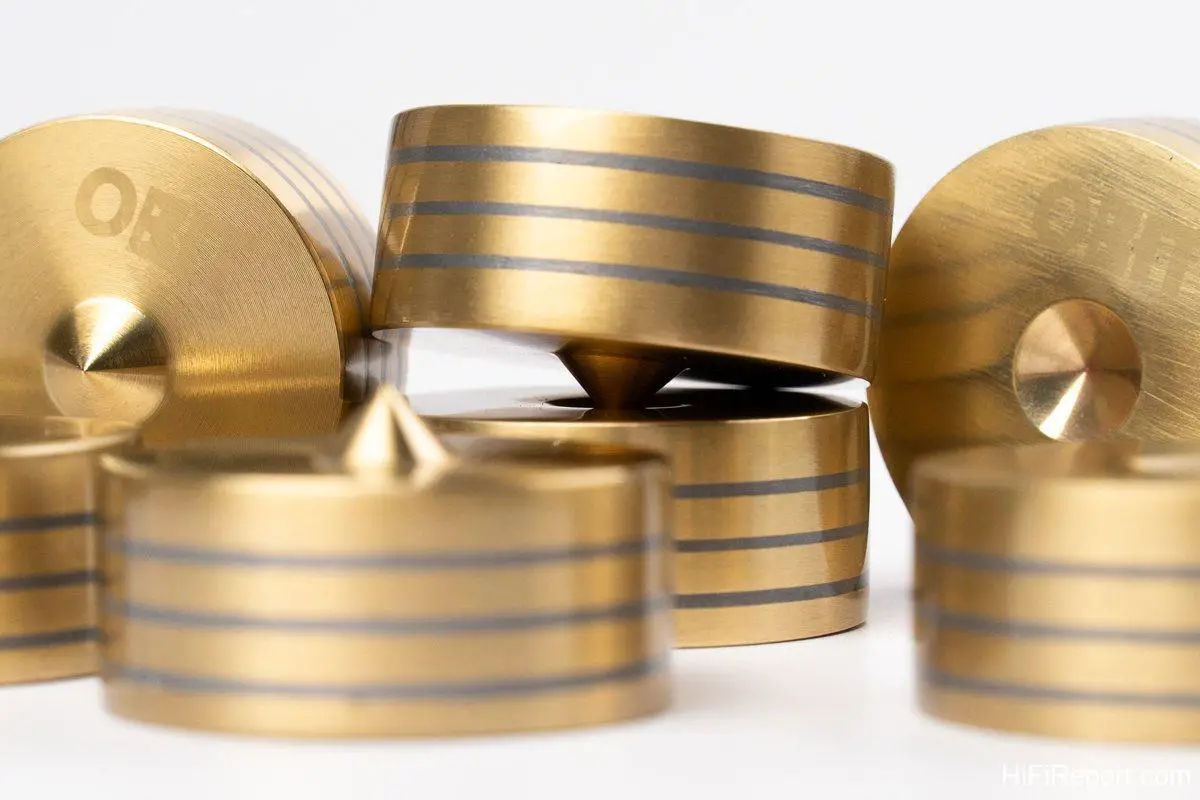
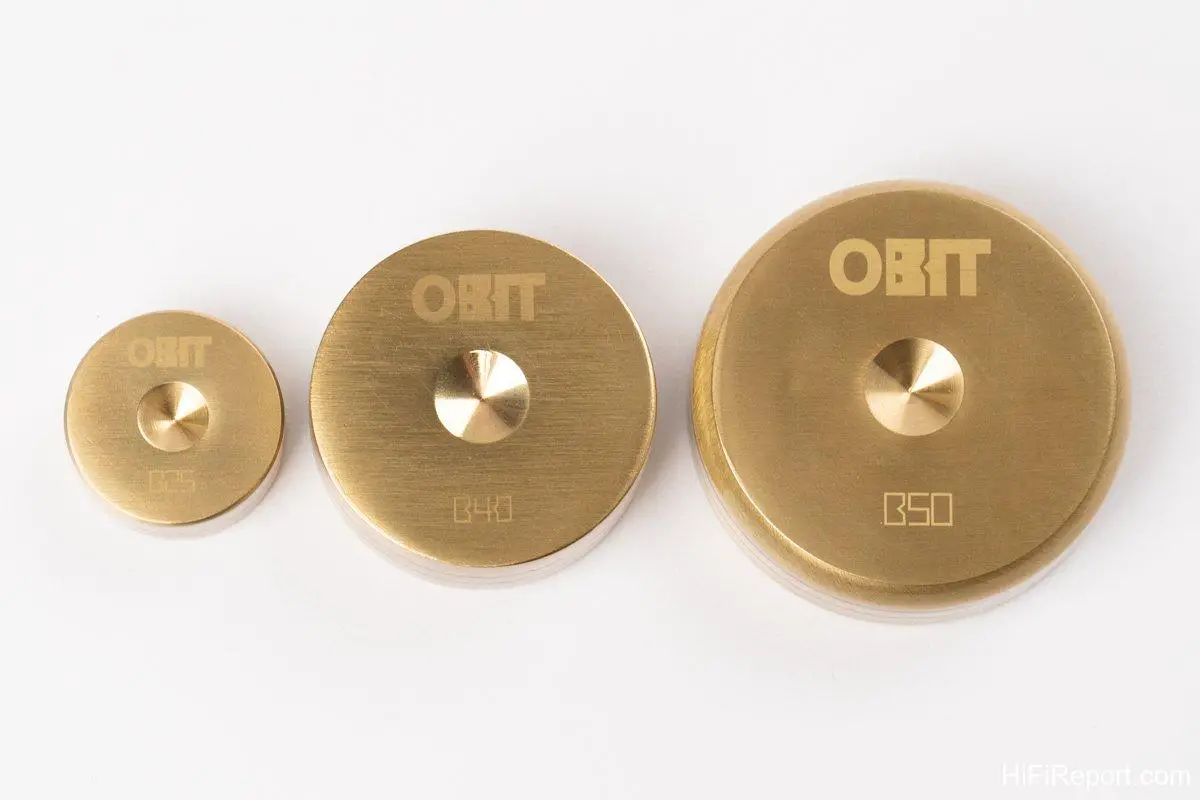
Both B and I series come in different sizes, with the number after the letter indicating the diameter. For example, B25 is a base footer with a 25mm diameter, and I40 is a cone with a 40mm diameter.
Besides 25 and 40, there are also larger sizes such as 50, 60, and 100mm. Generally, heavier equipment should be paired with larger footers or cones, as they offer better low-frequency handling.
Obit footers are made by welding multiple layers of metals with different hardness characteristics. Except for the smallest B25 and I25, which have one layer of filling (three layers in total), other models have three layers of filling (seven layers in total).
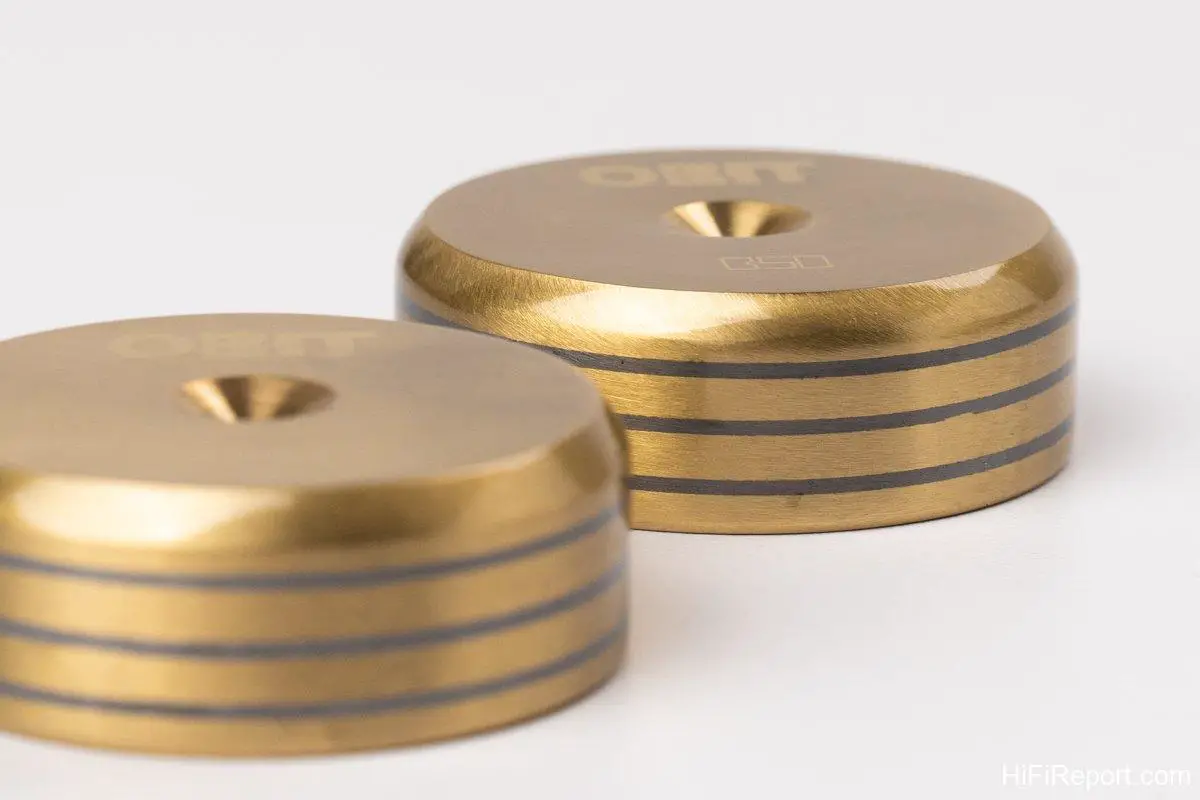
While they may appear to be made of only two metals, gold and silver, alternately welded, this is not the case. The metals in each layer are different, and the formulation and manufacturing process are very complex and time-consuming. Moreover, they are entirely handmade, making mass production difficult.
After welding, they undergo multiple surface treatment processes, including grinding, polishing, laser engraving, and painting. These layer-by-layer processes give them their refined appearance, smooth texture, and resistance to oxidation, ensuring they remain as new.
Furthermore, Obit footers feature meticulous packaging. Models 40mm and larger are laser-engraved with serial numbers and come with beautifully crafted serial number cards in the packaging, serving as both product warranty and enhancing the product’s added value, providing a more complete consumer experience.
Versatile Applications
Obit footers are versatile and can be used under equipment, speakers, speaker stands, and audio racks. They can be used individually as base footers or cones, or in combination.
Due to review space limitations, I could not try every configuration. This time, I focused on bookshelf speakers, a common application, placing Obit footers between bookshelf speakers and speaker stands, using different combinations to evaluate their effectiveness.
To make the review more informative, I selected three pairs of bookshelf speakers with different characteristics for testing: the vibrant, energetic Capriccio Continuo Admonitor Silver Preference (hereinafter referred to as Admonitor), the Chartwell LS3/5, a replica of the BBC LS3/5A predecessor LS3/5, and the Divini KIT-M, a high C/P value “small cannon” known for its (cheerful and delightful) sound.
The equipment used for listening included the Telos EMP music server/player, North Star Design USB DAC32, and Linear Acoustic LAV-60 MKII integrated amplifier. The main music selection was Jane Monheit’s “Taking a Chance on Love” album, featuring both smooth ballads and lively, upbeat songs, with jazz band arrangements including piano, double bass, drums, horns, guitar, and occasional string orchestra accompaniment.
Noticeable Effect with B25 Alone
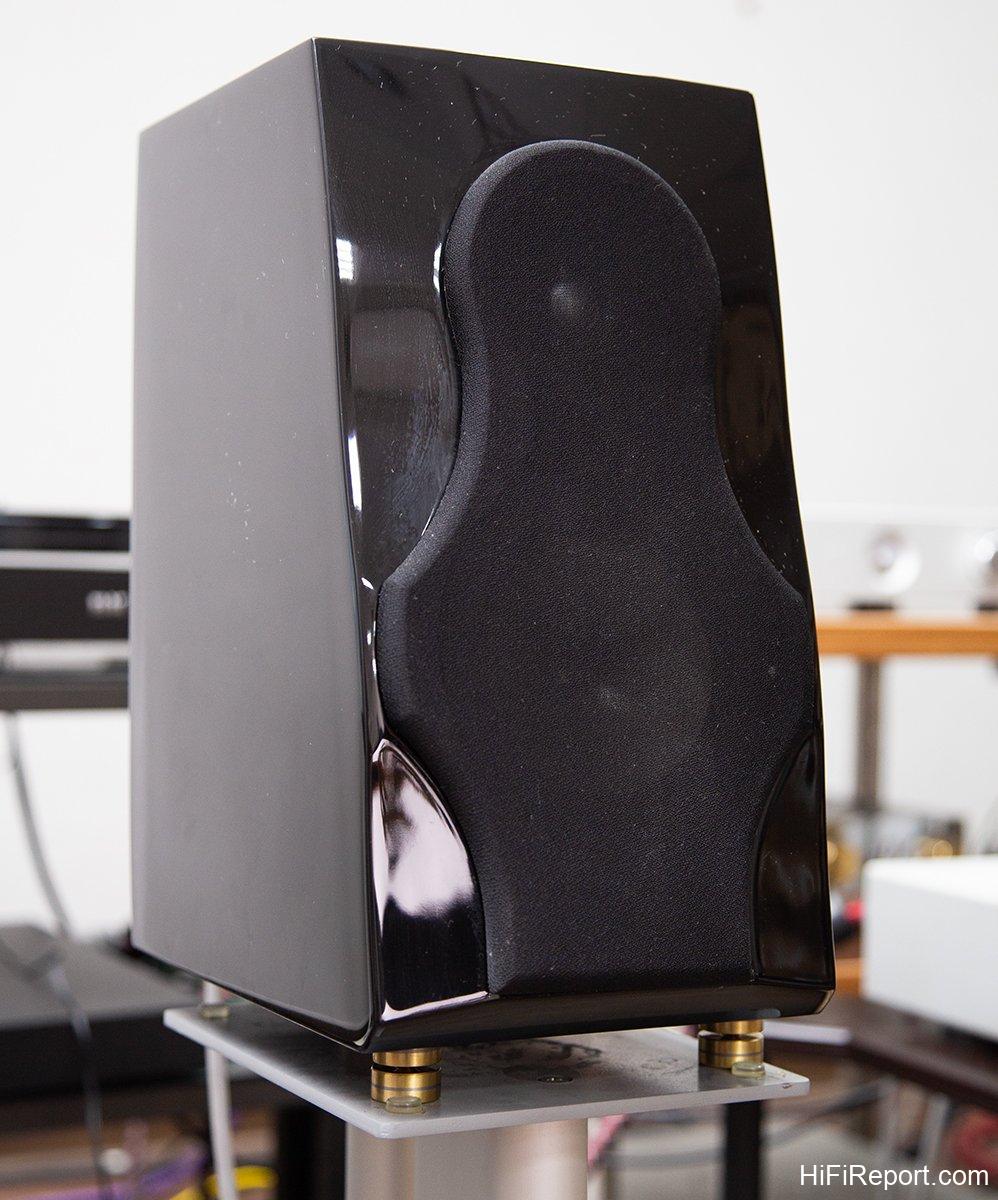
I started with the B25, the smallest base footer. I placed three under each speaker, with the recessed side facing up, two at the front and one at the back, totaling six for both speakers. Then, I placed the Admonitor speakers directly on top.
The speaker stands already had translucent anti-slip pads (the kind you can buy at most stores, not foam type, about 10mm thick). Without Obit, the speakers rested on these anti-slip pads, allowing for a comparison between using Obit and not using Obit.
This configuration is the most economical way to use Obit. What was the effect? Playing the second track, a ballad “In The Still Of The Night” that opens with gentle strings, I found that B25 made the string sections slightly clearer, the soundstage quieter in the soft music, and the vocal image more focused. This made the vocal line more prominent, the soundstage image clearer, and the music livelier.
However, while there was improvement, I felt the magnitude could be more significant, so I didn’t linger here and moved to the next stage: I25 + B25, using both cones and base footers together.
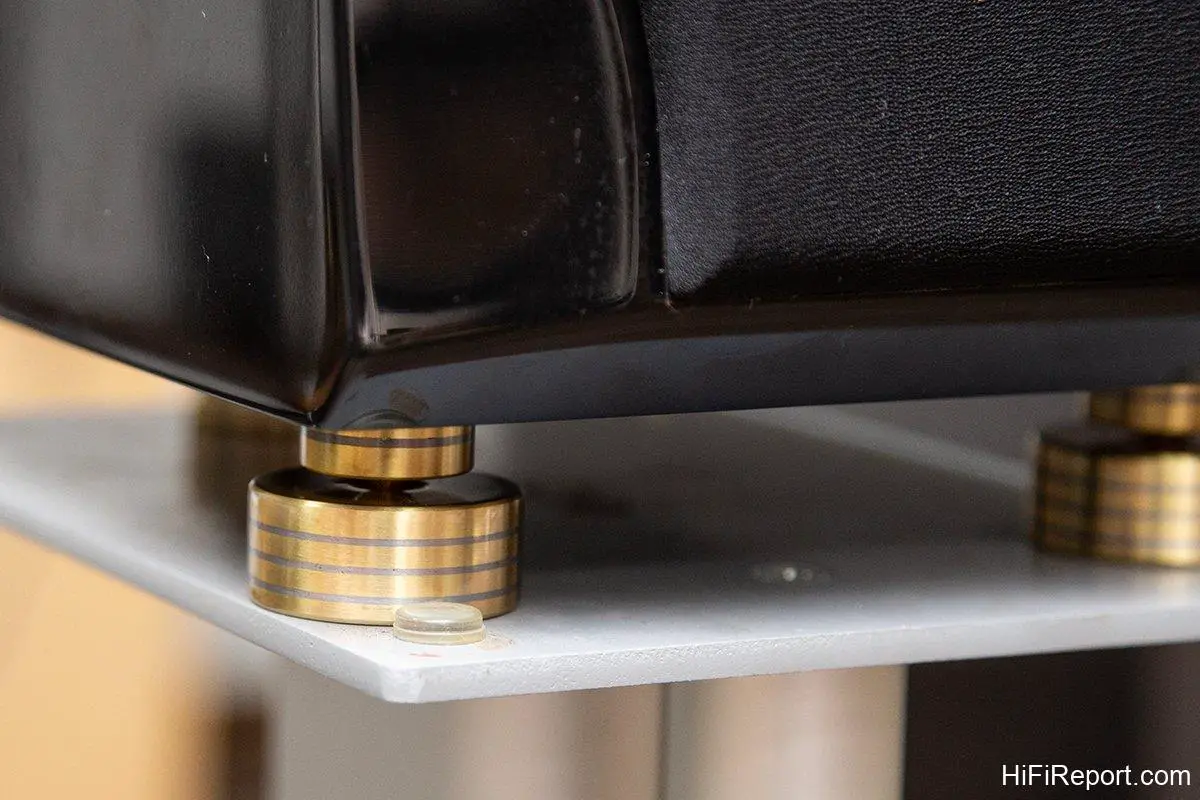
The operation is straightforward. First, place three B25s on the speaker stand top plate, again with the recess facing up, two in front and one in back. Then, align the pointed cone of the I25 with the recess on the B25 and slowly place the Admonitor on top. The three I25s will stand upright, with only the tip of the cone making contact between I25 and B25.

Recommended Starting Point: I25 + B25
Playing the same track again, the improvement was immediately noticeable. Not only was the enhancement from using B25 alone amplified, but the soundstage also expanded, becoming wider and taller. The height of the soundstage genuinely increased, while the low-frequency position remained stable, not elevated. The image solidity was also better.
I repeatedly compared the difference between using I25 + B25 and not using them. Without them, the soundstage was more constricted, clustered in the center, narrower than the speaker width, and flatter vertically. With them, the soundstage became more open, the vertical structure clearer, and the front-to-back layers and relative relationships more defined. Localization also became clearer due to the more prominent image solidity.
I25 + B25 made the soundstage wider and more open, but not by enlarging the images. Instead, the distance between instruments increased, improving separation.
Furthermore, I found that I25 + B25 made the timbre cleaner and the texture purer. The high frequencies gained a pleasing smoothness, and the low frequencies became more elastic, making the music feel more lively.
I also noticed that I25 + B25, unlike some metal footers I’ve used in the past, didn’t tend to cause frequency imbalances. Often, while clarity and brightness improved, frequency response or image balance would suffer. However, I25 + B25 hardly changed the frequency response at all. The overall sound remained balanced, indicating that Obit footers are indeed neutral. It seems that using welded metals of different hardness is a good idea.
I25 + B40 Superior to I25 + B25
I25 + B25 brought a more significant sound improvement than using B25 alone. Although the cost doubled, I felt the value increased even more. In other words, if you want to try Obit footers, instead of using B25 alone, it’s better to directly adopt the I25 + B25 configuration for a more substantial effect.
But did I25 + B25 represent the peak? Not yet. Next, I moved to the next stage: I25 + B40.
I25 + B40 means keeping the same cones on top, but replacing the base footers with larger B40s. The speakers remained Admonitor.
Continuing with Jane Monheit, the sound became more stable, giving the music a better sense of groundedness. The plucked notes of the double bass became fuller and rounder, and the bounce and string tension remained, or even increased. The low frequencies were never muddy, and the musical liveliness was undiminished.
Crucially, this more stable low-frequency foundation was not achieved at the expense of mid-range and high-frequency performance. The sound still had excellent brilliance, remaining the flamboyant Admonitor I was familiar with. The overall balance remained excellent, even improved! Furthermore, I25 + B40 made the music more fluid and effortless, with better separation and localization, and a clearer soundstage image.
At this point, I removed the I25 + B40 and placed the speakers directly on the stands. The drop in sound quality was even more significant. Separation plummeted, the relative positions and relationships of instruments became difficult to discern, and the soundstage shrank into a confined, narrow, and flat space, significantly reducing listening pleasure.
I25 + B40 Enhances BBC LS3/5A Enjoyment
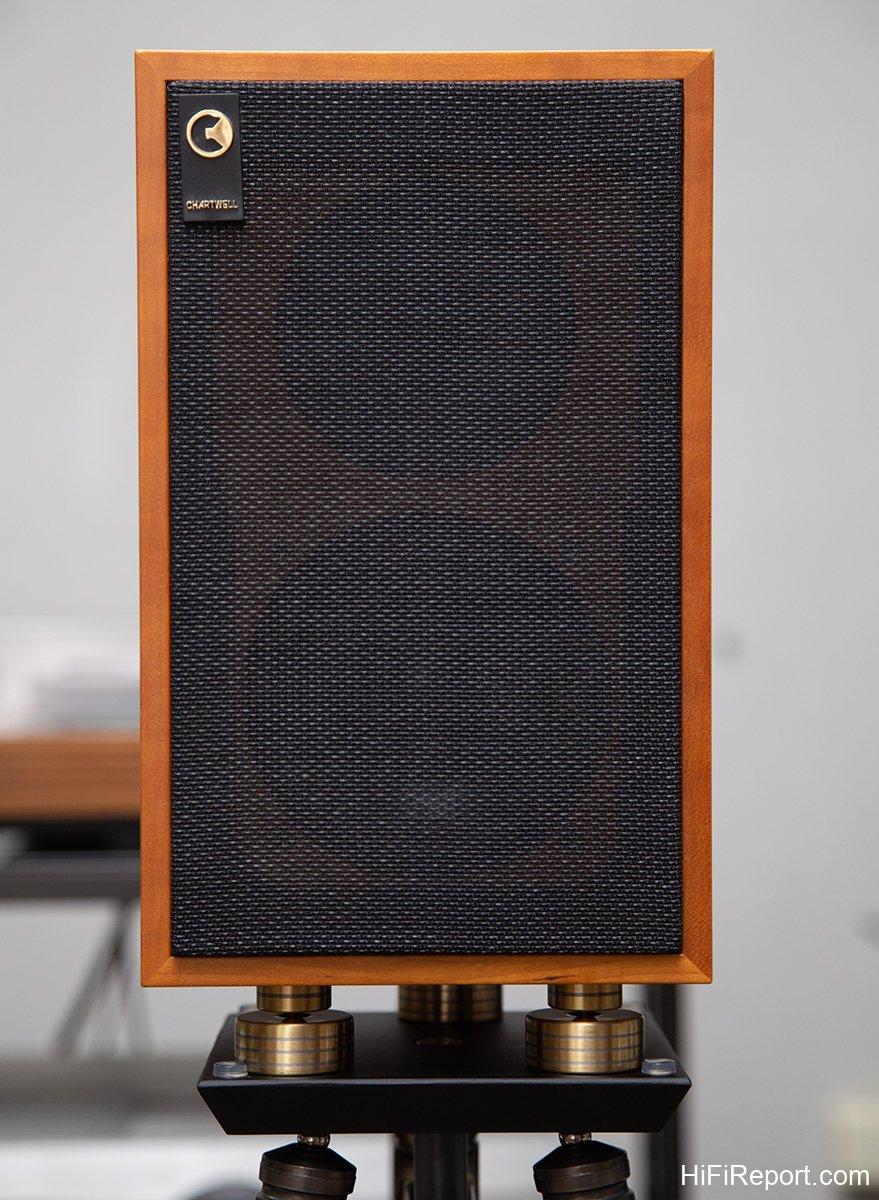
Next up was the Chartwell LS3/5, a replica of the BBC LS3/5A predecessor LS3/5, possessing a similar sonic signature and charm to the LS3/5A.
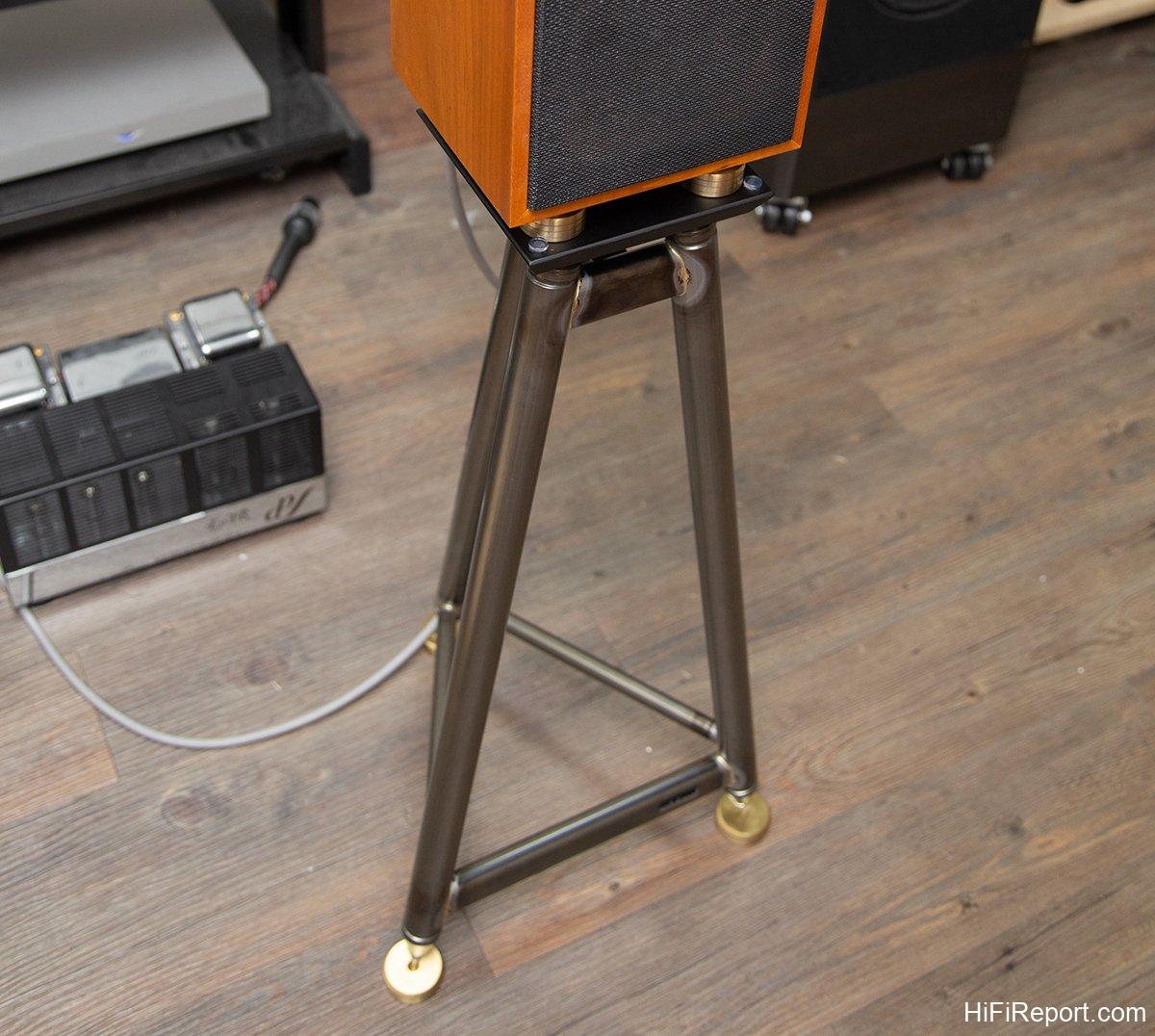
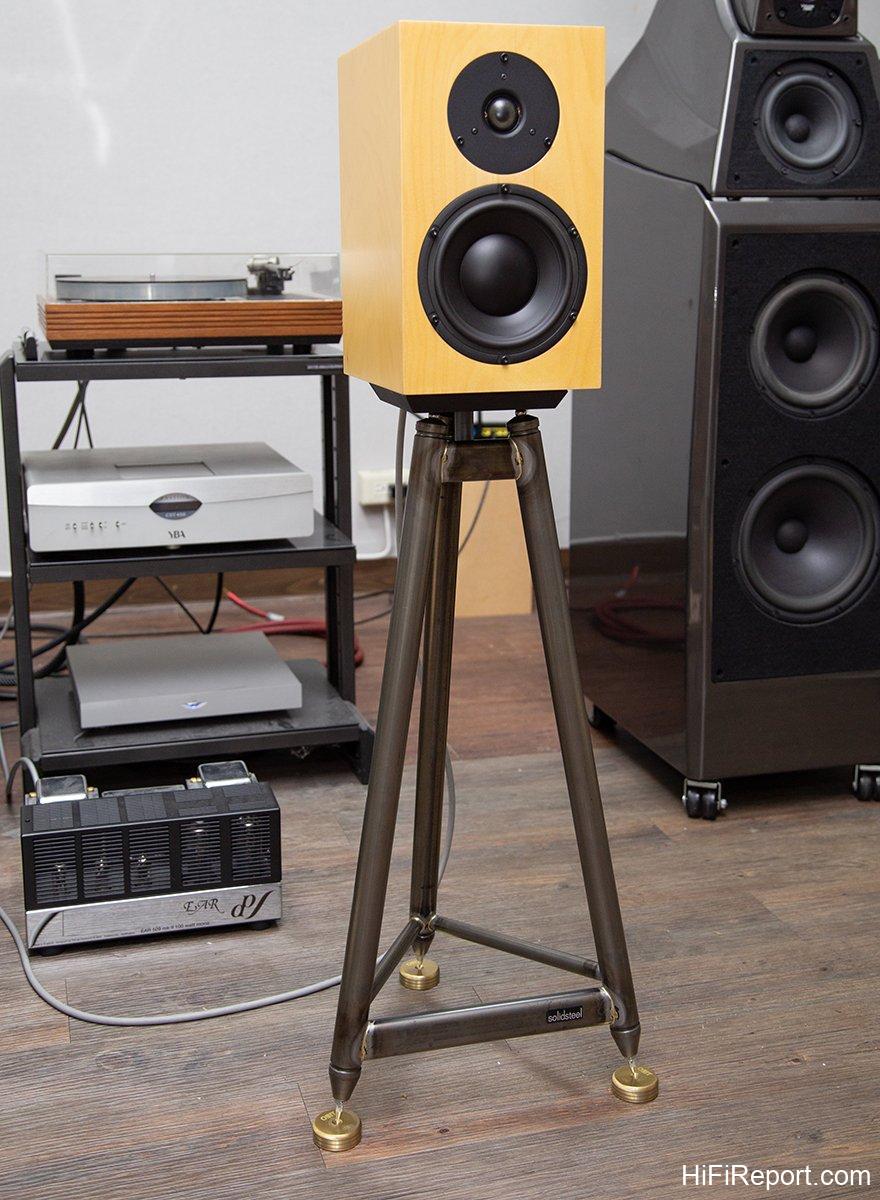
Since the Chartwell LS3/5 is smaller than the Admonitor, I switched to Solidsteel SS-7 speaker stands with a correspondingly sized top plate and started directly with I25 + B40.
Without footers, the Chartwell LS3/5 sounded quite thick and dense, with a less transparent timbre and instruments tending to blend together. Separation was not particularly good. After adding footers, something interesting happened. I found that I25 + B40 had a greater impact on the low frequencies compared to when used with the Admonitor. The low-frequency range became noticeably more controlled and focused. The low-end scale tightened slightly, and low-frequency resolution also improved, making the plucked double bass texture cleaner and more elastic, with clearer note definition. The original somewhat undefined, muddy, and unclear low end was significantly improved.
As the low-frequency range tightened and the soundstage height increased, the soundstage shape became more like a healthy cylinder (originally more like a blob), expanding the vertical dimension and clarifying the structure.
Furthermore, I25 + B40 made the sound images and outlines clearer and more concrete, thereby improving separation, layering, and localization. The quieter parts became lighter, and the louder parts became more energetic and dynamic. The dynamic range became more distinct, making the music not only more vibrant but also richer in expression and emotional nuance.
I25 + B40 also enhanced brilliance, but without altering the inherent character of the Chartwell LS3/5. The expected charm and richness were fully preserved. I believe audiophiles who love the BBC 3/5A will love it even more after using I25 + B40.
More is More: I25 + B40 + B50
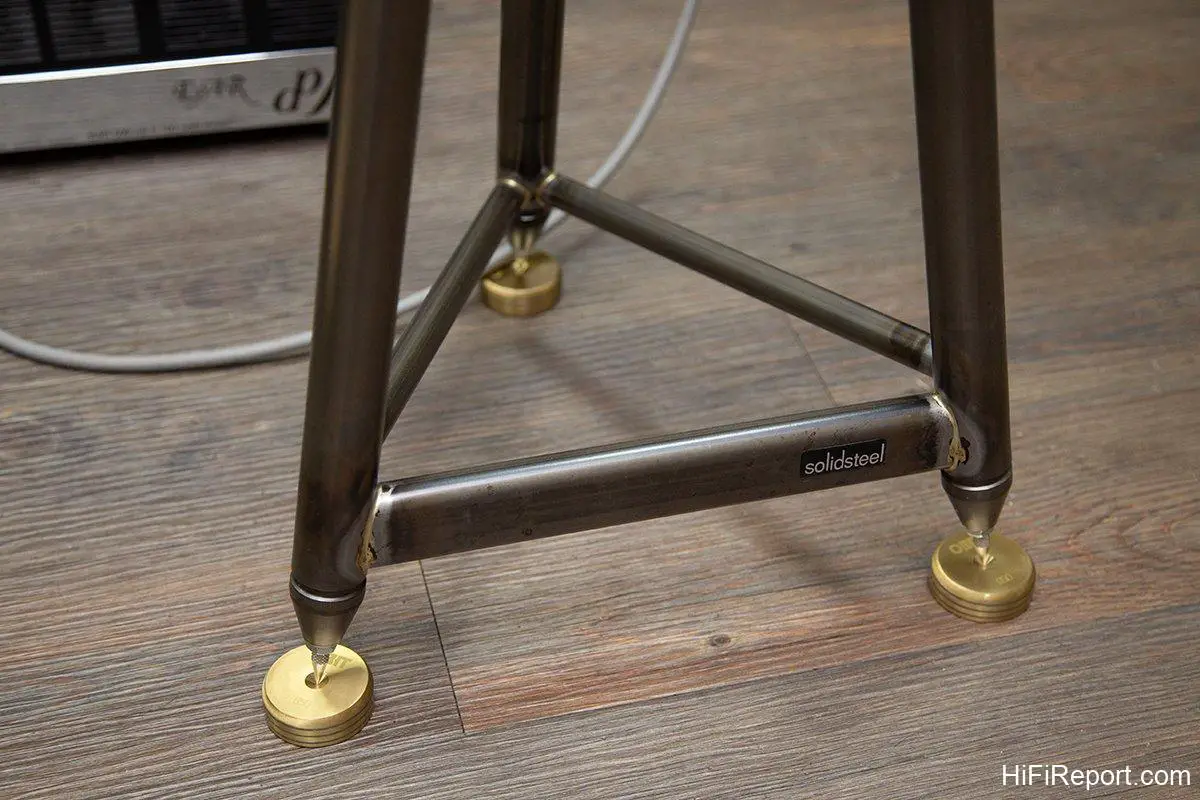
Suddenly, I noticed the B50s that Obit had sent along for review, which I hadn’t used yet. How should I use them? An idea struck me: place them under the speaker stands! Solidsteel SS-7 stands have three legs with cones at the bottom, so I would need three B50s per side. This configuration became I25 + B40 on top of the speaker stand and B50 underneath.
Upon playing music, I couldn’t help but silently exclaim “Wow!” The difference was so significant! The musical picture became even clearer and cleaner, the background more transparent, and the three-frequency balance, soundstage layering, and image localization were further upgraded. The sound images were very clear, with no loss of thickness, but even better density. The proportional relationships between different instruments became more defined. Upbeat music sounded more dynamic, and ballads became even more fluid. I could listen at higher volumes with less strain.
It turned out that Obit footers could be used this way too.
B50 Under Speaker Stands is Excellent
Finally, I had one more pair of bookshelf speakers to test, the Divini KIT-M. Since adding B50s under the speaker stands had such a significant effect, I decided to try just placing them underneath, without footers on top. So, I placed the KIT-M directly on the Solidsteel SS-7 speaker stands, with B50s under the stands, and compared the difference between using them and not using them.
The result? Another very noticeable improvement. Basically, the changes were in the same direction as with the previous configurations, but I felt the magnitude of improvement was no less than, and perhaps even greater than, using I25 + B40 on top of the speaker stands without anything underneath.
Without footers, certain low-frequency ranges tended to accumulate, making the timbre somewhat heavy and thick. With footers, the sound became cleaner and smoother, not only more organized but also better structured, with improved separation and layering. It also became fuller, with rounder low frequencies, while retaining detail and texture. Vocals became more hydrated and gained a bit more body. The soundstage structure became more organized, frequency transitions smoother, and the overall balance remained, with better extension at both ends. Strings became smoother, and the layering of different sections became clearer. Details, dynamics, layers, and textures all improved, making the music sound more vivid, expressive, and engaging.
Sample Loan Service Available: Try Before You Buy
In short, Obit footers, while maintaining system balance, can provide better liveliness and richer musicality, making listening more enjoyable. However, there seem to be many possible combinations. How should you choose? For bookshelf speakers, with a limited budget, use I25 + B25, six of each, placed on the speaker stands.
For a slightly larger budget, or if you have children or pets who might bump into the speakers, I recommend using eight B40s under the speaker stands, with nothing on top. If your speaker stands are three-legged, you only need six, saving even more.
For a more generous budget, you can combine the previous two options, or even upgrade I25 + B25 to I25 + B40. If budget allows, you can also upgrade the footers under the speaker stands to B50.
The advantage of Obit footers is that they can be purchased individually, so you can buy exactly the number you need, avoiding overspending.
Even better, Obit thoughtfully provides a sample loan service, allowing you to try them at home and decide after listening. You can’t go wrong with that, right? Since Obit is confident enough to lend you samples for trial, why not take action now?
Specifications
* **Models:** Obit Audio I25 / B25 / I40 / B40 / B50
* **Type:** Composite Metal Isolation Footers
* **Dimensions:**
* B25: 25 mm (width), 11 mm (height)
* B40: 40 mm (width), 17 mm (height)
* B50: 50 mm (width), 17 mm (height)
* **Recommended Load Capacity:**
* B25: Up to 20 kg
* B40: Up to 20 kg
* B50: 20~100 kg