
Nothing Ear (3) Review
Nothing’s third-generation earbuds add an aluminum case with a dual-microphone Super Mic system, push the ANC ceiling to 45 dB, and swap the driver for a 12 mm unit with a ceramic diaphragm. What the package delivers in daily use, and where it falls short, is covered below.
Quick Verdict
The Nothing Ear (3) pairs a bass-forward, detailed sound signature with a 45 dB hybrid ANC system and LDAC support over Bluetooth 5.4, putting it ahead of most earbuds in its class on musical enjoyment. The Super Mic on the charging case filters background noise up to 95 dB for calls, a practical tool anyone who takes calls on busy streets or in windy airports will use regularly. Battery life with ANC engaged sits at 5.5 hours (22 with the case), a step below what earlier Nothing earbuds delivered, which matters for full workday or long-flight use. For commuters, gym-goers, and call-heavy users who want a distinctive build without reaching for a top-shelf name brand, the Ear (3) covers the ground well; for anyone who needs 8+ hours without the case, the runtime gap is a real limitation.
Strengths and Weaknesses
Strengths
- 45 dB hybrid ANC recalibrates every millisecond across a 5000 Hz noise band
- 12 mm driver with ceramic diaphragm improves airflow by 10% and cuts distortion
- Super Mic dual-microphone system on the case handles background noise up to 95 dB for calls
- LDAC, AAC, and SBC codec support over Bluetooth 5.4 for Hi-Res wireless audio
- Aluminum charging case with lanyard hole; IP54 sweat and dust resistance on the buds
Weaknesses
- 5.5 hours with ANC on (22 with case) is shorter than earlier Nothing earbuds in the same mode
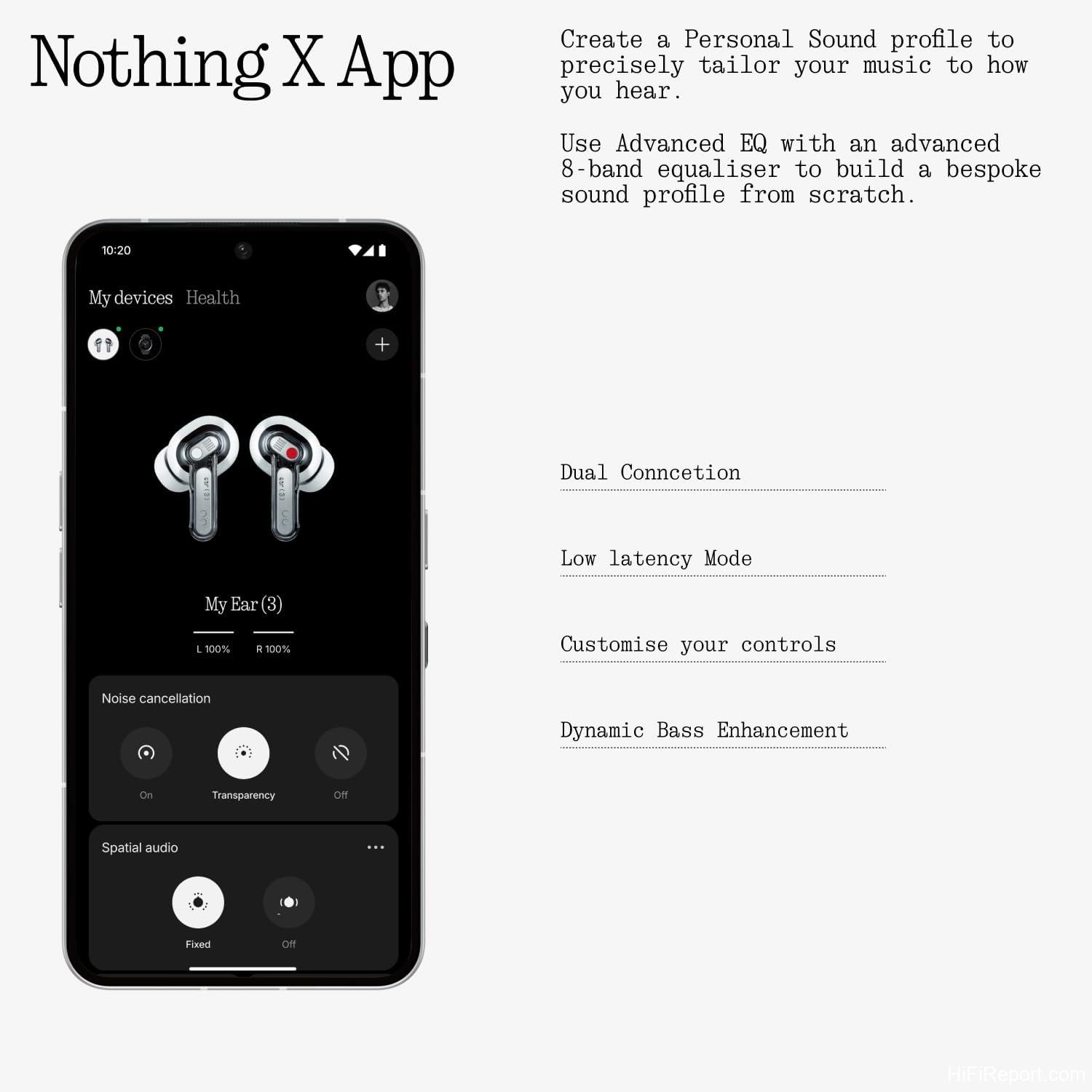
- Default tuning is bass-heavy; a neutral response requires running the EQ or Personal Sound test
- Transparency Mode introduces an “underwater” sensation for your own voice
- Super Mic requires the case in hand and within 5 cm of your mouth; it is useless when the case is in a backpack
- On Android, the TALK button triggers Bixby or Gemini instead of activating the case microphone
Who Should Buy This
Commuters and gym-goers who want strong ANC, a secure fit, and a look that does not blend into the sea of white pill cases will find the Ear (3) a strong fit. The 12 mm driver, IP54 rating, and stem design hold through runs and high-intensity workouts, and dual-connect keeps a phone and laptop bridged through a workday. Running the Personal Sound hearing test in the Nothing X app tailors the EQ to your hearing and takes the edge off the bass-heavy default.

Call-heavy users in windy or loud environments (airports, construction sites, open offices) get a real advantage from the Super Mic. Pressing the TALK button and speaking into the aluminum case filters out noise up to 95 dB, a task the bud mics handle less effectively on their own.

If your primary use is 8+ hour listening sessions without the case nearby, or if you need a PS5 controller connection (which the Ear (3) does not support), skip these. The 5.5-hour ANC-on window will force a mid-session top-up, and console gaming is not in the feature set.
Design, Fit and Feel
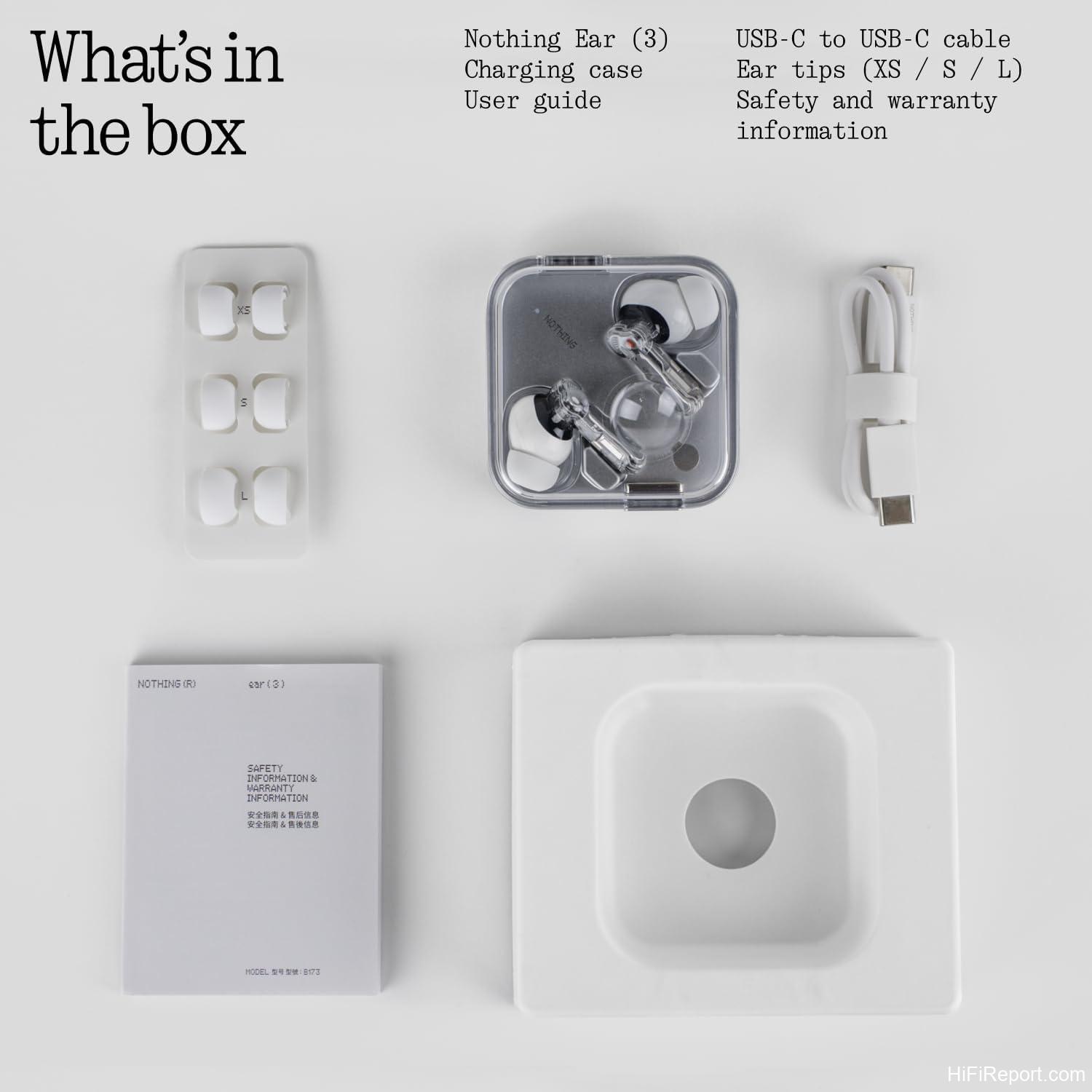
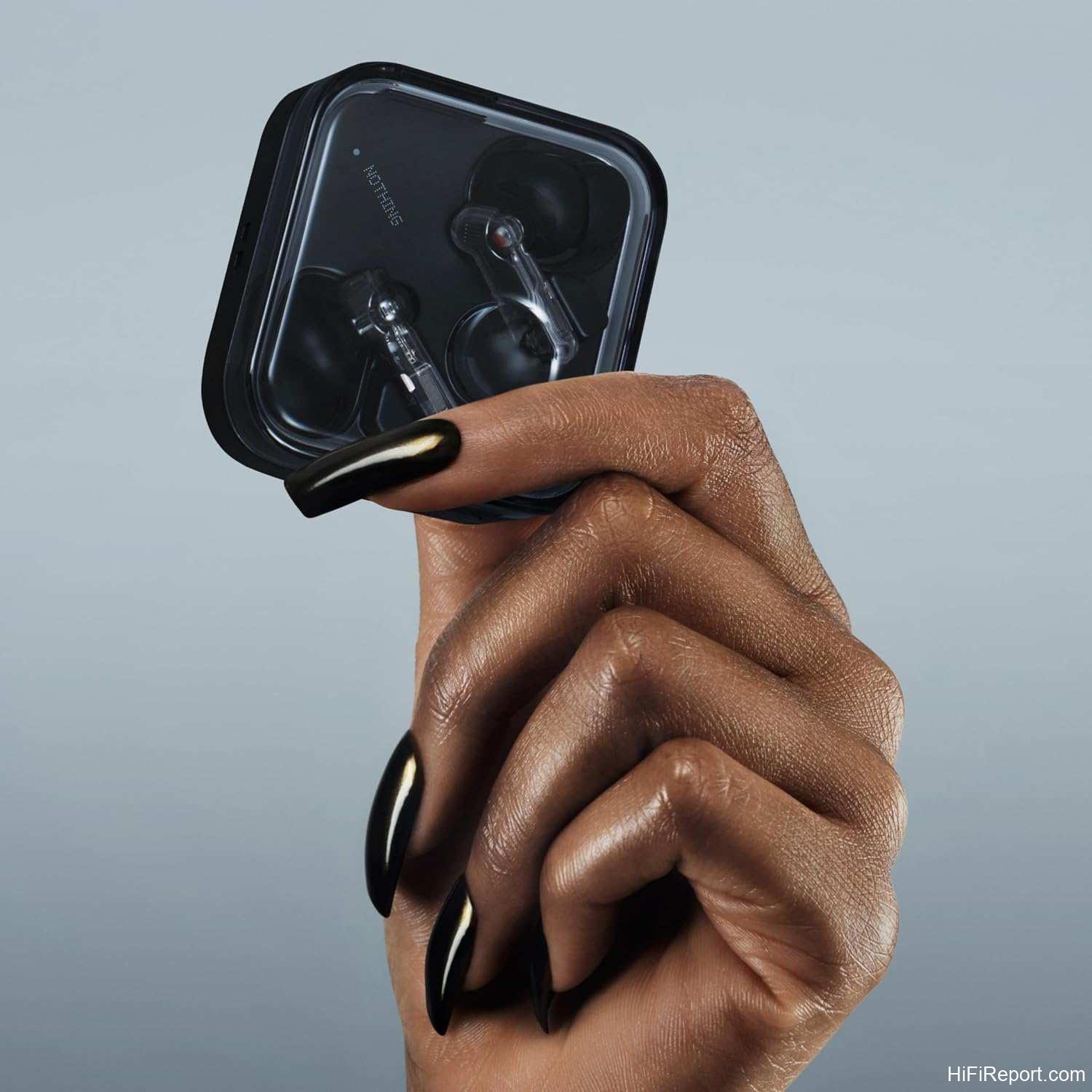
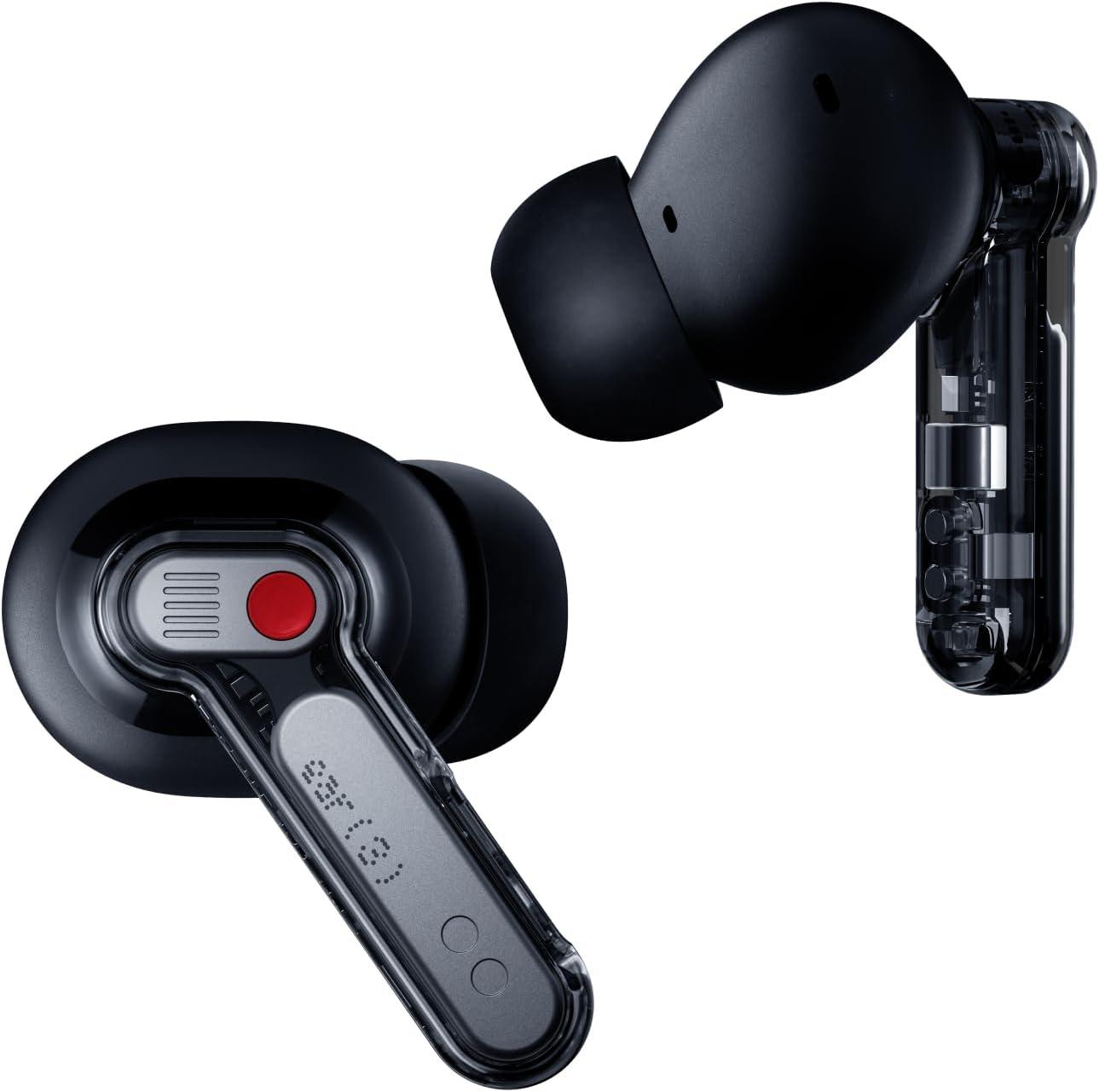
The Ear (3) replaces the previous generation’s all-plastic case with an aluminum base, giving the set a weight and texture that sets it apart from most rivals. The flat case stores the buds in a lying-down orientation rather than the vertical layout common to many competitors, and a lanyard hole on the back makes it easy to clip to a bag or belt. The buds use a stem design that multiple reviewers describe as secure during runs, with several ear-tip sizes included. The overall aesthetic follows Nothing’s angular, minimal language; the metal surface resists fingerprints better than the older plastic shell.
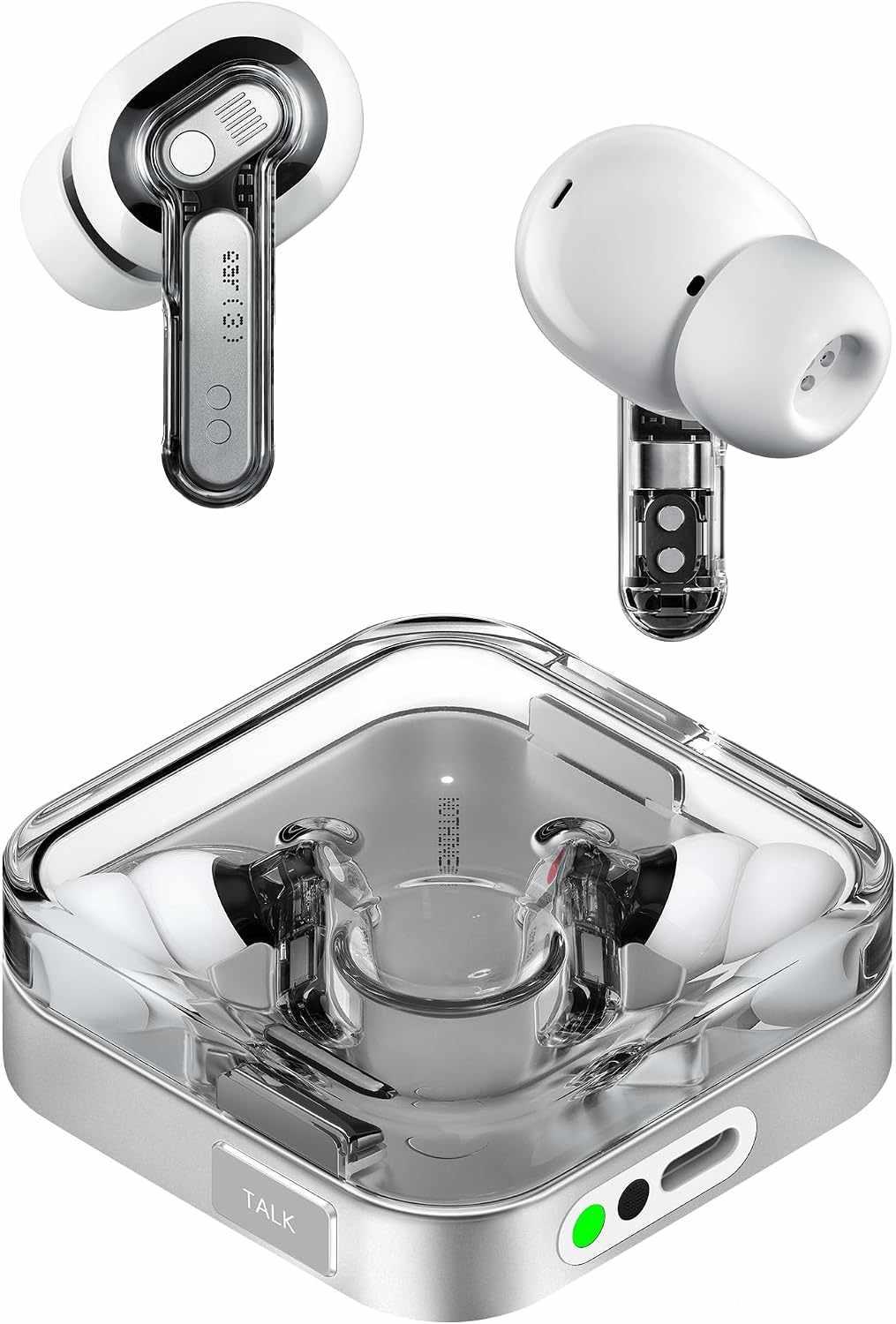
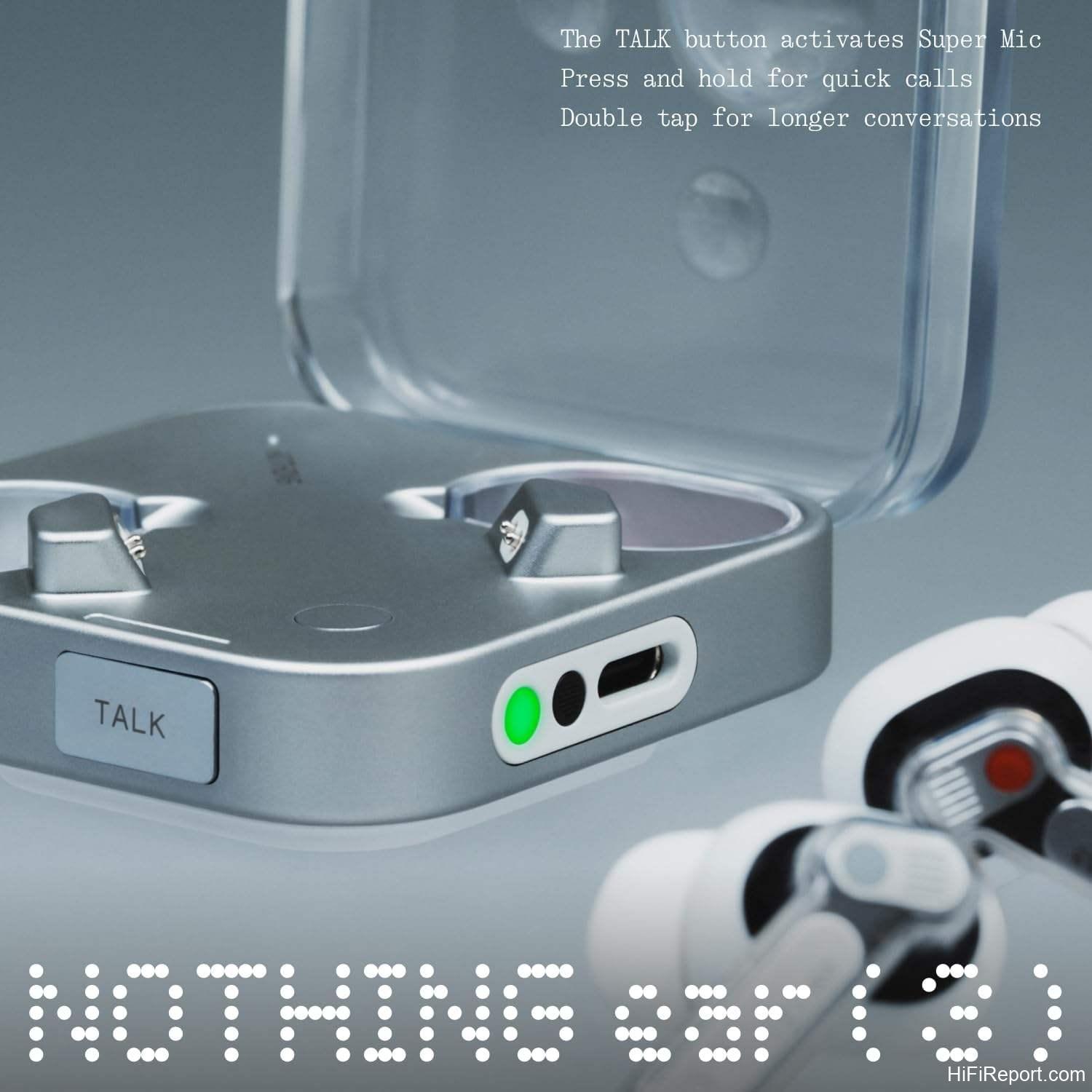
Control surfaces on each bud support pinch and tap gestures, fully remappable through the Nothing X app. The TALK button on the case is a physical key you press and hold; the case must sit within 5 cm of your mouth for the Super Mic to engage. That constraint makes the feature practical for a quick call at a desk or on a street, though it does not work when your hands are full or the case is stowed in a backpack.

Sound: What to Expect
Out of the box, the Ear (3) is a bass-forward listening experience. The 12 mm driver with its ceramic diaphragm improves airflow by 10% and reduces distortion, and the low end lands with a punch that reviewers across multiple regions describe as outstanding or “overpowering, but in a fun and enjoyable way.” If neutral is your preference, the 8-band EQ and the Personal Sound hearing test in the app let you flatten the response; one UK owner who swapped from a Sony WF-1000XM5 said the performance was “at worst on par” after dialing in the settings.
Mids and Highs
Vocals sit clearly above the bass shelf, and instrument separation improves over the previous generation. LDAC keeps the top end detailed, though one US reviewer noted that “s” consonants become sharp and needle-like at high volume. The app’s “voice” and “more treble” presets lean aggressive; the “balanced” mode is the safer starting point for most listeners.
Gaming and Low Latency
The Nothing X app includes a Low Lag Mode for gaming on both Android and iPhone. Combined with Bluetooth 5.4 and LDAC, the chain supports high-quality streaming at reduced latency, which matters for mobile gaming or video where audio trailing the picture is a problem.
Cancelling the Noise
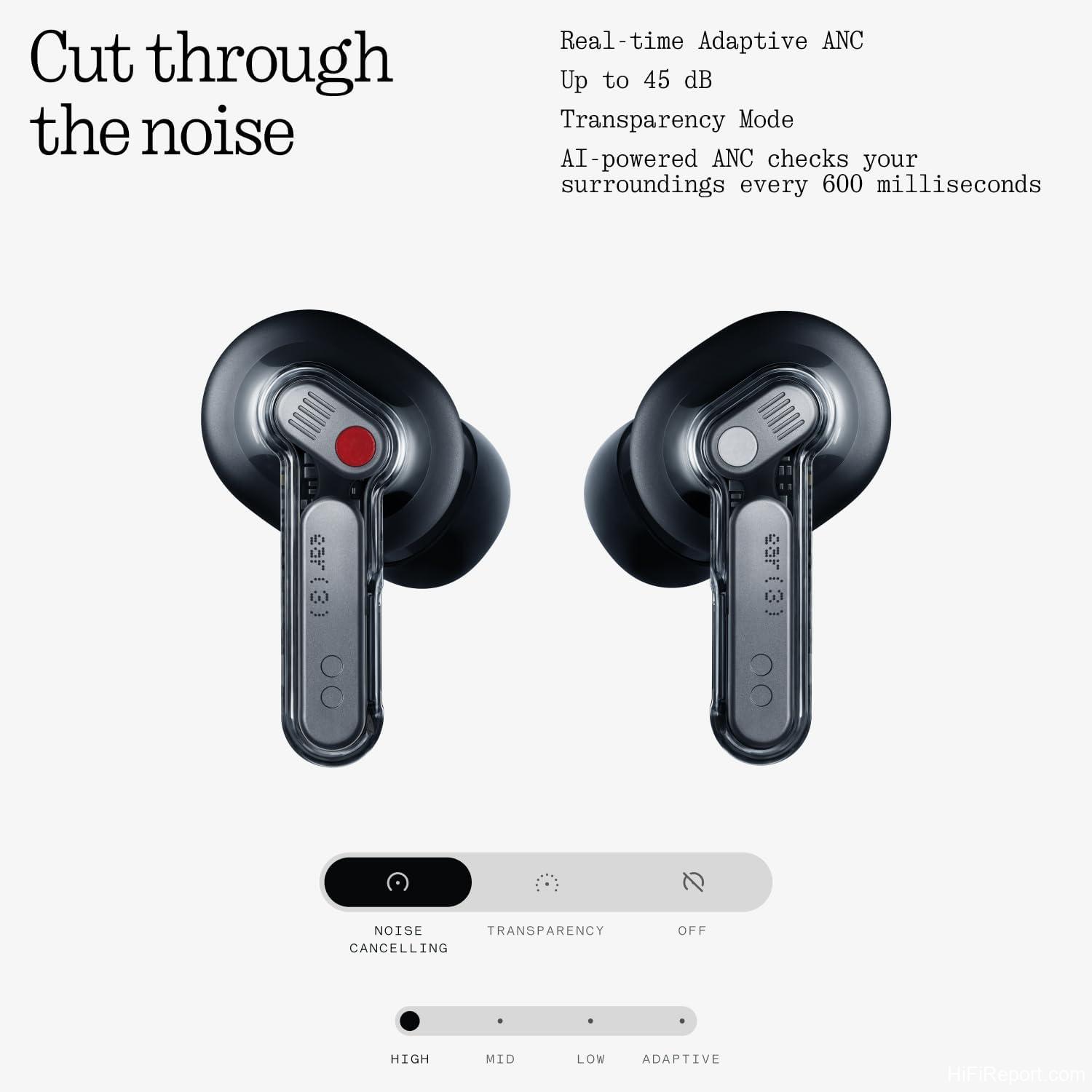
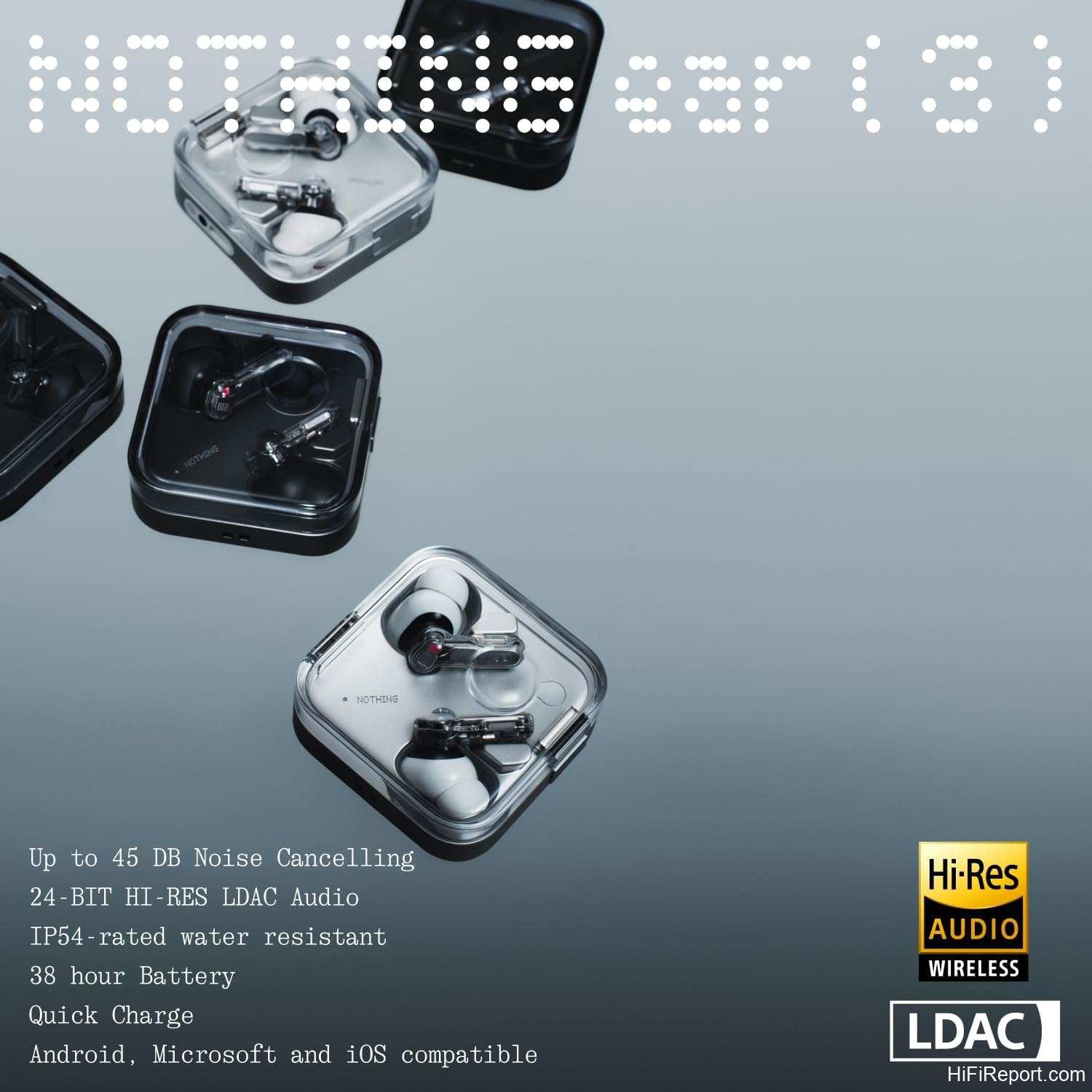
The Ear (3) blocks a wide band of ambient sound through its 45 dB hybrid ANC, which recalibrates every millisecond across the 5000 Hz range. In practice, one US owner measured roughly 35 dB of low-frequency cancellation and 38 dB in the highs on the High setting, landing at about 82% total noise reduction. That covers office chatter, AC hum, and plane rumble without needing to raise the listening volume to compensate. The system does not sit at the ceiling of the most expensive flagships, but it handles the noise sources most people encounter daily.
Transparency Mode restores ambient sound but introduces an “underwater” effect for your own voice, a quirk several reviewers flagged. It works well enough for quick chats or hearing a platform announcement, though it does not feel identical to no buds in the ear. Wind remains a weak spot: gusts hitting the buds can overwhelm the ANC and produce a whooshing artifact, which is where the Super Mic case system takes over for voice.
Run Time
With ANC off, the Ear (3) plays 10 hours on the buds and 38 hours total with the charging case. Turn ANC on and those figures drop to 5.5 hours and 22 hours. A 10-minute quick charge adds approximately 10 hours of use. Engaging LDAC compresses the ANC-on window to around 3.5 hours, a figure one US reviewer confirmed in daily use. Earlier Nothing earbuds offered longer playtime in the same configuration, so anyone upgrading will notice the case top-ups coming more often. Wireless charging and USB-C fast charging are both supported, and the lanyard hole on the aluminum case keeps it accessible while the buds sit in your ears.
How It Compares
The progression from the Ear (2) to the Ear (3) is visible in the driver and codec stack. The Ear (2) shipped with 11.6 mm speakers and LHDC 5.0 support in a plastic case. The Ear (3) moves to a 12 mm driver with a ceramic diaphragm, adds LDAC alongside AAC and SBC over Bluetooth 5.4, and introduces the aluminum case with the Super Mic dual-microphone system. The 45 dB ANC ceiling, IP54 rating, Google Fast Pair, and Microsoft Swift Pair are also new to the line.
The Wikipedia entry notes that several reviewers of the Ear (3) found the Talk button and case microphones underwhelming, reporting that audio quality and noise cancellation fell short of the marketing claims, while others said the audio was better but conceded the difference between the case mic and the bud mics was not substantial. That split mirrors the owner-review consensus: the Super Mic earns genuine praise from people in loud environments and dismissal from those who rarely find themselves in one.
What Changed From Last Gen
The Ear (2) carried 11.6 mm drivers and LHDC 5.0 codec support in a plastic case. The Ear (3) steps up to a 12 mm driver with a ceramic diaphragm, adds LDAC alongside AAC and SBC over Bluetooth 5.4, and introduces the aluminum case with the integrated Super Mic. The 45 dB hybrid ANC and IP54 rating are also new. The Nothing X app gains a Personal Sound hearing test and the ability to invoke ChatGPT directly from the bud, neither of which was on the previous model. Some owners report shorter battery life compared to their earlier Nothing earbuds, a thread that runs through several of the four- and five-star reviews.
Owner Feedback
The aggregate rating sits at 4.4 out of 5 across 1,108 reviews on Amazon, a strong number that still leaves room for the split opinions in the text. The most common praise clusters around sound quality (especially the low end), comfort during exercise, the distinctive design, and the Personal Sound calibration. One US owner who spent 12 years as a DJ and producer called the bass “outstanding” and said the personal sound profile “makes a big difference.” A UK owner who replaced a Sony WF-1000XM5 pair said the performance was “at worst on par” and appreciated the lighter, more comfortable fit.
Criticism concentrates on three areas. Battery life: multiple reviewers logged 5 to 6 hours with ANC on and called it short for long commutes or flights. The Super Mic’s practicality: several users found it gimmicky or noted that on Android the TALK button triggers Bixby or Gemini instead of the mic. Transparency mode’s “underwater” effect on your own voice and the bass-heavy default tuning round out the most frequent gripes. One US reviewer returned the pair after two weeks, ranking the battery, ANC depth, max volume, and mic button placement from most to least critical.
The overall picture is a product that sounds energetic and fits well, whose main compromises are runtime and a default EQ that assumes you like bass. Owners who run the Personal Sound test and carry the case for calls get the most out of the feature set; those who need maximum hours on a charge will feel the gap.
The Buying Decision
The Ear (3) holds its place by pairing a detailed, bass-forward sound with the most practical call-quality tool in its tier (the Super Mic) and an ANC system that handles the noise you actually encounter on a daily commute. The aluminum case, IP54 rating, and angular design make it a pair you will not confuse with anyone else’s on a train. The caveats are manageable: you will top up the case more often than you did with an earlier Nothing model, and the default bass shelf calls for a quick pass through the EQ if you prefer flat.
Best for commuters, gym-goers, and anyone who makes calls in loud or windy settings and wants a distinctive, well-built pair of earbuds without reaching for a top-shelf name brand.
Exclusive to hifireport.com. Redistribution or scraping without approval is prohibited.
Key Specs
- Driver: 12 mm dynamic with ceramic diaphragm
- ANC: 45 dB hybrid active noise cancellation
- Codecs: LDAC, AAC, SBC (Bluetooth 5.4)
- Microphones: 6 HD mics in buds + dual-mic Super Mic on case
- Water resistance: IP54
- Battery (ANC off): 10 hours buds / 38 hours with case
- Battery (ANC on): 5.5 hours buds / 22 hours with case
- Quick charge: 10 minutes adds approximately 10 hours
- Charging: USB-C, wireless
- Compatibility: iOS, Android, Windows; Google Fast Pair, Microsoft Swift Pair
Common Questions
Does the Super Mic actually improve call quality?
Yes, in very noisy or windy environments the case’s dual-microphone system filters background noise up to 95 dB and transmits your voice more clearly than the bud mics alone. The constraint is physical: the case must be in your hand and within 5 cm of your mouth, so it helps on a street call but not when your hands are full.
Will the TALK button work on my Android phone?
The button can conflict with Bixby or Gemini on Android, triggering the assistant instead of the mic. Several reviewers reported this issue; it is less common on iPhones. If you rely on the Super Mic with an Android phone, test the button before committing.
Is the default sound signature neutral?
No. The Ear (3) ships bass-forward with a V-shaped curve that several owners described as overwhelming on some tracks. The 8-band EQ and the Personal Sound hearing test in the Nothing X app let you flatten the response, and most owners who ran the calibration were satisfied with the result.
Exclusive to hifireport.com. Redistribution or scraping without approval is prohibited.
Can I use these on a PS5?
No. Owners note that the Ear (3) does not pair with a PS5 controller. The Bluetooth 5.4 stack supports iOS, Android, and Windows, but Sony console gaming is not in the feature set.
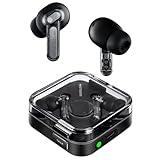
- Your Voice, Amplified. The Noise, Eliminated: Integrated into the Nothing Ear (3) charging case is a advanced dual-microphone system powered by specialized ambient filtering mics. This technology, called Super Mic, precisely targets your voice while cutting through extreme background noise (up to 95 dB), ensuring your calls and voice messages are transmitted with absolute clarity
- Intelligent Silence, Immersive Sound: Featuring Smart Hybrid ANC, Nothing Ear (3) delivers up to 45 dB of Active Noise Cancellation. This Bluetooth wireless earbuds recalibrate every millisecond to block a wide range of noise with a 5000Hz undesired noise to enjoy crystal-clear audio. Switch to Transparency Mode to seamlessly connect with your surroundings
- Super Mic, Tap to Engage: To activate the Nothing ear buds Super Mic, simply press and hold the 'TALK' button with the case within 5cm of your mouth for optimal clarity in loud settings. Hold for quick commands, or double-tap to lock it for extended conversations