
Nothing Ear (Open) Review
Nothing has built its identity around see-through industrial design, and the Ear (Open) extends that visual language to a form factor that leaves the ear canal completely unsealed.
An original hifireport.com article. Scraping, copying, or republishing is prohibited.
Verdict First
The Nothing Ear (Open) is the open-ear earbud to pick when hearing your surroundings matters more than bass depth or noise cancellation. At 8.1 grams per hook, the 50-degree gravity tilt keeps them locked through running and gym work, and the 14.2 mm titanium-coated driver delivers bass and treble that push past what most open-ear designs manage. Thirty hours of combined battery covers a work week on a single case charge. The two real trade-offs are the absence of wireless charging and a single-size earhook that does not fit every ear shape. This is the set to reach for when environmental awareness outranks isolation.
What We Like / What We Don’t
What we like:
- 8.1-gram earhooks with a 50-degree tilt and three-point balance hold through running, burpees, and everyday movement without constant readjustment
- The 14.2 mm stepped driver with a titanium-coated diaphragm produces bass and treble detail that outperforms most open-ear alternatives
- 30 hours of combined playback (8 hours per bud, 22 from the case) covers a full week of commutes and work sessions
- The pinch control uses a single countersunk capacitive point, which one owner confirmed prevents accidental triggers even while sleeping on the side
- Dual AI-enhanced microphones trained on 28 million noise samples keep phone calls clear in wind and crowded gyms
What we don’t:
- No wireless charging; the case takes USB-C only, a gap several owners flagged at this tier
- A single earhook size means the fit is a coin flip for larger or smaller ears, and no alternative loop options ship in the box
- Sound leaks at high volume, so a person standing close by can hear the track playing
- No in-ear detection, meaning the buds keep playing after you remove them
- The transparent charging case has a slight internal rattle that more than one reviewer noticed out of the box
Who Should Buy This
Runners, cyclists, and outdoor commuters who need to hear a siren, a race director’s cue, or a car backing up without pausing their playlist form the core user group. Podcast and audiobook listeners who want eight hours of comfortable, canal-free listening will also find these well matched to long sessions, especially in open offices where sealing your ears feels socially odd. Anyone with sensitive ear canals who finds in-ear buds warm, sweaty, or irritating gets genuine relief from the open hook design, and more than one owner with that exact complaint bought a second pair.
An original hifireport.com article. Scraping, copying, or republishing is prohibited.

The anti-profile is clear: if you want deep, textured bass in a loud gym, on a flight, or in a subway car, the open design cannot deliver that isolation. Sealed earbuds with active noise cancellation remain the tool for those scenarios. The Ear (Open) trades low-frequency impact and quiet-room focus for constant awareness of what is happening around you, and that is a deliberate design choice rather than a limitation to work around.
Design and Comfort
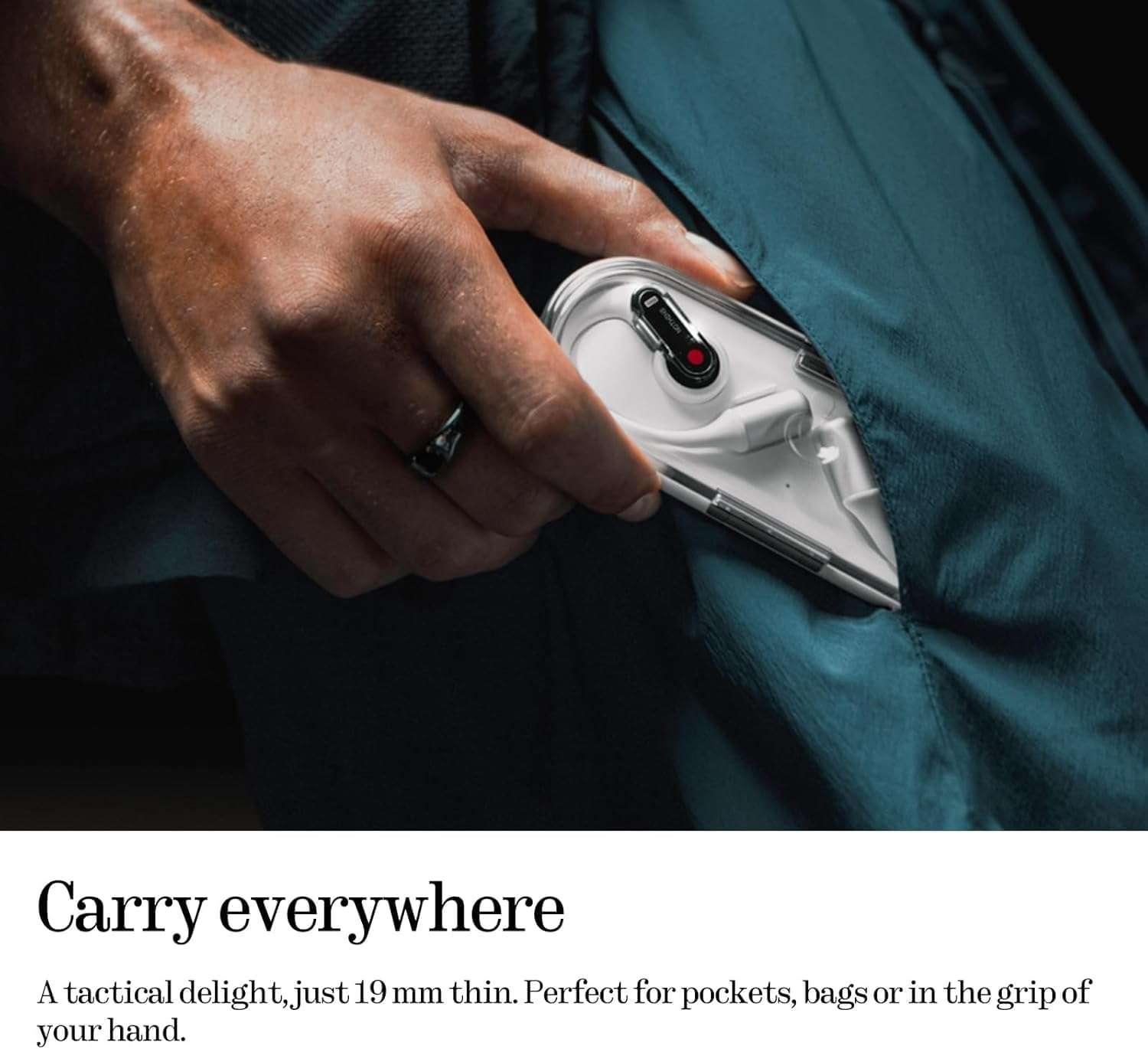
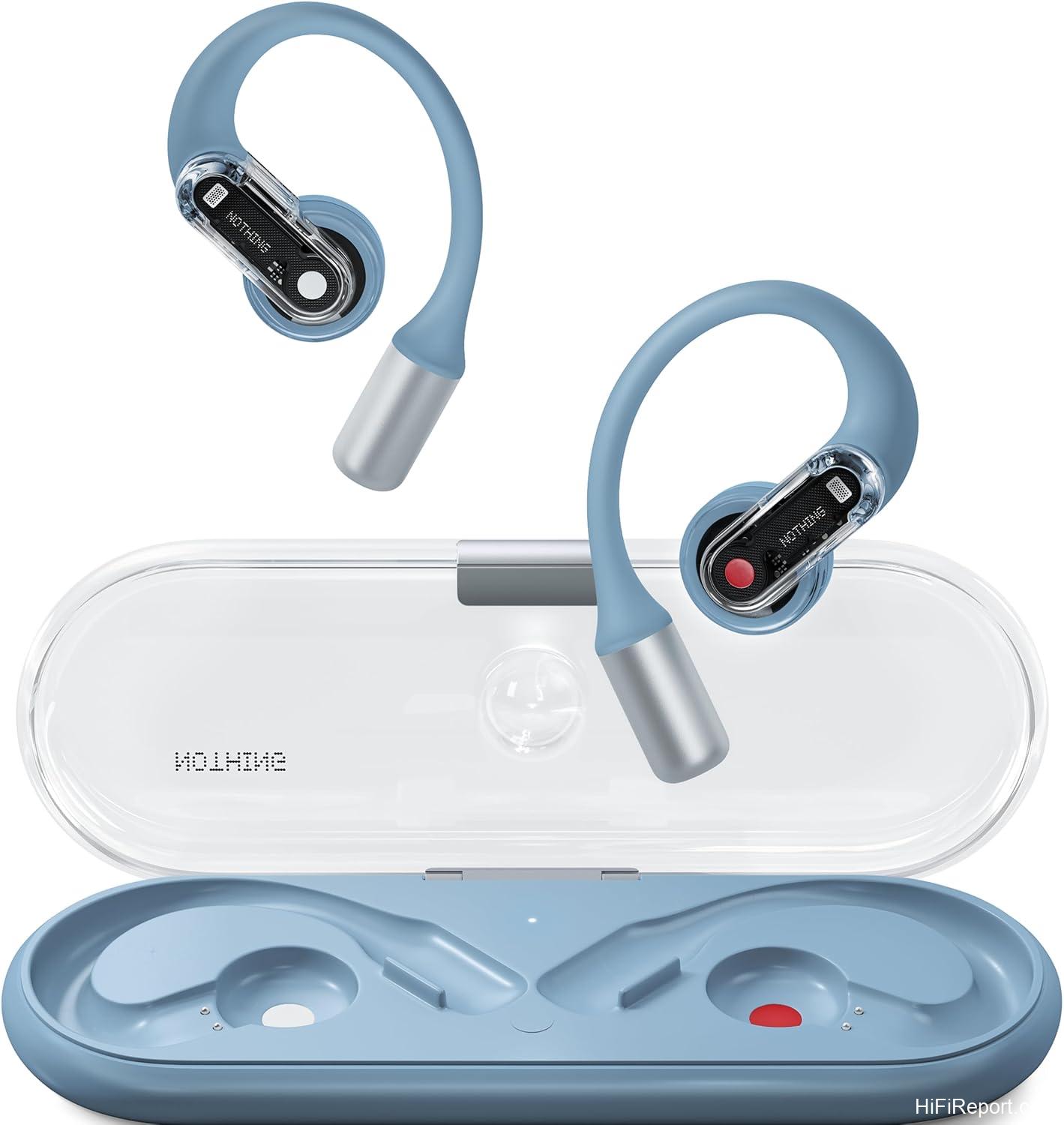
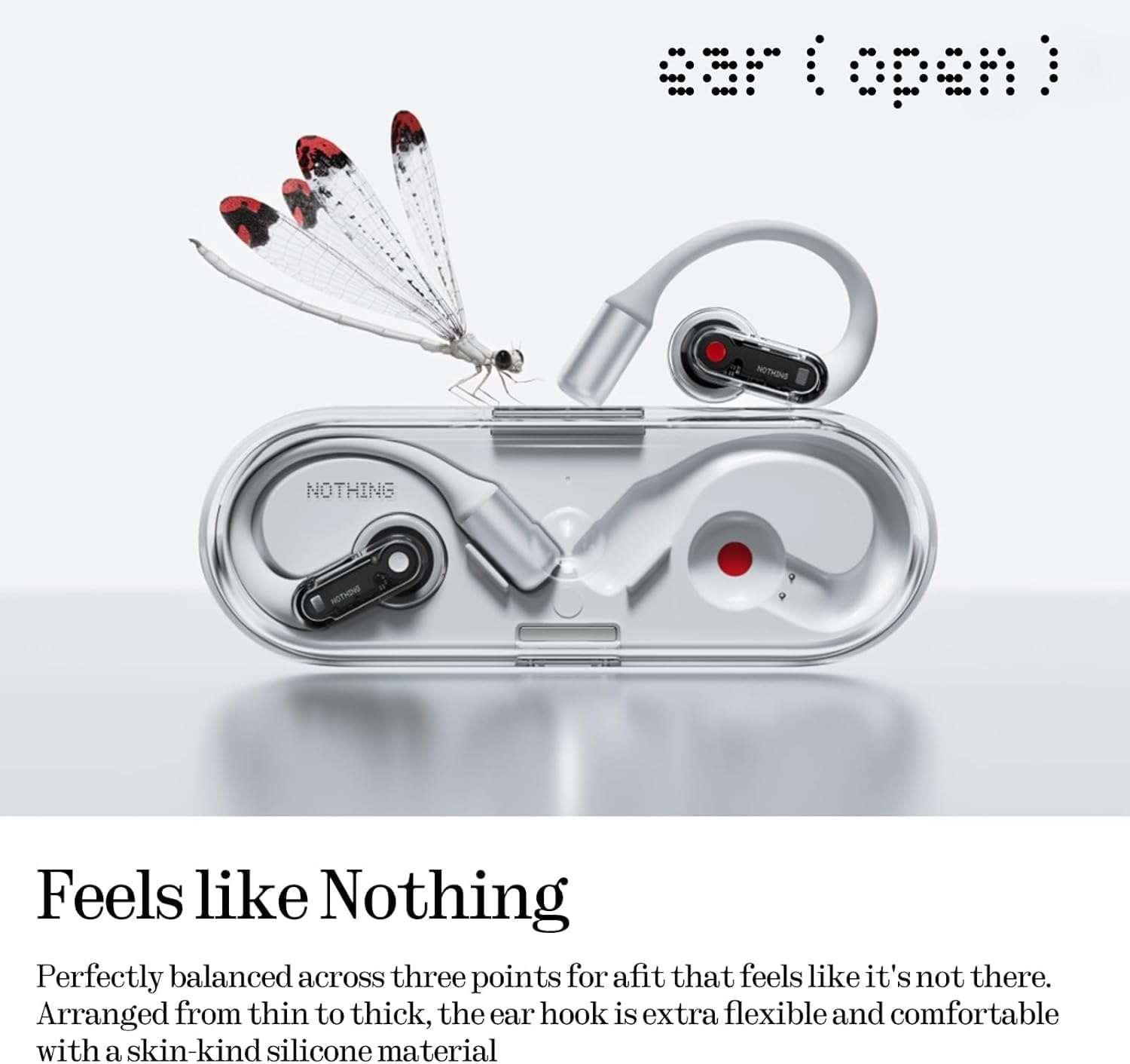
The build is light and purposeful. Each earhook weighs 8.1 grams and uses a three-point balance with skin-friendly silicone to spread pressure across the top and back of the ear. Nothing earned a Red Dot award for the design of both the earbuds and the transparent charging case. The hooks carry a 50-degree gravity tilt that angles the 14.2 mm driver toward the ear opening without inserting it, and the case is a slim, elongated rectangle that sits flat in a jacket pocket or purse.
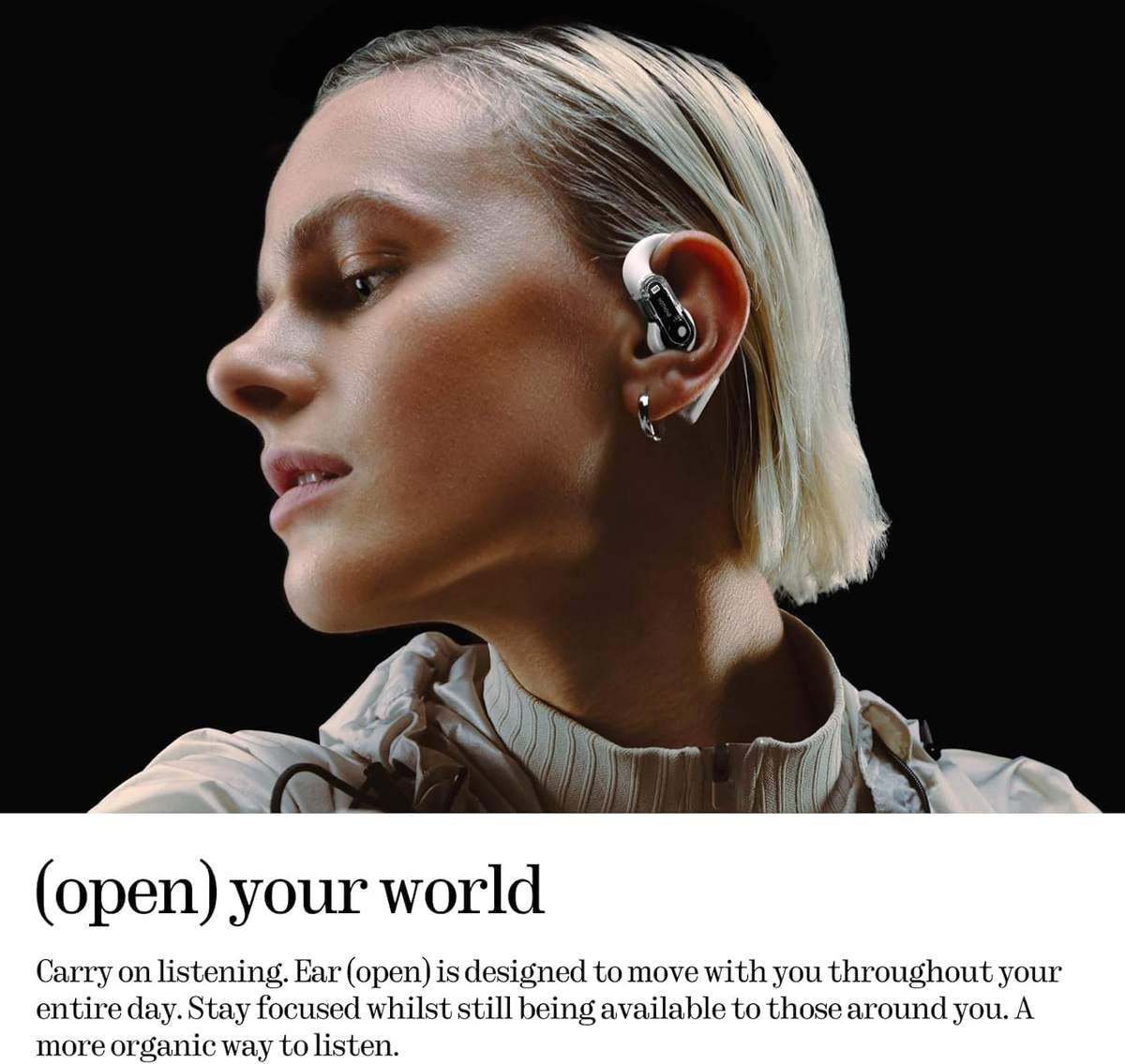
Fit is where the single-size limitation becomes visible. Owners with smaller ears report the driver sitting right at the canal opening for clean audio, while those with larger ears find the hook stretches the driver away, muddying the mids and adding distortion. One reviewer noted the hooks press into the ear when wearing sunglasses or safety glasses, pushing the plastic uncomfortably or shifting the fit. A few owners mentioned the buds can fly off if you pull a shirt over your head with the hooks still attached. The capacitive control point solved a specific problem for one longtime bone-conduction user: the slightly recessed trigger means a pillow cannot activate it, and the buds stayed on through a full night without any accidental pauses or track skips.
Sound: What to Expect
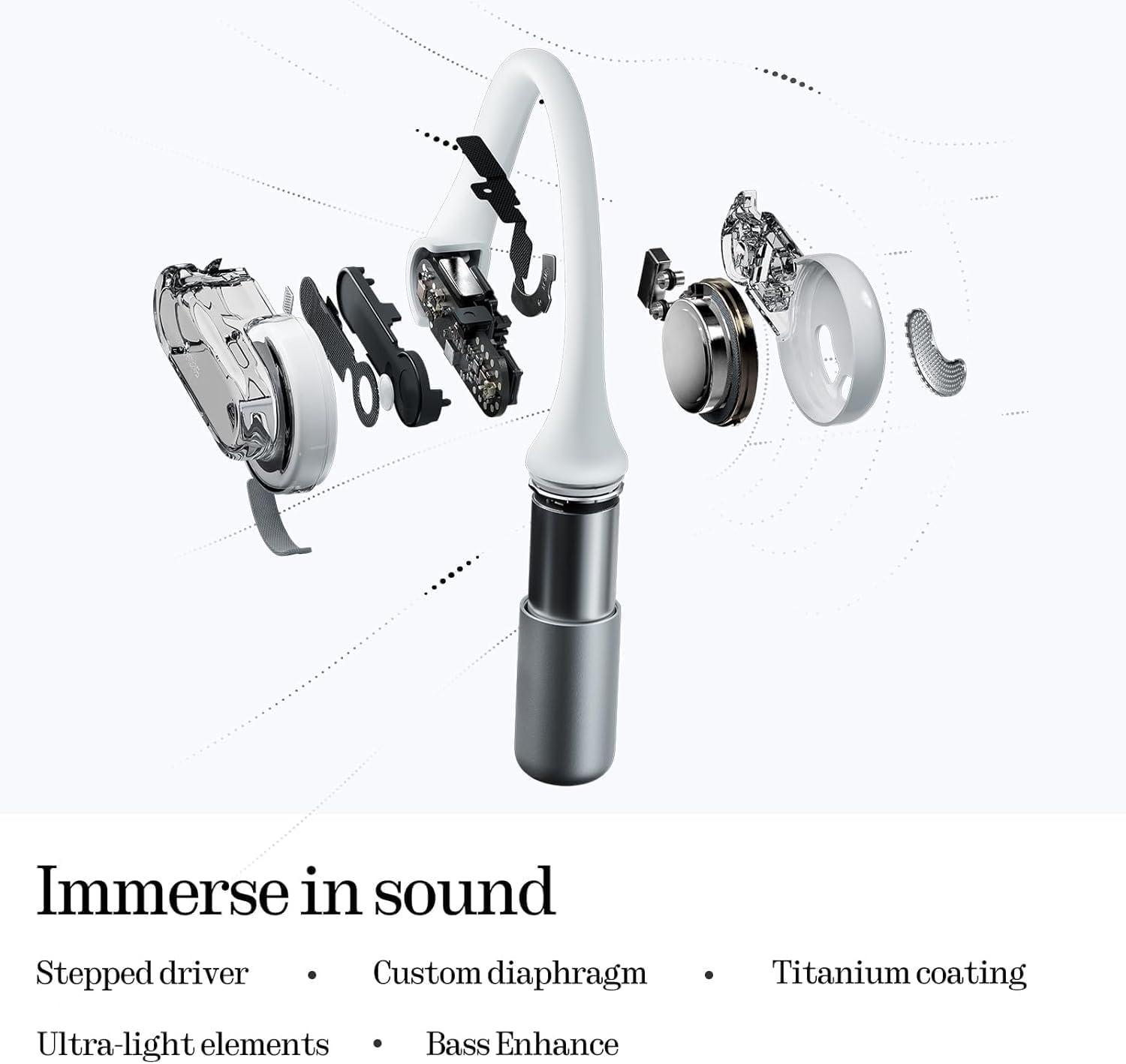
For a driver that fires sound from outside the ear canal, the bass and detail exceed what most owners expected. The 14.2 mm stepped driver with its titanium-coated diaphragm and ultralight components produces what the product listing calls “rich bass and crisp treble,” and multiple reviewers confirmed that low frequencies come through more clearly than with competing open-ear options. One owner coming from the Shokz OpenRun line called the sound comparable to the third-generation Trekz exciter, which in their daily workflow is more than enough for open-ear use.
The codec story sets the ceiling. The Ear (Open) supports only AAC and SBC, which sits below the LDAC support on Nothing’s newer sealed buds. One reviewer pushed the driver closer to the canal with a finger and heard noticeably deeper bass and cleaner separation, confirming that the open gap costs detail. In a noisy street or a spinning gym, ambient sound bleeds into the mids and the result is acceptable for voice content but not reference-grade for music.
The Nothing X app lets you reshape the tonal balance in three swipes and toggle a low-latency mode for gaming. Voice-forward content, podcasts, audiobooks, and phone calls, is where the tuning feels most at home. Music still works, but the open design means you trade some separation and bass texture for the ambient sound that pours in around the driver.
Silence on Demand
There is no active noise cancellation and no transparency mode; the open earhook design makes the outside world audible at all times, which is the entire point of the product. The Sound Seal System that Nothing describes as containing audio “like an invisible dome” keeps most leakage contained, but at high volume in a quiet office or library, a person standing a foot away can still pick up the track. One owner specifically noted that when they removed the buds they could barely hear the music, indicating the dome does most of its job under normal conditions. For calls, the dual AI-enhanced microphones with Clear Voice Technology 3.0, trained on 28 million noise samples, cut wind and gym clatter so the person on the other end hears you clearly even on a cycling route or in a crowded space.
Run Time
Thirty hours of combined playback is the headline number: up to 8 hours from the earbuds themselves and 22 additional hours from the transparent charging case. One owner on iOS measured 6 to 7 hours per charge with Cross Fade enabled while looping a playlist, which tracks with the 8-hour claim when continuous Bluetooth multipoint and other features are active. The case charges over USB-C and supports fast charging, but it has no wireless charging pad, a gap several reviewers called out as unexpected at this tier.
How It Compares
Within Nothing’s own lineup, the Ear (Open) fills a slot none of the sealed models cover. The Ear (3), the company’s current sealed flagship, supports Bluetooth 5.4 with AAC, SBC, and LDAC codecs and delivers 10 hours of battery with ANC disabled, rising to 38 hours with the case. The Ear (Open) trades that codec headroom and active noise cancellation for a form factor that leaves the canal open. Both carry an IP54 rating, so weather resistance is a tie. The earlier Ear (1) managed 34 hours combined with ANC off, placing the Ear (Open)’s 30-hour figure in the same neighborhood despite the larger 14.2 mm driver and the open design.
Against the sealed models, the Ear (Open) adds multipoint pairing, so it can hold a connection to a laptop and a phone simultaneously and switch between them. The Nothing X app offers EQ and a low-latency gaming mode on the open model, which the sealed buds also support, so the software layer is shared. The key structural difference remains the form factor: the Ear (Open) is the only product in the family that does not seal the canal, and that choice drives every other spec decision, from the driver size to the absence of ANC.
What’s New Over the Previous Model
The Ear (Open) is Nothing’s first product in the open-ear category, so there is no direct predecessor with a spec delta to track. What the addition brings to the family is a new use-case option: every prior earbud in the lineup (Ear (1), Ear (stick), Ear (2), Ear (a), Ear (3)) seals the canal, with or without active noise cancellation. The Ear (Open) drops the seal entirely, keeps the see-through case design, and introduces the 50-degree earhook form factor with a 14.2 mm driver tuned for an open environment. For existing Nothing owners, it is a complementary device for awareness-critical situations rather than an upgrade path from a sealed pair.
What Owners Say
The praise centers on comfort and the “you forget they are on” factor. Multiple reviewers, some coming from in-ear buds and some from bone-conduction bands, said the 8.1-gram hooks let them wear the earbuds for hours without the pressure, heat, or sweat that sealed designs create. Sound quality drew consistent positive notes, with owners surprised by the bass depth and the clarity of voice content. The pinch-control system, with its single recessed capacitive point, earned specific praise for eliminating the accidental pauses and track skips that plague touch-surface buds during workouts or while sleeping. One owner coming from a competing open-ear brand noted that when they removed the Nothing buds, they could barely hear the music, whereas the competitor leaked more.
The complaints cluster around fit and a handful of missing features. Owners with larger ears reported the driver sits too far from the canal, muddying the mids and adding distortion; the single earhook size offers no adjustment, and one reviewer suggested detachable loops or bendable silicone as a fix. The lack of wireless charging and in-ear detection generated the most repeated gripes, with one owner noting that even Nothing’s lower-tier CMF line includes in-ear detection. A small rattle inside the case, sound leakage at high volume, and a microphone quality that one Australian owner described as “showing age” round out the minor irritants.
Should You Buy It
If your daily listening happens on a bike, a running route, an open-plan office, or a commute where you need to hear an announcement or a car horn, the Ear (Open) solves that problem more completely than any sealed bud in Nothing’s lineup. The 30-hour battery, the secure 8.1-gram hook, and the clear call quality backed by 28-million-sample AI noise reduction make it a set-and-forget device for those scenarios. The two gaps, no wireless charging and a single earhook size, are real but manageable: carry a USB-C cable and test the fit on your own ears before committing.
Best for runners, cyclists, open-office workers, and podcast listeners who want all-day comfort and constant environmental awareness without sealing the ear canal.
An original hifireport.com article. Scraping, copying, or republishing is prohibited.
Specifications
- Driver: 14.2 mm dynamic, titanium-coated diaphragm, stepped structure
- Weight (per earhook): 8.1 g
- Bluetooth: 5.3, multipoint pairing
- Codecs: AAC, SBC
- Battery (earbuds): up to 8 hours
- Battery (combined with case): 30 hours
- Water and dust resistance: IP54
- Microphones: dual AI-enhanced, Clear Voice Technology 3.0
- Pairing: Google Fast Pair, Microsoft Swift Pair
- Companion app: Nothing X (EQ, low-latency gaming mode)
Common Questions
Do I need to put these in my ear canal?
No. The earhooks are designed to rest on top of and behind the ear, leaving the canal completely open. The 14.2 mm driver fires sound from just outside the opening. If you want sealed, in-canal audio, the Ear (3) or Ear (2) are the Nothing models built for that use case.
Will they stay on during a run or at the gym?
Owners report the 50-degree tilt and three-point balance hold through running, burpees, core work, and bench presses without constant readjustment. A few owners noted the buds can shift if you pull a shirt over your head with the hooks still attached, so remove them before dressing or undressing.
Can I wear them with sunglasses or safety glasses?
Multiple owners said the temple arms of glasses press against the earhook, either pushing the plastic into the ear or shifting the fit to an uncomfortable position. If you wear glasses or safety goggles daily, test the fit with them on before settling in for a long listening session.
Do they connect to both Android and iPhone?
Yes. The Ear (Open) supports Google Fast Pair on Android and Microsoft Swift Pair on iOS, and multipoint Bluetooth 5.3 lets it hold connections to two devices at once. The Nothing X app works on both platforms for EQ adjustments and control customization.

- Comfortable to Wear: Nothing Ear (Open) ultra-light open earbuds feature an ergonomic open ear hook design with a 50-degree tilt, a three-point balance, and skin-friendly silicone for all-day comfort and a secure fit. Please distinguish between left and right, and adjust the position of the earbuds into the ear according to the shape of your ear after wearing to bring you a better and more comfortable listening experience.
- Immersive Sound Quality: These open-ear headphones serve up rich bass and crisp treble, powered by an innovative stepped driver. Its uniquely shaped diaphragm, titanium alloy coating, and ultralight components deliver clear, balanced audio—making every note stand out.
- Bluetooth 5.3 & Seamless Dual Connection: These open-ear wireless earbuds feature the latest Bluetooth 5.3 for stable, low-latency audio—perfect for sports, fitness, travel, and office use. With multipoint pairing, they seamlessly switch between music and calls, delivering a hassle-free open audio experience with minimal setup. Whether you’re working out, commuting, or in meetings, the smooth dual connection elevates convenience in daily life and work.