
NuPrime AMG One Mono Power Amplifier Review
A few years back, NuPrime decided to democratize the groundbreaking 1MΩ technology from their flagship Evolution One power amplifier, introducing it into a more accessible product line. This new series was playfully dubbed “AMG,” a moniker derived from “One/ A Mega.”
Borrowing the prestigious initials from Mercedes-Benz’s high-performance division proved to be a masterstroke in branding, immediately lending the NuPrime AMG series a certain cachet.
However, a catchy name alone is no guarantee of success; true merit must lie beneath the surface. The initial AMG duo – the AMG PRA preamplifier and AMG STA power amplifier – delivered on this promise. Boasting a more refined aesthetic than the preceding 9 series and, crucially, a more nuanced sonic texture courtesy of the 1MΩ technology, the AMG PRA and AMG STA quickly became sought-after components.
ODC Class D Amplification
The AMG STA is a stereo amplifier, so the arrival of the monoblock AMG One some three years later might seem like a considerable gap. However, the AMG One is far more than just a mono rendition of the AMG STA.
Technologically, the AMG One represents a significant step forward, incorporating NuPrime’s latest advancements. Approximately a year prior to the AMG One’s debut, NuPrime unveiled the flagship Evolution STA stereo power amplifier. Building upon the foundation of the Evolution One, the Evolution STA introduced ODC technology, engineered to drastically reduce Total Harmonic Distortion plus Noise (THD+N).
Traditionally, designers have employed negative feedback as a primary tool to combat distortion. This involves inverting the output signal, superimposing it onto the input signal to isolate error signals, and then feeding this inverted error signal back into the input to correct inaccuracies through cancellation.
NuPrime, however, posits that while effective at diminishing distortion and lowering distortion figures, this conventional approach imparts a distinct “negative feedback sound.” Instead, NuPrime’s ODC (Only Distortion Cancellation) technology extracts error signals directly from the MOSFET devices and the output filter circuitry. This achieves distortion reduction while significantly minimizing negative feedback, thus avoiding the sonic artifacts often associated with it.
The results of NuPrime’s innovative approach are compelling. Factory specifications for the Evolution STA cite a distortion figure of less than 0.0025% at 5 watts (1 kHz) output and under 0.007% at 50 watts. These figures place it firmly in the realm of high-end amplification.
And the AMG One? NuPrime’s data sheet indicates a distortion rate of 0.003% at 5 watts and a mere 0.004% at 50 watts. This performance rivals the flagship Evolution STA. Furthermore, NuPrime claims a maximum distortion rate of under 0.006% across a dynamic output range from 2 to 80 watts, and even at 100 watts, distortion remains impressively low at below 0.03%.
Hence, NuPrime proudly designates this amplification method “ODC Class D,” signifying “Only Distortion Cancellation” – eliminating distortion without compromising the music’s integrity. They view ODC Class D as a pivotal advancement in Class D amplification, enabling it to achieve a “natural and pure sound.”
Powerful Output, Custom Circuitry
Despite its modest dimensions, the monoblock AMG One delivers a substantial 170 watts into 8 ohms and a formidable 220 watts into 4 ohms. This impressive output stems from NuPrime’s proprietary Class D amplifier circuit, operating at a high switching frequency of 600kHz.
While the market is replete with Class D amplifiers from numerous manufacturers, including established high-end brands, few undertake the intricate task of developing their own Class D amplification circuits. The majority rely on commercially available modules. NuPrime, in contrast, champions in-house development. This commitment to bespoke design sets NuPrime amplifiers apart, akin to wearing a tailored suit rather than off-the-rack designer wear.
Bespoke Power Supply Components
Attention to detail extends to the power supply. The AMG One utilizes a custom-engineered 250W toroidal transformer, meticulously designed to provide a clean, stable, and exceptionally low-noise power source. The power pathways are engineered for high current delivery, accommodating up to 15A, with low-impedance terminals at connection points to ensure robust and reliable current transfer.
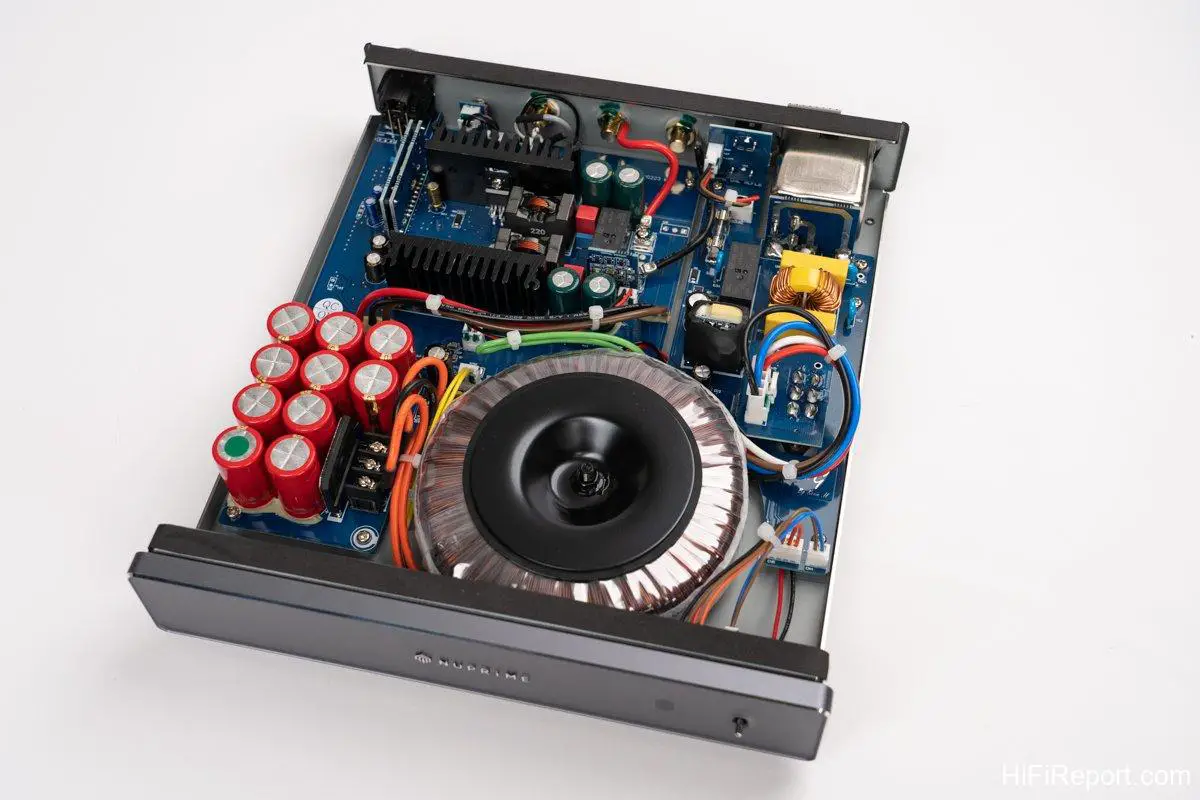
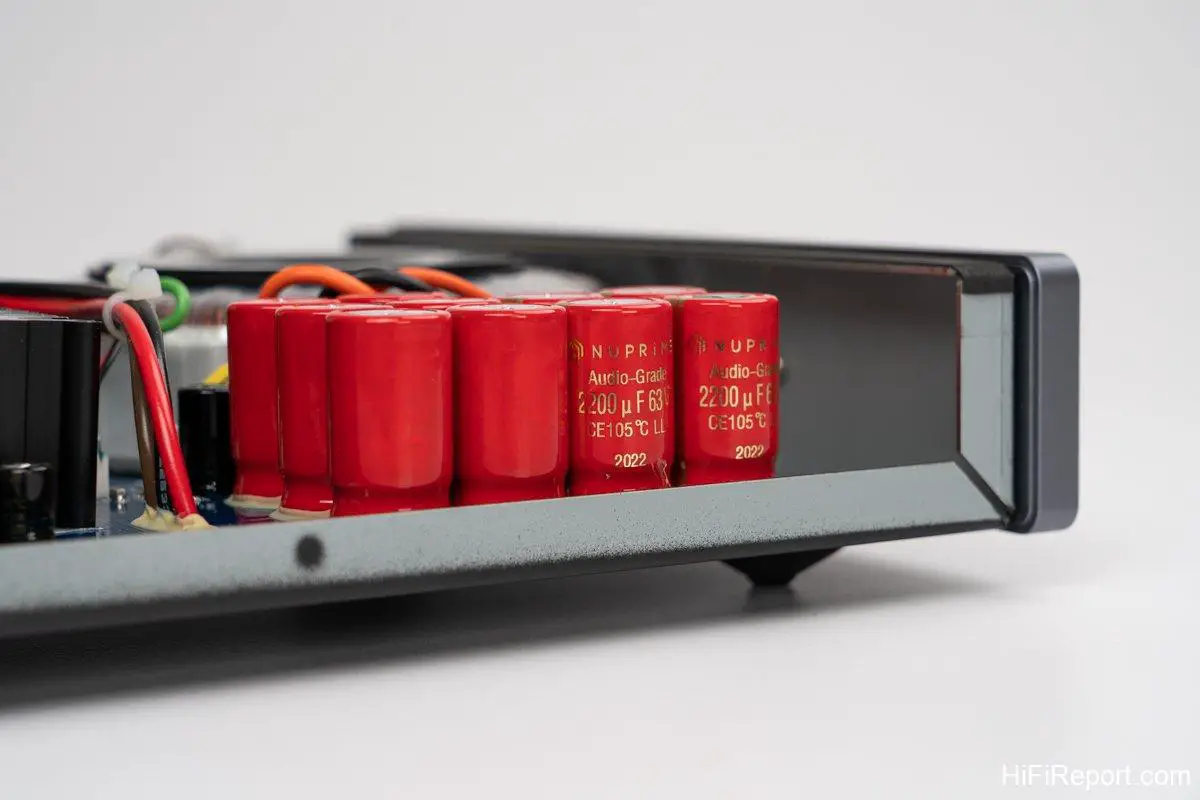
Filtering duties in the power supply are handled by custom-made capacitors, bearing the NuPrime insignia, with a total capacitance of 22,000uF. These bespoke components underscore NuPrime’s commitment to optimizing every facet of the amplifier’s design.
Elegant and Distinctive Aesthetics
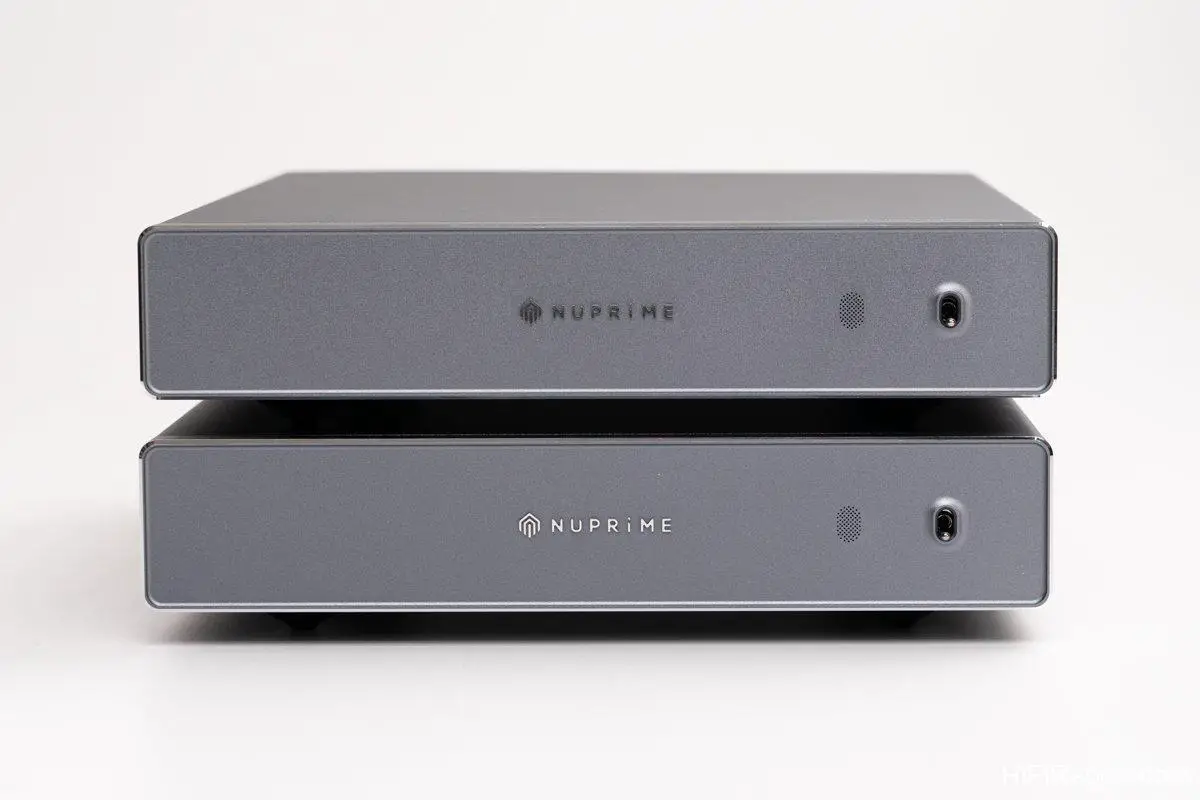
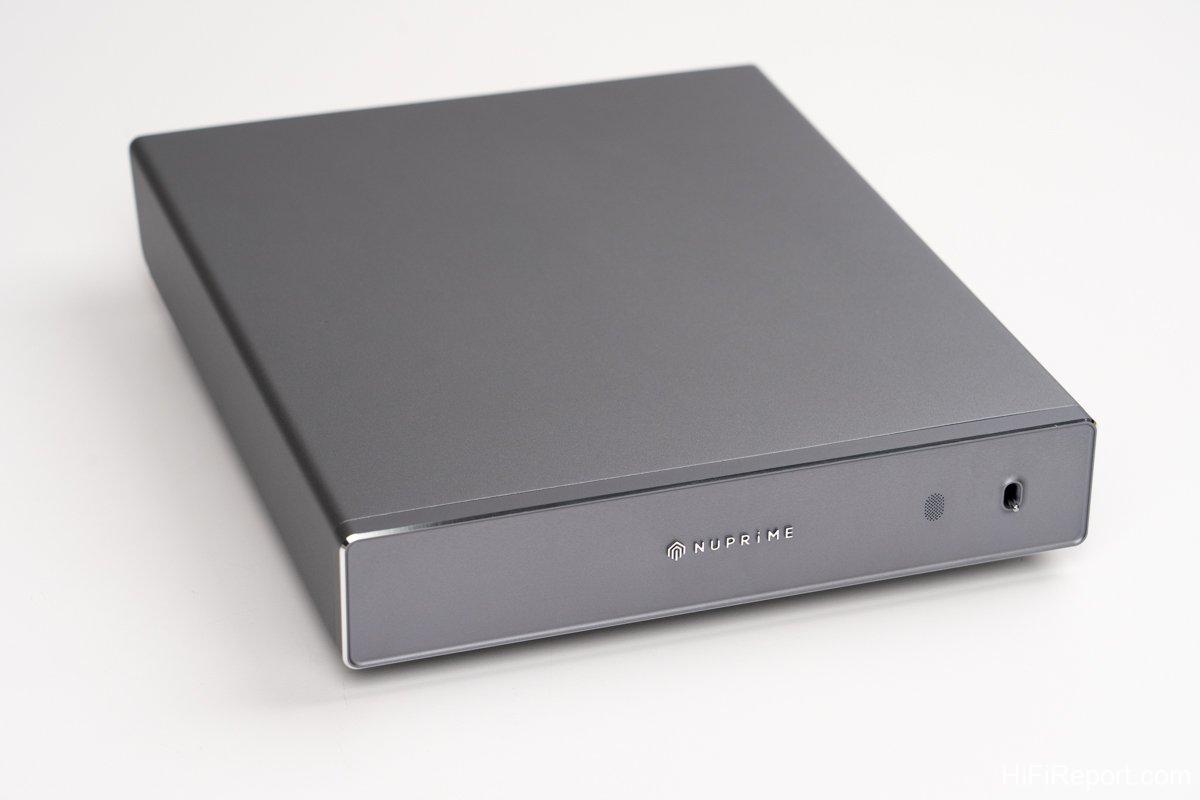
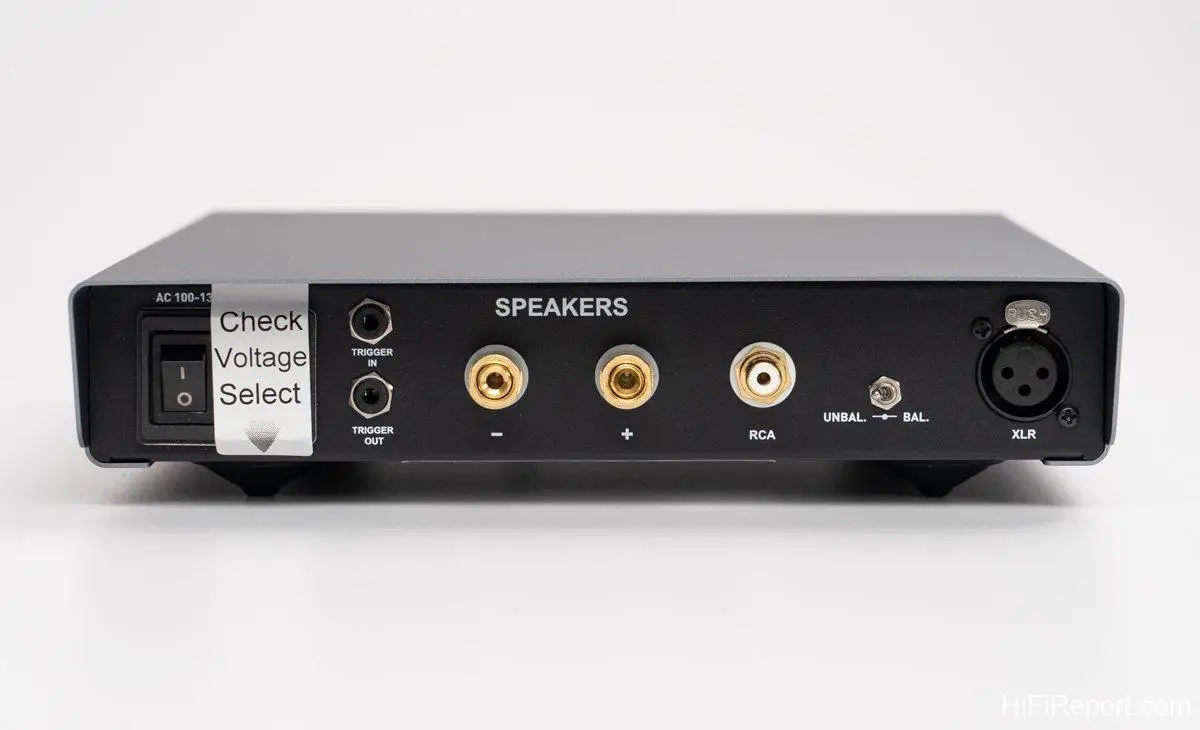
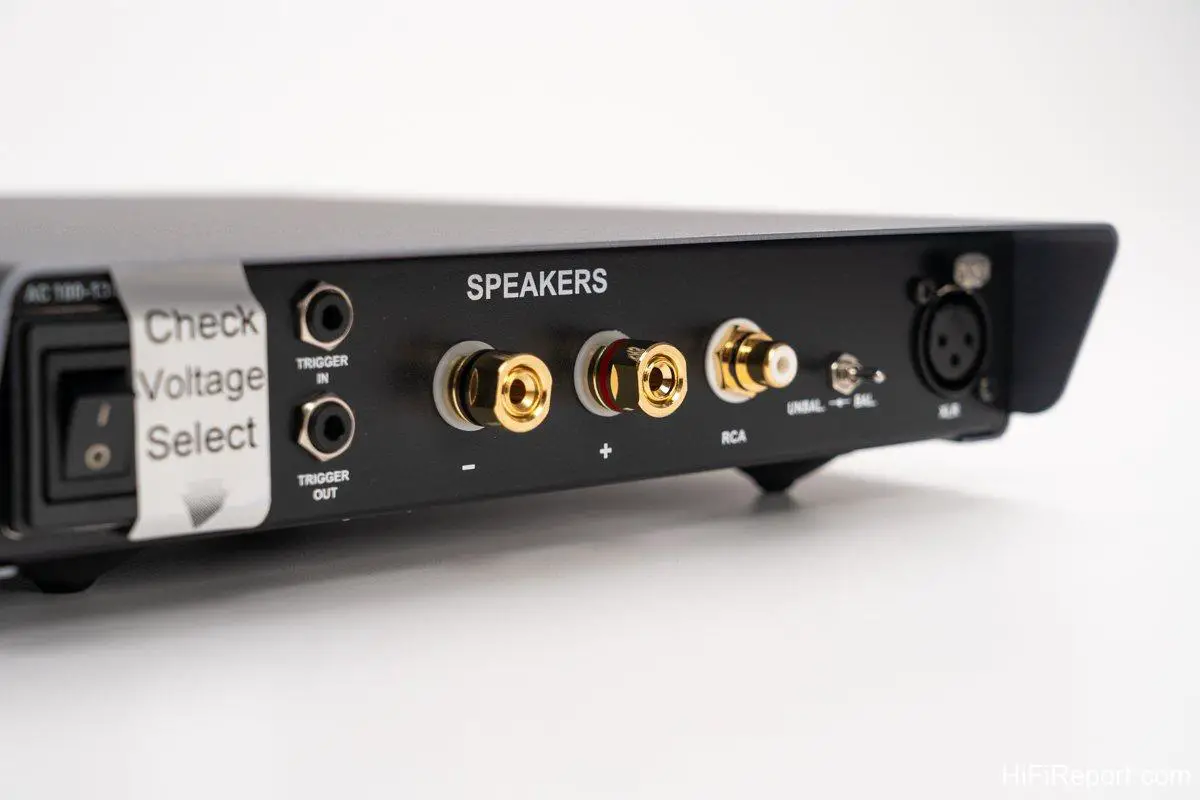
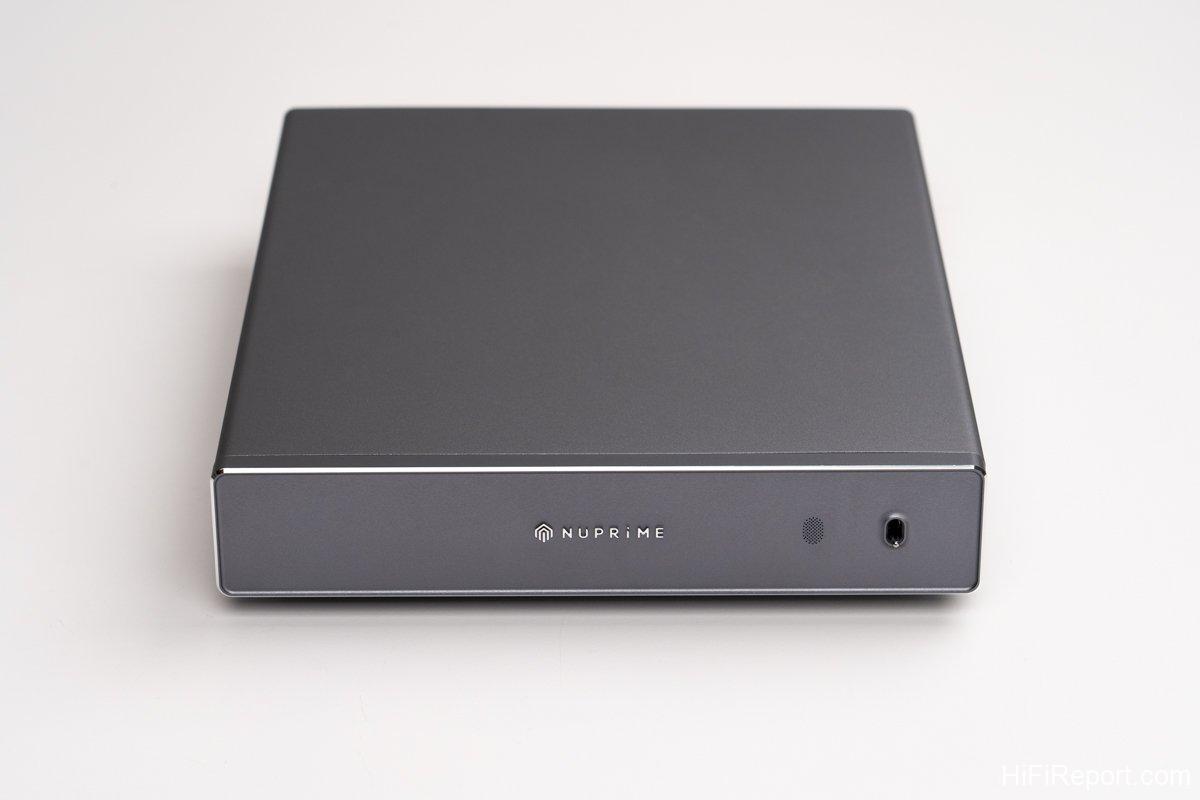
For input connectivity, the AMG One offers both RCA and XLR inputs, selectable via a rear-panel toggle switch. The chassis design echoes that of its AMG predecessors, featuring a meticulously CNC-machined front panel crafted from a substantial 15mm thick aluminum billet. The beveled edges, polished surfaces, the subtle circular recess surrounding the power toggle, and the embossed NuPrime logo all contribute to the AMG One’s air of refined sophistication.
The gracefully curved edges of the top cover further distinguish it from the more angular, masculine aesthetic of the Evolution and 10 series, and the utilitarian design of NuPrime’s entry-level offerings.
While the frontal aspect of the AMG series design is undeniably appealing, one element strikes a slightly discordant note. The rearward extension of the top cover, resembling an automotive spoiler, seems incongruous. While acknowledging the retractable spoiler on the Mercedes-AMG One hypercar, its purpose on an amplifier remains elusive. This “spoiler” can prove cumbersome during cable connections, occasionally causing scrapes, particularly with XLR connectors. Speaker cables terminated with Y-spades also present connection challenges. NuPrime might consider dispensing with this arguably superfluous design element in future iterations.
Sonically Sweet and Engaging
“Spoiler” quibbles aside, the AMG One excels in all other respects. Its visual appeal is matched, and perhaps surpassed, by its sonic capabilities. Within its price bracket, NuPrime consistently delivers products that stand out for their exceptional value. Having previously evaluated both the 9 series STA-9 and its successor, the STA-9X, I unequivocally declared them to be “unbeatable at their price.” Similarly, my positive impression of the ST-10 led to its acquisition.
Listening to the AMG One is an equally rewarding experience. Paired with a Spec PRM-DAC-3EX serving as both DAC and preamplifier, and driving Jean Marie-Reynaud Abscisse Jubilé loudspeakers, the AMG One exhibited a sound that was sweet and warmly inviting. Imaging was solid and three-dimensional, outlines were clearly delineated, and the soundstage unfolded naturally in all dimensions. Bass was taut and resilient, and the overall sonic presentation was smooth, comfortable, and utterly devoid of harshness or grain.
Orchestral Grandeur, Maintained Order
Taking Anne-Sophie Mutter’s “Across the Stars” album as a reference, John Williams’ orchestral scores, reimagined for Mutter with the solo violin taking center stage, highlight the melodic core of his compositions. This arrangement also serves as a stringent test of system balance, revealing any tendency towards violin stridency in more demanding passages.
In “Rey’s Theme” from “Star Wars: The Force Awakens,” the inherently rich low-string textures are rendered with exceptional clarity and articulation by the AMG One. The violin’s melodic lines are distinct, possessing palpable texture and density, remaining smooth and composed even in forceful high-register passages.
The AMG One’s sonic composure and engaging character are particularly evident in the music’s more dynamic sections. In “Hedwig’s Theme” from “Harry Potter and the Sorcerer’s Stone,” the opening celesta notes shimmer with a magical ambience. The crystalline tones are rich in harmonics, with a natural and unforced decay.
The violin’s presence is assertive and grounded, its texture readily discernible. Tonally, the presentation is remarkably neutral, free from any overt coloration. During orchestral crescendos, the stage layout remains clearly defined, with instrumental sections precisely located. The amplifier effortlessly conveys dynamic peaks without inducing strain, while quieter passages retain clarity and nuance. The seamless transitions between dynamic extremes contribute to a highly musical and engaging listening experience.
Expansive Soundstage, Layered Depth
Despite its compact physical footprint, the AMG One projects a soundstage that belies its size. It generates a profound sense of depth, extending far beyond the speakers. Soundstage width, while influenced by speaker placement, is generally expansive, exceeding that of the 9 series and approaching the breadth of the 10 series.
Listening to Hans Zimmer’s score for “Dune,” particularly “Dream of Arrakis,” the soundstage depth is truly immersive. This expansive depth allows for a deeper appreciation of Zimmer’s intricate sonic tapestry. The opening percussion strikes are potent and impactful, yet the AMG One imbues them with a subtle elasticity, avoiding undue aggression.
Throughout the “Dune” soundtrack, Zimmer masterfully employs synthesizers and a diverse array of unconventional instruments, crafting sounds that are simultaneously familiar and alien, conjuring an atmosphere of tension and otherworldly mystery. In “Herald of the Change,” deep bass frequencies underpin the sonic landscape, while the main melody floats above, interwoven with textured low-frequency lines.
The AMG One consistently excels at delineating these layers, lucidly revealing the music’s structure, organization, and intricate details. Its performance with the “Dune” score is exemplary within its price class.
Detail-Rich and Engaging
When tasked with blues and jazz, the AMG One imbues these genres with an added layer of atmosphere and emotional depth. Take Shelby Lynne’s “Just a Little Lovin'” album, for example. In the title track’s intro, the interplay between drums, guitar, and bass establishes a distinctly blues-infused mood.
The drum sound is crisp and impactful, while the cymbals shimmer with a delicate airiness, creating a supremely comfortable listening experience. Shelby Lynne’s smoky vocals enter with a clearly defined presence. The nuanced articulation and vocal inflections are richly conveyed, painting a vivid sonic portrait.
Her jazz-inflected phrasing, the subtle vocal flourishes at phrase endings, the emotive tension in her high notes, the nasal resonance, and the fluid vocal transitions – all are rendered with captivating realism against a backdrop of pristine clarity.
Interlude: ST-10 Comparison
According to Mr. Xiao, NuPrime’s Technical Director, the AMG One was conceived as a more accessible iteration of the Evolution STA, intended to supersede the existing ST-10 and ST-10M models. (A pang of sentimentality here – is the beloved 10 series truly nearing its end?) In essence, the AMG One can be viewed as a simplified, dual-mono rendition of the Evolution STA.
Given the passage of time and differing system configurations, a precise assessment of the AMG One’s performance relative to the Evolution STA is challenging. However, a comparison with the ST-10 reveals a performance parity, albeit with differing sonic signatures. The ST-10 exhibits a more refined and vibrant sonic character compared to the AMG One. Despite a slightly lower power rating, the ST-10 demonstrates superior speaker control, particularly with percussive instruments like piano and drums, where it delivers greater immediacy and impact.
In contrast, the AMG One boasts a demonstrably quieter and blacker background than the ST-10, and a sound that is rounder, warmer, and more relaxed. In terms of imaging and soundstage presentation, the AMG One is slightly more recessed, while the ST-10 projects a more forward sonic image. The AMG One’s speaker control manifests not in overt speed but in a sense of unwavering stability.
When reproducing complex orchestral works or music with wide dynamic swings, the AMG One maintains its composure, never descending into sonic disarray. It preserves a well-defined soundstage and instrumental separation with remarkable poise. While perhaps trading some outright speed and удар for a sweeter, more nuanced presentation, the AMG One’s sonic versatility and non-fatiguing nature make it an amplifier ideally suited for extended listening sessions and long-term companionship.
A Worthy Successor Emerges
If NuPrime’s intentions hold true, the AMG series, spearheaded by the AMG One, represents a formidable successor to the 10 series. Not only does it possess impressive performance capabilities, but it also carves out a distinct sonic territory, further differentiating itself from the flagship Evolution series. This nuanced product segmentation empowers consumers to select NuPrime amplification tailored to their specific needs, sonic preferences, and budget.
Do you prioritize sonic excellence above mere brand prestige? Then the NuPrime AMG One awaits your audition.
Specifications
* Type: Mono Power Amplifier
* Output Power (Continuous): 170W @ 8 Ohms, 220W @ 4 Ohms
* Output Power (Peak): 210W @ 8 Ohms, 260W @ 4 Ohms
* Gain: x21
* Sensitivity: 1.7Vrms
* Input Impedance: 47K Ohms
* Power/ THD Distortion/ S/N (typical) : @5W (0.003%, 95db), @50W (0.004%, 105db), @100w (0.03%, 110db)
* Frequency Response: 10Hz to 50kHz (-3dB)
* Dimensions: 285 x 235 x 55 mm
* Weight: 5kg