
NuPrime Evolution STA Stereo Flagship Amplifier Review
NuPrime’s legacy of flagship power amplifiers, inherited from the NuForce era, has long been defined by a mono-mono configuration. This purist approach champions complete separation of left and right channels, each boasting its own dedicated chassis, power supply, and amplification circuitry. The theoretical benefits are clear: maximized channel separation and enhanced sonic layering.
As a dedicated user of NuForce and NuPrime flagship power amps, currently relying on the NuPrime Evolution One as a reference, I can attest to the sonic merits. However, the mono-mono setup does present practical inconveniences. Power cord upgrades become a doubled expense, and reviewing single power cords with these amps is simply not feasible.
Furthermore, accommodating two standard chassis-width units side-by-side demands significant real estate, and ensuring symmetrical placement to avoid subtle channel imbalances requires meticulous attention.
Ultimately, the mono-mono design presents a trade-off between sonic purity and practical considerations, dependent on individual needs and priorities.
Therefore, the arrival of NuPrime’s first flagship stereo power amplifier, the Evolution STA, is a welcome development, offering audiophiles a compelling alternative.
ODC Technology: Distortion Cancellation
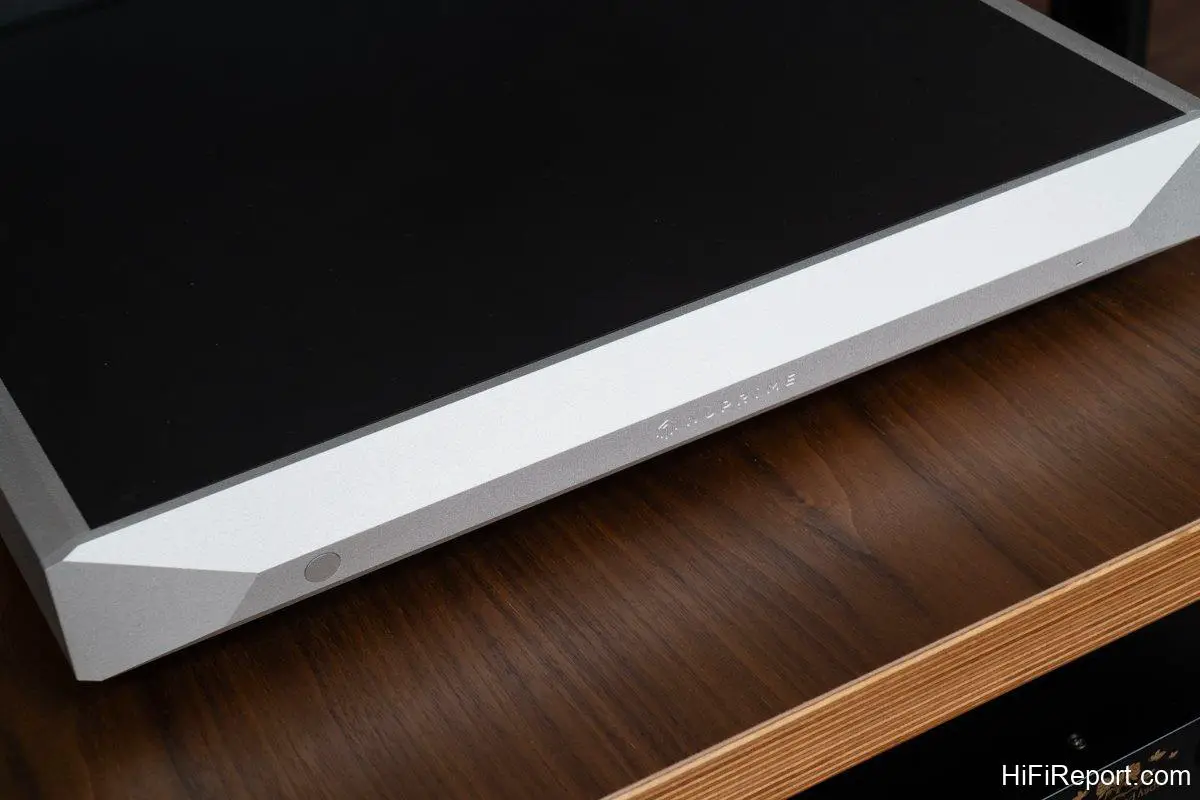
At first glance, the Evolution STA (EVO STA) mirrors its mono sibling, the Evolution One (EVO One), sharing the same chassis design available in both silver and black finishes.
However, the EVO STA is far from a mere consolidation of two EVO One units into a single enclosure. It introduces a revolutionary technology: ODC (Only Distortion Cancellation). This innovation tackles the traditional Achilles’ heel of Class D amplification – higher distortion – by dramatically reducing Total Harmonic Distortion plus Noise (THD+N).
The distortion figures are remarkably low. At a 5-watt output (1 kHz), THD+N is less than 0.0025%. Even at 50 watts, it remains below 0.007%, and at a substantial 100 watts, it only reaches 0.01%. These specifications significantly surpass the EVO One and are truly exceptional.
While ultra-low distortion doesn’t automatically guarantee sonic nirvana, it undeniably establishes the EVO STA’s credentials as a “high fidelity” amplifier in the truest sense.
Crucially, this pursuit of sonic purity doesn’t compromise power. The EVO STA delivers a robust 230 watts of continuous power into 8 ohms, a mere 10 watts shy of the EVO One, and a commanding 310 watts into 4 ohms. This ample headroom ensures effortless speaker control across a wide range of models.
ODC technology, as the acronym suggests, focuses solely on eliminating distortion while preserving the integrity of the original signal. It employs a classic feedback error correction design. By inverting the output signal and summing it with the original input, an inverted error signal is derived. This error signal is then reintroduced to the input, effectively correcting inaccuracies and yielding a more precise output.
By deriving the error signal directly from the MOSFET devices and output filter circuit within the ODC-based Class D amplification, negative feedback is significantly minimized, resulting in a substantial reduction in distortion.
Power Supply Design: Maximizing Current Delivery
Despite its stereo configuration, the EVO STA largely adheres to a dual-mono architecture internally.
The chassis is compartmentalized into three primary sections: the power supply, and separate amplification circuits for the left and right channels.
The power supply unit commands the largest internal space, occupying nearly half of the chassis volume.
Mirroring the Evolution One, the EVO STA utilizes a linear power supply, featuring a custom-engineered, low-profile toroidal transformer with a substantial 550VA capacity, ensuring a clean and ample power reservoir. The filter capacitor bank boasts an impressive total capacitance of 52,000uF.
To further optimize power delivery, every connection point within the EVO STA’s power path employs robust 40A-rated terminals. This meticulous design minimizes contact resistance, facilitating instantaneous current delivery and enhancing dynamic responsiveness.
Furthermore, power is fed to the amplification circuits directly via thick copper traces embedded within the circuit board, rather than conventional wiring. This deliberate choice minimizes power transmission losses and maximizes efficiency.
The EVO STA retains NuPrime’s proprietary hybrid Class D amplification technology, engineered to blend the linearity and low distortion characteristics of Class A with the high power and efficiency advantages of Class D.
A high reference waveform sampling frequency of 650 kHz, exceeding that of typical Class D designs, contributes to improved sonic resolution, detail retrieval, and textural nuance.
However, a notable departure from the EVO One is the EVO STA’s adoption of a more conventional 47kΩ input impedance, moving away from the previously emphasized 1MΩ value.

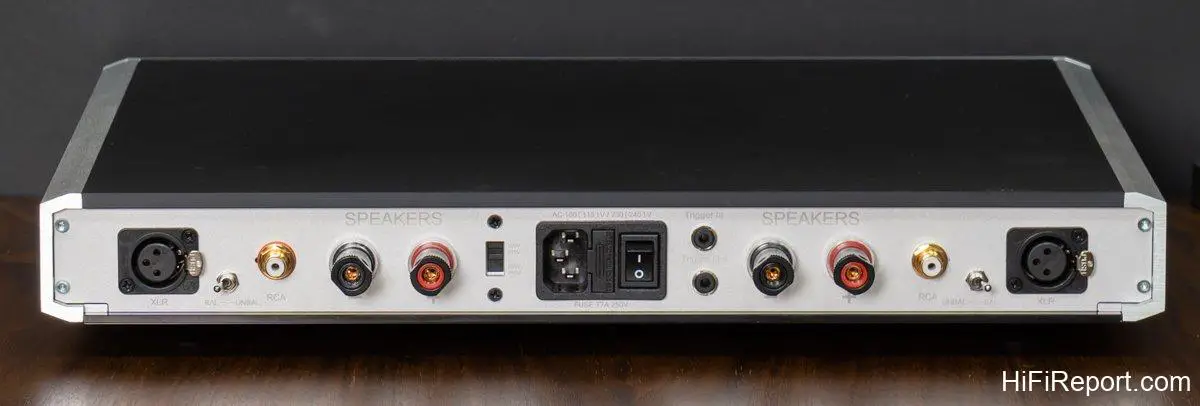
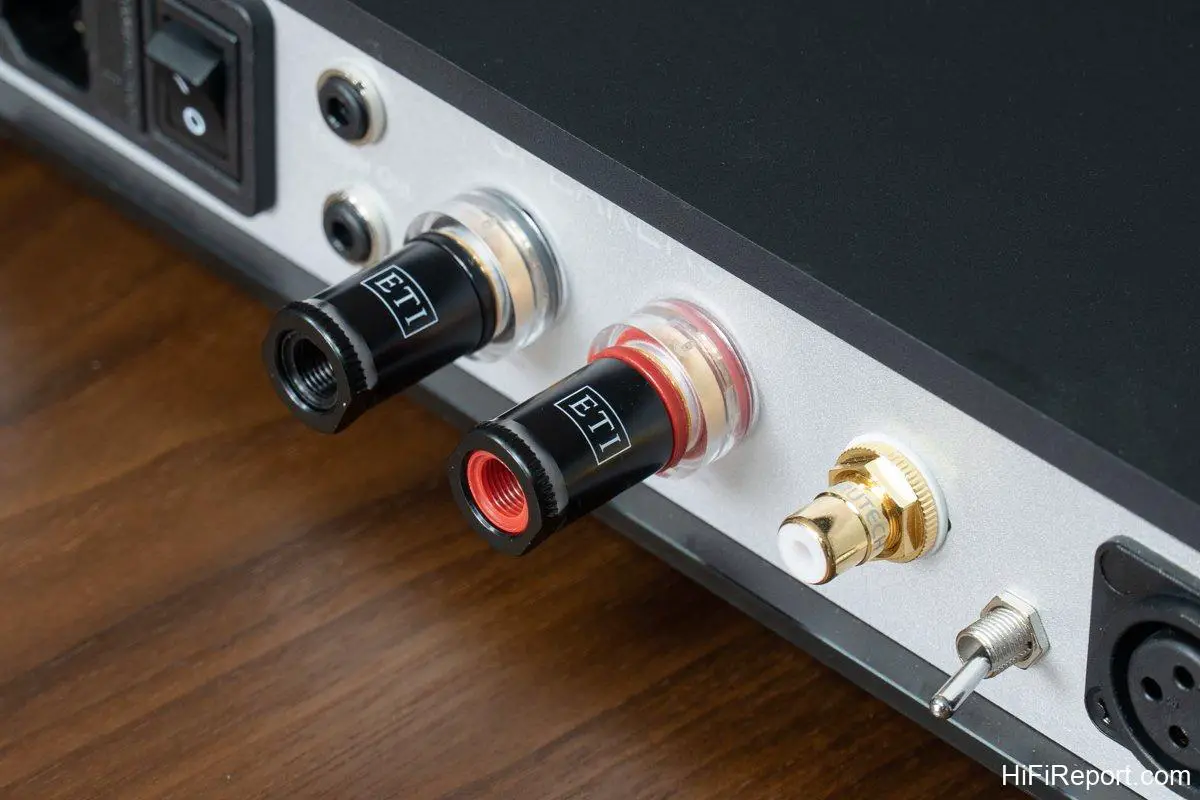
Connectivity includes both XLR and RCA inputs, selectable via a toggle switch adjacent to the input terminals.
The EVO STA accommodates both 110V and 220V input voltages, selectable via a switch located near the AC power inlet. Verifying correct voltage selection upon initial power-up is crucial to prevent damage.
Additionally, trigger input and output jacks are provided, enabling synchronized power on/off with compatible trigger-equipped components, enhancing system operational convenience.
Sonic Performance: Imaging and Layering
As a long-term EVO One user, comparing the EVO STA became a natural priority. The incorporation of new ODC technology and the shift away from the 1MΩ input impedance signaled potentially significant sonic differences. My initial listening sessions were conducted in my home system.
Familiar surroundings, coupled with my EC 4.8 preamplifier and Aurum Cantus Grand Harmony speakers, allowed for a rapid assessment of the EVO STA’s sonic character, revealing both shared traits and distinctions compared to the EVO One.
Starting with the similarities, the EVO STA shares the EVO One’s fundamental sonic DNA. Both amplifiers exhibit a blend of clarity and musicality, characterized by substantial body, precise imaging, rich detail and layering, a neutral and uncolored presentation, engaging and fatigue-free listening, and exceptional control. In essence, they share a common sonic blueprint.
The divergences emerge in subtle refinements. The EVO STA presents a heightened sense of image outline, more sharply defined sonic contours, and slightly more compact image sizes. It also leans slightly towards a brighter tonal balance with a touch less warmth compared to the EVO One, which projects a more relaxed, grounded, and rounded sonic profile.
In simple terms, the EVO STA can be perceived as a more youthful and energetic iteration of the EVO One.
This “youthful vigor” is, however, relative to the EVO One. The EVO STA retains a fundamentally poised, composed, and refined character.
Following home listening, I relocated the EVO STA to the HiFiReport listening room for formal evaluation. The system comprised an EAR 868 tube preamplifier, Wilson Audio Alexia 2 speakers, with YBA CDT450 CD transport and Merging NADAC serving as source components.
Before critical listening, I benchmarked the EVO STA against the reference Linear Acoustic LAV-60 MKII amplifier. The EVO STA exhibited a richer tonal palette with a slightly viscous texture, deviating from absolute transparency and neutrality. Its overall sonic presentation was denser, more substantial, and more grounded. In contrast, the LAV-60 MKII presented a cleaner sonic canvas, a more transparent and brighter timbre, finer sonic outlines, a flatter frequency response, and a more expansive and open soundstage, representing a distinctly different sonic philosophy.
Soundstage and Dynamics: Grand Scale
Despite its relatively slim and lightweight chassis, the EVO STA demonstrated effortless command driving the demanding Wilson Audio Alexia 2 speakers.
Using the 2016 Hi-End Audio Exhibition Commemorative CD, featuring live recordings of Lü Shao-Chia conducting the NSO at the National Concert Hall, track 1, the overture to Verdi’s “The Force of Destiny,” immediately impressed. The opening brass fanfares, delivered in powerful triplets, were rendered with formidable authority, possessing both weight and grandeur that instantly captivated.
Subsequent quieter passages revealed not only clear sonic outlines and trajectories but also remarkably stable low frequencies with distinct and richly layered textures. The precise image outlines further underscored the amplifier’s exceptional control.
This was the signature NuPrime power amplifier performance I’ve come to expect.
Even complex orchestral passages posed no challenge for the EVO STA. Instrumental separation and layering remained clearly defined, exhibiting order and coherence without any hint of congestion.
Track 2, Bizet’s “Carmen” Suite “Prelude,” commenced with two impactful timpani strikes, demonstrating precise localization and realistic scale. The perceived depth of the soundstage and the distinct layers of the orchestra, from front to back, were beautifully rendered. Track 3, “Aragonaise,” built to a crescendo, revealing the EVO STA’s commendable overall sonic density, particularly in the satisfyingly rich midrange. The amplifier’s focused and potent dynamic capabilities clearly delineated the contrasts between loud and soft passages.
Track 4, “Intermezzo,” further highlighted the EVO STA’s exceptional instrumental separation and layering. The various instrumental voices – strings, flute, harp, woodwinds, double bass pizzicato – were presented in distinct layers, without any blending or confusion.
Track 5, “Seguidilla,” a waltz in triple meter, showcased the clear articulation of the double bass pizzicato and the elastic, agile low frequencies. The music conveyed a sense of lightness and rhythmic vitality, demonstrating that the EVO STA, while maintaining precise control, allowed for appropriate low-frequency extension, enabling the music to flow naturally.
Speed and Attack: Rhythmic Drive
Moving to Hugh Masekela’s “Hope,” a South African fusion jazz album recorded in 1993, proved an excellent test of rhythmic agility and dynamic prowess. Masekela, leading a septet, creates a vibrant tapestry of African-infused jazz, featuring trumpet, vocals, guitar, bass, drums, percussion, saxophone, keyboards, and flute. The album’s rich instrumentation, energetic style, and commendable recording quality make it ideal for both critical listening and equipment evaluation.
Through the EVO STA and Alexia 2, “Hope” exploded into life with tightness, speed, energy, focus, and impactful dynamics. The articulate bass lines, the punch and definition of the kick drum, the clear lines and density of the trumpet and saxophone, and the tautness and elasticity of the percussion were all rendered with exceptional fidelity and excitement. Crucially, the EVO STA maintained ample low-frequency presence and excellent tonal balance, resulting in a healthy and robust sonic presentation.
The EVO STA effortlessly resolved complex musical textures, presenting individual instruments with clarity while maintaining a cohesive and harmonious ensemble. Instruments were distinct yet integrated, avoiding a disjointed or fragmented sound.
Track 8, “Nomali,” featuring clean-tone guitar, revealed another facet of the EVO STA’s sonic character: warmth. The guitar tone was smooth and inviting, exhibiting clarity with a touch of sweetness and liquidity, creating a comfortable and engaging listening experience.
Track 10, “Ntyilo Ntyilo (The Love Bird),” a slower, more lyrical piece, highlighted the EVO STA’s ability to render extended, continuous bass lines. The bass was not only clearly defined and texturally clean, but also substantial and full-bodied, avoiding any thinness or dryness. It was both taut and yielding, delivering a supremely comfortable and engaging low-frequency foundation.
The EVO STA paired with the Alexia 2 proved a synergistic match, delivering low frequencies that were simultaneously deep, full, clear, extended, taut, and elastic, with precise localization and excellent extension. It was a truly satisfying low-frequency performance.
High-End Synergy: Preamplifier Revelation
Seeking further refinement, I introduced the MBL New Noble Line N11 preamplifier into the system. While the N11 represents a significant price tier above the EVO STA, this pairing aimed to explore the EVO STA’s ability to reveal the nuances of higher-echelon front-end components. The results were immediately apparent.
Revisiting the “Hope” album with the N11 preamplifier elevated the sonic performance to a new level. The soundstage gained further illumination, textures became more transparent and refined, dynamic contrasts intensified, and image outlines sharpened with enhanced precision. Even the relative proportions of instruments within the soundstage were rendered with greater accuracy, creating a more vividly realistic sonic picture.
The N11 preamp unlocked a newfound level of tonal sophistication, richness, and heightened realism in both presence and spatial cues. The EVO STA unequivocally demonstrated its capability to partner with top-tier components.
Switching to the 2020 Hi-End Audio Exhibition “Chen Pi-Hsien 2019 Piano Recital Live Recording” CD, featuring Beethoven’s Piano Sonata No. 32 in C minor, Op. 111, the opening notes immediately conveyed a sense of resolute power and focused energy. The piano image was rendered with remarkable realism, prompting a more attentive listening posture.
The piano tone, now driven by the N11, exhibited exceptional clarity and beauty, transparent with a touch of natural warmth, and crystalline without sacrificing the inherent woodiness of the instrument. This was the hallmark of the N11’s refined character, faithfully conveyed by the EVO STA.
Track 2, “Arietta,” the slow movement, unfolded with extended pauses between notes, revealing long, clear decays that gracefully trailed into the spatial reverberation. The sense of space was palpable, and the profoundly quiet background allowed the subtle dynamic nuances of the music to breathe, creating a listening experience that was both expansive and intimate, simple yet exquisitely detailed.
Enduring Excellence
Throughout my extensive experience with NuPrime, across numerous models, the brand has consistently delivered exceptional sonic performance. The Evolution STA continues this tradition. Sharing the Hi-End pedigree of the Evolution One, it combines ample power with a relatively compact footprint, exhibiting versatility across diverse musical genres and system configurations. Its adaptable nature ensures seamless integration with a wide range of front-end components, making it a steadfast and enduring partner for any serious music enthusiast.
Specifications
* Type: Stereo Power Amplifier
* Output Power: 230 watts / 8 ohms, 310 watts / 4 ohms
* Gain: 21 dB
* Input Sensitivity: 2 Vrms
* Input Impedance: 47 kΩ
* Inputs: RCA, XLR
* Frequency Response: 10 Hz – 50 kHz
* Signal-to-Noise Ratio: > 90 dB
* Total Harmonic Distortion: 0.0025% @ 5W output, 95dB S/N
* Dimensions: 430 × 66.5 × 372 mm (Width × Height × Depth)
* Weight: 10.5 kg