
NuPrime Evolution Stream Music Server Review
If someone were to ask my opinion on choosing an amplifier – something compact yet powerful, with a design that’s not overly aggressive or flashy but definitely appealing to the eye, and priced affordably for the average professional or even student – NuPrime would invariably be on my recommendation list.
I’ve used numerous NuPrime components and have particular confidence in their amplifiers. In fact, I own a NuPrime DAC-10/ST-10 pre/power amp combination myself; I wired the payment immediately after finishing the review and kept the gear. NuPrime’s most striking characteristic, to me, is their amplifiers’ ability to deliver both power and refined sound quality.
While NuPrime excels as an “amplifier expert,” they are by no means “amplifier exclusive.” They have released several CD players (or transports) and DACs over the years, all of which I found impressive during testing. Even their CD players, despite being ‘just’ CD players, incorporated SRC chips for upsampling, allowing them to surpass Red Book standard playback quality. These units were also compact yet robust and reliable, with smooth tray operation and fast reading speeds, making for a great user experience.
Flagship Streamer Arrives
Beyond amplifiers and digital sources, NuPrime began introducing streaming products several years ago, including integrated amplifiers with built-in streaming capabilities. However, for years, the pace of integrating NuPrime’s streaming products into their existing series felt slow. Apart from the Stream 9 in the 9 series, other streaming products were branded under the ‘Omnia’ name, distinct from the established lines.
I consistently wondered: where were the higher-end options? Finally, the wait is over! NuPrime has introduced the Evolution Stream music server within their flagship Evolution series. It goes without saying, this is NuPrime’s top-tier effort in the streaming domain. Will it be expensive? Compared to their previous streaming offerings, the price is certainly higher.
However, when stacked against competing products on the market, the Evolution Stream, with its price in Taiwan at NT$118,000 (approximately $3,933 USD), positions itself squarely in the advanced or upper-mid range segment. The question remains: does the Evolution Stream uphold NuPrime’s consistent reputation for high performance-to-price ratio? You’re curious, and so am I.
Signature EVO Design
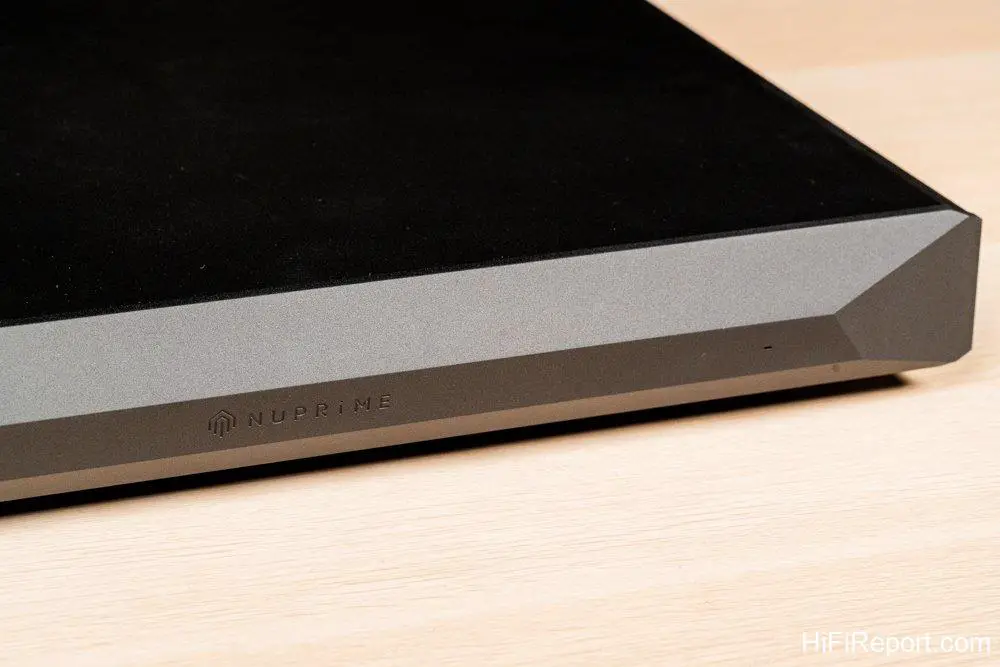
Unpacking the familiar, minimalist packaging reveals the Evolution Stream with its simple, clean design. True to the NuPrime Evolution series aesthetic, the Evolution Stream aligns perfectly in both size and lines with its siblings. Placed next to the Evolution STA stereo power amplifier, it would be genuinely difficult to tell them apart from a frontal view. This allows users to easily build a complete NuPrime Evolution “system.”
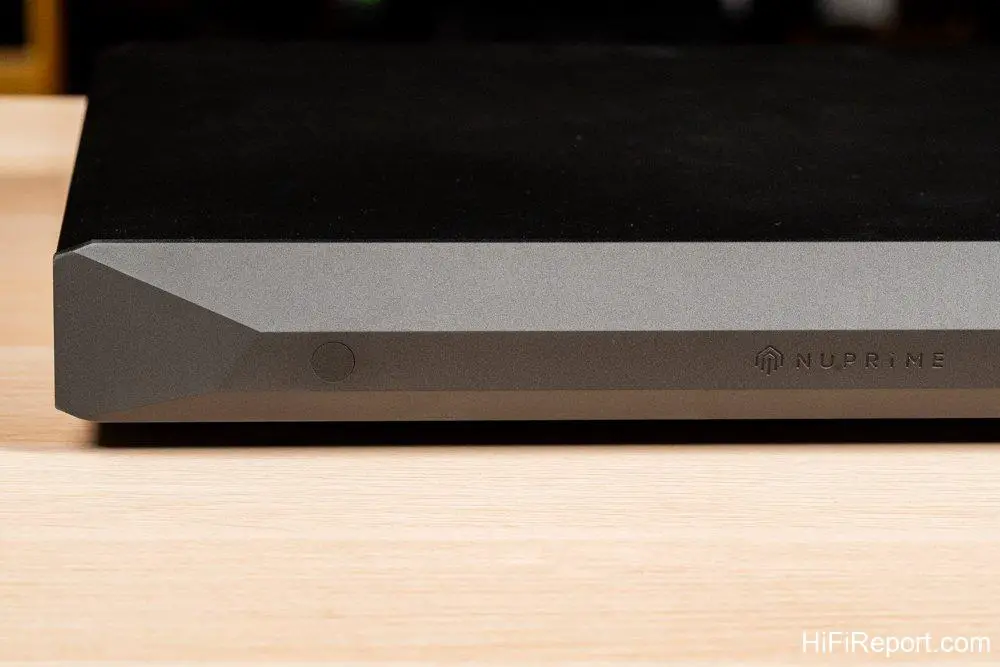
For streaming equipment, many manufacturers incorporate display screens, some even touch-sensitive, to enhance the user experience. Seeing the album art of what’s currently playing is undeniably enjoyable, much like how many people display the jewel case or LP cover when playing CDs or vinyl. However, another school of thought among manufacturers opposes this. They argue that screens increase power consumption, introduce noise, and are ultimately redundant as mobile phones and tablets, via control apps, can entirely replace their function, often with superior usability. Innuos is a prime example of this philosophy, having consistently chosen not to include screens across their entire product range. NuPrime’s previous streaming products featured small screens, but the Evolution Stream foregoes one, resulting in a cleaner, more refined appearance for the unit.
High Specifications, Wide Application
As NuPrime’s flagship music server, the Evolution Stream fully demonstrates the company’s strong ambition in terms of performance, specifications, and functionality. Regarding format support, the Evolution Stream decodes PCM up to 32-bit/768kHz and DSD512. It can also perform Roon DSP upsampling to DSD256.
Supported streaming services include Roon, Spotify Connect, Tidal Connect, Qobuz (via the Roon application), DLNA, and Signalyst. It also supports playback of all high-resolution formats available on Tidal and Qobuz.
Serious Noise Reduction, Grounding Option Included
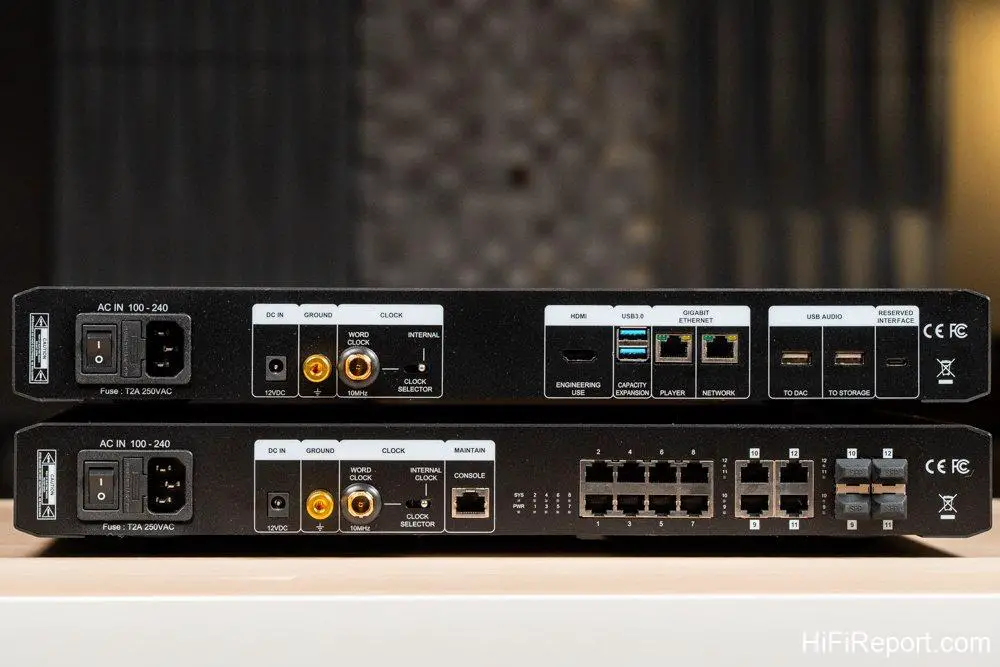
Two Gigabit Ethernet ports are provided: one for internet connection and the other to configure the Evolution Stream as a subnet for connecting devices like a NAS, streaming players, or other DLNA-enabled equipment. To ensure the purest sound quality, a high-frequency noise filter is installed along the power input path to preemptively isolate noise from the AC mains. Furthermore, internal circuitry benefits from EMI noise filtering technology to effectively eliminate electrical interference.
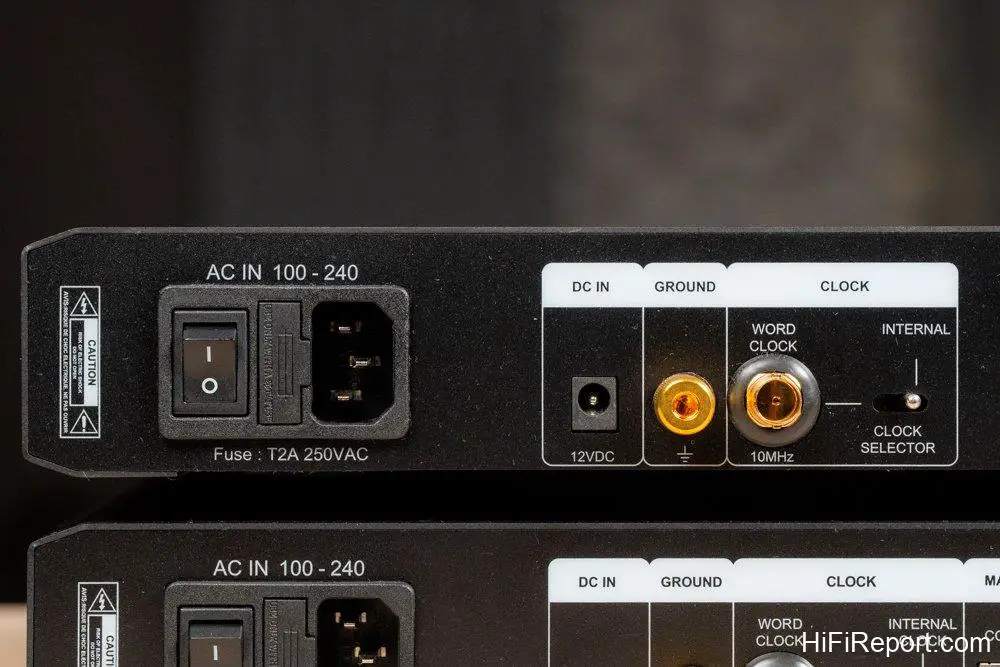
NuPrime employs another trick to reduce noise. The Evolution Stream features a grounding terminal on the rear panel, allowing users to connect external grounding for further reduction of power supply noise. The internal circuitry is also properly grounded to prevent ground loop noise. They’ve seemingly thought of every angle when it comes to tackling noise and interference.
External 10MHz Master Clock Capability
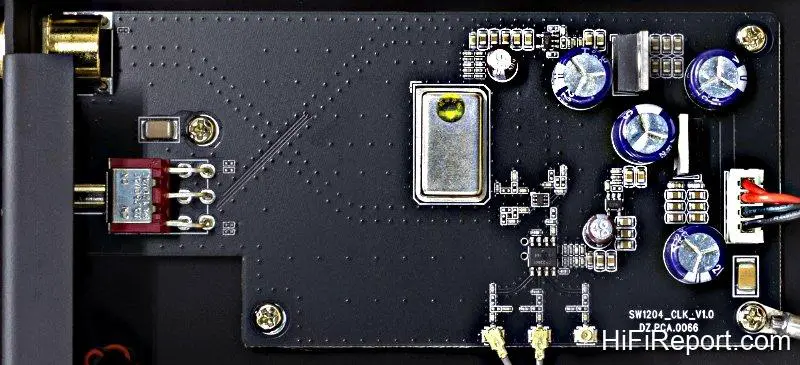
The Evolution Stream incorporates two dedicated 10MHz TCXO (Temperature Compensated Crystal Oscillators) clocks, one for each of the two Ethernet ports mentioned earlier. This separate timing avoids clock signal interference and ensures precise timing. These 10MHz TCXOs are designed to minimize streaming latency and jitter.
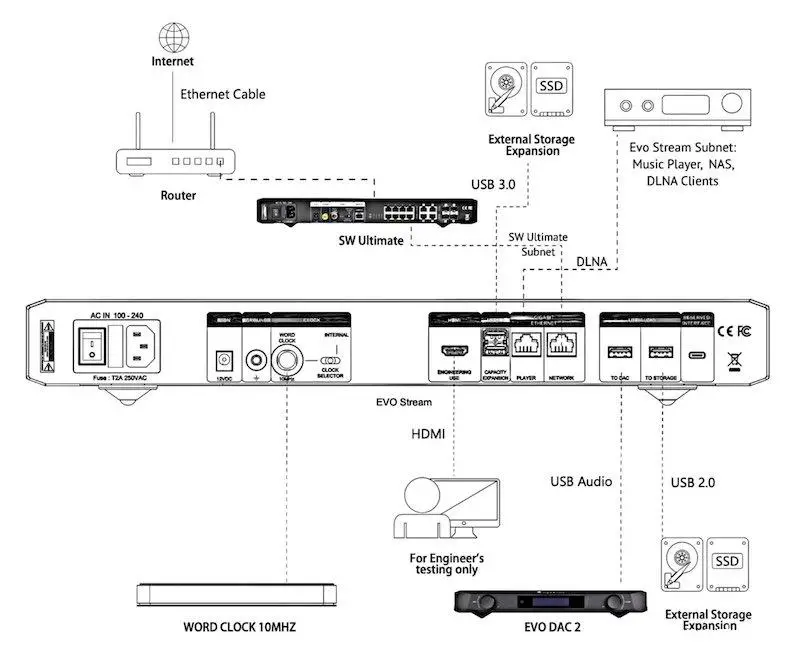
For the more discerning audiophile, NuPrime has included a BNC connector for future connection of an external 10MHz clock generator. A toggle switch nearby allows instant switching between the internal and external clocks. (NuPrime hasn’t released their own external clock yet – is this a hint at future products?)
High-Performance 250GB NVMe SSD
A pure streamer doesn’t necessarily require an internal hard drive, and even if supported, the manufacturer might not include one as standard. However, as a music server, the Evolution Stream’s internal drive is essential. It’s equipped with a high-performance 250GB NVMe SSD. When used with their proprietary VitOS application, this provides low-latency transfer speeds and ample capacity.
Furthermore, the SSD is accompanied by EMI absorbers and dedicated power regulation circuitry, all contributing to lowering the digital noise floor of the playback platform. Regarding digital storage, NuPrime advises against using internal storage, suggesting that the SSD might limit overall performance, especially for users with large local music libraries. They recommend using external storage. Users can connect external hard drives or USB drives via the USB Type-A ports or connect to a NAS via the Ethernet port. Both methods can reduce internal power consumption and potentially improve playback performance.
The Highlight: Roon Server Capability
For Roon users, the most compelling feature of the Nuprime Evolution Stream is its ability to function as a Roon Core/Server. In the Roon architecture, a processing core, previously called Roon Core and now Roon Server, is required. The Roon Server acts as the system’s brain, responsible for computation, control, and resource allocation. On the playback path, Roon also needs a Roon Bridge to receive digital audio from the cloud or NAS and output it digitally to the DAC for decoding. Streaming players labeled as “Roon Ready” typically perform the latter function as a Roon Bridge. Products that can act as a Roon Server are less common.
The NuPrime Evolution Stream can function not only as a Roon Bridge but also as a Roon Server. What’s more, it can directly output digital audio via USB to a DAC for decoding. The Evolution Stream allows for a streamlined “all-in-one” Roon system. This simplifies the setup and is clearly a more audiophile-oriented choice compared to using a noisy computer or NAS.
Built-in 32GB DDR4 Memory
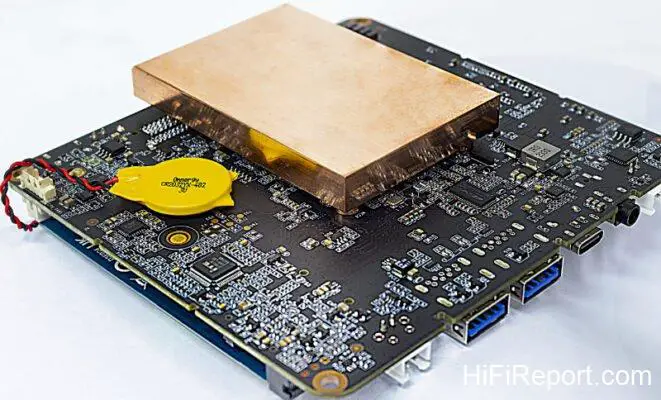
To ensure smooth performance, NuPrime selected low-power 32GB DDR4 RAM modules for the Evolution Stream. This level of cache is not only significantly more than what a typical NAS offers but is also rarely found in commercially available computers, which helps explain the remarkably smooth user experience.
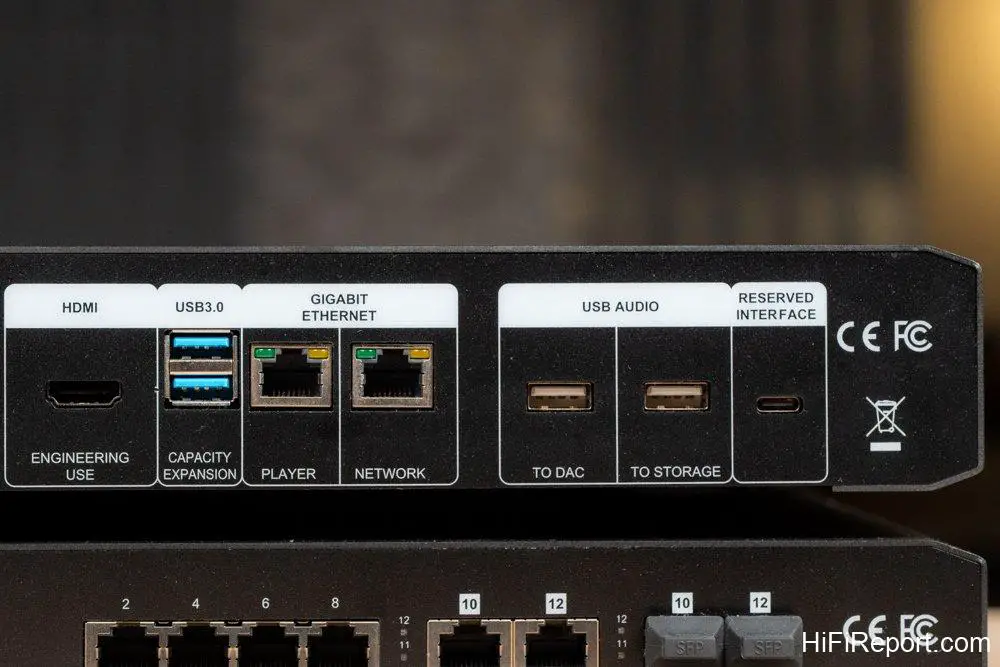
Furthermore, the Evolution Stream’s digital output is straightforward, featuring only the most common USB interface. However, this USB interface is not ordinary; it includes a high-frequency filter to achieve low-noise output and enhance the overall USB audio output quality.
External Linear Power Supply Option
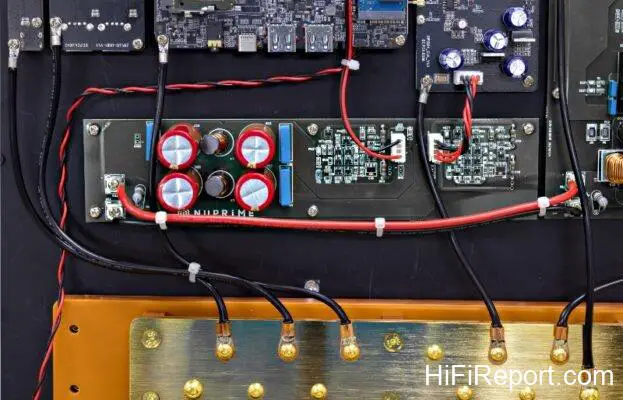
NuPrime has always paid close attention to the power supply of their equipment. In the Evolution Stream’s power module, a high-frequency noise filter is specifically included to ensure accurate signal transmission, minimum noise, and perfect phase synchronization. Moreover, it includes room for power supply upgrades. Although the Evolution Stream has its own built-in power supply and an AC input IEC socket, it also adds a 12V DC input. If users have a high-quality linear power supply, they can choose to use the linear power input to further enhance overall performance.
Using it as a Roon Server: Immediate Improvement
When I used the NuPrime Evolution Stream as the Roon Server and outputted via USB to the DAC, the playback quality was significantly better compared to using the dedicated hard drive in my NAS running as Server or using my MacBook as the Roon Server. Where was the improvement? The background was cleaner, layers were more distinct, the soundstage was wider, the sonic image was more transparent, the soundstage was more three-dimensional, the forms were more focused, the bass was tighter, and the dynamics were more immediate and impactful… Virtually every aspect we strive for in audio reproduction showed a noticeable improvement. How noticeable? Let me put it this way: you’ll hear it instantly; the difference is clear in ten seconds.
Excellent Performance in Bass Depth, Spatial Layering, and Detail Retrieval
Take Ravel’s Piano Concerto for the Left Hand as an example. This is a rare single-movement concerto. The opening introduction features a deep rumble from the contrabassoon, followed by the French horn entering to vaguely introduce the theme. After a period of musical development culminating in a forte passage, the piano enters to take over the theme presentation. Because the background is sufficiently dark, details are easy to emerge. Not only do they emerge, but these details are also sufficiently clear. The music is perhaps ambiguous, but the sound is definite. The piano, though only the left-hand part, enters with powerful chords, creating a magnificent presence. The orchestra’s response is equally potent, creating immense drama in this back-and-forth. Listening to the piano delve into the lower register here, that sense of weight, that richness, combined with the resonant string vibrations and body resonance, presents a thrilling tension. The Evolution Stream delivers excellent performance in terms of arranging voice parts, portraying instrumental texture, bass depth, detail presentation, and dynamic expansion.
If using a MacBook as the Roon Server and outputting directly via USB to the DAC, the sense of space in the music is not as transparent, and the dynamic range doesn’t unfold with the same effortless grandeur. If I switch to using a NAS as the Roon Server, paired with a Telos EMP as the Roon Bridge, the sound gains better body and the bass is fuller, and the soundstage is also larger than with the MacBook. However, the transparency is clearly not as good as the Evolution Stream. The cost of using a MacBook for output is very low, essentially leveraging existing equipment. However, the NAS paired with the Telos is not inexpensive, costing even slightly more than the Evolution Stream. Whether it’s a computer or a NAS, while they can function as Roon Servers, they are not specifically designed for music playback. I was not surprised that the NuPrime Evolution Stream came out on top.
Sharp Lines, Focused Images, Vivid Instrumental Texture
Using the Evolution Stream as the Roon Server, the sound is clean, the sonic images are focused, and this contributes to sharp lines, naturally revealing the vivid texture of instruments. Listening to the septet version of Bach’s Goldberg Variations, the Evolution Stream made the piece sound both harmoniously blended and exquisitely elegant. Bach’s Goldberg Variations was originally keyboard music, later arranged into various versions by others. German composer and conductor Heribert Breuer arranged this beloved piece into a septet, featuring a string trio (violin, viola, cello), a woodwind trio (flute, clarinet, bassoon), and a harp, creating a fresh and novel ensemble.
The string and woodwind timbres are distinct yet complement and support each other. The string instruments’ beautiful, delicate, and flowing legato lines guide the melody development with a singing quality. The warm tones of the flute and clarinet dance in partnership with the strings, while the bassoon provides a steady underpinning. The harp, replacing the keyboard instrument, has a rounder tone, softer than a piano, gentler than a harpsichord, and fuller than a lute. This configuration offers a much richer range of timbres and textures than a single instrument. The Evolution Stream, as I described, clearly resolves the texture of each instrument, and the position of each instrument is very precise, with clear layering in the ensemble arrangement. Because its sound is transparent and the background clean, both the individual instrumental details and the overall sound of the septet are clearly articulated.
Fast Speed, Wide Dynamics, Quiet Background, Transparent Image
The improvements delivered by the Evolution Stream extend beyond cleanliness and transparency to include power and speed. NuPrime has always prioritized the power supply for their mid-to-high-end products. They don’t always use linear power supplies; sometimes they opt for switching power supplies. Their design approach to power supply is guided by their interpretation of the specific product’s needs. However, their core philosophy in power supply design is to optimize rectification and regulation and minimize noise as much as possible. Everything mentioned earlier – how it makes streamed music sound clean, transparent, with clear lines, distinct outlines, three-dimensional images, and vivid textures – is related to this aspect. With less noise, less interference, and less distortion, all those effects are achieved.
On the other hand, music played through the NuPrime Evolution Stream exhibits fast transient response, clear dynamic contrasts, and effortless dynamic swings. Consider the album “Douo,” a collaboration between Betrand Renaudin and Olivier Cahours. How much synergy can a guitar and a jazz drum set create? Plenty! Listening through the Evolution Stream, these sparks seem even brighter and more vibrant. Renaudin creates a wealth of delicate sounds on the cymbals. Even these faint, tiny sounds are clearly audible, and their restless energy feels very tangible. As for the layered drum sounds, different drums produce distinct tones, and varying the force and speed of strikes yields different textures. In this recording, the dynamics and speed of both the jazz drums and guitar are the most captivating aspects. If these two elements are well-rendered, the guitar and jazz drums will have impact, and the music will be exhilarating to listen to. If the dynamics are soft and the speed slow, this jazz duo will lack that sense of excitement and vitality. The guitar strings ring brightly, and the notes are exceptionally clear and distinct at a brisk tempo. Following the notes, there’s a beautiful shimmer of trailing resonance – truly lovely. The drum and guitar sounds reproduced by the Evolution Stream are not only clean and punchy but also, thanks to the sufficient transparency, offer richer detail. The brisk pace contributes to a lifelike playback experience.
Plenty of Detail, Great Liveliness
The album “Eivør Live” by Faroese singer Eivør not only showcases her immense talent but also provides outstanding recording quality that adds to the listening pleasure. In the opening track, “Mín móðir,” the drum beats are tightly controlled, each strike solid and powerful. Eivør’s extensive use of breathy vocals and head resonance, as resolved by the Evolution Stream, sounds remarkably vivid. The amount of information the Evolution Stream provides is truly impressive! In “Where Are the Angels,” the guitar chords are full-bodied, but whether it’s the distinct notes or the body resonance, the sound remains clean despite the richness. It doesn’t become muddy or indistinct even when continuously playing arpeggios in the mid-low range. The Evolution Stream keeps streamed music clean and clear while preserving the music’s body and extension at both ends.
Eivør’s vocals are highly varied, her range wide, and her transitions always beautiful. Her skillful use of tempo flexibility adds an elusive, changeable emotional layer to her performances. When singing at high pitches, her voice is stable and piercing. Certain deliberate vocal variations make the emotional portrayal of the performance even more vivid, such as when she sings the classic “Natureboy,” employing a restrained vocal quality combined with dolphin-like falsetto. The Evolution Stream renders this enchanting segment of Eivør’s performance with wonderful liveliness and vibrancy.
VitOS DLNA Path Sounds Even Better Than Roon
I typically use Roon for listening to music. However, if I use the VitOS player included in the Evolution Stream, the performance in terms of transparency, layering, separation, and image definition is even better. Compared to some generic DLNA software, VitOS has a more intuitive user interface, a very logical structure, and operates smoothly, making it easy to pick up. If you’re not a Roon user, VitOS is capable and user-friendly.
However, if you’re like me and accustomed to Roon, and you’re currently using a personal computer, laptop, NUC, mini-PC, or NAS as your Roon Server, switching to the Evolution Stream as your Roon Server will make a significant difference in sound quality. Unfortunately, most streaming devices advertised as “Roon Ready” can only function as a Roon Bridge, still requiring a separate Roon Server. Music server products that boast Roon Server capability are often quite expensive, with some Roon Server music servers costing over a million NTD (tens of thousands USD). From this perspective, Roon users should definitely give serious consideration to the NuPrime Evolution Stream.
A Beautiful Shot, Score!
The NuPrime Evolution Stream is a truly beautiful shot! Its sleek, minimalist design looks great in any home and even better when paired with other Evolution series components. External interfaces for grounding, clocking, and DC power provide opportunities for future upgrades. Combined with the smooth and simple VitOS operating interface and its ability to function as a Roon Server, even with a price over NT$100,000, its performance-to-price ratio remains exceptionally high. Are you a Roon user? Perhaps the NuPrime Evolution Stream is the direct path to evolving your streaming system.
Specifications
NuPrime Evolution Stream
* Type: Music Server
* CPU: Intel Quad-core CPU J6413
* Memory: 32GB DDR4
* Storage: SATA SSD: 250GB / Up to 4TB NVMe SSD: Up to 4TB
* Master Clock: Highly Accurate TCXO Clock
* External Clock: 10MHz x 1 (BNC)
* Network: 1GbE x 2
* USB Storage Expansion: USB 3.1 x 2, USB 2.0 x 1
* Supported Decoding: PCM up to 32bit/768KHz, DSD512 (Roon DSP up to DSD256)
* Color: Black, Silver
* Dimensions: 61.5 x 430 x 369 mm (H x W x D)
* Weight: 5.2kg