
NuPrime Stream-9 Wireless Streaming DDC Turntable Review
For audiophiles looking to transition from listening to music files to streaming, choosing the right source component can often be a dilemma. In the past era of file-based listening, computers were commonly used as digital transports, paired with USB DACs for playback. However, in the current streaming age, computers are no longer as convenient. A dedicated streaming digital player that can replace a computer allows users to continue using their existing DACs, preserving their preferred sonic characteristics. Furthermore, for future upgrades, only the DAC needs to be replaced.
In essence, separating the streaming function from the DAC offers both convenience and maximum upgrade flexibility.
Recognizing this demand, NuPrime has introduced the Stream-9 wireless streaming transport. Paired with a capable DAC, achieving excellent sound quality becomes readily accessible.
High-Quality Linear Power Supply Inside
NuPrime boasts a diverse product range, spanning from two-channel to multi-channel, consumer-grade to Hi-End audiophile, portable players to desktop listening and full-fledged audio systems. Regardless of the consumer type, NuPrime offers products to meet various needs. However, the Stream-9 is likely NuPrime’s first foray into the realm of pure streaming transports.
Despite its compact size, which may deviate from the audiophile perception that “heavier equipment sounds better,” the Stream-9 is designed with high-fidelity performance as its primary focus.
The Stream-9 is powered by a built-in high-quality linear power supply, rather than a cheaper external switching power adapter. This not only enhances convenience but also allows users to connect high-end aftermarket power cables should they desire.
At the heart of the Stream-9 lies a 64-bit quad-core ARM Cortex-A53 processor. This ample processing power effortlessly handles any high-resolution wireless streaming music signals.
It supports both wired Ethernet and Wi-Fi wireless network connections. With a robust home wireless router, Wi-Fi transmission speed, stability, and sound performance can rival wired connections.
USB Exclusion for Interference Reduction
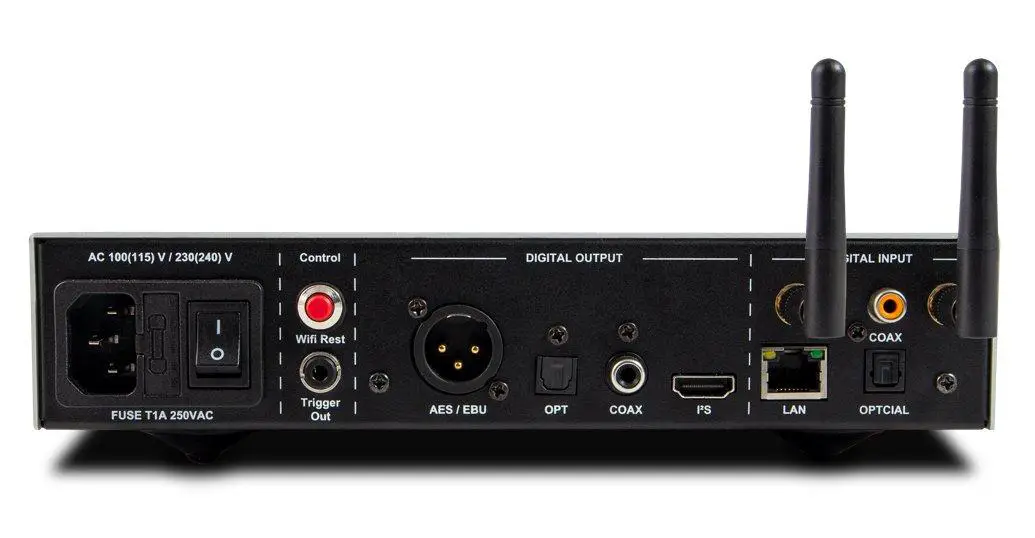
In terms of output interfaces, the Stream-9 provides AES/EBU, optical, RCA coaxial, and I2S digital outputs.
Notably absent is USB. Indeed, the Stream-9 does not offer USB output, nor does it have USB input, meaning it cannot connect to USB hard drives or flash drives for playback.
This design choice is likely due to the potential for USB interfaces to introduce interference, which can negatively impact audio quality. Eliminating USB helps to enhance sonic performance.
Furthermore, USB interfaces can sometimes encounter compatibility issues, where the USB DAC might not support the maximum sampling rate advertised by the DAC. This is not necessarily a fault of either device, but rather a communication mismatch.
Other digital interfaces, including I2S, AES/EBU, optical, and coaxial, do not typically suffer from such problems. If your DAC features an HDMI I2S input with compatible pin configuration, you can utilize the Stream-9’s I2S output, which supports up to 32bit/768kHz PCM and DSD256 formats.
If I2S is not an option, other interfaces are readily available. The Stream-9’s AES/EBU output can also handle up to 32bit/768kHz PCM and DSD256 (DoP), which is more than sufficient for most needs. Optical and coaxial outputs support up to 192kHz PCM and DSD64 (DoP), accommodating the majority of listening requirements.
Flexible Upsampling and Downsampling for Enhanced Enjoyment
Another scenario arises: what if I want to play a DSD128 file, but can only connect to the DAC via RCA coaxial, exceeding the interface’s transmission limitations? In such cases, the Stream-9’s SRC (Sample Rate Converter) resampling function comes into play.
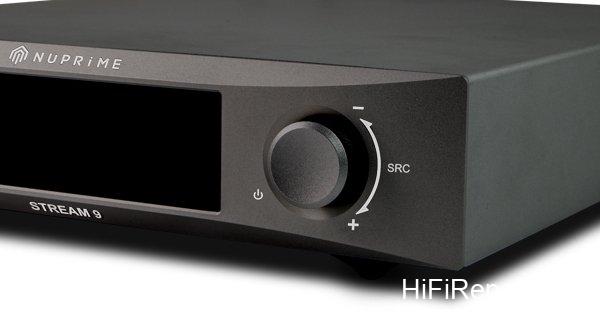
The Stream-9 incorporates a custom-designed SRC chip capable of upsampling or downsampling any incoming digital audio signal. It can also perform bidirectional conversion between PCM and DSD formats. This allows users to downsample high-sampling-rate files to formats acceptable by the DAC.
The SRC’s utility extends beyond downsampling. Upsampling is where the fun truly begins! As mentioned earlier, the Stream-9’s SRC can freely convert between PCM and DSD, upsampling PCM to a maximum of 768 kHz and DSD to a maximum of DSD256. If your DAC supports these rates, you can upsample standard 44.1 kHz formats to higher PCM or DSD rates for a richer listening experience.
The Stream-9’s SRC first upsamples the source signal to an extremely high MHz frequency before down-converting to the target format. This process is designed to reduce jitter and distortion, thereby enhancing dynamic performance.
The SRC function also endows the Stream-9 with capabilities similar to a DDC (Digital-to-Digital Converter).
In addition to network input, the Stream-9 offers optical, coaxial, and Bluetooth digital input interfaces. This allows connection to other digital sources such as set-top boxes, gaming consoles, and smartphones. You can upsample these signals before outputting them, exploring different sonic flavors.
Setting up upsampling and downsampling is straightforward. Simply rotate the knob on the front panel. Turning it right sequentially upsamples, while turning left sequentially downsamples. The front panel display shows the set frequency in real-time, making operation effortless.
The set format is stored in the device’s memory, and the Stream-9 will continue to resample according to the setting even after being powered off and on again.
Roon Ready Not Supported, Unfortunately
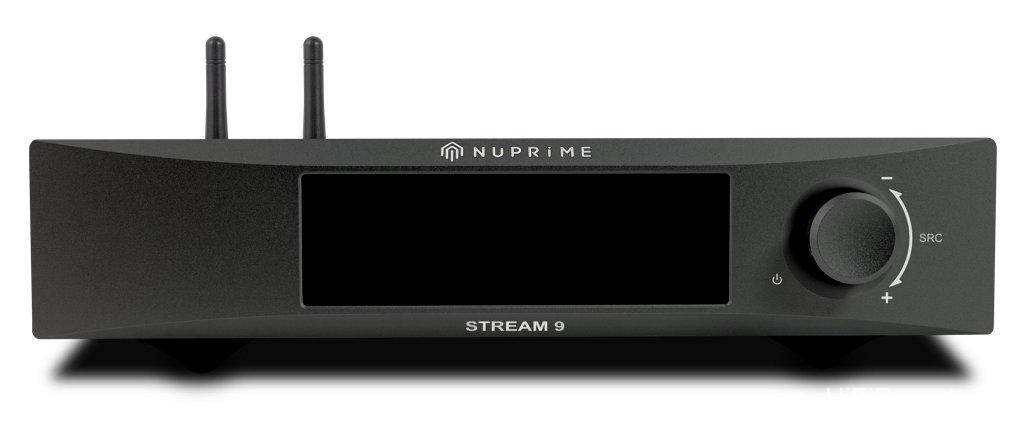
Regarding streaming technology support, the Stream-9 is compatible with DLNA/UPnP, AirPlay, AirPlay 2, and Bluetooth 5.0 (aptX-HD). Its Omnia Receiver remote control app is available for both iOS and Android platforms, ensuring control from virtually any smart device.
However, the Stream-9 does not support Roon Ready, which is a notable drawback.
In terms of streaming service support, the Stream-9 covers a comprehensive range of platforms, including Tidal, Qobuz, Spotify, TuneIn, Deezer, iHeartRadio, QQ Music, and more. It likely supports most streaming methods you might use.
Besides the Omnia Receiver app, the Stream-9 also comes with an elegant metal remote control. The remote allows for convenient operation of power on/off, source switching, track skipping, and other functions, offering greater ease of use compared to a smartphone app.
The remote control also provides SRC resampling settings, enabling instant upsampling with a single press.
Furthermore, the remote features number keys 1 through 9. What are these for? The Stream-9 allows users to preset 9 frequently used music services, playlists, or channels. Pressing a number key on the remote immediately starts playback, eliminating the need to navigate through the phone app for daily listening convenience.
Competing with High-Priced CD Transports
During the listening test, I used a Wi-Fi connection to stream music files stored on a NAS to the Stream-9, paired with a Merging NADAC.
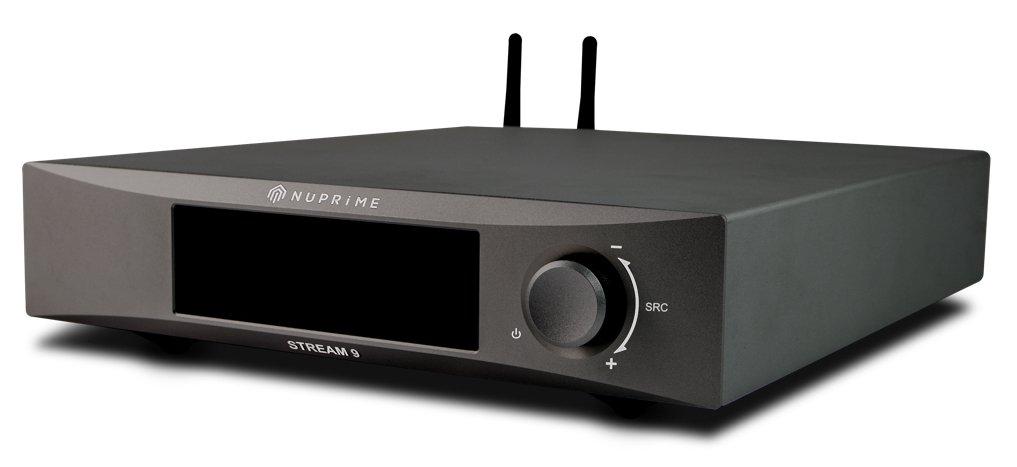
This NADAC is typically connected to a YBA CDT450 CD transport using a Transparent Reference XL AES/EBU digital cable. The rest of the system was already set up, including a Soulnote P-3 preamplifier, EAR 509 MKII vacuum tube power amplifiers, and Wilson Audio Alexia 2 speakers. Switching from the CDT450 to the Stream-9 was as simple as unplugging the Reference XL cable and plugging it into the Stream-9, allowing for immediate listening and comparison with the CDT450.
This system is our familiar reference system, so any change in the source, like switching to the Stream-9, was immediately noticeable. What became apparent was that the Stream-9, despite its significantly lower price, did not lose out to the CDT450.
The CDT450 possesses a reserved yet refined character, with a pure, restrained sound, dense texture, clear lines, and focused, prominent imaging. In comparison, the Stream-9 sounded more relaxed and open, with readily apparent micro-dynamics, distinct airiness, clear spatial definition, and rich overall layering. While its texture might not be as meticulously dense as the CDT450, it lacked no detail.
Both have different sonic approaches, each with its own merits and beauty. However, the Stream-9 offers the convenience of on-demand playback via smartphone and access to high-resolution online streaming music, making it far more convenient than a CD transport.
The Wellspring of Streaming Playback
A digital transport does not determine tonal character; that role belongs to the DAC. However, a transport can define clarity, detail, and layering. These are essential qualities of a good digital transport, and the Stream-9 excels in these areas, exceeding expectations for its price point.
Through the Stream-9, one can hear an open, spacious soundstage with excellent coherence. The vertical structure from top to bottom is clearly defined, and the front-to-back layering is well-extended. The balance between high, mid, and low frequencies is precise. Simply put, the music feels visually engaging.
Furthermore, the Stream-9 reproduces sonic images with commendable precision. The clarity of outlines is above standard, and the soundstage localization and separation are satisfying, indicating that the digital processing technology employed in the Stream-9 is far from rudimentary.
Moreover, the Stream-9 delivers ample detail, which is arguably the most crucial aspect. Detail determines whether the overall sound is vibrant, lively, engaging, and capable of holding the listener’s attention.
With these qualities present, music becomes enjoyable, and the Stream-9 achieves this within a limited budget.
In conclusion, as a wellspring of online streaming playback, the Stream-9 is undoubtedly qualified and a worthwhile investment.
Specifications
* Type: Wireless Streaming DDC Turntable
* Inputs: Wi-Fi, LAN, Optical, Coaxial, Bluetooth
* Outputs: I2S (HDMI), Optical, Coaxial, AES/EBU
* Streaming Technologies Supported: DLNA, AirPlay, AirPlay 2
* Streaming Services Supported: Deezer, iHeartRadio, Qobuz, QQ Music, Spotify, TIDAL, TuneIn
* Dimensions: 390 × 80 × 360 mm (Width × Height × Depth)
* Weight: 4 kg