
Odeon Fidelio Horn Loudspeaker Review
At the invitation of Feng Ming Audio, the distributor of German Odeon horn loudspeakers, I recently visited Pai Pu Audio, situated on Huanshan Road in Neihu. The occasion was the unveiling of a compelling two-channel audio system curated by Feng Ming Audio, designed to deliver exceptional sound quality at an accessible price point.
This system features the Odeon Fidelio horn loudspeakers partnered with the Pathos Classic One amplifier, currently showcased in a dynamic demonstration at Pai Pu Audio. Mr. Weng of Feng Ming Audio expressed his profound admiration for this pairing, prompting him to champion it for discerning audiophiles with a passion for horn speaker technology, extending a personal invitation for us to experience it firsthand.
Unforgettable Horn Sound
Our team has had the pleasure of experiencing Odeon loudspeakers on numerous occasions. Whether at audio exhibitions, in Feng Ming Audio’s dedicated listening space, or within the HiFiReport listening room itself, Odeon speakers have consistently left a lasting impression. The sonic character of Odeon, channeled through their signature horn design, consistently delivers captivating and emotionally resonant music.
Furthermore, Mr. Weng’s extensive experience in optimizing Odeon systems ensures consistently remarkable and memorable audio presentations.
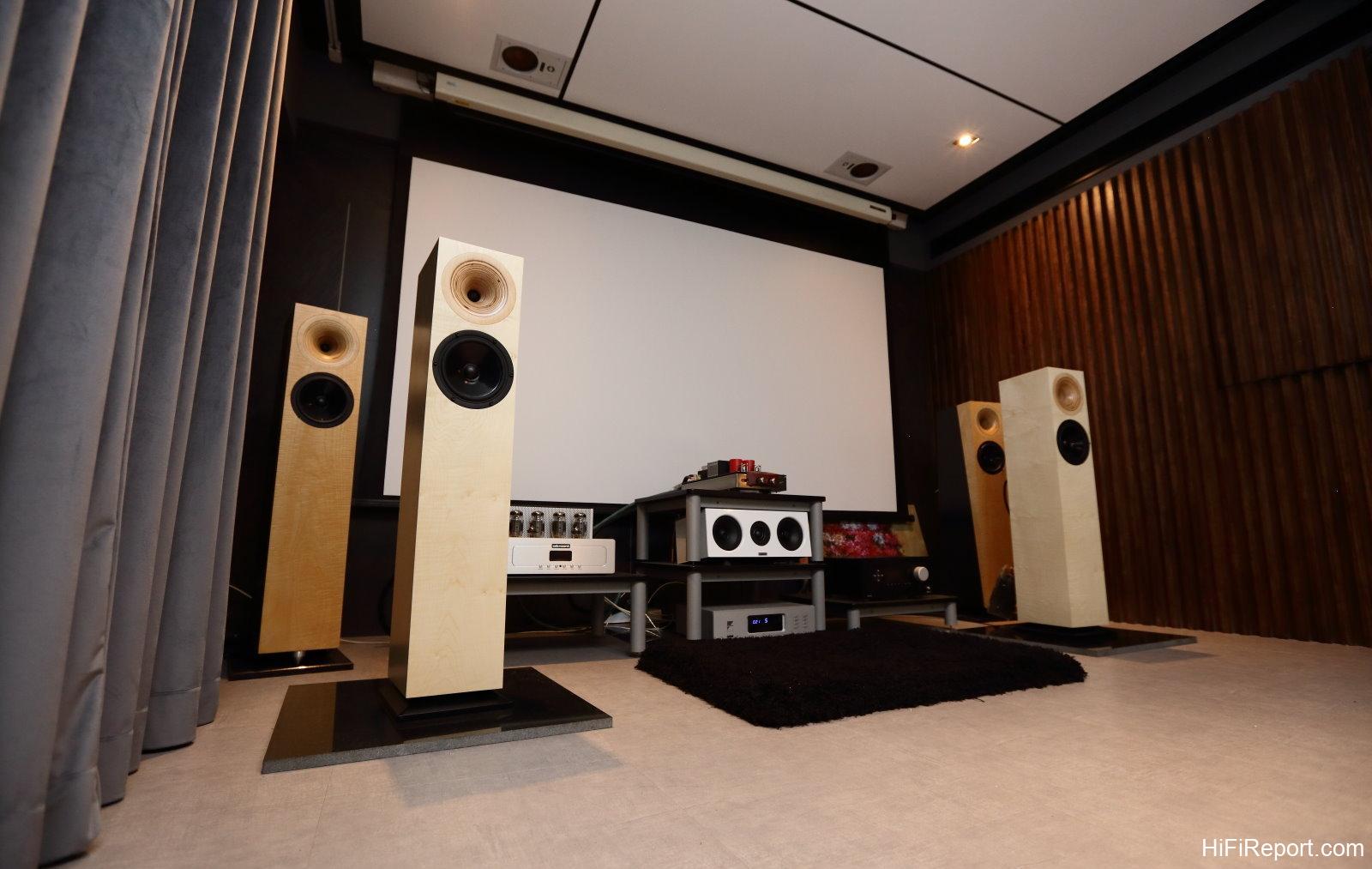
The Odeon Fidelio currently stands as the most diminutive floor-standing model in their range. This encounter with the Fidelio provided an opportune moment to audition both Odeon’s largest and smallest floor-standing offerings, aiming to discern the nuances and distinctions between the flagship No.38/2 and the more accessible Fidelio. In the accompanying image, the Fidelio is positioned in the foreground, while the darker, larger Nova model is visible behind.
Just two weeks prior, we had the pleasure of experiencing the Tosca S/2 at Feng Ming Audio’s premises, also in conjunction with the Pathos Classic One amplifier, a pairing that yielded remarkably refined and detailed musicality.
Compact Horn Loudspeaker
Let’s examine the fundamental specifications of the Odeon Fidelio. Standing at 102cm tall, it’s not imposing for a floor-standing speaker. Furthermore, its modest footprint of 19cm x 24cm in width and depth ensures it occupies minimal floor space. This compact form factor renders it ideally suited for environments where space is at a premium. Despite its svelte dimensions and unobtrusive height, I am well aware that Odeon loudspeakers are renowned for their unyielding low-frequency capabilities.
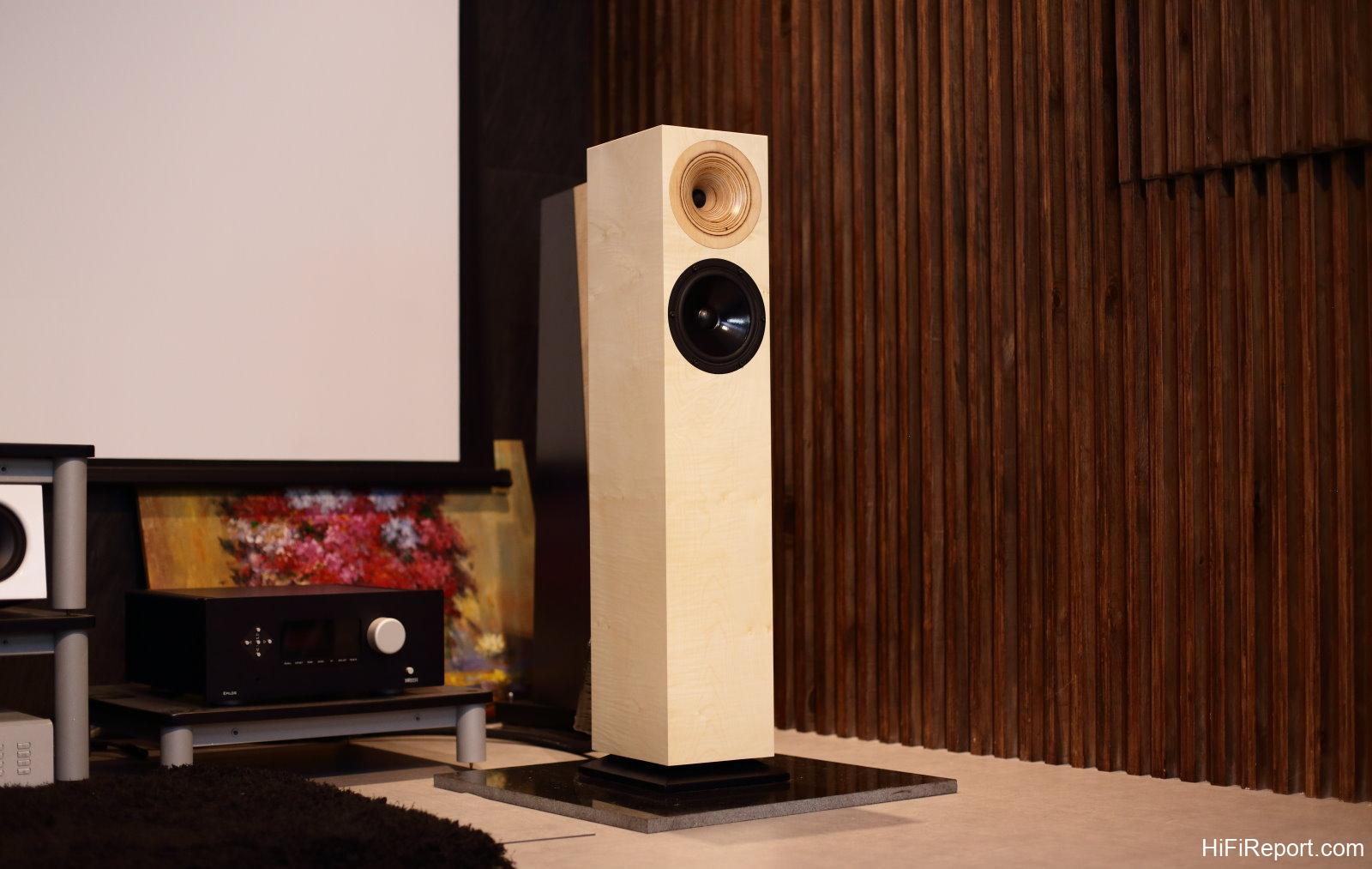
Underestimating its sonic potential based on size would be a grave error.
The Fidelio employs a two-way, two-driver configuration. High frequencies are handled by a 25mm soft dome tweeter integrated within a 6.5-inch diameter external wooden spherical horn. For the mid-bass frequencies, a matching 6.5-inch driver with a paper cone diaphragm, treated with a specialized coating, is utilized. The crossover frequency is precisely set at 2,200kHz.
The speaker utilizes a bass-reflex design, with the reflex ports ingeniously positioned not on the front or rear baffle, but rather on the lateral sides of the speaker’s base. Each speaker weighs approximately 17.5 kilograms and, as depicted, is finished in a refined, lighter-toned white maple veneer, exuding an air of understated elegance.
Driver Integration & Time Alignment
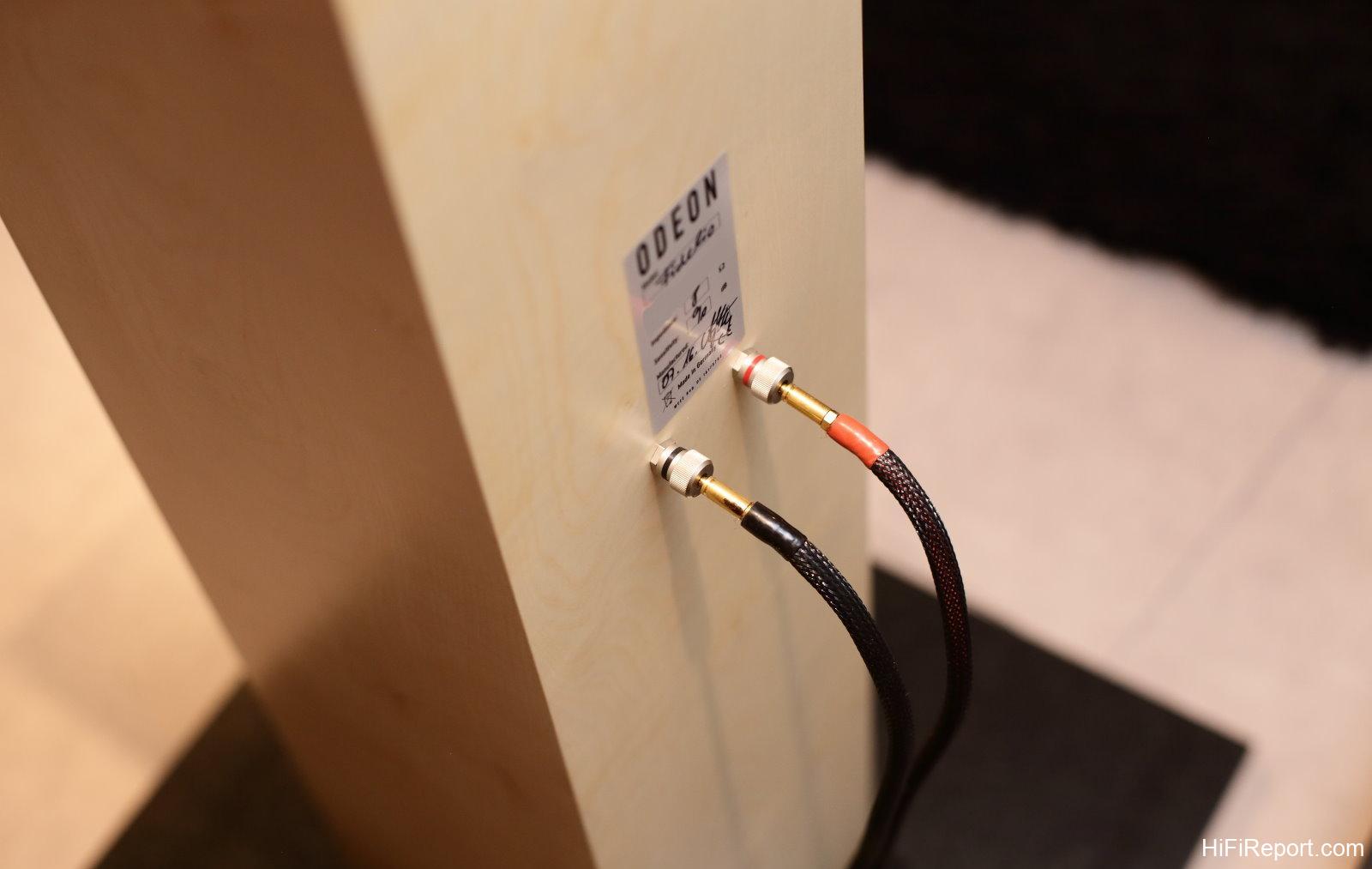
The rear panel is minimalistic, featuring only gold-plated speaker terminals and a small label detailing specifications, maintaining the consistent white maple aesthetic. The Fidelio presents an 8-ohm impedance and a 90dB sensitivity rating. Beyond the distinctive circular horn geometry, Odeon loudspeakers are particularly renowned for their crossover design.
According to Mr. Weng, the crossover network represents a core element of Odeon’s technological prowess, meticulously engineered to ensure seamless integration between the drivers and achieve precise time alignment. This, he suggests, is paramount to the success of Odeon’s sonic signature. However, the specifics of this design remain closely guarded by the manufacturer.
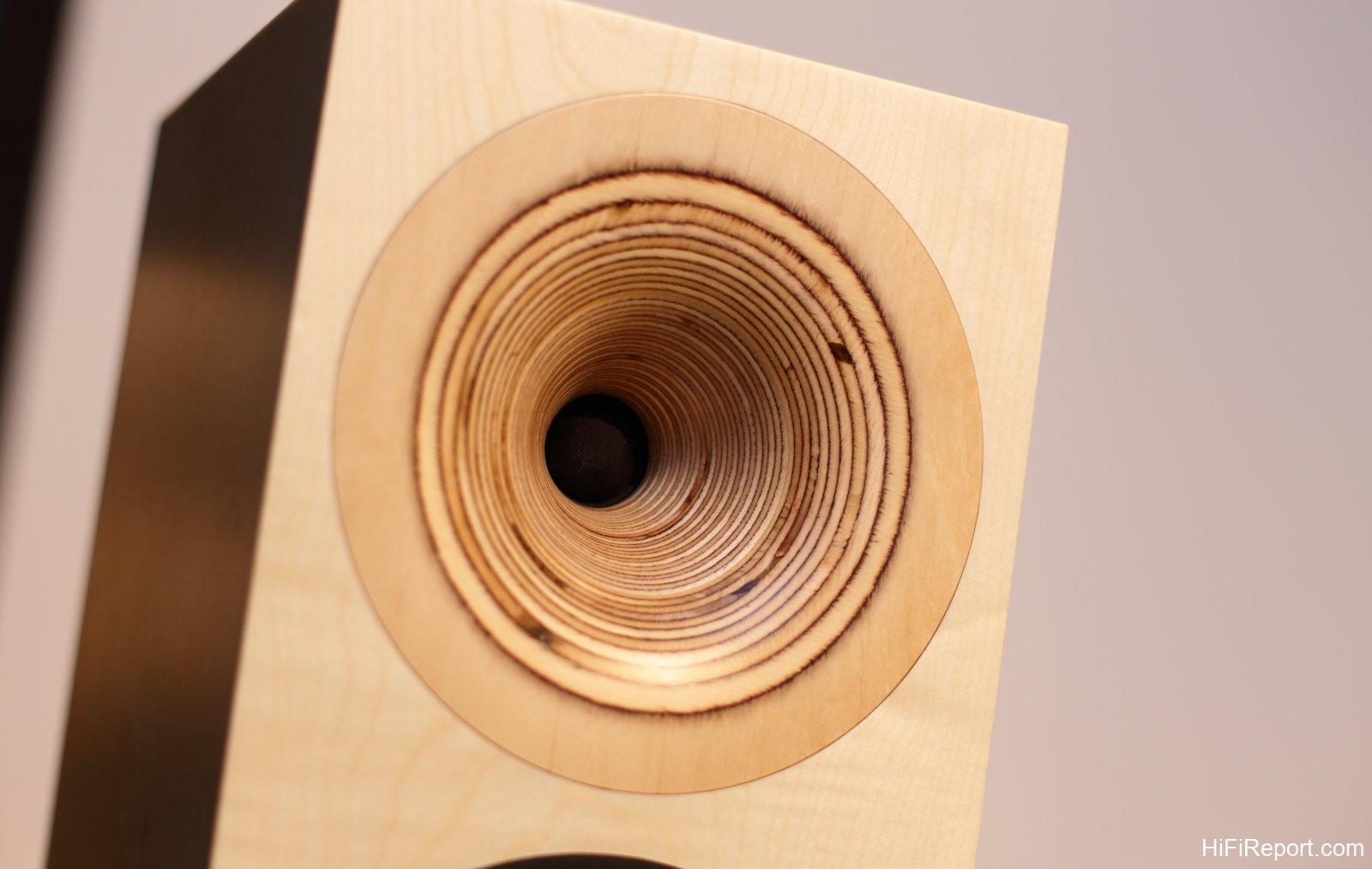
The wooden horn waveguide for the tweeter is a defining characteristic of Odeon loudspeakers. The wood’s natural growth rings are clearly visible and are protected by a specialized lacquer coating. The tweeter itself is a soft dome design. In this white maple finish, the cabinet’s wood grain is less pronounced. However, on darker-finished Odeon models, the wood grain is more prominent, and almost invariably book-matched, ensuring a mirror image grain pattern between the pair of speakers.
Amplifier Partner: Pathos Classic One
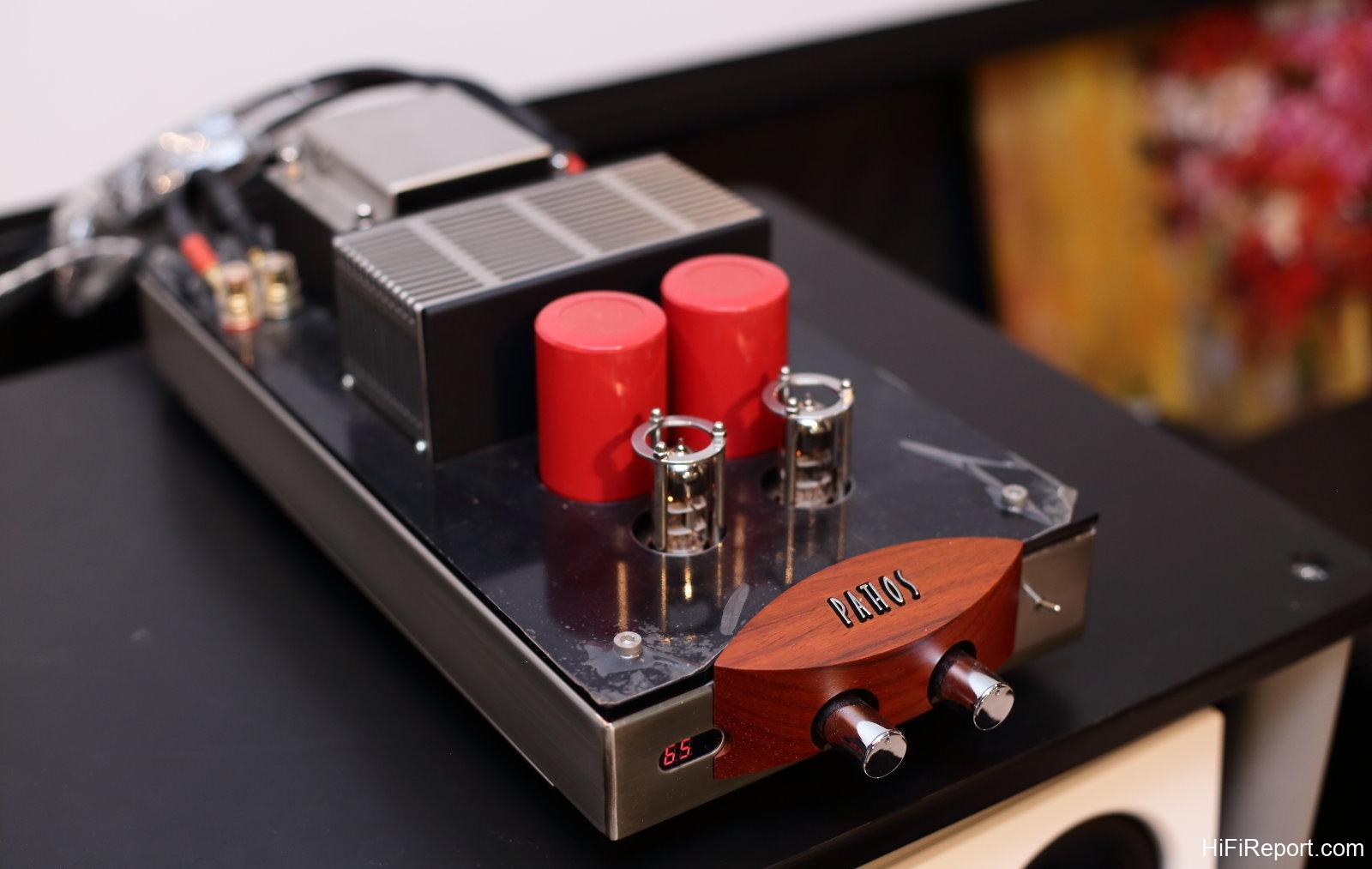
The amplification for this evaluation was provided by the Pathos Classic One integrated amplifier. This unit employs a hybrid design, featuring a tube-based preamplifier stage and a solid-state power amplifier section. The preamplifier circuitry operates in pure Class A and is fully balanced, utilizing vacuum tubes for signal gain. The power amplifier stage is a Class A/AB solid-state design, delivering 70 watts per channel into 8 ohms.
Connectivity is comprehensive, with one set of balanced inputs/outputs and four sets of single-ended inputs. The Pathos Classic One offers impressive practicality with its generous input selection. During a previous encounter with the larger Tosca S/2 loudspeakers, also powered by the Classic One, I was immediately captivated by its sonic character and ample power delivery within a 20-minute listening session.
Accustomed to more conventionally sized amplifiers, I initially underestimated the Classic One’s capabilities based on its compact dimensions, prompting closer inspection. Consequently, I approached this Fidelio pairing with considerable anticipation.
Dynamic Detail & Warmth
To initiate the listening session, I selected several familiar recordings, beginning with Koji Tamaki’s “Wine Red Heart.” The system immediately impressed with its exceptional vocal clarity and inherent musicality. Given that many tracks feature vocals accompanied by a sparse instrumental arrangement, achieving this level of musicality is no small feat.
The system adeptly rendered dynamic nuances and subtle gradations, capturing the full emotional arc of Tamaki’s vocal performance, from delicate whispers to powerful crescendos. The underlying warmth of the system’s sonic signature perfectly complemented the album’s intended atmosphere. Having listened to this recording countless times, I consistently find Koji Tamaki’s voice particularly captivating when reproduced through tube-based amplification.
Exceptional Musicality & Vocals
Next, I turned to the Hong Kong Hi-Fi Show commemorative album, “2015 Audiophile Selections,” starting with track one, Jacky Cheung’s “How Can You Bear to Leave You.” The system conveyed the poignant emotion embedded in the lyrics with remarkable fidelity. Cheung’s vocal performance and the delicate guitar accompaniment were rendered with captivating intimacy, possibly the finest reproduction I have personally experienced of this track.
The system once again exhibited a compelling balance of clarity and warmth, delivering a sound that was sufficiently smooth and refined. The soundstage was appropriately scaled, and the system unearthed a wealth of subtle nuances within the recording. Such was the captivating nature of the rendition that we immediately replayed the track. Moving to track two, “The Magnificent Seven,” the system effectively conveyed the expansive and panoramic scope of the orchestral arrangement.
The brass instruments possessed impressive bite and projection, while maintaining commendable speed and agility. Low-frequency reproduction was surprisingly robust, certainly more than adequate for typical listening environments, even if not comparable to larger, more ambitious systems.
Odeon speakers are demonstrably adept at creating a sense of air and spaciousness, and the Pathos Classic One maintained its composure and control even at higher volumes, showcasing a level of capability that exceeded my initial expectations.
Rich & Fast Bass, Odeon Signature
Moving to track 3 of the compilation, Eivør Pálsdóttir’s rendition of “Mín móðir,” the system immediately established an expansive sense of atmosphere, transporting the listener to a seemingly boundless vista. The singer’s vocal timbre was captivatingly alluring and possessed impressive density, imbued with an ethereal, dreamlike quality.
Simultaneously, the resonant drumbeats were reproduced with palpable solidity, permeating the listening space with compelling force and emotional impact. The Odeon Fidelio and Pathos Classic One combination demonstrated exceptional prowess in vocal reproduction, and considering their price point, they present a formidable challenge to competitors.
Switching to track 11, “Earth Drums,” the track’s dynamic and rapid percussion rhythms posed a rigorous test for the speaker’s mid-bass driver and the amplifier’s capabilities, demanding both speed, substantial output, and transient accuracy. The Odeon Fidelio, being the smallest Odeon loudspeaker I have yet encountered, defied expectations.
While I was aware of Odeon’s reputation for robust bass performance, I was genuinely surprised by the Fidelio’s ability to deliver such ample low-frequency extension and responsiveness from its relatively slender enclosure.
Exceptional Value at Feng Ming Audio
The Odeon Fidelio is priced at NTD 138,000. Whether this represents value isn’t solely determined by physical dimensions, but rather by sonic performance and build quality. Based on today’s listening experience and prior encounters with Odeon loudspeakers, this price point is undeniably justified.
Furthermore, Mr. Weng at Feng Ming Audio is offering a special package price when purchased as a system with the Pathos Classic One, presenting an even more compelling value proposition for HiFiReport readers. This listening session has genuinely been a sonic feast, and your opportunity to experience this system firsthand will arise at the International Audio Exhibition held at the Howard Hotel in December.
Feng Ming Audio’s exhibit room is scheduled to feature a dynamic demonstration of this very combination, and I certainly intend to revisit and indulge in another listening session.
Specifications
* 2-way bass reflex
* 17cm spherical horn (25mm fiber dome tweeter)
* 17cm paper cone mid-bass driver
* Crossover frequency: 2,200 Hz
* Frequency response: +/- 3dB 40 – 21,000 Hz
* Impedance: 8 Ohm
* Sensitivity: 90 dB
* Dimensions (HxWxD): 102 cm x 19 cm x 24 cm
* Weight: 17.5 kg