
Orpheus Lab Review
Orpheus Lab, a high-end audio brand hailing from Switzerland, a nation renowned for its luxury goods, has been crafting exceptional audio equipment since its inception in 2001. The brand’s name is inspired by Orpheus, a figure from Greek mythology, son of Apollo, the god of music, and Calliope, the muse of eloquence and epic poetry (whose name itself means “beautiful-voiced” in Greek). Orpheus was legendary for his unparalleled musical talent.
The Orpheus Lab logo features the lyre held by Orpheus, symbolizing the brand’s commitment to musical harmony, fidelity, and passionate sound reproduction.
Swiss Precision and Audio Heritage
Switzerland is globally recognized, particularly for its luxury goods industry. Despite being a mountainous nation with a population of under ten million, it is world-famous for its exquisite timepieces. Unlike Germany, another powerhouse of precision engineering, Swiss manufacturing excels in chemical and physical sciences, electromechanical engineering, and precision instruments, including watchmaking, rather than large-scale heavy industry.
Switzerland’s commitment to academic excellence provides a robust and fertile ground for industries like high-end audio. Consequently, numerous highly esteemed high-end audio brands originate from Switzerland, enjoying significant acclaim among audiophiles, a phenomenon deeply rooted in the country’s cultural and industrial environment.
New Product Lineup
Discerning audiophiles may have noticed Orpheus Lab’s recent launch of a completely redesigned product line. This new series encompasses sources, preamplifiers, power amplifiers, and integrated amplifiers, all gradually being introduced to the market. The aesthetics and design of these new components represent a significant departure from previous offerings.
HiFiReport has been closely following these developments over the past three months, and recently visited Lorin Audio to explore the new source and preamplifier in detail. During our visit, we paired them with the Analog Domain Artemis and Kharma Exquisite Classique speakers for an in-depth listening session.
Absolute Mediaserver: Multifunctional Source
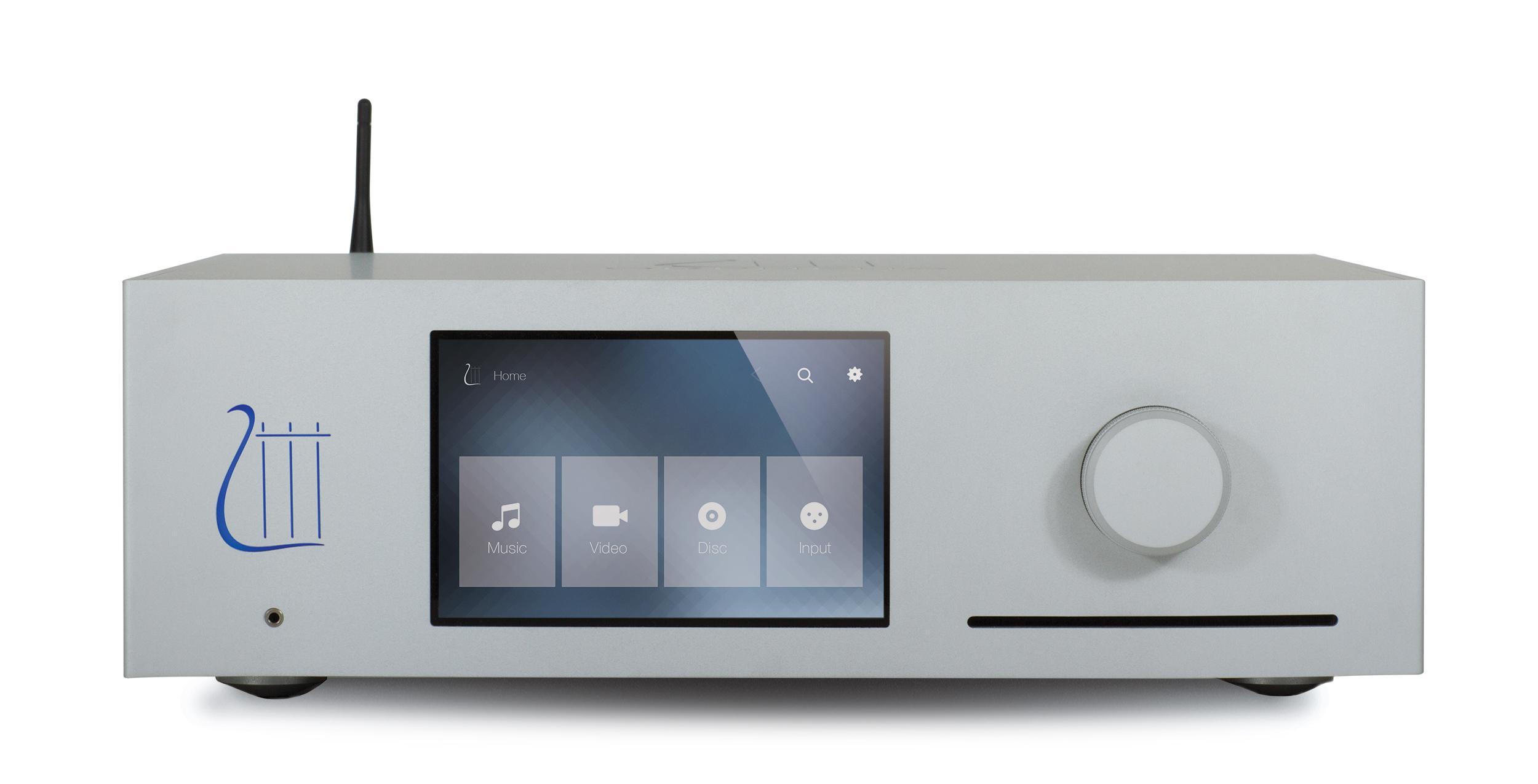
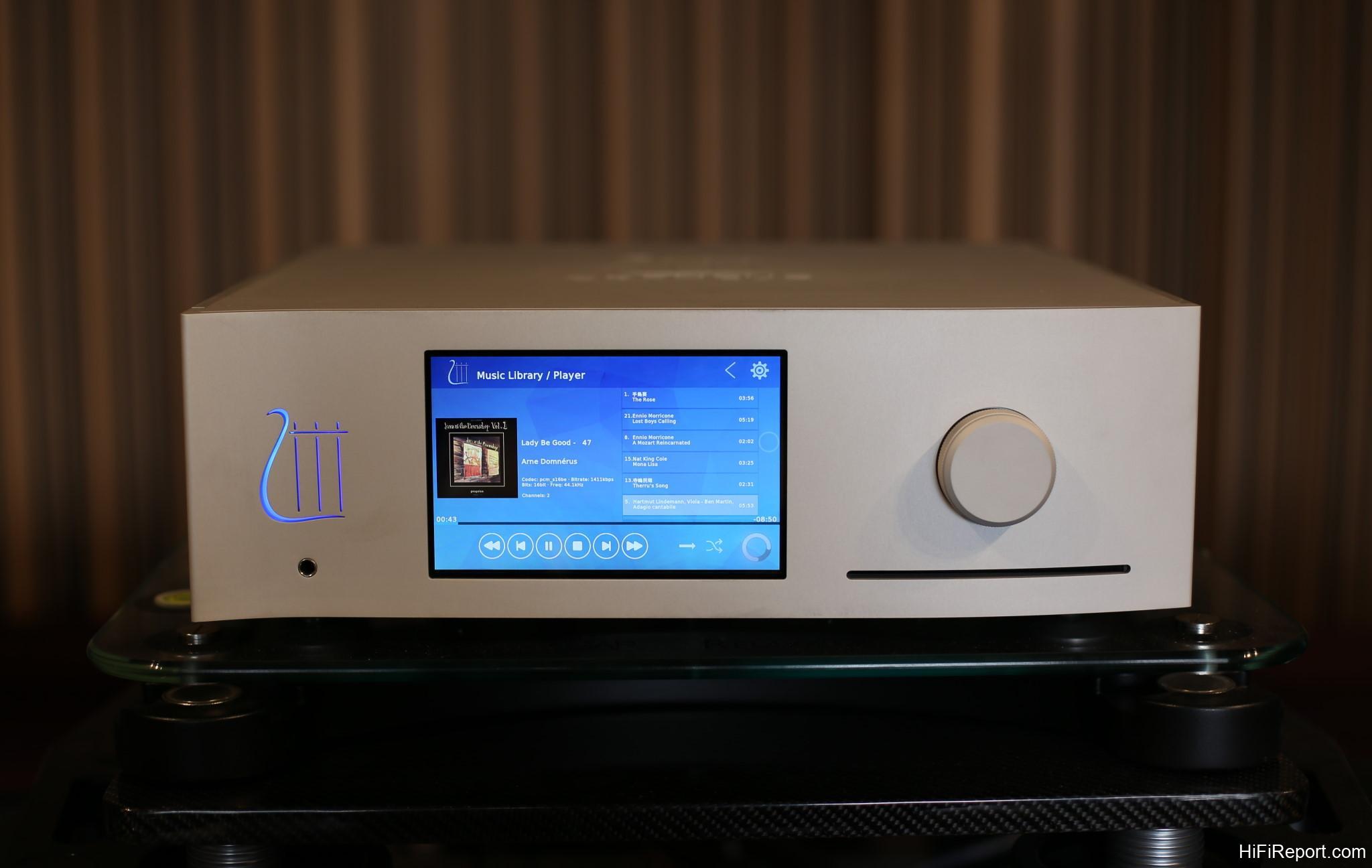
Pictured here is the Absolute Mediaserver, Orpheus’s latest media playback source. This versatile machine is engineered as the central hub of a high-end audio system, offering extensive playback capabilities and top-tier sonic performance. Internally, it features a fully balanced architecture with a dual-mono DAC circuit. Each channel employs eight ESS 9018 DAC chips. It can handle CD, DVD, and 4K Blu-ray discs.
Furthermore, it includes an internal SSD for ripping and storing audio and video files for rapid playback. Network connectivity allows for streaming internet radio and online music services like Spotify, Sirius XM, and Qobuz.
Operation is remarkably user-friendly, featuring a 7-inch touchscreen display on the front panel, along with a dedicated Orpheus app for remote control via iOS or Android devices. Orpheus’s new product line shares a consistent design language, utilizing aluminum alloy enclosures with clean, minimalist aesthetics and meticulous, high-quality construction. These components exude sophistication and are a tasteful addition to any listening room.
The illuminated logo on the front panel adds a touch of visual interest without being ostentatious, enhancing the overall premium feel.
Versatile Connectivity
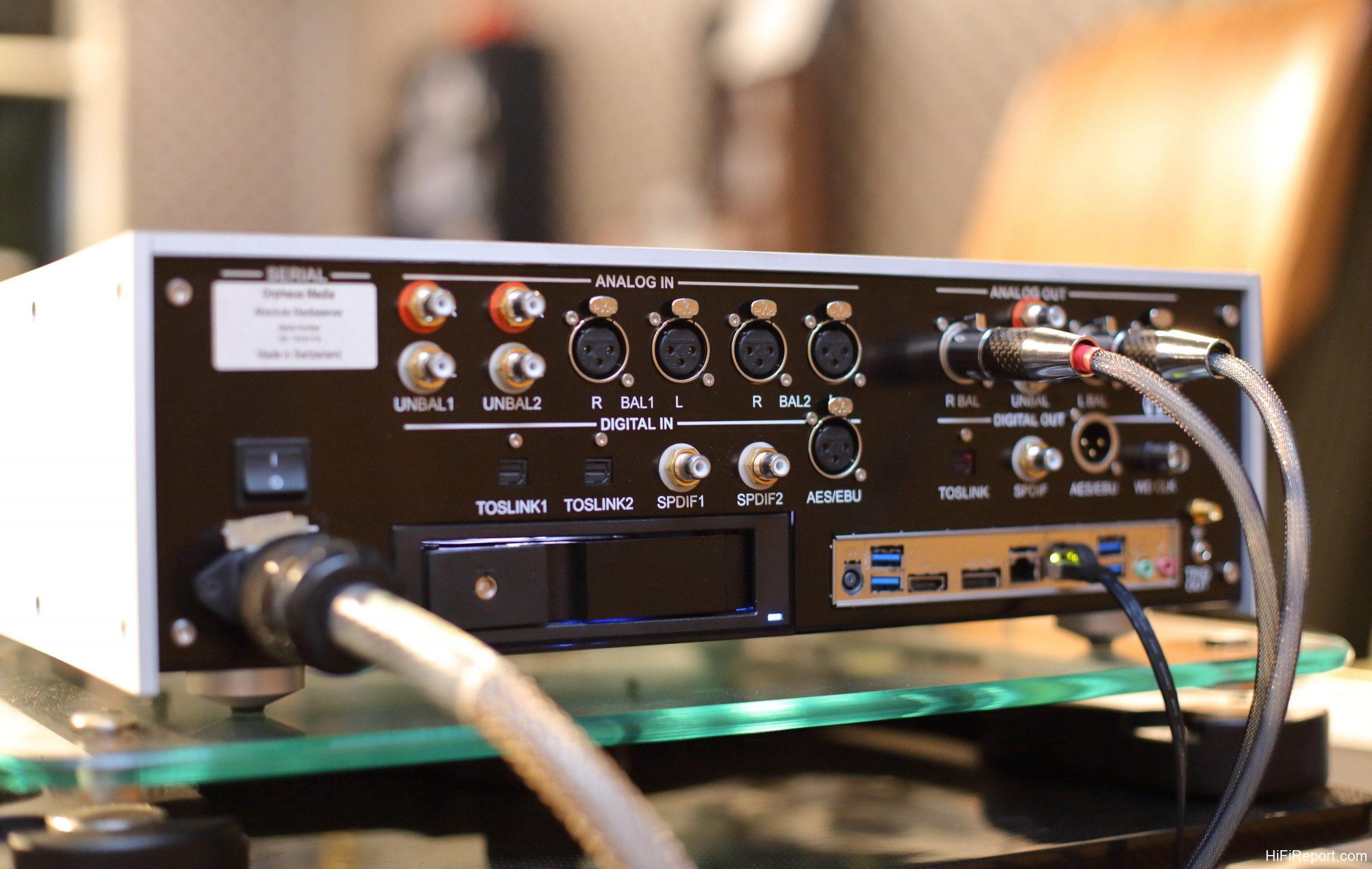
The rear panel of the Absolute Mediaserver, in contrast to its minimalist front, is packed with a comprehensive array of input and output connections, enabling seamless integration with multiple audio components. Digital inputs include 2 Toslink, 2 S/PDIF, and 1 AES/EBU. Digital outputs mirror this with 1 Toslink, 1 S/PDIF, 1 AES/EBU, and a word clock output.
Analog inputs comprise 2 unbalanced RCA and 2 balanced XLR pairs, while analog outputs offer 1 unbalanced RCA, 1 balanced XLR, a balanced 4-pin XLR headphone output, and a 6.55mm headphone jack.
Dedicated Control App
The Absolute Mediaserver benefits from a dedicated app for control. The image displays the iOS interface; an Android version is also available. The main options, “music” and “movie,” reflect the Mediaserver’s core functionalities. The bottom left provides access to custom playlists, while the right side displays albums stored on the internal hard drive. Basic playback controls are conveniently located at the bottom of the screen.
Heritage Preamplifier: Two-Chassis Design
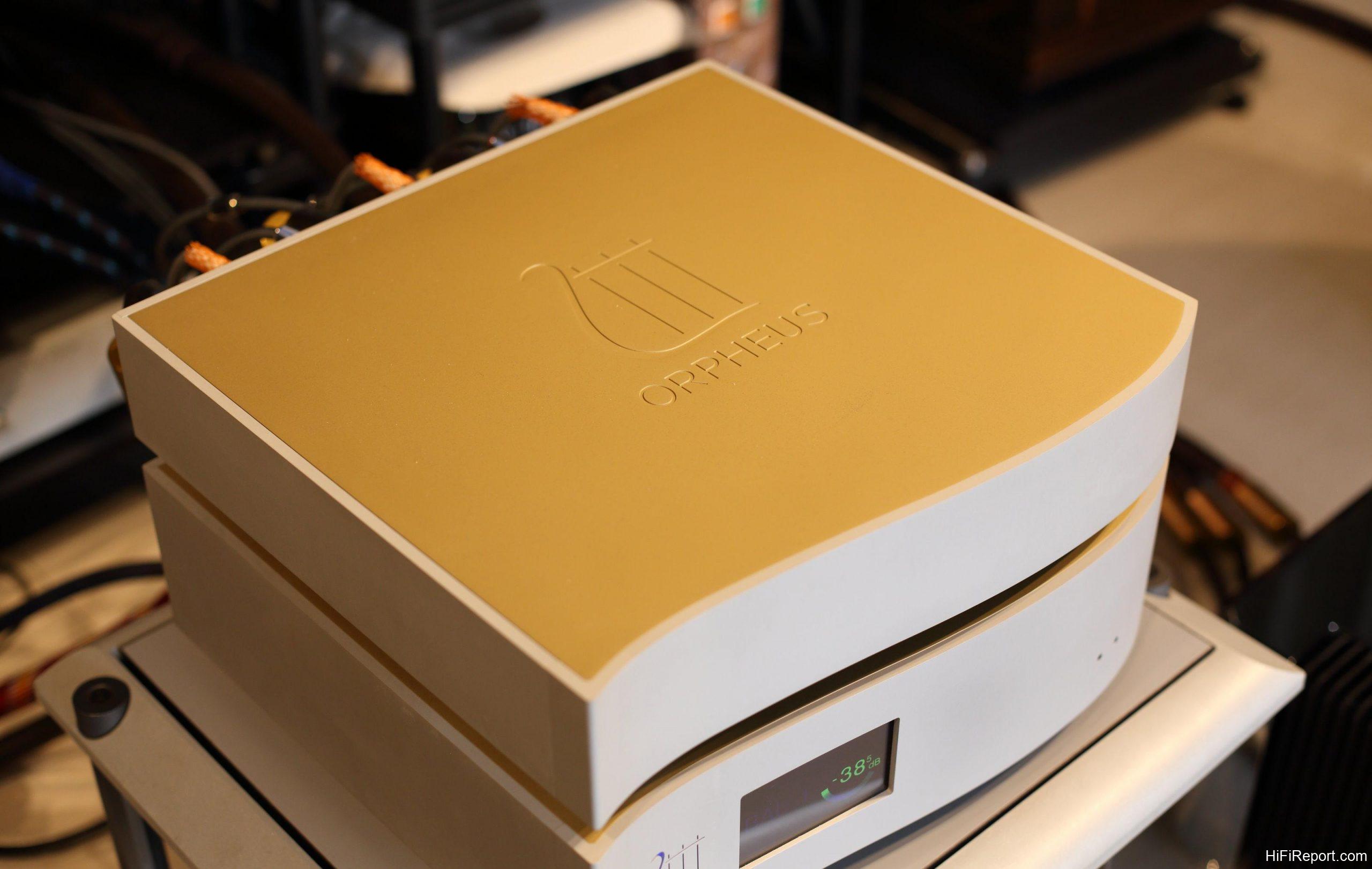
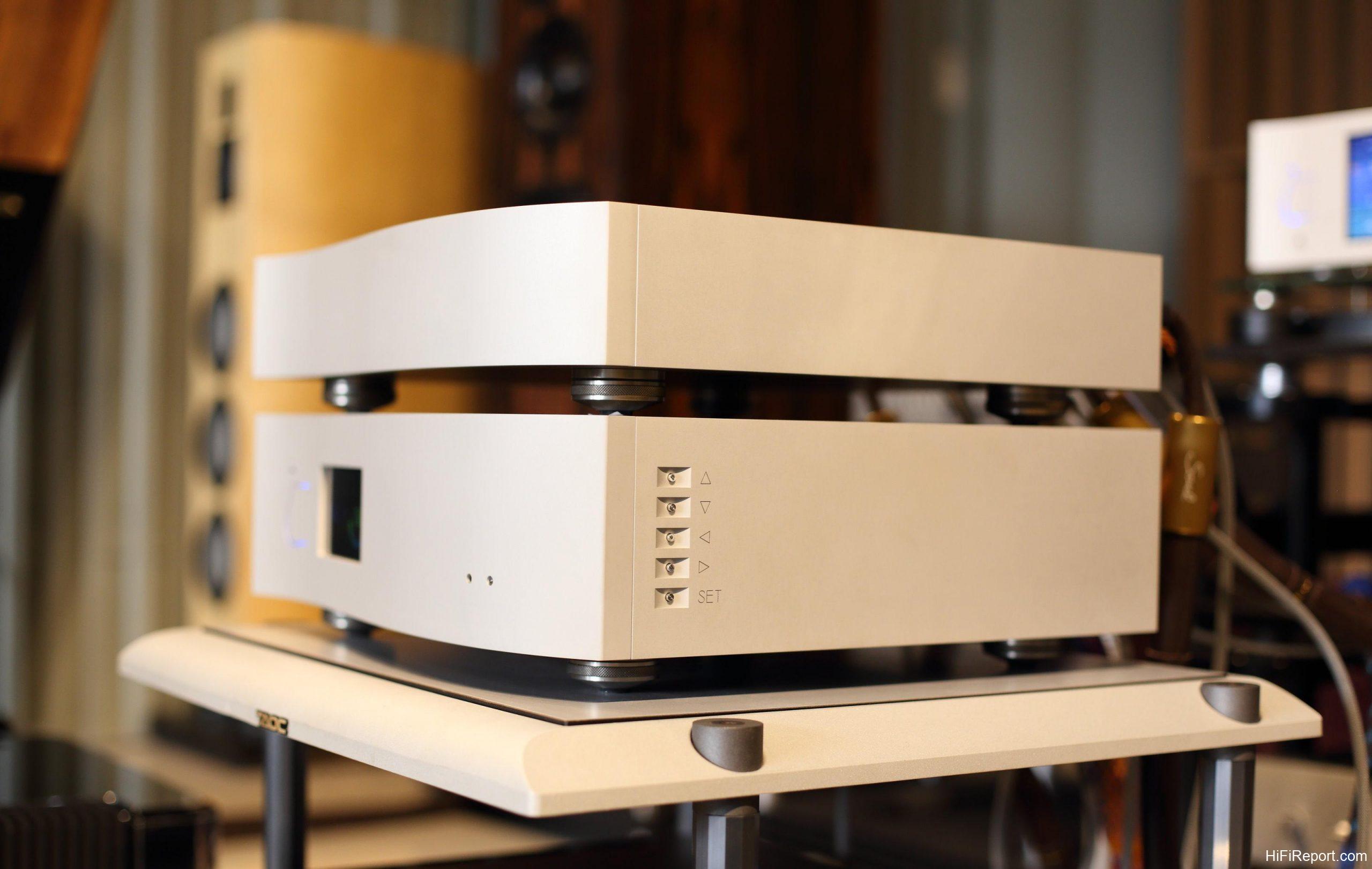
Another noteworthy release is the newly designed Heritage Preamplifier. This preamplifier employs a two-chassis configuration, separating the power supply into a distinct unit. Intriguingly, the power supply chassis includes a 4.3-inch LCD color display, presenting essential operational information. The slimmer top chassis houses the preamplifier circuitry itself. This physical separation of the power supply from the audio circuitry minimizes interference from the transformer and diodes.
Furthermore, the power supplies for the digital display/control and the analog audio signal are completely isolated. The power supply delivers a total of 350VA.
Fully Balanced, Isolated Circuitry
The Heritage Preamplifier also adopts a fully balanced architecture. The power supply stage for the amplification circuits is channel-separated, with independent transformers for each channel. This new power supply design delivers ample energy to the amplification circuits and maintains minimal temperature fluctuations even under significant power output variations, ensuring consistent sonic performance.
The Heritage Preamplifier boasts a Total Harmonic Distortion plus Noise (THD+N) of 120dB and a Signal-to-Noise Ratio (SNR) of 125dB.
The profile view of the Heritage Preamplifier reveals its elegantly curved front panel, a departure from a purely flat design. The top surface is finished with anodized aluminum, subtly adorned with the brand logo and model name, adding sophistication and visual interest.
The Heritage Preamplifier’s control buttons are located on the right side of the power supply chassis. Remote control is also provided. Notably, this separate power supply unit can also power Orpheus’s standalone DAC, allowing simultaneous connection to both a preamplifier and a DAC.
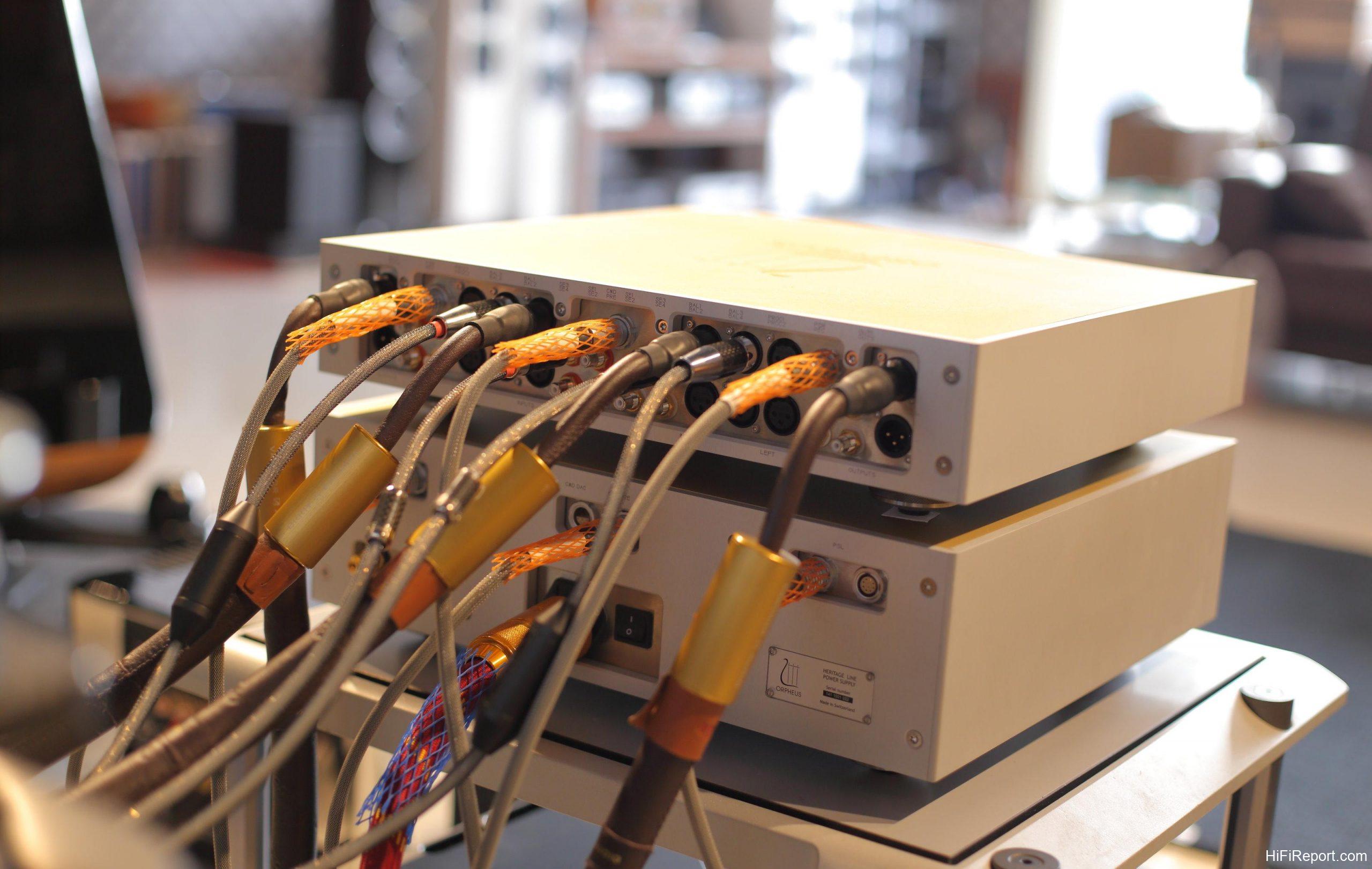
The rear panel of the Heritage Preamplifier is equally well-equipped. Analog inputs include 4 unbalanced RCA, 4 balanced XLR, and 2 balanced processor inputs. Analog outputs offer 2 unbalanced RCA, 2 balanced XLR, and 1 unbalanced record output.
Artemis Power Amplifiers and Kharma Speakers
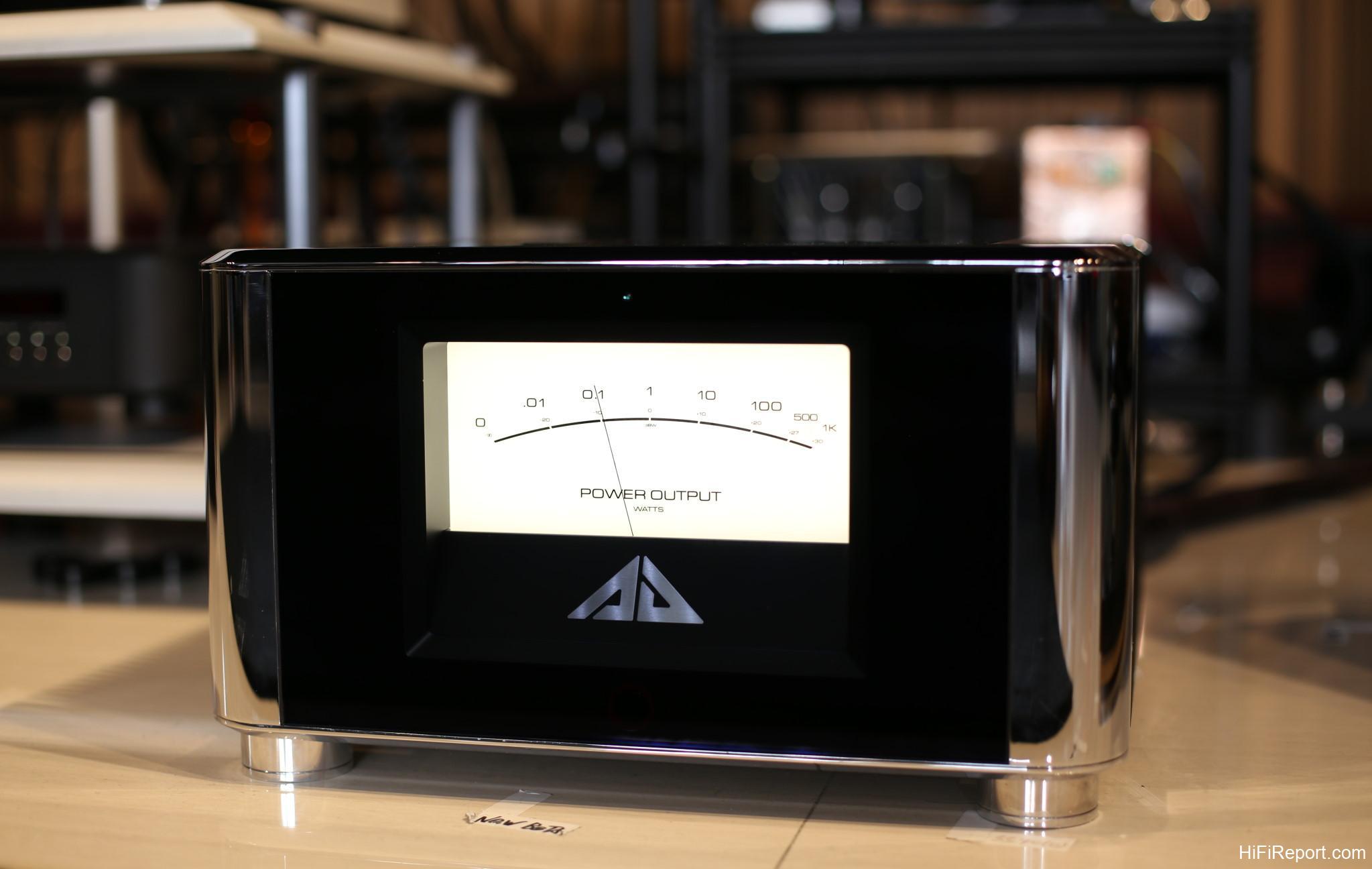
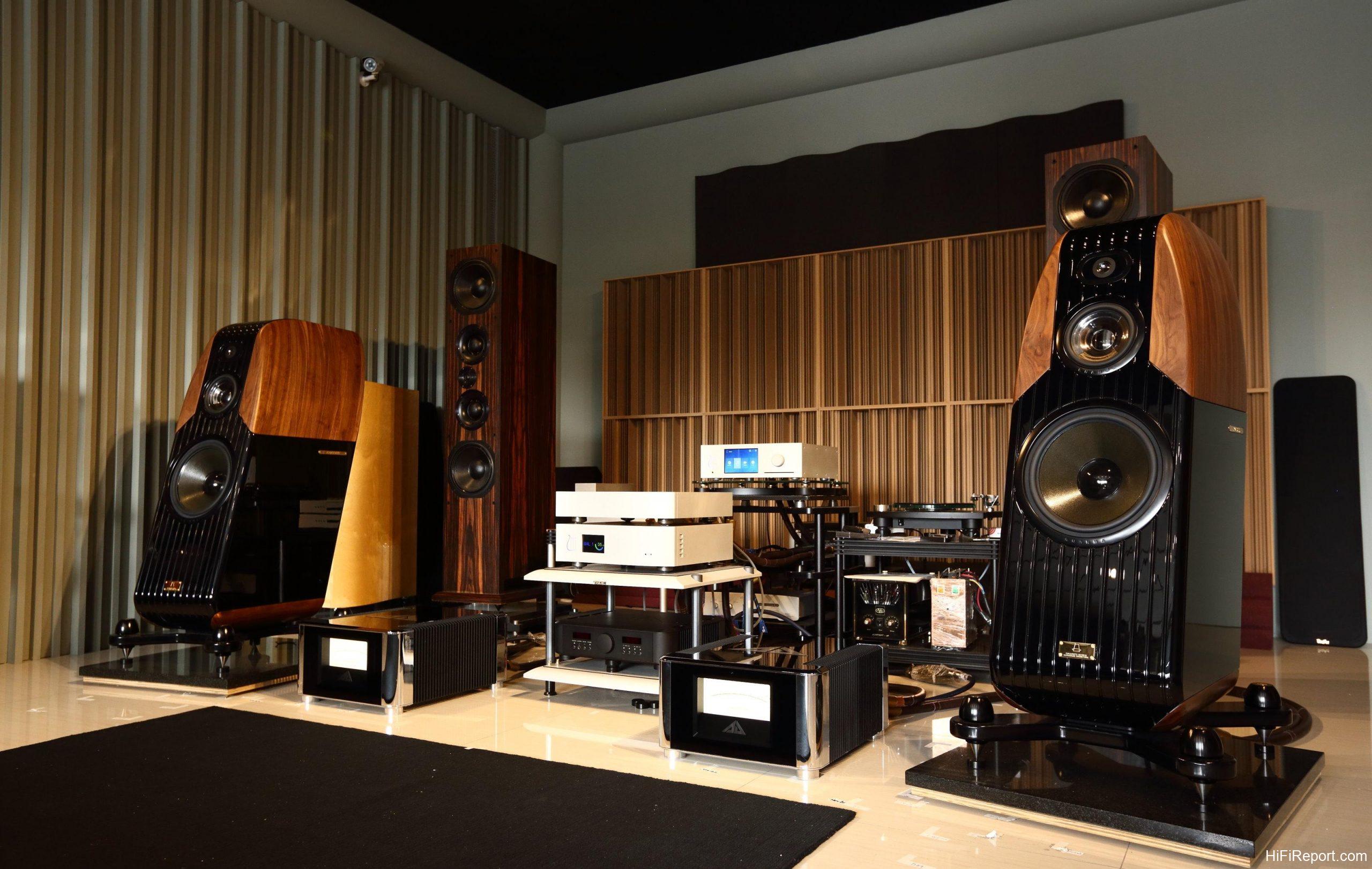
For our listening session, we paired the Orpheus components with Analog Domain Artemis power amplifiers from Germany. We employed two Artemis monoblock amplifiers to drive the Kharma Exquisite Classique loudspeakers from the Netherlands, with each Artemis handling a single channel. The Artemis delivers a peak power output of 1,000 watts into 8 ohms and 2,000 watts into 4 ohms, ensuring ample power for virtually any loudspeaker.
Its output stage features 52 high-performance power transistors with a peak current capacity of 360 amperes.
These monoblock amplifiers have spent time in HiFiReport’s listening room previously, and we have also auditioned them extensively in home environments. Their driving force and control are top-tier, complemented by exceptional sonic resolution and a rich, full-bodied sound. This system configuration is identical to the one showcased at the 2016 Taipei Hi-End Audio Show, which left a lasting impression on many attendees. The synergy with Orpheus is undeniable, creating a truly exceptional system.
System Synergy and Acoustic Environment
Our listening took place at Lorin Audio. Mr. Chang and Mr. Lu of Lorin Audio have continually refined their understanding and setup of this system. The sonic improvements from its initial presentation at the Taipei Hi-End Audio Show to its current demonstration in their store are remarkable.
At the audio show, the system’s fundamental sonic character was evident, but the limitations of the environment hindered the soundstage and overall musical immersion, restricting playback volume and preventing a full exploration of the system’s true potential. Following two weeks of meticulous adjustments by Lorin Audio and within their optimized listening space, the overall sonic performance has improved dramatically compared to the audio show.
The system’s capabilities and distinctive qualities are now clearly and compellingly revealed.
Exquisite Detail, Majestic Soundstage
We commenced our listening with Bach’s Toccata and Fugue in D minor BWV 565 from the disc. The opening immediately established a sense of grandeur and expansive soundstage, showcasing the organ’s imposing presence. Lorin Audio’s listening room is quite spacious, yet this system and this iconic piece transcended the room’s boundaries, filling it with a palpable and substantial sonic aura.
During the piece’s rapid keyboard passages, the system’s detail and refinement were strikingly evident. The Orpheus components exhibited a remarkably smooth and delicate sonic texture, akin to silk. The Artemis amplifiers provided instantaneous power and control, revealing subtle microdynamic nuances while maintaining unwavering command during large-scale dynamic shifts.
Superb Stability, Agile Speed, and Control
Moving to the , we selected “Johannes Passion,” another Bach masterpiece, this time from his St. John Passion. We deliberately played the piece at a considerable volume level and observed that the sound retained its refined character without any degradation. Image localization remained exceptionally precise. In the choral sections, voices emerged from the soundstage instantaneously and ceased just as abruptly.
The dynamics were not only expansive but also remarkably controlled, with spatial reverberation dissipating instantly as the chorus concluded each phrase. This level of performance is rarely encountered. The system’s agility and control are truly exceptional.
Relaxed, Full-Bodied Sonic Feast
Next, we listened to Diana Krall’s “Boulevard of Broken Dreams” from her album. The sonic texture remained clear and detailed. The Orpheus components contributed a beautifully delicate and refined sonic signature, while the Artemis amplifiers provided sonic weight and fullness. The system flawlessly captured the relaxed atmosphere essential to jazz music. The sound was full-bodied, the soundstage expansive, and the details crystal clear.
The system adeptly conveyed the music’s dynamic contours, with instantaneous power delivery precisely when needed. The Orpheus and Analog Domain combination exemplifies the ideal fusion of scientific design and sonic artistry, resulting in a truly aesthetic listening experience.
Unveiling Subtle Differences in Recordings
Switching to Jacky Cheung’s , we specifically selected the 24bit/96kHz high-resolution version of “Love is Like a Tide.” The sonic density was noticeably richer and more refined compared to the CD-quality version, exhibiting remarkable detail and a full, powerful sound. The system clearly revealed the subtle sonic nuances between different source qualities.
The background was exceptionally quiet, bordering on absolute silence, highlighting the exceptional signal-to-noise ratio of the Orpheus source and preamplifier. Playing Tsai Chin’s “Moonlight Serenade” from , even disregarding the vocals, the ethereal sounds of the zither immediately transported the listener to a tranquil moonlit landscape.
A True High-End System
In Lorin Audio’s listening environment, this system demonstrated top-tier performance in terms of detail retrieval, quietness, soundstage spaciousness, dynamic range, and speed control. Orpheus provides a gentle, refined, and almost tender sonic character, while Analog Domain delivers substantial power, resolution, and versatile performance. The combination is undoubtedly synergistic, achieving a 1+1 > 2 effect, driving the Kharma Exquisite Classique speakers with effortless grace and beauty.
Orpheus also offers its own monoblock power amplifiers, which were showcased at the Taipei Hi-End Audio Show, presenting a very detailed and sonically beautiful character. Unfortunately, we were unable to compare them directly in this session to explore the full potential of an all-Orpheus system within Lorin Audio’s listening space. This system, even excluding cables and other accessories, represents a significant financial investment, placing it beyond the reach of most.
However, its price point naturally implies an exceptionally high level of sonic performance. Our listening session at Lorin Audio confirmed that the system lived up to and exceeded these expectations. Across a wide range of musical genres, it consistently delivered a high level of performance, deepening our appreciation for Orpheus. Audiophiles seeking to experience truly exceptional sound should make a point of visiting Lorin Audio to audition this system—it is unlikely to disappoint.
Orpheus Absolute Mediaserver Specifications
* CD Drive: TEAC® CD/DVD/BD mechanism (slot-loading)
* Disc Formats Supported: CD, CD-R, CD-RW, DVD (SL,DL), DVD-/+R (SL,DL), DVD-/+RW, DVD-RAM, BD, BD-R, BD-RE, BD HYBRID
* Input Interfaces: 2 x Toslink, 2 x S/PDIF, 1 x AES/EBU, 2 x XLR (Bal. ), 2 x RCA (Unbal.)
* Digital Outputs: 1 x Toslink, 1 x S/PDIF, 1 x AES/EBU, 1 x Word Clock
* Analog Outputs: 2 x Balanced, 2 x Unbalanced, 1 x Stereo headphone jack (6.55 mm), 1x Stereo balanced headphone (4 pin XLR)
* Other Digital Interfaces: 2 x USB 3.0, 2 x USB 2.0, 1 x Gigabit Ethernet, 1 x VGA, 1x HDMI, Wi-Fi, Bluetooth 4.0
* Clock Interface: Word clock out (44.1KHz, 48KHz, 88.2KHz, 96KHz, 176.4 KHz, 192KHz, 352.8 KHz, 384 KHz)
* DAC Chipset: ESS 9018 DAC (mono mode, 8/channel)
* Control Methods: Touch screen or via Orpheus App (Android and iOS)
* Power Consumption: 75 W (operating), 5 W (standby)
* Dimensions (WxLxH): 436 x 440 x 150 mm
* Weight: 12 Kg
Orpheus Heritage Preamplifier Specifications
* Input Interfaces: 8x Unbalanced (RCA), 8x Balanced (XLR), 4x Balanced processor inputs
* Output Interfaces: 4 x Unbalanced (RCA), 4 x Balanced (XLR), 2x Unbalanced record outputs
* Total Harmonic Distortion + Noise (THD + N): 120 dBr
* Signal-to-Noise Ratio (SNR): 125 dBr
* Linearity: less than 0.002 dB (from 20Hz to 20KHz)
* Remote Control: All-aluminum remote
* Power Consumption: 35 W (operating), 5 W (standby)
* Dimensions: Power supply unit 440 x 420 x 120 mm, Preamplifier 440 x 420 x 80 mm
* Weight: Power supply unit 24.3 Kg, Preamplifier 13.8 Kg