
Audionet G5 & Sennheiser HE1 Review
Not long ago, I wrote a review of the Audionet ART G5 CD player, considering it a “near-miss” reference-grade digital source. Recently, Enjoy Music Hi-Fi organized a Sennheiser HE1 (New Orpheus) audition event by appointment. Having never experienced this combination, I quickly scheduled a time to explore it.
Reluctant to Return the Audionet ART G5
The ART G5 is a CD player I deeply regret missing out on. When searching for a reference digital source for the editorial department, I somehow overlooked it. During the audition period, I was completely captivated, but alas, I eventually had to let it go.
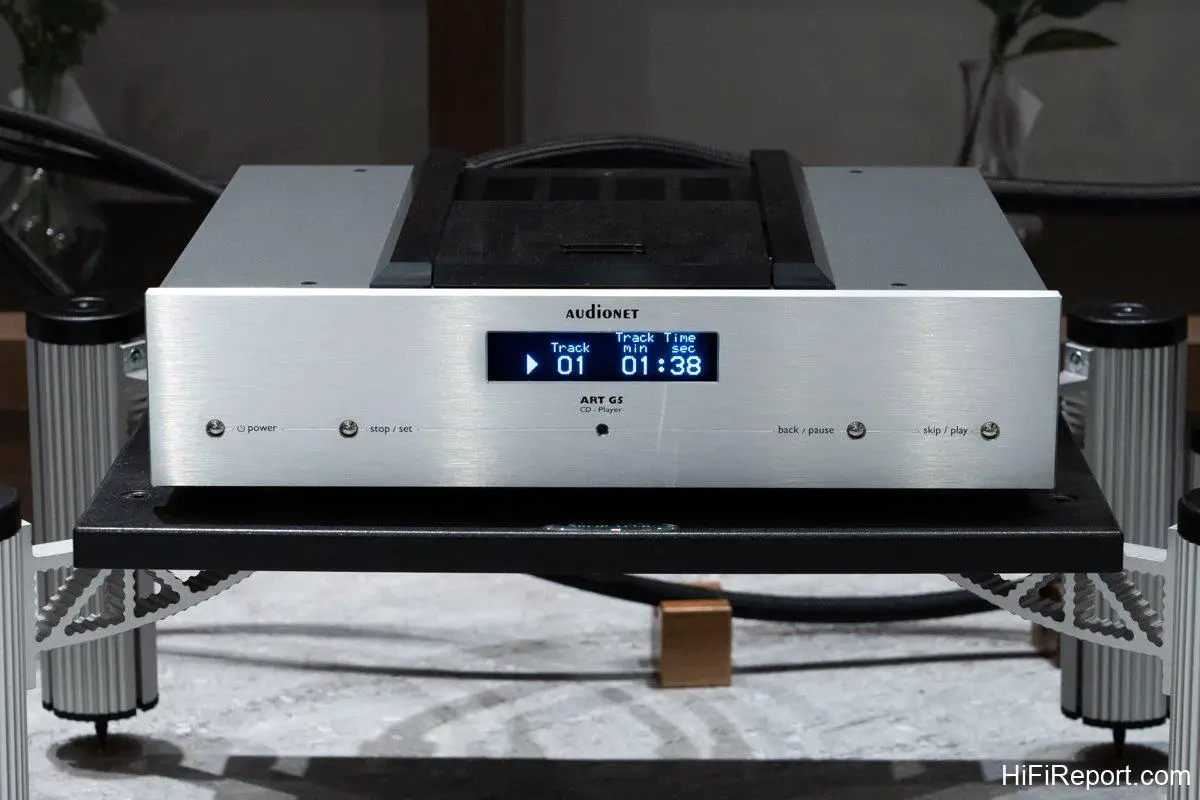
It can be considered a representative of the new generation of CD players, employing the brand new CD Pro8 laser mechanism. This is currently the best CD transport structure money can buy (excluding SACD). HiFiReport’s YBA CDT 450 uses the CD-Pro2, which was also once recognized as the best transport structure, but it’s now discontinued. Consequently, most new high-end digital transports are shifting to the CD-Pro8. Missing out on the ART G5 meant we were stuck in past glories, failing to keep up with the latest trends.
Moreover, the CD-Pro8 used in the ART G5 is a modified and enhanced version, incorporating numerous Audionet proprietary technologies. The manufacturer calls it “Aligned Resonance Technology” – hence the “ART” in the name.
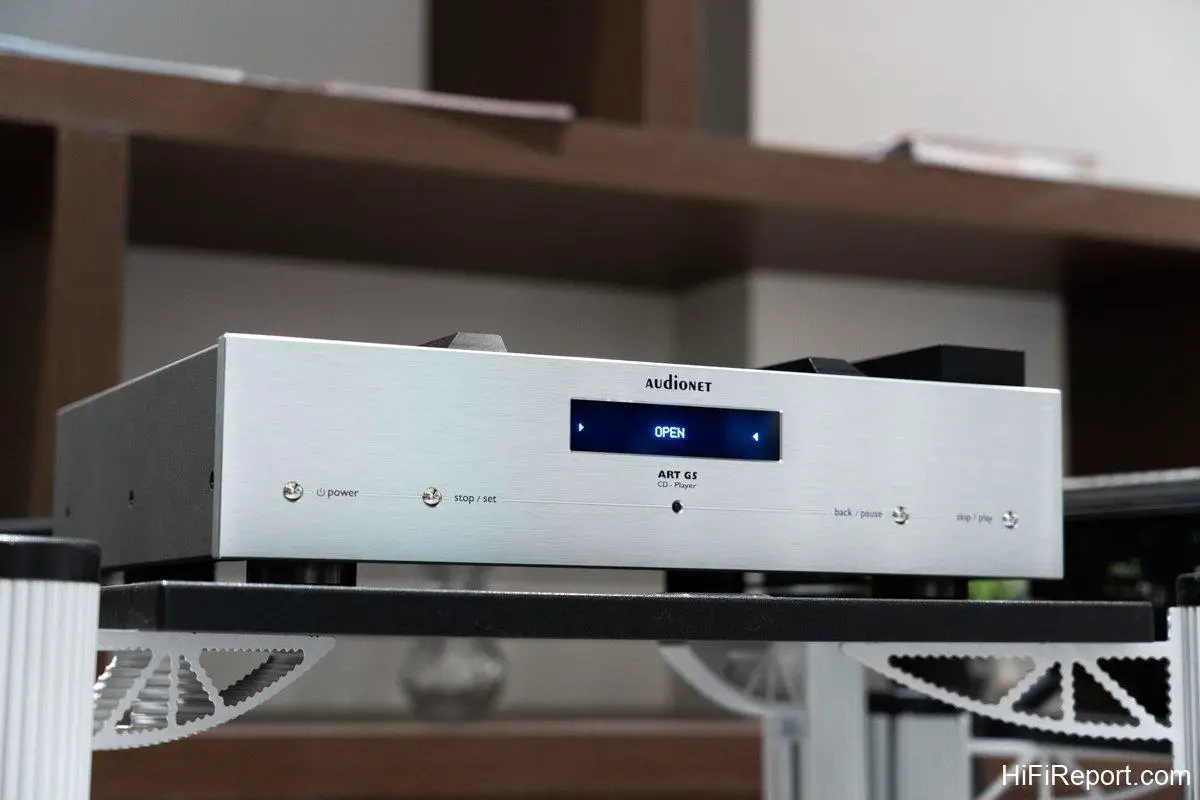
Numerous Audionet Exclusive Technologies
“Aligned Resonance Technology” encompasses many of Audionet’s unique vibration damping designs. For instance, the CD drive mechanism and control circuit board are separated to avoid the influence of minute vibrations. The CD drive mechanism is mounted on a thick aluminum plate, which is further damped and secured with brass foot nails. The entire unit’s base is fitted with a granite plinth, further lowering the machine’s center of gravity. Although the chassis appears to be a standard size, it weighs a substantial 22 kg. Audionet has added considerable mass to control resonance.
Another technological highlight of the ART G5 is Audionet’s proprietary DSP upsampling algorithm. It upsamples all music signals to 24 bit/192 kHz before feeding them into dual DACs for independent decoding of the left and right channels. Asynchronous clocks are used for re-clocking, reducing jitter to below 60 picoseconds sigma. How low is this number? Audionet claims it’s already testing the limits of measurement instruments. This implies that the ART G5’s jitter is so low that it’s almost undetectable by measurement equipment, highlighting just how minimal it is.
Ultimately, all digital-to-analog conversions must undergo analog amplification. For this stage, the ART G5 employs Audionet’s in-house developed Audionet OP amplifier. Some might perceive “OP” (operational amplifier) as not high-end enough. However, a well-designed OP is actually an ideal micro-amplification component. Mass-produced OPs commonly used in 3C products don’t require such high specifications, leading to the perception that OP components are not premium. In reality, OPs can achieve excellent bandwidth and very low distortion. The issue is that manufacturing high-specification OPs requires sufficient production volume for manufacturers to be willing to undertake it. Therefore, the Audionet OP is not easily obtained, representing Audionet’s willingness to invest heavily in proprietary amplification OPs rather than purchasing readily available, ordinary parts.
The Most Expensive Electrostatic Headphone System
The Sennheiser HE1, launched in 2016, is arguably one of the most expensive headphone systems available today. Audiophiles affectionately call it “New Orpheus” as a tribute to the original flagship Orpheus electrostatic headphone system. The old Orpheus was known as “Orpheus,” so HE1 became “New Orpheus.” Nearly thirty years ago, the Orpheus commanded a price of 300,000 NTD, roughly equivalent to the price per square meter of prime real estate in Taipei. The later HE1, priced at over 2 million NTD, is also about the same as the price per square meter of luxury housing, suggesting inflation hasn’t been too outrageous in this rarefied air.
Being called an electrostatic headphone system signifies that HE1 is not just electrostatic headphones, but also includes a vacuum tube amplifier and DAC. Simply add a music source, and you can enjoy music. When launched in 2016, it employed eight ESS SABRE ES9018 DAC chips operating in parallel for fully balanced digital-to-analog conversion. High-end digital sources today almost universally adopt the same architecture, demonstrating HE1’s forward-thinking design. Even five years after its release, it remains cutting-edge.
Rare Audition Experience Opportunity
Experiencing the ART G5 paired with HE1 is undoubtedly an opportunity not to be missed. Enjoy Music Hi-Fi’s willingness to offer scheduled auditions is aimed at creating an irresistible experience. Audio sales are fundamentally about experience marketing. A CD player and headphone system priced like a luxury car requires firsthand listening before anyone would impulsively buy it. However, how many audio stores are willing to actually set up such an expensive “personal enjoyment” audio system for public audition? Therefore, if you want to witness a top-tier personal audio system, don’t miss this audition opportunity.
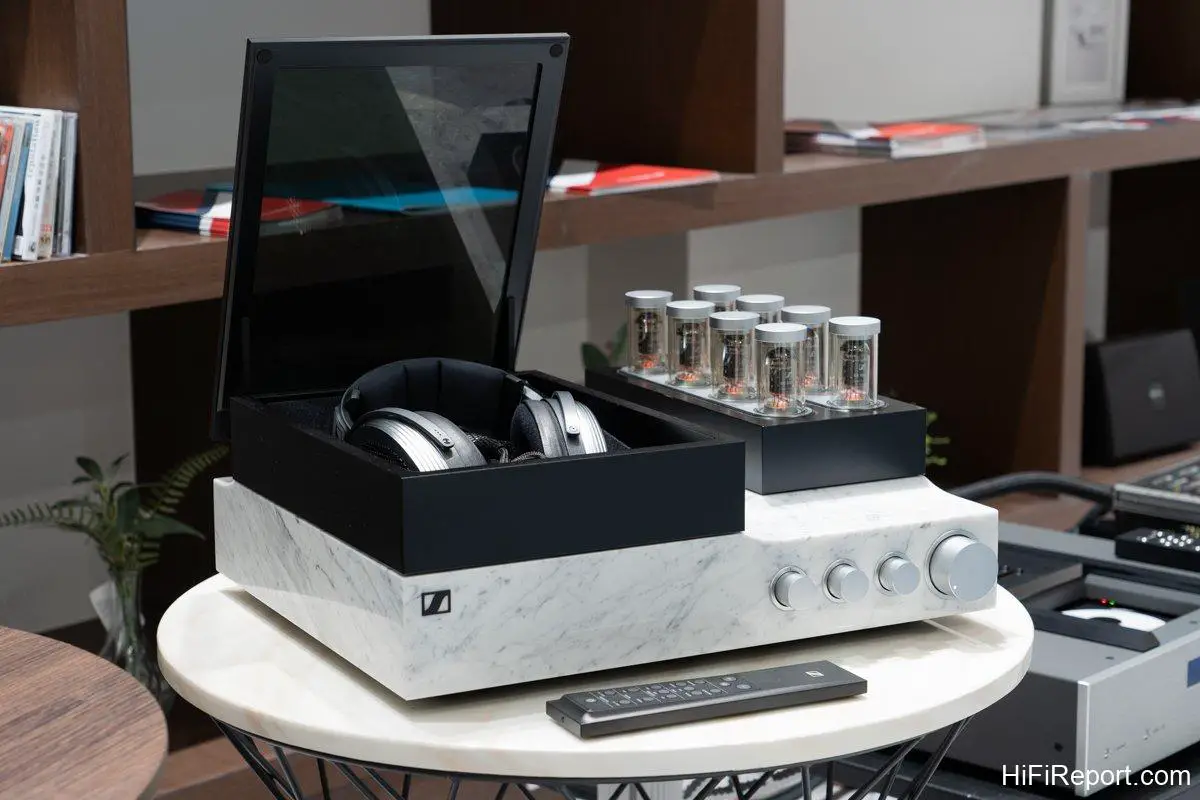
This is the third HE1 audition event hosted by Enjoy Music Hi-Fi. The first time, it was paired with Danish Gato, the second with Mark Levinson, and this time with Audionet. Each event features equipment they are actively promoting. Auditions are by appointment, starting from March 21st. Visit the Enjoy Music Hi-Fi Facebook fan page, answer a question, and like and join the fan group to schedule your audition.
Since having the chance to hear HE1 in 2016, my only subsequent encounters were at audio shows. However, audio shows are inevitably affected by environmental distractions. HE1, being open-back electrostatic headphones, is particularly sensitive to ambient noise. Imagine listening to a HE1 system costing over two million NTD, and someone nearby says, “I heard these headphones are really expensive.” It not only ruins the musical atmosphere but also obscures the musical details that HE1 so meticulously reproduces. How can you fully appreciate the prowess of a top-tier headphone system in such conditions? However, booking an audition at Enjoy Music Hi-Fi provides exclusive access to a listening room for thirty minutes per session, eliminating concerns about ambient interference.
Carefully Planned Cable and Power Supply Matching
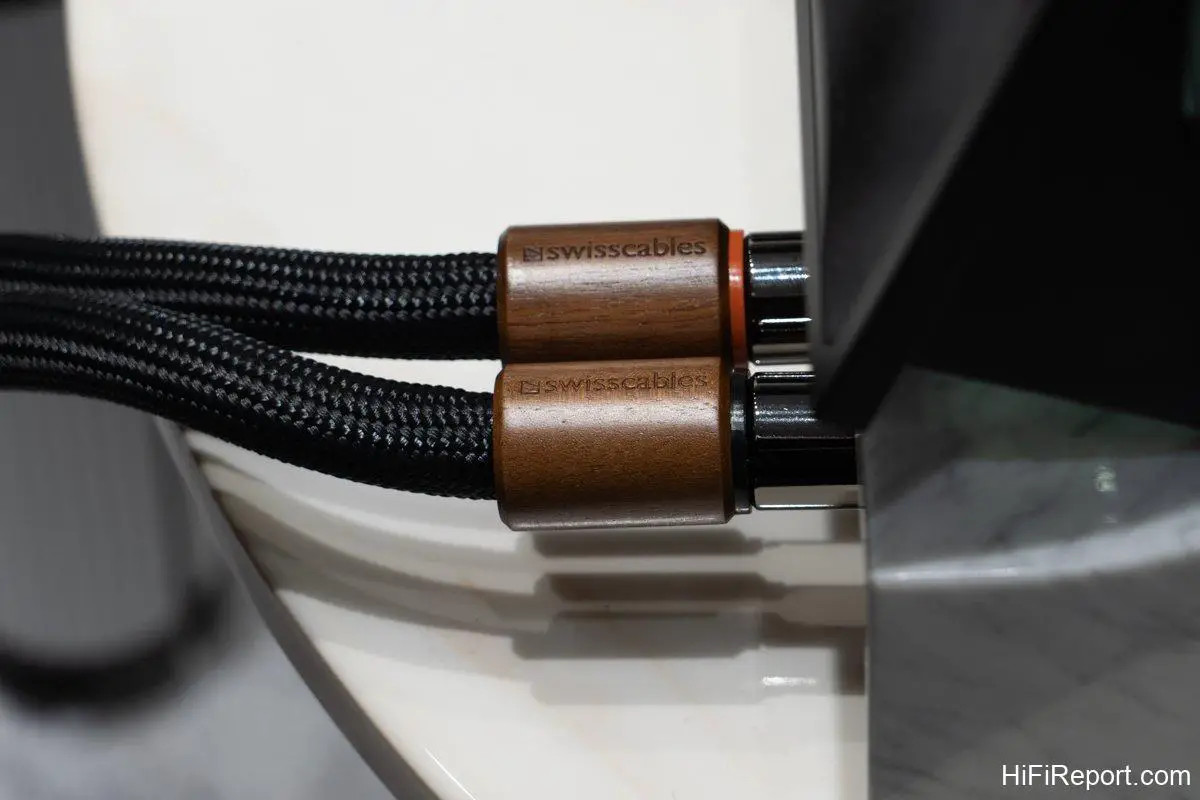
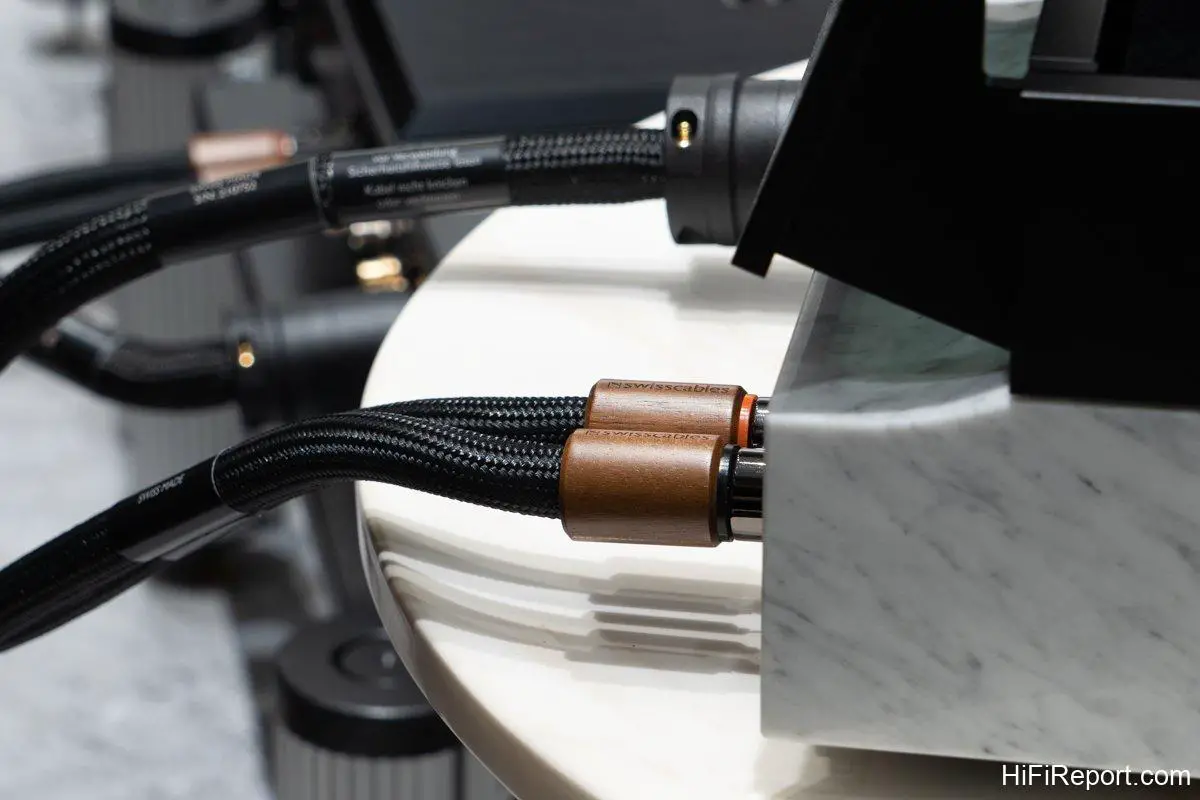
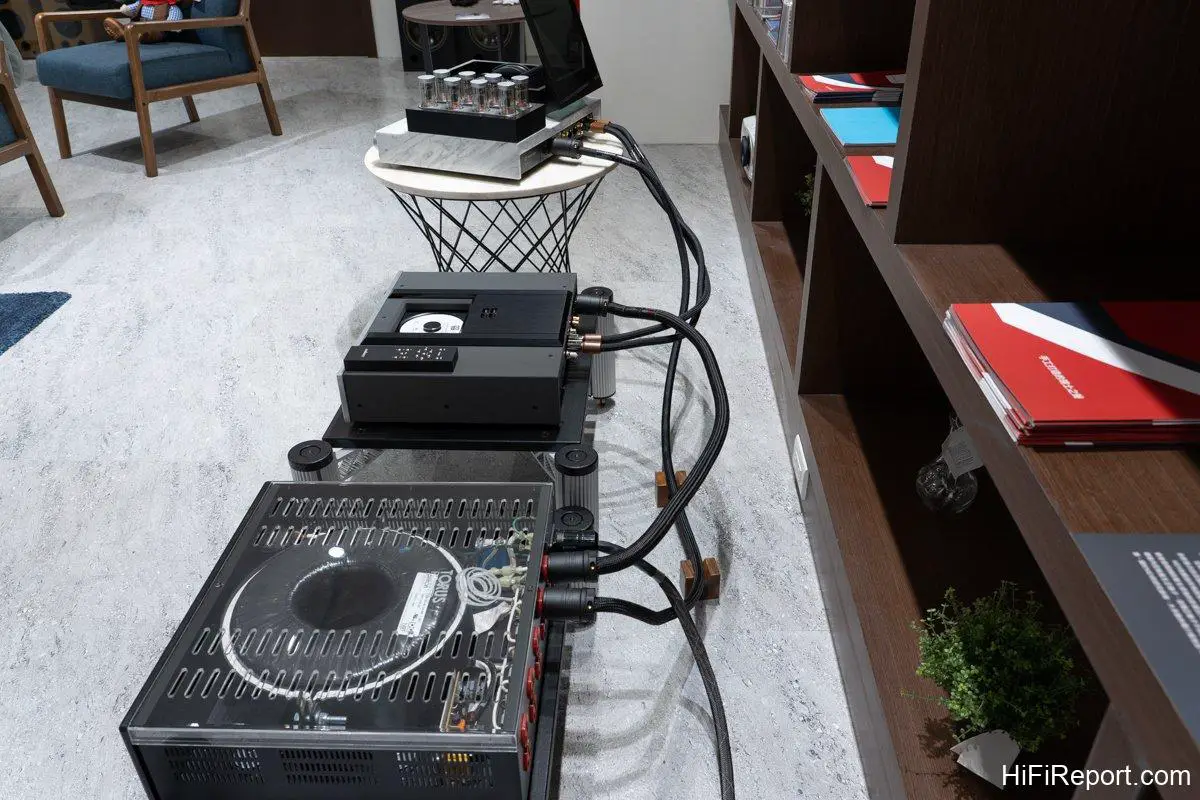
In addition to HE1 and ART G5, Enjoy Music Hi-Fi also used a full set of Swisscables. Store manager Mr. Lee mentioned that Swisscables are high-quality audio cables known for their warm and beautiful sound. Each level of their cable range possesses distinct sonic characteristics. Therefore, they planned a full Swisscables setup for the event, ultimately using the top-tier Reference Plus series.
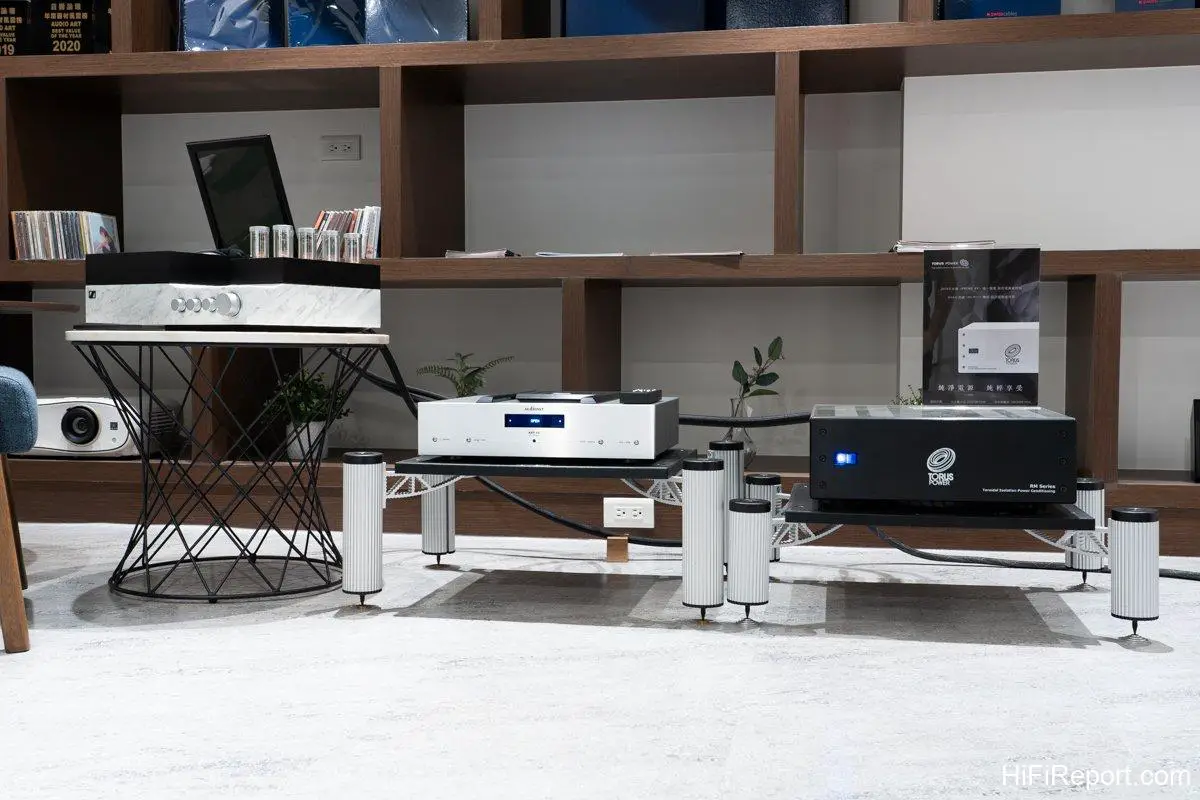
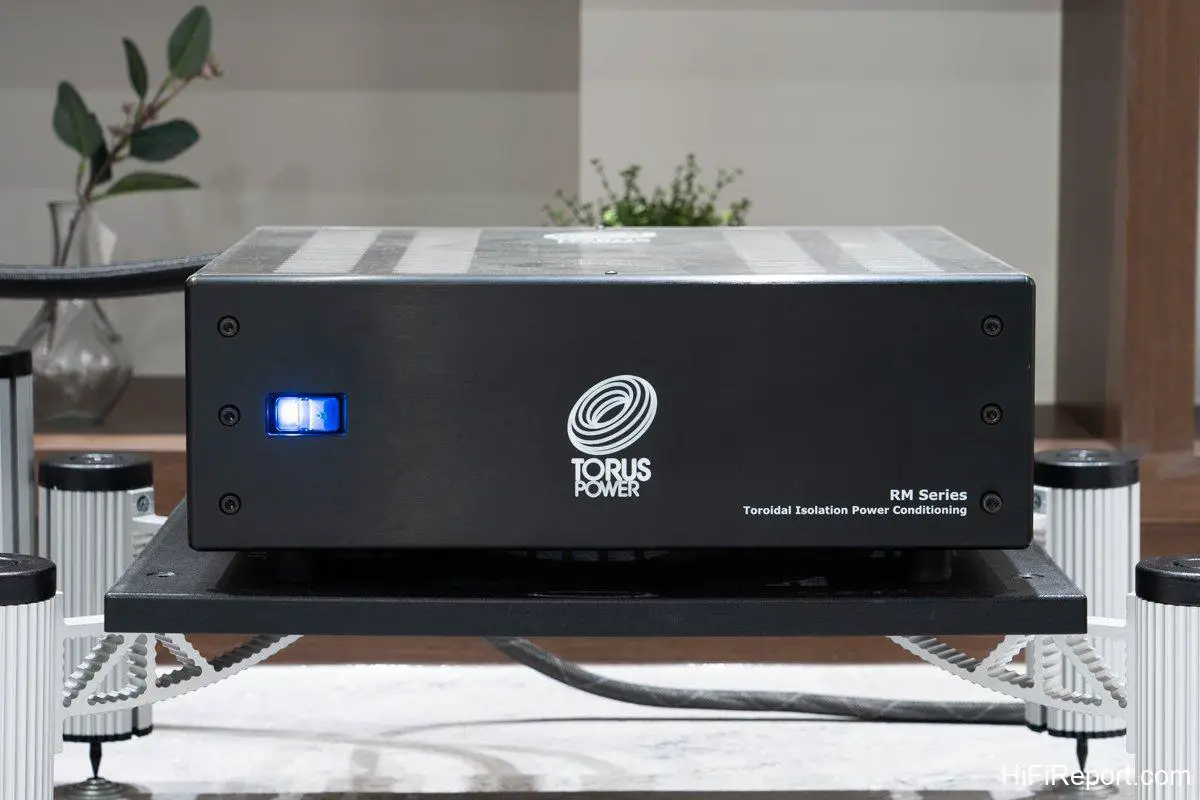
For such a high-end headphone system, power supply is also crucial. Mr. Lee stated that they typically recommend Torus Power power conditioners to their customers. Adding a premium power supply not only quiets the musical background but also expands the soundstage.
If you visit Enjoy Music Hi-Fi for an audition, be sure to inquire about the detailed audio pairings. This is where the store’s expertise lies.
Exploring the Crossfeed Function
Even for someone working in audio media, listening to HE1 paired with ART G5 is an extremely rare experience. Although I’ve heard both components separately, I had never tried them together. Even for me, this was a first.
During the audition, pay attention to HE1’s “special feature”: the Crossfeed mode. It has three settings: Off/Low/High. “Off” disables it, while “Low” and “High” activate Crossfeed.
What is Crossfeed? It subtly adjusts the time difference between the left and right channels to create a more stereophonic sound, essentially an “enhanced” soundstage spaciousness effect. For purist audiophiles, “enhancement” might seem like artificial manipulation. However, Crossfeed’s principle is rooted in auditory psychology. It’s worth experimenting with to experience different soundstage spatial impressions.
Excellent Open Spaciousness
I started listening with Katja Werker’s “Contact Myself 2.0.” I had used this CD when reviewing the ART G5, finding it easy to discern an audio system’s ability to recreate the recording venue. Using it to evaluate HE1 was even more challenging because headphones inherently struggle with spatial representation. After all, the sound source is so close to the ears, making it naturally difficult to create a sense of open airiness.
However, this is HE1, not ordinary headphones. Electrostatic headphones are inherently strong in spatial depiction, and HE1 is among the best. Recorded live at the Stockfisch Records studio, Katja Werker’s guitar is positioned to the right, another guitar also to the right, and the fretless bass is centered, slightly recessed, to emphasize Katja Werker’s vocals, which are focused in the center. The guitar tones are crisp and transparent. Every time I listen to HE1, it feels like a full-fledged audio system hanging on my ears. The sense of space is truly exceptional, seemingly unmatched. Paired with the ART G5, the quietness of the musical background further enhances the spatial depiction. The soundstage is direct and transparent, as if transported back to the recording studio.
Switching to “Piazzolla For Two,” a simple duet of flute and classical guitar, the recording’s soundstage is excellent. On an audio system, you can not only hear the flute on the left and guitar on the right but also easily perceive the flute being slightly higher and the guitar slightly lower in relative position. However, instrument height is relatively less pronounced on headphones. Even with the HE1 and ART G5 combination, instrument placement is precise, but the sense of height difference is not as distinct. Nevertheless, headphones more effortlessly reveal recording details. Details like the breath sounds of the flute and the subtle finger movements of the guitar are easily superior to what speaker systems can convey.
No Pressure Even at High Volumes
Increasing the musical scale, I listened to Mutter and John Williams’ “Across The Stars,” specifically “Rey’s Theme” from “Star Wars: The Force Awakens.” HE1 and ART G5 showcased the violin’s gorgeous timbre. The high frequencies were smooth and lustrous, transitioning to a rich and varied lower register, creating dramatic tonal contrasts. The crossover recording’s low frequencies are slightly exaggerated, with the double bass pizzicato sounding full and weighty, contrasting with the violin solo’s clarity and brilliance. HE1 and ART G5 possess a near-magical ability to reveal recording details while maintaining a warm and lush tonality. Even listening at high volumes, there was no sense of ear fatigue or pressure.
For something romantic, I listened to Barenboim playing Chopin’s Piano Concerto No. 2. For romance, naturally, the second movement, Larghetto, is the choice. The strings open with a slow passage, gently echoed by the woodwinds, welcoming the piano solo’s entry from low to high. Barenboim’s tempo is free and relatively slow, yet he sustains the flowing melodic lines. The hesitant theme, after a brilliant chord, gently descends. HE1 and ART G5 clearly delineate each piano note, revealing the nuances of tone. As the theme repeats an octave higher, the timbre becomes crystalline. The changes in the piano’s inflection allow you to hear Barenboim unhurriedly stringing each note together, like Chopin’s inner monologue.
Moving to jazz, I listened to “Cooking With Miles Davis.” “My Funny Valentine” is a classic jazz standard. On HE1 and ART G5, you can clearly hear the vintage character of the recording. The old analog recording has a richer tone and higher background noise, but the instrument focus and realism are strong. Although the instrumental timbres have a slight roughness, they exude the vitality of old analog recordings. The distance between the instruments and the listener feels very close. Listening on headphones intensifies this atmosphere of being present at the recording session. You can also sense the recording’s age.
Feel Real, Direct, Transparent, and Open
After spending over an hour with HE1 and ART G5 (the editor-in-chief apologetically listened a bit longer), I dared not continue. It’s truly an aspirational reference-grade personal audio system. On HE1, you can more clearly appreciate the ART G5’s qualities of being real, direct, transparent, and open. Moreover, experiencing this system in Enjoy Music Hi-Fi’s quiet listening room was a truly delightful listening experience.
I want to reiterate that having the opportunity to audition the HE1 and ART G5 combination in person is a rare chance. Experiencing it firsthand will reveal just how remarkable the pinnacle of personal audio systems truly is.
【Audition System Configuration】
* **Headphone System:** Sennheiser HE1
* **Playback Source:** Audionet ART G5 CD Source
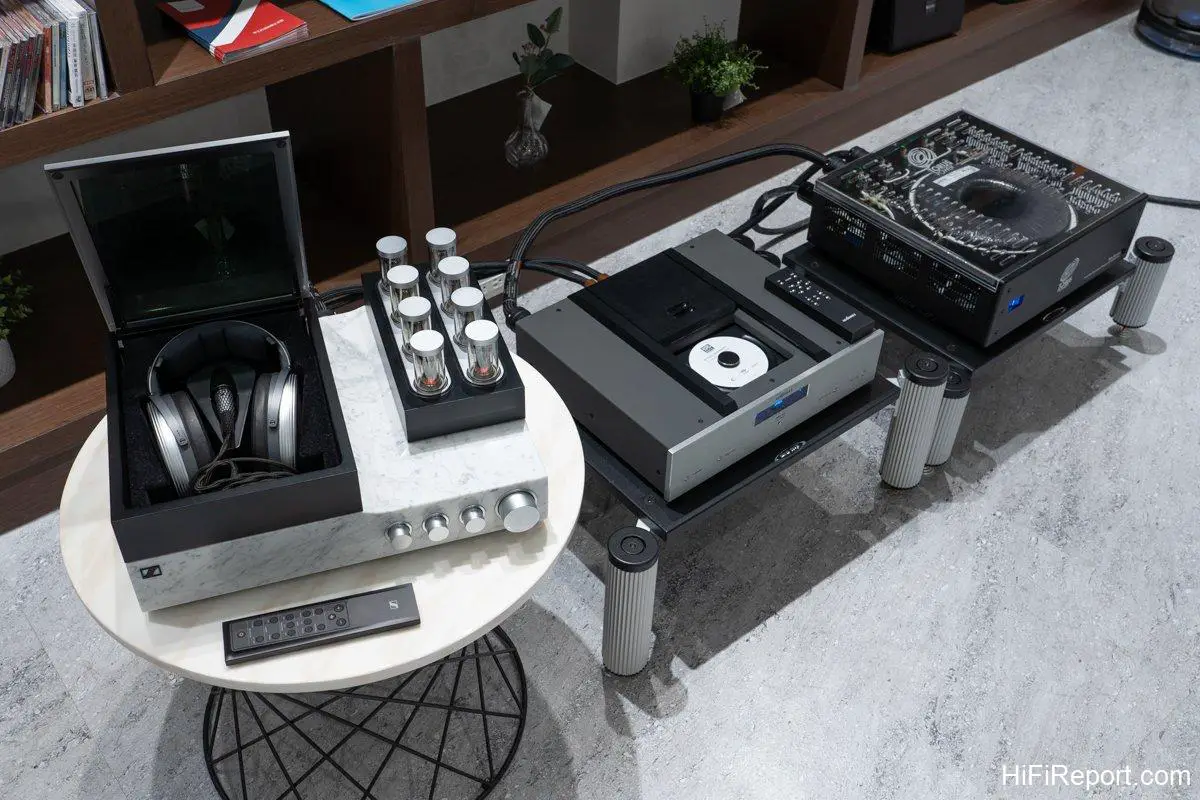
* **Cables:** Swisscables: Reference Plus Series
* **Power Conditioning:** Torus Power RM 15 Plus Power Conditioner
Equipment Specifications
**Audionet ART G5**
* **Type:** CD Player
* **Frequency Response:** 0 – 90 kHz (-3 dB)
* **Total Harmonic Distortion:** 103 dB (A-weighted) -60 dBFs
* **Signal-to-Noise Ratio:** > 110 dB
* **Channel Separation:** > 130 dB @ 10 kHz
* **Output Impedance:** 33 ohms
* **Analog Outputs:** RCA × 1, XLR × 2
* **Digital Outputs:** RCA × 2, AES/EBU × 1, Optical Toslink × 1
* **Digital Inputs:** USB × 1, Optical Toslink × 1
* **Dimensions:** 430 × 120 × 360 mm (W×H×D)
* **Weight:** 22 kg