
Panasonic TH-55LX750W Review
Panasonic’s newly released LX750 series this year continues the excellent edge-lit backlight technology of last year’s JX750 series, while enhancing detailed features. First, this TV utilizes a high-transmittance panel (which the manufacturer calls “Super Bright Panel Plus”) combined with a high-end HCX Pro image processor as its display foundation. This allows 4K picture quality to be presented clearly, naturally, and brightly.
Picture Technology and Performance
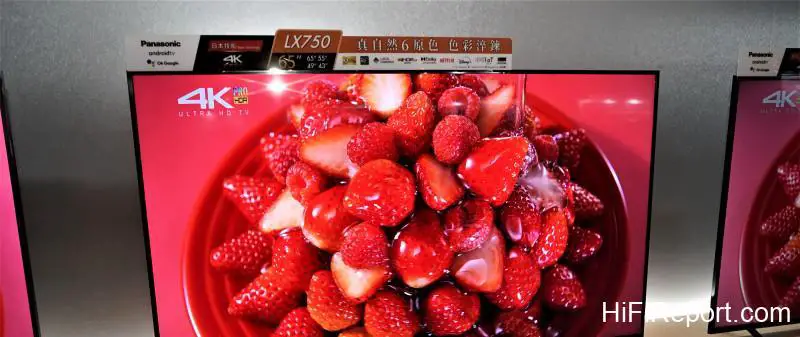
For color reproduction, the LX750 employs Panasonic’s current core Hexa Chroma Drive Pro (“True Natural 6 Primary Colors”) color management technology. Using the professional monitor calibration standard 3D-LUT (3D Look-Up Table) as the calibration target, this technology precisely adjusts the six colors (RGBCMY) to achieve better color saturation and hue accuracy in the TV’s display.
Furthermore, the back panel features a local dimming function, which, when combined with well-controlled contrast, creates 4K images that are closest to realistic visual effects.
The LX750 series continues Panasonic TV’s characteristic comprehensive support for HDR formats. The HCX processor ensures robust HDR compatibility for the JX750 series, and it remains true here. It supports HDR10, HDR10+, HLG, and Dolby Vision, fundamentally capable of playing back all current 4K HDR content.
The LX750 series also boasts excellent motion processing technology. The image processing chip dynamically optimizes moving objects and flowing backgrounds. Under a 4K input signal, it can provide 1800Hz BMR (Back Light Motion Rate) motion performance, making dynamic scenes appear clearer and smoother.
Audio and Cinematic Experience
Modern televisions place great emphasis on delivering both excellent picture and sound. Besides picture quality and color standards suitable for movie viewing, the audio also adheres to movie sound specifications. To provide users with the best viewing experience, the LX750 series includes Filmmaker Mode.
This professional image mode, developed for televisions by numerous Hollywood directors, producers, actors, and other professional film creatives, optimizes the picture based on frame rate, aspect ratio, color characteristics, and other relevant image parameters of the movie. This allows consumers to see an effect that is closest to the original film image.
In terms of audio, the LX750 series also supports Dolby Atmos, the most mainstream encoding format for current 4K movies. The TV can directly decode movie audio encoded in Dolby Atmos. Although it doesn’t feature upward-firing speakers like some of Panasonic’s higher-end TVs, it can still create a virtual panoramic sound field using the built-in speakers (10W + 10W), offering a more three-dimensional sound experience than TVs without Dolby Atmos decoding support.
Additionally, this series features 3D Surround Effect technology. When watching movies or other videos, enabling this function can further expand the 3D soundstage effect, enhancing the TV’s audio performance.
Smart Capabilities and Connectivity
The smart TV system built into the LX750 series is Android TV. You can access various Android TV functions through the familiar interface. Like last year’s JX750 series, the Panasonic original My Home Screen user interface is retained beneath the personalized Android TV homepage. This allows you to quickly switch between frequently used functions in conjunction with the Android TV interface features.
To provide greater operating convenience, the LX750 series’ newly designed remote control this year includes a dedicated Disney+ button, allowing for one-touch launch just like Netflix, Prime Video, and YouTube. Naturally, you can also use the microphone on the front of the smart remote to operate the Google Assistant voice assistant feature. The useful Chromecast built-in is also available, allowing you to easily cast content from your phone to the TV for playback on the large screen.
It’s worth noting that this year, Panasonic has placed significant emphasis on the(interconnection) between TVs and other home appliances. The LX750 series boasts robust IoT smart appliance connectivity features. You can control your appliances (like turning them on or off) using the TV remote. Panasonic smart appliances can also display operational information on the TV screen.
Whether it’s knowing if the washing machine is finished, if the dehumidifier’s water tank is full, or if the refrigerator door is properly closed, you can stay informed via push notifications on the TV. The smart appliance connectivity is quite strong.

Design and Physical Connections
Due to its edge-lit design, the LX750 series features a super-slim profile. Like last year’s JX750, it also adopts a narrow bezel design, making it blend seamlessly into home decor whether wall-mounted or placed on a stand. The TV stand continues the practical dual installation method of the 750 series from recent years, offering the flexibility to position it near the edge of the TV or centered, adapting to the placement location.
The stand also uses a screwless interlocking design, fixed simply with clips, making assembly and disassembly very convenient.
In terms of I/O, the LX750 series provides three HDMI ports, two located on the side and one on the back. HDMI Input 2 supports ARC functionality. Additionally, there are two USB ports for multimedia file playback, one optical digital audio output, one analog video input, and a headphone output.

Picture Settings and Viewing Impressions
Strictly speaking, I believe the picture style of the LX750 series is very similar to that of last year’s JX750 series. The picture has a strong high-contrast color tone. With rich and vivid colors, the image appears exceptionally tangible and weighty. Therefore, whether you’re looking at characters, vehicles, buildings, or even flowers and grass in a movie, you can see very realistic effects.
However, even within the dense colors, you can still perceive delicate grayscale information. The light and shadow variations within a single color system are natural, and the transitions between different shades of color are very smooth. The image also has clear contour outlining. So, when you examine details closely, such as clothing or faces, you can see a wealth of fine textural information. These aspects repeatedly highlight the delicate picture quality characteristics of this 4K TV.
When watching, I highly recommend using either “Filmmaker Mode” or “True Cinema” picture modes, as I have tested their color gamut coordinates, and both are closest to the Rec.709 standard for six colors. Panasonic TVs’ “Reddish 2” color temperature continues to provide a warm picture style. If you find it too warm, you can adjust to “Reddish 1,” which is around 7000K color temperature, making the picture appear less warm and yellow, reducing visual fatigue during long movie watching sessions.
This warm picture style, combined with the LX750 series’ color tuning, can accurately reproduce the D65 picture style of movies. Watching in “Filmmaker Mode” at the original movie aspect ratio and frame rate effectively creates a cinema-like viewing experience. Whether it’s character skin tones or the colors of various scenes in the environment, there’s a strong “cinematic feel” that I personally really enjoy.
When watching different types of videos on this unit, remember that the TV’s sound menu offers sound modes such as Standard, Clear, Sports, News, Music, and Cinema. You can also use the custom settings to equalize the audio and create your preferred sound effect, building the most ideal audio-visual experience.
Value Proposition and Conclusion
From the HX750 series the year before last, the JX750 series last year, to this year’s LX750 series, all have been very strong contenders with high cost-performance in the approximately $1000 USD price range for 65-inch models. Through continuously improving performance and features, consumers can enjoy products that perform above their class at the most affordable prices.
Whether it’s 4K picture quality, color performance, or the comprehensiveness of smart TV functions, the overall performance is above average.
Looking back at the evolutionary process of Panasonic TVs generation by generation through the LX750 series, it’s clear to see the progress made in Panasonic TVs manufactured in Taiwan. They consistently deliver a more ideal user experience to consumers at the same price point.
Specifications
* Type: 55-inch 4K LED LCD TV
* Panel: Edge-lit
* Aspect Ratio: 16:9
* Panel Resolution: 3840×2160
* HDR Formats: Dolby Vision, HDR10, HDR 10+, HLG
* Motion Processing: 4K 1800Hz BMR
* Picture Modes: Dynamic/Standard/Filmmaker Mode/Cinema/Sports/Game/True Cinema/Dolby Vision (Vivid/Bright/Dark)
* Connections: HDMI×3 (Input 2 supports ARC), USB 2.0×2, Analog Video Input×1, Optical Output×1, Headphone Output×1
* Smart TV System: Android 10.0
* Speakers: 10W Speakers×2
* Surround Sound: 3D Surround Effect
* Sound Modes: Standard/Music/Sports/Cinema
* Dimensions: 1235×771×218mm (with stand), 1235×716×45mm (without stand)
* Weight: 18.5 kg (without stand), 19.0 kg (with stand)