
Perlisten R5t Floorstanding Loudspeakers Review
Many people, upon hearing the name Perlisten, immediately think of THX Dominus certification – the so-called “Voice of God.” To date, Perlisten is the *only* company worldwide to have achieved THX Dominus certification, and this includes the R5t floorstanding loudspeakers we’re reviewing here. With THX certification, one might assume Perlisten is exclusively designed for multi-channel systems. However, after listening to the R5t, the editor-in-chief can attest that Perlisten speakers offer far more than just their impressive technical prowess for home cinema. They deliver a rich musicality, imbued with an endlessly captivating emotional resonance. They are, quite simply, superb and deserve the careful consideration of any stereo enthusiast.
The World’s Sole THX Dominus Certified Loudspeaker
Drawn in by the allure of THX Dominus certification, I, like many, initially assumed Perlisten was best suited for multi-channel applications. I was pleasantly surprised to discover just how exceptional they are for music listening. This assumption wasn’t entirely unfounded; THX’s Dominus certification, established to meet incredibly stringent standards, has, until now, only been achieved by Perlisten globally. This alone speaks volumes about their capabilities.
THX certifications encompass four distinct tiers: Compact, Select, Ultra, and Dominus. Each level specifies requirements for room size and ceiling height, and involves over 300 testing parameters. The Ultra certification itself is remarkably demanding, with a limited number of brands and products meeting its criteria. The most stringent of all, Dominus, was first achieved by Perlisten in 2020. To this day, Perlisten remains the sole recipient of THX Dominus certification – a testament to their prowess.
An Editor’s Humble Pie
Given Perlisten’s unparalleled global achievement in obtaining the singular THX Dominus certification, even the editor-in-chief made the assumption that Perlisten was primarily for multi-channel setups. Listening to the R5t this time truly put that notion to the test, and frankly, it was a rather humbling experience. The R5t’s profound musical impact has led to me practically monopolizing the listening room recently, spending half the day immersed in sound. This has left other editors waiting patiently for their turn with the equipment they are responsible for.
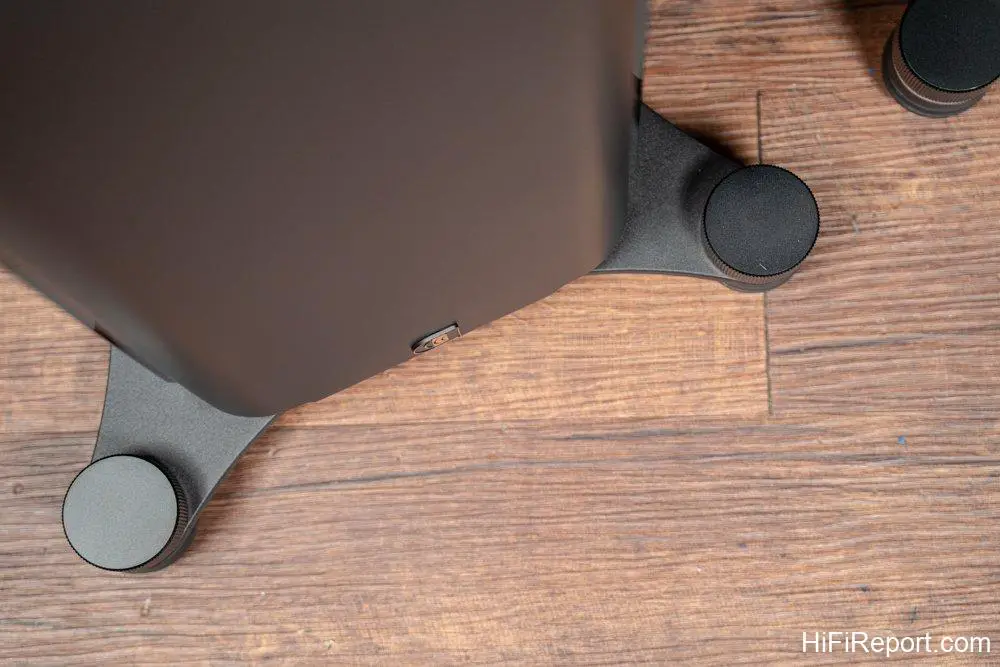
Emphasizing In-House Development and Manufacturing
Founded in 2016, Perlisten initially focused on audio design consulting rather than product development. It wasn’t until 2018 that they began researching and developing their own products. In 2020, they launched their first loudspeaker, the S7t, which subsequently earned THX Dominus certification, propelling them to international acclaim. Their global team has facilitated Perlisten’s rapid market penetration, with direct subsidiaries now established in North America, Denmark, and China.
Despite being a relatively young company, Perlisten’s management team comprises seasoned industry veterans and passionate entrepreneurial spirits dedicated to audio. They are committed to product innovation, with all their proprietary technologies, from drivers to amplifier modules and software, being developed in-house. Crucially, the manufacturing process is also handled in their *own* factories, rather than outsourced to OEM partners – a point of significant pride for Perlisten.
Championing “Perceptual Listening”
The brand name, Perlisten, is derived from “Perceptual Listening,” combining the initial syllables to signify “perceptive listening.” While my initial translation leaned towards “perceptive,” experiencing the R5t’s musical allure and emotional depth has convinced me that “perceptual” or even “emotive listening” better captures their essence.
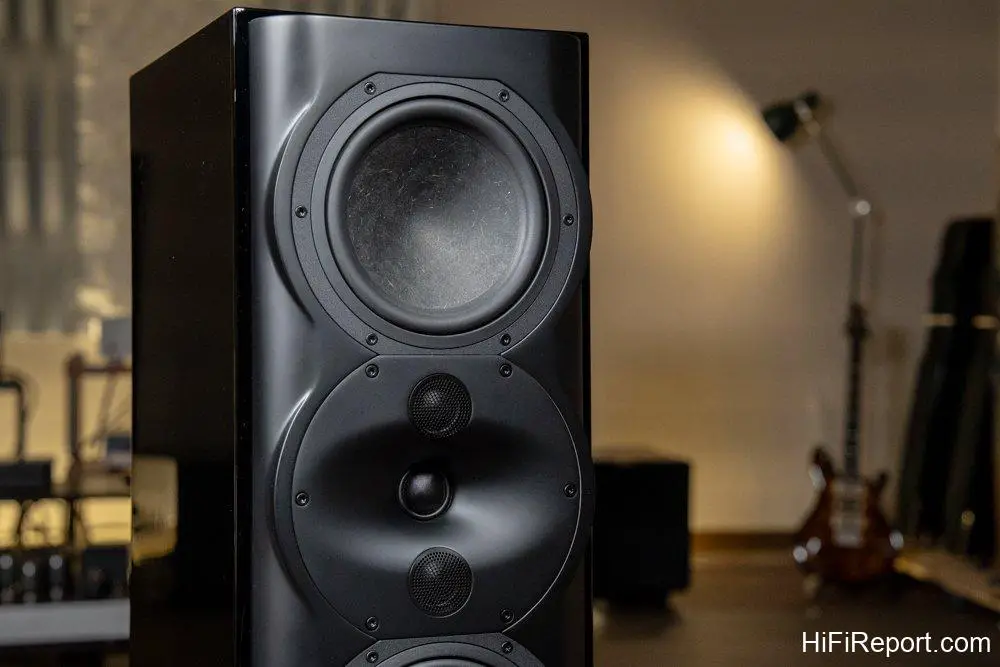
While praising the R5t’s profound musicality and emotional impact is a good starting point, their ability to create such captivating sound is not merely rhetoric. It’s backed by significant technological expertise, with the DPC (Directivity Perceptual Control) tweeter array being a key cornerstone.
The DPC Tweeter Array: A Core Technological Innovation
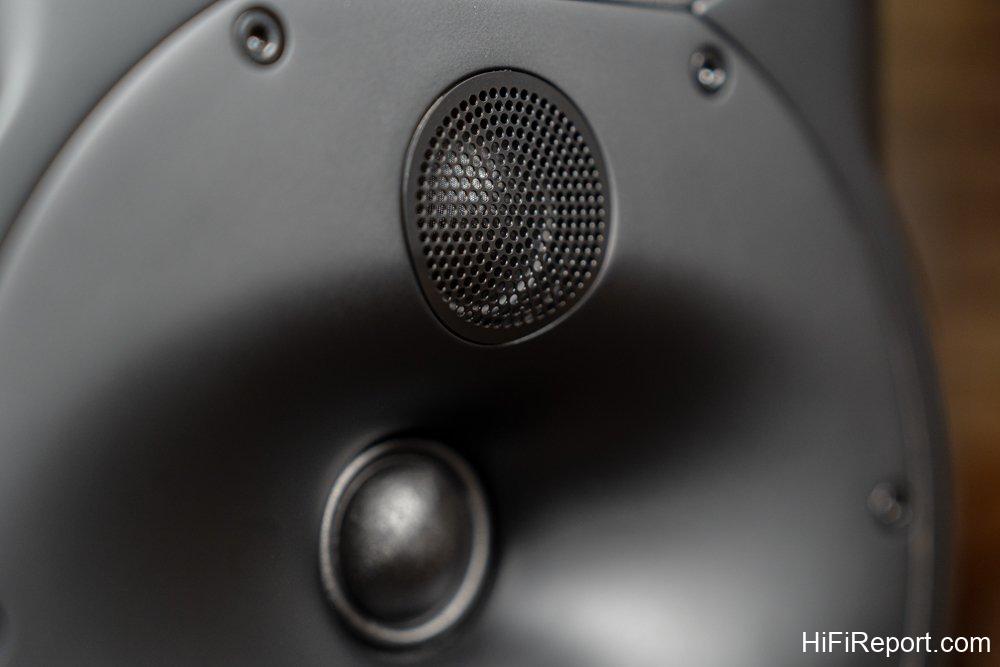
The DPC array, located in the center of the R5t’s mid-bass drivers, is a circular module. It comprises a central 26mm silk dome tweeter flanked by two additional 26mm silk dome tweeters, one above and one below. This DPC array alone boasts eight US technology patents, with more expected as Perlisten continues to expand its product line.
The primary goal of the DPC tweeter array is to “increase horizontal dispersion and reduce vertical dispersion.” Traditional silk dome tweeters, with their circular design, exhibit similar horizontal and vertical dispersion characteristics. However, when listening to music, sound waves arriving from the horizontal plane are perceived as more natural. Conversely, sound waves dispersed vertically reflect off the floor and ceiling, reaching the listener’s ears at different times. Floor reflections arrive quickly, while ceiling reflections are delayed. If vertical dispersion is too broad, these reflections can create a sense of acoustic chaos and listening discomfort due to inconsistent energy and timing.
Reducing Vertical Dispersion, Enhancing Horizontal Dispersion
The solution lies in minimizing vertical dispersion while maximizing horizontal dispersion. The DPC tweeter array achieves this ingeniously. The central 26mm silk dome tweeter is housed within an internally recessed, shallow elliptical horn, termed the “Waveguide Lens.” This design effectively reduces the vertical dispersion angle of the tweeter. The two flanking 26mm tweeters work in tandem to cancel out sound waves directed upwards and downwards, thereby reinforcing forward-propagating energy.
Is it as simple as it sounds? Visually, perhaps. However, Perlisten employed sophisticated Comsol computer modeling, performing extensive calculations to determine the optimal angles and crossover points that define the DPC tweeter array’s configuration. Replicating this design would be far from straightforward, encompassing not just the array’s crossover frequencies but also the precise placement and aiming angles of the drivers. The technological depth here is truly remarkable.
In-House Developed HPF Hybrid Pulp Cone
The R5t’s mid-bass drivers utilize Perlisten’s in-house developed HPF (Hybrid Pulp Formulation) diaphragm. This is essentially a paper cone, but during the pulping process, it’s blended with long-fiber hardwood, bamboo fibers, and wool. This composition results in a diaphragm that is both lightweight and exceptionally rigid.
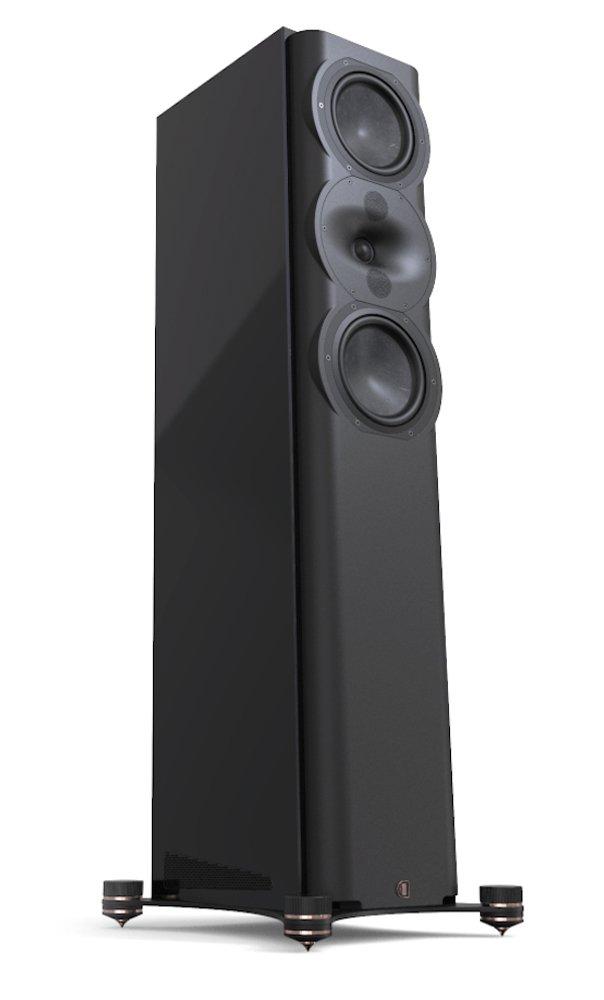
Complementing the DPC tweeter array and the dual HPF pulp cone mid-bass drivers, Perlisten has engineered a robust cabinet for the R5t. The front baffle measures a substantial 50mm thick, with side panels at 25mm. Internally, seven bracing structures are implemented, and the interior is treated with bitumen damping and fibrous acoustic absorption materials.
A Versatile Cabinet Design
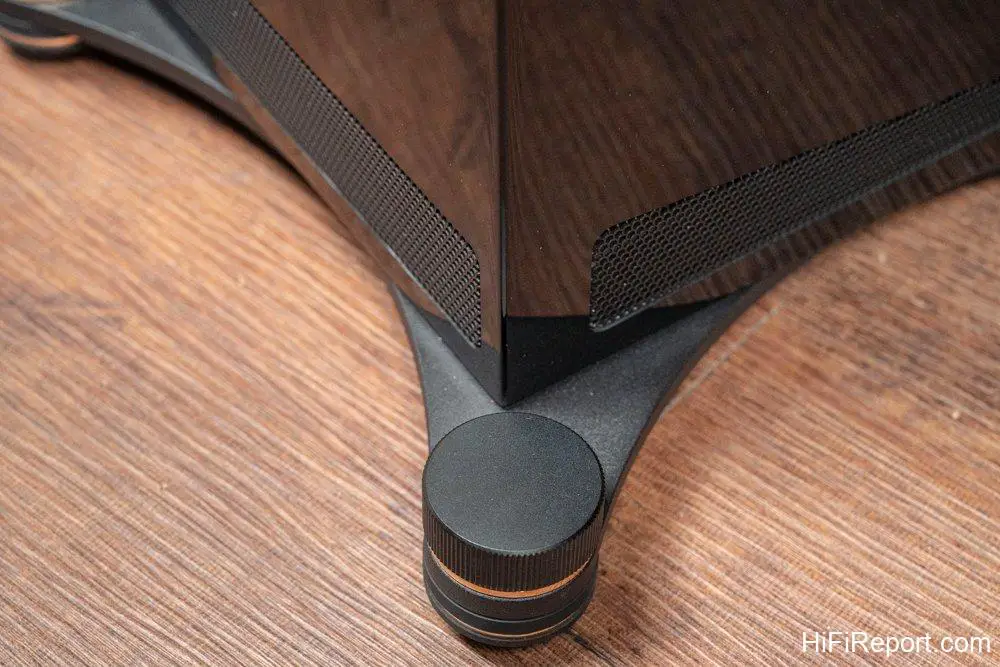
The R5t’s cabinet harbors another ingenious feature: its bottom-mounted port. While designed for down-firing bass reflex operation, Perlisten includes a dense, circular foam plug. Inserting this plug effectively transforms the cabinet into an acoustic suspension system. This means a single pair of loudspeakers offers two distinct operating modes.
If you desire more bass quantity and deeper extension, the bass reflex configuration is generally more effective. However, for a faster transient response and tighter, more impactful bass, sealing the port with the foam plug to create an acoustic suspension system yields superior results. It’s important to note that in acoustic suspension mode, the speaker’s efficiency will be slightly reduced, requiring more power from the amplifier.
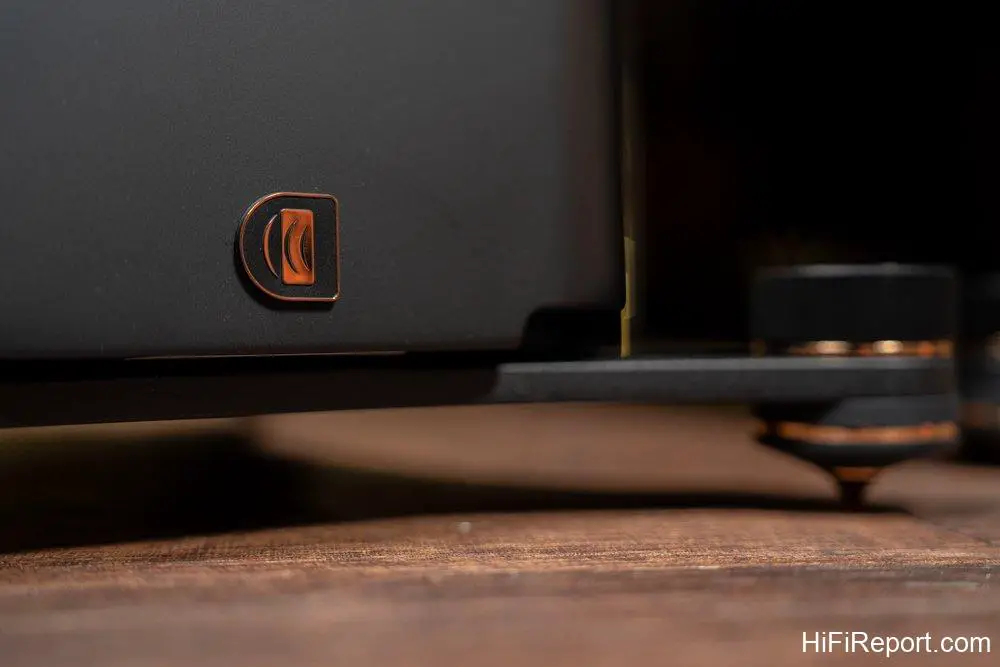
Acoustic Suspension for Faster Bass Decay
When I initially began listening to the R5t, I was using the bass reflex configuration. My colleagues, in their haste to install the base during setup, had inadvertently removed the foam plug that was housed within. After a few days, curiosity about the acoustic suspension sound piqued, I asked for assistance to detach the base and reinsert the foam plug. The change was profound. I ultimately decided to keep the plug in place. Although it slightly reduced the overall efficiency, the improvement in bass transient response, impact, and overall clarity of bass decay was precisely to my taste.
However, this preference is subjective. Whether you opt for the bass reflex (plug removed) or acoustic suspension (plug inserted) mode will depend on your personal preference and listening environment. There is no single “correct” answer.
Amplification is Key: Sufficient Power is Essential
My initial experience with the EAR 509 MK II monoblock amplifiers powering the R5t felt adequate. However, once the foam plug was inserted, the 509 MK II began to struggle.
How did I gauge this inadequacy? With the bass reflex configuration, the amplifier’s bias lights remained steady even under demanding passages. After inserting the plug, however, more vigorous bass passages would cause the bias lights to flicker, indicating the amplifier was being drained of power.
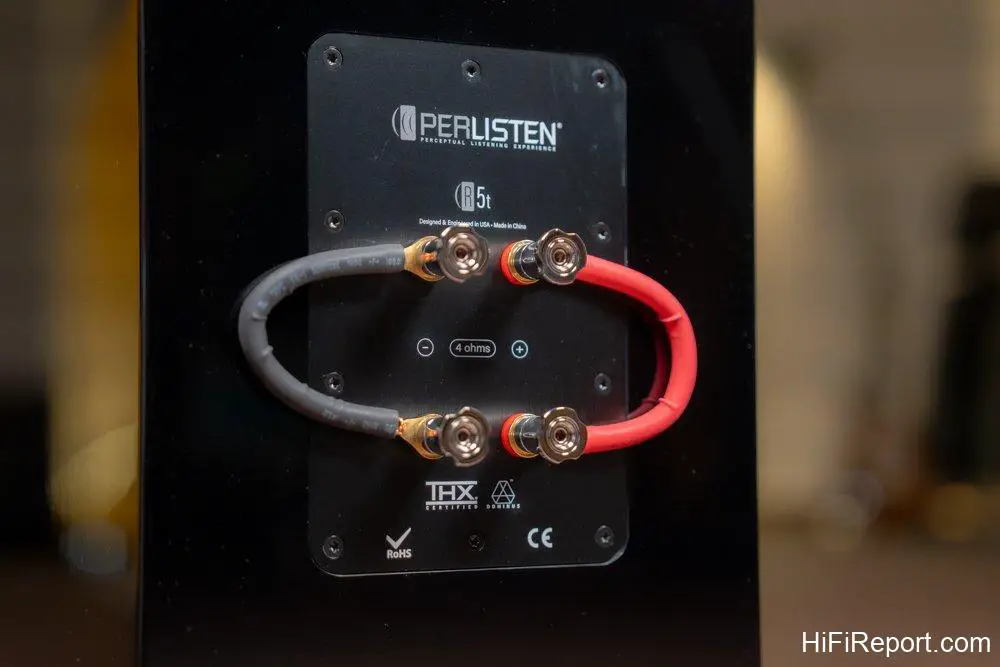
This R5t proved to be remarkably capable, and I felt compelled to push its limits. I then brought out the NuForce R18 monoblock amplifiers. These have been a staple in HiFiReport’s arsenal for years, and in conjunction with the R5t’s 4-ohm impedance, each R18 can deliver a substantial 333 watts. This should be more than sufficient. Upon switching, the R5t finally seemed to be adequately powered. I bypassed a dedicated preamplifier, using the MBL C41 DAC/streamer as a digital preamplifier directly into the R18s.
Truly a Superb Two-Channel Speaker, Underrated by THX
Perlisten, in my opinion, is a fantastic loudspeaker that has been somewhat overshadowed by its THX Dominus certification. They are absolutely not just for multi-channel systems; please do not make that mistake. Their performance in a two-channel setup is phenomenal. While one might associate THX-certified speakers with overly aggressive treble, booming bass, and a hollow midrange, the R5t is entirely the opposite. They possess a rich, warm midrange, a beautifully extended, sweet treble, and a powerful, resonant bass foundation.

Listening to “Mozart Violin Sonatas” performed by Mutter and Oistrakh, specifically the Allegro movement of K.376, the interplay between piano and violin in the opening motif, the piano’s arpeggiated chords leading to sustained violin notes, and the rapid back-and-forth of fast passages, the R5t effortlessly conveyed the nuance of the violin sonata. The musical density was excellent. The piano’s crystalline notes contrasted beautifully with the violin’s cheerful melody. The fine detail of the violin bow’s interaction with the strings was evident, the treble bright and lustrous, while the midrange exuded a woody resonance, perfectly complementing the broad expanse of the grand piano. The R5t rendered Mozart’s violin sonatas with remarkable vivacity.
A Beautiful 3D Soundstage Without Toe-In
Thanks to the DPC array, the R5t offers a relatively wide listening sweet spot. I found I could achieve a spacious and deep 3D soundstage with minimal toe-in, simply by adjusting the speaker separation. The R5t’s sweet spot is quite broad; even when moving away from the exact center, the relative positioning of sonic images within the 3D soundstage remained remarkably stable.
However, if you have the opportunity to audition the R5t, I strongly recommend listening from a seated position. The DPC’s reduced vertical dispersion means that standing up can cause the soundstage to appear lower. Conversely, if your listening position is too low, the soundstage may seem elevated. In short, sitting down with the R5t unlocks an accurate soundstage that feels “within reach.”

Live Recordings Capturing Heartbreak’s Bittersweetness
I want to highlight Adele’s live performance of “Someone Like You (Live from the BRTTs).” The roar of the crowd echoed through the listening space. The piano’s broken chords played from the left side of the stage, while Adele’s voice was anchored in the center. The R5t delivered rich detail in the mid-high frequencies. One could vividly imagine Adele leaning into the microphone, singing “Someone Like You” with heartfelt emotion. Because it was a live recording, there was a slight pitch waver in the pause after “I Heard That You….” However, as the chorus began with “Never Mind I’ll Find Someone Like You,” each line was sung with passionate precision. The R5t conveyed the desolation of heartbreak, as well as the defiant cry of self-empowerment from someone moving on.
Is Adele a challenging artist to reproduce? Absolutely, especially this live recording. If the high notes are harsh or piercing, it can be incredibly fatiguing. Conversely, if the high frequencies lack presence, Adele’s emotional intensity is lost. The R5t not only captured Adele’s inner turmoil but also articulated the bittersweet pain and burgeoning courage of heartbreak. I was captivated. In live recordings, any mistake can become immortal. Yet, that minor stumble in the opening line almost felt intentional, a touch of imperfection befitting a song about lost love.
Excellent Stage Presentation and Layering
Another piece I’d like to mention is Crowd Lu’s “Happy April Fools’ Day.” The acapella opening allowed the R5t to bring Lu’s voice incredibly close, with a substantial sonic image, making it feel as if he were right in front of me. The piano gently joined with chords, leading into a jazz drum kit and electric bass. The R5t initially presented the acapella vocal centrally, then introduced the piano, and as the band entered, the soundstage widened considerably.
The clear layering of the soundstage was akin to stage lighting, focusing on the lead singer in the center, then softly illuminating the piano, before fully opening up to reveal the band. The R5t meticulously layered the decorative woodwinds, strings, and guitar in the center, creating a deliberately constructed sense of stage presence in the recording.
Brahms: Beautifully Melancholy and Heart-Wrenching
The R5t’s ability to create a sonic stage is remarkable. I turn to the “Brahms Piano Trio No. 1” performed by Pires, Dumay, and Jian Wang. The first movement opens with the piano, followed by the cello, creating a sound of exquisite beauty. As the violin joins, completing the trio, the R5t resolves each instrument with clarity. The piano is centered, possessing a broad sense of space. The cello is positioned slightly to the right, and the violin to the left. The R5t is so precise that it even subtly renders the height of the instruments: the piano centered, the cello slightly lower and to the right, and the violin soaring dynamically to the upper left.
Where the R5t truly excels, however, is not just in the concrete placement of instrumental forms but, more importantly, in the intricate interplay and resonance between the three instruments. The first movement of Brahms’s Piano Trio No. 1 begins with a beautiful theme, which develops into passionate passages where the three instruments collide and interact, progressively increasing the musical tension and intensity. This culminates in sudden descents into quiet contemplation, followed by several more fervent surges. The romantic emotion is woven into the fabric of the tranquil, flowing melodies and the passionate, energetic exchanges. This blend of cool and heat makes listening to Brahms through the R5t both exquisitely beautiful and deeply heart-wrenching.
Grand Scale Effortlessly Dissolves the Speakers
When the scale expands, listening to John Williams conduct the Saito Kinen Orchestra performing “Raider’s March,” the theme from “Indiana Jones,” the timpani and brass ensemble opening, and the trumpet’s rendition of the protagonist’s motif, the R5t unfolds a magnificent stage presence, allowing the speakers to effortlessly disappear into the listening space.
I ventured to increase the volume, and the R5t scaled linearly without any sense of strain, as if saying, “Don’t worry, more is welcome!”
Unafraid of Pushing the Volume
I pushed the volume to ninety percent, and the R5t’s sound became even fuller. The more power delivered, the stronger the R5t became. The transitional passages in the middle were imbued with a romantic warmth that enveloped the listener. The string sections murmured and intertwined, high and low strings weaving in and out. The R5t brought out the lingering richness of the lower strings, and as the violins soared from the left, igniting passion, the return to the main theme was triumphant and majestic, the pitch ascending. The timpani and percussion became more ferocious, with the triangle shimmering in the background. The brass punctuated the conclusion decisively. Bravo! Still immersed in “Raider’s March,” the R5t continued with “The Imperial March: The Empire Strikes Back.” Upon hearing the iconic theme, one immediately knows the Dark Lord approaches. The R5t, with its robust foundation, conveyed the formidable presence of Darth Vader through the brass section’s lower registers. The rapid figures in the woodwinds heightened the sense of tension. The brass theme echoed the surging strings, and the R5t, with its exceptional musical layering, clearly presented the interplay between different sections. Such musical clarity makes the R5t a truly exquisite pair of floorstanding loudspeakers.
Enduring the Appeal: The Editor’s Restraint
This listening experience with the R5t has completely changed my perception of Perlisten. Previously, due to the THX Dominus certification, I had pigeonholed them as multi-channel speakers. The reality has proven my assumption spectacularly wrong; they are, in fact, outstanding two-channel loudspeakers. The more I listened, the more I grew to love them. What am I to do? I’ve recently grown very fond of the MBL C41, and now the R5t has captured my heart. I can’t possibly keep them all. No, the editor must exercise restraint and cherish the memory of the R5t’s excellence. I wonder if listening to the higher-tier S5t next will so utterly enchant me that I’ll be compelled to make a purchase!
Equipment Specifications
* **Model:** Perlisten R5t
* **Type:** 3-way bass reflex / acoustic suspension loudspeaker
* **Drivers:**
* DPC-Array 26 mm silk dome tweeter x 3
* 165 mm HPF diaphragm woofer x 2
* **Sensitivity:** 89 dB / 2.83V / 1 m
* **Impedance:** 4 Ohms (minimum 3.2 Ohms)
* **Frequency Response:** 80 Hz – 20 kHz (+/- 1.5 dB)
* **Low-Frequency Extension:**
* Bass Reflex: 21 Hz
* Acoustic Suspension: 32 Hz
* **Maximum SPL:** 113 dB
* **Certifications:** THX Dominus, THX Ultra
* **Dimensions:** 1100 x 230 x 350 mm
* **Weight:** 26.5 kg