
Piega ACE 50 Floorstanding Speaker Review
If you’re looking for speakers that are both beautiful and sound fantastic, look no further than Swiss manufacturer Piega. The newly released ACE 50 speakers are the successor to the previous TMicro series, now rebranded as the ACE series. This lineup includes three models: the ACE 50 floorstanding speaker, the ACE 30 bookshelf speaker, and an ACE center channel, making them suitable for both two-channel stereo and multi-channel home theater setups.
Space-Saving Beautiful Speakers
Compared to the previous TMicro series, the ACE series boasts a more refined industrial design. With slightly elevated stands and circular bases, the ACE 50, despite being a floorstanding speaker, occupies a minimal footprint. This design prioritizes saving precious living space.
Space is a premium, especially in Switzerland’s urban areas where real estate is expensive. Designing speakers that don’t dominate a room yet deliver exceptional sound is a key focus of the ACE series.
To enhance the aesthetic appeal of the ACE series, Piega collaborated with Swiss design firm Stephan Hurlemann. Founded in 2001, this studio’s portfolio spans a wide range, from public spaces and installations to furniture and watches. Their design styles range from minimalist to intricate. Hurlemann’s partnership with Piega began in 2016 with the flagship Master Line Source, extending to the Premium Wireless and MLS 3 in 2018, and now the ACE series in 2021.
Piega and Hurlemann Collaboration
The collaboration between Piega and Hurlemann Design is a perfect example of “leaving it to the professionals.” Hurlemann focused on the visual design, while Piega handled the acoustic engineering. This powerful partnership aims to create modern speakers that are both beautiful and sonically superior.
Hurlemann drew inspiration from Piega’s existing design language, maintaining the brand’s established style while introducing fresh, detailed lines. In the ACE series, the changes from the TMicro might seem subtle, but upon closer inspection, the ACE 50 reveals more rounded and streamlined contours. The 3cm increase in base height cleverly creates the illusion of the speaker floating, giving the ACE 50 a modern yet elegant presence.
With Hurlemann’s design expertise shaping the aesthetics, the acoustic engineering challenge fell to Piega.
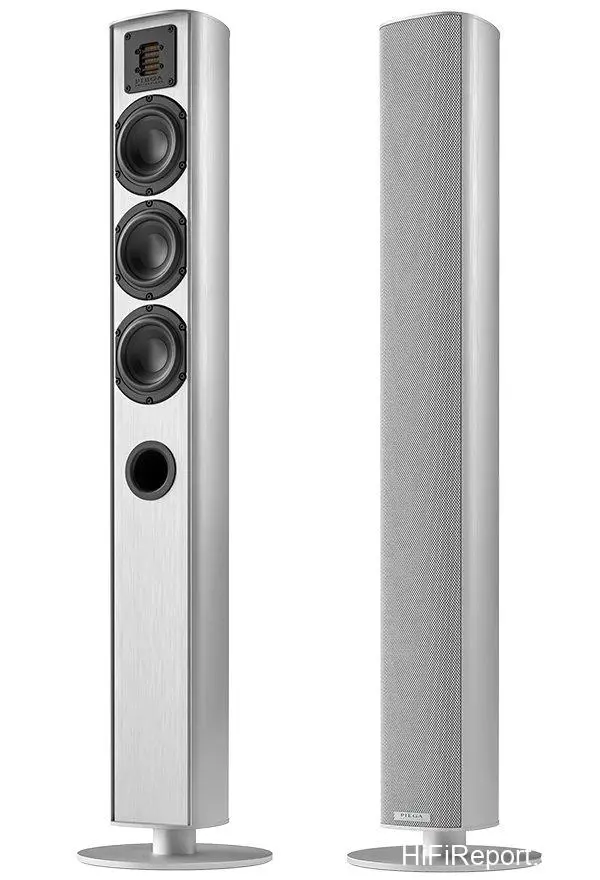
The primary acoustic challenge for the ACE 50? Limited cabinet volume! If speakers are considered part of home décor, then cabinet size should be minimized. While many audiophiles dream of owning Wilson Audio Alexia 2 speakers, like those used by HiFiReport, their imposing size demands a space that costs far more than the speakers themselves. In contrast, the ACE 50 floorstanding speakers occupy very little floor space, their slender and tall profile easily integrating into living environments.
Sound Energy from Limited Volume
Creating substantial sonic energy from a limited cabinet volume is Piega’s forte. They are among the few audio brands that consistently use aluminum for their speaker cabinets, and at a relatively accessible price point compared to other aluminum speaker manufacturers.
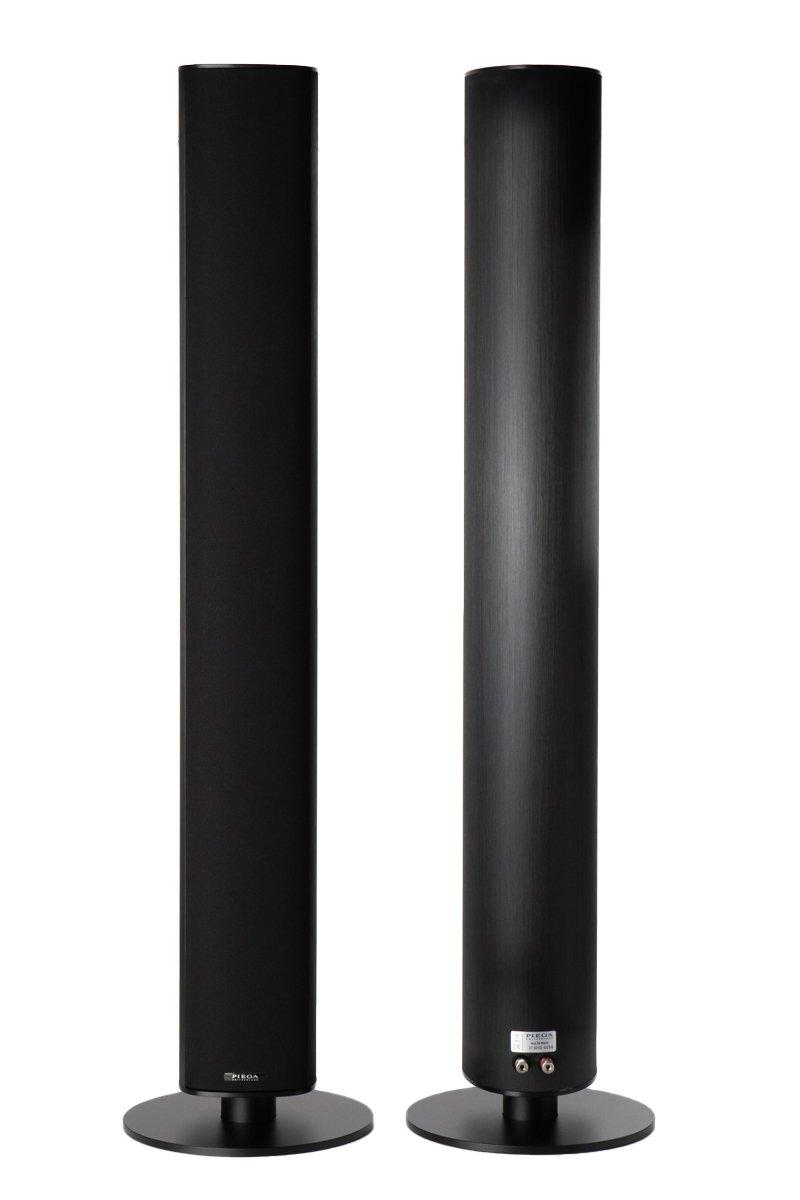
Compared to whom? Swiss brand Goldmund and American brand Magico, whose entry-level offerings are significantly more expensive than the ACE series, highlighting Piega’s relative price competitiveness. For those seeking aluminum cabinet speakers, Piega presents a more budget-friendly option.
Sophisticated Aluminum Enclosure
Aluminum, in theory, is one of the best materials for speaker cabinets. It offers high rigidity and is relatively easy to shape. However, the downside is its material cost, significantly higher than common MDF.
How does Piega produce competitively priced aluminum speakers? The answer lies in aluminum extrusion. While the material itself is expensive, extrusion allows for single-process shaping and cutting to speaker height, simplifying assembly and reducing costs.
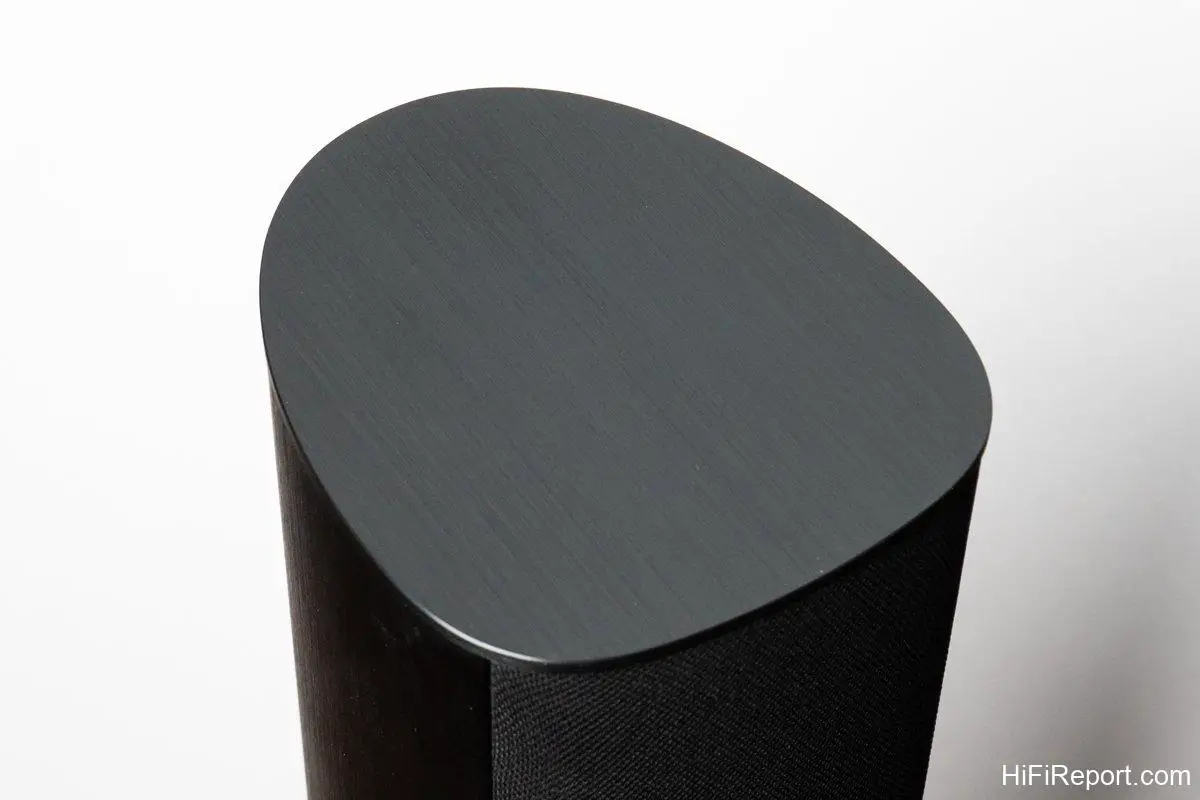
The ACE 50’s aluminum cabinet, when viewed from above, resembles a peach shape. This design eliminates parallel internal surfaces, effectively disrupting internal standing waves – a smart design feature. The second key aspect is the cabinet’s internal damping. Aluminum has low internal damping, meaning it tends to resonate when vibrated, which is why some perceive aluminum speakers as having a “metallic” sound. However, this can be mitigated through internal structure. The ACE 50 incorporates internal steel beams and specialized damping material adhered to the cabinet walls, effectively eliminating cabinet resonance and coloration.
Don’t ask about the specific damping material; even if I have seen and touched it, its exact composition remains a closely guarded Piega proprietary secret.
Premium-Grade Driver Units
With the aluminum cabinet in place, the next step is to equip the ACE 50 with drivers. The three-way ACE 50 features an AMT-1 Air Motion Transformer tweeter, a 120mm MDS midrange driver, and dual 120mm MDS-B bass drivers. The MDS midrange and MDS-B woofer sizes are maximized relative to the cabinet width, essentially using the largest possible drivers for the limited cabinet dimensions. This maximizes the use of the compact speaker enclosure.
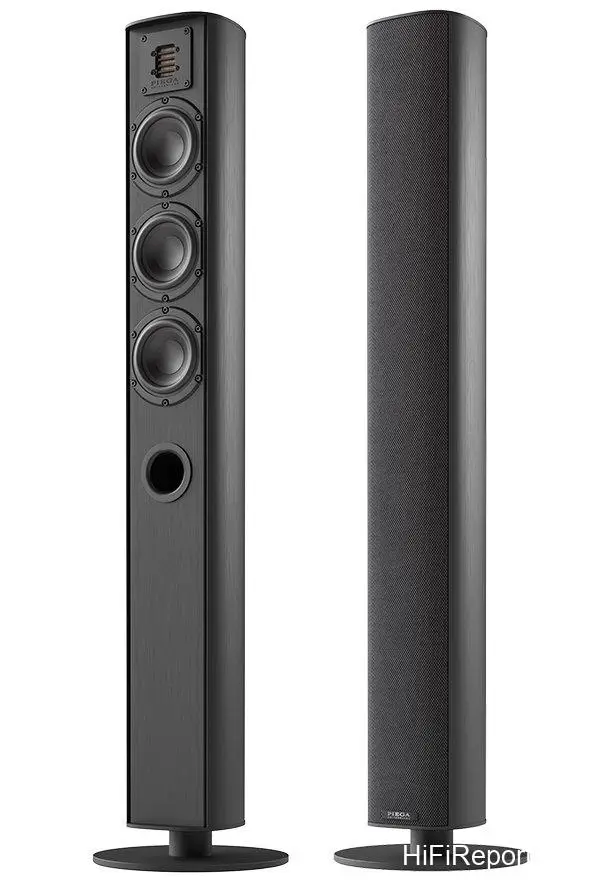
In terms of driver configuration, the ACE 50’s midrange and bass units are comparable to Piega’s higher-tier Premium series. However, the tweeter is the AMT-1 Air Motion Transformer instead of Piega’s renowned ribbon tweeter. The reason is simple: ribbon tweeters are more costly. Using the AMT-1 allows the ACE 50 to be more price-competitive. However, if you are specifically seeking the ethereal beauty of ribbon tweeters, the higher-end Premium series is the way to go.
Power is Key for ACE 50
During the ACE 50 listening sessions, I used three different amplifier setups: an EAR 868P preamp with 509 MK II power amp, a Linear Acoustic LAV-60 MK II integrated amplifier, and a Mission 778X integrated amplifier. Surprisingly, the ACE 50 seemed to prefer solid-state amplification. With the EAR tube preamp and power amp, the sound was warm and smooth with full bass, but the bass speed and impact were slightly lacking. Switching to the LAV-60 MK II opened up the ACE 50’s bandwidth, creating a more transparent soundstage and improved bass dynamics.
The most value-oriented pairing among the three was the Mission 778X. Although this integrated amplifier delivers only 65 watts into 4 ohms, its midrange warmth rivaled that of tube amplifiers. It also includes a built-in phono stage and an ESS9018K2M DAC chip, covering both digital and analog sources. While the bass impact and speed were still slightly less than the LAV-60 MK II, the 778X drove the ACE 50 with considerable charm. The warm midrange made for very enjoyable listening and felt like a high-value match for the ACE 50.
On paper, the ACE 50 has a sensitivity of 90 dB, which is moderately high. However, Piega’s design features a relatively slim and slender aluminum cabinet. To achieve robust bass, power is crucial. In my experience, around 100 watts of genuinely delivered power is sufficient. Both the EAR and Linear Acoustic setups provided around 100 watts and drove the ACE 50 exceptionally well. The Mission, at 65 watts, felt slightly strained at higher volumes. However, it’s important to note that before the 778X started to feel underpowered, the volume level was already at nightclub levels. Unless you have a dedicated, soundproof listening room and like to crank up the volume intensely, the 778X will hardly leave you feeling that it’s underpowering the ACE 50.
Ample Power Unleashes Energy
With sufficient power, the ACE 50 can generate musical energy and soundstage that belie its physical size. Despite its slim and elegant appearance, the ACE 50 harbors considerable musical power. With adequate amplification, it can extract a mid-bass and low-frequency presence that surpasses expectations for its dimensions.
Listening to EggPlantEgg’s “Love You More Than I Thought,” the track opens with powerful kick drum hits, establishing a dynamic rhythm. With enough amplifier power, the ACE 50’s drum presence and size will definitely exceed your expectations for speakers of this stature.
Although I positioned the ACE 50 in the center of my listening room, far from the back and side walls, the ACE 50 is actually quite suitable for placement closer to walls. Because the bass reflex port is located at the front, even when placed near a wall, the bass reinforcement from the wall reflection is not excessively strong. This is another example of the ACE 50’s room-friendly design.
Explosive Bass with Adele
To further test the ACE 50’s bass performance, I played Adele’s “25,” specifically “Send My Love (to Your New Lover).” Adele’s close-miked speaking voice at the beginning might suggest a gentle track, but don’t be fooled. The song features fingerpicked guitar chords underpinned by explosive percussion that drives a strong rhythm. Adele’s vocals were effortlessly centered by the ACE 50.
As the chorus kicks in, the bass presence intensifies, and backing vocals widen the soundstage. The ACE 50 expands to create a broad soundstage. After the chorus, the soundstage immediately contracts back to Adele’s solo vocal, with subtle harmonies adding height and width to the soundstage. Despite the ACE 50’s modest size, the scale and dynamic contrast of the soundstage felt like listening to much larger floorstanding speakers.
Effortless Swing with Jazz
Jazz is also a strong suit for the ACE 50. The rich mid-bass, combined with a relaxed, bright yet non-fatiguing and expansive high-frequency range, perfectly captures the swing atmosphere.
Take Oscar Peterson’s “We Get Requests,” listening to “Quiet Nights and Quiet Stars.” This album is one of the records that originally drew me into the world of hi-fi.
The opening string plucks, achieved by reaching inside the piano and randomly plucking strings, are followed by gentle brushwork on the snare drum and pizzicato bass, setting a swinging rhythm. The piano then enters with a cheerful melody. Listening through the ACE 50, the midrange is rich enough to create a warm musical texture. The bass is ample, and the resolution is excellent. The sustain and decay of the pizzicato bass notes are clear, conveying a beautiful swing feel. The subtle drum work floats effortlessly on the left side of the soundstage, while the double bass sits on the right, both supporting the piano’s sparkling tone. If you want to hear a lively and engaging jazz trio, the ACE 50 delivers.
Vanishing Act: Beautiful Soundstage
What about classical music? Speakers that can “disappear” and create a convincing soundstage are generally excellent across genres.
Consider Maria João Pires’ piano solo with Claudio Abbado conducting Mozart’s Piano Concerto No. 21. The first movement begins with spirited strings, painting a cheerful musical atmosphere. The layering of instrumental sections builds musical depth, then recedes to a soft, lyrical theme. Woodwinds and brass then expand the two themes of the exposition, concluding with an interplay of woodwinds that ushers in the piano solo. The piano’s rapid note passages are underpinned by the strings, before the piano takes over the main theme.
With proper speaker placement, the ACE 50’s left and right channel presence completely vanishes, creating a wide and deep soundstage. The midrange has sufficient richness to support a substantial piano image at the center, while the orchestra unfolds behind it in a spacious soundstage, enveloping the piano solo. This creates a very convincing concert hall atmosphere for piano concertos.
Want to push things a bit? Rest assured, paired with the LAV-60, with its ample driving power, volume is no issue. Listening to the RR demonstration disc “Tutti,” specifically Rimsky-Korsakov’s “Dance of the Tumblers,” the festive musical melody, starting with strings gradually building to a grand musical scene, with brass and woodwinds joining in, and the constant shimmer of the triangle. The ACE 50 projects a soundstage far exceeding its physical size. Pushed to higher volumes, the mid-bass and low-frequency ranges unleash powerful energy, contrasting sharply with the crisp triangle sounds. My point is, the ACE 50 is not afraid of being driven hard. As long as you provide it with quality amplification, the ACE 50 can unleash its hidden sonic power.
Value Proposition: Performance & Price
Considering its sonic performance and the prestige of Swiss manufacturing, the ACE 50 is arguably Piega’s most outstanding value speaker. Even as an entry-level model, its capabilities are remarkable. But remember, provide the ACE 50 with sufficient power. Don’t expect budget surround sound receivers to do them justice. Even when used in a multi-channel system, if you designate the ACE 50 as your main speakers, it’s best to pair them with a dedicated power amplifier. With adequate drive, the ACE 50’s slender form factor will unleash its hidden sonic prowess.
Specifications
* Type: 3-way 4-driver bass reflex floorstanding speaker
* Drivers: AMT-1 Air Motion Transformer tweeter x 1, 120 mm MDS midrange, 2 x 120 mm MDS-B woofer
* Frequency Response: 45 Hz – 40 kHz
* Impedance: 4 Ohms
* Sensitivity: 90 dB
* Recommended Amplifier Power: 20 – 150 Watts
* Dimensions: H 104 cm x W 14 cm x D 16 cm
* Weight: 12 kg