
Canton GLE 20 Review
Many audio designers have said something similar: designing products on a limited budget is often harder than creating high-priced ones. This is because it directly tests the designer’s ability to truly spend the cost where it counts most. Canton, a German brand, isn’t as widely known in Taiwan compared to its status in Europe, of course.
Canton’s Legacy and Market Position
Founded by four audiophiles in 1972, Canton has been operating for 50 years and is a major company capable of launching highly competitive products across various price points. It has long held a significant market share in Europe and thus hasn’t aggressively expanded into Asian and American markets. Its ability to dominate the European market certainly attests to its skill in cost control and crafting high-value products.
The New GLE Series
With its production lines recently realigned, Canton now offers six series: the flagship Reference K, Vento, Townus, GLE, Ergo, and CD. The best-selling GLE series has just released its latest version. The new generation includes four floorstanding models, two bookshelf models, plus a center channel and wall-mounted speakers, clearly allowing for the creation of a home theater system. The GLE 20 reviewed here is the smallest bookshelf speaker in the lineup.
What’s New?
So, what’s different about the new generation of the GLE series? The most significant change lies in the cone drivers. The previous models used aluminum diaphragms, while the new ones adopt titanium diaphragms, a material previously found only in higher-end models. Titanium is known for having the best strength-to-weight ratio among metals, making it a popular material in aerospace and military applications where weight is critical.
Its lightweight and high-strength properties naturally make it highly suitable for diaphragm material. Besides the material, the surrounds have also been improved. The previous generation already used a computer-calculated triple-fold wave surround, which offered performance far superior to conventional surrounds, and this has now been further refined. Additionally, the magnetic system has been strengthened, and the driver frame uses PC (polycarbonate).
The tweeter remains the familiar aluminum-manganese alloy dome. Many audiophiles see aluminum tweeters and assume they’ll sound metallic. While this might be true for some speakers, Canton, with its long history of using metal drivers, understands their characteristics intimately. If you look closely at their tweeters, you’ll notice a concentric circular damping pad in front of the driver, which is likely Canton’s secret to solving the ringing issues often associated with aluminum alloys.
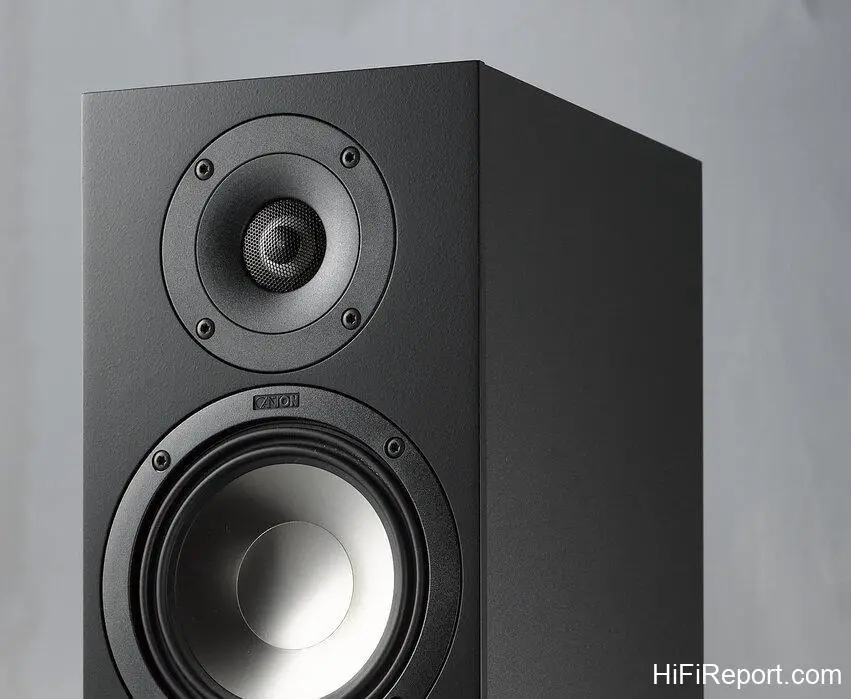
The Little GLE 20
As the smallest speaker in the series, the GLE 20 also features the smallest bass driver at 154mm. However, Canton seems to be including the outer frame in this measurement; the GLE 20’s diaphragm appears to be closer to a typical 4-inch driver, which is quite small even among bookshelf speakers. Given its small size and the official recommendation to drive it with amplifiers ranging from 70W to 130W, one might intuitively think the GLE 20 would be difficult to drive.
However, considering the GLE 20’s price point, I decided to first use the Denon PMA-900HNE, an integrated streaming amplifier with 50W per channel, which seems like a reasonable match in terms of cost.
The actual pairing was surprisingly good. The Denon drove the GLE 20 with plenty of vigor, showing absolutely no signs of insufficient power. Is the Denon an exception? I switched to an Arcam SA10, also rated at 50W, and the driving capability wasn’t significantly different from the Denon. This suggests that 50W is clearly quite sufficient, and the manufacturer’s recommendation of 70W seems rather conservative.
Based on these pairings, the GLE 20 is not particularly difficult to drive for a speaker of its size, which can be considered the GLE 20’s first advantage.
Mid & High Clarity
In terms of tonal character, the GLE 20 sounds largely similar to previous Canton models, leaning towards a healthy and refreshing presentation. Compared to the previous generation’s flagship GLE 496.2, which serves as our reference speaker, the GLE 20 seems slightly more energetic, though this could be due to differences in burn-in time. Another advantage of the GLE 20, and indeed a hallmark of Canton, is the excellent tonal consistency between the tweeter and mid-bass driver.
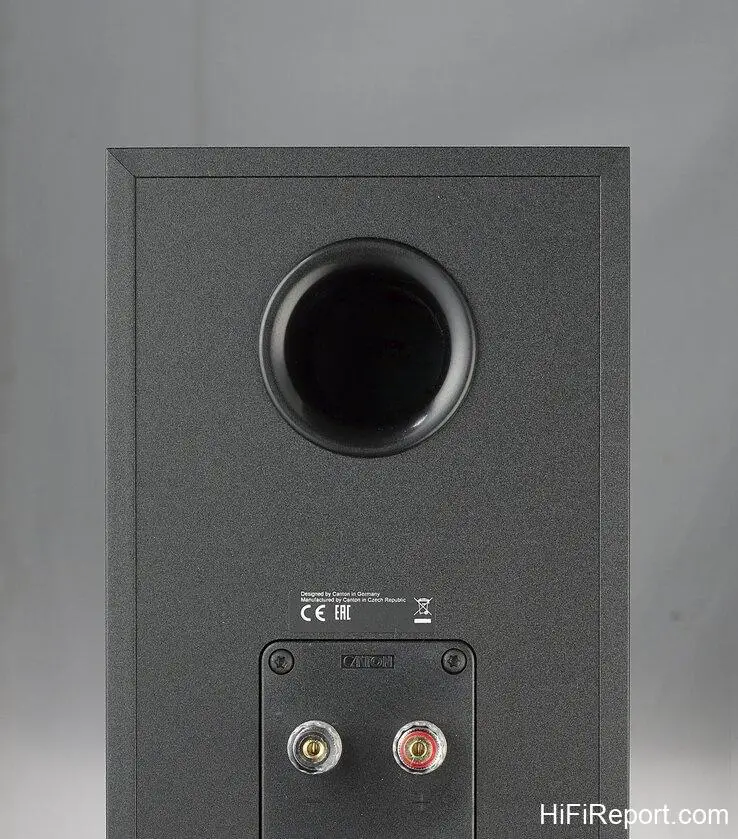
While inconsistency between drivers isn’t exclusive to budget speakers, it is certainly most common in this price range. With the GLE 20, it’s genuinely difficult to discern any tonal difference between the tweeter and the mid-bass driver.
For its price point, the GLE 20 offers excellent clarity in the mid-high frequencies, even competing with more expensive speakers. Improved resolution, allowing music to be heard more clearly, can be considered the dividing line between Hi-Fi speakers and consumer electronics products. In this regard, the GLE 20 absolutely won’t disappoint entry-level buyers; it’s immediately obvious that it’s in a different league from 3C speakers.
Bass Performance
The bass performance is also worth noting. Naturally, the GLE 20 has limited low-frequency extension, but within its capabilities, it delivers sufficient quantity and creates a soundstage size that rivals floorstanding speakers. Listening to orchestral music, it successfully supports the low-frequency foundation without sounding weak. For instance, when listening to the Star Wars theme from “John Williams in Vienna,” the scale presented by the GLE 20 completely belies its size.
Furthermore, the most dramatic and high-pressure segments of the melody remain stable and don’t collapse, showcasing the excellent strength of the titanium diaphragm.
Performance Summary and Value
Overall, given the GLE 20’s excellent mid-high performance, adding a subwoofer to let the GLE 20 focus on those frequencies would certainly elevate the overall performance significantly, assuming your environment allows for it. Oh, and for a speaker in this price range, most people would instinctively assume it’s made in China, right? In reality, Canton established a factory in the Czech Republic long ago, and budget models, including the GLE series, are still manufactured in Europe.
If you’re looking for a European-made speaker in this price category, the Canton GLE 20 might very well be the only one on the market.
Specifications
* Product Type: Two-way passive bookshelf speaker
* Drivers: 25mm Aluminum-Manganese Alloy Dome Tweeter × 1, 154mm Titanium Cone Mid-Bass Driver × 1
* Frequency Response: 42Hz to 40kHz
* Crossover Frequency: 3,200Hz
* Nominal Impedance: 4 to 8 ohms
* Recommended Amplifier Power: 70W
* Maximum Power Handling: 130W
* Weight: 4.6 kg