
ProAc Tablette 10 Signature Bookshelf Speaker Review
Last year, when the ProAc Tablette 10 was first released, I visited HiFiReport twice (see “Worth an Editor’s Visit, Even for a $1,588 Speaker” and “The Joy of Ultra-Nearfield Listening”) to audition this latest iteration of the Tablette, a speaker that has been around since 1979.
The Tablette 10 features a sealed-box design. With fewer reflections, the bass is cleaner.
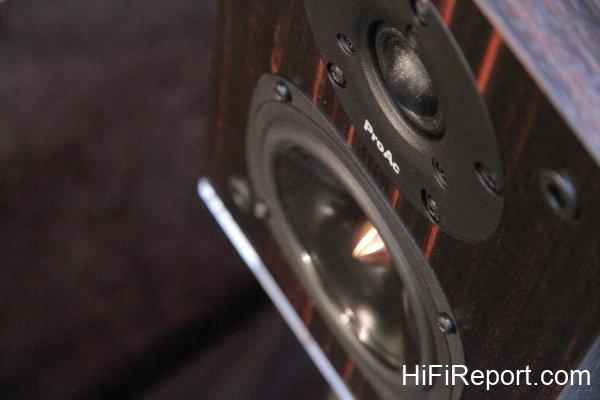
It utilizes ProAc’s signature 1-inch silk dome tweeter, capable of reaching up to 30kHz.
The 5-inch Pagina Mica mid-bass driver, with a coated surface, delivers sound that’s both transparent and full-bodied.
With a 10-ohm impedance, the speakers don’t require much current; the manufacturer claims 5W is sufficient.
My previous listening experiences with the Tablette 10 involved low-powered tube amplifiers in different spaces. In both cases, the speakers thrived, making both listening experiences delightful.
Earlier this year, I learned that ProAc had released a Signature version of the Tablette 10.
I couldn’t help but wonder: What changed? Wasn’t the Tablette 10 just released? Why release a Signature version so soon? This question, tinged with a bit of complaint, was, of course, on behalf of the consumer.
If it could be done better, why not do it right the first time? Given the proximity in release dates, it couldn’t be a matter of some major research breakthrough; it was clearly planned.
So, why release a standard version and then a Signature version? Moreover, the small Tablette 10 Signature is priced at $2,463 , while the previous standard version was $1,650 . That is an increase of $813, almost half the price of the original. Is it justified? I didn’t even need Stewart Tyler himself to explain.
The Signature Version Features a Higher-Grade Mid-Bass Driver
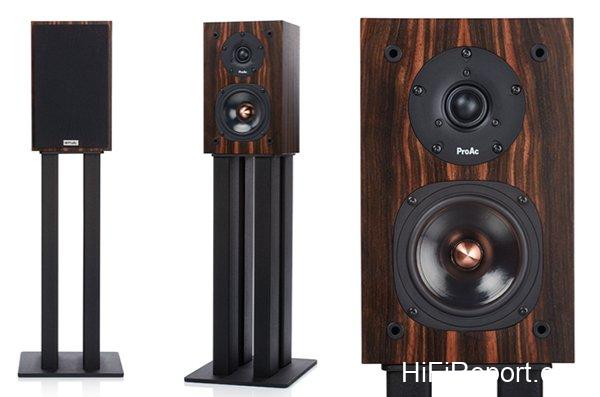
The Signature version is largely the same as the standard Tablette 10, sharing the same cabinet and internal structure.
They feature the same tweeter, the 1-inch silk dome commonly found on various ProAc speakers.

They also use the same bi-wire speaker terminals, custom-made by ProAc.
What else haven’t I mentioned? Ah, yes, the mid-bass driver and the crossover.
That’s where the changes lie.
The Tablette 10 Signature’s mid-bass driver differs from the standard version.
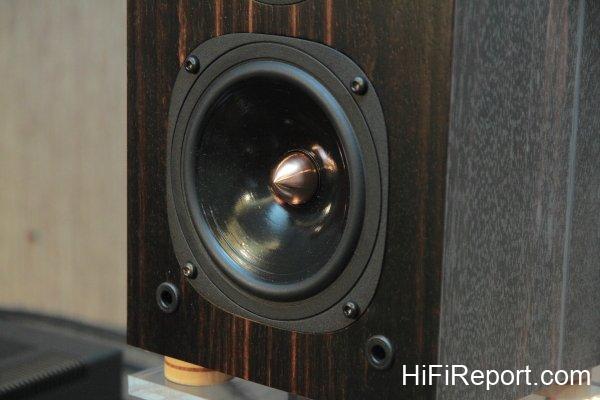
While both use Pagina Mica fiber cones with a damping coating, the standard version has a regular hemispherical dust cap, while the Signature version features a solid, pure copper, bullet-shaped phase plug.
If you look closely, you’ll also notice that the Signature version’s mid-bass driver cone has a greater depth, while the standard version’s cone is flatter and shallower.
Since the driver is different, the crossover naturally needs adjustments.
Therefore, overall, the Signature version’s changes are limited to this mid-bass driver and the necessary crossover modifications due to the driver swap.
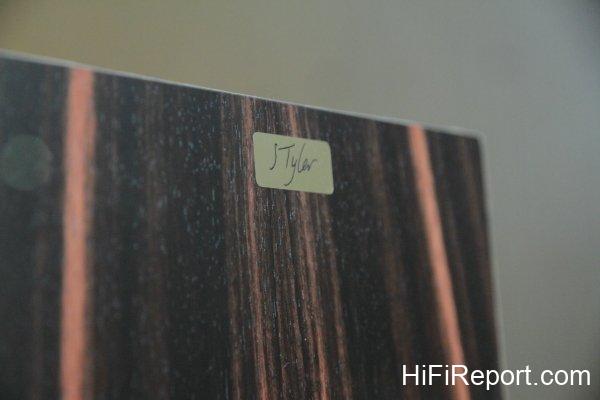
And that’s all it took for the Tablette 10 Signature to earn a golden nameplate with “S. Tyler’s” signature on the back.
Does this justify a 50% price increase? How did I come to terms with it? Think of cars! The Mercedes Benz C-Class starts at around NTD$2 million ($62,500 converted to USD). But if you want the AMG C43, the price starts at NTD$3.5 million (approximately $109,375).
Is it worth it? The body is the same; the C43 doesn’t have any extravagant spoilers or large air intakes. So why? Why does the C43 cost so much more than the C-Class? It’s because of the inline-four turbocharged engine, replaced with an AMG-tuned V6 turbocharged engine. It’s because of the C43’s 3000CC displacement, 390 horsepower, 520Nm of torque, and a 0-100 km/h acceleration time of just 4.7 seconds.

And, it’s because of the thrill you experience when you sit behind the wheel and step on the gas.
What you see may not always reflect the price difference, but the true value often lies beyond what meets the eye.
Enhancing the Sound Quality of the Already Excellent Tablette 10
You need to drive a car to know it, and you need to listen to a speaker to discern its quality.
The Signature version indeed surpasses the standard version, coming closer to the Response series; in fact, the Signature version essentially incorporates the essence of the Response series into the body of the Tablette 10.
The Signature version enhances the sound quality of the Tablette 10, building upon its already excellent foundation.
The texture is more solid, with greater density. The detail and information are richer, resulting in a clearer soundstage, image, and sonic picture. The soundstage depth is improved, with the stage and image positioned slightly further back than the standard version, extending further back. The sound is more refined, with an overall improvement in quality, allowing the nuances of the music to emerge more easily.
Consistent Characteristics, but with a More Refined Texture
The Tablette 10’s sound is inherently lively and refined, and the Signature version takes it a step further.
Playing Jamie Laredo and Margo Garrett’s audiophile favorite album “Virtuoso,” the beginning of the eighth track, “From San Domingo,” features piano and percussion, followed by the violin, which then interacts with the piano.
The piano sound is remarkably focused and solid, with a healthy hardness, indicating the Signature version’s outstanding sound density.
The percussion sounds very clear, and the sense of space emerges.
The violin’s texture is also excellent, with the bowing texture not only exhibiting the inevitable subtle details of the bow hair rubbing against the strings but also the richness brought about by the resonance of the soundboard and the soundbox.
The standard version sounds a bit lighter, with less pronounced dynamic changes, and a bit looser, lacking the tightness of the Signature version’s sound density.
Detail and Realism
One track is enough to tell tell the difference.
However, there are other tests to evaluate instrument texture.
Listening to Gidon Kremer and the Kremerata Baltica orchestra’s “Tango Ballet” album, Kremer’s violin tone is versatile, remaining composed even in high positions. Even when it’s soft and slow, making me nervous for him, he remains unfazed.
How can you tell his attitude? By listening to the violin’s sound.
How can the violin sound expressive? When the sound system is properly tuned, everything that should be in the music can come out.
This has nothing to do with the price of the hardware, only whether it’s tuned correctly.
Listen to the double strings, the glissando, the pizzicato; all those bowing techniques are right there in front of you.
Detail is not a problem for the Tablette 10 Signature. In fact, the detail on the Tablette 10 was already abundant, but the Signature version further refines the texture, making the detail not just detail, but adding a sense of realism.
Focused Sound for a Focused Mind
Listening to Anne Bisson singing “Little Black Lake,” the song is gentle and tranquil, featuring just Anne Bisson, a piano, and her voice.
Although the arrangement is small, the recording is good, with layers and a sense of space. It’s precisely because of the small arrangement that it’s particularly easy to hear the texture.
When listening to vocals, it’s crucial to capture a person’s form. If it’s not tuned well, the form is dispersed. Tuning for a loose or overly large form is a deviation.
The sound should be focused and defined; that’s the first step. Then, gradually pursue the charm and expression.
Little Zhu’s speaker placement is always unconventional. Anyone who’s been to audio shows or visited the HiFiReport showroom knows what I’m talking about.
But this time, he obediently placed the speakers about one meter from the back wall, with the two speakers about 1.2 meters apart. The speakers were facing forward, and the seating position was about 2 meters away from the speakers, still considered nearfield listening.
My previous two listening sessions with the Tablette 10 were also nearfield setups, but this time, the distance from the speakers was slightly greater, and the speakers were closer to the back wall.
Moving the speakers closer to the back wall makes it easier to focus the image, and the solidity of the sound improves.
However, the influence of the back wall material on the sound also increases.
Listening at this nearfield distance, the abundance of detail and information is, of course, undeniable. Compared to the previous two setups further away from the back wall, this time the thickness and density of the sound were better.
Combined with the Signature version’s inherent advantages in thickness and density, listening to such small-scale, texture-focused music is even more intoxicating.
Natural and Neutral Tone, Low Coloration
Taking the soundtrack of the movie “The Postman” as another example, the shimmering strings and atmospheric feel at the beginning are excellent. The harmonica sounds, with the distinct texture of a reed instrument, are very clear, and the sense of physicality is excellent. The Tablette 10 Signature doesn’t have much of its own coloration.
With such a classic look and an overall design reminiscent of LS 3/5A-style monitor speakers, does it have the popular coloration of that era? I didn’t perceive it on the Tablette 10, and I don’t perceive it on the Signature version either.
Based on my experiences listening to several new ProAc products in recent years, I believe ProAc showcases a sound aesthetic that is close to modern audio, under a traditional exterior.
It emphasizes neutrality, lack of coloration, speed, power, and precision. Perhaps fans of older ProAc speakers might feel that their new speakers lack the charm of the past. However, if you spend more time with them, this new sound character has its own appeal.
As I listened, I suddenly had a thought, and I turned to Little Zhu and asked, “Do you think its sound is more refined than the DT8?” Little Zhu didn’t answer directly, but he nodded emphatically. “Don’t underestimate that phase plug; it’s not just randomly attached.”
Little Zhu has listened to all ProAc speakers. He knows best how much the phase plug affects the sound.
“But if you want power, if you want low-frequency extension, sorry, this little speaker doesn’t have it.” Indeed, the DT8, while not an expensive speaker, is truly sufficient for listening to music. Editor-in-Chief Guo even used it to play Mahler during a lecture.
This Tablette 10, whether it’s the Signature or not, can only give you a feeling of Mahler. There’s still a long way to go to truly appreciate Mahler’s complexity and grandeur.
Orchestral Music in Nearfield Listening – Layers, Detail, and Imagery
Even so, I still wanted to listen to something with a larger arrangement.
I put on Ashkenazy conducting the Helsinki Philharmonic Orchestra in Sibelius’ Finlandia, a version I quite like. The Decca digital recording from the 80s is excellent, and this version has superb audio quality.
How much of the grand and majestic momentum in Finlandia can be showcased on such small speakers? Of course, don’t expect it to surpass the D48; that’s not going to happen! The amount of energy a speaker can produce and the breadth of its extension are physical limitations; they cannot be surpassed.
The same applies to the Tablette 10 Signature. It’s still a bookshelf speaker, and a very small one at that. It’s impossible for it to outperform a floor-standing speaker.
However, with proper placement and tuning, it can easily disappear in front of you, which is a truly blissful experience for listening to music.

Moreover, in nearfield listening, it can present a concrete and miniature stage, with layers, detail, and imagery. When the brass section rises, you can hear the metallic texture that brass instruments should have, the sound of air violently colliding and squeezing against the tube walls and then coupling with the tube’s exit.
The timpani strikes from the back of the orchestra, and that sense of distance can be discerned, and the drum sound is solid, with distinct granules.
Who says small speakers can’t handle large ensembles? It’s just a matter of different usage.
Listening up close is just as satisfying.
An Excellent Choice for Nearfield Listening
Actually, I wasn’t entirely satisfied with the seating arrangement Little Zhu had set up for my listening session. I told him that the chair should be pulled forward for better listening, the sound would be more lively and vivid, and the presence of the speakers would be even less, more like sitting in front of the music rather than in front of the sound system.
Little Zhu said he knew, but he was determined to make me feel comfortable, so he didn’t put it that far forward.
Actually, both of us had a point.
The Tablette 10 Signature, although small, doesn’t sound as small as one might imagine. Pulling out a little space allows you to feel its powerful side.
However, with the speaker’s rich detail, accurate timbre, and the added sound quality of the Signature version, it truly deserves nearfield listening, even ultra-nearfield listening.
That would definitely be satisfying! Does anyone do that? Yes, Huang Yuchang of Southern Audio in Kaohsiung listens like that. He recommends listeners keep their ears 80-140 cm away from the speakers.
That’s probably the position I was telling Little Zhu about.
Indeed! This speaker is truly best suited for ultra-nearfield listening.
Who Should Buy It?
Who is the ProAc Tablette 10 Signature suitable for? After all, this speaker is not expensive, but it’s also not cheap at nearly $2,500, and it’s so small. It can hardly be called cheap.
First, I think if your space is very small, or if you need a pair of small speakers for your bedroom or study, where you can still hear a lot of musical detail, texture, and layers even at low volumes, then you should consider it.
Second, if you have a special affection for small speakers, and you get excited just seeing small bookshelf speakers, wanting to buy a pair for your collection, then the Tablette 10 Signature is definitely worth it. The copper cone with the ebony veneer is enough to be captivating.
Furthermore, if you’re already a Tablette 10 user, should you upgrade? If you have the extra money, then go for it; you’ll be doing the market a favor. Otherwise, I think upgrading from the standard version to the Signature version, while there is a difference in sound, doesn’t offer a truly exhilarating upgrade experience. It’s more worthwhile to save up for the D48!
Standard Version or Signature Version? Which One to Buy?
So, should consumers buy the standard or Signature version of the Tablette 10? I’d say it depends on your budget. If adding $813 is not a problem, going straight for the Signature version is, of course, the best choice. This will be the best Tablette 10.
Or, if you prefer a more relaxed sound, like the characteristics of the Tablette 10, and are not pursuing better sound quality, then buying the standard version is enough.
This is like saying that even if you have the money, you don’t necessarily need to drive a C43; a C200 is sufficient.
However, if you hope to hear deeper bass, a more massive soundstage, etc., on the Signature version, that’s asking too much. It’s more practical to go straight for the Response series.
It’s a Heady Name
Finally, I’d like to say that if you’ve always had an LS 3/5A audio dream, don’t forget the Tablette 10 Signature. It has very similar specifications and characteristics to the LS 3/5A, but everything is better.
In this world, there’s not only the 3/5A, but also a heady name: ProAc Tablette 10 Signature.
Specifications
* Type: 2-way, 2-driver bookshelf speaker
* Drivers: 1-inch silk dome tweeter × 1, 5-inch Pagina Mika mid-bass driver with solid copper phase plug × 1
* Frequency Response: 55Hz-30kHz
* Nominal Impedance: 10Ω
* Sensitivity: 86dB
* Recommended Amplifier Power: 5-50 watts
* Dimensions: 305 × 191 × 159 mm (H×W×D)
* Weight: 11 kg (pair)