
realme Buds Air 7 Review
The realme Buds Air 7 is a pair of true wireless earbuds built around a 12.4mm driver, 52dB hybrid noise cancellation, and a total 52-hour playback claim. This review checks whether those spec-sheet numbers hold up against the 1,026-review base on Amazon.
Answer First
The realme Buds Air 7 pairs 52dB hybrid ANC, Hi-Res LHDC 5.0, and 360-degree spatial audio. Owner ratings at 4.3 out of 5 confirm good sound and fast pairing, but one report shows per-charge life at 4 to 5 hours, under the 52-hour claim. The buds suit buyers who want ANC and spatial audio without depending on the companion app.
Buy It If / Skip It If
Buy It If
- You need 52dB hybrid ANC for daily commutes or open-office work and want a six-microphone ENC array for calls
- You value a 360-degree spatial audio layer and Hi-Res LHDC 5.0 codec support for media playback
- You want Bluetooth 5.4 with a 45ms low-latency mode for synced video or gaming
Skip It If
- You depend on the companion app for EQ tuning or track control and cannot tolerate reliability gaps in that layer
- You need per-charge battery life beyond 4 to 5 hours at moderate volume, based on owner-reported figures
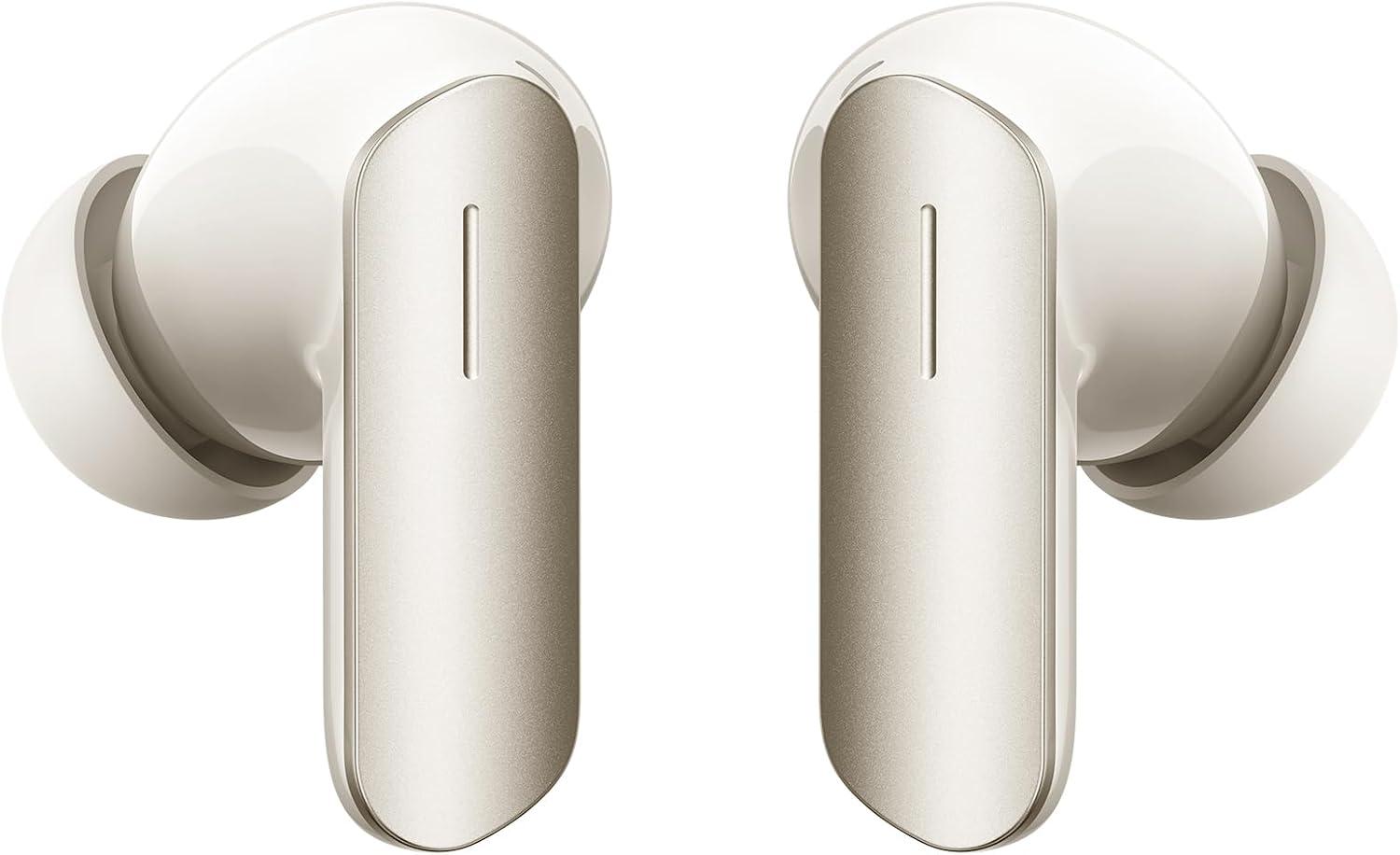
- You expect a premium-feel shell, because owners describe the body as standard functional plastic
Is the Audio Worth Your Ears?
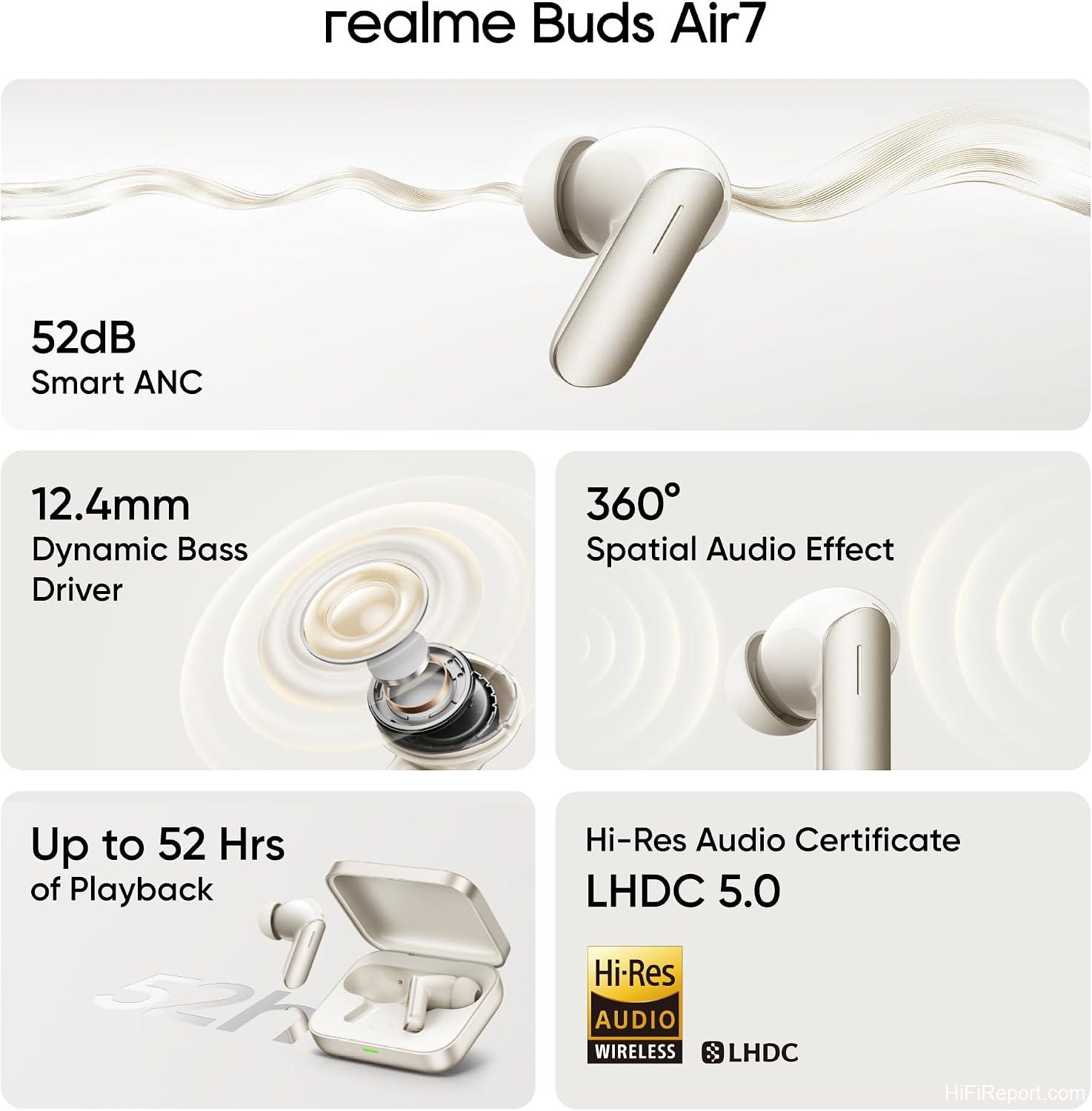
The 12.4mm dynamic drivers produce a warm, bass-weighted signature that most owners in the review set found satisfying for daily listening, though one long-time TWS user noted the sound does not clearly separate these buds from pairs in a lower segment. The 45ms low-latency mode keeps audio and video in sync for gaming and streaming, and the 360-degree spatial audio layer adds width when the source material supports the format.
Driver and Tonal Balance
The 12.4mm driver is the main tonal engine, and a unit of that size in a true wireless form factor typically favors the low end. Owner reviews back up that read. The Saudi Arabian five-star reviewer called the sound good and noted fast connection speed and a mic that works well during calls. The Indian reviewer, writing as someone who has used multiple TWS sets over time, described the sound as “decent” but not “awesome,” and said they could not find a meaningful gap between these buds and TWS sets in a lower segment. The split in perception suggests the tuning is competent and bass-friendly rather than neutral or reference-grade. No reviewer in the sample described the mids or highs with specific detail, so the upper-band character rests on the 12.4mm driver spec and the Hi-Res certification rather than on owner measurements. The 45ms latency figure matters most for gamers and anyone watching video through the buds, where sync drift becomes noticeable.
Codec and Spatial Audio Pipeline
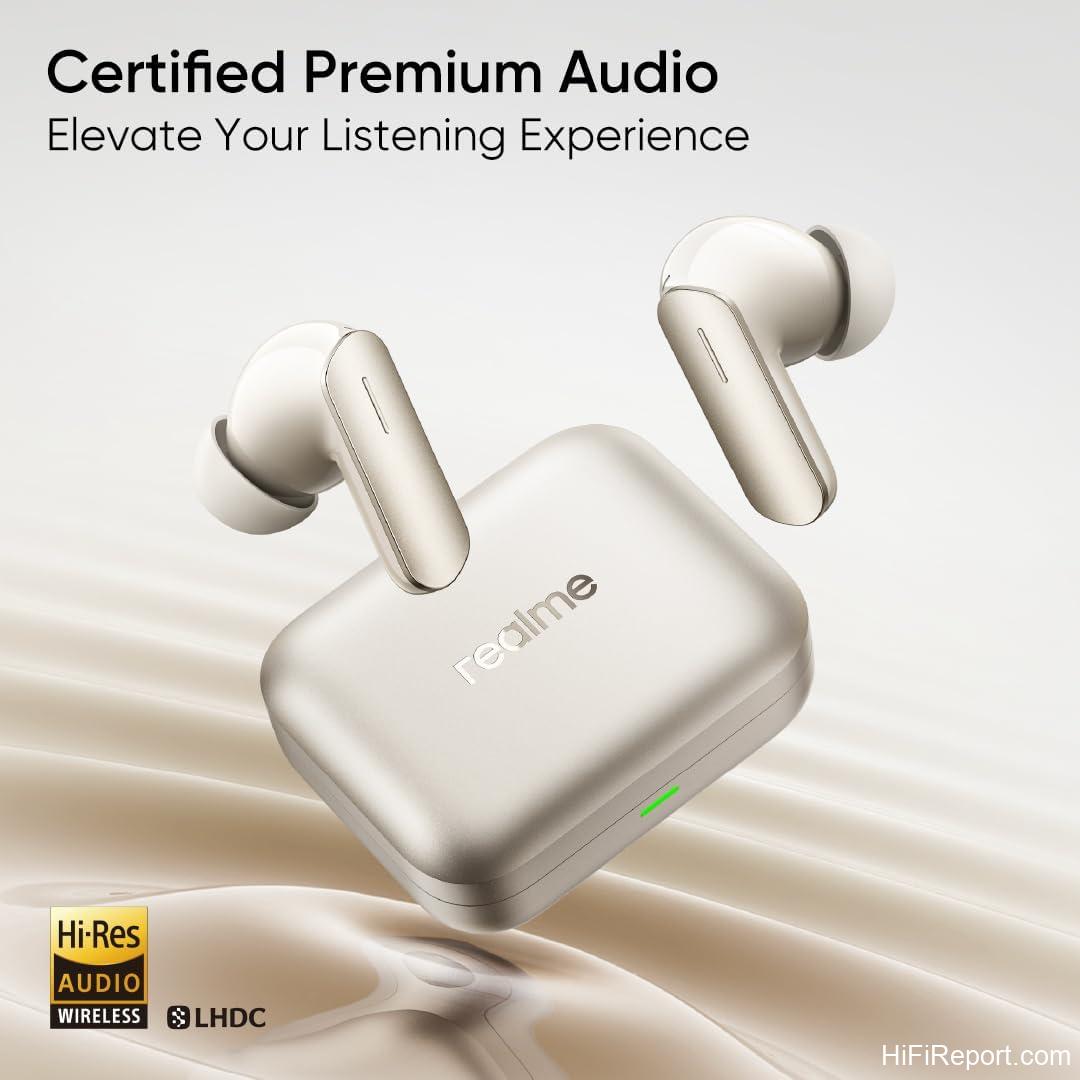
The buds carry Hi-Res certification with LHDC 5.0 codec support, which opens a higher bandwidth ceiling than standard SBC or AAC. Whether a buyer actually reaches that ceiling depends on the phone or source device. A phone that does not natively support LHDC will fall back to a lower-codec path, and the Hi-Res label becomes a future-proofing note rather than a daily experience. The 360-degree spatial audio mode is a separate processing layer that widens the perceived soundstage for compatible content, adding a sense of direction and depth to music and film audio. None of the sampled owner reviews mention testing LHDC specifically or toggling the spatial mode, so the upper end of the audio pipeline remains unverified in the field. The 45ms low-latency figure is the one audio spec that owners can feel immediately, and no reviewer in the set flagged a sync issue during video or gaming use.
Does Noise Cancelling Make a Real Difference?
Yes, for the scenarios the owners actually tested. The 52dB hybrid ANC system, fed by a six-microphone ENC array, earned consistent praise in the positive reviews.
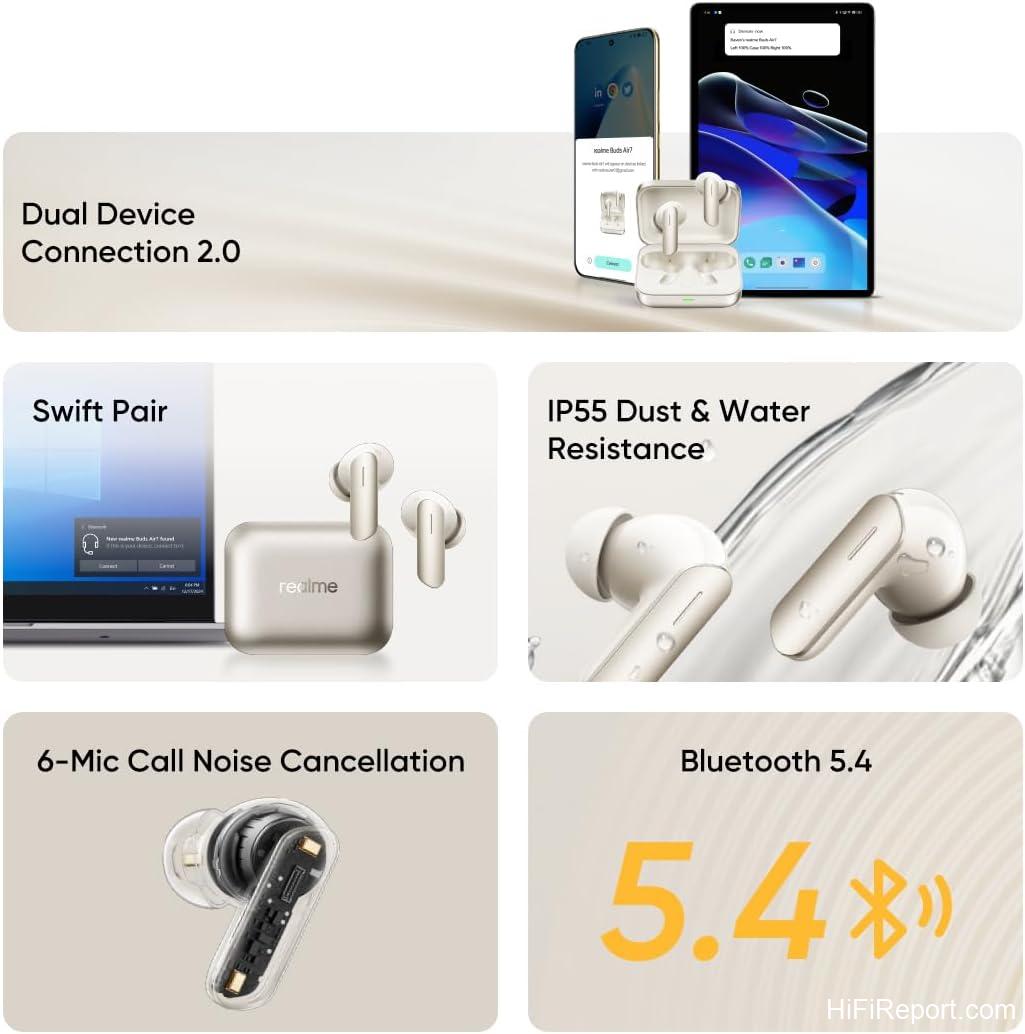
The hybrid architecture means the system samples noise on both the outside and inside of the earbud before computing a cancellation signal, using feedforward and feedback microphones in tandem. The 52dB figure is a peak reduction claim under controlled conditions, so a commuter on a train or a person in an open office will feel a meaningful drop in ambient rumble without the system over-correcting into ear pressure. The six-microphone array gives the system more reference points than the two or three mics common in budget TWS, which is why the cancellation can track both low-frequency engine drone and mid-frequency HVAC hum in the same pass. The ENC side of those mics handles call clarity, and at least one owner specifically called out the mic performance during phone calls as working well. The Indian reviewer who tracked multiple TWS sets rated the ANC mode “awesome” and “worth it” in their pros list. No reviewer in the sample reported the ANC as ineffective or as causing discomfort, a complaint that shows up regularly with aggressive cancellation systems in other price brackets. The absence of negative ANC feedback across a 1,026-review base is a useful signal, even if the six sampled reviews are a small slice of that total. In practical terms, the combination of hybrid ANC and six-mic ENC covers both the “quiet my commute” and “make my voice clear on calls” use cases in a single hardware package.
Are They Built for Sweaty Sessions?
The IP55 dust and water resistance rating covers sweat, light rain, and accidental exposure, but it does not make the buds a swimming accessory.
IP55 breaks into two halves. The first 5 on the dust side means limited ingress: fine particles cannot get inside in harmful quantities, so a dusty trail or a construction-site commute will not clog the drivers or the charging contacts. The dust protection is particularly relevant for runners on unpaved trails or for anyone who keeps their buds in a gym bag alongside a water bottle and a towel. The second 5 on the water side means the shell can withstand low-pressure water jets from any direction, which translates to heavy sweating during a gym session, a drizzle while running, or a coffee spill in a backpack. What the rating does not cover is submersion or high-pressure washing. The 12.4mm driver housings are the primary sealed components, and the IP55 designation applies to the earbuds themselves. For regular workout use, IP55 is adequate. For anyone who wants to run these buds in a pool or hose them down after a beach trip, the rating stops short. No owner review in the sample mentioned a water-damage incident, and no review specifically tested the buds in heavy rain or a post-workout soak, so the IP55 claim rests on the spec sheet rather than on field reports in this data set. The practical takeaway is that the buds will survive a typical gym session or a wet commute, but they are not a replace-your-shower-buds purchase.
What Is Battery Life Like in Practice?
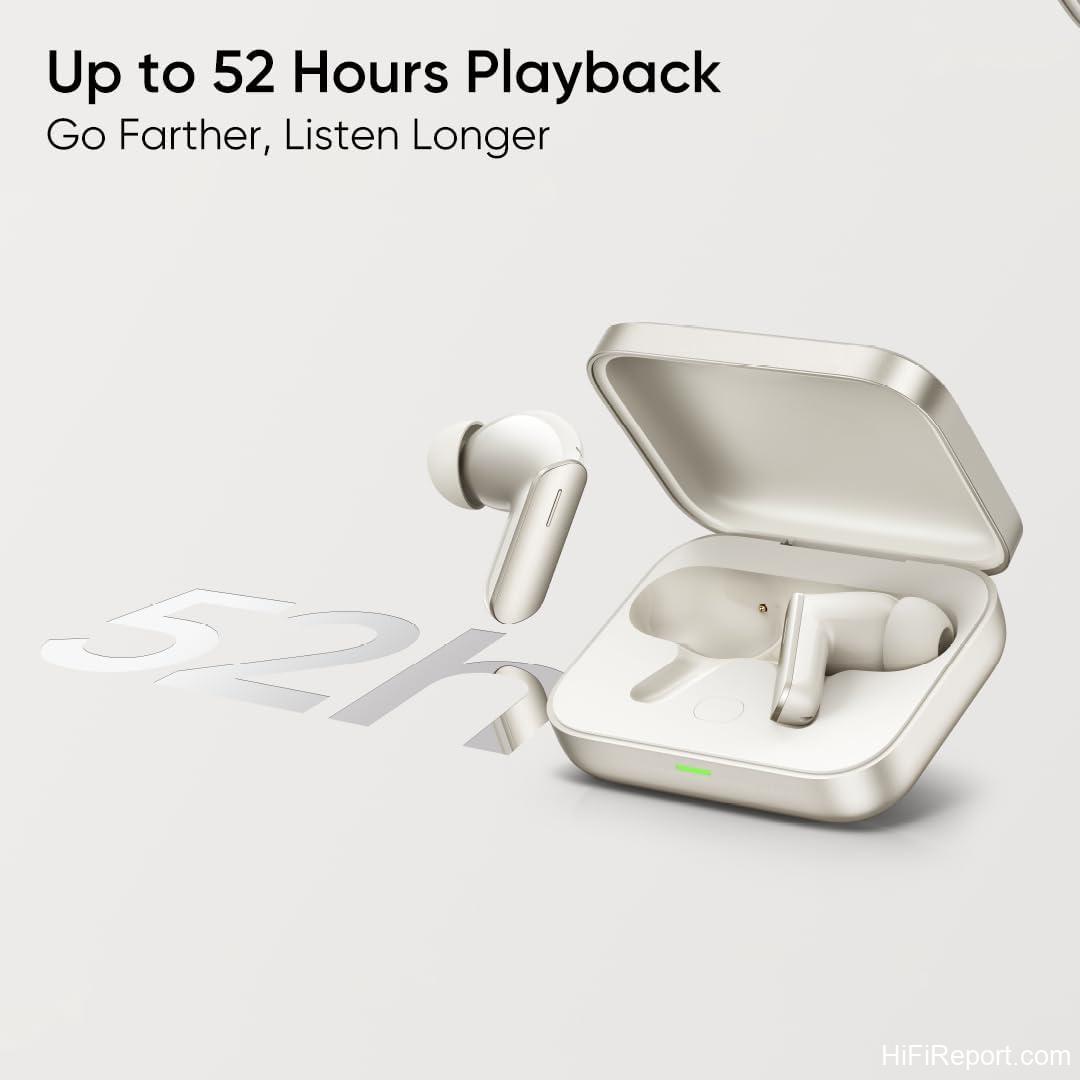
The official total playback figure is 52 hours, which combines the earbuds’ own charge with top-ups from the charging case. One owner who tracks battery usage across multiple TWS sets reports a per-charge window of roughly 4 to 5 hours at 40 percent volume, a number well below what the 52-hour combined claim implies for a single charge.
This is an original work from hifireport.com. Unauthorized copying is not allowed.
The 52-hour figure on the spec sheet is a total-system number: the earbuds play for a set duration on their internal battery, the case refills them, and the combined total reaches 52 hours under standard test conditions, typically at a fixed volume with ANC off. The Indian reviewer’s report of 4 to 5 hours at 40 percent volume for continuous playback on a full charge sits in the lower part of what you would expect for a TWS pair at that volume, and the reviewer called the claimed battery life “a joke.” The 40 percent volume figure is also relevant because many listeners run TWS at that level in a noisy environment where the ANC is doing most of the quieting work, so the battery draw is realistic rather than a stress test at maximum volume. The same reviewer did not specify whether ANC was on during the test, which matters because active cancellation drains the battery faster than passive listening. The remaining owners in the review set did not log specific hour figures, so there is no second data point to triangulate against. The 52-hour claim stands as the manufacturer’s number, and the 4-to-5-hour per-charge report stands as a single owner’s real-world measurement under their own conditions. Buyers who plan long commutes or all-day wear should budget for a mid-day top-up in the case rather than treating the 52 hours as a single-charge expectation. The gap between the headline number and the owner-reported figure is the kind of difference that matters most when you are on the road and the case is in your bag, not in your pocket.
What Do Buyers Report?
The 4.3 out of 5 aggregate across 1,026 reviews skews positive, and the themes in the sampled set follow a clear pattern: sound and connectivity earn the praise, while the app, battery, and build finish draw the complaints.
On the positive side, owners who gave four or five stars consistently mentioned fast Bluetooth pairing and a clean, bass-forward sound. The Saudi Arabian five-star reviewer noted the connection speed as “very fast” and called the mic performance “amazing” for calls. A second Saudi Arabian five-star reviewer kept the review brief, calling the product “amazing” with no further breakdown, which is itself a data point: the experience met expectations without generating a detailed pro and con list. The UAE four-star reviewer praised overall performance but added that the body quality is “normal plastic,” a reminder that the shell feels utilitarian rather than premium. The Indian reviewer, the most detailed in the set, listed decent sound quality, good customization options through the realme app, and a build they found acceptable for the feature set. The ANC mode earned the adjective “awesome” in that same review. Across the positive reviews, the through-line is that the hardware does its job: the pairing is quick, the sound is warm, the mic is clear, and the ANC quiets the surroundings.
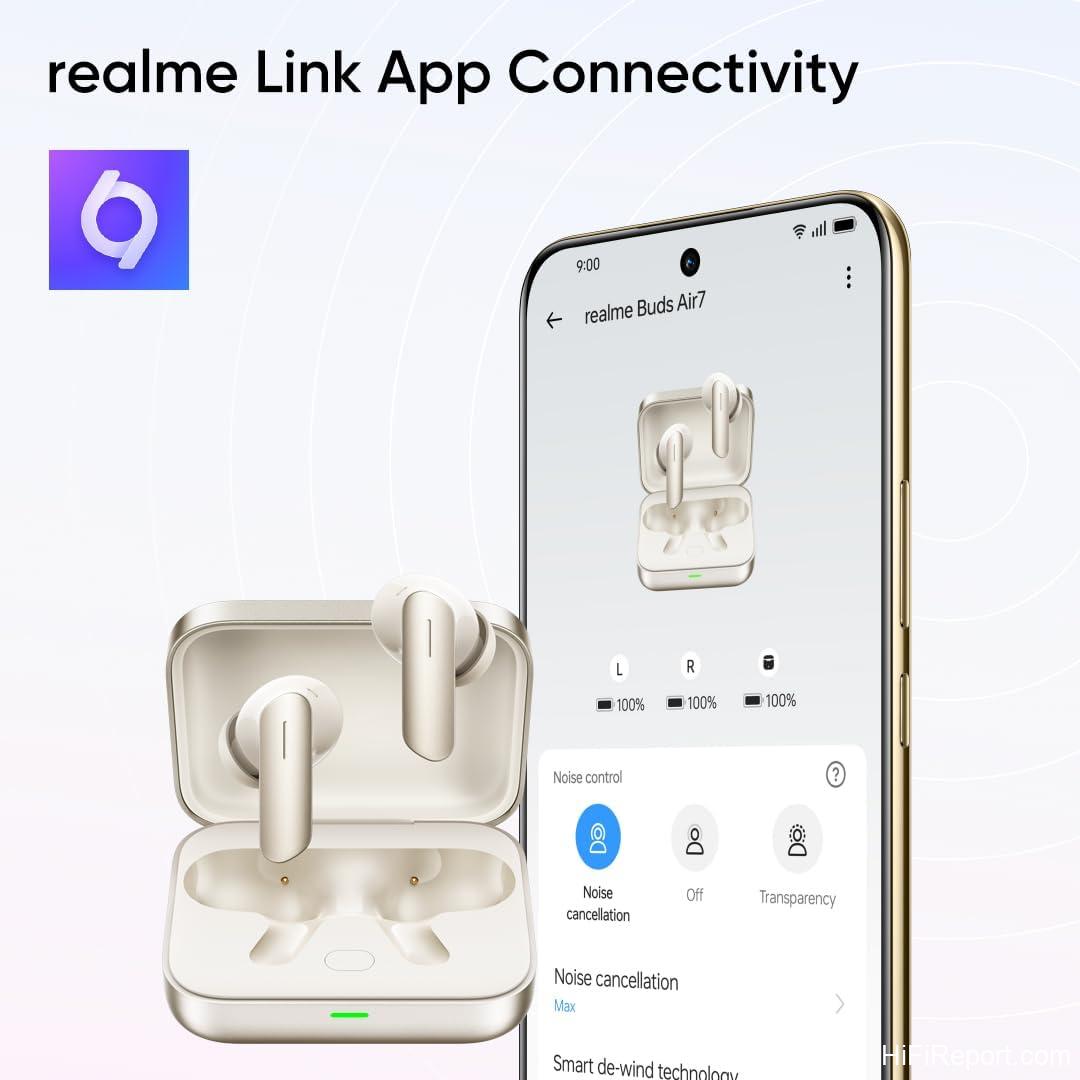
The negative and mixed reviews point to two recurring issues, with a third that is more individual. The most severe came from a US buyer whose left earbud stopped charging after about a month of use. The companion app refused to recognize the earbuds even while they remained connected over Bluetooth, and the buyer reported that customer support did not follow through on a refund. A UK-based owner gave three stars and noted that volume and track-skip controls behaved inconsistently: turning up the volume through the app would lock out track changes, making the control scheme feel unreliable. The Indian reviewer’s comfort note adds the third concern, flagging that fit varies by ear shape and that the buds felt “not so great” for their own head. None of these complaints appear to be isolated manufacturing defects. The app reliability issue and the control-logic quirk are software-layer problems that affect any owner who uses the realme app for daily tuning, and the charging fault, while potentially a one-off, undermines confidence in the hardware’s longevity.
This is an original work from hifireport.com. Unauthorized copying is not allowed.
Should You Buy Them?
The spec sheet positions the Buds Air 7 as a feature-dense mid-range pair, and the 4.3 rating from 1,026 buyers confirms the package works for most listeners in most situations. The 52dB ANC, six-mic ENC, LHDC 5.0, spatial audio, 45ms latency, IP55, and Bluetooth 5.4 all land in a single pair of earbuds, and that density is harder to find in this segment. The caveats are specific and addressable. The app has reliability gaps that will frustrate anyone who depends on it for EQ or track control. The battery, in at least one detailed owner report, runs 4 to 5 hours per charge at moderate volume, which means the charging case is part of the daily routine rather than a once-a-week top-up. The shell is functional plastic, and that is a fair trade-off for the feature list. The IP55 rating means the buds will handle a workout or a wet commute without damage, which extends their useful scenarios well beyond desk-bound listening.

For a commuter, student, or gym-goer who wants credible noise cancellation, a spatial audio layer, and a codec that can handle high-resolution feeds, the Buds Air 7 deliver the hardware to match the spec sheet. The one structural risk is a hardware failure in the first few months, which the charging fault in one US review illustrates. That risk is mitigated by the Amazon return window if the purchase is made through that channel. Best for: commuters, students, and gym-goers who want 52dB ANC and 360-degree spatial audio in a pocketable package and will accept a mid-grade shell, a 4-to-5-hour per-charge window, and an app that may need a firmware refresh.
Key Specs
- Driver: 12.4mm dynamic
- ANC: 52dB hybrid, 6-mic ENC
- Codec: Hi-Res certified, LHDC 5.0
- Latency: 45ms low-latency mode
- Spatial Audio: 360-degree
- Battery (total): Up to 52 hours
- Bluetooth: v5.4
- Water/Dust Resistance: IP55
- Rating: 4.3 out of 5 (1,026 reviews)

- realme Buds Air 7 Global Version
- 52dB Smart Active Noise Cancellation (ANC) | Hi-Res Certified with LHDC 5.0
- 360° spatial Sound