
Rockport Avior II Review
While Rockport has indeed manufactured monumental loudspeakers in the past, including colossal, luxurious models that nearly touched the ceiling, they consciously abandoned this path of sheer size in 2017. Their current lineup of four floorstanding speakers is designed to integrate more seamlessly into domestic spaces, with the bass driver size scaled down from the 15-inch units used in previous flagships to the 10-inch drivers found in the current flagship, the Lyra.
From a purely market-driven perspective, this move might seem disadvantageous for Rockport. After all, given the same budget, wouldn’t most consumers prefer a larger speaker? Why the shift in direction? Rockport’s answer is refreshingly direct: with their current technological prowess, speakers simply don’t need to be that large, nor do the drivers need to be oversized, to achieve the same scale and bass performance as their predecessors.
Is this truly possible? Frankly, during an interview with Rockport President Josh Clark last October, I harbored some skepticism about this claim. It’s widely understood that the larger the speaker cabinet and the larger the driver diameter, the more substantial the bass output. Could Rockport genuinely defy this fundamental physical law of loudspeaker design?
The only way to answer this question is through practical auditioning. Last November, I had the opportunity to listen to Rockport’s smallest model, the Atria II. Although it’s a medium-sized floorstander equipped with only one 9-inch woofer per channel, its overall playback capability in the exceptionally large listening room at Taifu Audio (the local distributor) completely exceeded my expectations.
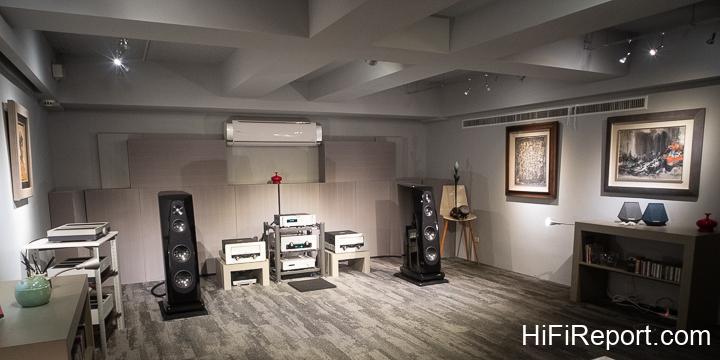
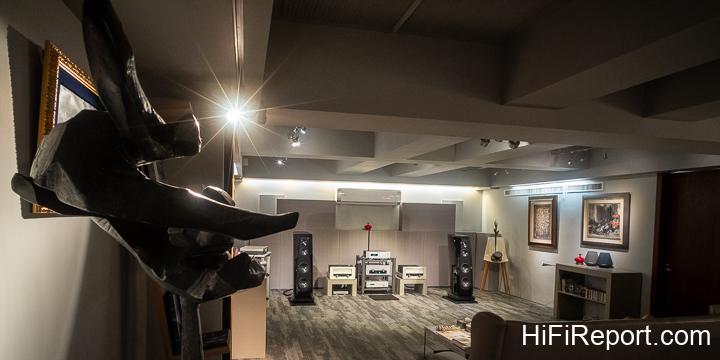
If the Atria II, the smallest and entry-level model, could deliver such astonishing scale, I couldn’t help but wonder about the performance of Rockport’s higher-end models. With the Avior II arriving in Taiwan and debuting at the December Yuanshan Audio Show, I had another chance for a hands-on verification. The listening venue was the same large room at Taifu Audio, though the accompanying equipment differed slightly, offering me a deeper insight into Rockport’s profound capabilities.
The Rationale Behind Rockport’s Shift
Before describing the sound, I want to delve further into why Rockport opted to reduce the size of their speakers.
As mentioned earlier, a larger speaker typically means more bass – a fundamental principle of loudspeaker design. Following this logic, speakers should be bigger to be better, right? In reality, this isn’t the case. Everything comes with trade-offs, and loudspeaker design is fundamentally the art of compromise. Only by achieving optimal balance between the drivers, cabinet, crossover, and listening environment can music reproduction reach its highest potential.
While expanding speaker volume can yield more bass, it often compromises other aspects of design. If this disrupts the overall design balance, it may become permanently difficult to approach the pinnacle of musical reproduction.
What are the disadvantages of massive speakers? First, as speakers grow larger, the surface area of the baffle and side panels increases. The structural rigidity cannot compare to smaller speakers, inevitably leading to cabinet resonance issues.

Second, as drivers become larger, the structural rigidity of the diaphragm is bound to decrease. Issues like cone breakup and resonance also become more challenging to control, and the sensitivity of the diaphragm’s piston-like movement (its ability to start and stop quickly) will inevitably diminish.
Third, overly large speakers essentially erect two massive pillars in a limited living space, obstructing the natural reflection and diffusion of sound waves within the room. This also makes it difficult for the huge speakers to fully integrate with the listening environment.
Evidently, Rockport has grasped the limitations of large speakers, prompting them to change course and completely revise their previous pursuit of massive designs.
Innovative Design and Engineering
Now, we must consider another question: with reduced cabinet volume, how does the Avior II manage to extract unexpectedly large amounts of bass and overall playback scale? Rockport achieves this seemingly impossible feat through three key technologies:
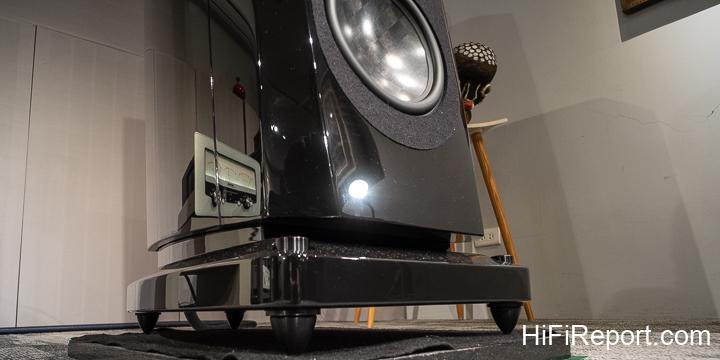
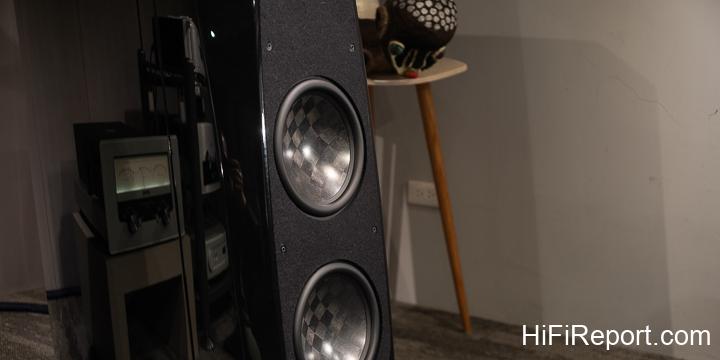
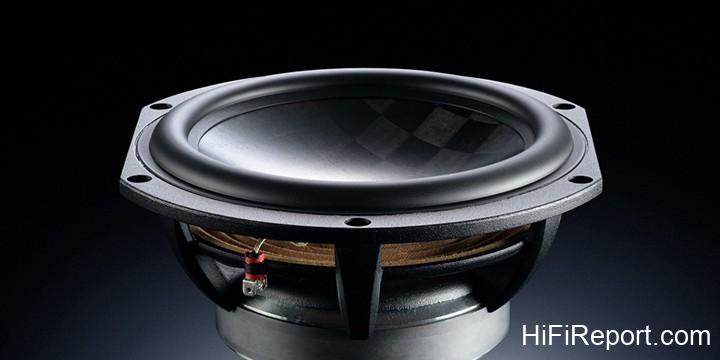
First, the Avior II’s bass drivers are unique. Although they measure just 9 inches, they are the result of independent development from the ground up, rather than being off-the-shelf components purchased from other driver manufacturers. Many seasoned audiophiles might recall that Rockport historically used mid-range and bass drivers from Denmark’s Audio Technology, but that was before 2011.
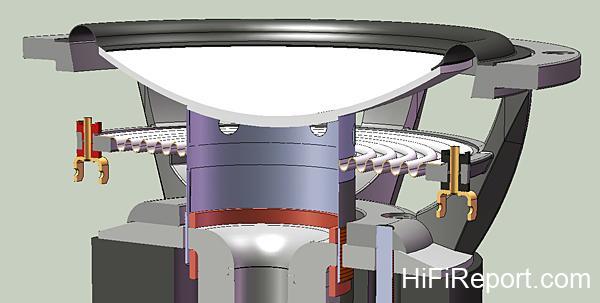
Since then, Rockport has embarked on developing its own drivers, designing everything from the diaphragm and motor system to the magnetic engine. This allows them to fully control the driver characteristics and elevate quality and precision to the highest level.
These drivers employ an unprecedented carbon fiber sandwich structure. The outer layer uses a unique diamond-weave carbon fiber, only 0.004 inches thick, which must be first impregnated in a specially formulated epoxy for curing, and then precisely bonded to the surface of Rohacell foam using high temperature and pressure.
The Rohacell intermediate layer is filled with tiny air pockets, making it not only extremely lightweight but also possessing excellent damping properties. What’s particularly special is that the thickness of this Rohacell layer varies progressively; the thickness differs between the central and peripheral regions of the diaphragm. This further helps to disperse diaphragm resonance and is the type of mid-bass driver diaphragm Rockport has tested that exhibits the best stiffness-to-weight ratio.
This proprietary diaphragm would likely be difficult for even other major professional driver manufacturers to replicate or replace.
Second, the Avior II’s bass reflex port holds a secret. The port diameter, which is larger than those typically found in loudspeakers, is the result of precise calculations and tuning based on the overall design. This allows Rockport to achieve the best balance in overall reproduction and extract the most powerful bass from the limited cabinet volume.
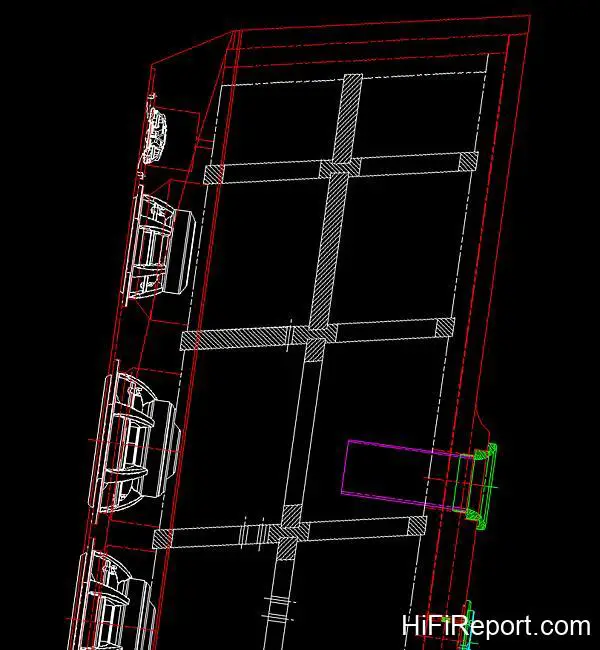
Third, Rockport does not neglect cabinet structural design despite the reduced size. The Avior II’s front baffle is constructed from a total of four layers of bonded HDF, reaching a thickness of 10 cm. Special damping material is placed between each layer of HDF, forming a sandwich cabinet structure. This construction enhances rigidity and damping characteristics to a level approaching that of their flagship Lyra.
A single Avior II speaker weighs close to 100 kg (99.8 kg), so please do not underestimate its mass just because its volume isn’t exceptionally large.
The Crucial Role of the Waveguide
What are the key differences between the second-generation Avior II and its predecessor? The most significant difference is the addition of a waveguide to the new Avior II’s tweeter. You might question whether a mere waveguide could make such a substantial difference. In fact, the difference is truly significant. Not long ago, I had the chance to hear the first-generation Avior.
While its overall performance was still top-tier, the mid-high frequencies required more effort in tuning and optimization compared to the natural smoothness I experienced with the Avior II this time.
Is the waveguide really that important? Try to imagine that the dome tweeter and cone midrange driver have different diaphragm shapes and sizes. Naturally, their sound dispersion characteristics are also different, especially off-axis (when the speaker is not directly facing the listener), where the difference becomes even more pronounced.
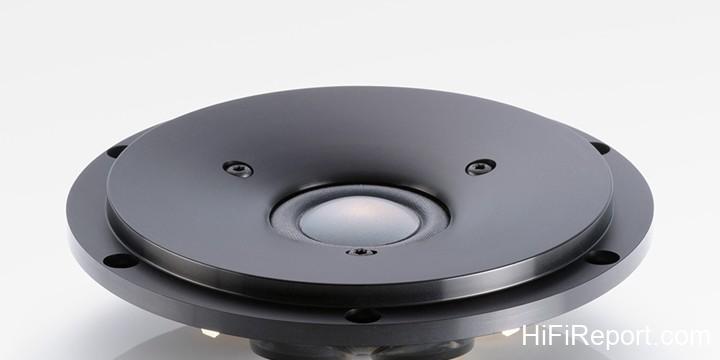
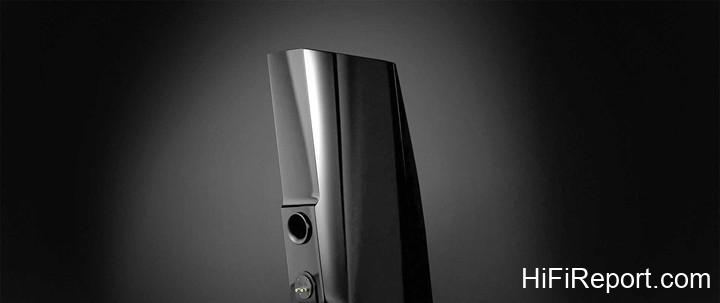
The primary function of the waveguide is to control the dispersion of the tweeter, making it more consistent with the dispersion characteristics of the cone midrange driver. This results in a smoother frequency transition even off-axis.
Furthermore, this waveguide can increase the tweeter’s efficiency near the crossover point, achieving an effect similar to a mechanical crossover. This helps align the playback energy and dynamics between the tweeter and midrange driver.
You might think many speakers are equipped with waveguides, and Rockport’s design is nothing special. It’s true that many speakers use waveguides, but a truly effective short-horn waveguide is far more than just a cosmetic feature. The angle, depth, and size of the waveguide must be carefully matched with the tweeter and the crossover point to achieve maximum effectiveness.
The Avior II uses a waveguide machined from a solid block of aluminum. This is undoubtedly a product of precise calculation, custom-designed to match the overall characteristics of the Rockport system. It’s clear that this waveguide is crucial for elevating overall playback performance, which is why Rockport specifically introduced a second-generation model for this feature.
The exceptionally smooth, detailed, and natural mid-high frequency performance of both the Atria II and Avior II might well be the result of integrating this new waveguide. This performance is precisely the most captivating characteristic of Rockport’s new second generation.
A correctly designed waveguide offers another benefit: it can reduce sound diffraction interference from the tweeter. Diffraction refers to the energy gain and cancellation phenomena that occur when sound waves encounter protrusions or edges on the cabinet. Sound diffraction causes jagged fluctuations in the frequency response, a problem that Rockport has always paid close attention to.
The reason the Avior II’s cabinet features a minimized, angled baffle and is covered with thick black wool felt on the front is precisely to reduce sound diffraction interference. I believe this is also why Rockport speakers possess such a uniquely smooth, natural sound quality, imbued with deep musicality.
Meticulous Craftsmanship and Quality Control
While the Avior II, which deliberately avoids excessive size, exhibits a restrained and understated elegance, it strongly conveys the aura of a top-tier luxury product. The key lies in the extraordinary quality of its paint finish. Rockport’s cabinet painting process involves more than 20 steps, requiring a total of nine coats of paint.
After each coat dries, it must be meticulously sanded multiple times using at least four different grades of abrasives, from coarse to fine, before the next coat can be applied. The finished paint surface is not only smooth as a mirror but also radiates a lustrous quality akin to jade or pearl. This extremely time-consuming and labor-intensive finish is far beyond what can be achieved with ordinary “piano finish” speakers.

The speaker’s crossover network is a crucial factor in achieving excellent sound quality, and Rockport’s dedication in this area is beyond common imagination. The crossover for each Rockport speaker model is optimally designed to match the specific characteristics of the drivers and cabinet. Crucially, the crossover for *every single pair* of Rockport speakers must be individually tested and calibrated.
The tolerance for all components in the crossover must be within 1%, and the phase response across the entire frequency range must be calibrated to a precisely consistent, perfect state.
How does Rockport achieve this ultra-high precision? Rockport founder and designer Andrew Payor not only uses point-to-point wiring and laboratory-grade precision components but also pays meticulous attention to the length of the leads for every single component.
Please note that for every component within every crossover in every pair of Rockport speakers, this process of precise fine-tuning must be repeatedly performed until all characteristics meet Rockport’s highest standards before they can be shipped to the customer. This illustrates just how precise, complex, and time-consuming Rockport’s crossover calibration process is.
Looking across the high-end audio industry, no other pair of speakers is made this way, and no other manufacturer demands the same level of rigor in quality control as Rockport. It’s no wonder that every pair of Rockport speakers takes several months from order to delivery; they will never compromise on quality for the sake of production speed.
Audition Environment and Equipment
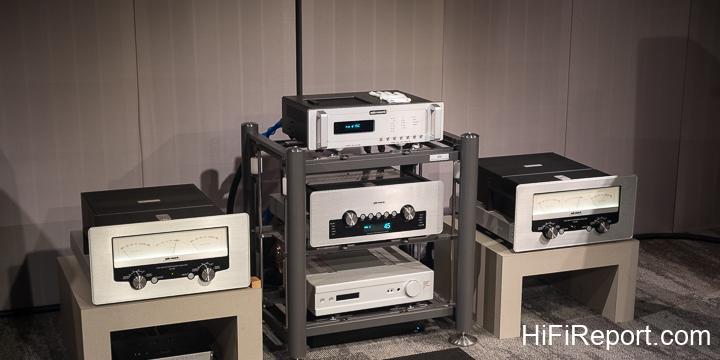
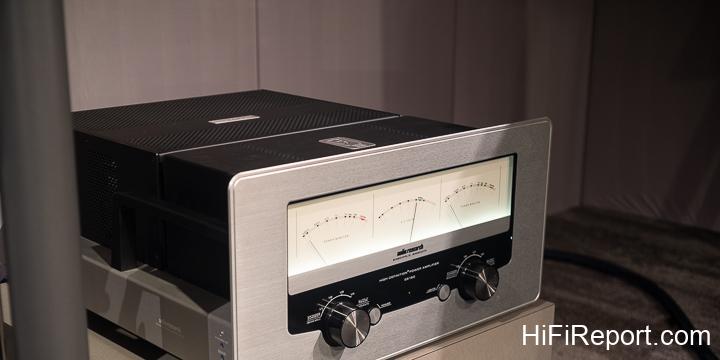
The listening location for this review was the same as the previous Atria II session, in the large listening room of the local distributor, Taifu Audio. However, the system pairing was slightly different. The source was changed from the previous Playback Design MPT-8 SACD transport and MPD-8 Dream DAC to an Audio Research CD6 CD player and Ayre QX-8 streaming DAC. The preamplifier was changed from the previous Audio Research Reference 6SE to the same manufacturer’s GSPre.
The power amplifier was changed from the previous Reference 160M monoblocks to the GS150 monoblocks.
I must say, the difference in equipment quality was fully revealed by the exceptionally sensitive Avior II. The Playback Design combination used last time was undoubtedly a level above the source used this time, and the previous preamplifier was also of a higher grade. In terms of detail richness and micro-dynamic resolution, the previous setup was indeed a cut above what I heard this time.
My main point is that the Avior II’s ability to distinguish between front-end components is truly remarkable; it faithfully presents differences in resolution and tonal quality among the upstream equipment.
What about the power amplifier pairing? The GS150 used last time and the Reference 160M paired this time are actually very close in class. Both use four KT150 power tubes per channel, and both have an output power of 150 watts. Last time, when using the GS150 with the Atria II, I felt the driving power was completely sufficient, effortlessly extracting the full potential of the Atria II.
However, when using the Reference 160M with the Avior II this time, while the performance was still comprehensive, I felt that the Avior II still had untapped potential, perhaps only operating at 70% of its capability. I believe that if paired with a more powerful solid-state or tube amplifier, the Avior II’s performance would reach another level!
Sonic Performance Evaluation
In terms of playback scale and bass performance, what are the differences between the Avior II and the smaller Atria II? This was the first thing I wanted to know during this listening session. I was already impressed by the Atria II’s bass last time, and the larger Avior II indeed takes it up a notch. When playing large-scale orchestral music, the overall scale is more relaxed, stable, and effortless.
Listening to “Oil Rig” from the “Man of Steel” soundtrack, the Avior II not only reproduced the immense scale and expansive soundstage of 12 drum kits playing simultaneously but also presented clearly delineated bass layers. The drums started and stopped incredibly quickly, and the bass was neither loose nor muddy – a performance I had never experienced before with this track.
Next, I listened to French organist Olivier Latry’s album “Midnight at Notre-Dame,” the last organ recording made at Notre Dame Cathedral before the fire. On track seven, Rachmaninoff’s Prelude Op. 3, No. 2, although the Avior II’s physical size is not comparable to many giant speakers, using only two 9-inch woofers per channel, it managed to reproduce the extreme low-frequency extension of the organ accurately and clearly.
The key point is that the bass texture was very relaxed and soft, not sounding at all like bass that was being laboriously squeezed out. This texture, very close to a real pipe organ, is something even massive speakers might struggle to achieve, yet the Avior II accomplished it seemingly effortlessly. I can only say that this kind of bass performance, breaking through physical limits, is truly magical!
Next, I tested piano reproduction. I deliberately chose Mitsuko Uchida’s recording of Schubert’s Piano Sonata D960, second movement. The unique aspect of this performance lies in Uchida’s extremely light, soft, and slow touch. Played on most systems, the piano sounds ambiguous and obscure, as if lost in a dense fog, with the softest notes almost inaudible. This time, playing it through the Avior II was completely different.
Although the performance was incredibly soft, it still conveyed clear nuances in the touch. Here, I wouldn’t say the Avior II’s performance was like clearing away the clouds, because its reproduction did not destroy the hazy, dreamy atmosphere created by Uchida. The Avior II simply used its extraordinary resolution to allow even the lightest high-frequency touches to still gleam through the mist.
Listening to harpsichordist Luca Oberti’s album “Bach: An Italian Journey,” the dynamic range of the harpsichord is not as varied as a modern piano, and audio reproduction can easily become monotonous. However, the Avior II’s performance was attention-grabbing. It not only presented the rich layers of harpsichord harmonies and overtone extension, but the golden, resplendent tone was also as dazzling as a kaleidoscope.
If you have the chance, you must listen to track eight, BWV 974, second movement, from this album. The crisp, distinct attack and decay of the notes, combined with the expansive and grand soundstage, will absolutely give you a fresh new understanding of the harpsichord.
Let’s listen to another piece by Schubert. I played his Fantasia D934, choosing my favorite version performed by violinist Lydia Mordkovitch and pianist Gerhard Oppitz. The Avior II seemed to elevate the tone quality of the violin and piano to the highest level. The violin was incredibly delicate, with a very realistic sense of density. The tone quality was as smooth as the finest silk, remaining composed and not becoming tight even when playing the highest notes.
The piano tone was crystal clear and brilliant like a diamond, with every note sounding like the most exquisite, perfect gem. However, the Avior II’s interpretation was not just a meticulously detailed miniature; it was also capable of conveying a grand, sweeping performance scale. The piano and violin played with close synergy while simultaneously exhibiting a free-spirited, vast, and magnificent scale, like a turbulent mountain river landscape.
Extremely natural and smooth musicality is undoubtedly the greatest characteristic of the new generation of Rockport speakers, evident in both the Avior II reviewed this time and the Atria II I heard previously. However, this doesn’t mean the Avior II is merely a refined gentleman. When called upon to be explosive, the Avior II can unleash intense energy.
Listening to “Hot for Teacher” from heavy rock band Van Halen’s album “1984,” the double bass drums at the beginning sound like machine gun fire – not only incredibly fast but also with clearly defined, distinct beats, solid and powerful impact. The bass is neither muddy nor chaotic, fully demonstrating the Avior II’s extraordinary bass resolution. And remember, the Avior II was only operating at about 70% of its power!
With a more powerful amplifier, the bass performance would undoubtedly be even stronger. Its potential is simply unfathomable!
Let’s listen to the vocal performance. First, I listened to American soul singer Siobhan Monique’s cover of Billie Holiday’s classic “Strange Fruit.” The Avior II not only fully conveyed Siobhan’s powerful, explosive vocal delivery but also captured the subtle and nuanced inflections in her voice.
Next, I listened to the album “Pleasures of Their Company,” a collaboration between soprano Kathleen Battle and classical guitarist Christopher Parkening. Playing track six, Bach/Gounod’s “Ave Maria,” I had always considered this a minor piece before. However, the Avior II’s interpretation elevated Kathleen’s performance to a completely new level, unleashing the vocal energy she infused into the piece.
Her voice was not only pure and flawless but also remained stable and poised even when singing the highest notes, without any hint of harshness or strain.
For the final test, I couldn’t resist bringing out the ultimate challenge: the “Angels & Demons” soundtrack, attempting to push the Avior II’s limits of reproduction. Even when reproducing the most powerful sections, with continuous heavy bass impacts and the most complex musical layering, the Avior II’s performance remained composed and stable. That massive scale and effortless ease are undoubtedly levels typically only achievable by giant speakers.
It’s astonishing that the Avior II, with its limited physical size, could exhibit equivalent capability. Furthermore, the clarity of the bass layering, definition, and resolution might be a standard difficult for even large speakers to reach.
Summary and Final Thoughts
I want to emphasize once again that for the same price, you might be able to buy larger speakers, but the Avior II is a top-tier creation that integrates most easily into typical home environments. It’s not a massive heavy-duty truck but a top-performance supercar that embodies the most meticulous craftsmanship in every detail. And remember, what I heard above was likely only about 70% of the Avior II’s capability.
If your budget allows, pair it with the best possible source and the most powerful amplifier you can. The Avior II will reward you with the deepest musical (moving emotional experience), and this supreme listening experience is something that cannot be bought with any amount of money.
Technical Specifications
* 3-way, 4-driver, bass-reflex floorstanding loudspeaker
* 1 x 25mm Beryllium dome tweeter
* 1 x 150mm Carbon fiber sandwich cone midrange driver
* 2 x 225mm Carbon fiber sandwich cone bass drivers
* Frequency Response: 25Hz – 30kHz (-3dB)
* Nominal Impedance: 4 Ohms
* Sensitivity: 89.5dB (2.83v)
* Recommended Amplifier Power: 50 Watts or more
* Dimensions (WHD): 381 x 1,180 x 622mm
* Weight: 99.8 kg