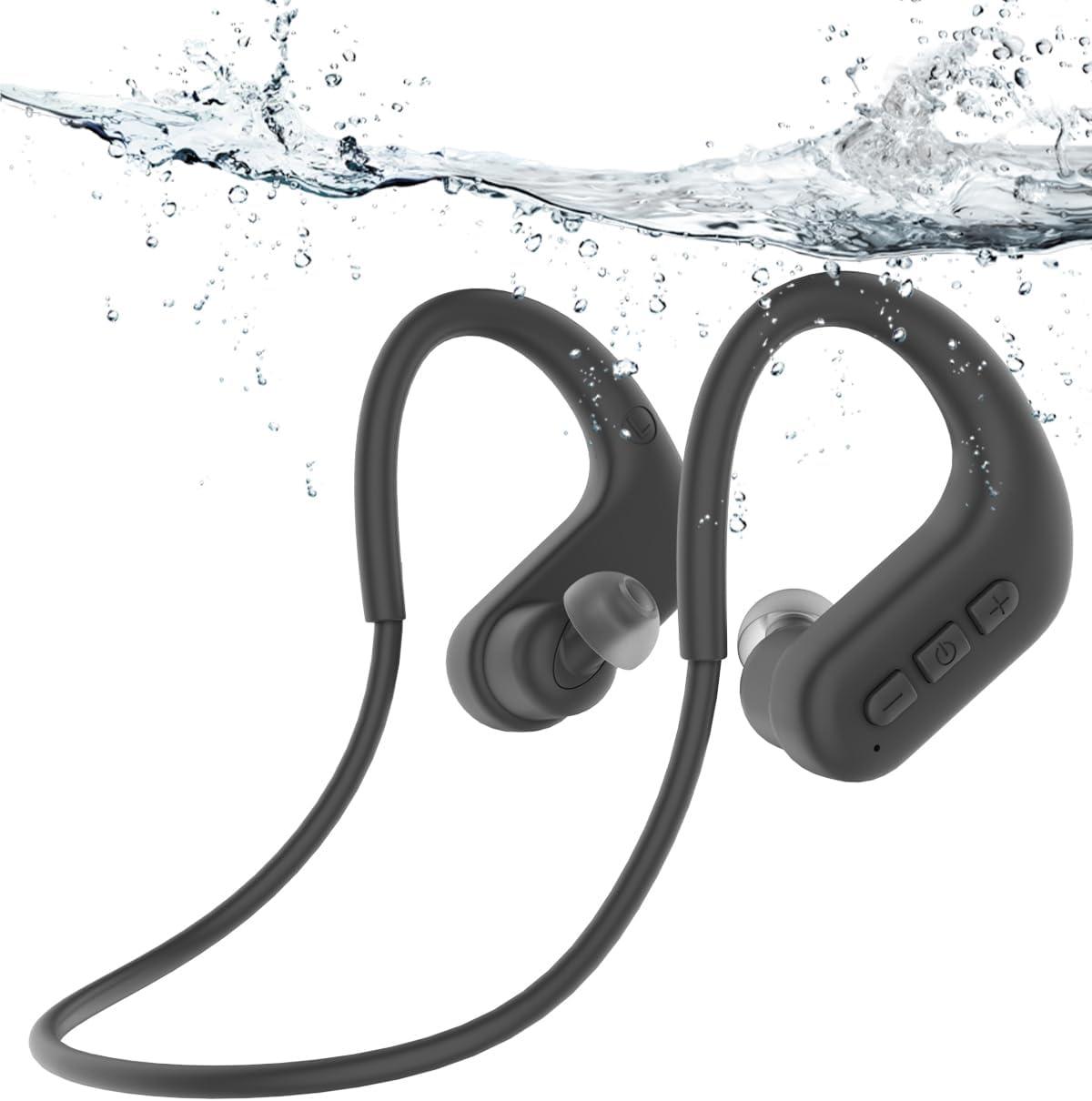
SANOTO Swimming Headphones Review
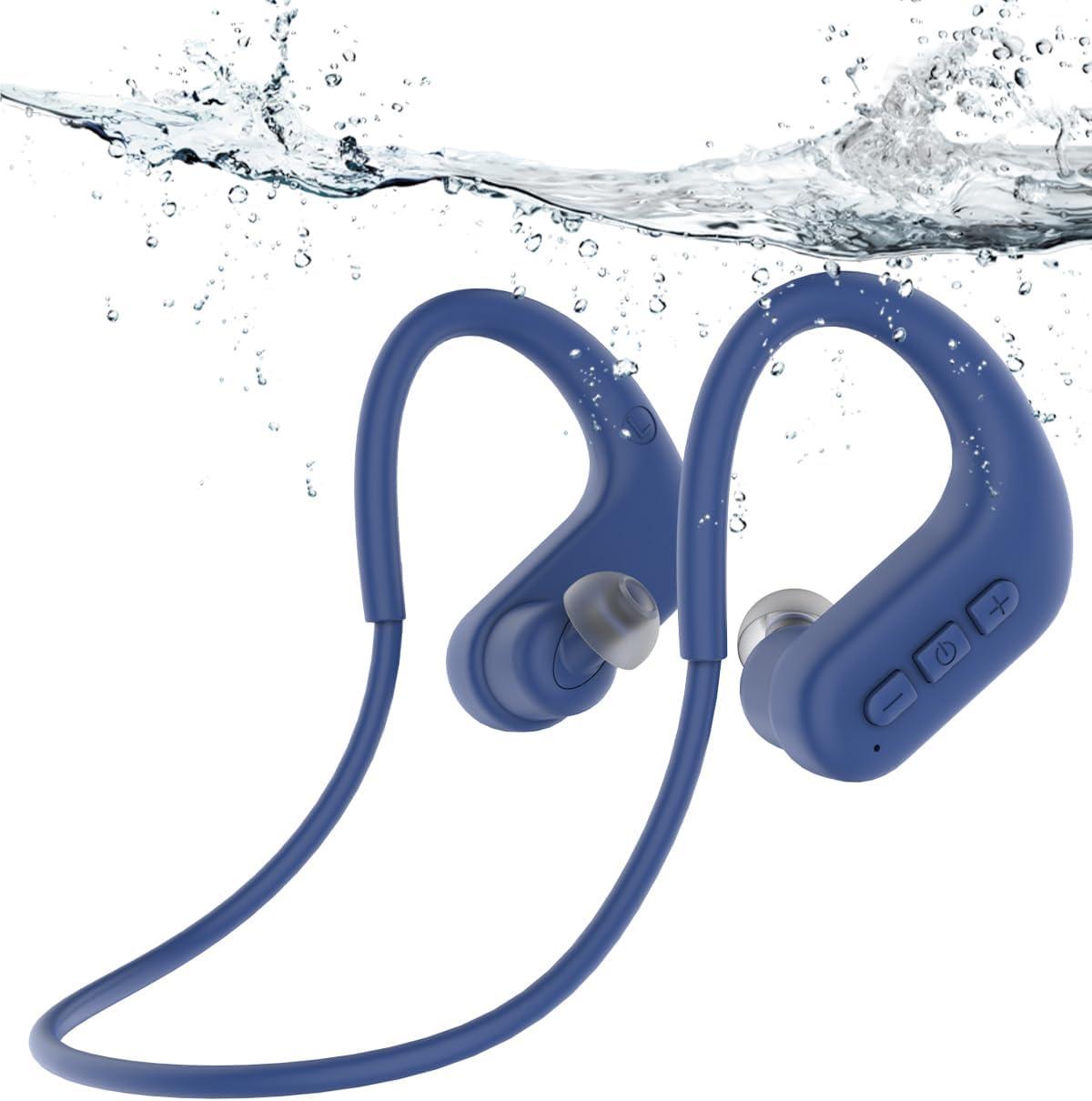
The SANOTO is a dual-mode waterproof earbud built for swimmers who want to leave the phone on the pool deck and still hear music, podcasts, or audiobooks underwater.
The Short Answer
The SANOTO swimming headphones are a practical IPX8-rated option for pool swimmers and water-exercise users who need reliable submersion without a separate phone case. The 8GB built-in MP3 player removes the dependency on a phone, and the 12-hour battery in MP3 mode covers weeks of training between charges. The tradeoffs are fit security during aggressive push-offs and a bass-limited sound profile that sits below what dedicated audio brands deliver. For structured pool laps with a swim cap in place, this set handles the job; for open-water surfing or hard flip turns without a cap, the retention will frustrate you.
Pros and Cons
Pros:
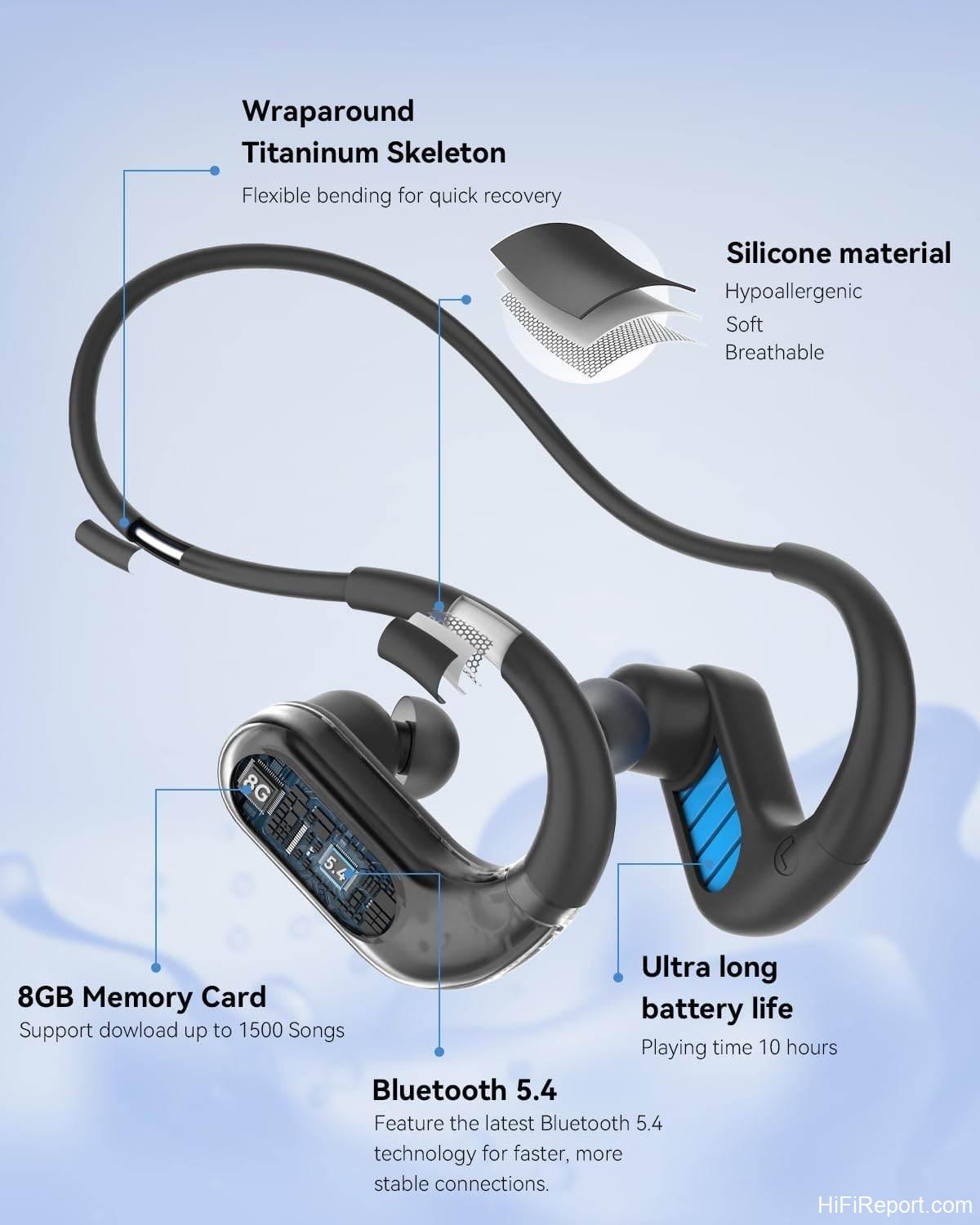
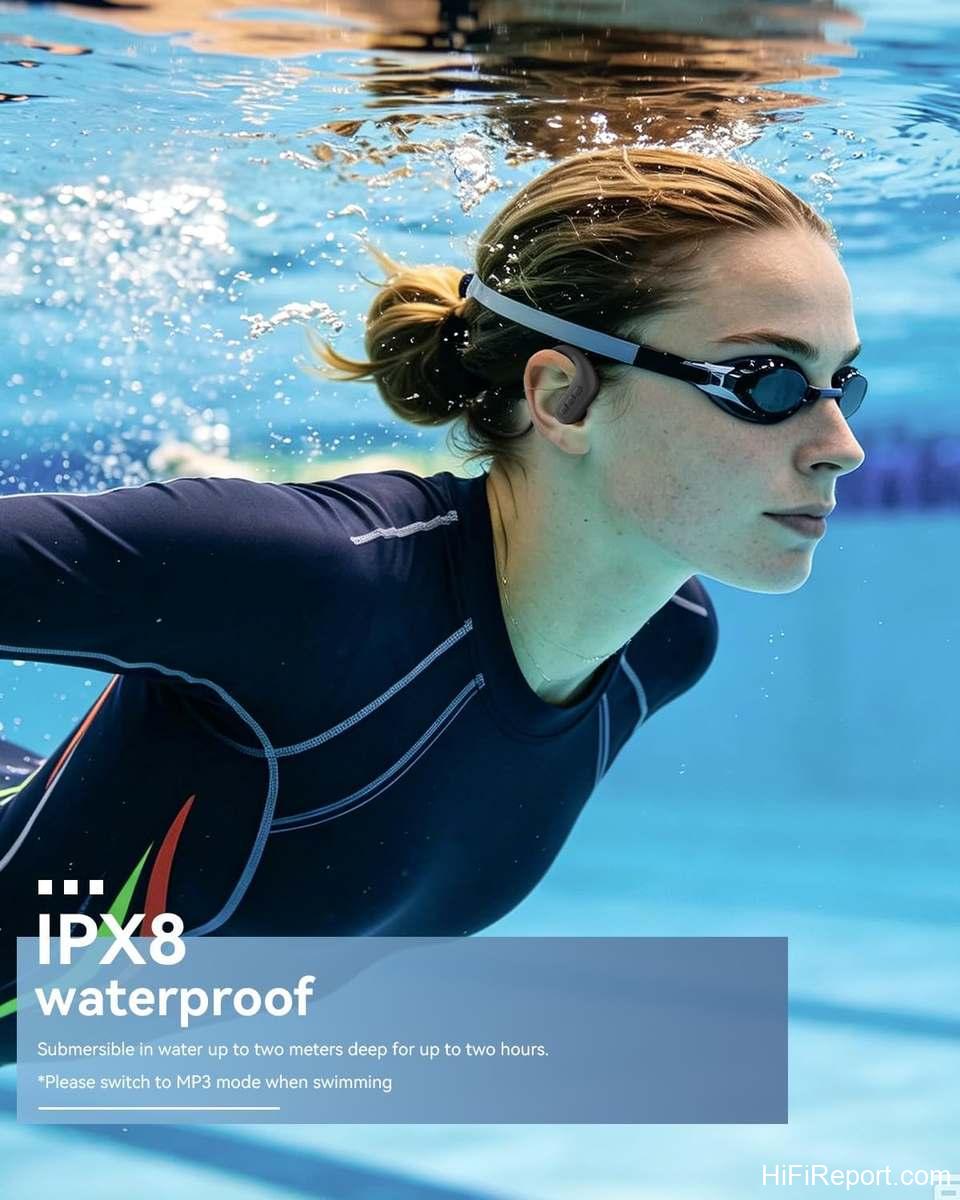
- IPX8 rated for submersion up to 10 meters for more than 2 hours
- 8GB built-in MP3 player supports FLAC, WAV, APE, MP3, and WMA without a phone
- Up to 12 hours of playback in MP3 mode; 8 hours in Bluetooth mode
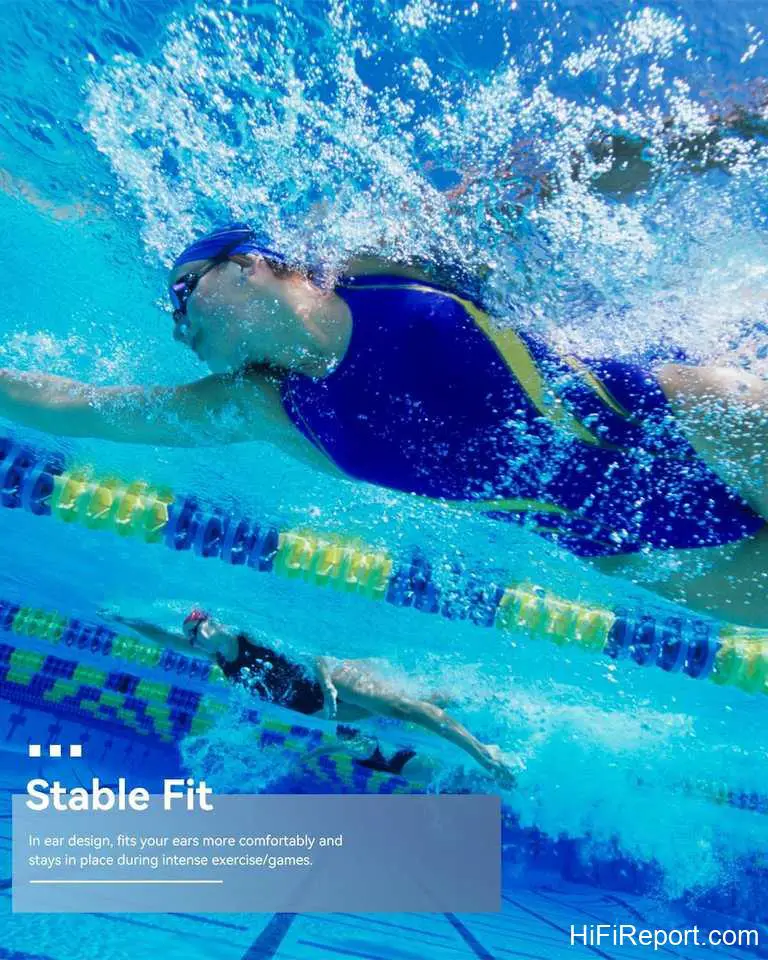
- Silicone ear hooks and in-ear design stay secure with a swim cap
- Drag-and-drop file transfer from a PC; no companion app required
Cons:
Published originally on hifireport.com, all rights reserved, no unauthorized reuse.
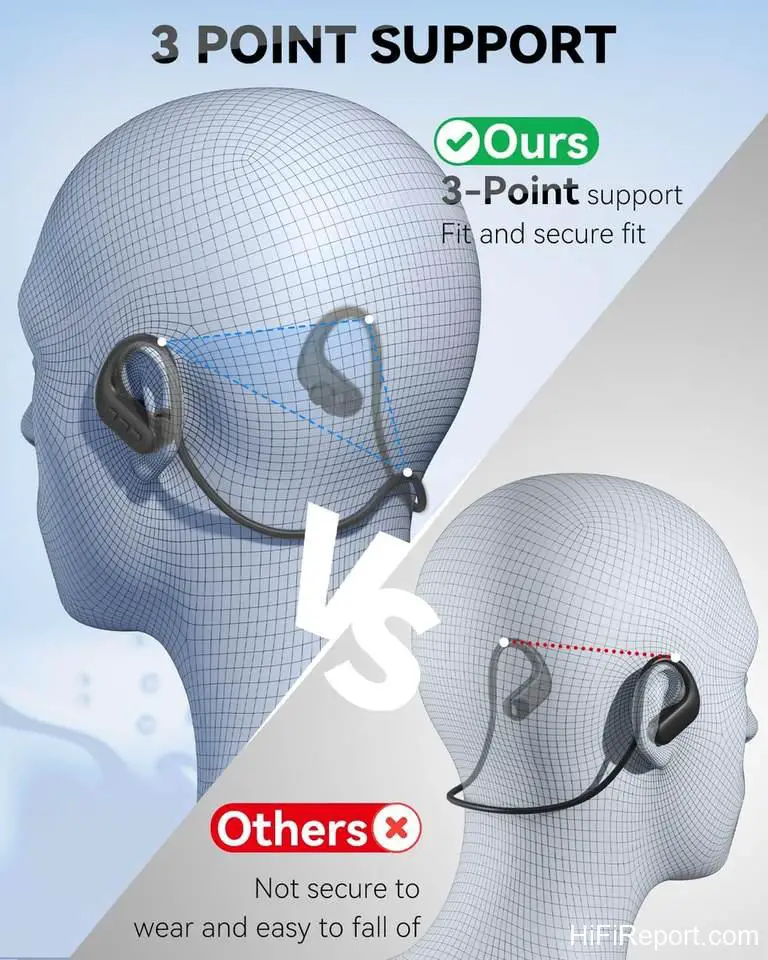
- Buds shift or pop out during forceful wall push-offs without a cap or goggle-strap aid
- No on-device battery percentage display; only a low-battery warning at roughly 10 minutes remaining
- Bass response and peak volume fall below dedicated audio-brand benchmarks
- Device boots to Bluetooth mode at each startup, requiring a double-press to reach MP3 mode
- At least one owner reported total battery failure after a month of regular use
Who Is It For
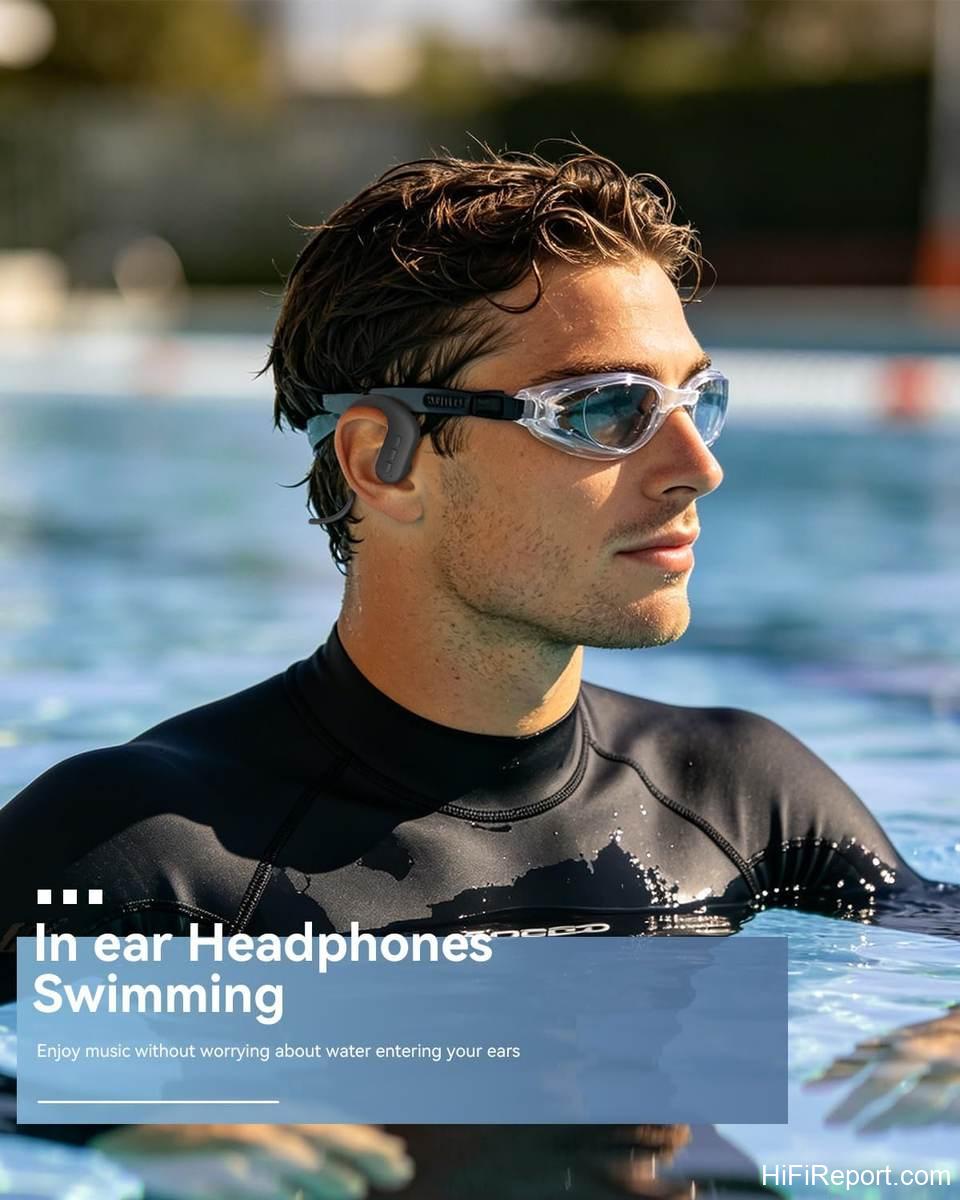
Lap swimmers who train in a pool several times a week form the core audience. These users benefit from the built-in storage that removes the need for a waterproof phone case, the 12-hour MP3 battery that outlasts a full training block, and the secure fit when a swim cap is in place. The drag-and-drop file loading also suits swimmers who want a zero-friction setup: connect a USB, copy your tracks, and clip on the cap. No app, no pairing ritual before a morning set.
Runners, cyclists, and gym-goers who want a single set of earbuds that handles both land and water form a second fit. The Bluetooth 5.4 mode streams from a phone during a run or ride, while the MP3 mode covers pool days. The silicone hooks and in-ear tips transition between both contexts without swapping gear, and the 8-hour Bluetooth battery covers most single-activity sessions.
The anti-profile: open-water surfers, scuba divers, and anyone who does forceful, repetitive wall push-offs without a cap should look at alternatives. Owners report the buds shifting or losing volume during aggressive turns, and the IPX8 rating, while deep at 10 meters, is designed for swimming rather than extended submersion under heavy pressure. If your primary use is surfing or freediving, the retention and pressure tolerance of a purpose-built open-water set will serve you better.
Design, Fit and Feel
The SANOTO uses a combined ear-hook and in-ear construction. The hooks are molded from flexible silicone that the product listing describes as skin-friendly, and they wrap behind the ear to anchor the bud. The in-ear tip sits in the canal, and a German reviewer noted that the silicone tips reduce ambient noise passively while helping keep water out of the ear. An included elastic adjustment band provides a second retention point, and one US reviewer credited that band with keeping the buds seated during hard turns. Without the cap or the elastic band, the fit is less secure, and two separate owners described the buds shifting or popping out during a forceful push-off.
Handling is straightforward: a single function key manages playback, mode switching, and file navigation. A double-press on that key flips between Bluetooth and MP3 modes, and the device boots to Bluetooth at each startup, so pool users must switch before their first lap. File transfer is a plain drag-and-drop from a computer, and one reviewer confirmed that no third-party software or companion app is required. The overall feel is light and unobtrusive, and the silicone hooks do not dig into the ear during extended wear. For a user who will not cap, the retention is the main design compromise; for a capper, the fit holds solid across 30-to-60-minute sessions.
Published originally on hifireport.com, all rights reserved, no unauthorized reuse.
Sound: What to Expect
Clarity and Volume in Water
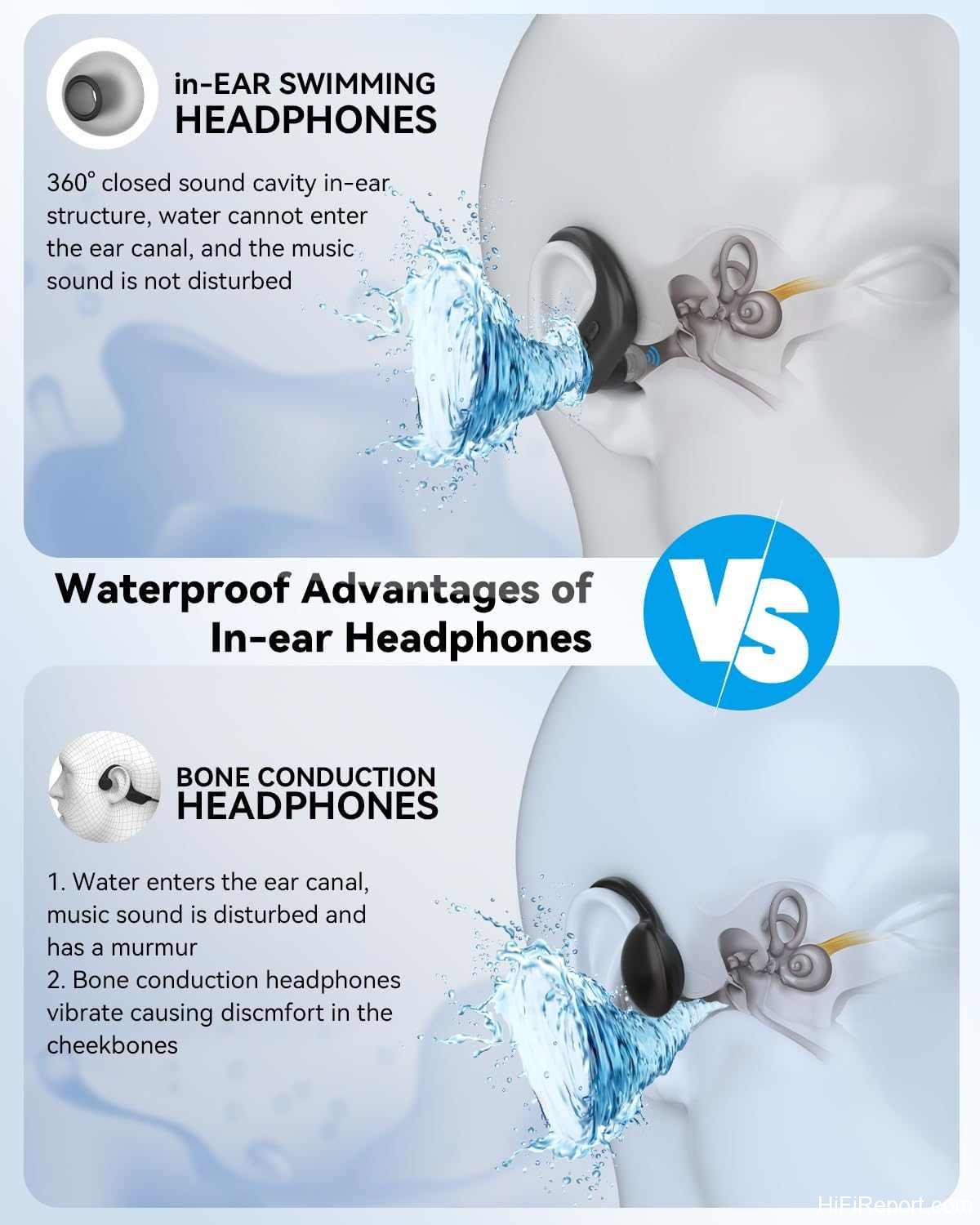
The SANOTO produces clear, adequately loud audio for pool swimming, though the signature will not match a dedicated audiophile set. The 360-degree closed sound cavity and anti-leak acoustics described in the product listing focus the vibration-driven transducer output toward the listener, and multiple reviewers confirm that voices and music remain intelligible during active laps. One US reviewer called the volume “surprisingly strong” even while actively swimming, and another noted that the audio tracks clearly through 30-to-60-minute sessions without dropping.
Bass, Balance and Voices
Bass is the weakest dimension, which is typical of small vibration-driven transducers where directional clarity takes priority over frequency extension. A three-star US reviewer noted that the highest volume setting is not very loud and that bass levels run low. In dry conditions, a Dutch reviewer described the sound as not fantastic, adding that it improves when the buds are wet, which makes sense given the cavity is tuned for water-filled ears. For voice and audiobook work, the midrange holds up well: a German reviewer called voice reproduction clear and easy to follow, and the US five-star reviewer agreed that narrated content tracks cleanly without the muddiness some small earbuds introduce.
Silence on Demand
The SANOTO has no active noise cancellation; its quieting comes entirely from passive isolation. The silicone in-ear tips seal the canal, and the closed sound cavity blocks most ambient pool noise from reaching the driver. A German reviewer confirmed the passive damping cuts down splashing and echo effectively, and noted that adding active cancellation would further improve the experience in a noisy gym. For a pool setting, that passive seal is the primary quieting mechanism, and it works well enough for most swimmers who do not need to block out a loud facility.
The bone-conduction vibration element has one specific implication worth noting: if you remove the bud from your ear, the audio is still transmitted through the jawbone. One US reviewer demonstrated this by holding the headset in their lap and hearing the music play through the conduction path. This means the earbuds do not offer true “off” silence when out of the ear, though in normal seated use the effect is minimal.

Battery and Charging
The SANOTO runs up to 12 hours in MP3 mode and 8 hours in Bluetooth mode on a single charge. A US reviewer reported getting 6 to 8 swims of 30 to 60 minutes each before the battery ran down, which lines up with the 12-hour figure when you factor in the gaps between sets and the manual mode switching. The device has no on-screen percentage display. It issues a low-battery warning when roughly 10 minutes of charge remain, which one owner described as the only heads-up the device provides.
Charging is via the included cable, and a reviewer emphasized using that specific cable rather than a generic USB replacement. At least one owner reported the battery failing completely after about a month of regular use, with the device no longer accepting files or holding a charge. For most users at a moderate pace, the battery life is comfortable, but long-term endurance under daily heavy use is not yet confirmed by the available review data.
What Owners Say
The aggregate rating sits at 3.9 out of 5 across 704 reviews, a number that places the SANOTO in the solidly positive range for a budget swim-earbud. The five-star voices praise the secure fit with a cap, the loud and clear underwater audio, the ease of drag-and-drop loading, and the freedom of leaving the phone at home. Several swimmers mentioned finding themselves going faster or swimming longer with music on, and one noted the included elastic adjustment band made a real difference in retention during turns. A German reviewer highlighted the flexibility of the dual Bluetooth-plus-MP3 design, specifically the ability to run without a phone and still access audiobooks and podcasts.
The negative reviews cluster around two issues. Fit failure during forceful push-offs is the most common complaint: buds shift, volume drops, or the Bluetooth connection loses signal mid-lap. The second cluster is durability. At least two owners reported the device stopping or the battery dying within the first month of use, and one Mexican reviewer mentioned that after formatting the device, local music would not play. A few reviewers also flagged the lack of a battery-level display and the Bluetooth default boot as minor annoyances that add up over weeks of training.
The three- and four-star middle of the distribution tends to come from users who got what they expected acoustically but wanted more bass or higher peak volume. None of the negative reviews mention water ingress or waterproofing failure, a quiet but important data point for a product whose entire reason for existing is surviving submersion.
So, Buy or Pass
The SANOTO swims in a specific lane: it is a competent, no-frills waterproof earbud for pool swimmers and water-exercise users who want to leave the phone on the deck. The 8GB internal storage, 12-hour MP3 battery, and IPX8 rating to 10 meters cover the core use case without needing a separate waterproof case or a phone that can survive a pool. The fit system works well with a swim cap, and the drag-and-drop loading removes any app setup. The Bluetooth 5.4 mode extends the earbuds to dry-land running and cycling, making them a genuine two-environment set. One additional point the review set supports: the customer service team responded to warranty and setup queries by email, and one owner received a replacement storage case in the process, which suggests hands-on support is the norm at this point.
The reasons to pass are equally concrete. If your training involves hard flip turns without a cap, the buds will shift. If you need a battery-level readout before each session, you will not get one. And if you expected studio-grade audio, the bass-limited, mid-forward signature of a small vibration transducer will disappoint. For structured pool laps, running, or cycling with the occasional water exposure, the value proposition holds.
Best for: pool swimmers who cap their ears, run and cycle on dry land, and want a single set of earbuds that handles both worlds without a phone case.
Specifications
- Bluetooth version: 5.4
- Waterproof rating: IPX8 (submersion up to 10 meters, more than 2 hours)
- Built-in storage: 8GB
- Supported audio formats: MP3, FLAC, WMA, WAV, APE
- Battery life, MP3 mode: up to 12 hours
- Battery life, Bluetooth mode: up to 8 hours
- Ear-hook material: Flexible silicone
- Sound cavity: 360-degree closed cavity with anti-leak acoustics
- Charging: Included cable
- Mode switching: Double-press function key
Quick Questions
Do I need to carry my phone while swimming with these?
No. The 8GB built-in MP3 player holds your music, podcasts, or audiobooks, and you load files by dragging them from a computer. A US reviewer confirmed that no third-party software is needed, just a simple file transfer. Leave the phone on the deck and switch to MP3 mode with a double-press of the function key before you enter the water.
Will the buds stay in during aggressive swim turns?
They can shift during a forceful push-off, especially without a swim cap. Two US reviewers independently reported the buds popping or moving when they launched off the wall. Wearing a cap over the hooks or routing a goggle strap through the ear-hook loop fixes the issue for most users. If your stroke is heavy on flip turns and you will not cap, expect some fumbling mid-lap.
How do I check the battery level?
You cannot. There is no on-device percentage display. The SANOTO issues a low-battery warning when roughly 10 minutes of charge remain, which one owner described as the only heads-up the device provides. Plan your sessions around that warning, and charge the unit with the included cable before a long training block.
Can I use these for running or cycling on land?
Yes. The Bluetooth 5.4 mode connects to a phone or tablet for streaming, and the silicone hooks keep the buds seated during dry-land movement. A German reviewer specifically noted the set works well for running and jumping without the speakers falling out. The 8-hour Bluetooth battery covers most single runs, and the 12-hour MP3 mode extends that if you prefer offline playback.
No products found.