
Signature Series Flagship Review
Due to overwhelming market demand, Sony has doubled down on its product development direction, launching the IER-Z1R in-ear headphones—the first in-ear model in their Signature Series—and the DMP-Z1, a digital music player positioned even higher in terms of pedigree and componentry. The sheer build quality and bold design choices evident in these two products surpass their predecessors, once again showcasing Sony’s ambitious commitment to the headphone market.
IER-Z1R Deep Dive
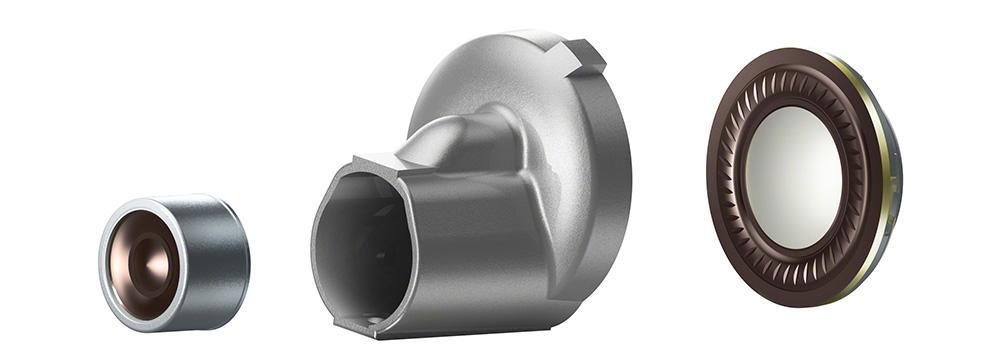
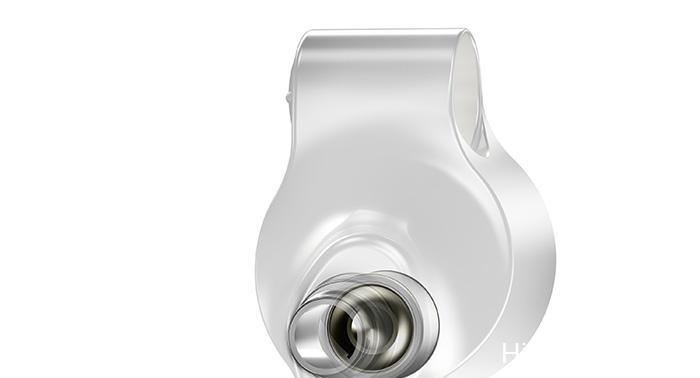
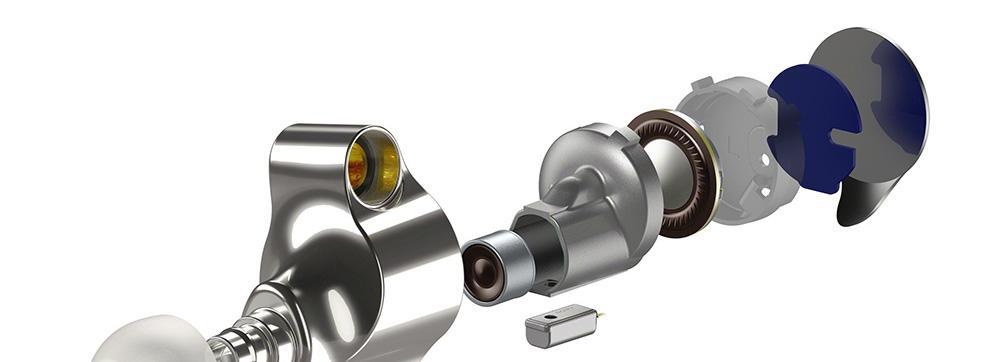
Let’s begin with the flagship IER-Z1R in-ear monitors. To achieve ultimate performance, they employ a rather unique acoustic design, featuring a configuration of two dynamic drivers plus one balanced armature driver, with a special frequency division scheme. The largest driver is a 12mm dynamic unit, acting as a near full-range driver covering the widest frequency response range.
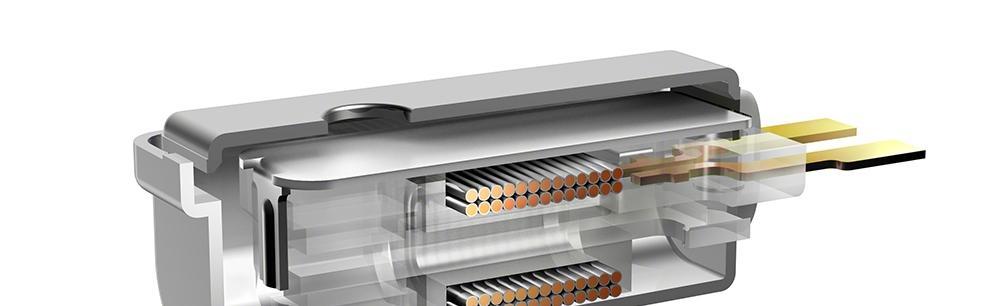
The diaphragm of this dynamic driver is meticulously engineered, with a magnesium dome at the center and a Liquid Crystal Polymer (LCP) film surrounding it, further coated with aluminum – a highly complex structure.
For the high frequencies, a balanced armature driver is utilized. This unit is a brand-new design from Sony, featuring a magnesium alloy diaphragm, a silver-coated copper voice coil, and gold-plated terminals – every component is specified to the highest standard. For the “ultra-high frequencies,” a small 5mm dynamic driver takes over. This small unit uses an aluminum-coated LCP diaphragm, allowing the IER-Z1R to achieve an astonishing high-frequency response of up to 100kHz.
Sony proudly touts it as the world’s first in-ear headphone capable of extending its high-frequency response to 100kHz.
To ensure exceptional ultra-high frequency performance, the small 5mm dynamic driver and its sound tube are arranged coaxially, aligning the driver directly towards the ear canal and placing it as close as possible to preserve maximum information. The 12mm dynamic driver is positioned at the rear of the chamber, while the balanced armature driver is located at the bottom. This arrangement allows the sound from the three drivers to blend naturally without interfering with each other.

Furthermore, the IER-Z1R incorporates Sony’s “airflow control technology,” connecting a sound tube to the chamber behind the diaphragm. This allows the backwave energy generated by the large 12mm dynamic driver’s movement to dissipate through the tube, preventing it from reflecting back and affecting diaphragm performance. This enhances control and results in more precise sound.
Such a configuration grants the IER-Z1R comprehensive performance, with extensive low-frequency extension and high-frequency response, providing ample headroom for musical expression.
IER-Z1R Construction and Features
The main body of the IER-Z1R earphones is primarily constructed from magnesium alloy, offering high rigidity to suppress unwanted vibrations. Notably, to emphasize their flagship status and premium texture, the outer shell is made from the rare material “zirconium alloy,” which is resistant to wear and scratches. It is further adorned with the exquisite “Perlage pattern” typically found on high-end watches, making the earphones look like fine jewelry.
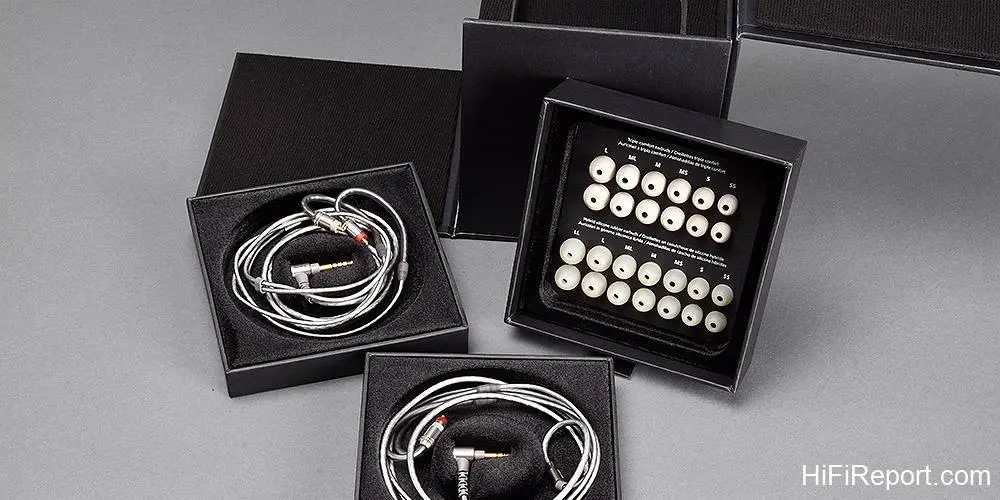
The headphone cable uses silver-coated oxygen-free copper and supports the 4.4mm balanced connection. For ear tips, an extensive selection of 13 pairs in different materials is provided, ensuring top-tier materials and design from the inside out.
IER-Z1R Sound Impressions
Our listening test paired the IER-Z1R with the same-series DMP-Z1 digital music player, using the 4.4mm balanced connection. The driver design of the IER-Z1R hints at a dynamic-driver-first sound signature, and indeed, the bass foundation is solid and exceptionally elastic. It feels neither weak nor dry, yet is completely free from bloat or sluggishness, presenting a textured sound with substantial weight.
The mid-range, particularly vocals, exhibits excellent expressiveness. Every nuance, from diaphragm control to subtle breath sounds, is rendered with remarkable clarity and naturalness, brimming with emotion. Interestingly, the more accomplished the singer, the more this earphone reveals their skill, widening the gap between them and ordinary vocalists.

The IER-Z1R’s high frequencies present incredibly refined details and a beautifully delicate timbre. While the sound is indeed delicate, it is far from sluggish. When speed is required, it delivers excellent transient response. The IER-Z1R also creates a spacious soundstage with good spatial cues. Even in a small jazz ensemble recording, the sound doesn’t feel confined but possesses ample roominess, contributing to a relaxed listening experience.
I recall playing Igor Levit’s performance of Bach’s piano suites. Many tracks feature only solo piano, yet the IER-Z1R captivated my full attention. The sound was clear, sweet, and delicate, with subtle decay that beautifully conveyed the sense of space. Even though the low notes weren’t struck forcefully, their weight was palpable. It was utterly comfortable – a rare treat to hear such a comfortable, relaxed, sweet, and high-end piano performance from in-ear monitors.
Next, I played “Paddy Fahey’s” from Adam Agee and Jon Sousa’s album *Suantraí* (a 2.8MHz DSD file). Wow, that was another level entirely! This piece features violin and guitar in unison. Through the IER-Z1R, the guitar sounded fresh, crystalline, and full of vitality and elasticity, while the violin was nuanced and smooth. I compared it with other earphones during the session, and those with lesser capability tended to make the violin sound flat.

The IER-Z1R, however, kept the violin full of detail, lively, and dynamic – a performance capability simply beyond ordinary earphones.
After an extended listening session, despite the IER-Z1R’s dynamic-driver-first design approach, its performance feels entirely distinct from typical dynamic driver earphones. The IER-Z1R exhibits superb delicacy and expressiveness, particularly in rendering the beauty of instruments. Whether it’s violin, guitar, piano, or even orchestral music, it showcases a delicate and refined side, perfectly matching its exquisite external craftsmanship. It is an outstanding earphone for classical music.
Yet, the IER-Z1R’s sound is not clinically neutral like monitor earphones; it carries a slight richness and elasticity that injects warmth and emotion into the music. In terms of achieving the design goal of simply sounding “good,” the IER-Z1R is profoundly successful.
DMP-Z1 Ultra-Premium Player
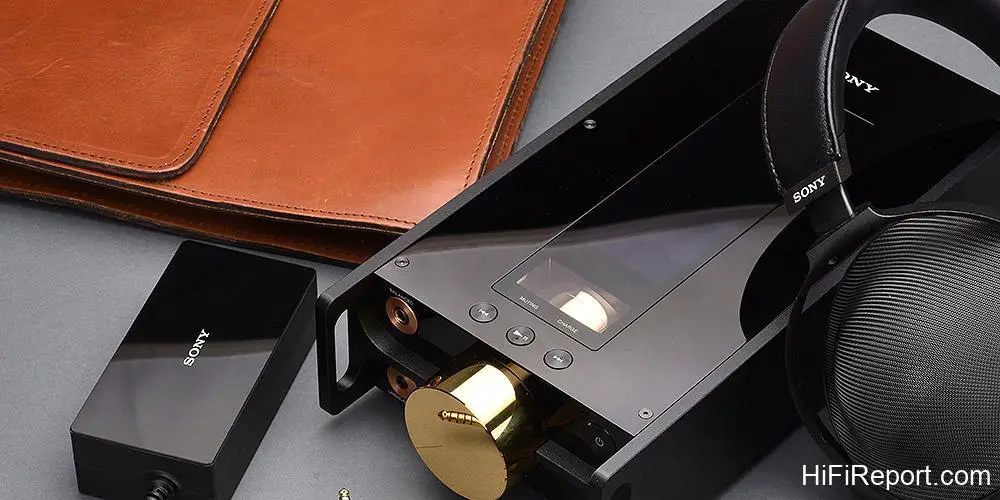
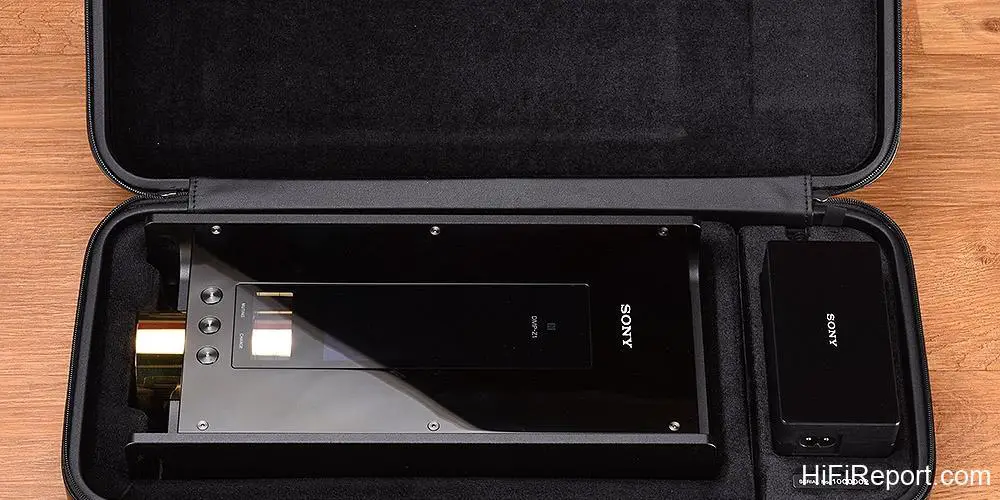
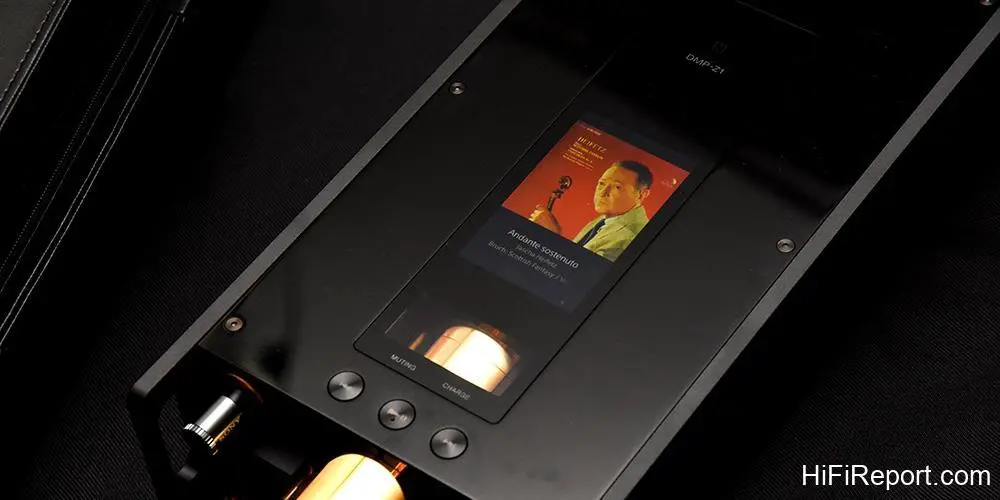
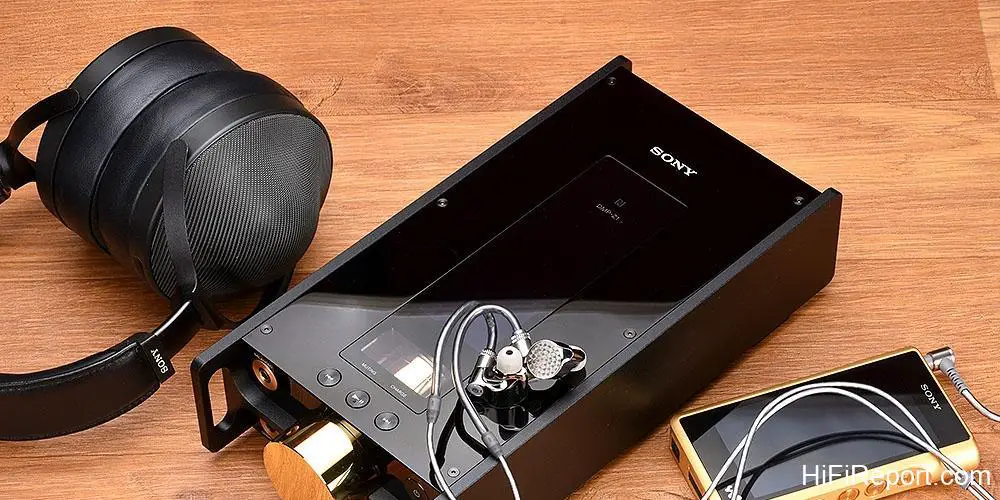
Next, let’s look at the ultra-premium DMP-Z1 player. Its design is truly astonishing; Sony’s engineers have gone to extraordinary lengths in pursuit of superior sound quality. The DMP-Z1 is a player you can “take with you,” so calling it a portable player isn’t incorrect, yet its size is roughly that of a small lunchbox – unprecedented in the world of personal audio products. Why such a design?
Because Sony aimed for the DMP-Z1 to possess “the high sound quality and driving power of home audio systems” while simultaneously offering “the mobility and convenience of a portable player,” making zero compromises on either front.
This concept birthed the DMP-Z1, which integrates various high-end components, offering a multifaceted feature set including a music player, headphone amplifier, independent battery system, and USB DAC. The DMP-Z1 boasts high-fidelity characteristics, capable of driving high-impedance headphones, and remains portable, allowing you to enjoy top-tier sound quality anywhere.
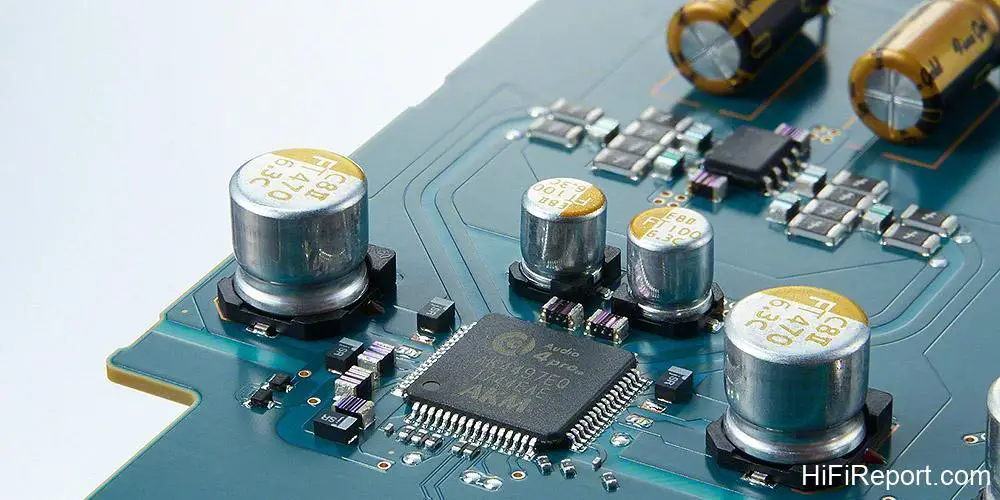
As a digital music player, the DAC chip responsible for digital-to-analog conversion is crucial. For this, Sony selected the finest performer on the market: the AK4497 from Asahi Kasei Microdevices (AKM) in Japan. This is AKM’s current top-tier 32-bit DAC chip; high-end digital streamers like the Linn Klimax DSM, costing over $31,000 USD, use this very chip. What’s remarkable is that the DMP-Z1 uses *two* of them, one for each left and right channel, creating a fully balanced system.
This successfully reduces crosstalk and achieves a better signal-to-noise ratio.
To create Hi-End level equipment, the “power supply” is naturally paramount. Typically, equipment of the DMP-Z1’s size and componentry (dual DACs, dual amplifier circuits, balanced architecture) would rely on AC mains power. However, mains power is susceptible to various factors that can degrade sound quality, such as unstable voltage or electrical noise. To counteract this, Sony employed a highly unusual method: equipping the DMP-Z1 with an “independent battery system.”
This completely bypasses the issues associated with mains power, providing a nearly perfect, clean, and stable power source.
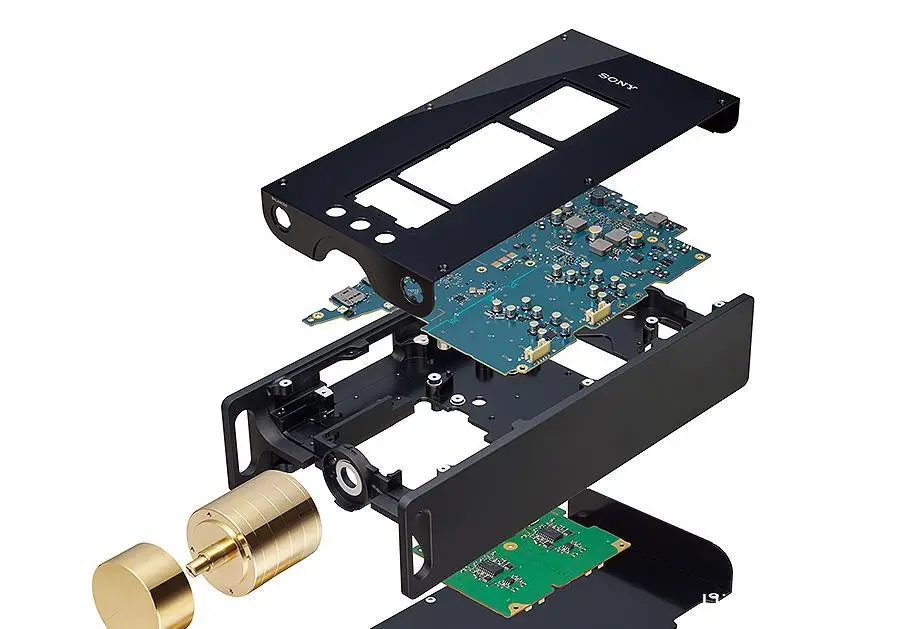
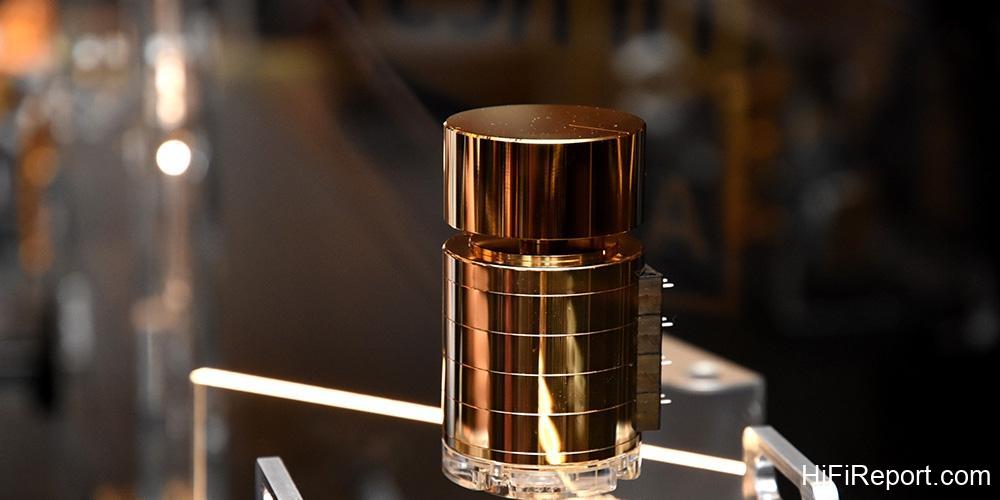
The battery system design itself is also meticulously crafted. Digital and analog circuits have their own independent battery power systems to prevent noise interference between circuits. Furthermore, to maintain stable operation and ample driving power for all components, a total of five batteries are utilized: one for the digital circuit and four for the analog amplifier circuits.
With this setup, the DMP-Z1 possesses the signal processing capabilities of a home audio system and the driving power of a home headphone rig, all while being supplied by the purest power source, resulting in more transparent, cleaner, and higher-information sound.
DMP-Z1 Chassis and Components
The DMP-Z1’s chassis design also features clever engineering. Its core is an H-shaped aluminum frame, machined from a single block of aluminum. The cross-section forms an ‘H’, making it significantly more rigid than common box-shaped chassis structures and reducing vibration, which is beneficial for sound quality. Sony’s designers also cleverly utilized the H-shaped structure: the upper section houses the digital circuitry, and the lower section houses the analog amplifier circuits.
This effectively separates the two layers of circuitry with a metal frame, reducing contamination of the amplifier circuits by digital noise and further enhancing sound purity.
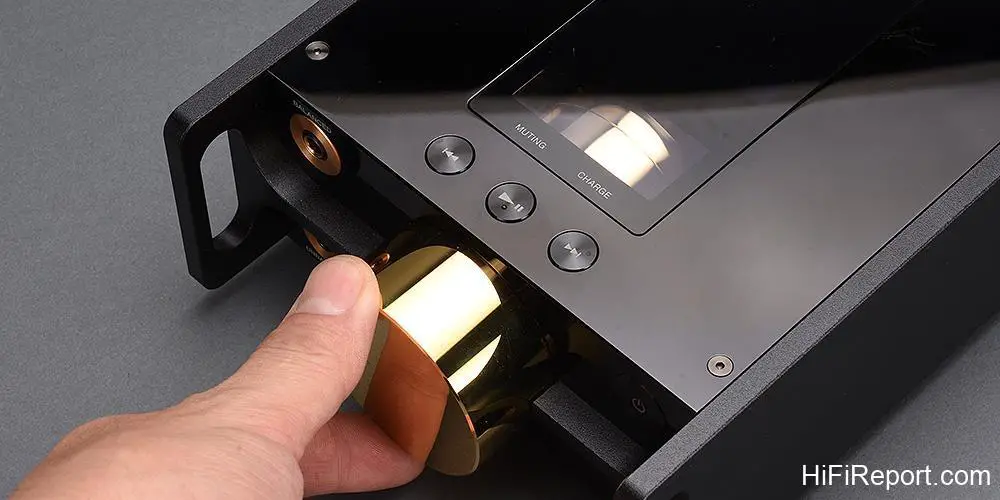
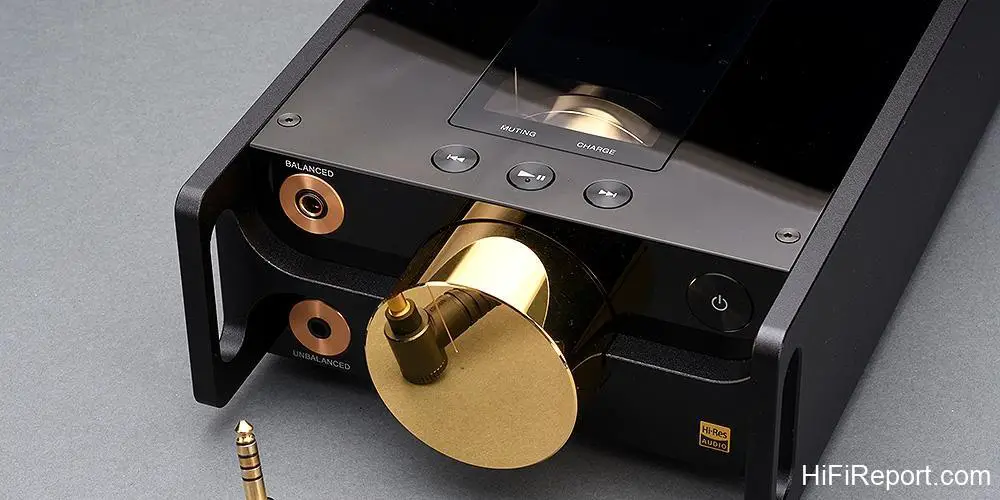
Another critical link in sound signal processing is the “volume control.” Since it sits directly in the music signal path, controlling volume can easily degrade sound quality. For example, common digital volume control chips can suffer from reduced resolution or dynamic compression. To avoid this, the DMP-Z1 uses an ALPS high-precision quadruple volume controller. This is an analog volume control, free from the resolution issues of digital controls.
Furthermore, this controller was custom-developed by ALPS specifically for Sony, featuring not only copper plating but also an additional layer of gold plating to optimize sound quality.
The DMP-Z1 includes 256GB of internal memory and can be expanded with two micro-SD memory cards. It supports PCM audio up to 384kHz/32bit and DSD up to 11.2MHz. Besides playing internal music files, the DMP-Z1 can also function as a USB DAC, playing high-resolution files from a computer. Additionally, the DMP-Z1 supports Bluetooth 4.2 and high-quality wireless transmission standards like aptX HD and LDAC, enabling high-resolution wireless listening.
In pursuit of sound quality, the DMP-Z1’s input/output terminals are kept exceptionally simple to avoid sound degradation from unnecessary circuitry or connectors. The front panel features only one 4.4mm balanced output and one 3.5mm single-ended output. According to official specifications, the DMP-Z1 can drive high-impedance headphones, boasting a powerful output of up to 1500mW (into 16 ohms).
The DMP-Z1’s design seems impeccable in every aspect; calling it the “most powerful portable player ever” is certainly not an exaggeration.
Beyond its hardware components, the DMP-Z1’s software design is also robust, offering a wide variety of listening experiences. Let’s now report on these features and their impact on the sound, tested with the flagship over-ear headphones MDR-Z1R and the IER-Z1R in-ears from the same series, both connected via 4.4mm balanced cables.
DMP-Z1 Sound Modes
As mentioned earlier, the DMP-Z1 can run on battery power, but it’s not limited to it. When the batteries are not fully charged, you can still connect to AC power to listen to music without issue. The DMP-Z1 offers two internal settings: “AC Mode” and “Battery Mode.” In AC Mode, the driving power is solid and robust, delivering excellent impact and scale, performing admirably even with large over-ear headphones.
Switching to Battery Mode further enhances the overall sound refinement; the “quality” of the sound is notably elevated.
Initially listening in AC Mode already delivered a high-end listening experience. The music background felt very “black” (low noise floor), dynamics were vast, the sound was highly elastic, details were refined, and the sense of space presented was impressive. This performance was already sufficient to handle challenging orchestral music.
For instance, playing Jochum conducting the Berlin Philharmonic in Beethoven’s Violin Concerto showcased both the texture of the solo instrument and the harmony and grandeur of the orchestral tutti.
Testing the Battery Mode revealed that the background quietness could be further enhanced, and the difference in detail rendering was significant – surprisingly so. For example, simple actions like striking a piano key or bowing a string felt much clearer in Battery Mode. The subtle vibrations of strings or drumheads became more apparent, increasing the amount of information in the sound. Musical details gained dimensionality, and everything became more lively, natural, and textured.
The second significant functional setting is “DSD Remastering.” This is a key feature of the DMP-Z1 and the first time Sony has included it in a portable player. When enabled, it resamples all PCM music signals to 5.6 MHz DSD audio, resulting in a more linear, faithful sound signal (closer to analog audio).
Enabling this feature undeniably elevated the sound quality another notch. The entire musical presentation felt more resolved. The decay of instrument strings became longer and clearer, allowing the “air” of the recording venue to be distinctly felt, presented naturally and harmoniously. Instruments gained more shimmer, details were more exquisite, decay was longer, and the music became more opulent, captivating, and expressive. Piano and violin, especially, sounded more refined.
The third important feature is Sony’s newly developed “Vinyl Processor.” When activated, it digitally processes the music signal to give digital audio files a sound quality approaching that of playing a vinyl record. It can even reproduce effects familiar to vinyl enthusiasts, such as tonearm resonance and subtle surface noise, adding “analog flavor” to high-resolution digital files. Enabling it indeed brought a significant change in texture. The music sounded smoother, richer, and warmer.
Vocals, in particular, exhibited more moisture, making the performance feel more intimate and heartfelt.
When listening to captivating vocals, I found myself really enjoying the combination of “Battery Mode” with the “Vinyl Processor.” For example, playing “Bakerstreet” from “Kiss by a Song,” a demo disc produced by speaker manufacturer Dynaudio, the vocals were full-bodied, slightly magnetic, and very sweet. A judicious amount of reverberation created a sense of spaciousness. The accompanying piano was incredibly melodic, with a weighty foundation.
The mid-bass region had a wonderful richness that made me want to replay and savor the track repeatedly.
The DMP-Z1 is a top-tier player crafted by Sony leveraging their full design prowess. Its excellent performance was expected, but its unconventional, special design and its wide, flexible sound characteristics still exceeded our expectations. With the diverse settings available, it is hard to imagine anyone not finding a sound signature they love. The DMP-Z1 should satisfy even the most discerning ears.