
Sonus Faber Lumina Serie Review
Just two months ago, I had the pleasure of reviewing Sonus Faber’s mid-to-high-end Olympica Nova speaker series. Their exquisite sound quality and boutique-level craftsmanship are still fresh in my memory. My only regret? My pockets aren’t deep enough. I could only seize the opportunity during the review period for a brief encounter, a fleeting moment of indulgence.
This is why Sonus Faber speakers, while always my dream pursuit, had a slight imperfection in my eyes: models like the Olympica Nova series are often financially out of reach for entry-level enthusiasts, leaving them as distant objects of admiration rather than attainable possessions. I believe many audiophiles share this feeling.
Introducing the Accessible Lumina Series
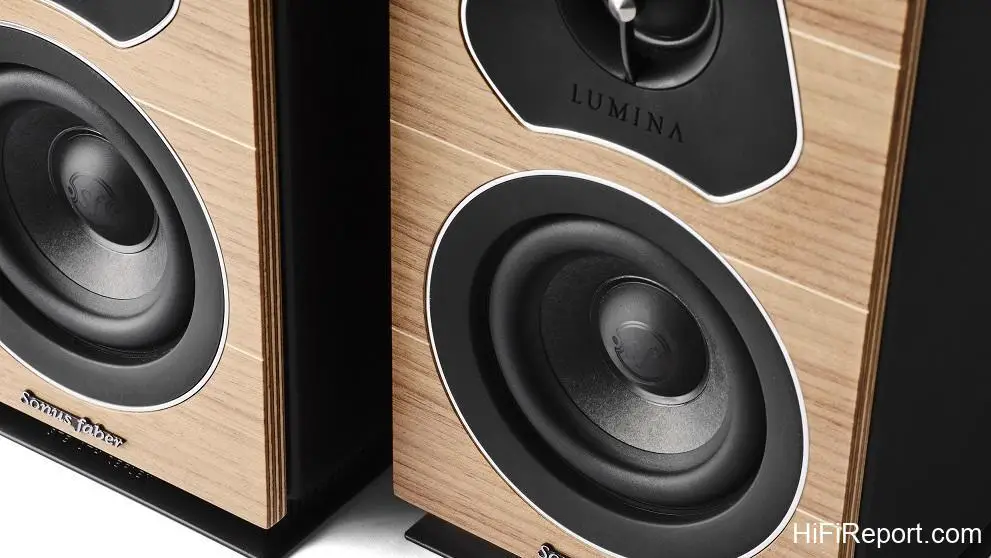
Recently, Sonus Faber seems to have heard the voices of consumers, introducing the accessible Lumina series. While the design departs from the flowing cabinet shapes of the higher-end lines, adopting a more traditional speaker form, Sonus Faber’s signature elements like leather and natural wood are certainly not missing. Under a simplified design, the external texture remains remarkably refined.
Crucially, these speakers are not only still made in Italy but also inherit technology from their higher-end siblings, yet come at a very approachable price point. This offers audiophiles with limited budgets the chance to own Sonus Faber’s beautiful sound.
Why the name “Lumina”? It’s not without meaning. Reportedly, breaking down the letters reveals the intent: “LU” for luxury, “MI” for minimalist design, and “NA” for natural sound. This hints at a work that is both understated and luxurious. The Lumina family is quite straightforward, consisting of three models: the Lumina III floorstander, the Lumina I bookshelf speaker, and the Lumina CI center channel speaker.
The distributor generously sent all three models to our office, allowing us to assemble a complete 5.1 channel home theater system with the addition of a subwoofer.
Design and Craftsmanship
Starting with the aesthetics, let’s look at the Lumina III floorstanding speaker. While its cabinet doesn’t feature the flowing, teardrop shape or raked baffle of higher-end Sonus Faber models, opting for a traditional rectangular structure, this choice lends the speaker a touch of classical elegance. Upon closer inspection, you’ll notice that despite the understated shape, every detail is meticulously crafted.
The front baffle is made from multiple layers of glued MDF, offering both beauty and excellent rigidity, providing a stable foundation for the drivers. The surface is covered with beautiful veneer, available in Piano Black, Walnut, and Wenge finishes. Decorative lines between the wooden panels further enhance the sense of high-end quality. The rest of the cabinet is wrapped in leatherette.
The speakers feel wonderful to the touch and are visually appealing, perfectly embodying Sonus Faber’s aesthetic craftsmanship. Even as an entry-level model, they feel significantly more refined than speakers from many other brands!
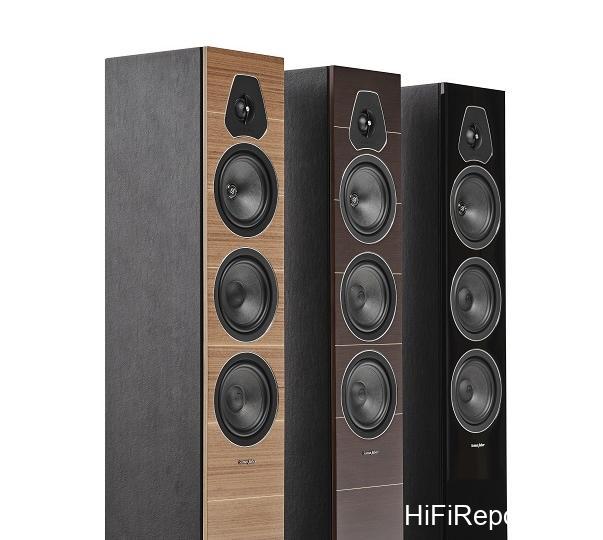
Looking at the base of the speaker, you’ll find a large, downward-firing bass reflex port. This design not only preserves the speaker’s aesthetic and enhances the low-frequency performance but also increases placement flexibility, making it easier to position the speakers closer to a wall. Due to this design, the speakers must be fitted with spikes or outriggers to provide space for the port output, and the manufacturer naturally includes metal discs to protect your floor.
Advanced Driver Technology
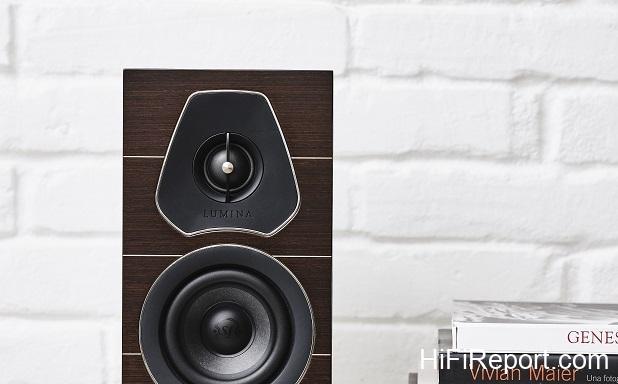
Turning our attention to the drivers, the entire Lumina series inherits Sonus Faber’s DAD (Damped Apex Dome) 29mm large soft-dome tweeter. This driver was developed in collaboration with Kurtmueller. It’s not just larger than typical tweeters; it also features a special coating to enhance the driver’s damping characteristics. Furthermore, the driver is surrounded by a unique chromed metal frame.
Upon closer inspection, you’ll notice the frame incorporates a damping ball at its apex and an absorbent structure at the tip, lightly touching the center of the dome. The purpose is to reduce non-uniform vibration in the soft dome tweeter, resulting in a more natural and smooth response. This tweeter extends the high-frequency response up to 24kHz.
The shallow metal waveguide surrounding the tweeter also improves the driver’s dispersion, making the listening position more flexible, so you get good sound wherever you are in the room.
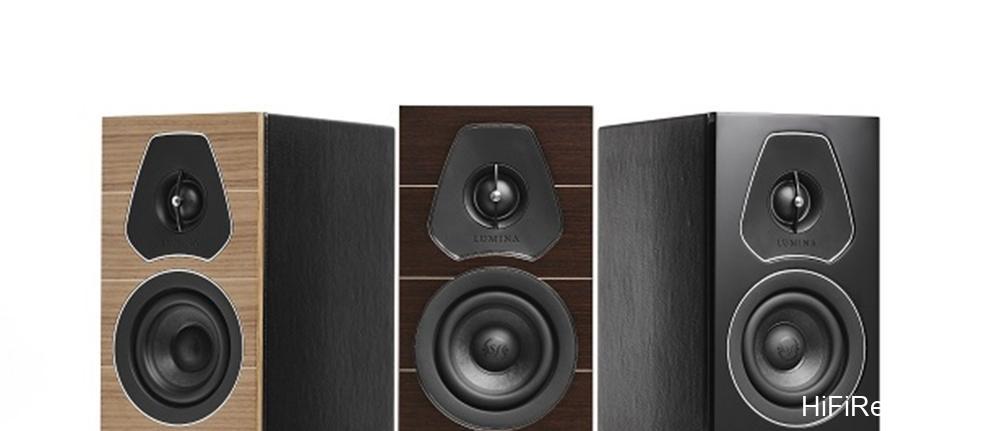
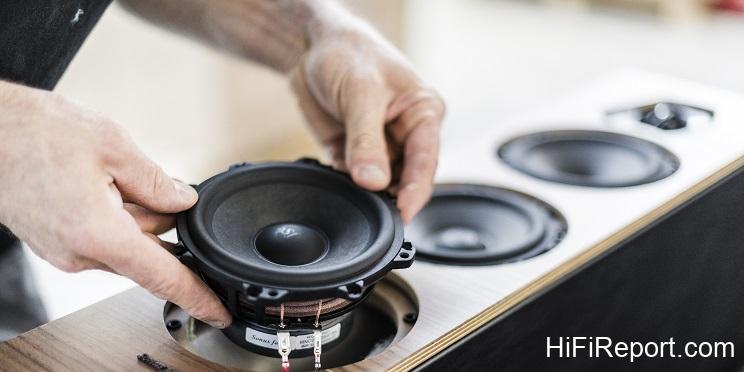
The mid-range is handled by a 5-inch driver, which shares the same design as those in the mid-range Sonetto series. The center of the driver features a metal dust cap bearing the “sf” logo. The cone itself is made from a blend of pulp, cotton, and kapok fibers, naturally air-dried. What are the benefits of this? Firstly, pulp offers the highest malleability among cone materials, allowing for easy control of thickness and tighter tolerances, while possessing excellent rigidity.
Secondly, the addition of cotton and kapok fibers acts as damping material, optimizing the cone’s resonant characteristics, enabling the driver to deliver an open and natural mid-range performance.
Finally, the two 5-inch woofers in the Lumina III were specifically custom-designed for this series. Like the mid-range driver, the cone is made from a composite paper pulp, and features a longer excursion capability than the mid-range driver to produce deep, full low-frequency response. The matching driver sizes aim to improve the driver integration, resulting in a smooth frequency response transition.
This allows the Lumina III to extend down to 40Hz, which is quite remarkable for a floorstanding speaker of this relatively compact size.
The Lumina I and CI
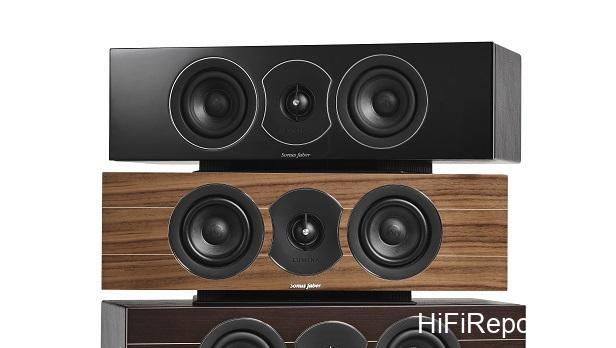
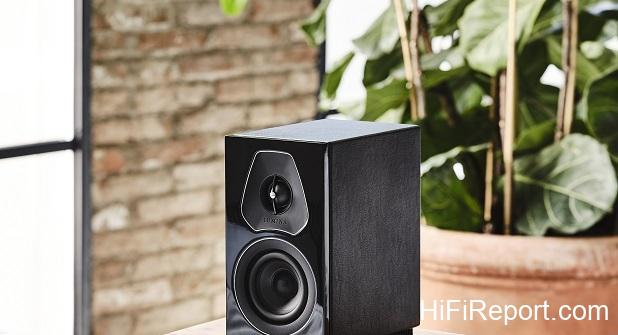
Moving on to the Lumina I bookshelf speaker and the Lumina CI center channel speaker, their aesthetics are consistent with the Lumina III, also incorporating elements like wood veneer panels and leatherette. They also utilize the same 29mm DAD soft-dome tweeter for wide high-frequency dispersion. A difference is the addition of a base, and the bass reflex port is front-firing rather than downward-firing. This is also designed to facilitate placement closer to a wall.
Coupled with their rectangular cabinets and compact size, they significantly save listening space. The slim design of the Lumina CI center channel speaker allows it to be placed below a TV without obstructing the view. In addition to the DAD soft-dome tweeter, the center speaker features two 4-inch composite fiber cone drivers, delivering clear and full vocal dialogues. They also integrate well with the main and surround channels, providing a better surround sound experience.
Listening Impressions
Music Performance
For the actual testing, I paired the speakers with a mid-to-high-end Denon AVR-X4700H surround receiver and used a Sony UBP-X700 Blu-ray player as the source. Following my usual routine, I first engaged “Pure Direct” mode to assess the Lumina III’s performance with music. These speakers lean towards a stronger mid-bass presentation, following a warm and smooth character. This differs from the Olympica Nova series I recently heard.
While slightly less refined in the extreme high frequencies, they still offer excellent body and liquidity. The overall tonal balance is natural and pleasing.
Playing “Let Everything Go with the Wind” from Priscilla Chan’s “By Heart” album, the female vocals sounded delicate and full. I could distinctly hear a clear, three-dimensional image positioned centrally. The overtones in her voice were rich, yet completely free of any harshness or pressure. The sound was both warm and resolving. Between phrases, I could hear subtle throat resonance, adding a touch of charming sweetness to Priscilla Chan’s magnetic voice – truly captivating!
The acoustic guitar accompaniment in this track, which can often sound dry and thin on speakers lacking sufficient fullness, sounded exceptionally sweet and elastic on the Lumina III. Each pluck was rendered with abundant wooden body resonance, the notes round and transparent. Even the slightest dynamic shifts in the strumming and the friction of fingers on the steel strings were clearly audible, demonstrating their impressive detail retrieval capabilities.
Initially, seeing the downward-firing bass port, I wondered if it meant the speakers needed wall placement for ample bass quantity. However, when I played John Mayer’s live album “TRY! “, I discovered that even positioned about 2 meters away from the wall, the bass quantity was remarkably sufficient. In our large listening room, they performed with effortless composure. It even prompted me to repeatedly check that the subwoofer wasn’t actually active – quite remarkable!
For instance, in the track “Something’s Missing,” the kick drum had a solid, impactful “thump” with each beat hitting your chest. The accompanying electric bass also had a full-bodied texture. While the bass detail might not be as extensive as on higher-end speakers, it felt weighty and incredibly satisfying, delivering a strong sense of musical presence!
Home Theater Performance
Next, I paired the system with our in-house MK Sound X10 subwoofer and set the channels to “small” mode to optimize the Lumina’s performance for movies. As soon as the 5.1 system kicked in, its incredible soundstage immersion immediately grabbed my attention. For example, during the battle scene in the film “Shadow,” the overwhelming sense of being enveloped by the pouring rain was palpable.
The rain wasn’t a uniform wash; I could distinctly hear individual raindrops falling, creating a vivid impression of a wet, saturated environment. When the archers loosed their arrows simultaneously, I could clearly follow their trajectories swirling around me. The movement felt seamless, demonstrating excellent sonic coherence.
And as flying blades approached from a distance, I genuinely felt their distinct form almost hitting me, providing viewers with an intensely immersive and thrilling experience!
Simultaneously, as the protagonists slid across the ground in their iron umbrellas, the scraping metal sound was crisp and pleasant, utterly devoid of harshness. When the large swords clashed, the metallic ring was bright and shimmering, accompanied by lingering echoes. This demonstrated that even under complex sound conditions, the speakers maintained impressive sonic detail without compromise – truly outstanding!

This speaker system is not only detailed but also boasts excellent dispersion, creating an expansive cinematic soundstage. For instance, in the sea battle scene from “Dunkirk,” the vast ocean was filled with various environmental sounds. Distant waves and bird calls were rendered naturally, with clear positioning and believable textures. When the scene shifted inside the ship’s cabin, the soundstage immediately shrank, creating a sense of confined space.
Amidst the cacophony of voices, their origin and position were clearly distinguishable, and I could hear the reverberation from the metal deck within the cabin, making it feel as though I was genuinely present in the cramped space, experiencing the oppressive closeness.
During the beach airstrike sequence, I could perceive the layered progression of the bombs exploding from a distance, moving closer until they reached the viewer, resulting in deafening impact. With the subwoofer’s assistance, the energy was both full and fast. As the explosions occurred, the fragments of debris flying everywhere were also clearly audible. I strongly recommend pairing the Lumina series with a fast and energetic subwoofer to fully unleash their cinematic potential.
Sonus Faber’s own Gravis II would likely be an excellent choice.
After auditioning the Lumina series, I found that they successfully capture Sonus Faber’s refined sound characteristics, making them well-suited for pure music listening. For home theater, their performance is even more appealing than some higher-end Sonus Faber models! If you appreciate Sonus Faber’s sound and are looking for a speaker system that excels in both movies and music, the Lumina series is definitely the one for you!
Specifications
Lumina III Floorstanding Speakers
* Type: 3-way, 3-driver, Bass Reflex
* Drivers: 1x 29mm DAD soft-dome tweeter, 1x 5-inch midrange driver, 2x 5-inch bass drivers
* Frequency Response: 40Hz-24kHz
* Crossover Points: 350Hz, 3.5kHz
* Recommended Amplifier Power: 50-250 W
* Sensitivity: 89 dB SPL (2.83V / 1m)
* Impedance: 4 ohms
* Dimensions (H.W.D.): 989x228x277.7mm
* Weight: 15.9kg per speaker
Lumina I Bookshelf Speakers
* Type: 2-way, 2-driver, Bass Reflex
* Drivers: 1x 29mm DAD soft-dome tweeter, 1x 4-inch mid-woofer
* Frequency Response: 65Hz-24kHz
* Crossover Point: 2kHz
* Recommended Amplifier Power: 30-100 W
* Sensitivity: 84 dB SPL (2.83V / 1m)
* Impedance: 4 ohms
* Dimensions (H.W.D.): 280x148x213mm
* Weight: 9kg per speaker
Lumina CI Center Channel Speaker
* Type: 2-way, 3-driver, Stealth Ultraflex Bass Reflex
* Drivers: 1x 28mm DAD soft-dome tweeter, 2x 150mm (6-inch approx.) mid-woofers (Note: original spec listed 4-inch, but measurement implies 150mm which is closer to 6-inch, common for center channels)
* Frequency Response: 45Hz-35kHz
* Crossover Point: 1.55kHz
* Recommended Amplifier Power: 35-250 W
* Sensitivity: 90 dB SPL (2.83V / 1m)
* Impedance: 4 ohms
* Dimensions (H.W.D.): 241.6x616x397.8mm
* Weight: 18kg