
Sonus Faber Omnia Wireless Speaker System Review
If you’re in the market for a simple and user-friendly active Bluetooth speaker, the current market offers numerous options. However, when it comes to a design as exquisite as the Sonus Faber Omnia, it’s virtually unparalleled. This sheer beauty alone, evident in its appearance, is enough to trigger consumer desire.
Redefining Sonic Design Aesthetics
Sonus Faber has consistently been a brand synonymous with both beautiful form and captivating sound. The Omnia wireless speaker system once again redefines our perception of sonic design aesthetics. It demonstrates that a wireless Bluetooth speaker system can be incredibly beautiful, artistic, remarkably easy to use, and offered at a price point that truly excites – a remarkable achievement.
This isn’t Sonus Faber’s first foray into designing an all-in-one wireless Bluetooth speaker system. In 2016, they introduced the SF16, a tribute to their iconic Snail speaker. Its design creativity was already astonishing. Unfortunately, its high price tag, with a suggested retail price of around $11,500 USD (350,000 NTD), meant that assembling a traditional audio system at that price point could easily surpass the SF16 in sound performance. The SF16’s visual appeal and the cool, futuristic extension of its satellite speakers were unmatched, but its sales were limited. Ultimately, the value of audio equipment lies in its sound quality. While visually stunning, the SF16’s price made it a difficult proposition based purely on sonic merit.
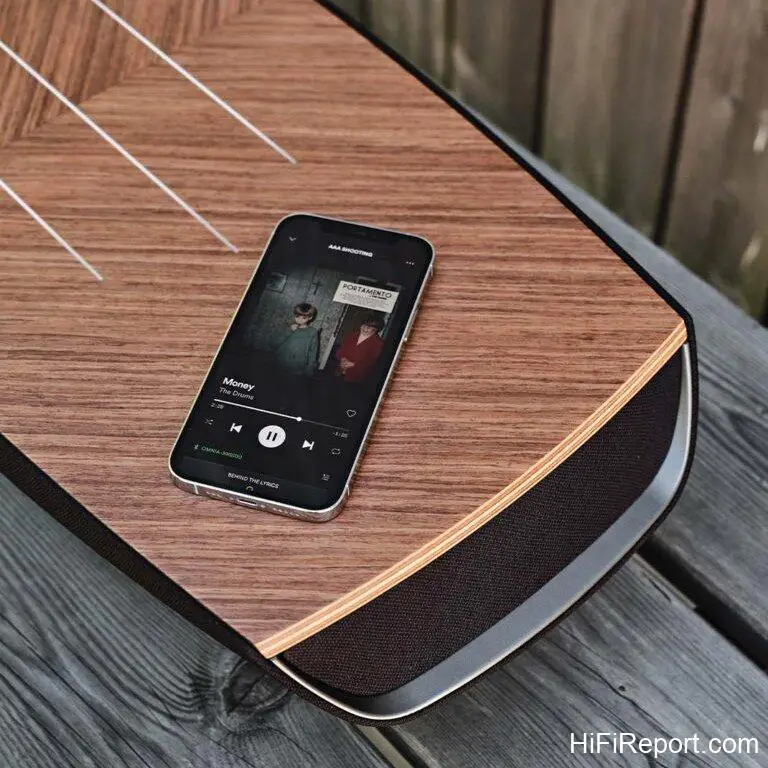
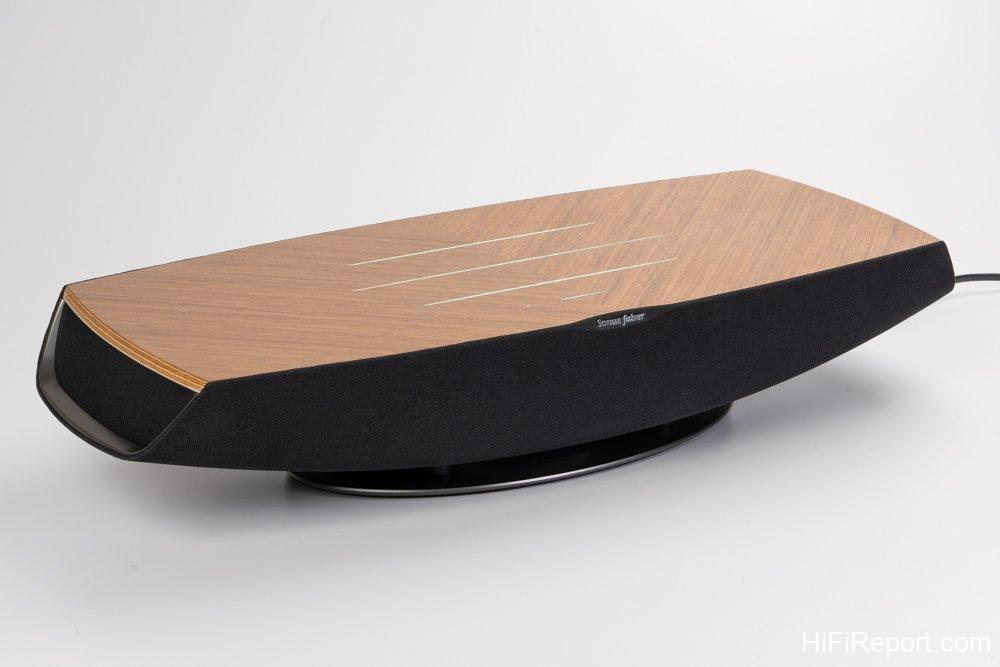
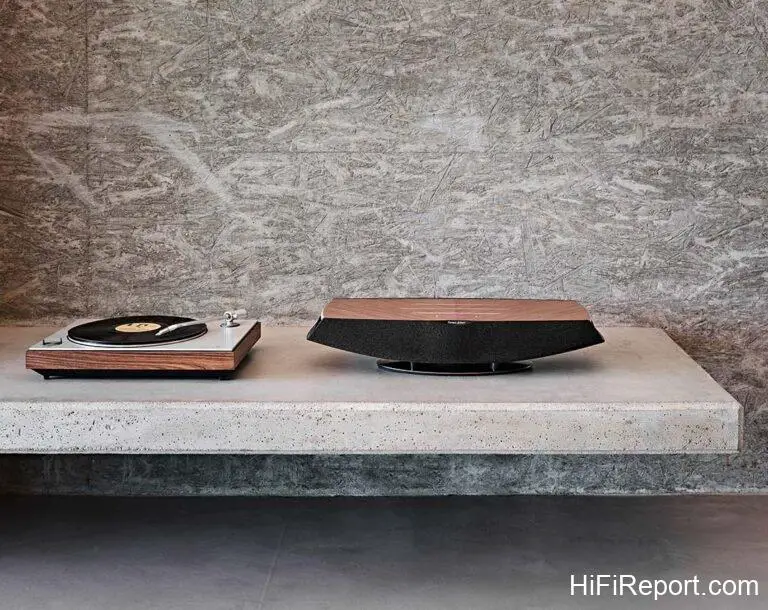
The Sonus Faber Omnia is entirely different. Its price is highly competitive, with a European MSRP of 1,799 Euros. Being an all-in-one wireless system, it offers exceptional ease of use. Simply unpack, plug it in, set up the network, and you can immediately enjoy various digital streaming music services. Moreover, its design resembles a simplified version of the SF16. Our editorial team was immediately captivated upon unboxing, exclaiming at the sheer beauty and ingenuity of the design.
Not Aimed at Traditional Audiophiles
If you are a traditional audiophile, you can save your time and skip reading further about the Omnia. It isn’t designed for that market segment. For audiophiles, Sonus Faber’s Reference and Homage series represent their ultimate aspirations. Those with a penchant for vintage aesthetics might choose the Heritage series. For those seeking versatility in both stereo and multi-channel setups, the Olympica Nova, Sonetto, and Lumina series, paired with Gravis subwoofers, offer a comprehensive range to satisfy audiophile needs. However, the Omnia stands alone as a unique offering, specifically targeting individuals who haven’t yet developed a passion for traditional audio, providing a simple, beautiful, and great-sounding new toy.
For audiophiles, the term “phile” implies a certain level of obsession. It’s about constantly seeking the perfect equipment pairings, comparing subtle differences between components, and discovering new ways to enjoy audio. The sheer volume of audio equipment available is inexhaustible, hence the term “phile.” However, many people prefer a simpler lifestyle. They love music but don’t want a complex audio system dominating their living space, requiring intricate wiring and precise placement. For these “simple Hi-Fi” enthusiasts, a Bluetooth active speaker might be perfectly sufficient. This is precisely the demographic the Omnia targets.
SENSO and CRESCENDO: Exclusive Technologies
At this point, I can’t help but wonder if having me, an audiophile-centric reviewer, evaluate the Omnia misses the point. Initially, I thought so too. However, the Omnia’s new technologies are genuinely intriguing and have broadened my perspective. Perhaps, in the future, we will see more similar devices, fulfilling the simple audio dreams of a wider audience.
The Omnia features two brand-new Sonus Faber-developed technologies: SENSO human-machine interface and CRESCENDO digital signal processing. These technologies contribute to the Omnia’s modern technological feel, seamlessly integrated within its classic speaker cabinet design.
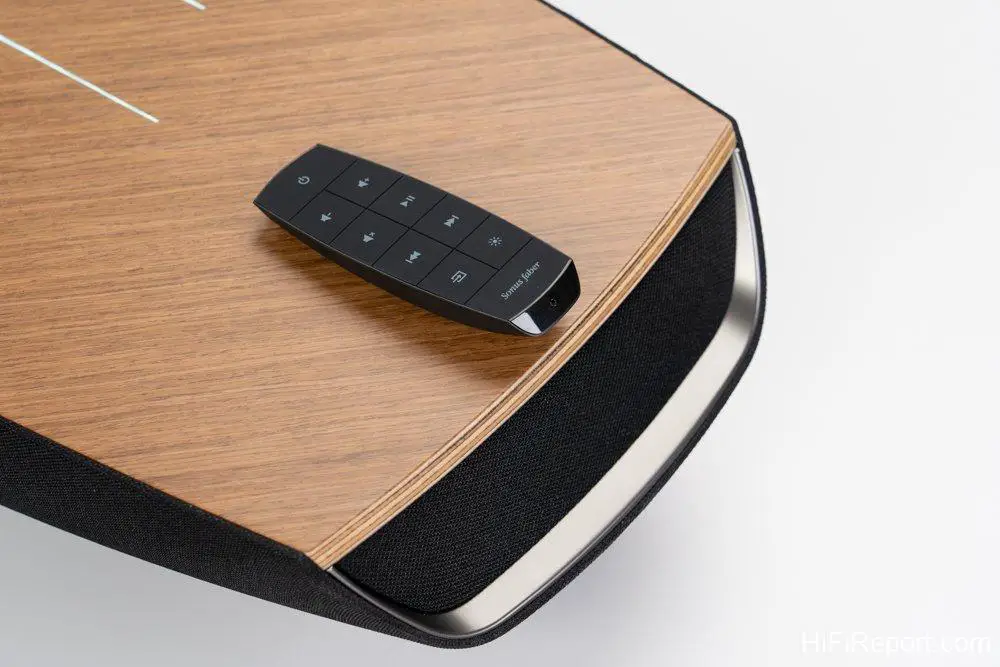
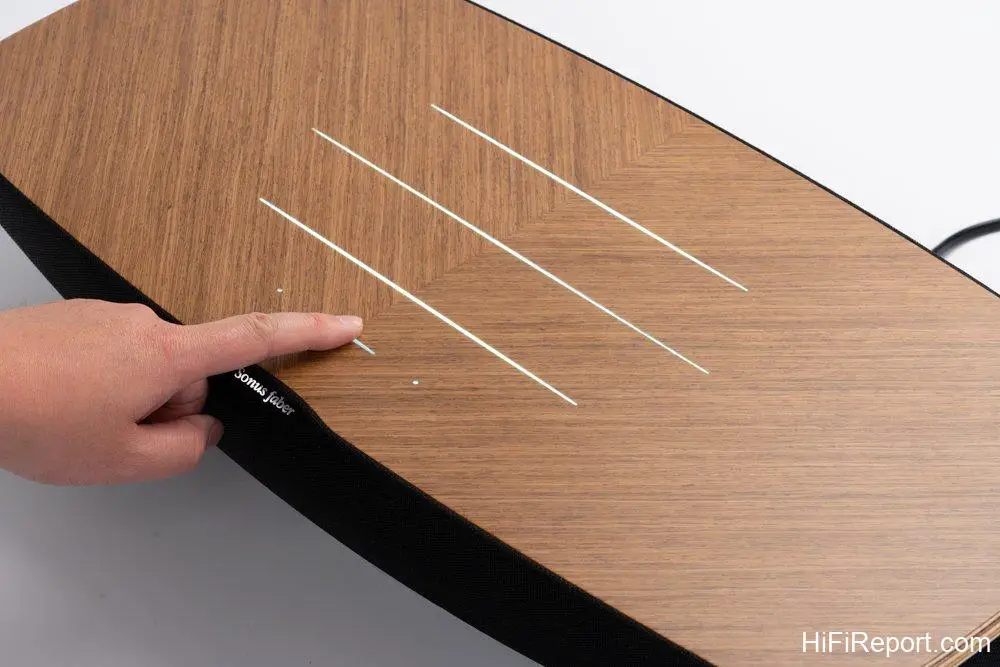
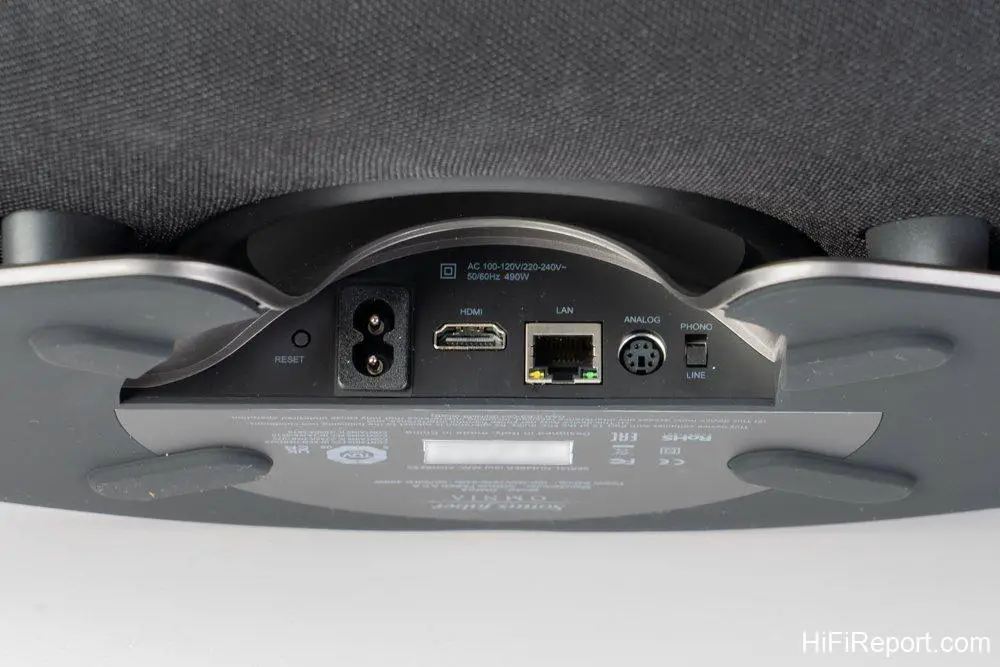
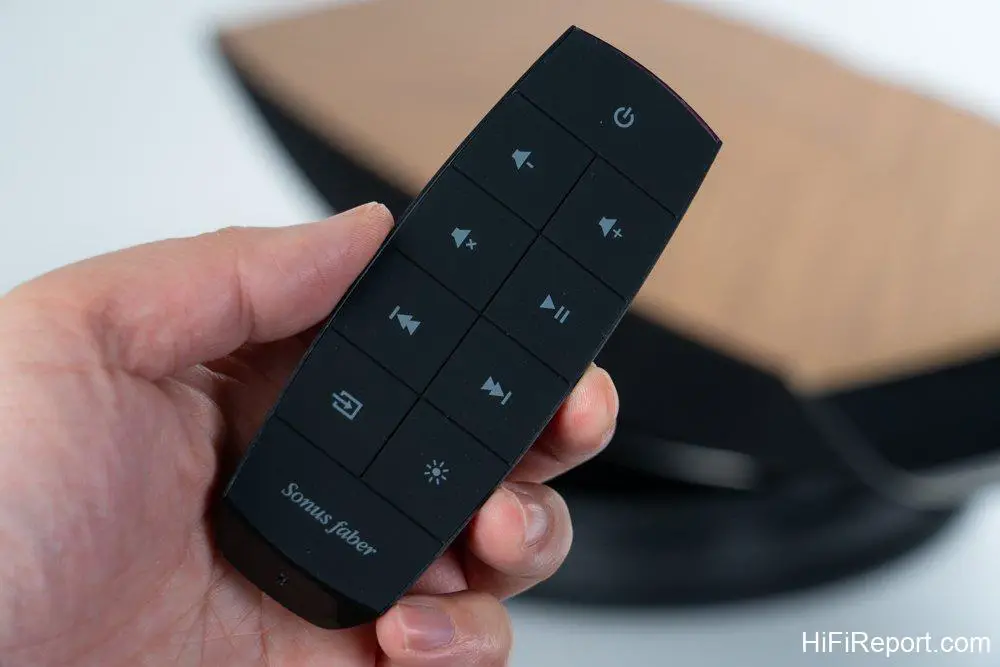
The SENSO interface is intuitively easy to use. The birchwood top panel of the Omnia conceals multi-colored LED lights. Upon powering on, the lighting is captivating. The panel also houses a touch interface for input selection and volume control, with different colored lights indicating the active source. Eight colors represent Tidal Connect, Analog (High-Level or Phono), Roon Ready, Bluetooth, Spotify, Chromecast, HDMI, and Airplay. Supporting such a wide range of digital streaming services, along with HDMI, allows the Omnia to function not only as a wireless Bluetooth speaker but also as a soundbar. If you prefer a more traditional approach, Sonus Faber includes a stylish remote control.
CRESCENDO: Excellent Sound Anywhere
CRESCENDO is the core acoustic technology. This aspect is more complex. If you’re not interested in audio technology, you can skip this section. After all, enjoying music is about pleasure, not necessarily technical understanding, much like driving a car – you just need to drive smoothly without needing to know the intricacies of the engine or suspension system.
The purpose of CRESCENDO is to address the challenge of achieving a stereo effect from an all-in-one speaker. Similar technologies exist in the market, primarily used in soundbars. However, Sonus Faber’s approach is different. While others pursue multi-channel solutions, Sonus Faber focuses on delivering a two-channel experience, ensuring the Omnia sounds like a stereo system regardless of its placement in the room.
How is this achieved? By controlling the time and phase differences of sound waves, creating a convincing illusion of stereo sound.
While the concept is simple to explain, its implementation is complex. Creating stereo sound from a single speaker cabinet makes CRESCENDO the critical core technology.
490 Watts Driving 7 Drivers
CRESCENDO’s heart is a high-end audio processing system that controls the Omnia’s powerful and intricate driver configuration and adjusts spatial EQ based on speaker placement.
Although the Omnia’s exterior design is sleek and minimalist, it houses seven drivers internally: two 0.75-inch silk dome tweeters, two 3-inch paper cone midranges, two 1.75-inch full-range drivers, and a 6.5-inch long-throw aluminum cone woofer. These seven drivers are powered by a 490-watt amplifier module. CRESCENDO’s audio processing manages the output and equalization settings of these seven drivers to achieve the “sounds great anywhere” effect.
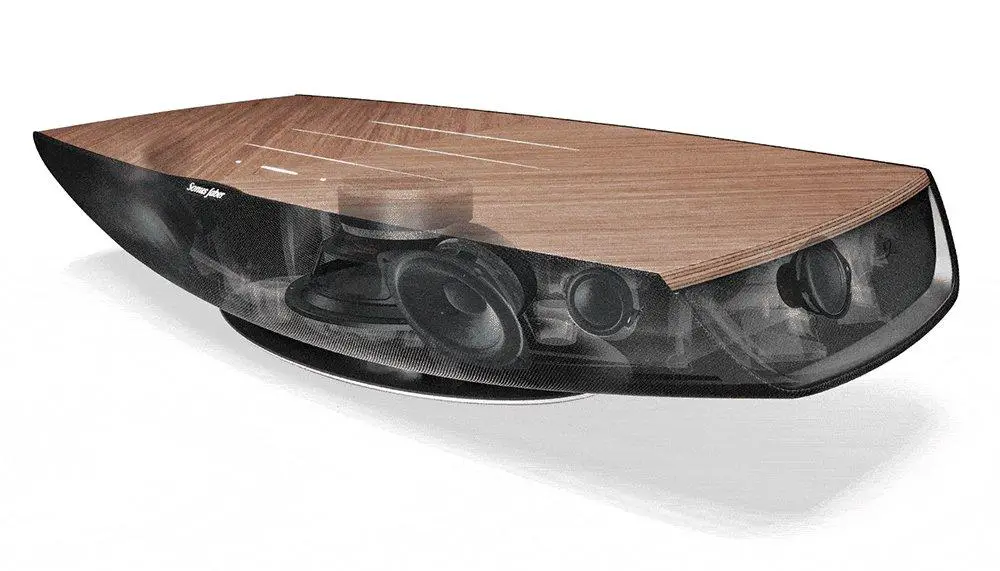
It might sound complex, but it’s not difficult to understand. The 0.75-inch silk dome tweeters and 3-inch paper cone midranges handle the left and right channels. The downward-firing 6.5-inch aluminum cone woofer manages the low frequencies, forming a 2.1 speaker system. The 1.75-inch full-range side-firing drivers are responsible for expanding the soundstage, completing the Omnia’s basic acoustic configuration. Building on this foundation, the CRESCENDO digital engine controls the Omnia’s sound output modes, allowing the speaker to adapt to various room placements.
Simple Spatial Acoustic Settings
This sounds tiring to read! So technical! Yes, CRESCENDO internally is a complex acoustic system, but its operation is incredibly simple. After powering on and setting up the network, use Apple Home to connect and access the web-based settings interface. Here, you can toggle CRESCENDO on or off. When CRESCENDO is off, the side-firing full-range drivers operate in Bipole mode, radiating in phase. When turned on, they switch to Dipole mode, radiating out of phase. Bipole mode provides a more focused sound, while Dipole mode enhances the sense of spaciousness.
The Room Placement setting is even simpler, offering only “Near the Wall” and “Away From the Wall” options. Omnia automatically adjusts the bass output accordingly. If placed near a wall, bass is reduced to compensate for wall-induced bass reinforcement. Conversely, “Away From the Wall” mode increases bass output for a more powerful low-end.
If you are a bass enthusiast, setting it to “Away From the Wall” and placing the Omnia near a wall will result in very powerful bass, though it might become slightly muddy.
Loudness for Low-Volume Listening
Omnia also features a Loudness compensation function, again with a simple on/off setting.
Many mistake Loudness for simply making the sound louder. In fact, Loudness is designed to compensate for the ear’s reduced sensitivity to low frequencies at low listening volumes. At lower volumes, the bass can sound weak. Engaging Loudness boosts the mid-bass and bass frequencies, adding fullness and perceived detail. If Loudness is left on at higher volumes, it can actually compromise mid-bass clarity. Therefore, Loudness is intended for low-volume listening and should ideally be turned off at higher volumes.
Sonus Faber hasn’t provided extensive technical details about CRESCENDO, only stating that the Omnia’s seven drivers, combined with advanced digital audio processing, blend stereo signals and adjust driver delays and phase to create an immersive listening experience. Activating CRESCENDO enhances the sound wave dispersion from the side-firing full-range drivers.
Sonus Faber’s brief description is indeed vague. After all, this is their core proprietary technology, and revealing too much might lead to quick imitations. However, the audible effect is noticeable. With CRESCENDO off, the Omnia sounds smoother. Turning CRESCENDO on adds a “boost,” making the sound more forceful, adding mid-range thickness, and altering the soundstage.
Different Listening Experience from Traditional Stereo
Regarding the Omnia’s sound performance, it differs from traditional stereo systems. Traditional two-channel speakers paired with amplifiers, with careful placement, can create a precise soundstage. However, the Omnia, being an all-in-one unit, struggles to achieve pinpoint soundstage accuracy. Instead, the Omnia excels as a Bluetooth speaker that sounds good wherever you place it. While lacking precise imaging, the Omnia’s strength lies in filling the room with music. Through CRESCENDO’s phase and delay control, music naturally disperses throughout the space, creating a comfortable listening experience.
If you prioritize precise soundstage localization, the Omnia isn’t for you. But if you simply want to fill your room with music, CRESCENDO technology simplifies things, sounding good regardless of placement. Built-in Chromecast supports Android, while Airplay 2 is available for Apple users, and integration with Apple Home is also possible. Sonus Faber smartly leverages established platforms. With Google and Apple as backbones, the Omnia can keep pace with future smart home advancements driven by these tech giants.
Effortlessly Fill Your Home with Music
Listening to music on the Omnia is a relaxed and enjoyable experience. While it can’t replicate the precise virtual soundstage of a traditional system, the Omnia’s mid-range richness surpasses many budget Bluetooth speakers. As a Sonus Faber product, its sonic tuning naturally reflects the brand’s heritage. Mid-high frequency clarity is good, and bass impact is decent. Listening to John Mayer’s “Where the Light Is” live in Los Angeles, on “Stop this Train,” the acoustic guitar’s strumming is crisp, and the percussive thumps of right-hand muting enhance the brightness of the chord progressions. John Mayer’s vocals have ample body. Overall, the sound is smooth, comfortable, and effortless.
Listening to EggPlantEgg’s “Hi Girl,” the acoustic guitar intro is warm, and vocalist Abin’s voice has a smoky quality. If you find the mid-bass a bit boomy, you can adjust CRESCENDO or switch the Omnia’s placement setting between “Near Wall” and “Away From Wall.” These options are straightforward binary choices. Sonus Faber provides the simplest selections, allowing you to easily find a sound you like. Furthermore, since the Omnia employs a downward-firing woofer, providing it with a stable surface, such as a solid desktop, will enhance bass definition. Elevating the base slightly can also improve bass clarity. However, I believe the joy of the Omnia lies not in meticulous placement but in casual placement and effortless listening.
A Speaker Your Partner Might Actually Approve Of
Despite being a simple all-in-one Bluetooth speaker, the Omnia incorporates diverse digital streaming playback functionalities. Its industrial design elevates it to a new level. If you desire a Bluetooth speaker that is both “good-sounding and beautiful,” the Sonus Faber Omnia is arguably the best choice in its category. I believe placing an Omnia in the living room is something your partner is unlikely to object to!
Specifications
* Type: 4-way 7-driver closed cabinet wireless Bluetooth speaker system (with RCA input and MM phono stage)
* Drivers: 0.75-inch tweeter x 2, 3-inch paper cone midrange x 2, 6.5-inch aluminum cone woofer x 1, 1.75-inch side-firing full-range driver x 2
* Built-in Amplifier: 490 watts
* Frequency Response: 30 Hz – 25 kHz (-6 dB)
* Network: Ethernet (10/100 Mbps), Wi-Fi dual-band 2×2 802.11 b/g/n/ac (2.4 GHz/5.2 GHz)
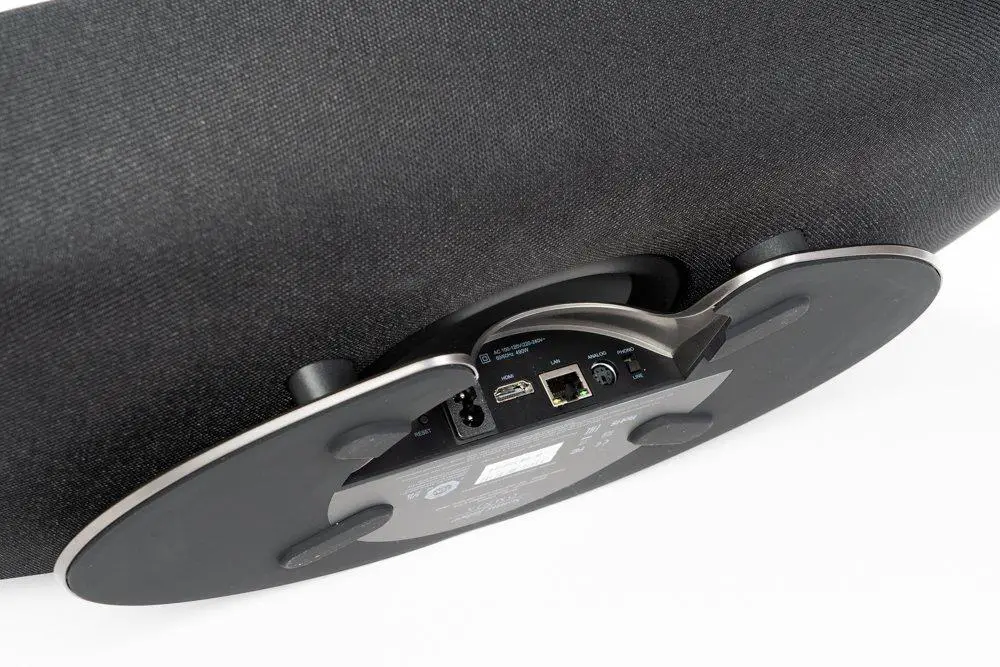
* Inputs: HDMI Arc (2 channels), MM Phono/Line-in
* Dimensions: 130 x 650 x 280 mm
* Weight: 7.6 kg