
Sony HT-A9 Wireless Multiroom System Review
Yearning for a multi-channel system at home, but constantly facing resistance from the ‘better half’? Tired of just scrolling through equipment photos online? Sony’s new HT-A9 wireless multi-channel system might be the answer. This isn’t your typical, underperforming soundbar. Instead, it employs four digital active wireless speakers to construct a revolutionary home surround sound experience that rivals a conventional 12-speaker system.
Beyond the Soundbar
Fresh off the heels of the bustling TAA Hi-End Audio Show, Sony inquired if I’d be interested in reviewing their soon-to-be-released audio-visual systems. My initial response? ‘If it’s just another soundbar, I’ll have to pass – things are incredibly hectic at the moment.’ To my surprise, Sony countered that while one was indeed a soundbar, the other was ‘quite different.’ Intriguing. Was this a ploy to pique my interest? Perhaps, but ‘different’ certainly had my attention. ‘Show me the details,’ I conceded. Shortly after, information on both the HT-A9 and HT-A7000, two simultaneously launched products, landed in my inbox. The HT-A7000, as expected, was an upgraded, superior soundbar. However, the HT-A9… that genuinely seemed to be ‘very different’ indeed.
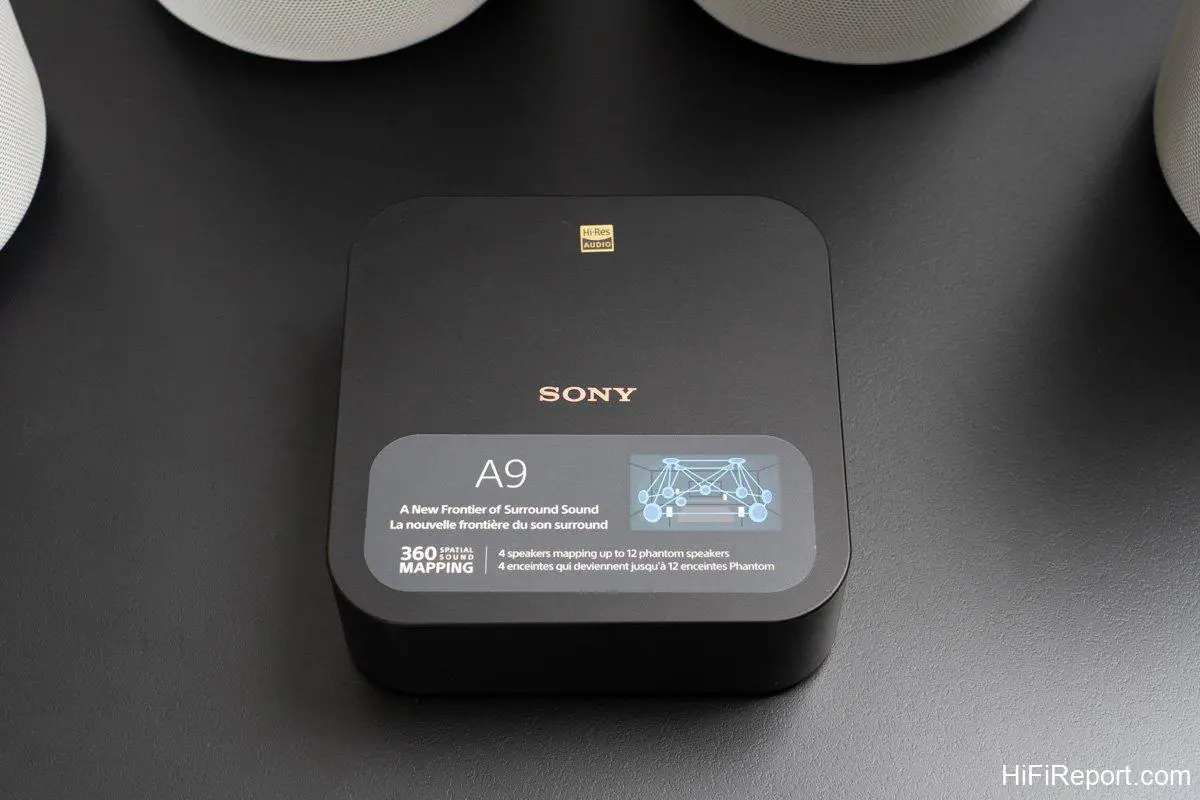
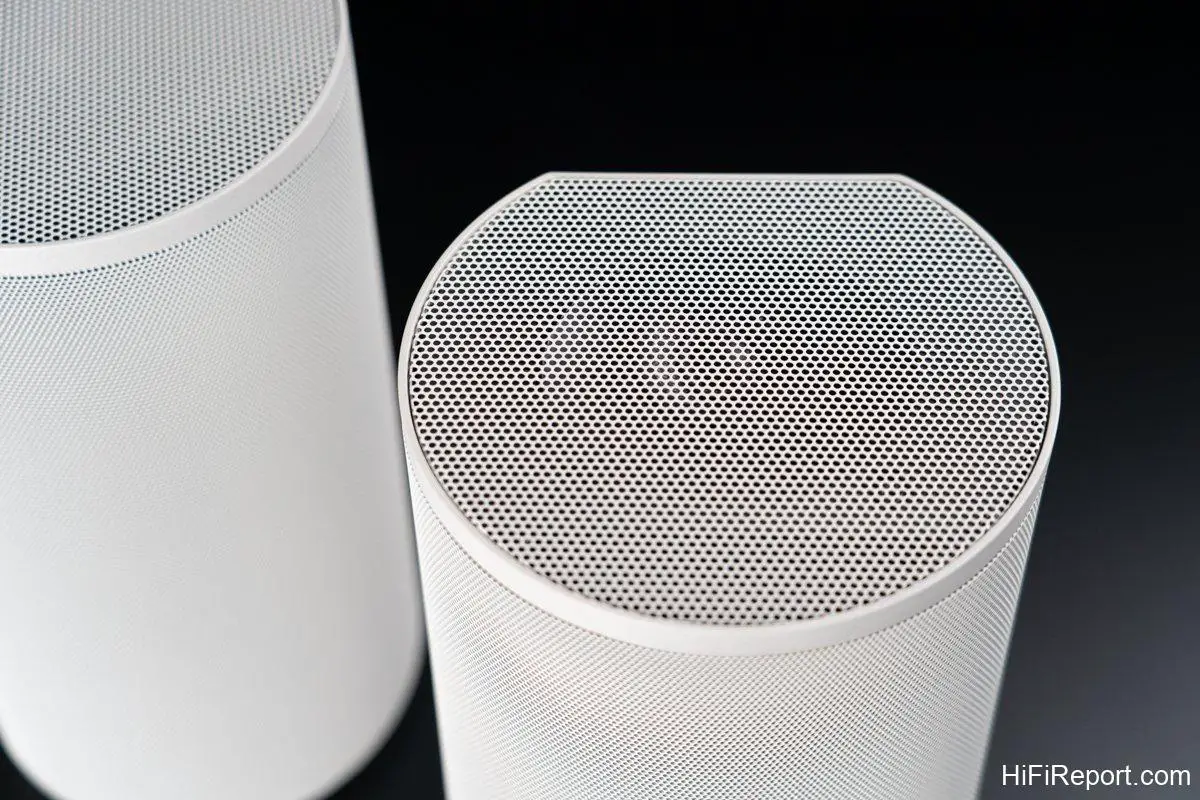
But ‘different’ in what way? The HT-A9 bears no resemblance to a conventional soundbar. Instead, it comprises four individual digital wireless active speakers, accompanied by a central ‘black box’ unit responsible for all inputs, outputs, and digital processing. While only four physical speakers are present, Sony’s uniquely developed algorithm conjures ‘phantom speakers,’ transforming the quartet into a twelve-speaker array, delivering a rich, multi-dimensional ‘immersive soundscape.’
4 Speakers, 12 Channels
How exactly does this ‘4-equals-12’ speaker trick work? The secret lies in the HT-A9’s ability to ‘listen.’ Each speaker is equipped with dual built-in microphones. Using test tones, the HT-A9 ‘audibly analyzes’ your room’s acoustics, intelligently calculating and automatically configuring settings to simulate a 12-speaker array. The HT-A9 boasts a 7.1.4 channel specification, meaning these four active speakers can convincingly emulate a full 7.1.4 surround sound system. Furthermore, the entirely wireless connectivity eliminates the need for unsightly speaker cables. Setting up a home theater is as simple as providing five power outlets for the HT-A9. The incredibly straightforward setup leaves no room for the ‘Queen’ to veto your home theater dreams on grounds of complicated installation or space consumption – the HT-A9 truly is that simple.
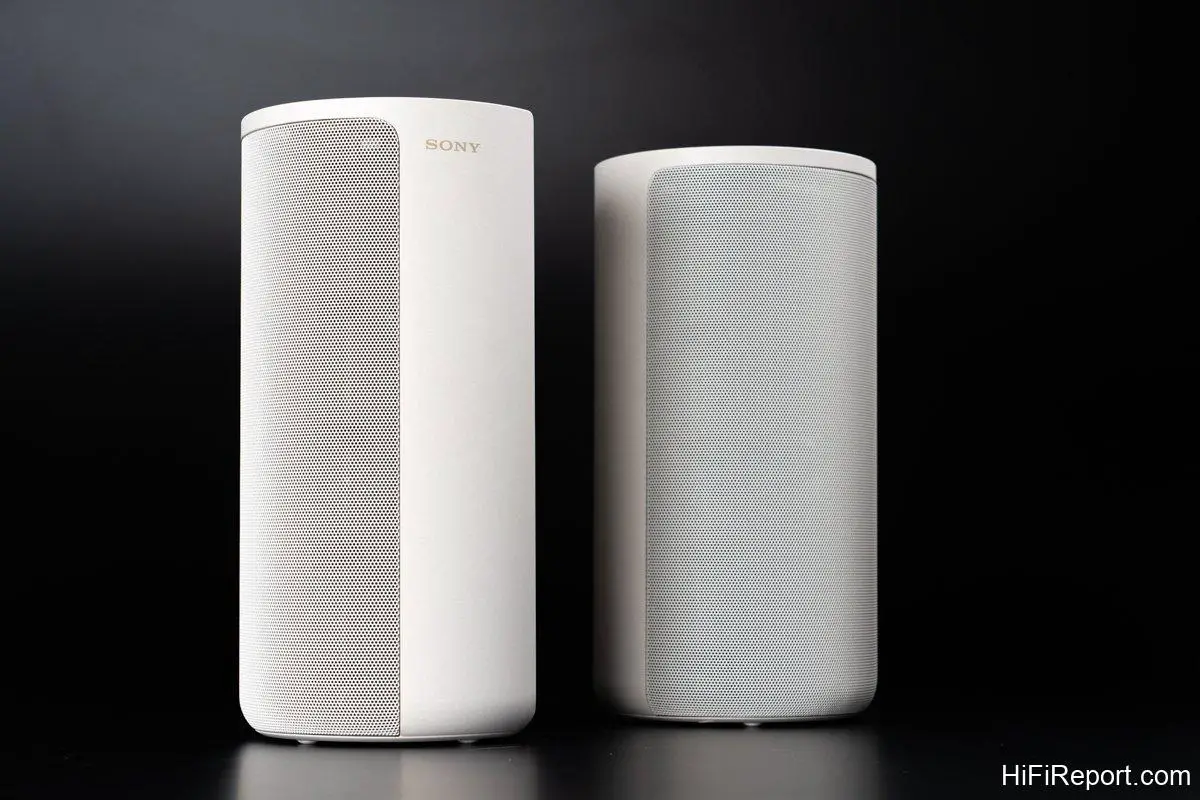
Adding to its ingenuity, the HT-A9 incorporates 360 Spatial Sound (360 SSM) digital processing technology. This not only ‘listens’ to your room to automatically optimize immersive surround sound but also offers remarkable placement flexibility. The four HT-A9 speakers don’t require ideal positioning. Uneven speaker heights or asymmetrical left-right spacing are not impediments. Because the HT-A9 ‘listens’ to the room, the 360 SSM intelligently auto-corrects for varying speaker placements. Asymmetrical speaker arrangements pose no problem whatsoever.
The ‘Full Package’ Arrives
Having reviewed the HT-A9’s technical specifications, my curiosity was thoroughly piqued. Knowing that pre-launch media review slots are always in high demand, I promptly requested Sony to send over the review units. To my surprise, a veritable ‘full package’ arrived – not just the HT-A9, but also the SA-SW5 active wireless subwoofer and a Bravia A80J 65-inch OLED TV, all in three substantial boxes.
Rest assured, purchasing all three components isn’t mandatory. The HT-A9 on its own is a complete system. The SA-SW5 subwoofer is an optional add-on for those seeking enhanced bass response. And the new Bravia TV unlocks a ‘special feature’ when paired with the HT-A9.
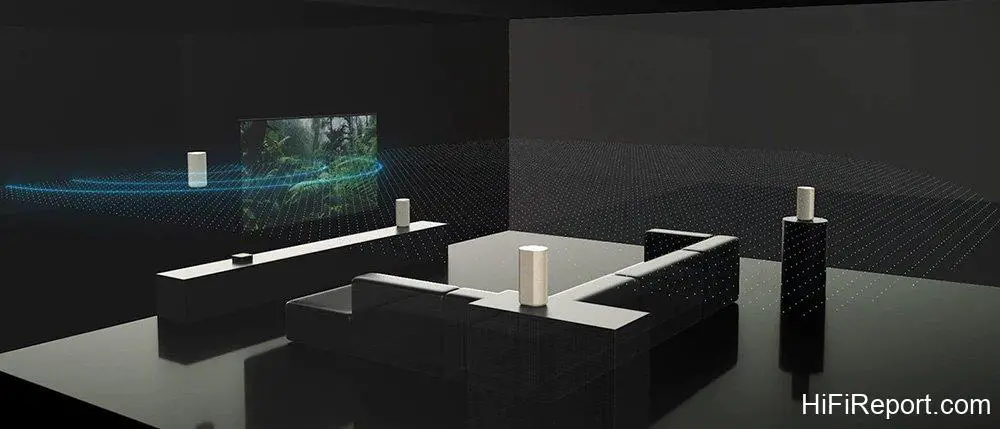
With limited pre-launch audition time, I wasted no time in setting everything up. In the HiFiReport listening room, I opted for a standard configuration initially, placing speaker stands flanking the Bravia A80J TV and positioning another pair of stands to the sides and slightly behind the listening position on the small sofa.
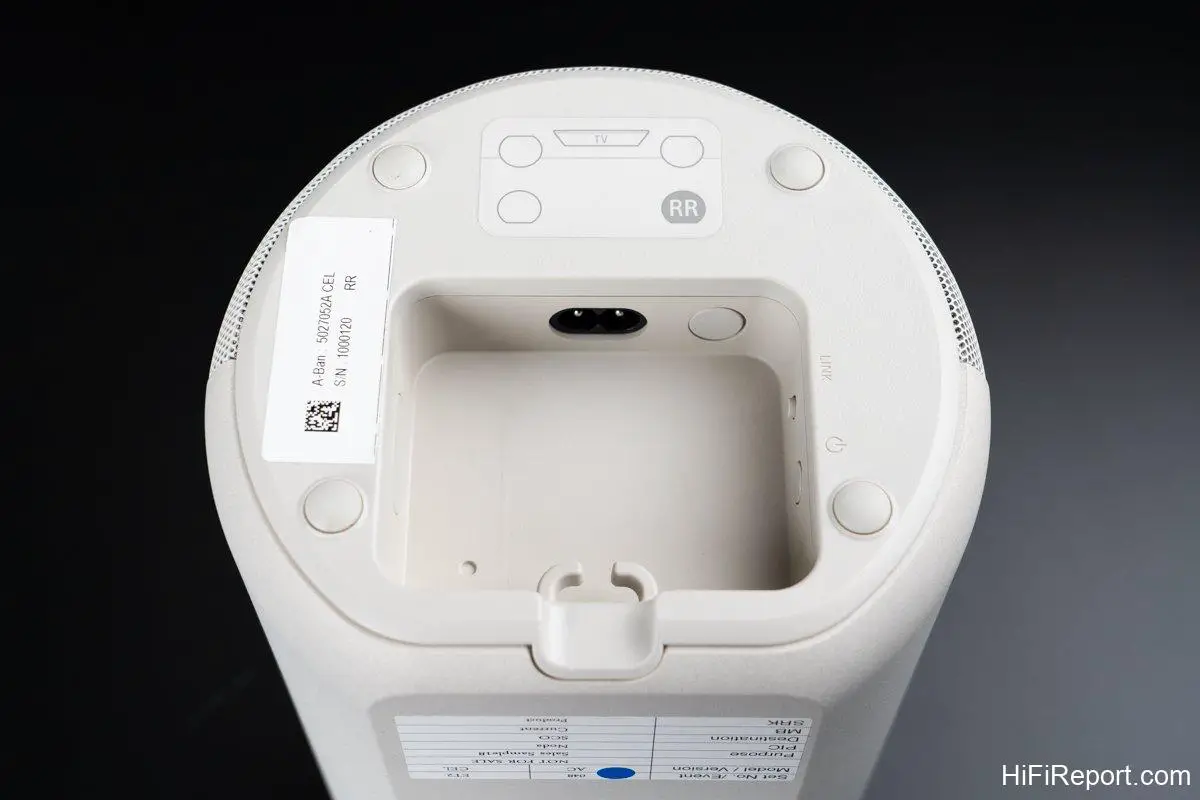
Crucially, the four HT-A9 digital wireless active speakers must be placed in their designated positions: front left (L), front right (R), rear left (RL), and rear right (RR). Correct placement according to the labels on the speaker bases is essential.
Correct Speaker Positioning
What happens if speaker placement is incorrect? The HT-A9, being a system that ‘listens’ to its environment, is quite astute. If speaker positions are amiss, the central ‘black box’ unit promptly displays a speaker placement error message on screen, prompting you to rectify the setup according to the correct guidelines. Digital audio equipment these days is indeed becoming increasingly intelligent.
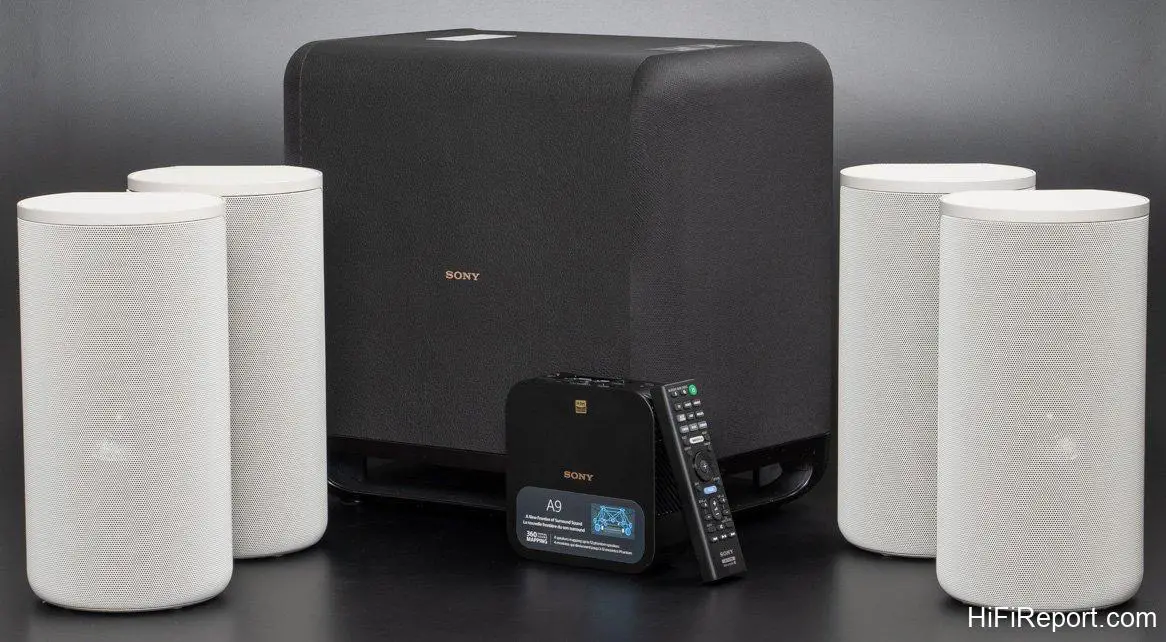
Thanks to this enhanced intelligence, upon powering up the HT-A9 and SA-SW5, the speakers seamlessly communicate and automatically establish a wireless connection. Next, you can access the on-screen menu to configure speaker settings, primarily focusing on the HT-A9’s 360 SSM optimization.
Quick 360 SSM Setup
Initiating sound field optimization is straightforward. The HT-A9 prompts a warning that test tones will be emitted during the optimization process and to be mindful of the volume level. Upon confirming ‘OK,’ the 360 SSM automatic optimization sequence commences.
The first test tones are familiar short beeps, emitted horizontally to assess the relative positions of the four speakers within the listening space. These are followed by test tones for the overhead channels. Upon completion of the calibration, a 360 SSM surround sound sphere graphic appears on the display, confirming successful setup.
The duration of automatic calibration? Remarkably, it’s completed in under a minute – incredibly fast.
Bravia Center Channel Integration
For owners of newer Bravia TVs, pairing with the HT-A9 unlocks an additional ‘special feature’: Bravia Acoustic Center Sync. Using the included 3.5mm cable, connect the HT-A9’s ‘S-Center Out’ to the ‘S-Center Speaker In’ on compatible Bravia TVs. This ingeniously utilizes the TV’s built-in speakers as the physical center channel in the system. The primary benefit is enhanced dialogue clarity and richness. Currently, compatible Bravia TV models include the Z9J, A90J, A80J, and X95J series, with future Bravia models expected to support this feature as well.
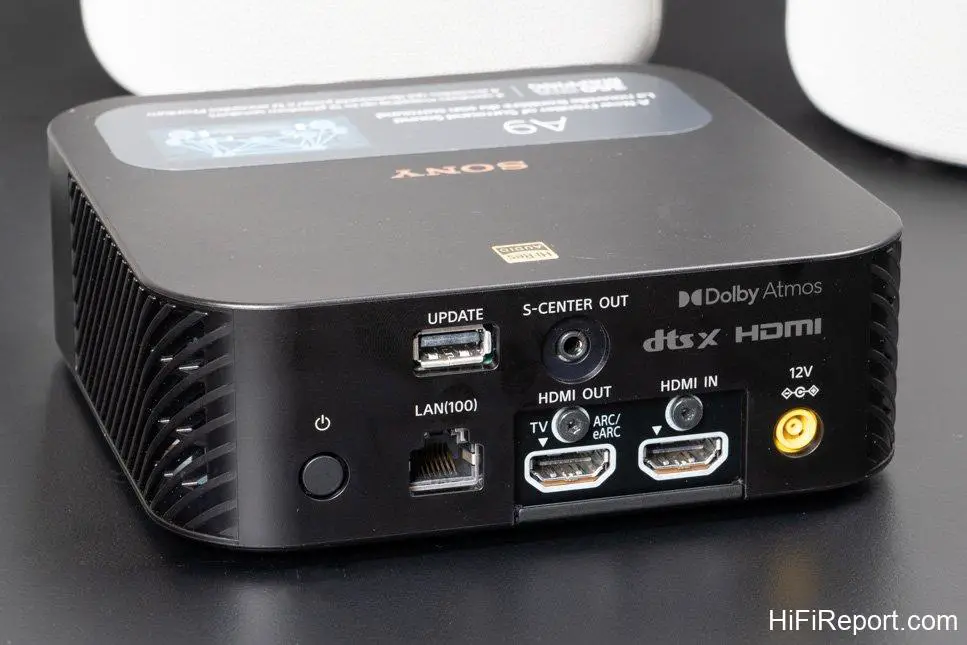
The HT-A9’s central ‘black box’ effectively serves as the system’s brain, managing signal reception and controlling the four digital wireless active speakers. The unit itself is remarkably compact, facilitating discreet placement. Connectivity is streamlined, featuring a single HDMI input and output, along with a network port. While seemingly minimal, the input selection is more than adequate. Primary source devices such as a PS5, Blu-ray player, or cable TV box can be connected directly to the TV. The HT-A9’s HDMI output is eARC (enhanced Audio Return Channel) enabled, allowing for lossless audio transmission from the TV. Furthermore, with a plethora of audio-visual streaming services integrated directly into modern smart TVs, the HT-A9’s seemingly limited inputs prove to be perfectly sufficient in practice.
Beyond wired signal transmission, the HT-A9 incorporates built-in Bluetooth wireless connectivity, arguably the most practical input option for many users. While streaming video content likely utilizes the smart TV’s integrated apps like Netflix, Amazon Prime, or Apple TV rather than phone mirroring, music listening often originates from smartphones. The HT-A9’s Bluetooth functionality excels in this regard. However, it’s crucial to remember to switch to ‘Music’ mode when listening to stereo music. Otherwise, applying surround sound processing to two-channel audio can create an unnatural and spatially distorted listening experience. Selecting ‘Music’ mode ensures optimal audio fidelity for music playback.
Noticeable Height and Rear Effects
During the automatic 360 SSM setup of the HT-A9, the most immediate and striking impression was the palpable presence of the overhead channels. The test tones, projected directly towards the ceiling, clearly conveyed the height of the soundstage, extending far above head level, and felt remarkably substantial. While soundbars have made significant strides in recent years, with increasingly refined overhead channel simulation, the rear soundstage often remains somewhat diffused. Consequently, high-end soundbars frequently offer optional wireless rear surround active speakers to provide genuine rear channel audio, creating a more tangible soundscape compared to relying solely on sound reflection for rear effects, which can feel somewhat artificial.
However, the HT-A9, with its four digital wireless active speakers delivering sound from the front, rear, left, and right, achieves a remarkably precise rear soundstage. Even during the test tones, the perceived height of the overhead channels and the positioning of sounds both in front and behind felt strikingly realistic.
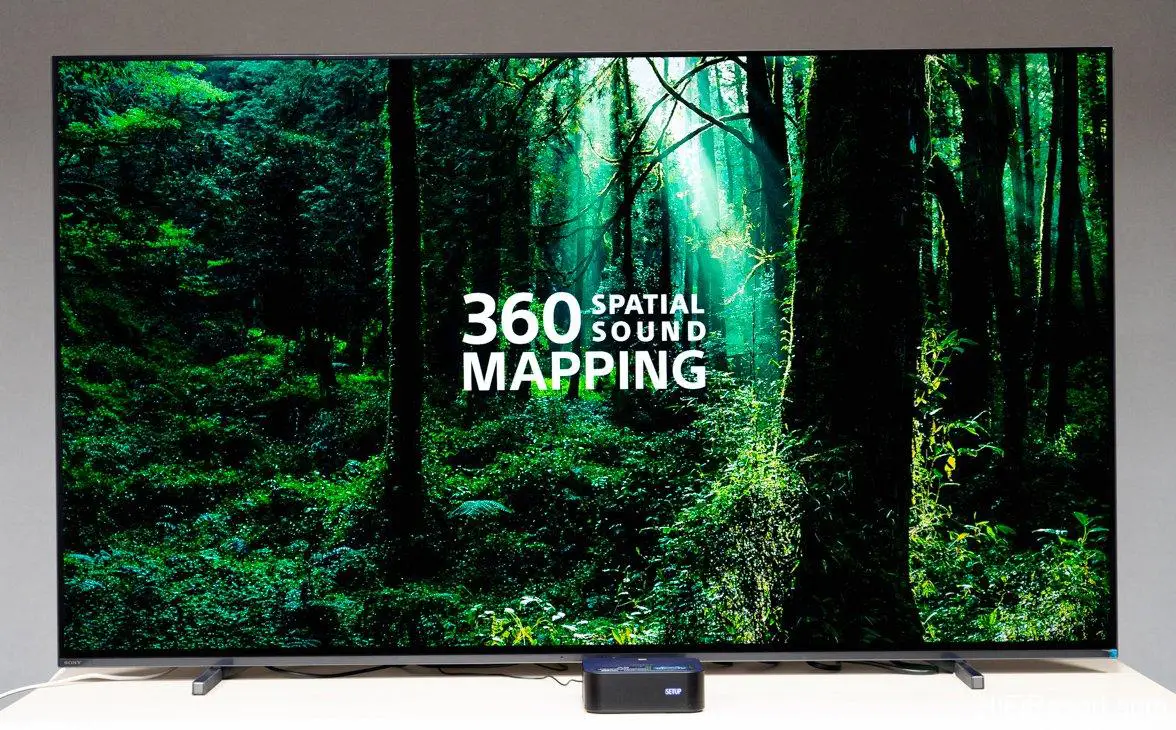
Sony has once again demonstrated its prowess as an innovator in the home audio-visual arena. In a soundbar market saturated with models and fierce price competition – a veritable ‘red ocean’ – they’ve introduced the distinctive HT-A9. This system ingeniously leverages four speakers to create a 7.1.4 channel experience, blending both virtual and real sound sources to deliver a 12-channel effect. Impressively, the performance genuinely rivals traditional multi-channel systems in the same price bracket.
Performance Rivals Traditional Systems
Throughout the HT-A9 audition, I continuously pondered whether a comparable or superior performance could be achieved with a similarly priced traditional multi-channel system. Mentally, I ran through various component combinations. A decent surround sound receiver alone would likely set you back $660 to $990 USD, and then factoring in a 7.1.4 speaker package, the total cost quickly escalates beyond that of the HT-A9 system – and that’s before even considering the added expense and hassle of speaker wiring and professional installation. The HT-A9 truly represents a ‘new breed’ of home audio system, leveraging sophisticated algorithms and high-performance processing chips to deliver a user-friendly, straightforward, and sonically impressive multi-channel experience.
With sound optimization complete, it was time to put the HT-A9 through its paces with movie playback. DTS demo discs are always a quick and effective test. Cueing up the treasure hunt scene from ‘The Huntsman: Winter’s War,’ the subtle sound of a twig snapping underfoot just before the action commenced emanated convincingly from floor level. The delicate ambient sounds of the forest were elevated by the virtual overhead channels, creating a palpable sense of vertical space. As the scene escalated, with guardian monsters alerted and combat erupting, the impact of punches and kicks, augmented by the subwoofer, delivered visceral, bone-jarring force. Furthermore, the directional accuracy of sound movement perfectly mirrored the on-screen action, significantly enhancing the viewing experience.
Next, I switched to ‘Gods of Egypt,’ focusing on the scene where the protagonist navigates through ancient tomb chambers. The whooshing sound of torches being lit along the walls was clearly localized within the soundstage. As the protagonist triggered a booby trap, unleashing colossal Egyptian statues wielding swords in a whirlwind of attacks from all directions, the sweeping and slashing sounds of the blades, both high and low, filled the room. Despite the HT-A9’s overhead channels being virtual, the realism was surprisingly convincing. The immersive surround sound, encompassing front, rear, and sides, coupled with the constant flurry of sword strikes, heightened the tension and drama of the scene considerably.
(Though we all know the protagonist is never really in danger, are they?) Moving on to ‘Zoolander 2,’ a scene depicting the protagonist alone on a snowy night, interrupted by a neighbor delivering mail. The knocking at the door emanated distinctly from the rear of the soundstage. Despite the HT-A9’s compact size, the addition of the subwoofer lent impressive depth and weight to the knocking sound. Furthermore, with the HT-A9 paired with the Bravia A80J as a center channel, dialogue was rendered with excellent clarity and richness. With the subwoofer contributing to the overall sonic heft, the HT-A9 truly holds its own against traditional multi-channel setups.
Still Impressive Without Sub
Wait a minute – my previous impressions were based on the ‘full package’ configuration, including the SA-SW5 subwoofer and the Bravia A80J functioning as a center channel. What if we remove these two ‘optional’ components? Time to revisit the same three test clips.
Indeed, without the Bravia A80J supplementing the center channel, dialogue did lose a touch of richness. Similarly, the absence of the dedicated subwoofer resulted in a slightly less visceral impact from punches and explosions. However, the overall experience didn’t degrade significantly. In fact, for listeners who prefer a more transparent and articulate sound profile, the HT-A9’s ‘digitally simulated’ .1 channel bass, even without the SA-SW5, remained surprisingly capable and avoided sounding artificial or weak.
Furthermore, during the initial audition, the HT-A9 speakers were positioned in relatively ‘optimal’ locations. But what about deliberately challenging its placement flexibility? We intentionally positioned the front left and right speakers asymmetrically, and placed the rear surround speakers at varying heights, significantly elevated above the listening position. After re-running the 360 SSM sound optimization, while the overall surround effect remained surprisingly robust, the front soundstage did exhibit a slight leftward bias, even post-calibration. The rear sound field and overhead effects, however, remained largely unaffected. Manual fine-tuning within the settings menu could partially compensate for the leftward bias, but a slight imbalance persisted. This suggests that while the rear speakers can indeed leverage ‘intelligent processing’ to adapt to less-than-ideal placement, the front speakers benefit from more careful positioning for optimal front soundstage balance.
AirPlay 2 and Dolby Atmos Integration
While the HT-A9 excelled with movies, delivering performance on par with similarly priced traditional multi-channel systems, how did it fare with music? As previously mentioned, the 360 SSM processing, while ideal for cinematic immersion, can sound unnatural with music. Therefore, for stereo music listening, switching to ‘Music’ mode is essential. Fortunately, this is easily accomplished with a single button press on the remote. This deactivates the surround processing, reverting to a traditional front soundstage, and allowing the music’s inherent stereo imaging to shine through.
Listening to Fire EX.’s ‘Inner Voice’ in ‘Music’ mode, the crisp guitar chords were rendered with clarity and nuance. Yang Da-zheng’s vocals, raw and sincere, conveyed the heartfelt message of the song. This personal favorite track sounded refreshingly clean through the HT-A9. However, subwoofer management becomes crucial here. Fire EX.’s recordings tend to be generously endowed with low-frequency energy. During the song’s chorus, the bass could become slightly overwhelming. Disabling the subwoofer and slightly increasing the HT-A9’s overall volume resulted in a more balanced and natural musical presentation.
Furthermore, the HT-A9’s AirPlay 2 support allows for seamless streaming directly from iPhones. Coupled with Dolby Atmos Music compatibility, exploring newly released Dolby Atmos tracks becomes particularly engaging. Listening to Taylor Swift’s ‘I Bet You Think About Me’ in Dolby Atmos, the sense of spaciousness expanded significantly. While acknowledging that the expansive soundstage is digitally generated, the immersive quality was undeniable, enhancing musical engagement. The rhythmic punch of the drums and the crisp guitar chords perfectly complemented Taylor Swift’s saccharine vocals. Pop-rock genres, in particular, seemed to synergize exceptionally well with the HT-A9, creating an energetic and enjoyable listening experience.
Concerns about Bluetooth audio quality? Rest assured. Sony’s proprietary DSEE (Digital Sound Enhancement Engine) Extreme and LDAC codec technologies are integrated to automatically digitally upsample and enhance compressed music files. Utilizing AI algorithms, DSEE Extreme aims to restore lost detail and sonic information, approaching original high-resolution audio quality. Furthermore, being a Sony product, the HT-A9 also supports Sony’s 360 Reality Audio format, ensuring a readily available library of immersive music content optimized for the system’s capabilities.
Queen-Approved System
The HT-A9’s simplicity, convenience, ease of installation, and impressive sonic performance, rivaling traditional multi-channel systems, position it as a compelling alternative. It appears that in a market increasingly dominated by soundbars and ‘new species’ like the HT-A9, only high-end, dedicated home theater systems may remain in the traditional multi-channel speaker space. Within more constrained budgets, the majority of consumers will likely gravitate towards user-friendly solutions like soundbars or the HT-A9. I believe that systems like the HT-A9, leveraging physical digital wireless active speakers to create a 4-equals-12 virtual-physical sound field, have the potential to carve out a new ‘blue ocean’ market segment, distinct from conventional soundbars.
Who is the ideal HT-A9 customer? Anyone yearning for a multi-channel surround system but deterred by complex installations and space constraints should seriously consider the HT-A9. Its compact and aesthetically pleasing design is virtually guaranteed to win over the ‘Queen,’ ensuring budget approval.
As for the optional subwoofer, it can always be added later, or once a suitable, discreet location for subwoofer placement is identified.
Beyond home use, the HT-A9 is also well-suited for creative commercial spaces, such as trendy cafes or boutiques. Leveraging the 360 SSM automatic sound optimization, it can create a near-seamless immersive listening environment, making the musical ambiance as inviting as the aroma of freshly brewed coffee.
Specifications
* Channels: 7.1.4 (Utilizing 4 speakers to create 12 phantom speakers)
* Surround Technology: 360 SSM
* Output Power: 504 watts
* Supported Audio Formats: Dolby Atmos, DTS-X, 360 RA, Hi-Res Audio
* Supported Video Formats: 8K 60/4K 120
* Bluetooth Transmission: AAC, SBC, LDAC
* HDMI (Input/Output): 1/1
* Optional Accessories: Subwoofer SA-SW3, SA-SW5
* Reference Price: HT-A9 (NTD 56,900 / USD 1878), SA-SW3 (NTD 9,990 / USD 329), SA-SW5 (NTD 19,990 / USD 659)
* Manufacturer: Sony