
Sony NW-WM1ZM2 Review
Sony NW-WM1ZM2 Gold Brick
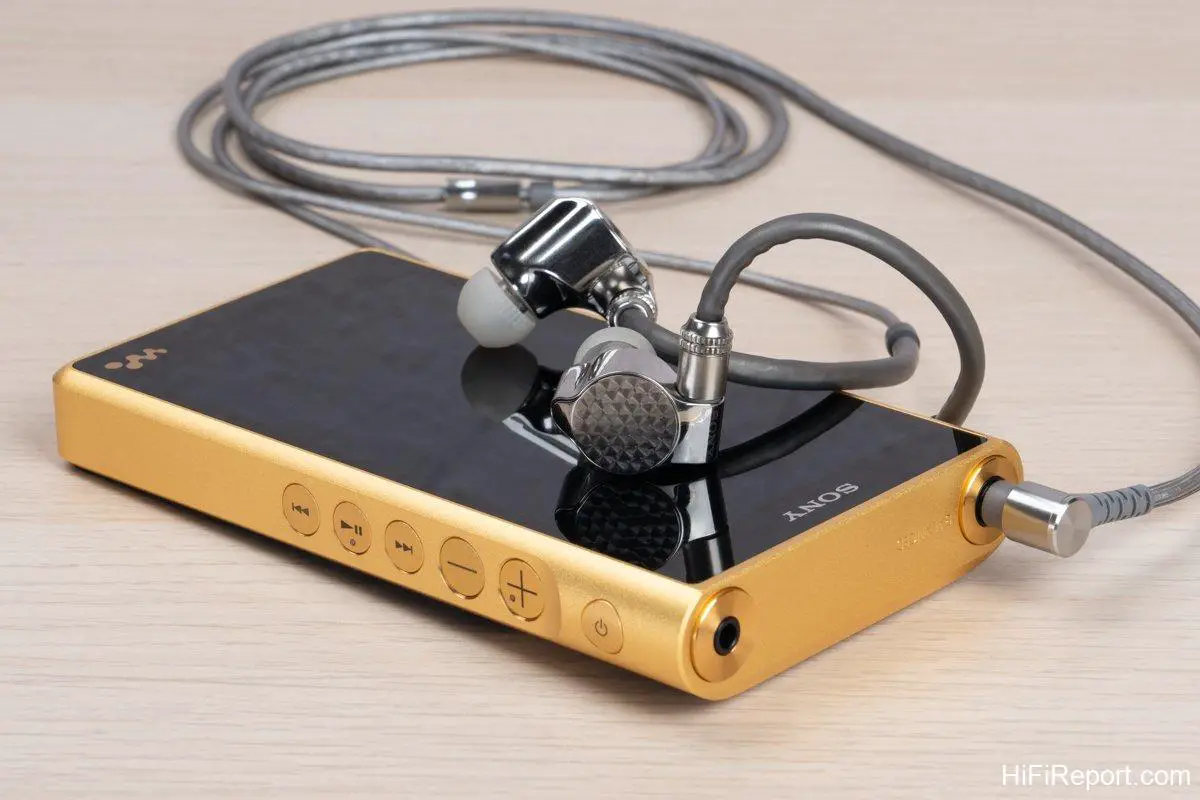
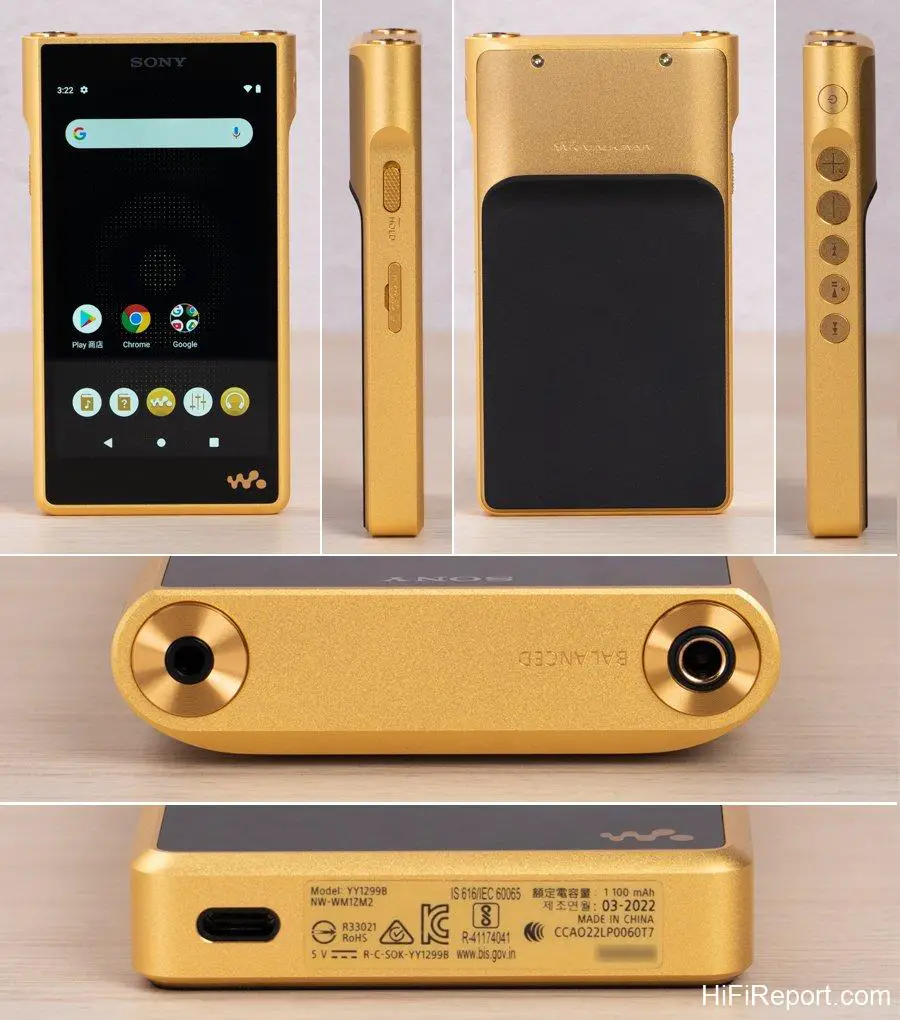
In 2016, Sony launched the first-generation “Gold Brick,” the NW-WM1Z. Five years later, the second-generation NW-WM1ZM2 arrives. While the 4-inch touch screen has been enlarged to 5 inches and the industrial design appears similar at first glance, every detail has been re-examined. The NW-WM1ZM2 is not just a second-generation Gold Brick; it redefines the very notion of “best,” especially in terms of soundstage and spatial expansion. You have to hear it to believe it.
*Left: NW-WM1ZM2; Right: NW-WM1AM2.*
Launch Delayed by Supply Chain Issues
When Sony informed us that the new NW-WM1ZM2 was arriving in Taiwan and offered a pre-launch listening session, we were thrilled. However, due to global supply chain disruptions and port congestion, the launch plan was delayed multiple times. Even the promotional sample unit barely made it in time, forcing us to compress the listening session. But the NW-WM1ZM2 offers so much to explore, and after listening, we were left wanting more time to truly delve into this new Gold Brick.
Before actually seeing the NW-WM1ZM2, Sony held several online media briefings, featuring Sony R&D engineer Hiroaki Sato discussing the design philosophy. However, without a physical unit to experience, much of the media’s attention focused on the chipsets and specifications. Ironically, these aspects saw the fewest changes, particularly the unchanged S-Master HX digital amplifier engine. Many questioned the new Gold Brick, wondering how Sony dared to release a new generation product after five years without upgrading the S-Master HX.
The Devil is in the Details
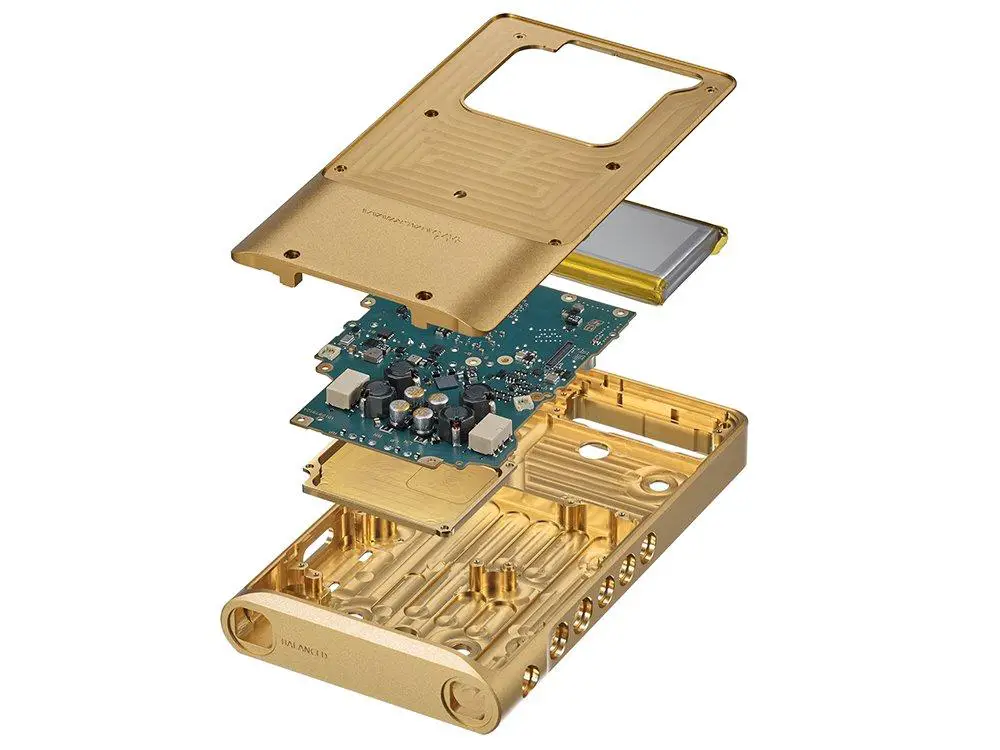
This situation is somewhat reminiscent of the mid-cycle refresh of the previous-generation Mercedes-Benz C-Class, the W205. The exterior appeared almost identical, and the engine remained the same, yet over two hundred internal details were modified. The new NW-WM1ZM2 follows a similar path. While the most obvious changes are the screen size increase from 4 to 5 inches and the operating system shift to Android, the internal refinements are where “the devil is in the details” truly resides. The first-generation Gold Brick used an oxygen-free copper chassis plated with gold, creating an ultra-rigid enclosure with excellent shielding to block external noise. This was already an extremely luxurious material. For the NW-WM1ZM2, the same oxygen-free copper and gold plating are used, but the purity of the copper has been increased from 99.96% to 99.99%. This seemingly small 0.03% increase demonstrates Sony’s ambition to challenge the state-of-the-art.
Incremental Refinements
With a 99.99% pure oxygen-free copper gold-plated chassis, what components are housed inside the NW-WM1ZM2? The software is easily described: Android 11, optimized for music playback. By entrusting all music playback, digital streaming functions, and music library management to Android, the system becomes user-friendly, especially for the vast number of Android users who will find the operation intuitive.
As for the hardware, the NW-WM1ZM2 is essentially a meticulously crafted USB DAC and headphone amplifier, encased in a luxurious 4N oxygen-free copper gold-plated chassis.
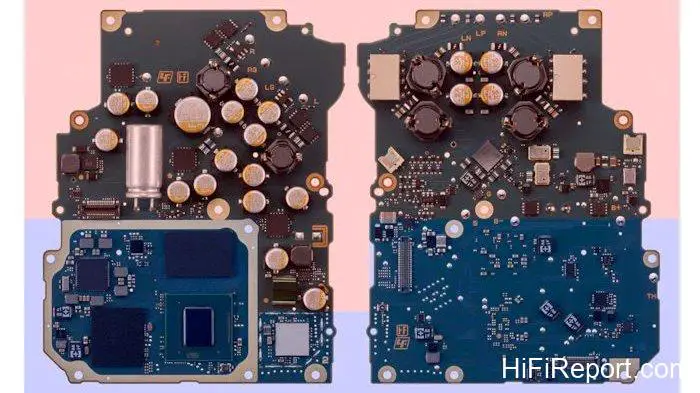
What does this encompass? Power supply, amplification circuitry, DAC upsampling processing and computation, clock calibration, and more. In terms of basic architecture, the NW-WM1ZM2 doesn’t represent a radical departure. However, as they say, the devil is in the details. The NW-WM1ZM2 meticulously re-examines every aspect, refining numerous small elements to perfection. As Sony engineer Hiroaki Sato explained, these accumulated small improvements contribute to significant overall progress. For technology purists, this is akin to a quest for redemption, pushing an already excellent device closer to perfection.
Enhanced Power Supply with Custom Capacitors
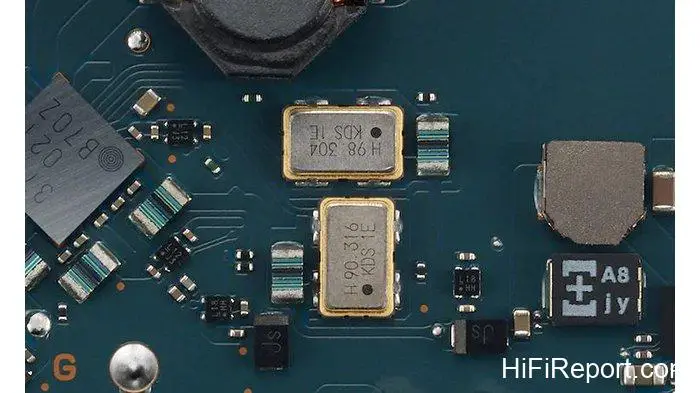
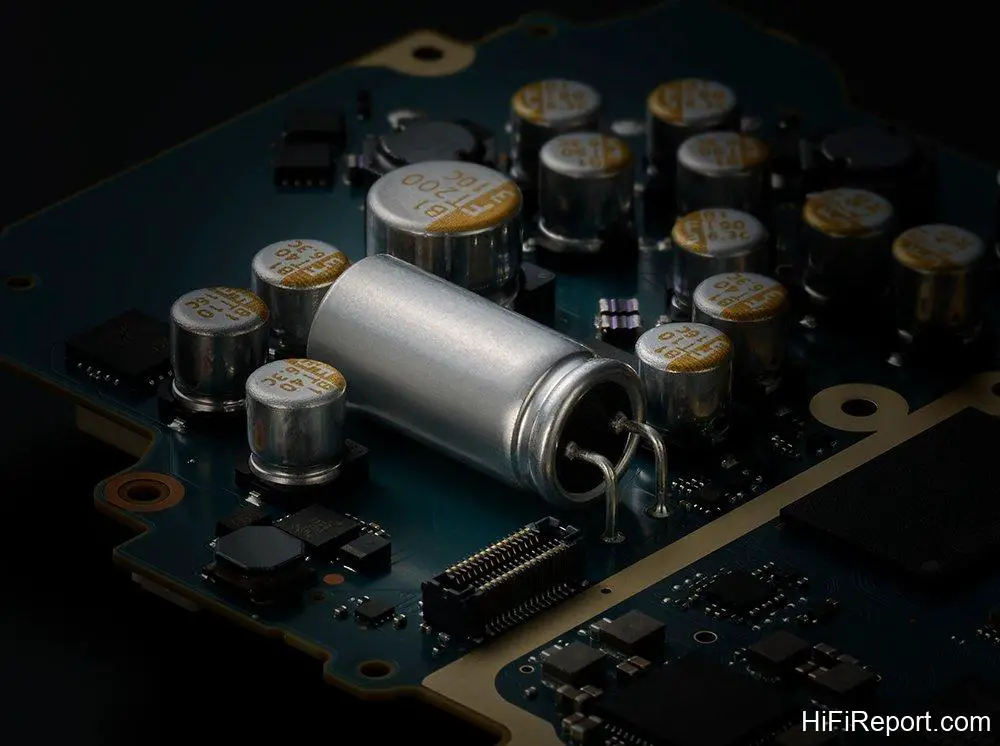
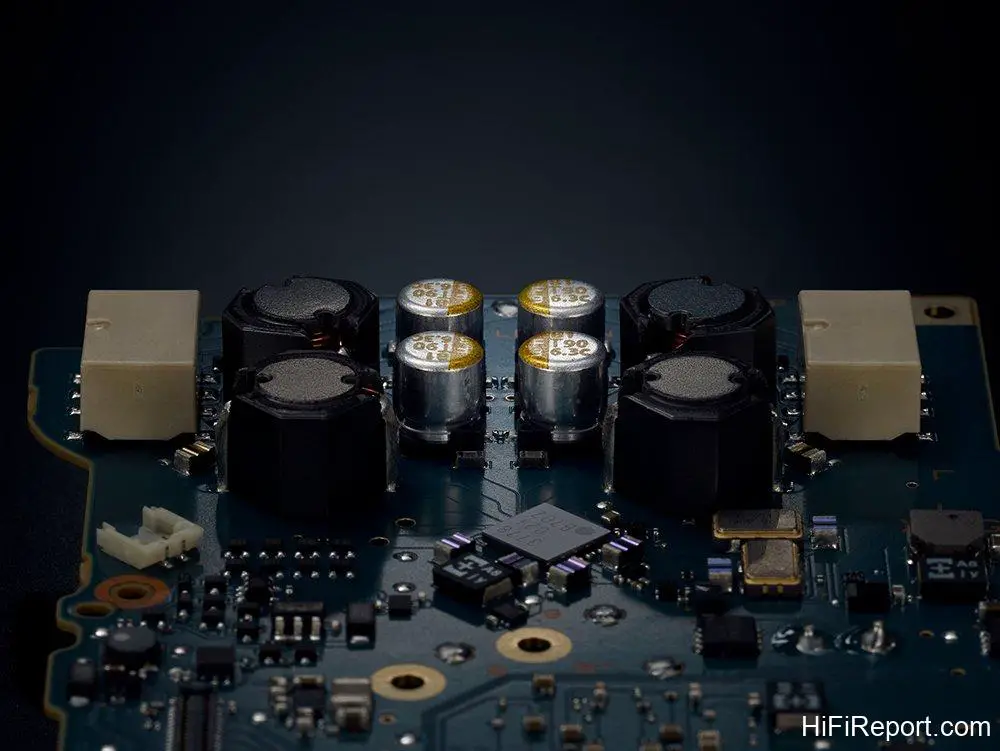
Audiophiles know that excellent sound begins with the power supply. The first-generation Gold Brick already employed FT CAP high-polymer capacitors. The second-generation NW-WM1ZM2 utilizes the new FT CAP3, along with newly developed large solid polymer capacitors. These can provide instantaneous high current output, preventing the sound from weakening during sudden dynamic peaks in the music.
Some may argue that capacitors are not particularly expensive components. However, “custom-designed” capacitors are undoubtedly costly, as specialized specifications require smaller production runs, driving up the unit price. It is likely that only a company of Sony’s scale could persuade capacitor manufacturers to undertake the design and prototyping, followed by small-quantity production. These custom-designed capacitors are truly hard-won components.
Beyond the enhanced capacitors in the power supply, the NW-WM1ZM2 also requires circuit boards that ensure smooth current and signal flow. This is even before considering the DAC or headphone amplifier stages, focusing solely on the circuit board manufacturing details. Sony has implemented two key improvements in this foundational aspect: first, the use of newly developed gold-containing solder; second, the selection of low dielectric constant circuit boards with thickened copper foil on the conductive pathways. This effectively creates a high-speed highway for current and audio signals, all for the sake of pure, unadulterated music reproduction.
Dual Clock Precision
A robust power supply and carefully crafted circuit boards are foundational elements, laying the groundwork for higher achievements. The S-Master HX digital amplifier engine remains unchanged, as Sony believes it is currently the best digital amplification circuitry available. They contend that improvements in the foundational engineering are sufficient to allow the S-Master HX to perform even better. However, there is still room for progress, specifically in the isolation of digital and analog circuits. Therefore, the NW-WM1ZM2 employs an OFC oxygen-free copper milled chassis partition to physically separate the digital and analog circuitry, ensuring both grounding and shielding. This is yet another small detail aimed at enhancing the tranquility of the musical background.
Before the S-Master HX amplifies the music signal, the NW-WM1ZM2 handles digital upsampling and processing. Crucially, the time correction clock is paramount for reducing jitter. Sony has opted for a dual clock design, with separate clocks for 44.1 kHz and 48 kHz. Regardless of the music file format you input, the NW-WM1ZM2 automatically selects the “correct” calibration clock to minimize errors in digital upsampling and processing.
Consider the scenario where 24/176.4 and 24/192 files both use the same clock. The error in digital upsampling calculation would be significant. Therefore, the optimal approach is to use a 44.1 kHz clock for 24/176.4 files and a 48 kHz clock for 24/192 files, minimizing algorithm errors.
Five Advanced Sound Tuning Modes
Now, things get intricate, and this is where the NW-WM1ZM2 truly shines, showcasing its pride as a flagship product. All of Sony’s most advanced technologies are concentrated here, including DSEE Ultimate, DC Phase Linearizer, DSD Engine, and Vinyl Processor. Explaining these four technologies in detail would require a deep dive into technical jargon, potentially overwhelming readers.
However, while the underlying digital processing technology in the NW-WM1ZM2 is complex, its operation is remarkably user-friendly. Imagine them as diverse sound adjustment modes. The fundamental sonic character remains consistent, but you can enhance the music’s richness and fullness, add airiness or warmth to the high frequencies, or even introduce a touch of “vinyl flavor.”
This is akin to ordering spicy ramen at Kikanbo. You can adjust the spice and numbing levels to your preference, but the fundamental flavor of spicy ramen remains, just tailored to your individual taste.
If these options are not enough, the NW-WM1ZM2 also provides the ultimate sound-tailoring tool: a ten-band digital equalizer, allowing you to freely sculpt the music to your exact liking.
What other technologies are worth mentioning? LDAC, Sony’s proprietary technology, offers three times the transmission bandwidth of standard Bluetooth. However, this requires LDAC-compatible headphones to fully realize its benefits. If you are a loyal Sony enthusiast, you can certainly enjoy the advantages of LDAC. However, I prefer using wired headphones with the NW-WM1ZM2, as it is, after all, the ultimate digital-era Walkman. Currently, wired still surpasses wireless in pure audio fidelity, especially considering the NW-WM1ZM2’s powerful headphone driving capabilities, which are best exploited with wired headphones.
Upgraded Kimber Cable Wiring
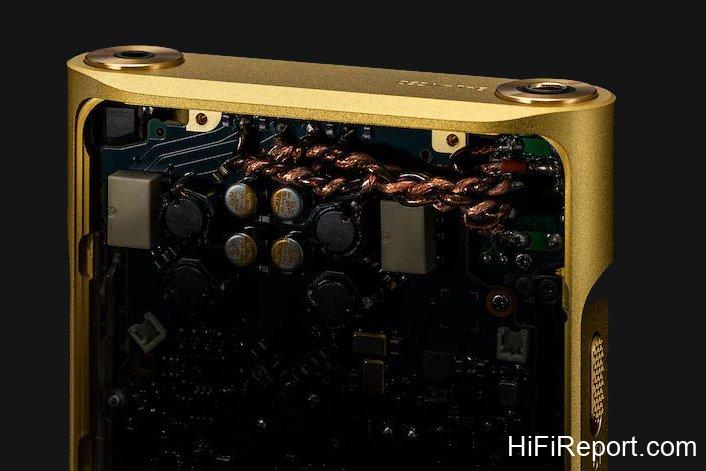
One final detail worth mentioning is the upgrade to the internal wiring. Sony originally partnered with Kimber Kable for custom four-core braided wiring. This successful formula remains, but the wiring itself has been improved.
Engineer Hiroaki Sato casually mentioned in an interview that he prefers thicker wiring. Through repeated experimentation with various formulations and countless trials and errors, they identified the optimal wiring. This process undoubtedly involved considerable time and repeated listening tests, discerning the best formulation from subtle differences.
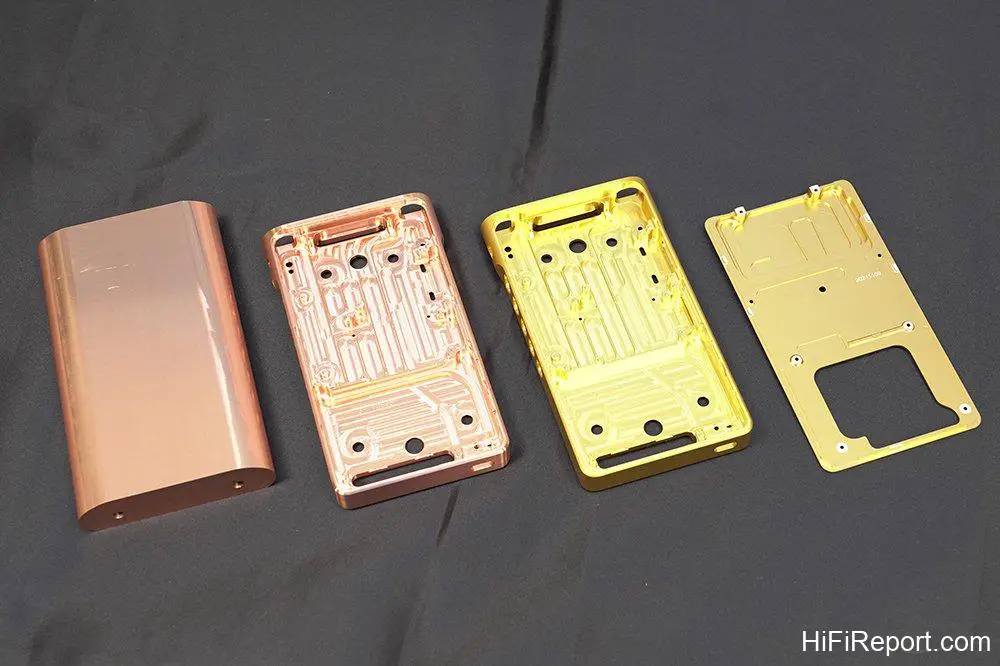
This covers the major technical advancements in the NW-WM1ZM2. It represents the relentless pursuit of technological progress by audio engineers, meticulously scrutinizing even the already exceptional Gold Brick, identifying and refining every possible detail for improvement. This includes not only material upgrades but also circuit optimization, transforming an already superb Gold Brick into a truly extraordinary one.
Recommended Headphone Pairing
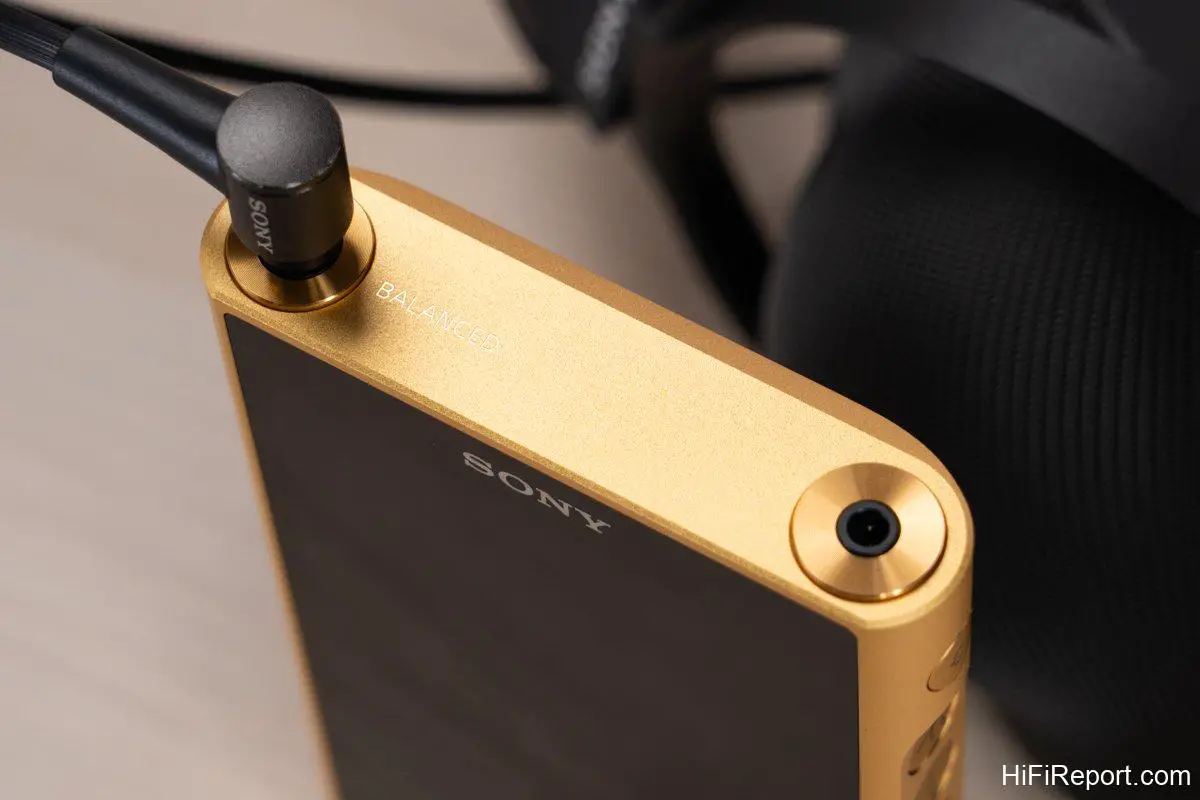
As a portable Walkman, the NW-WM1ZM2 outputs 60mW (at 16 ohms) from the 3.5mm jack and 250mW (at 16 ohms) from the 4.4mm balanced jack. It is recommended to use headphones with an impedance of 100 ohms or less and a sensitivity of 100 dB/mW or higher. This specification is designed to balance portability and battery life. Therefore, the NW-WM1ZM2 is not intended to have limitless driving power. If you prefer high-impedance headphones, consider the DMP-Z1 or TA-ZH1ES desktop headphone amplifiers, which offer greater power to drive demanding high-impedance headphones.
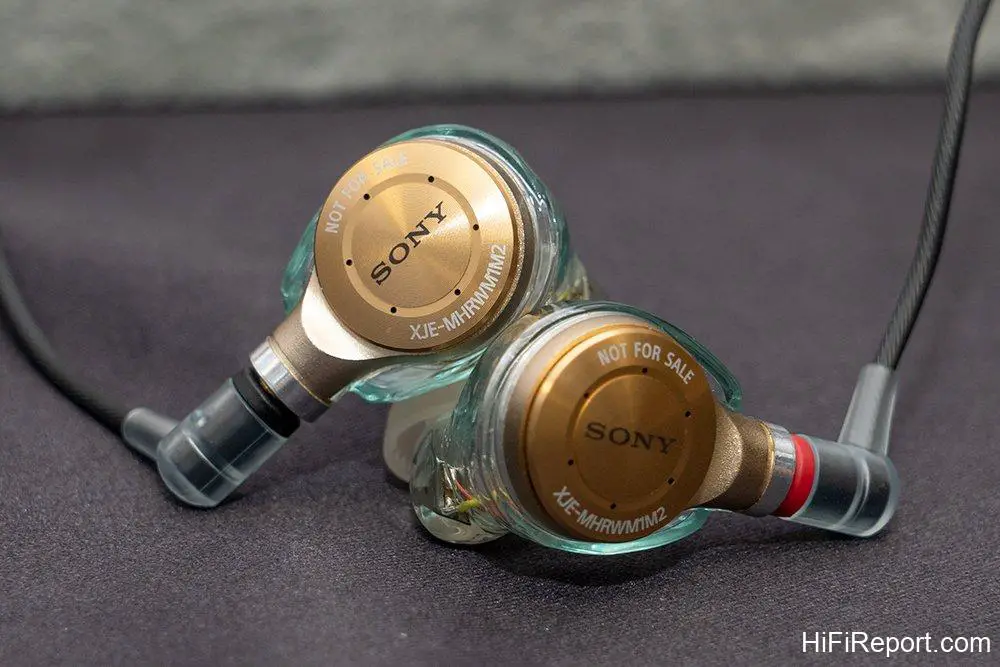
To simplify headphone pairing, the NW-WM1ZM2 is compatible with all Sony headphones. As the Gold Brick is a flagship-level DAP, the MDR-Z1R flagship over-ear headphones are naturally an ideal match, forming a true Signature Series pairing. However, if you intend to use the NW-WM1ZM2 on the go, over-ear headphones might be less convenient. In that case, the IER-Z1R in-ear monitors are an excellent alternative. For even greater customization, consider Sony’s Just Ear custom in-ear monitors, specifically tuned for the NW-WM1ZM2, for an unparalleled listening experience.
Expansive Soundstage
During the listening session, paired with the MDR-Z1R over-ear headphones – a quintessential Signature Series combination – even without direct comparison to the first-generation Gold Brick, the NW-WM1ZM2’s advancements in soundstage and spatial presentation were immediately apparent. The quieter the listening environment, the more you can appreciate the NW-WM1ZM2’s sonic virtues, especially in soundstage and overall sound quality.
In the office, I initially felt that the NW-WM1ZM2 was “slightly” better than its predecessor. However, when I took the device home and listened late at night in a quiet setting, I was struck by the significant improvements. The NW-WM1ZM2 pushes the boundaries of soundstage and spatiality, achieving an almost unbelievable sense of space, even with headphones. In fact, when I first used the NW-WM1ZM2 as a USB DAC, music began playing, and I initially thought the computer speakers were active, mistakenly believing the sound was not coming from the headphones. Removing the headphones, I realized the settings were correct; the NW-WM1ZM2’s soundstage was simply so expansive that it created the illusion of speaker playback.
Listening to Crowd Lu’s “Motivational Speech,” the NW-WM1ZM2 and MDR-Z1R expanded the recording’s spatial dimensions dramatically. This is attributable to both the quality of the equipment and the Dolby Atmos effect. It not only widens the soundstage but also vividly presents diverse sound localization cues. The backing vocals in the chorus, for example, appear on the left and right of the soundstage, flanking Crowd Lu in the center. Funky guitar riffs punctuate the music, slightly off-center to the left, and ethereal electronic effects drift throughout the soundscape. All of this detail requires excellent soundstage reproduction to fully appreciate the subtle variations in the recording. If you listen to “Motivational Speech” and perceive all the sounds clustered in the center, missing the band’s intricate details playfully moving around the virtual soundstage, it indicates a deficiency in spatial recreation.
Enhanced Dolby Atmos Performance
Late-night listening sessions with the NW-WM1ZM2 and MDR-Z1R led me to eagerly explore Dolby Atmos recordings, such as Ed Sheeran’s “Shape of You.” The opening kalimba chords establish the harmony, while acoustic guitar strums the rhythm, creating the initial soundstage. Ed Sheeran’s vocals emerge centrally, with his own harmonies appearing simultaneously on the left and right. During the chorus, the harmonies layer with the lead vocal, coalescing in the center, while the entrance of electronic drums expands the soundstage, creating a lively atmosphere.
The NW-WM1ZM2 and MDR-Z1R deliver a smooth and natural sonic character, making for comfortable listening. The high frequencies extend effortlessly and smoothly, while the low frequencies possess excellent power. The overall sonic signature is imbued with a gentle tonality, ensuring fatigue-free listening even at higher volumes.
The improvements in sound quality in the NW-WM1ZM2 might not be immediately apparent without direct comparison, as both generations are flagship Signature Series products, inherently excellent. Moreover, the NW-WM1ZM2 offers adjustable DSEE Ultimate, DC Phase Linearizer, DSD Engine, and Vinyl Processor, along with a ten-band equalizer. Fine-tuning sound quality and timbre is subjective, varying according to personal preferences. Therefore, it’s difficult to definitively claim a massive sonic leap with the NW-WM1ZM2. However, in terms of virtual soundstage and spatial recreation, the advancements are undeniable and significant. Consequently, when preparing for a Sony VIP experience event, I intentionally selected four musical pieces specifically chosen to showcase soundstage performance, as the NW-WM1ZM2’s most striking attribute is its expanded spatial presentation.
Soundstage Test Tracks
At the Sony Store experience event, I prepared four musical selections. First, I played the “Million Dollar Baby” soundtrack, specifically “Blue Morgan” and “It’s Nice Viewing.” Starting with solo steel-string guitar, the NW-WM1ZM2 presented clean, focused details of the guitar’s playing, accompanied by a sense of space surrounding the instrument. In “It’s Nice Viewing,” the focus shifts to solo piano, revealing the subtle effects of the piano’s sustain pedal, allowing the sound to naturally expand. As the string section enters, the entire soundstage broadens outwards. On the NW-WM1ZM2, the soundstage is not only impressively spacious but also sonically refined and beautiful.
For the second track, I chose Katja Werker’s “Contact Myself 2.0” album, specifically the opening track “Yes.” This track is a live recording from the legendary German Stockfisch Records studio. While a studio recording, it deliberately employs a simultaneous live recording approach, simulating a studio concert setting to showcase the musicians’ skills and create a more fluid, natural, and live-sounding recording.
The NW-WM1ZM2 accurately reproduced the ambiance of the studio live performance. The first guitar emerged from the center-left, and as Katja Werker began singing, another guitar appeared on the right of the soundstage. Katja Werker’s vocals were anchored in the center. The NW-WM1ZM2 and MDR-Z1R presented a warm tonal palette, with rich guitar detail and beautiful resonance, making for a very comfortable listening experience.
Engaging Vinyl Mode
For the third piece, I selected Yo-Yo Ma, Edgar Meyer, and Chris Thile’s collaboration, “Bach Trio.” Beyond the precise instrument placement of the trio, the recording’s location in a rural barn created a beautifully expansive vertical soundstage, a spatial dimension notoriously challenging for headphone systems to reproduce convincingly. The NW-WM1ZM2 and MDR-Z1R passed this test effortlessly. If it weren’t for the physical sensation of the MDR-Z1R headphones on my ears, I might have believed they had vanished entirely. The expansive soundstage and the clear localization of the three instruments remained coherent even during ensemble passages.
For the final selection, I chose “Cooking With Miles Davis,” opting for the relaxed swing of jazz, specifically the classic standard “My Funny Valentine.” Despite the recording’s age, the NW-WM1ZM2 and MDR-Z1R sculpted a rich and warm sonic texture, preventing the recording from sounding dated. I deliberately engaged the Vinyl Processor, adding a touch of vintage character to the sound, making it even more lush and flavorful.
Does this introduce coloration? Of course, it does, but it’s a pleasing form of coloration, adding a layer of enjoyment to the listening experience. These diverse digital processing and sound-tuning features are precisely what make the NW-WM1ZM2 so engaging and fun to use. Why wouldn’t you want to explore them?
Unrivaled Soundstage Performance
I am aware that the NW-WM1ZM2 is not inexpensive. However, compared to many high-end DACs, the NW-WM1ZM2 is not exorbitantly priced. Moreover, you can take the NW-WM1ZM2 with you on the go. It’s a Walkman for the digital age, and its USB DAC functionality rivals that of many home DACs. You can also connect it to your home audio system. It’s essentially two devices in one. Considered from this perspective, if the NW-WM1ZM2 can replace your existing DAC and elevate your audio to Signature level quality, then it doesn’t seem so expensive. For discerning audiophiles who prioritize soundstage performance, the NW-WM1ZM2 is a must-hear. In my experience, it offers the best soundstage performance of any DAP I’ve encountered to date, and it is absolutely worth experiencing.
Specifications
* Memory Capacity: 256 GB
* Expansion: microSD/microSDHC/microSDXC
* Output Frequency: 20 Hz – 40 kHz
* Sound Settings: Direct Source, 10-Band Equalizer, DSEE Ultimate, DC Phase Linearizer, Dynamic Normalizer, Vinyl Processor
* Power Supply: Built-in Rechargeable Lithium-ion Battery / USB Power
* Screen Size & Resolution: 5 inches, HD (1280 x 720 px), LED-backlit TFT color touch screen
* USB: Hi-Speed USB (USB 2.0 compliant)
* Headphone Jacks: 3.5 mm stereo mini-jack, 4.4 mm balanced standard jack
* Bluetooth: Bluetooth Version 5.0
* USB Charging Time: 4.5 hours
* Supported Music Formats: MP3, WMA, FLAC, Linear PCM, AAC, HE-AAC, Apple Lossless, AIFF, DSD 11.2 MHz, MQA