
Sony PS-LX310BT Turntable Review
Many people say they don’t want to listen to vinyl because the setup is too troublesome. However, in this era of digital streaming, holding a vinyl record in your hands allows you to truly feel the “physical warmth” of music! But some are deterred by the hassle and the perceived high cost of vinyl playback. Worry no more! Sony’s brand new PS-LX310BT turntable, launched in 2019, uses “full automation” and Bluetooth wireless technology, eliminating setup entirely. You can wirelessly connect to speakers or headphones, freely enjoying “trendy vinyl.” This fully automatic Bluetooth turntable has a suggested retail price of only $218 USD (NTD 6,990), and paired with a set of Bluetooth speakers, you can start playing vinyl at a truly approachable price.
Entry-Level Automatic Turntable
I previously reviewed the Sony PS-HX500 turntable. I initially thought the new PS-LX310BT was an updated version of that model, but upon receiving the unit, I realized it’s actually an evolution of the PS-LX300 USB released in 2010.
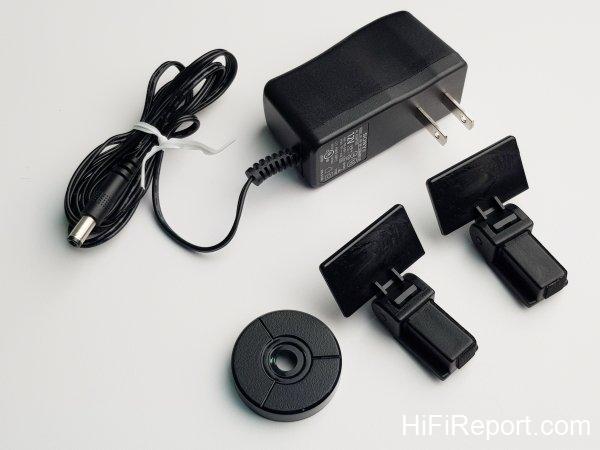
What are the differences? The PS-HX500 has a more traditional design, featuring adjustable tracking force, anti-skating, and the ability to convert vinyl to digital music files. In contrast, the PS-LX310BT is a “fully automatic turntable.” It requires no tracking force adjustment, no anti-skating adjustment, no adjustments at all! Simply press the “Start” button, and the PS-LX310BT happily starts playing music! Seriously, the PS-LX310BT is that easy to use! Upon unboxing, you only need to assemble the platter onto the turntable base, put the belt on the motor pulley, plug it in, turn on the power, and the PS-LX310BT is ready to play vinyl.
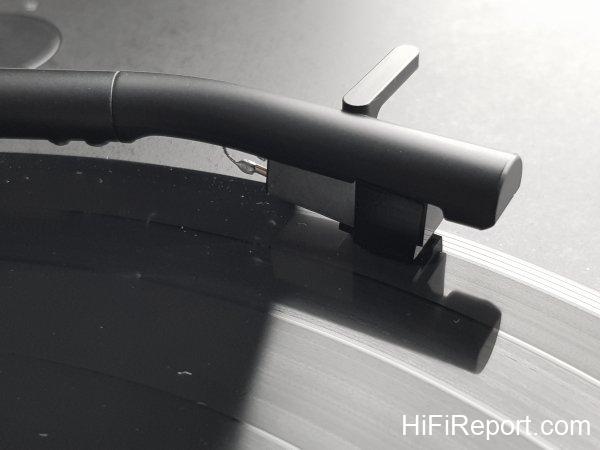
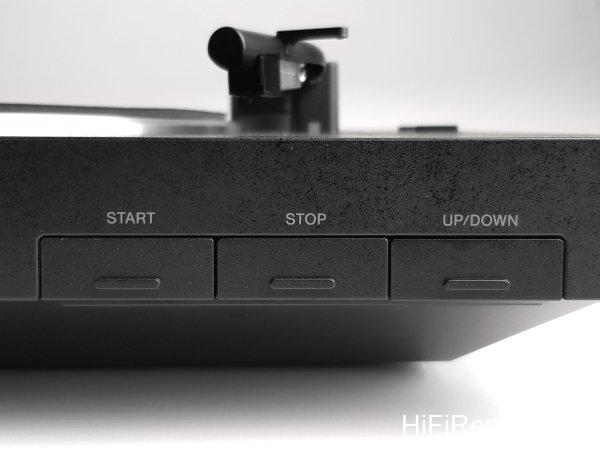
Tracking force? No adjustment, and no way to adjust it. Anti-skating? Same, no adjustment and no option to adjust. The PS-LX310BT’s controls are very simple. The power switch is on the rear panel. Turn it on, and Bluetooth is ready, automatically searching for any pre-configured Bluetooth wireless speakers or headphones. On the lower right of the front panel, there are three buttons: Start, Stop, and Up/Down.
Intuitive Operation
Can you guess how to use these three buttons on the PS-LX310BT? I guarantee it’s intuitive! No need to read the manual. Press Start to begin, and Stop to halt playback. Being a fully automatic turntable, when you press the Start button, you’ll hear subtle mechanical sounds from inside the PS-LX310BT, indicating the tonearm is moving, preparing to play the vinyl.
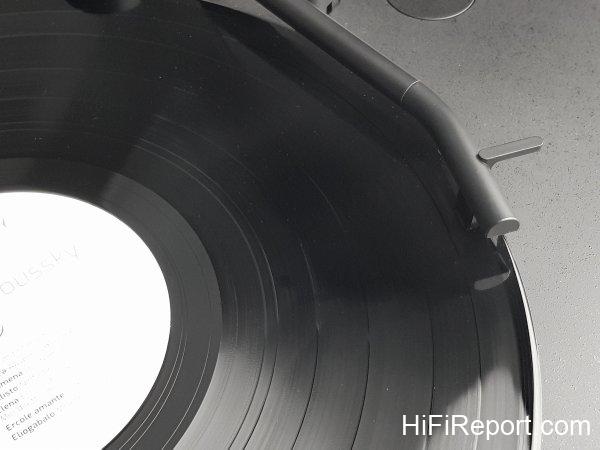
At this point, you’ll see the PS-LX310BT’s tonearm gently lift, automatically move to the first track position of the vinyl record, and then slowly lower the stylus. The moment the stylus touches the record, a soft “thump” confirms that the turntable and audio system are properly connected and vinyl playback has begun. As warm, comforting music flows out, watching the vinyl spin steadily at 33 1/3 RPM on the PS-LX310BT, the center label’s design transforming into rotating lines, listening to vinyl is indeed a trendy and sophisticated pastime!
Vinyl Revival: Targeting Entry-Level Users
In the realm of digital music and audio, Sony has long been a market leader, whether in high-end headphones, headphone amplifiers, DACs, or DAPs. However, Sony recognizes that vinyl remains a significant music medium. This trend is evident in music sales. While digital streaming and subscription services have seen substantial growth for three consecutive years, eroding compressed digital music download sales and further weakening already struggling CD sales, vinyl records are experiencing growth against the trend.

Although it’s unlikely vinyl will return to the golden age before CDs, when it reigned supreme, the niche market is sufficient to support vinyl record releases and maintain a certain market share for analog turntables. Every year at the Munich High End Show, analog vinyl-related products have never decreased, and have even increased annually, demonstrating the vinyl revival trend.
Therefore, Sony launched the PS-LX310BT to address the stable and slightly growing demand in the vinyl market. However, Sony’s entry point is not the high-priced market but rather targeting younger demographics, introducing an affordable yet fully functional automatic turntable. This allows consumers to easily enjoy analog vinyl music without budget concerns, and even take analog vinyl “on the go.”

Vinyl Recording and Bluetooth Wireless
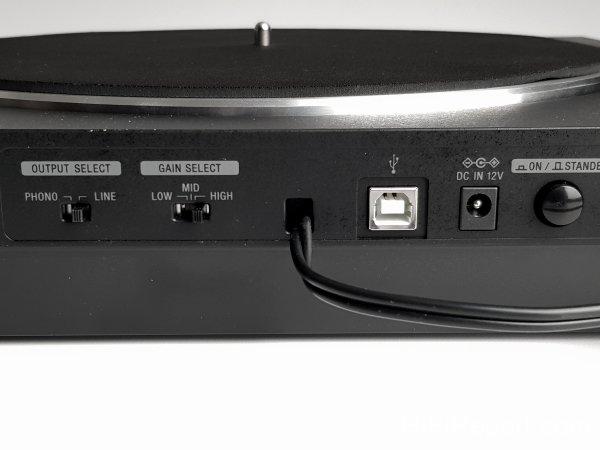
How can vinyl be taken “on the go”? Of course, you can’t listen to the PS-LX310BT while walking around, but Sony has equipped the PS-LX310BT with an ADC (Analog-to-Digital Converter). Via USB output, you can convert vinyl into music files (supporting up to 16bit/44.1kHz or 16bit/48kHz formats). This way, you can put the digitally converted music files from vinyl onto your phone or DAP for listening anywhere. You can even play vinyl-recorded music in your car audio system.
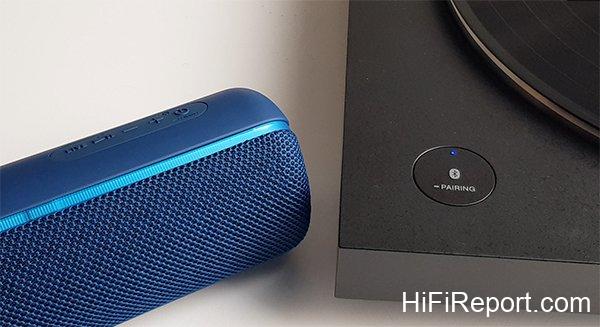
Want even more convenience? The PS-LX310BT includes a Bluetooth module, eliminating the need for even analog signal cables. Directly connect wirelessly via Bluetooth to active Bluetooth speakers, or enjoy private listening with Bluetooth headphones connected to the PS-LX310BT.
With USB output and Bluetooth wireless module, the PS-LX310BT’s connectivity features are up-to-date with modern trends.
Built-in Phono Amp with Gain Control
For those wanting to get into vinyl but worried about complicated setups, the PS-LX310BT is the perfect choice.
It’s not only easy to set up and Bluetooth-enabled for wireless vinyl listening, but the PS-LX310BT also has a built-in phono preamplifier. If your amplifier lacks a phono stage and only has high-level inputs, use the Phono output setting to utilize the PS-LX310BT’s built-in phono preamp. If your amplifier has a phono stage, switch the output setting to Line, sending the signal to your amplifier’s phono preamp for vinyl playback.
See? The PS-LX310BT is thoughtfully designed to connect with various audio systems. For personal listening, Bluetooth headphones connect easily. Simple pairing with active Bluetooth speakers is also possible. If you want to integrate with your home audio system, the PS-LX310BT works whether your amplifier has a phono stage or not.
Furthermore, the PS-LX310BT’s phono preamp now offers high, medium, and low gain settings, making it even easier to match with downstream audio systems.
Recording via OS Built-in Function
We’ve discussed the PS-LX310BT’s wired and wireless connections to downstream audio equipment. Now, let’s look at how to record music with the PS-LX310BT.
Actually, no additional software is needed. Windows and macOS operating systems both have built-in recording software. Simply set the audio source to USB, connect the PS-LX310BT to your computer, and open the operating system’s bundled recording software to start recording. However, this method of recording vinyl doesn’t easily “split tracks,” often recording an entire side of vinyl as one large music file, requiring post-processing to cut tracks. But the advantage is that no extra recording software is needed; you can use the basic recording capabilities built into Windows or macOS.
Alternatively, you can use the manufacturer’s recommended Audacity software for vinyl conversion. It’s a free download (www.audacityteam.org) and supports both Windows and macOS.
Bauhaus-Inspired Black Design
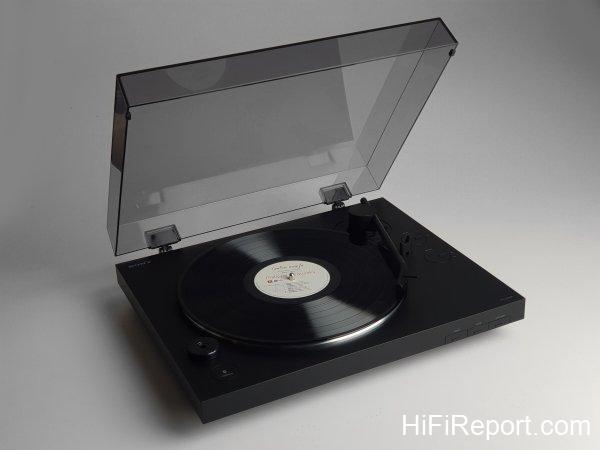
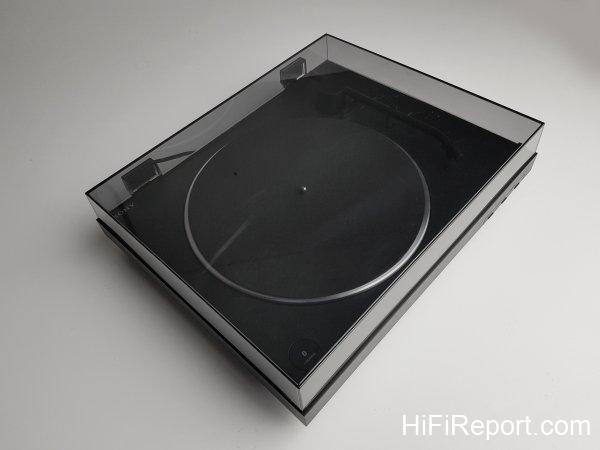
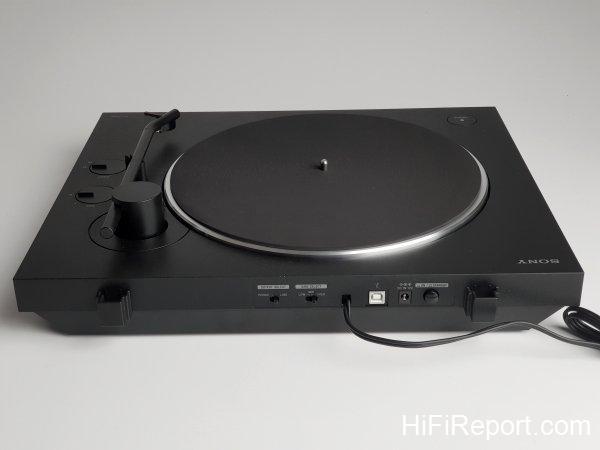
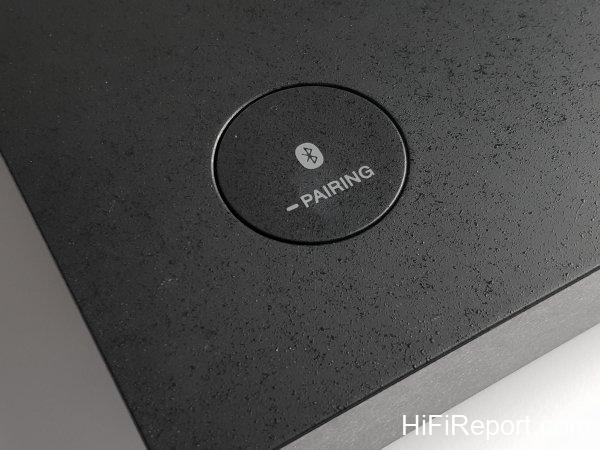
As an entry-level “fully automatic turntable,” the PS-LX310BT’s design is quite “Bauhaus-inspired,” meaning it follows a minimalist aesthetic. The black turntable base has clean lines, and various function buttons are subtly integrated into the chassis. On the top panel’s left side is the Bluetooth pairing button. On the panel to the right of the tonearm, there are two black selector knobs. One is for switching between 7-inch and 12-inch vinyl records. This is rarely used since most people listen to 12-inch LPs. However, the PS-LX310BT retains this function and includes an adapter for centering older single EP records.
The other selector knob is for switching between 33 RPM and 45 RPM speeds, which is frequently used.

What best showcases the PS-LX310BT’s industrial design and clean lines is the tonearm.
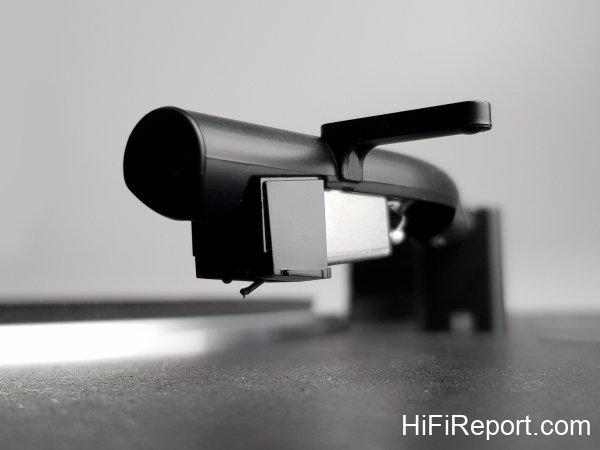
The hollow aluminum tube with a matte black finish, combined with the front-end curved J-shape arm design, and the circular bearing at the rear echoing the tonearm’s slender lines. Most importantly, the absence of a rear counterweight makes the tonearm look like a black aluminum tube floating in the air.
When I first saw photos online, I thought Sony’s official product shots deliberately omitted the counterweight for better aesthetics. Unexpectedly, the PS-LX310BT, due to its fully automatic design, doesn’t require a counterweight at all, which is why the tonearm’s lines are so beautiful.
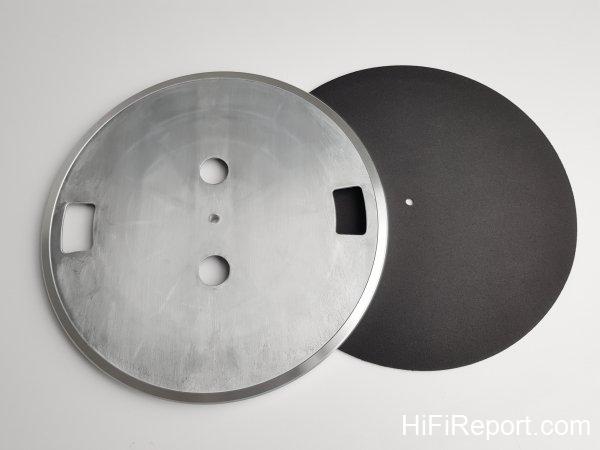
Furthermore, the PS-LX310BT conceals all control buttons and knobs within the black base, resulting in clean and sleek lines. The platter itself is made of die-cast aluminum. When installed, about half of the platter is hidden inside, keeping the center of gravity low, with only a thin line of aluminum alloy visible on top. Topped with the included soft felt mat, the PS-LX310BT truly embodies the design aesthetic of playing with the “black” element.
No Setup: Tracking Force & Anti-Skating
Of course, being fully automatic, there’s no need to set tracking force or adjust anti-skating, which also means you probably can’t replace the cartridge. Fortunately, it’s an MM cartridge. If you accidentally break the stylus, replacing the stylus and cantilever shouldn’t be expensive. Or rather, the replacement MM cartridges for this type of entry-level turntable should be affordable.
Also, because it’s fully automatic, you’re less likely to damage the cartridge.
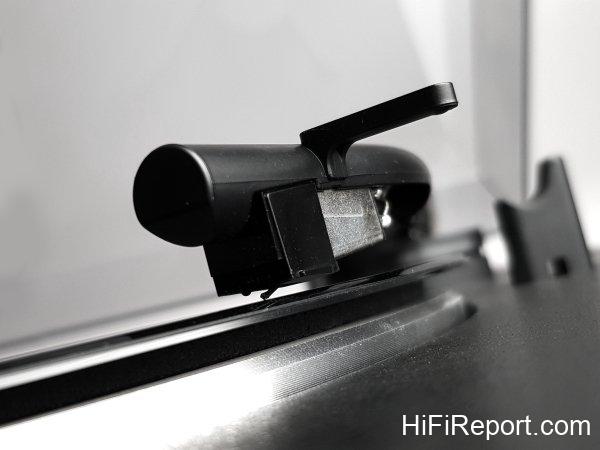
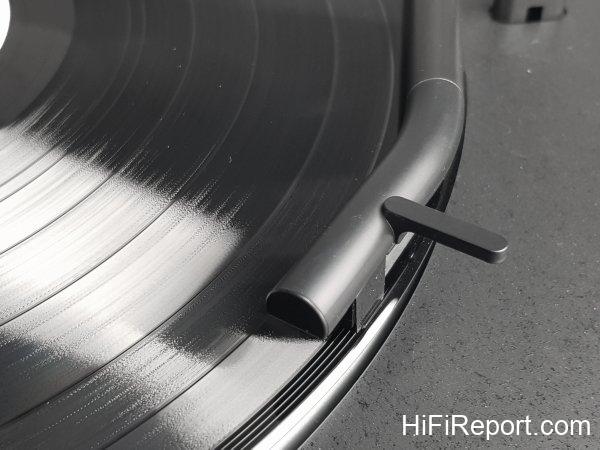
Why? Traditional turntables require using a cue lever to lift the cartridge, position it over the desired track, and then use the cue lever to lower it. Many experienced users become accustomed to manual operation and skip the cue lever altogether. A slight slip of the hand could break the stylus. However, the PS-LX310BT uses a fully automatic design. You simply press “Start,” and the PS-LX310BT’s tonearm gently lifts, moves to the left, aligns the stylus with the edge of the record at the first track, and automatically lowers the stylus. No manual operation is needed, reducing the chance of accidents.
If you want to stop listening mid-record, just press “Stop.” The tonearm automatically returns to the tonearm rest, and the platter stops spinning.
What if you want to start listening from a specific track? Press “Up/Down” once to lift the tonearm, then manually move the tonearm to the desired position, and press “Up/Down” again. The tonearm will automatically lower and start playing.
Auto-Return and Stop Function
Moreover, when the record finishes playing, the tonearm will automatically lift, return to its rest, and stop spinning. It won’t endlessly loop in the run-out groove, repeatedly making “thump, thump, thump…” sounds. For those who listen to music to fall asleep, you can drift off to vinyl dreams.
Wait, isn’t it said that automatic turntables are not suitable for sleeping to music? Yes, it is possible! If you’re listening to Bach’s Goldberg Variations and drowsiness sets in, just as you’re about to enter dreamland, the record ends. The “thump, thump, thump…” sound of the record ending urges you to get up, lift the tonearm, put away the record, and then go to sleep.
Who can fall back asleep then? Getting up to put away the record wakes you up, potentially leading to insomnia again.
But if you just don’t get up to lift the tonearm and put away the record, the stylus will continue in the run-out groove “thump, thump, thump…” until dawn. You might wake up in the morning to find the diamond stylus tip missing.
So, isn’t the PS-LX310BT’s ability to “automatically lift the tonearm and stop playback when the record ends” a blessing for those who want to peacefully fall asleep to vinyl? Actually, for seasoned vinyl enthusiasts, fully automatic turntables are practically toys. A turntable with almost no adjustable settings lacks the fun of tweaking and optimizing. However, Sony launched the PS-LX310BT to target analog newcomers who want to experience vinyl but haven’t become experts yet. They want to listen to vinyl with the PS-LX310BT without needing a manual or making adjustments, making vinyl more accessible to everyone.
And Sony has truly achieved this. It’s so simple that I set up the turntable and got it playing music without even looking at the manual.
Retro Automatic Playback Experience
Although it’s an entry-level automatic turntable, the PS-LX310BT’s build quality still demonstrates a certain level of refinement. The PS-LX310BT’s tonearm lifting, moving, and stylus lowering actions are slow and deliberate, yet full of charm. When I first set it up, I enthusiastically played with it several times, as if transported back to the era of automatic turntables from thirty or forty years ago. Re-experiencing this on the PS-LX310BT, the tonearm slowly lifting, pausing, then moving left, pausing again. Just as you’re wondering when the PS-LX310BT will lower the stylus, the tonearm action follows. The subtle mechanical sounds tell you all actions are analog, evoking a retro feel. And the PS-LX310BT’s automatic playback actions are a bit slow, but isn’t listening to vinyl precisely about adding a touch of slow-paced music enjoyment to our fast-paced, kaleidoscopic lives?
Remove Dust Cover for Optimal Sound
A transparent dust cover is standard equipment. When not listening to the PS-LX310BT, it should be covered to prevent dust from entering the unit.
I know that most people considering the PS-LX310BT are likely vinyl beginners. I want to remind you of one thing: when listening to the PS-LX310BT, do not listen with the transparent dust cover half-open, and definitely don’t listen with the dust cover closed. You should completely remove the dust cover and place it aside.
Why? It’s called a dust cover, and it’s only for dust protection. But when listening to the PS-LX310BT, the cover will make the sound muffled. The liveliness of the mid-high frequencies will be diminished, and the bass will also be muddier. If you want to hear the PS-LX310BT’s best performance, remember to remove the dust cover and put it back on after listening.
Plug-and-Play with Bluetooth Speakers
We’ve discussed almost everything about the PS-LX310BT’s features. Now, it’s time to listen to its sound performance.
I’ll start with the most probable use case: pairing the PS-LX310BT with active Bluetooth speakers, using Sony’s own SRS-XB22 as a preliminary test.
I placed the SRS-XB22 next to the PS-LX310BT, turned on the power, and the blue light illuminated. Immediately, I heard the connection completion prompt sound, indicating they were connected. I believe this is because the two devices had been paired before, so they automatically connected upon powering on. Even if they haven’t been paired before, you only need to press the Pairing button on both the turntable and Bluetooth speaker for easy pairing. It’s not troublesome at all.
The first record I pulled out for testing was the 2015 Kaohsiung Hi-Fi Show commemorative vinyl, “Nano-Creation Four Seasons.” I chose this record because its surface has a molybdenum nano-coating treatment, making it scratch-resistant. I wanted to first observe the PS-LX310BT’s stylus lowering force, so I started with a scratch-resistant nano-vinyl.
Pressing the “Start” button, the tonearm lifted, moved to the first track, and automatically lowered the stylus. The “thump” sound was quite gentle, indicating the stylus lowering force isn’t heavy-handed. Tchaikovsky’s piano melody “January” flowed smoothly. The SRS-XB22’s sound is warm, making for a comfortable listening experience with the PS-LX310BT.
Pairing with High-End System
Hey, what’s the editor doing? Is he really going to write a review of the HS-LX310BT using the SRS-XB22? Sorry, that was just a preliminary test. However, considering the PS-LX310BT’s suggested retail price of only $218 USD (NTD 6,990), I must say that this simple wireless Bluetooth speaker pairing can already satisfy many trendy individuals’ imagination of analog vinyl. Although the signal undergoes multiple analog and digital conversions, you can still hear the stylus gliding through the record grooves, delivering a warm analog sonic foundation. Time to get serious! Let’s bring out HiFiReport’s Wilson Audio Alexia 2 speakers, paired with a Linn Selekt DSM. Is that high-end enough? I know it’s almost unheard of to pair a $218 USD turntable with such a system, but this is the best speaker setup HiFiReport can provide. Let me indulge myself this once!
MM Cartridge Gain Considerations
The PS-LX310BT’s cartridge output is 2.5mV. For an MM cartridge, this gain isn’t particularly high. Using the Line output (bypassing the PS-LX310BT’s built-in phono preamp) and connecting to the Selekt DSM’s MM phono input, the gain was noticeably lower than digital inputs. Therefore, I increased the gain by 10dB in the Selekt DSM’s MM input (maximum 15dB gain), which was roughly equivalent to the digital input volume. Based on this, if you plan to pair the HS-LX310BT with a phono preamp, choose one with sufficient MM output gain.
Using the SRS-XB22 was just a warm-up, a quick test. Now, with the high-end system in place, let’s put on Miles Davis’ “Kind Of Blue.”
On the first track of side A, “So What,” the deep, resonant plucked double bass notes reveal the PS-LX310BT’s substantial bass presence. Even at high volumes, bearing rumble is almost inaudible. A jazz drum fill, and Miles Davis’ trumpet blares brightly, with piano accompaniment in the background. Although the PS-LX310BT’s soundstage feels a bit shallow, the full-bodied midrange of analog vinyl sounds quite comfortable.
Warm Midrange Without Adjustment
For classical music to fall asleep to, Bach’s “Goldberg Variations” is a good choice. Listening to Beatrice Rana’s newly released 2017 vinyl, playing at a Gould-esque slow tempo, paired with the MM cartridge of the PS-LX310BT, although the high-frequency extension lacks some brilliance, the full midrange timbre gives the piano notes a rounded presence. Entering the second variation, the piano’s dynamics increase, and the notes become more forceful. Although the texture feels slightly rough, I must say, for only $218 USD, to enjoy such warm, rich, and full-bodied analog sound, the PS-LX310BT is truly worthwhile.
Let’s switch to something fresher – Jacky Cheung’s “Song Era II”! Listening to “Song Era II,” starting with track one of side A, “Wo Hao Xiang Ni (I Miss You So Much),” the PS-LX310BT’s rich midrange timbre makes instrument images stand out, creating an intimate live recording ambiance. Switching to track one of side B, “A Lifetime of Love,” one of the theme songs from the movie “A Chinese Odyssey,” the live performance tempo is slower than Lowell Lo’s original version, conveying a richer romantic and beautiful emotion. Jacky Cheung’s vocals maintain their clear, bright, and transparent quality. And with the PS-LX310BT, you can hear the unique rich midrange of vinyl.
Of course, I would wish for the PS-LX310BT to have more musical detail, finer mid-high frequencies, a deeper soundstage, and tighter bass definition. But I also know that to get just a bit more of these qualities, the budget would need at least one or even two more zeros. The PS-LX310BT’s sound performance already far exceeds my expectations for a $218 USD turntable.
Easy Analog for Beginners
Don’t be afraid! If you want to get into vinyl but worry about being clueless and not knowing how to use it after buying it, Sony’s PS-LX310BT is definitely “ready to play out of the box.” Besides installing the aluminum platter and attaching the belt, the PS-LX310BT is truly plug-in-power, place-vinyl, and press “Start” to play. It can also convert vinyl to digital, and with a suggested retail price of under $218 USD, you can catch up with the trendy analog style. The PS-LX310BT is truly a treasure for vinyl beginners!
Specifications
* Type: Fully automatic analog turntable (with AD conversion USB output)
* Drive System: Belt drive
* Speeds: 33 1/3 RPM, 45 RPM
* Cartridge: MM (3g tracking force, 2.5 mV output)
* Digital Output: USB
* Bluetooth Wireless: Ver 4.2 (supports SBC, Qualcomm aptX)